Oh, Adam was a gardener, and God who made him sees
That half a proper gardener’s work is done upon his knees,
So when your work is finished, you can wash your hand and pray
For the Glory of the Garden, that it may not pass away!
(link: The Glory of the Garden by Rudyard Kipling)
The correlation between gardening and prayer had not occurred to me until I read that Kipling poem. American culture has forgotten how growing one’s own food is a lot of labor and often a gamble. This year there has been sufficient rain, but previous years these mountains have experienced drought. In years past I’ve lost plants to a Spring frost, plant mold and blight. But when Kipling wrote those lines ubiquitous herbicides and pesticides where unavailable as well as genetically modified plants. Gardening and spirituality have always been connected, but only in recent history that we have forgotten that truth as the culture detoured to a road of industrial foods.
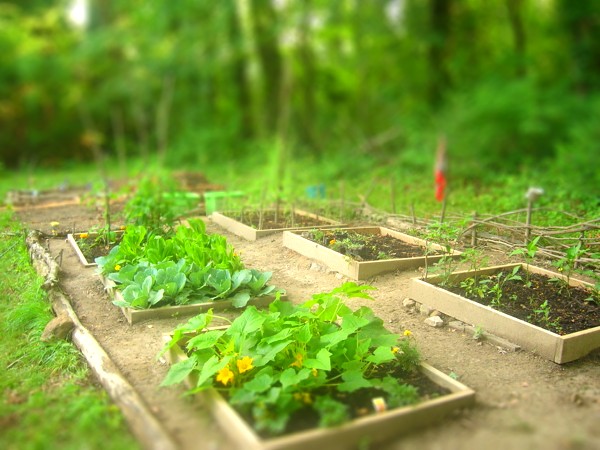
So far the garden has yielded a modest supply of lettuce for occasional salads, a dozen or so snap peas, a half-dozen chili peppers. The tomatoes should be coming in soon as well as the squash. The first load of vermicompost was used in the garden box where the peppers grow. (It may be difficult to see in the photo, but there are two green totes behind the tomato garden box where I vermicompost table scraps.) At the current pace, worms compost one tote of table scraps every three to four weeks. It’s hard to imagine that this little garden provides so much work that many evenings and weekends are filled with labor on my hands and knees.
 Coffeehouse Junkie