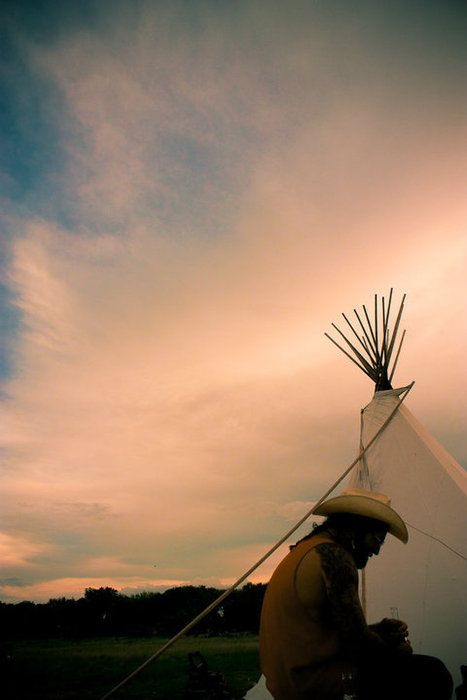
bobowoodlake: suninscorpio: Coyote Coy by Ryan Christensen
bobowoodlake: suninscorpio: Coyote Coy by Ryan Christensen
i love this spare design: http://ping.fm/gWAkt
oh, to have my art space & drawing table back again: http://ping.fm/HABmc
seoul cycle: http://ping.fm/kG6Zf
If instead I see my value as separating the important from the unimportant and making good decisions on the important, then I can go home at a reasonable hour, spend time with my family, ignore my…
glasgow school of arts by steven holl: http://ping.fm/xqcgE
“Statistics are like a bikini. What they reveal is interesting. But what they hide is vital.”
–Aaron Levenstein, former Baruch College business professor
Link: Brand Autopsy http://ping.fm/Lh6cr
If instead I see my value as separating the important from the unimportant and making good decisions on the important, then I can go home at a reasonable hour, spend time with my family, ignore my email and phone messages all weekend long…
–Peter Norvig
Link: Knowing important from unimportant tasks
For those about to sip their caffeine elixir… Java-Inspired Jazz: http://ping.fm/wVldP

(via motherearthfathersky)

(via nevadamoonrise)
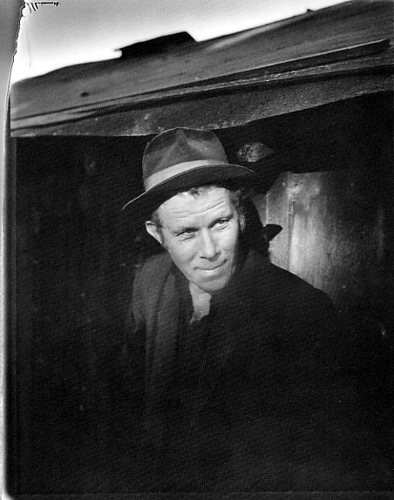
everybodyknowsthisisnowhere: shedarkedthesun: Tom Waits by Marina Chavez
Krista Tippett, host The crescent-topped dome of Masjid An-Nasr peeks through trees of a residential neighborhood in Oklahoma City. (photo: Andrew Shockley/Flickr) My grandfather was the Reverend Calvin Titus Perkins, known by all as C.T. He was a Southern Baptist evangelist — a…
– Socrates
This is a book review I do not want to write. In fact, I have put it off for more than six months. Why the delay, you ask. Procrastination? Too busy? Lack of motivation? All of these. And yet none of these. It has nothing to do with the book or its author. For a first novel, the book offers a startling look into the contemporary scene of rural Appalachia. It is clear that Roger Alan Skipper reaches for a story that is close to him like a favorite coffee mug or faded denim jacket or even a place—an old diner where coffee is still served for fifty cents including free refills. The novel is not too complicated, nor too simple, nor too trite to write a review. In a manner of speaking—it is too true to be fiction.
I feel I might be he, Sid, who loves and hates the mountains where he once lived and left—as if the mountains themselves embrace and reject him. I feel that if I write about this book I may be committing myself to its plot. And I am not sure I like how the author left Sid Lore on page 208. The plot is simple and complex like the characters that pass through the pages between the book’s covers. And if I write this review it will be like a rune that once it is carved into stone cannot be withdrawn—the future committed before it arrives—before it is lived. Is that possible?
During the alter call, the girl went forward. A swarm of growed-ups buried her in a mess of sweat and noise. “Give her your Spirit, Lord,” one cherry-faced old bag bellered, and Sid shivered…. She couldn’t get the tongues any better than he could, she said, and in the company of someone just like him, … he’d decided to talk in tongues whether they was the Lord’s or his own, …
The author writes in an authentic voice; placing the reader in a small rural Appalachian mountain town, placing the reader in a small charismatic congregation, placing the reader on a road to tear down the mountain. Sid struggles with his identity, his sense of place and purpose. He sees Janet seeking acceptance in the church and identifies with her desperation, longing, isolation. Sid and his brother try to fit into this community, but Sid feels equally a part of it as he does a stranger to it.
Like the novel’s title, some days I want to “tear down the mountain” in search of a place that has a better job market to match the housing costs. Sid and Janet “tear down the mountain”—a colloquial expression meaning to leave the mountains, not remove them—in a beat up pickup truck with no tags and “FARM USE scrawled on the doors with green spray paint. How were they to know that wasn’t legal outside of West Virginia?”
Once left behind, the mountains change. After fourteen years divorced from the home where Sid and Janet met, they return separately to find the quiet little secluded place in the Appalachians transformed to a tourist getaway.
A sense of the ridiculous swelled as she drove slowly… . Familiar signs that she never expected to see—Perkins and Comfort Inn… made it all a mixed-up dream.
Several themes complicate and populate this novel: personal identity, community, the authentic and superficial attributes of religious life, gender roles in a traditional marriage, and the emotional strain of unemployment in an economically challenged and changing Appalachian town. All these themes resonate with the Asheville, North Carolina experience.
A couple years ago I shared a conversation with an older graphic designer. I asked him how Asheville had changed since he had moved here (because it is rare to find someone in Asheville who actually grew up here). He told me that Asheville resembles Aspen during the 1980s. The older graphic designer had moved from a comercialized Aspen tourist spot to the quiet enclaves of Asheville. This city had the mountain charm and vibe that Aspen had lost. But now Asheville is losing its mountain roots and values—replacing it with tourism. And tourists visit Asheville to see a city on exhibition and do not share the commitment and struggle to maintain a daily mountain lifestyle.
I’ve witnessed families relocate to Asheville, but within 12 to 16 months move to Raleigh or other cities because skilled-labor opportunities (especially for professionals in creative services and high-tech businesses) are rare in this region. Just last week on the bus, Route 13 to be precise, I overheard two women talking about their plans to move to Charlotte because the jobs that pay well don’t exist in Asheville. One of the women said she found a six-bedroom house in Charlotte and a job that can afford the mortgage (i.e. Asheville’s housing is too expensive and the wages too low.) In Tear Down the Mountain, Sid Lore faced the same dilemma.
“May back’s no better. Unless we move where there’s jobs I can do, its up to you. Or we can set here and starve.” [Sid’s] eyelids hung red and water shot like an old hound’s. “You could go to college, learn that stuff.”
Sacrifices must be made if one wants to live in the mountains of Asheville. Sid and Janet decide to move to a city in the valley where there are jobs.
Where Route 50 topped Allegheny Front Sid pulled to the side of the road and killed the engine. “What’s wrong?” Janet said. “You want to give the mountains one last look before we fall off?”
“No man, having put his hand to the plow, and looking back, is fit for the Kingdom of God. The Bible says that.”
Sid laughed … “I didn’t figure it come from the TV Guide …”
At this point in the novel I begin to dislike the story. They left the mountains. I knew before I left page 176 that they could never return to the same mountains they once knew. No one ever does. Once you leave you lose your ground—your roots. You change. The place changes. That is why I do not want to leave Asheville. That is why I sacrifice a lot to stay in this area. That is why a lot of citizens in Asheville accept low wages and high costs of living. They do not want to tear down the mountain. They accept the hardships and ironies of a mountain lifestyle. That is how I would have ended the novel, but that is not the life the author planned for Sid Lore and Janet Holler. Tear Down the Mountain is a tragic Appalachian love story. And Roger Alan Skipper’s debut novel from Soft Skull Press could have no other ending. But it is not my ending.
(c) Matthew Mulder. All rights reserved.
Originally published in The Indie, Volume 5, Number 51
The first time I heard the music of U2 was from a double vinyl release of Rattle and Hum. Before cassettes and CDs and iPods there were vinyl records. The black and white grainy photos and reversed out lyrics (white text on black background) created an experience that’s difficult to explain. I listened to it for days if not weeks and months. It expanded how I saw the world and expanded me a bit too. For those older than I, the musicians may have different names: Bob Dylan or Bruce Springsteen. For me it was the rebel Irish rockers of U2.
I don’t own a television. So, I was delighted the morning after the Grammys to hear NPR broadcast the results. U2 dominated the Grammys with Best Rock Song, Best Rock Album, Song of the Year and Album of the Year (there may have been more but that’s enough for now).
Here’s something NPR did not cover. The previous week Bono spoke at the National Prayer Breakfast. I know. It is very odd indeed and he thought so too. “If you’re wondering what I’m doing here, at a prayer breakfast,” began Bono. “I’m certainly not here as a man of the cloth, unless that cloth is leather.”
He continued his introduction at the National Prayer Breakfast by commenting how “unnatural” it seems to have a rock star behind a “pulpit and preaching at presidents.” After a couple more comments he offered this reflection:
“I avoided religious people most of my life. Maybe it had something to do with having a father who was Protestant and a mother who was Catholic in a country where the line between the two was, quite literally, a battle line. Where the line between church and state was… well, a little blurry, and hard to see.”
He went on to observe how “religion often gets in the way of God” and his general contempt of the “religious establishment.”
“I must confess,” Bono said. “I wanted my MTV. Even though I was a believer. Perhaps because I was a believer.”
I share the same cynicism toward organized religion that Bono confessed in his address. When people are placed in positions of power, whether it be religious or political, there is always the potential for the abuse and perversion of that power. Abraham Lincoln is credited for saying: “Nearly all men can stand adversity, but if you want to test a man’s character, give him power.”
Bono also presented a topic near to his heart — poverty — by stating that “It’s not a coincidence that in the scriptures, poverty is mentioned more than 2,100 times… ‘As you have done it unto the least of these my brethren, you have done it unto me’ (Matthew 25:40).” The Christian Scriptures mention money and possessions over 2,300 times. Heaven is mentioned to over 500 times. I dare say this isn’t something you hear often in an American church service. He concluded his speech at the National Prayer Breakfast on the topic of “a completely avoidable catastrophe” — AIDS in Africa.
I don’t know about you, but I still find it difficult to believe that Bono didn’t drop the f-bomb during his National Prayer Breakfast address. I suppose NPR would have run that story if he had. However, this really got me to think about why I don’t like to go to church. And further, why I still go despite me feelings about it.
Like Bono, I feel disillusioned by organized religion — more specifically, Christianity (or church-ianity). Many Christians become so busy being religious and being political that they completely miss spirituality all together. Also like the stubborn Irish rocker, I’m not going to give up on God even though people can be down right disappointing.
It has been a long spiritual journey for me, and it’s not over yet. I don’t have it all together. I blow it more times than I’d like to admit. Sometimes I think I am more of a curse than a blessing to those around me. But I think that’s exactly why God pursues me. God knows I need help. I guess, like Saint Peter trying to walk on water, God wants me to ask for help and He’s ready to keep me from drowning. I guess that’s why I have a particular interest in Bono’s story. He’s dealing with his Christian spirituality in a very public manner. Sure, he drops the f-bomb more times than is comfortable for television executives. But he’s also known for his intense spirituality and a relationship with the God that listens.
***
It’s difficult explaining to my children why I go to church because sometimes I just don’t want to go. Why should I force them to do something I don’t want to do? Yet, I remind them to brush their teeth and wash their hands and eat wholesome organic foods and vegetables. Should I make them go to church? After all, Christianity is fubar. It’s a like an auto that is well beyond an oil change and the engine has locked up but the gears are still hammering away as if it will still move forward another inch. It’s like you can’t go to a Christian church in America that isn’t pressuring you to be a good little conservative Republican or insisting Democrats are social saviors. American politics is not what it means to be Christian. True spirituality is what it means to be a Christian.
***
Some days I don’t brush my teeth after breakfast, but I should. Some times I sneak over to a downtown café for confectionary goodness though I know full well that a spinach salad would be better for me. In the same manner, I force myself to go a small church up on a hill. There are a lot of really nice people there. They help the poor and sick and they put up with me — unconditionally, I hope. I’m sure I’m one of those people who show up at church and congregates wonder, “Why the hell is he here? If he is here, then I had better find another church.” I explain to my children that I go to church for God not for the people that show up week after week. It’s like going to get me spiritual car refueled from a week’s worth of travel. A friend of mine calls it filling one’s love basket.
One Sunday I was daydreaming during one of those sermons that included a political rabbit trail that totally pissed me off. I dreamt that I was late for the morning service and there was only one seat available which was not quite in the front and not quite near the back and not quite near the end of a row. I had to squeeze in front of nicely-seated people in order to reach that chair. As I nervously approached that single vacancy I noticed the guy near it was wearing a leather jacket and looked a lot like Bono. I sat down abruptly and didn’t notice his Bible on the empty chair.
“Shit,” I said under my breath and hoped no one heard. But it was clear people did hear me for they all looked in my direction with angry eyebrows.
“Are you saving this seat for someone?” I asked as I handed the Bible to the guy who looked a lot like Bono.
“I was saving that seat for you,” he said and sounded a lot like Bono. “It’s about fucking time you showed up.”
I looked at him again, as did other congregates around us, and, oddly, I felt at home. This must be the right place for me. After all, the guy who looked and sounded a lot like Bono had saved me a seat.
“Perfect people don’t come to church,” he said. “Now quit gawking at me and pay attention to the minister. His homely is about not showing partiality to people whether they are rich or poor, clean or foul. It’s from the book of James.”
I guess the sermon that day must have ended shortly after that point in my daydream. Or maybe I actually said “shit” in church recognizing a political rabbit trail was about to take place and buried my eyes in the scriptures hoping nobody heard me and nobody saw me. But the idea from the daydream is still profound. One doesn’t go to an emergency room if one is healthy. So, if I’m spiritually hungry, then wouldn’t it be the perfect place to fill my basket?
***
True spirituality conveys unconditional love. Maybe that’s the hope I have when I go to the small church up on a hill. I hope that if I sit next to some stranger from Asheville or Ireland that I’ll unconditionally love him rather than love him on the condition that he needs to clean up his life to attend church. Maybe that’s one reason why I keep attending that small church up on a hill — people show up just as they are not as they pretend to be or think they should to be.
I go to church because I’m broken, fragile, hurt, abused or just down right rotten. In fact, I’ve shown up at church in a rather fowl mood a time or two or maybe more than I’d like to confess. And there are times I’ve stormed out of church because of one thing or another. I don’t go to church to impress my neighbors. I don’t go to church to impress the congregates. I sure as hell don’t go to impress the minister. I go to church to because I’m spiritually hungry and need to be feed unconditionally even if I don’t like the taste of the sermon. God looks beyond what I’m wearing or what I drove to church. God even looks beyond why I was late for church or why I was daydreaming in church. God looks at my intentions. More importantly, God knows all about me and still listens and still helps and still loves me. People are people and need, as my friend says, their love baskets filled with wholesome, unconditional goodness. It’s a spirit thing not a religious thing.
(c) Matthew Mulder. All rights reserved.
Originally published in Blue Sky Asheville, Volume 1, Number 1





 Coffeehouse Junkie