// Coding XML podcast file and uploading mp3 to web server.
// Coding XML podcast file and uploading mp3 to web server.
// Coding XML podcast file and uploading mp3 to web server.
// Ah, a walk through the mountains with old friends on a beautiful autumn day followed by a shared supper. A full day. A full heart.
// Done working on a media kit. Expecting out-of-towners soon.
// Watching Simon Schama’s Power of Art DVD collection.
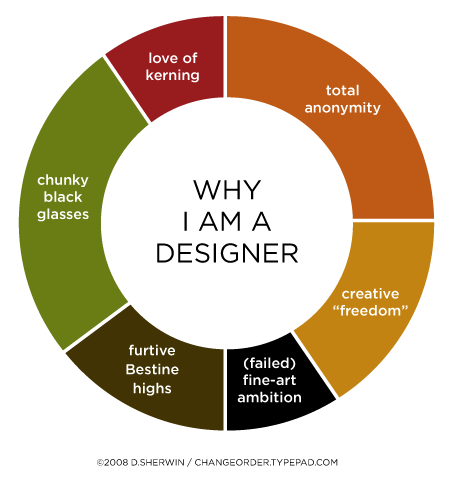
scumblr: (via ffffound)
// Oh, happy, happy Friday. Some good citizen brought doughnuts to share with fellow office-dwellers.
// It’s a beautiful chilly, rainy autumn day.
// It’s too late to keep working on ads and stuff. I must be getting old. I used to be able to design stuff all night long.
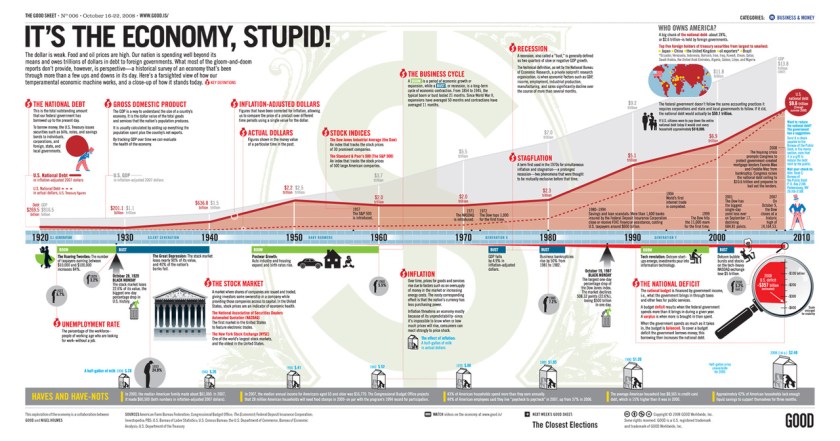
With the market plunging, here’s two encouraging items to consider as a poet:
1) “The state’s jobless rate began the year at 4.9 percent and has steadily increased since then. It stood at 6.6 percent in July.” Link The unemployment rate in N.C. is presently 7 percent.
DO NOT try to make a living writing poetry. Keep your day job (and your night job, too).
2) In the Asheville area, almost $400,000 was donated to political campaigns.
NONE of that money was spent on your livelihood as a poet, buying your poetry books, or purchasing coffee and other goodies at your public poetry readings.
With the market plunging, here’s two encouraging items to consider as a poet:
1) “The state’s jobless rate began the year at 4.9 percent and has steadily increased since then. It stood at 6.6 percent in July.” Link The unemployment rate in N.C. is presently 7 percent.
DO NOT try to make a living writing poetry. Keep your day job (and your night job, too).
2) In the Asheville area, almost $400,000 was donated to political campaigns.
NONE of that money was spent on your livelihood as a poet, buying your poetry books, or purchasing coffee and other goodies at your public poetry readings.
// To add a comma or not to add a comma, that is the question that The Chicago Manual of Style must answer.
// Arg! I tried a second cup of coffee from the office caffeine dispenser and it is still horrible.
// Thanks to all those who attended the Writers at Home Series today at Malaprop’s.
// I think I’ll call it quits for awhile and enjoy the wonderful autumn weather outside.
// Normally I don’t mind The Dripolator’s instore music selection—most days I prefer it—but not today. Where’s my headphones?
// Working at The Dripolator (Yes, I realize it is Saturday).
From The Nation (http://www.thenation.com/doc/20081103/kim):
“To pre-empt such embarrassing displays of weakness, softer propagandists like Andrew Sullivan and Christopher Hitchens—who once brayed on and on about the left’s “hatred of the United States” and its role as a “fifth column” “in favor of surrender and defeat”—have declared their support for Obama. But as Hitchens’s recent endorsement in Slate amply demonstrates, he is not quite ready to give up the poisoned sword. Obama, he writes, is not a “capitulationist,” even if he does “accept the support of the surrender faction.”
Is “capitulationist” as word? I guess so—thanks to Christopher Hitchens.
From The Writer’s Almanac (link).
Stevens wrote:
“After one has abandoned a belief in God, poetry is that essence which takes its place as life’s redemption.”
Further:
Poetry is the supreme fiction, madame.
Take the moral law and make a nave of it
And from the nave build haunted heaven. Thus,
The conscience is converted into palms
Like windy citherns, hankering for hymns.
We agree in principle. That’s clear. But take
The opposing law and make a peristyle,
And from the peristyle project a masque
Beyond the planets. Thus, our bawdiness,
Unpurged by epitaph, indulged at last,
Is equally converted into palms,
Squiggling like saxophones. And palm for palm,
Madame, we are where we began.
I wonder about this idea.
From ZimBlog (link) with HT to Poetry Hut Blog:
“”We” GenXers emerge … as a prickly group with an intense work ethic, a mania for effectiveness and efficiency, a hatred of talk and meetings, a pragmatic wish to find out what works, a corresponding impatience with ideology, and a risk-taking and entrepreneurial spirit. …
“…they have finally eschewed academia in favor of writing and consulting; and many have passed on advanced degrees altogether so that they could become entrepreneurs or start new organizations.”
For several years now I have resisted the advice of fellow poets and writers to apply to the Warren Wilson College MFA Program for Writers. Maybe it is the Zeitgeist of my generation.
From The Writer’s Almanac (link). Stevens wrote:
“After one has abandoned a belief in God, poetry is that essence which takes its place as life’s redemption.”
Further:
Poetry is the supreme fiction, madame.
Take the moral law and make a nave of it
And from the nave build haunted heaven. Thus,
The conscience is converted into palms
Like windy citherns, hankering for hymns.
We agree in principle. That’s clear. But take
The opposing law and make a peristyle,
And from the peristyle project a masque
Beyond the planets. Thus, our bawdiness,
Unpurged by epitaph, indulged at last,
Is equally converted into palms,
Squiggling like saxophones. And palm for palm,
Madame, we are where we began.
I wonder about this idea.
 Coffeehouse Junkie