Very often when we talk about the skill of ‘productivity’ what we are really talking about is ‘self-control.’
James Shelley (via the 99%)
Very often when we talk about the skill of ‘productivity’ what we are really talking about is ‘self-control.’
James Shelley (via the 99%)
It appears I am only traveling as the sun rises for the sun sets either way it is a beautiful autumn drive

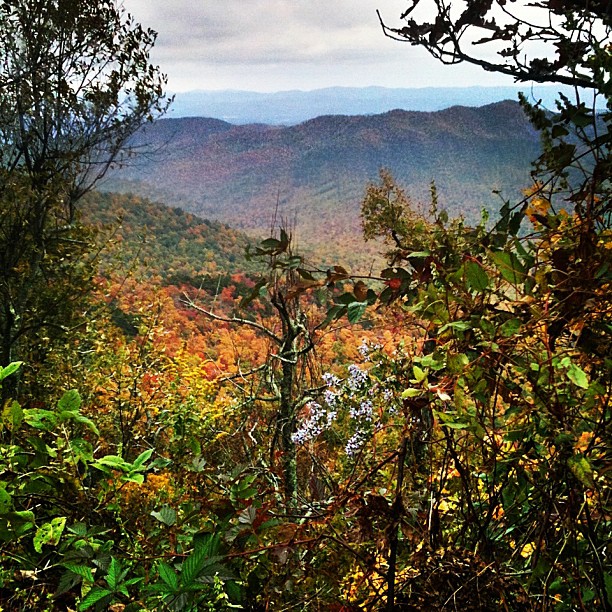
Attitude + altitude = #avl

Japanese breakthrough will make wind power cheaper than nuclear
A surprising aerodynamic innovation in wind turbine design called the ‘wind lens’ could triple the output of a typical wind turbine, making it less costly than nuclear power.Great news! But keep in mind, this is still just a render. IT’S NOT ACTUALLY IN PRODUCTION, which means it’s hard to make those kinds of statements. I can make a model say whatever I want, it doesn’t mean the system can actually produce that. The last thing our industry needs is more unfulfilled promises. Just look at the $500 million mistake of Solyndra…
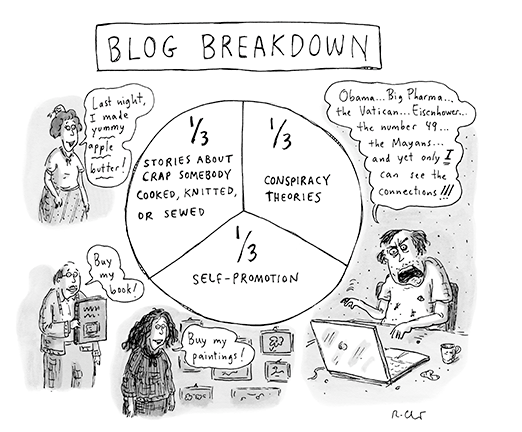
Cartoon of the Day. Don’t forget to enter this week’s caption contest.
When I received the notice from the CEO that the office was closing for business and the entire staff would be out of work, I was devastated. But there are a lot of resources available to help cope with that stressful situation. Here’s a few tips if you just got laid off:
(via msnbc, ‘10 things to do if you have just lost your job’)
Following the theme of consequences, here’s an interesting long read titled, “The Real Story of Globalization.” Here are some highlights:
“Earthworms… especially the common nightcrawler and the red marsh worm… did not exist in North America before 1492.”
“English ships tied up to Virginia docks and took in barrels of rolled-up tobacco leaves… Sailors balanced out the weight by leaving behind their ships’ ballast: stones, gravel and soil. They swapped English dirt for Virginia tobacco.”
“That dirt very likely contained the common nightcrawler and the red marsh worm… Before Europeans arrived, the upper Midwest, New England and all of Canada had no earthworms—they had been wiped out in the last Ice Age.”
“In worm-free woodlands, leaves pile up in drifts on the forest floor… When earthworms arrive, they quickly consume the leaf litter, packing the nutrients deep in the soil in the form of castings (worm excrement). Suddenly, the plants can no longer feed themselves; their fine, surface-level root systems are in the wrong place. Wild sarsaparilla, wild oats, Solomon’s seal and a host of understory plants die off; grass-like species such as Pennsylvania sedge take over. Sugar maples almost stop growing, and ash seedlings start to thrive.”
(via wsj)
Link: Globalization circa 1571 and brought to you by earthworms
This morning while waiting for a bus, I saw a man reach in his pocket, pull out a knife and slit open a stamped envelope. He carefully opened a three page, handwritten letter and slowly began to read. To avoid being any more a voyeur, I focused my attention elsewhere for the next twenty minutes until the bus arrived. As we boarded, I caught two words on the last page of the letter. Soon we were swallowed by the bus and deposited at our separate destinations.
The man, his knife and letter disappeared, but a thought remained and also a question, who still writes handwritten letters? The thought of a handwritten letter in a stamped envelope haunts me as I reflect on how smartphone usage, social media sites, and the endless barrage of emails has changed my thinking and in some regards my behavior (not to mention how my spelling and grammar have increasingly deteriorated).
Consider how much of emails, social media updates and smartphone use is not actionable (to use a David Allen GTD expression). Consider how to eliminate access data assault and focus on learning through connections the way many geniuses and polyglots learn. And unless these thoughts have actions they are but vain ponderings. So, beginning September 1, I plan to focus on the essence of handwritten letters: communication and connection. This means I will not access social media sites (apologies in advance if I have begun a conversation through Facebook or Twitter), and only post updates using my Tumblr and WordPress accounts (and maybe I’ll decide on one of those platforms as the best one for communication and connection). This is an experiment. I’m not retreating to a monastery hidden somewhere near Mount Athos (though, I must confess, I do find that an attractive idea). So we’ll see what happens. And maybe I’ll start writing handwritten letters.
…your name is Frank [1] and people are trying to kill you and a film critic calls you ‘Mr. Calm.’ [2]
This morning I read a review of ‘The Tourist.’ [3] It’s funny. To me, anyway. The reviewer writes, Depp ‘completely botches the movie, making Frank Mr. Calm when he should be freaking out about all the people trying to kill him.’ [4] A few things come to mind:
Ok, so ‘The Tourist’ isn’t really a film about Wisconsin. Maybe if it was more about Wisconsin it would get better reviews from film critics.
[1] Johnny Depp plays the character Frank a math teacher from Wisconsin in the film ‘The Tourist.’ [2] Reading a movie review on a Friday morning after eating organic ‘frosted toaster pastries’ is as banal as the movie review. [3] Nevertheless, the reviewer brings up a good question. I’m still searching for the question. [4] Even though the reviewer writes for a Chicago outlet, it doesn’t mean he understands male Wisconsin math teachers. [5] Current temperature in my adopted hometown, is a balmy 19°F. [6] Current temperature in Venice, Italy, frigid 43°F. [7] I suppose you could always work in the patent office. [8] Dr. Eppes, author of ‘Friendship, As Easy as Pi.’ [9] Numb3rs, Episode 109: Trajectory or Episode 612: Arm and arms. [10] Numb3rs, Episode 102: Uncertainty Principle. [11] Yeah, I know that was awhile ago, but Green Bay fans still freak out when the Bears beat the Packers at Lambeau Field. I mean, it’s LAMBEAU FIELD. Full disclosure: I’ve never actually been to Lambeau Field. I drove by it once or twice, but you can’t really see it from the highway. And yes, it is possible to live in Wisconsin and never visit the sacred ground of Lambeau Field. [12] ‘There is a little Bugs Bunny in all of us.’ [13] ‘In Madison, it’s a neighborhood story.’
Recently, a workplace policy has me thinking about online and offline time as well as social network sites and the nature of friendship. I’m sure I’m not the only one who deals with the challenges of separating work and home life with instant connectivity through mobile devices and laptops nursing on wifi signals. A decade ago, the separation between what goes on at the office and what goes on at home were clearly marked. Early in my career, co-workers and friends would mingle after hours — leaving whatever happened at the office at the office. Some nights we’d hangout at The Village Café, Coffee Underground, a movie theater, a bowling alley, or congregate at someones apartment to watch the latest episode of Party of Five. But the last few years I’ve noticed myself never quite leaving the office at the office. Projects follow me home like a shadow and even on vacation. Obsessively I check emails late at night because I know coworkers are at home doing the same thing — working around the clock.
‘Divide your day into online and offline,’ writes Stephen Elliott in a Poets & Writers article [1] I quoted a few years ago in a post [2] published [3] on a writers blog. That’s easy for him to say, I thought to myself. He doesn’t work for a media organization that has to constantly feed the beast — the Internet — that never sleeps. But I was wrong to think along those lines. An organization can ritualize the release of online content in much the same way that the online consumers ritualize their access of the online content.
Internet restrictions to social media sites (like Facebook and Twitter) and web streaming sites (like YouTube and LastFM) avoid excessive bandwidth usage. Or at least that’s what I’ve been told by the office’s IT department. Some of you reading this might think it unfair that management places this restrictions on employees. Some of you might even think it is the right of employees to have unrestricted internet access at office computers. In some regards, I might agree with you, and in some regards I might disagree with you.
I’ve had several months to consider this change in workplace environment. First, I confess that until August I brought my on laptop to work — as I’ve done for years — and used it to go about my business of producing audio podcasts, publishing books and other related graphic design projects. But I must also confess that throughout the work day I would often carry on casual conversations via Facebook, Twitter, Tumblr, and other social network sites. But when the company purchased a new laptop for me to use, things change. After all, the machine they purchased is not my laptop. It’s the company’s laptop and therefore all I do on that machine should be work related, correct? Before the company provided a new laptop, my attitude was: ‘This is my laptop that I purchased with my earnings. The software is mine. All the apps are mine. All the silly desktops and screensavers are mine. And since it’s mine, I can do what I want on it.’ But my attitude has since changed. The new, company-owned laptop with all its new company-owned software is not mine. I use it for business in much the same fashion I would a rent an auto for a business trip. At the end of the day I return it — actually, I leave the company-owned laptop at the office — as I received it.
The second thing I noticed is the virtual blindness I feel from the restrictions of my daily social media diet. It’s not as if I had disappeared from social media entirely. I was restricted from updating Facebook statuses a few times a day or from tweeting as least once an hour — or more. So, I’d return home from the office. After the kidlingers were sent to bed, I would sign into various social network sites and try to maintain those conversations. But social media conversations are really strained when they occur once a day rather than periodically throughout the day. At a social media school, Gary of G Social Media, [4] mentioned that your tweet may be viewed by 10% of your Twitter — or social media — audience. He encouraged people to tweet something twice to reach a large portion of your social media audience. The science of tweeting and retweeting [5] is still a rather young field, but Gary has a valid point. The challenge I discovered is that most people are offline — or at least not checking their Twitter or Facebook account — at 10 p.m. I’ve missed a few Tweet-ups due to this social network disruption, but I was able to catch up with other people in real life.
This brings me to the idea of friendship as it relates to social networks. Socrates taught that there is no greater thing than a good, sincere friend. [6] But is this idea akin to collecting Facebook ‘friends’ for the mere fact of voyeuristically peeping in on their lives? Was Socrates saying that friends are objects to possess? One of the things I really enjoy about Twitter is the tweet-ups that result from online conversations. I’ve met new people in real life through Twitter connections — some personal and some professional. But I don’t hear much from the Twitter crowd since the new internet restrictions have been in place at the office. And though I try to maintain social network connections after work hours it makes me wonder how well Twitter ‘friends’ translate to real life ‘friends’ or whether you can be a ‘friend’ without Twitter? Socrates observed that people are often more reckless in their friendships than their stuff. Have I been careless with my friendships online and offline? I’ve been thinking about that question for awhile. In Mark Vernon’s article on friendship, [7] he mentions that Aristotle taught that there is an immediate desire for friendship, but that friendship is not immediate. From that I deduce that friendships take time to nurture and maintain. With the speed of social media networks, I wonder if it is nearly impossible to properly nurture friendships. It seems that people eagerly accumulate ‘friends’ on Facebook and Twitter, but deep friendship requires more than a laptop and the internet.
While researching and composing this piece, NPR ran a story [8] about a Pennsylvania university that blocked Facebook and Twitter for a week. I saw their story link on Facebook and added the following comment:
A policy of no Twitter nor Facebook was put in practice about a month ago at the office where I work. I don’t know if productivity has improved, but I have observed that some co-workers appear to be more accessible.
What I didn’t mention in the comment section of NPR’s Facebook page is that I’ve been catching up on night stand reading material including books on business strategy, spirituality, poetry and an entire print issue of The Writer’s Chronicle. I’ve made a new acquaintance on the bus route and at the local coffee shop. Further, I began writing this piece almost three months ago and have delayed posting it because new articles and opinions continue to emerge. For example, CEO of Behance, Scott Belsky, recently provided solutions to disconnect from online distractions based his question of why we choose distraction over downtime. [9] Along Mr. Belsky’s line of thinking, I’ve eliminated Facebook distraction all together (full disclosure: the fact that my WordPress blog posts aggregate to Facebook, Tumblr and Twitter does not mean I actually log in to those services) and sought out ‘sacred’ spaces for downtime. It is not my intent to demonize the 500 million users for spending 700 billion minutes a month on Facebook. [10] To be honest (and I’ll have to explore this in another post), I’ve used Facebook affectively to promote events with great success. But I also know that a ‘man’s got to know his limitations.’ [11] So I’m taking a hiatus of sorts from online distractions in order to focus on nurturing relationships with family and friends.
[1] Surviving a Month Without Internet [2] Unplugged [3] Info diet [4] G Social Media [5] Science of Retweeting [6] Socrates on Friendship [7] What is friendship? [8] Pa. University Bans Facebook, Twitter For A Week [9] What Happened to Downtime? The Extinction of Deep Thinking & Sacred Space [10] Facebook statistics [11] Harry Callahan
00. It has been many moons since my last confession.
01. I awoke at 5 a.m.
02. A few years ago Janely (janely.blogspot.com) inspired me to write confession posts.
03. My blogging has been on autopilot (thanks to scheduling features on WordPress and Tumblr) during the last couple months…
04. due to a change in policy at the office that restricts access to social media sites (like Twitter) and webstreaming sites (like Youtube).
05. The transition from audio production to graphic design and back is more challenging than I anticipated.
06. I have yet to turn on the home’s heating system despite the fact that outside nightly temperatures have dipped into the low 40s.
07. I finished designing a poetry anthology book…
08. and sent it to the printing press yesterday.
09. I’m listening to the The Wall Street Journal This Morning podcast.
10. I’m currently reading The Financial Lives of the Poets by Jess Walter as well as a dozen other book titles.
For those about to sip their caffeine elixir… Java-Inspired Jazz: http://ping.fm/wVldP
[scene one]
Asheville may be the only place I know that can turn a hula hoops event into something slightly tamer than pole dancing. Walking to the Transit Center earlier this week, I observed quite a large crowd of people with hula hoops at Pritchard Park. A deejay whipped up some trance vibes and the crowd responded with hips and hoops. For the most part, the event seemed quite family friendly with the exception of a few women whose performance with hula hoops approached the idea of *ahem* public art.
[scene two]
The next evening I walked along Patton Avenue — again heading toward the Transit Center. A guy leaning on the rail outside the Asheville Yacht Club with a Pabst Blue Ribbon can in his right hand stared across the street as if watching a tired rerun of That 70s Show. I didn’t think much of it. Maybe he had a lousy day and was trying to unwind. Maybe he was waiting for someone to join him and was just killing time. When the signal lamp changed I crossed the street and realized that the guy outside the Asheville Yacht Club was watching two young women making out at one of the tables on the street outside Thirsty Monk’s Pub. Who needs a television? or an iPhone? Just grab a seat at the rail outside the Asheville Yacht Club, order a PBR, and watch the wildlife at Thirsty Monk’s Pub. The whole scene made me feel oddly lugubrious.
[scene three]
Thursday morning the sunrise bruised the sky with purple and red clouds. The air echoed its coolness and as I walked from the bus stop to Starbucks. After purchasing a pumpkin muffin and a tall bold coffee, I walked across the parking lot toward the office. I noticed a car with all its windows open about an inch or so. It seemed trashed. Piles of plastic bags with clothes, stuffed toys, fast food restaurant bags, and shoes cluttered the interior of the car and seemed to reach the window. As I bit off a morsel of muffin I realized, at second glance, that a woman, man and child were sleeping in the car. What appeared to be plastic bags were black sleeping bags that were unzipped and pulled up to their necks like quilts. The woman was in the driver’s seat with the seat reclined back as fast is it will go. The man was sleeping on his right side facing the woman. His seat was also reclined, but not as much as the woman’s. The child slept in an a car seat with a dark blanket pulled up to the neck. I paused, but thought a third glance would be wrong and might wake them.
The sun still hid behind the mountains to the east as I finished eating the muffin while standing in the parking lot. They’re story must be interesting, I thought to myself as I stuffed the paper muffin wrapping in my pocket. It was still early. No one was in the office yet. I hesitated for a few seconds, looked back at the car in the parking lot with a sleeping family, took a sip of coffee and walked up the steps to the office.
Dear twitchy-guy riding the bus and wearing an Iron Maiden hoodie,
Please don’t hit on the young lady in the Slipknot T-shirt. It’s the musical equivalence of incest. Besides, she doesn’t like you and the bus driver is ready to throw you off the bus.
Further, having consumed moderate amounts of Iron Maiden during the Seventh Son of a Seventh Son and No Prayer for the Dying era, your ear-bud induced convulsions are a poor imitation of Nicko McBrain’s thunderous drum work.
Sincerely,
Annoyed-undercaffeinated bus rider
Red Green says, “Men need to replace the phrase ‘Hey, watch this’, with ‘Where are my glasses?’ and ‘Where are my other glasses?’…”
Somehow I managed to make it all the way to the office before I realized I left my glasses at home. Usually I’m more organized than this. My book bag is packed the night before. Bus pass, office keys, glasses, etc. are placed next to the book bag. Shoes are placed at the front door. So, the futility of waking up early this morning to get to the office before anyone else only to have to return home, retrieve my glasses and go back to the office was rewarded by a barista who says, “You want a bold coffee, right?”
I’m sure David Allen would have something appropriate to say about the inefficiency of this mornings events. Maybe there was an open loop somewhere I didn’t close. Maybe it has something to do with time or energy availability. Or maybe it has to do with stumbling around the house in the dark while trying not to wake anyone.
All this to say, I can do stupid things just as fast without coffee as I can with coffee.
It’s a cool September morning. For the first time in over a week, the bus from my ‘hood made it to the Transit Center in time for me to transfer to the next bus that takes me to work.On the way to the office I stop by my coffee dealer who sets me up with a pumpkin scone and a bold Italian blend coffee. To the east, the sun barely breaks the ridge of the mountain at 7:45 AM. The office is quiet as a nibble away at breakfast and sip steaming hot coffee.
Reading “My American Body” by W. K. Buckley
Fireflies sparkle
Outside. I see them through the
Living room window.
It’s the time between
Times as I
Examine a new hole in
My jeans and consider
“Picking up their shreds
To the tangled light.”
Condensation rolls down
St. Pauli Girl who
Makes me sparkle
Inside.
(c) Matthew Mulder. All rights reserved.
Originally published in Rapid River Art Magazine, October 2005
~ Paul Tillich, The Writer’s Almanac
If you’re traveling on the road and need some wifi connectivity, a couple websites help locate hotposts. Obviously, any Starbucks in America will have free wifi, as well as Barnes and Noble, but for other places I use jiwire and openwifispots to find wifi hotpots.
 Coffeehouse Junkie