

A reminder that the seasons are in transition.
The lost art of gathering business narratives.
“Today, if I were looking for content for the intranet or the Web, I’d be asking myself every time one of those smokers told a story, ‘Is this a video? Is this a blog post? Is there an infographic in there?’”
(via flack me)

Can the Middle Class Be Saved?
The Great Recession has accelerated the hollowing-out of the American middle class. And it has illuminated the widening divide between most of America and the super-rich. Both developments herald grave consequences. Here is how we can bridge the gap between us.
Read our September cover story at The Atlantic
What can I say… #avltransit bus stops are… an adventure.

There’s more new census data out and, as Jonathan Cohn writes, “one in six Americans are extremely poor. … If you want to find a year when the poverty rate was significantly higher, you have to go all the way back to the early 1960s, before enactment of the Great Society.”
Read more, here.
Courtesy of the AtlanticWire

Virtue on Lexington.

#avl autumn hits the streets.

Boca for #avleat goodness.
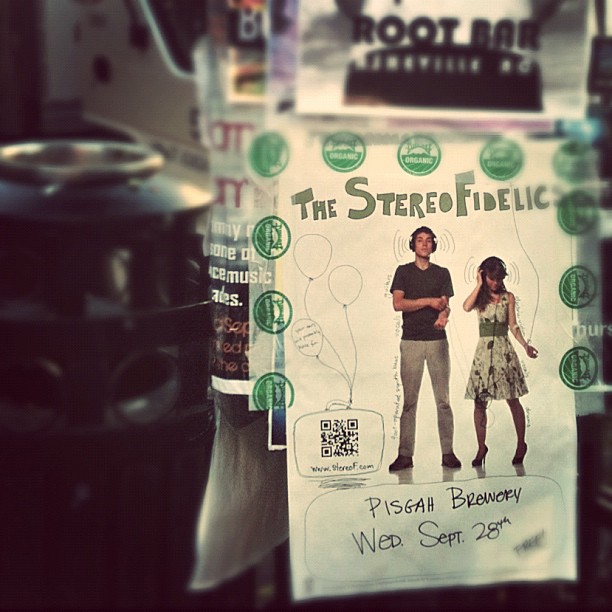
New tech + old school event poster = good marketing.

Autumn begins to litter the streets.

Good morning #AVL
Every day, the world writes the equivalent of a 10 million-page book in Tweets or 8,163 copies of Leo Tolstoy’s War and Peace. Reading this much text would take more than 31 years and stacking this many copies of War and Peace would reach the height of about 1,470 feet, nearly the ground-to-roof height of Taiwan’s Taipei 101, the second tallest building in the world.
The Twitter Blog, 200 million Tweets per day. (via futurejournalismproject)
The silence after sending out resumes and cover letters is frustrating. Here’s four tips from Gerry Corbett for Talent Zoo:
(via talentzoo)

Even with a new road, it has been a tragic summer.
1. Remove Dates from Your Education
2. Focus on Recent Relevant Experience
3. Focus on New Technologies
4. Get Online and Get Connected
5. Give Your Resume a Personal Voice
(via monster)

Afternoon coffee break?

Bargain bin jazz CDs.
When I received the notice from the CEO that the office was closing for business and the entire staff would be out of work, I was devastated. But there are a lot of resources available to help cope with that stressful situation. Here’s a few tips if you just got laid off:
(via msnbc, ‘10 things to do if you have just lost your job’)
1. Being Wrong
2. Failure Doesn’t Suck
3. Fear of Failure
4. Real Change Involves Failure
5. How the Lizard Brain Holds Us Back
6. Six Types of Failure, Only a Few Help You Innovate
7. Roll with the Punches
8. Trial, Error and the God Complex
9. The Fringe Benefits of Failure
(via 99%)
Following the theme of consequences, here’s an interesting long read titled, “The Real Story of Globalization.” Here are some highlights:
“Earthworms… especially the common nightcrawler and the red marsh worm… did not exist in North America before 1492.”
“English ships tied up to Virginia docks and took in barrels of rolled-up tobacco leaves… Sailors balanced out the weight by leaving behind their ships’ ballast: stones, gravel and soil. They swapped English dirt for Virginia tobacco.”
“That dirt very likely contained the common nightcrawler and the red marsh worm… Before Europeans arrived, the upper Midwest, New England and all of Canada had no earthworms—they had been wiped out in the last Ice Age.”
“In worm-free woodlands, leaves pile up in drifts on the forest floor… When earthworms arrive, they quickly consume the leaf litter, packing the nutrients deep in the soil in the form of castings (worm excrement). Suddenly, the plants can no longer feed themselves; their fine, surface-level root systems are in the wrong place. Wild sarsaparilla, wild oats, Solomon’s seal and a host of understory plants die off; grass-like species such as Pennsylvania sedge take over. Sugar maples almost stop growing, and ash seedlings start to thrive.”
(via wsj)
Link: Globalization circa 1571 and brought to you by earthworms
“The purpose of sketching your ideas is to help you explore as many ideas as possible in order to trash the bad ones, leaving you with a couple of good ideas that could evolve in a solid design…”
Read the blog post for more details on productivity and creativity. Here’s some techniques offered:

 Coffeehouse Junkie