
When music & poetry warmed the night with the Traveling Bonfires
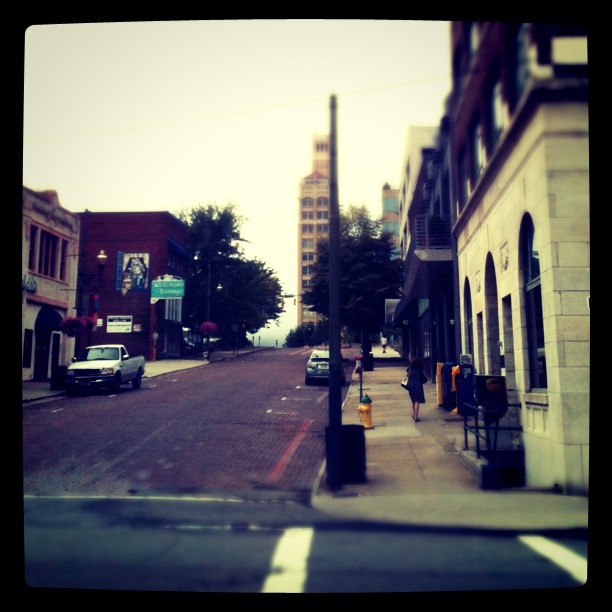
A lot of things have changed in the last ten years. This photo captures an early Monday morning in downtown Asheville, North Carolina. When I look at this photo, I see a thousand words of visual storytelling. But I also see what is left out. Each photo is framed in such a manner as to communicate what the photographer intends. What do you see in this photo? If you had to write a thousand words about this photo, how would the first sentence read?
![200612211149529[sqr]](https://coffeehousejunkie.net/wp-content/uploads/2015/12/200612211149529sqr.jpg?w=560)
There was a short story I wrote when I lived in my adopted hometown. I posted it last year.[1] An edited version of it was published in an indie newspaper ten years ago this month.[2] Hope you enjoy the story. Merry Christmas!
by Matthew Mulder
![DSCN3236[sqr-classic-dallas]](https://coffeehousejunkie.net/wp-content/uploads/2015/12/dscn3236sqr-classic-dallas.jpg?w=300)
Westville Pub was busier than I thought for a Christmas Eve. It looked like we were not the only ones escaping the chilly, damp Appalachian December night. My small family arrived a little after eight in the evening to enjoy an energetic performance by Gypsy Bandwagon. There was only one booth available near the back that we quickly populated. The bar maid took my order for a pint of ale, chips and salsa and ginger ale.
Gypsy Bandwagon, self-described as genre-challenged, played lively Irish and Scottish jigs and reels, a bit of Bluegrass, classical piano solos and traditional gypsy pieces. Lead guitarist and vocalist shared singing chores with his wife, an accomplished violinist and keyboardist. The drummer,Uncle Biscuit, complemented his wife, a multi-instrumentalist, who played everything from the violin to the bass guitar. The band put on a free concert for the holiday crowd and brought gifts to give away to people in the Pub. With festive flare they gave away wrapped gifts if you owned a dog or claimed to be a Chicago Cubs fan or if you liked the last number they performed you got a free Gypsy Bandwagon CD.
Many traditional Christmas favorites filled their set list that pleased the crowd. A 16th century carol haunted me. I don’t even remember the name of it, but I imagined a New England tavern must have sounded much like that over two hundred years ago. I wondered about the first Christmas celebration.
Rome. December 25, 336 was the first recorded celebration of Christmas. Was there egg nog? Probably not. St. Francis of Assisi assembled one of the first Nativity scenes in Greccio, Italy on December 25, 1223. Nearly a thousand years between those two dates—and a lot of history. Leap forward nearly 600 hundred years, the well-known Christmas carol “Silent Night” was performed for the first time at the Church of Saint Nikolaus in Oberndorff, Austria on Christmas day in 1818. What will Christmas celebrations will be like in 100 years?
Thinking back to how I was raised by my parents, I suspect the notion of attending a gig in a pub with kids on Christmas Eve must seem odd—if not a bit disturbing. My oldest loved the whole experience. I am not sure if it was the ginger ale or the nachos or the bouncing on the booth seat to the music or the fact that he was up past his bed time. He seemed glad to be there. His baby brother fell asleep.
Uncle Biscuit came back and said hello during a quick intermission. He and his wife are good friends. It was getting late. After wishing him and his wife a Merry Christmas, we left.
It had begun to rain outside as the family gathered into the car. We drove home with the windshield lightly swishing away the rain droplets. When we arrived home my son said, “Our home is waiting for us.” I like that expression—home is waiting for us. The smell of fresh-cut poplar was sweet in the damp night air as we entered our waiting home.
Christmas morning. My family attended church. Coena Domini, or Eucharist, was celebrated. In low church fellowships it is called “the Lord’s Supper” or “communion.” Supper seems so common for a sacred “feast” on Sunday morning. Well, it was twelve ordinary guys that witnessed the death and resurrection of Jesus the Christ.
As the elements of Eucharist were distributed, I thought of Jesus — the babe born in Bethlehem. He reportedly fulfilled more than 300 prophesies. During the morning homily I read of ten of those prophesies. I found the fulfilled prophesies amazing. Ann Rice admitted to discovering similar facts while she researched her book, Christ the Lord: Out of Egypt.
What I did not find fascinating was the small plastic cup filled with grape juice and a crumb of broken Saltines. Is this not a Blessed Sacrament—as some Christians call it. I had a challenge finding anything sacred about a swallow of grape juice and a scrap of cracker. But these are simple reminders of a greater narrative.
Jeremy Huggins, author of literary nonfiction, posed the question, is there “any reason why I couldn’t go through the Communion line more than once?” Initially I responded: “When was the last time anyone ate a suggestion of bread and a swallow of wine and called it supper?”
For some reason I thought of the pale ale and nachos I had consumed the previous night at Westville Pub. Why is it that ale and nachos are not sacred reminders of the holy truth? Maybe that is a bit sacrilegious to be considered on Christmas—a holiday. Holiday means “a religious feast day.” A day like any other day recognized as sacred, hallowed, sanctified seems out-of-place in American culture.
As I held a swallow of grape juice and a scrap of cracker in my hands that Christmas morning, I remembered the night the Christ was betrayed. He shared his last meal of wine and bread with twelve ordinary, mostly nondescript guys who were being prepared to turn the world upside down. I identified with Jesus the Christ by taking the Eucharist. Am I more holy now than I was before? Does a day change its nature simply because it is recognized as sacred? I will leave those questions to the philosophers and theologians. “Our home is waiting for us,” my eldest child said on Christmas Eve. In more ways than the child realizes, that statement just might explain the reality of Christmas.
NOTES:
[1] A Christmas Story
[2] Recently Published Writings
From the living room window, I see the full moon rising through the twinkling reflection of Christmas lights. At a glance, the moon might be mistaken for a street lamp. The play of lights off the window and through it remind me of something I read earlier this week: “Keep the ripple going.”[1] There is a short story I wrote that I have been sitting on for nearly a decade. An edited version of it was published in an indie newspaper.[2] Since it is Christmas and a full moon, it seems time to release the unedited/extended version of the text tonight before the clouds roll in and hide the moon. Hope you enjoy the short story. Merry Christmas!
by Matthew Mulder
Westville Pub was busier than I thought for a Christmas Eve. It looked like we were not the only ones escaping the chilly, damp Appalachian December night. My small family arrived a little after eight in the evening to enjoy an energetic performance by Gypsy Bandwagon. There was only one booth available near the back that we quickly populated. The bar maid took my order for a pint of ale, chips and salsa and ginger ale.
Gypsy Bandwagon, self-described as genre-challenged, played lively Irish and Scottish jigs and reels, a bit of Bluegrass, classical piano solos and traditional gypsy pieces. Lead guitarist and vocalist shared singing chores with his wife, an accomplished violinist and keyboardist. The drummer,Uncle Biscuit, complemented his wife, a multi-instrumentalist, who played everything from the violin to the bass guitar. The band put on a free concert for the holiday crowd and brought gifts to give away to people in the Pub. With festive flare they gave away wrapped gifts if you owned a dog or claimed to be a Chicago Cubs fan or if you liked the last number they performed you got a free Gypsy Bandwagon CD.
Many traditional Christmas favorites filled their set list that pleased the crowd. A 16th century carol haunted me. I don’t even remember the name of it, but I imagined a New England tavern must have sounded much like that over two hundred years ago. I wondered about the first Christmas celebration.
Rome December 25, 336 was the first recorded celebration of Christmas. Was there egg nog? Probably not. St. Francis of Assisi assembled one of the first Nativity scenes in Greccio, Italy on December 25, 1223. The well-known Christmas carol “Silent Night” was performed for the first time at the Church of Saint Nikolaus in Oberndorff, Austria on Christmas day in 1818. What will Christmas celebrations will be like in ten years? Or 100 years?
Thinking back to how I was reared up by my parents, I suspect the notion of attending a gig in a pub with kids on Christmas Eve must seem odd—if not a bit disturbing. My oldest loved the whole experience. I am not sure if it was the ginger ale or the nachos or the bouncing on the booth seat to the music or the fact that he was up past his bed time. He seemed glad to be there. His baby brother fell asleep.
Uncle Biscuit came back and said hello during a quick intermission. He and his wife are good friends and he is a local cartoonist and illustrator. It was getting late. After wishing him and his wife a Merry Christmas, we left.
It had begun to rain outside as the family gathered into the car. We drove home with the windshield lightly swishing away the rain droplets. When we arrived home my son said, “Our home is waiting for us.” I like that expression—home is waiting for us. The smell of fresh-cut poplar was sweet in the damp night air as we entered our waiting home.
Christmas morning. My family attended church. Coena Domini, or Eucharist, was celebrated. In a non-denominational church they simply call it “Lord’s Supper.” Supper seems so common for a sacred “feast” on Sunday morning. Well, it was twelve ordinary guys that witnessed the death and resurrection of Jesus the Christ.
As the elements of Eucharist were distributed, I thought of Jesus — the babe born in Bethlehem. He reportedly fulfilled more than 300 prophesies. During the morning service I read of ten of those prophesies. I am not a theologian, but I found the fulfilled prophesies amazing. I am not a mathematician either, but the probability factor is equally fascinating. Ann Rice admitted to discovering similar facts while she researched her book, Christ the Lord: Out of Egypt.
What I did not find fascinating was the small plastic cup filled with grape juice and a crumb of broken Saltines. Is this not a Blessed Sacrament—as some Christians call it. I had a challenge finding anything sacred about a swallow of grape juice and a scrap of cracker. But these are simple reminders of a greater narrative. Nothing wrong with common things.
Jeremy Huggins posed the question, is there “any reason why I couldn’t go through the Communion line more than once?” Initially I responded: “When was the last time anyone ate a suggestion of bread and a swallow of wine and called it supper?”
I wonder if American Christians embrace an ascetic view of communion because they live an epicurean lifestyle. Should followers of Christ not seek the highest pleasure—desiring God? Let us feast Deo favente (with God’s favor).
By practice, the fellowship I attend also observes the Passover Supper each year as part of Passion Week. The elements of the Seder Dinner (Maror: bitter herbs-horseradish, Karpas: vegetable-parsley, Chazeret: bitter vegetable-lettuce, Charoset: apple, nut, spice and wine mixture, Zeroa: shankbone-kosher lamb and Beitzah: egg) are symbolic and common. Likewise, bread and wine are common food items. Still a supper is a supper, not an appetizer.
For some reason I thought of the pale ale and nachos I had consumed the previous night at Westville Pub. Why is it that ale and nachos are not sacred reminders of the holy truth? Maybe that is a bit sacrilegious to be considered on Christmas—a holiday. “Holiday,” from an Old English word “hligdæg,” means “a religious feast day.” Why a holy day? The Middle English word “holi” has Old High German origins from the word “heilag” meaning “sacred” which has Gothic roots meaning “hallow, sanctified” which further has Latin sources in the word “sanctus.” A day like any other day recognized as sacred, hallowed, sanctified seems out-of-place in American culture.
As I held a swallow of grape juice and a scrap of cracker in my hands that Christmas morning, I remembered the night the Christ was betrayed. He shared his last meal of wine and bread with twelve ordinary, mostly nondescript guys who were being prepared to turn the world upside down. I identified with Jesus the Christ by taking the Eucharist. Am I more holy now than I was before? Does a day change its nature simply because it is recognized as sacred? I will leave those questions to the philosophers and theologians. “Our home is waiting for us,” my eldest child said on Christmas Eve. In more ways than the child realizes, that statement just might explain the reality of Christmas.
NOTES:
[1] Who touched your heart forever moment year by Melissa G Wilson
[2] Recently Published Writings
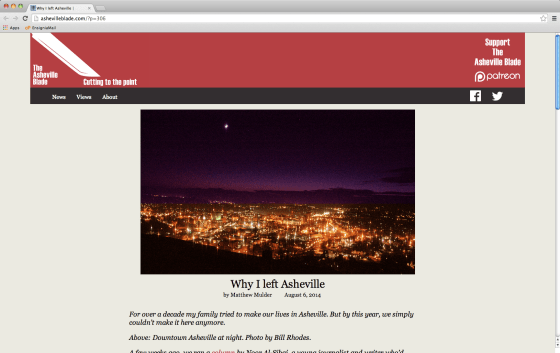
Last week The Asheville Blade published a story I wrote — Why I Left Asheville.
The response to that story has been overwhelming. If you have not read the story yet, please give it a read and share your thoughts in the comment section. Thanks for your support!
As promised last week, here is a found poem I constructed based on the poets who read at the Asheville 100 Thousand Poets for Change event.
Do not wonder when I say it directly to your ear,[1]
“I am writing a letter to my dead sister. . . “[2]
We anticipate the leap into freedom. [3]
We make our vows in the beach dunes. [4]
We need visual signs of healing. [5]
All that remains is the small few. . . [6]
A home where the family never can return. [7]
They sold their own inheritance. . . [8]
And must return to the center. . . to learn more. . . [9]
It is possible to have everything. . . or at least twenty dollars. . . [10]
NOTES: Each line in this found poem is from the following poets who read at the Asheville 100 Thousand Poets for Change event on September 28, 2013.
[1] Britt Kaufmann
[2] Barbara Gravelle
[3] Steve Brooks
[4] Jeff Davis
[5] Jessica Newton
[6] Jeff Davis
[7] Caleb Beissert
[8] Britt Kaufmann
[9] Jessica Newton
[10] Brian Sneeden
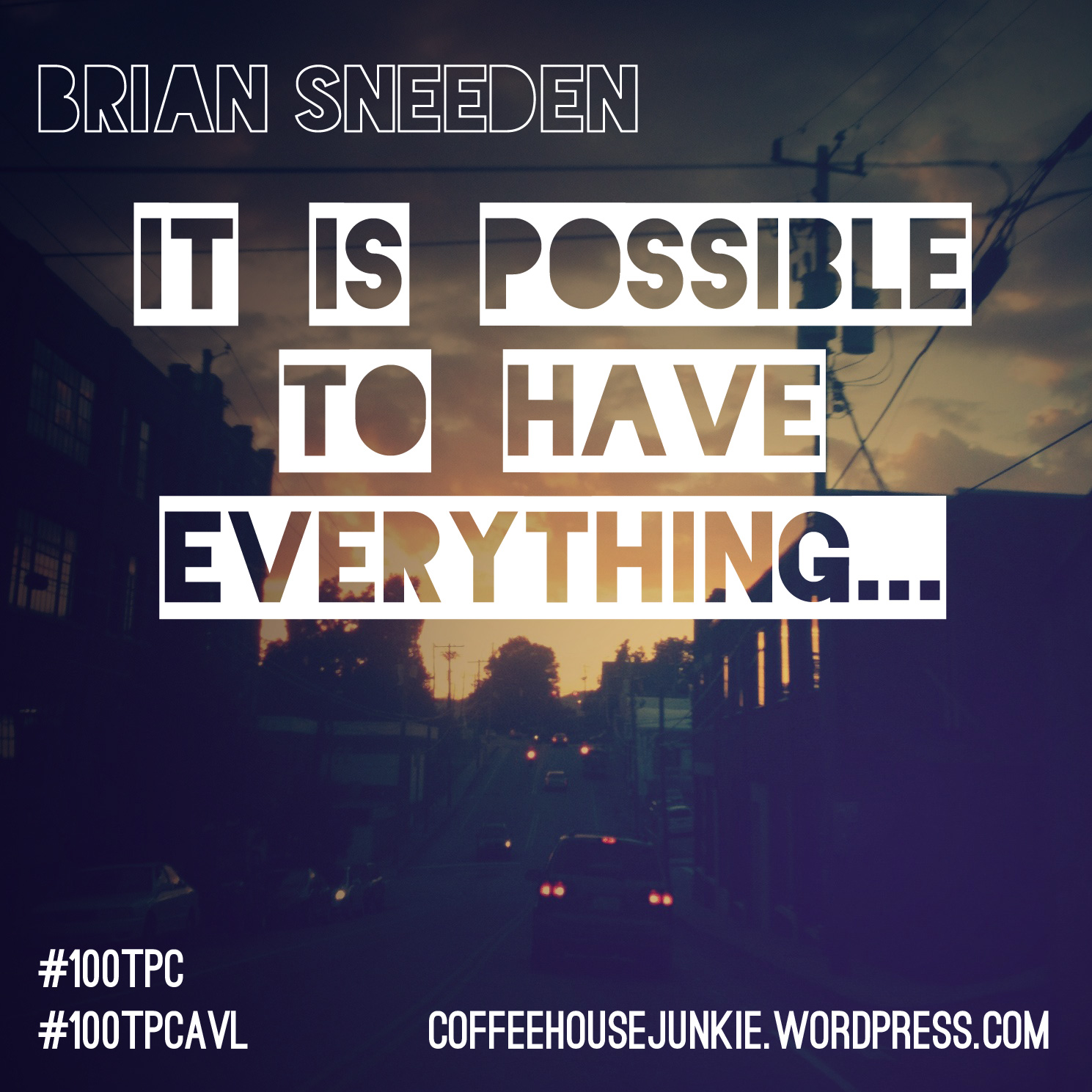
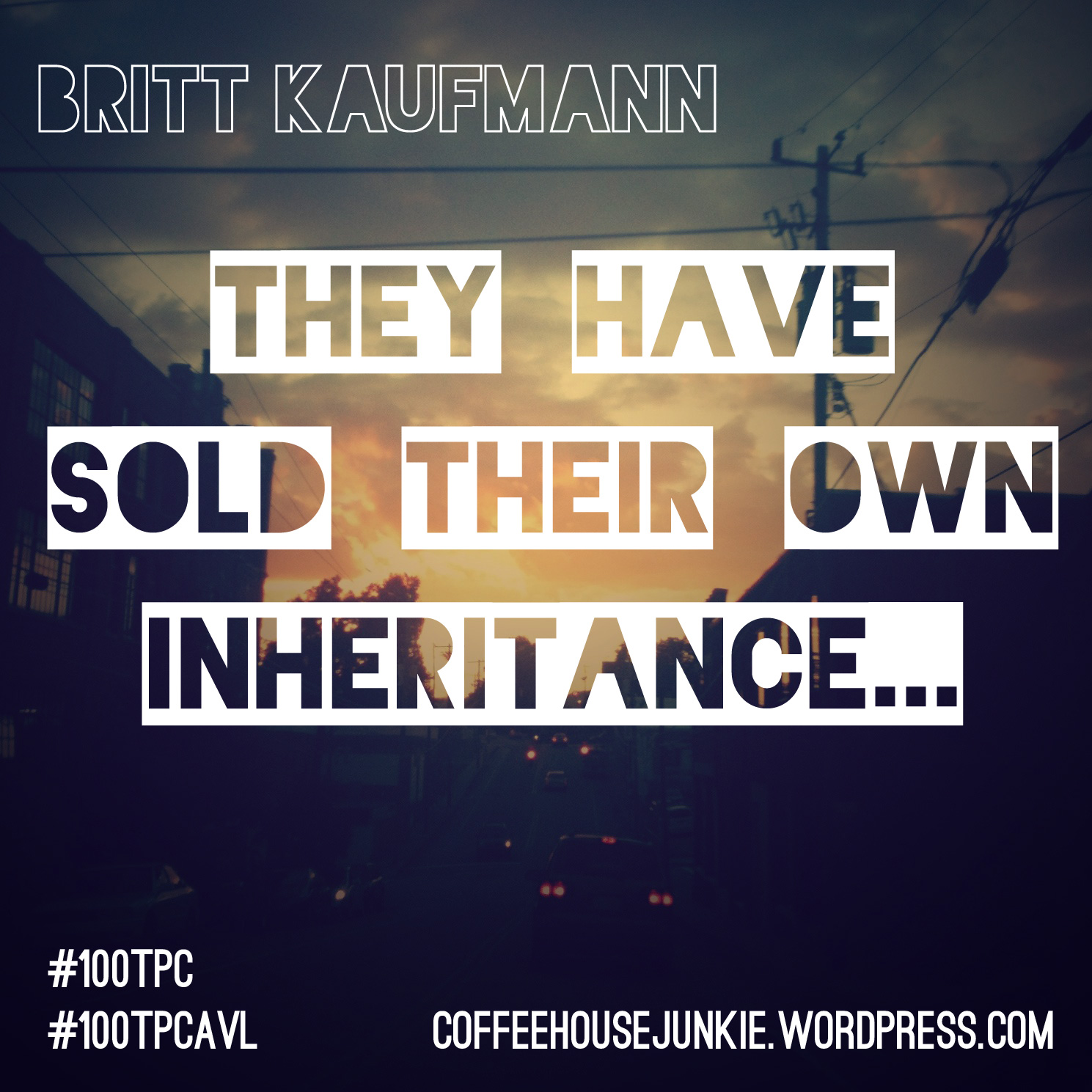
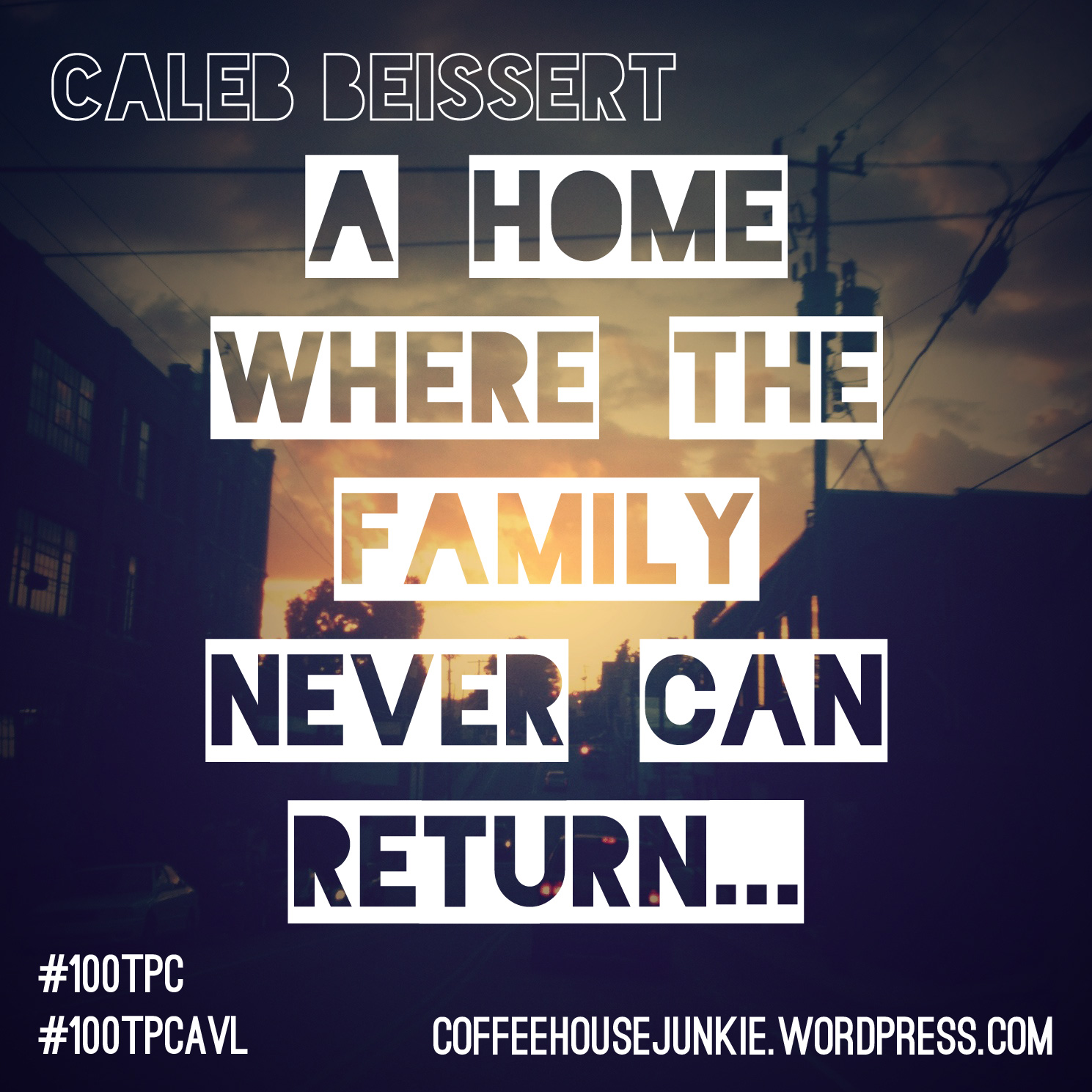
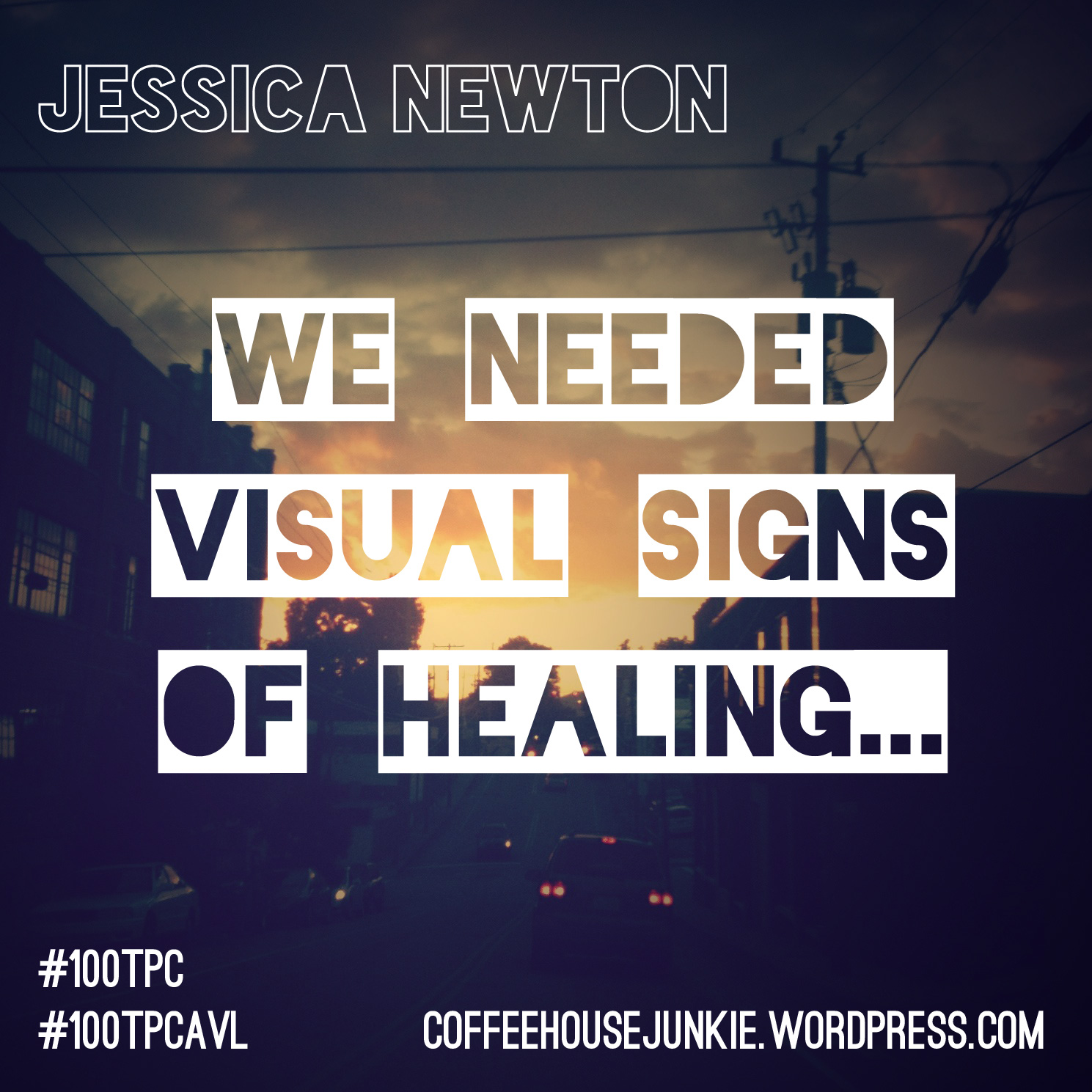
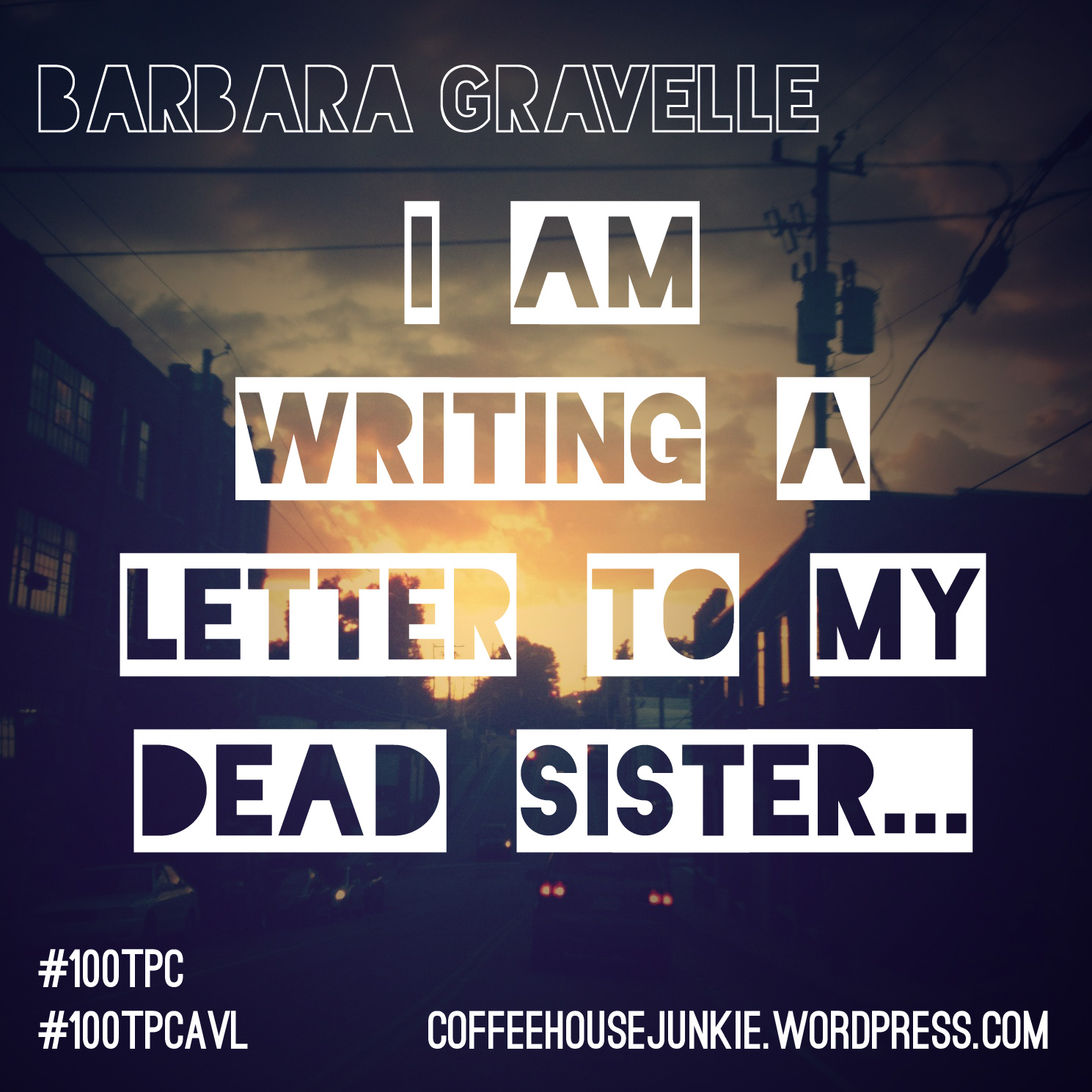

From 100 Thousand Poets for Change Asheville event last weekend, a quote from a poem Jeff Davis read: “We made our vows in the beach dunes…”
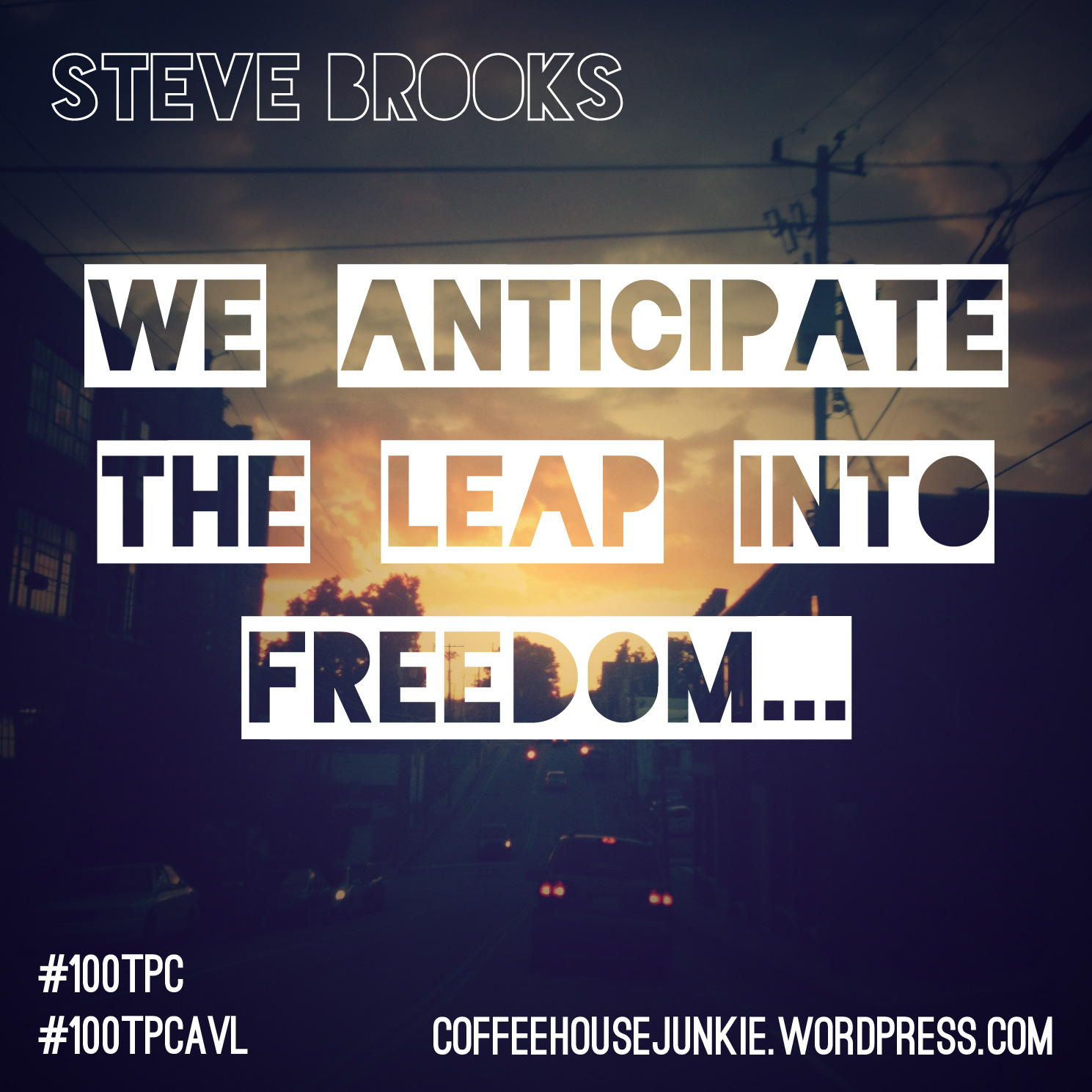
If you missed the 100 Thousand Poets for Change Asheville event last weekend, quotes from each poet will be featured here. The first quote is from a poem Steve Brooks read: “We anticipate the leap into freedom…”
A big thank you to Susie and Lance for hosting the event at the Sly Grog Wine & Beer Lounge located in The Downtown Market Asheville. Especially since 100 Thousand Poets for Change Asheville event ran a bit longer than scheduled.
Thanks again to all the poets who participated: Caleb Beissert, Steve Brooks, Jeff Davis, Barbara Gravelle, Britt Kaufmann Jessica Newton and Brian Sneeden. And to those who joined the event and read after the featured poets: Alice, Ashley, Chuck, Lance and Susie.
An audio recording was captured of the event. Details regarding that will be forthcoming. Also, a found poem will be featured on this blog later this week to commemorate the event and poets who chose to affect change in Asheville in beyond.
Thanks to the Battery Park Book Exchange & Champagne Bar for hosting the after party. And thanks to the Rankin Vault Cocktail Lounge for hosting the after-after party.
Special thanks to Michael Rothenberg and Terri Carrion for establishing 100 Thousand Poets for Change (read more about 100TPC here) and helping me track down the elusive bagpiper (in side joke… you’ll have to read my Twitter feed to get it).
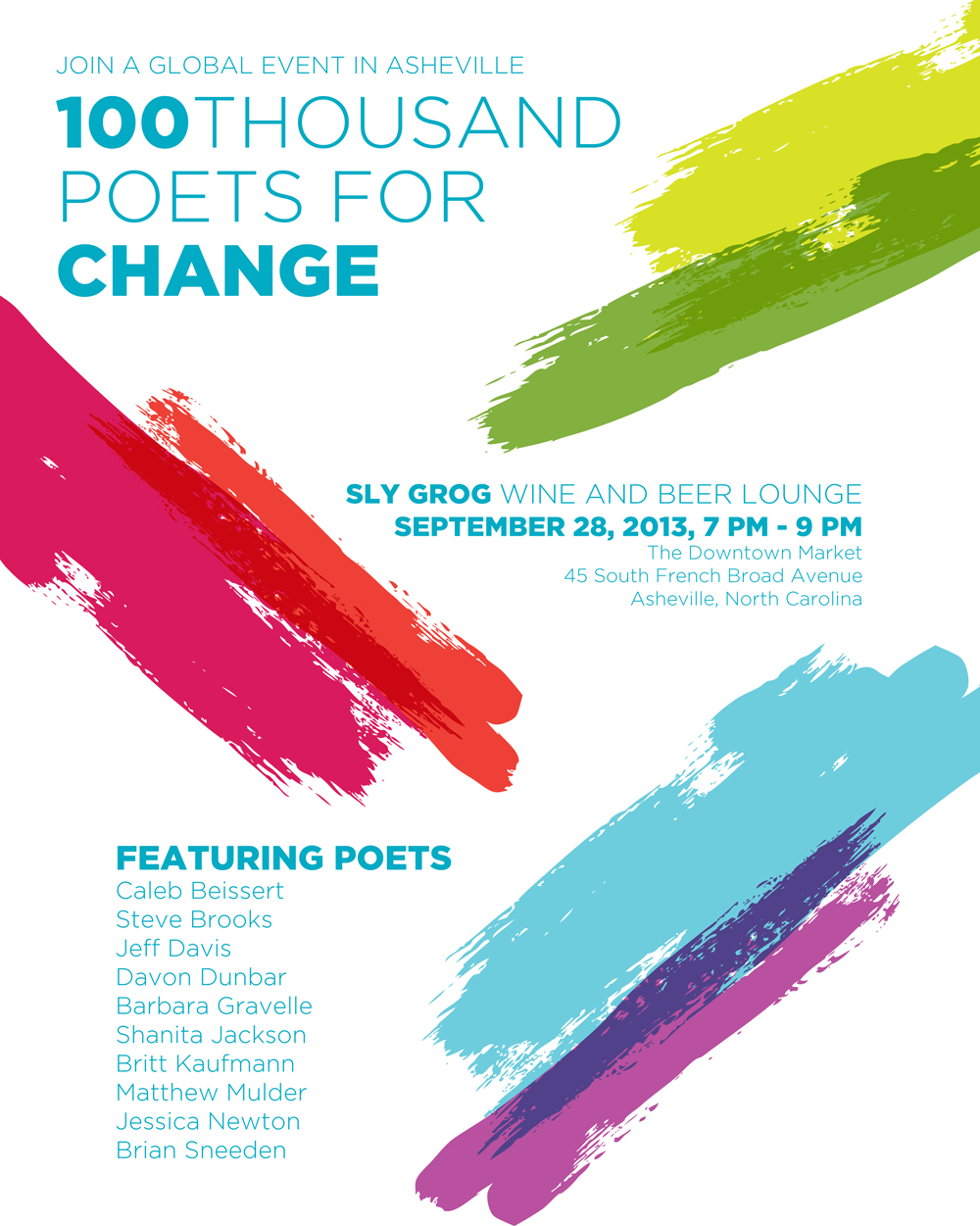 Tomorrow night, Asheville’s 100 Thousand Poets for Change event invade Sly Grog Wine and Beer Lounge (The Downtown Market, 45 South French Broad Avenue, Asheville, North Carolina). The Asheville event will be held Saturday night, September 28, 2013, from 7 PM – 9 PM. Featured poets and their bios are listed below. Please note: after the featured poets read, there will be time for you to read you poem. Bring your poem and join 100 Thousand Poets for Change in Asheville, NC.
Here are short bios of the featured poets:
Caleb Beissert is a poet, translator, and musician from Washington, D.C., living in Asheville, NC. His work has appeared in numerous literary journals, and his book Beautiful: Translations from the Spanish was published by New Native Press in 2013. Beissert hosts an open mic at Vanuatu Kava Bar and produces the monthly reading series “Poetry at the Altamont” in Asheville.
Steve Brooks a poet and author of Philip Blanc in San Francisco (Panjandrum Press, 1972), The Dancer in the Heart (Philos Press, 2001) and his latest collection of poems, Essential Occupation. He currently resides in Asheville, North Carolina.
Jeff Davis is a poet, host of the radio show “Word Play” (now on AshevilleFM.org) and author of Transits of Venus (2005) and Natures: Selected Poems, 1972 – 2005 (2006). He serves as director of MadHat, Inc., teaches in UNCA’s Great Smokies Writing Program and co-hosts the monthly “Poetry at the Altamont” reading series in Asheville.
Davon Dunbar,14 , was a member of the winning Asheville Wordslam Middleschool team two years running and is now a freshman at SILSA, a member of the spoken word poetry club, and local poetry slam competitor.
Barbara Gravelle, author of several poetry books including, Keepsake, Dancing the Naked Dance of Love, and her latest collection of poems, Poet on the Roof of the World.
16-year-old Shanita Jackson lives in Hendersonville and attends Blue Ridge Early College. She is a two-time member of Asheville’s Brave New Voices team, has won too many youth poetry slams to list here, and is a co founder of Soulspeaker, a youth-centered and youth-driven local organization devoted to youth spoken word poetry.
Britt Kaufmann lives in Burnsville with her husband and three children. She has written one chapbook of poetry Belonging and two plays: An Uncivil Union: the Battle of Burnsville and Between the Tackles.
Matthew Mulder is a graphic designer and poet living in Asheville. His poetry and prose have appeared or are forthcoming in Crab Creek Review, Small Press Review, The Indie, H_NGM_N, and other publications.
Jessica Newton’s poems have been published in Appalacian Literary Review, Stolen Island Review and Colere. She sees poetry as an engine that’s fueled by change on an individual level. A WNC native and graduate of UNC-Asheville, she lives in Candler.
Brian Sneeden has produced, designed or written for more than a hundred theatrical performances. His poems and reviews have appeared or are forthcoming in a variety of journals, including Beloit Poetry Journal, Ninth Letter, Third Coast, Asheville Poetry Review and other publications. He is the current Poetry Editor at Meridian.
Use the hashtag #100tpcAVL when sharing details about Asheville’s 100 Thousand Poets for Change event.
Just a few more days until the Asheville 100 Thousand Poets for Change event!
Join Caleb Beissert, Steve Brooks, Jeff Davis, Davon Dunbar, Barbara Gravelle, Shanita Jackson, Britt Kaufmann, Matthew Mulder, Jessica Newton and Brian Sneeden at Sly Grog Wine and Beer Lounge (The Downtown Market, 45 South French Broad Avenue, Asheville, North Carolina), Saturday, September 28, 2013, 7 PM – 9 PM.

Here is your official invitation to join a global event called: 100 Thousand Poets for Change.
The Asheville event will be held September 28, 2013, 7 PM – 9 PM at Sly Grog Wine and Beer Lounge (The Downtown Market, 45 South French Broad Avenue, Asheville, North Carolina). Featured poets include: Caleb Beissert, Steve Brooks, Jeff Davis, Davon Dunbar, Barbara Gravelle, Shanita Jackson, Britt Kaufmann, Matthew Mulder, Jessica Newton and Brian Sneeden.
Use the hashtag #100tpcAVL when sharing details about Asheville’s 100 Thousand Poets for Change event.
For more information, or if you have questions, please leave a comment. Thanks!
UPDATE: Here’s a PDF file of the event poster for 100 Thousand Poets for Change Asheville event next week. Download here: 100TPC AVL Poster.
With 11 days to go before the global event, the Asheville event planned in coordination with 100 Thousand Poets for Change (100tpc.org) will feature many local poets. Sly Grog Wine and Beer Lounge will host the event September 28th, 7PM – 9 PM. More details will be presented later this week.
POET’S NOTE: As an exercise to try something new in composing a poem, I wrote this short piece as a found poem based on news headlines and related blog posts. John Hollander wrote in Vision and Resonance: Two Senses of Poetic Form that “anyone may ‘find’ a text; the poet is he who names it, ‘Text’.” With that introduction, I offer this found poem.
1.
It seems like the very heavens [1] rupture [2]
with news of the Pontiff’s decision [3]
to abdicate the Holy See.
2.
Somewhere in America, for nearly a week,
film and fiction collide with a John Rambo-like [4]
manhunt [5] that ends as expected. [6]
3.
She sings, [7]
When you get to Asheville
send me an email…. [8]
Will she tell me that the President is coming to town? [9] [10]
Will there be a hollywood celebrity to greet him, [11] when he arrives?
Will he retire to the Paris of the South [12] after this whole presidency thing? [13]
4.
Whether it comes from above [14] or snakes its way through the dark depths below, [15]
the number one regret on the lips of the dying is
to have lived true to one’s self rather than the expectation of others. [16]
NOTES:
[1] Phil Plait, “BREAKING: Huge Meteor Blazes Across Sky Over Russia; Sonic Boom Shatters Windows [UPDATED],” Slate, Feb. 15, 2013 accessed February 15, 2013 http://www.slate.com/blogs/bad_astronomy/2013/02/15/breaking_huge_meteor_explodes_over_russia.html
[2] CBS/AP, “Meteorites slam into Russia as meteor seen streaking through morning sky,” CBSNews.com, February 15, 2013, accessed February 15, 2013 http://www.cbsnews.com/8301-202_162-57569551/meteorites-slam-into-russia-as-meteor-seen-streaking-through-morning-sky/
[3] Mark Memmott, “Pope Benedict XVI Is Resigning,” NPR’s The Two-Way, February 11, 2013, accessed February 15, 2013 http://www.npr.org/blogs/thetwo-way/2013/02/11/171680715/pope-benedict-xvi-is-resigning.
[4] “Christopher Dorner manhunt: police hunt ‘Rambo’ cop killer” The Week, February 8, 2013, accessed February 15, 2013 http://www.theweek.co.uk/us/51429/christopher-dorner-manhunt-police-hunt-rambo-cop-killer.
[5] Halimah Abdullah, “L.A. manhunt reminiscent of D.C. sniper case,” CNN, February 9, 2013, accessed February 15, 2013 http://www.cnn.com/2013/02/08/politics/lapd-attacks-dc-sniper/index.html?iid=article_sidebar.
[6] “Dorner manhunt: Charred human remains found in burned cabin,” Los Angeles Times, February 13, 2013, accessed February 15, 2013 http://latimesblogs.latimes.com/lanow/2013/02/dorner-manhunt-charred-human-remains-found-in-burned-cabin.html.
[7] Jennifer Saylor, “New single from Steve Martin and Edie Brickell: ‘When you get to Asheville’,” Ashvegas.com, February 14, 2013, accessed February 15, 2013 http://www.ashvegas.com/new-single-from-steve-martin-and-edie-brickell-when-you-get-to-asheville.
[8] Alec Wilkinson, “EDIE BRICKELL AND THAO NGUYEN,” The New Yorker, February 5, 2013, accessed February 15, 2013 http://www.newyorker.com/online/blogs/culture/2013/02/listen-to-new-albums-by-edie-brickell-and-thao-nguyen.html.
[9] Jeff Willhelm, “Obama in Asheville,” The Charlotte Observer, February 13, 2013, accessed February 15, 2013 http://www.charlotteobserver.com/2013/02/13/3852979/obama-in-asheville.html.
[10] Jennifer Saylor, “Obama in Asheville, Part 1: Fourth visit,” Ashvegas.com, February 13, 2013, accessed February 15, 2013 http://www.ashvegas.com/obama-in-asheville-part-1-fourth-visit.
[11] James Franco, “Obama in Asheville,” Yahoo! News, January 21, 2013, accessed February 15, 2013 http://news.yahoo.com/president-obama-in-asheville-a-james-franco-poem–231846640.html.
[12] Jennifer Saylor, “Obama in Asheville, Part 2: President says he might retire here,” Ashvegas.com, February 13, 2013, accessed February 15, 2013 http://www.ashvegas.com/obama-in-asheville-part-2-president-says-he-might-retire-here
[13] Donovan Slack, “Obama on barbecue, life ‘after this whole presidency thing’,” Politico 44, February 13, 2013, accessed February 15, 2013 http://www.politico.com/politico44/2013/02/obama-on-barbecue-life-after-this-whole-presidency-156963.html.
[14] Joel Achenbach, “Asteroid’s pass near Earth a close call in cosmic terms only,” The Washington Post, February 14, 2013, accessed February 15, 2013 http://www.washingtonpost.com/national/health-science/asteroid-to-pass-near-earth-but-you-dont-need-to-duck/2013/02/14/615d5848-73cb-11e2-aa12-e6cf1d31106b_story.html.
[15] Mark Wilson, “Infographic: The 550,000 Miles Of Undersea Cabling That Powers The Internet,” Co.Design, accessed February 15, 2013 http://www.fastcodesign.com/1671777/infographic-the-550000-miles-of-undersea-cabling-that-powers-the-internet#1.
[16] Susie Steiner, “Top five regrets of the dying,” The Guardian, February 1, 2013, accessed February 15, 2013 http://www.guardian.co.uk/lifeandstyle/2012/feb/01/top-five-regrets-of-the-dying.


 Coffeehouse Junkie