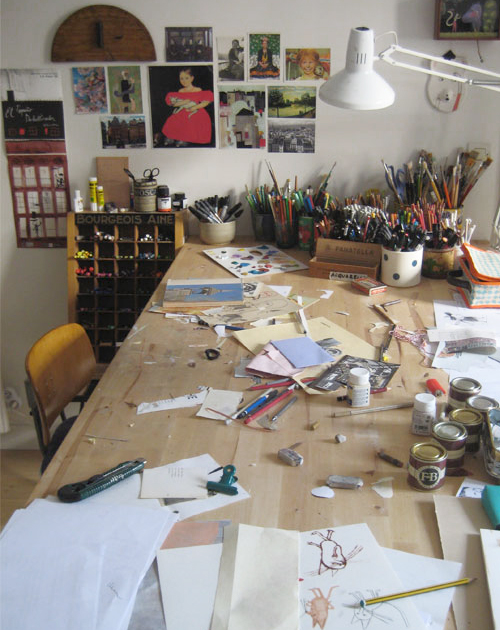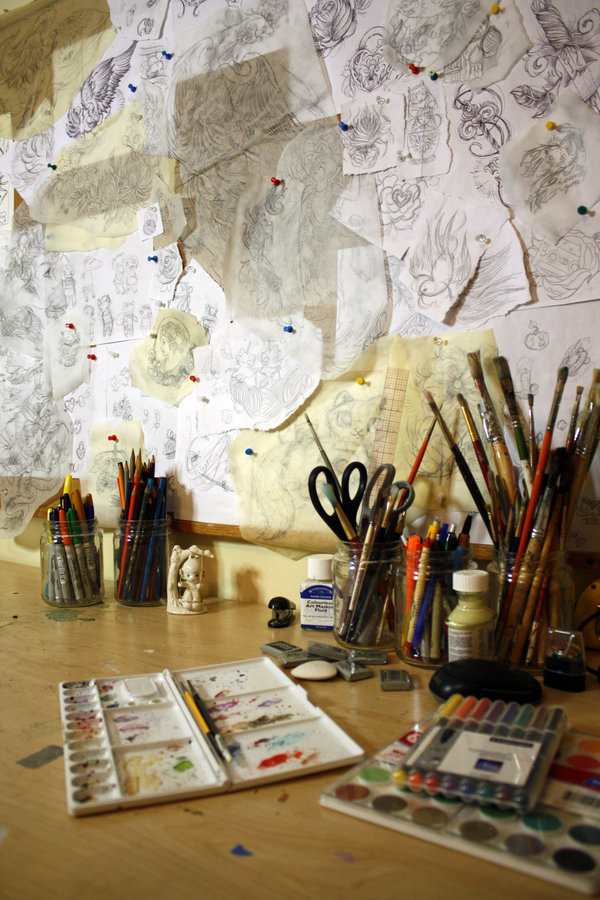
(via projectedendlessly)
Byzantine paintings were created to as icons depicting the eternal while denying the ephemeral. That’s why many 11th and 12th century wooden panel paintings were gilded with gold backgrounds and exhibited floating figures of the Christ, the Madonna and the saints. These images are what inspired River District artist Ryan Ford. “I’ve always been very intrigued by the aesthetics of religious icon art,” he told me in a recent interview in his studio at The Wedge (one of the many warehouse buildings scattered along the French Broad River District). The work that started it all was his replica of St. Anthony Beaten by Devils.
“It’s a fifteenth century, Sienese painting by Stefano di Giovanni,” Ryan Ford began. “The original was an egg tempera painting. I did this in oil paint,” he gestured to the panel on the wall.
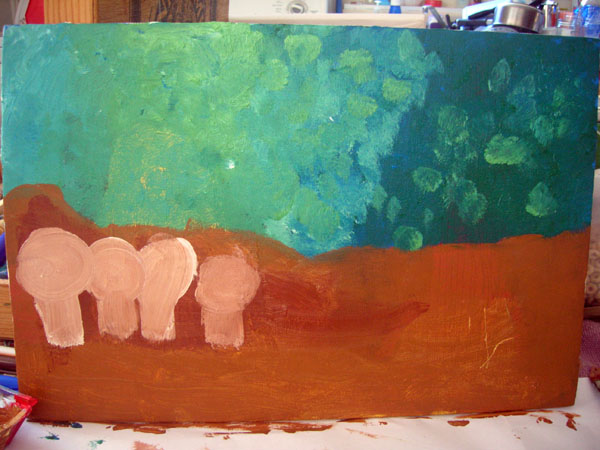
“Interesting story about this one… supposedly the peasants were so moved by the piece that they [would] scratch away the beasts faces and genitalia revealing the under sketching. So, that’s what you’re seeing here.” Ford pointed at the portion of the painting where a beast’s groin revealed gold smudges. “I wouldn’t imagine this painting any other way. It’s one of my favorite paintings in the world. That’s why I did an exact copy of it.” Ford explained, “the Sienese artists… capture an air of inquisitiveness. It’s almost timeless and just for them. They paint very simply. They don’t over do anything. I mean, look at the trees in the background. They’re little mushroom shapes. It’s just got this air of truth and beauty that was just so moving to me.”
Ford hit on something that has been missing in contemporary art for a long time, “truth and beauty.” The formula, in the classical school of thought, was to display truth and beauty. Even disturbing images depicted in Stefano di Giovanni painting held a timeless quality and vocabulary that is lost on young, contemporary artists. In Ford’s work he combines violent and comedic elements that resonate.
He moved passed a huge furry mask hanging from the low ceiling and deeper into his studio to a work in progress. “I’m doing a show coming up in April. That’s what this one is for,” He told me as he stood to the left the unfinished painting on an easel.
“I’ve talked [with] friends that have faced the issue of suicide. So, this is kind of a tribute. You’ll notice the brains coming out of the side of his head I painted in gold. Like your ideas are golden. I had this composition in my head and I’ve [wanted] to do it for awhile. I just started yesterday so I’ve gotten this far. There’s a long way to go on it. This for the next show in April.” Ryan Ford is hosting a show April 30th at the Wedge Gallery. The title of the fine arts show is “All Desperate and Golden.”
Behind Ryan Ford hung a large painting dominating the far wall. Its intensity reminds me of an apocryphal vision. Last April, the Mountain Xpress ran an article by Connie Bostic featuring him and Julie Masaoka. In that article Julie wrote: “Ford, who’s now reading the Bible, says he loves the visions these stories inspire. He’s particularly moved… by the Book of Job.” As we moved deeper into his small studio as he told me of the story behind the painting and within the painting.
“I read the Bible. It took me like eight months to read. I’m not going to act like I know everything about the Bible now, because I’m probably just as confused after reading as I was before reading it. So, I was drawn to Revelation. I mean, I love the way it was written. This,” he paused as he looked at his work. “I took from Revelation. The alpha and omega,” Ford pointed to the creature in the upper right hand corner and then casually shuffled to the left side of the painting. “And the angel descending from the sky is dropping seven stars and seven candles. I forget what they are significant of. I’m mixing Revelation with my own little character. His name is Hot-Pants. He’s kind of like the unsung hero. He’s the everyday person. He’s you and me. He’s running blind through his own life. Just kind of taking it as [it] comes, and he’s getting hit from every direction. But he still has a smile on his paper bag.” Hot-Pants is represented by a figure in a red spandex body suit, a blue cap and a paper bag in place of a mask.
“I’ve got a lot of characters,” Ford continued. “This here is our typical businessman who is made a lot of bad decisions. He fears for his life. He’s got his wings right now, but they’re not going to last.”
We discussed other selections of the Bible. We reflected on vibrant imagery in the Bible such as a passage from Zechariah: “I saw by night, and behold, a man riding on a red horse, and it stood among the myrtle trees in the hollow; and behind him were horses: red, sorrel, and white.”
“Yeah that’s how it is in reading it,” Ford responded. “It’s like pieces of it really just grip me. Like I read fragments and… like whoa, you know, and get blown away. Throughout [my] life English and art teachers always move me the most, you know. Of course, I’m retarded in math. But I had an English teacher who said ‘if you read one book, I definitely suggest reading the Bible. If nothing else for the literary quality’.” He turned back to his painting and continued to explain his vision.
“Another central figure here is a rapper. He’s got the armor piercing lyric logo above him, because he’s kind of like the Christ-figure. He’s using his voice as a weapon. And then Jacob’s ladder connecting heaven and earth. I also put [it] in there because it’s one of my favorite movies.”
“It’s just pieces I put together, you know. Actually a lot of the characters I sketch in there one day but a lot of it kind of grows as I go along. The cloud-eater… like what the hell is that? What does that mean? I don’t know. So, I took a cloud-eater [and] made this little monster that’s attractive to me. I don’t try to explain. It just fits for me. And it’s fun.
“My roommate always makes fun of me, ‘All your stuff is like a kid. You can’t grow up.’ Yeah, well, that’s what’s fun to me. I’ve got reference to Mario Brothers with the little bricks. That’s referencing to childhood… nostalgia also.”
Reesa Grushka, in a recent essay, wrote, “Translation usually makes what is foreign familiar. An inverse translation claims what is familiar as the domain of the foreign.” The creations of Ryan Ford seem to translate ancient themes of truth and beauty into contemporary visual stories. Inversely, his use of pop culture icons woven into early renaissance structure communicates well to the modern audience.
(c) Matthew Mulder. All rights reserved.
First published in the April 2004 issue of The Indie
It was early February when I visited Eva Scruggs at her River District studio. The recent winter storms had swelled the French Broad River above normal levels and I watched the ominous river on that cloudy afternoon as I drove to meet her.
Eva Scruggs welcomed me into her studio and we exchanged pleasantries. She offered me beer, tea or chai. “Chai would be great.” I said as I retrieved some recording equipment from my canvas messenger bag. She prepared a cup of chai and sweetened it with honey and added soy milk. She offered me the warm drink then sat down in her white floor chair and sipped her beer from an old mason jar. I pressed the red “record” button and began, “Tell me a little about yourself…”
“I guess,” she said. “I started oil painting at the age of six.”
There followed a brief discussion about art school. Eva told me that she had majored in art at the College of Charleston and later received a masters in art education in Tennessee. After that, she took some time off. I asked her if she thought it was important, as an artist, to unplug from art-making.
“Yeah, well, I had to for financial reasons. So, I mean, it isn’t that I ever really wanted to just focus on teaching art. It’s that I had to teach art to make money to feed my habit which is doing art.”
It seems that most of the artists that I know work a day job to fuel their creative passions. Maybe it’s not possible to be a full-time artist. Maybe juggling between art-making and waiting tables is necessary for artists.
“If all I had to do was be here in the studio and paint,” she said. “I would probably go crazy. I would probably get a little too self absorbed. You know how you can really drift into your own world. I need that world and at the same time it helps to keep… balance. So, I teach and I do organic farming during the summer time. And I’m a mom.”
“I really like to teach. I teach at AB Tech and I really, really feed off the new energy of new students… fresh ideas… There is something about the farming thing, too. I have to have at least a certain amount of it, you know. So, no, I wouldn’t want to paint full-time. I think I would go crazy.”
Our conversation weaved into an unsuspected path of artists being the true scientists and modern prophets. But I’ll save that for another time. I wanted to know what direction she thought art education is heading. She suggested that there are two branches of thought. “One is more academic, more exclusive amongst artists. Lots of MFA programs are focusing on what’s relevant to this century or even this half of century. But to me it seems kind of elitist. It seems like that’s going to be a view of art that only a certain amount of people can understand. It’s art for artists.”
“The other, which is sort of my path… is art to the people. Part of the reason I am a figurative painter is because I know that people relate and understand figurative painting. Common, average people understand basic symbolism. Part of my thing… is being able to communicate with people, everyday people. Not just artists who are going to understand the breakdown of elements and principles. So I paint… paintings that… have messages. I don’t paint them for someone to buy. I paint them to express this.” She gestures at the paintings around her. “I’d like people to see and understand and relate. That’s what all those biblical paintings are kind of about, too. Let’s rethink this story. You know, turn it around in a different point of view and modernize it to some extent.”
At the mention of the biblical series, Eva appeared more relaxed, more confident as if she had arrived in her sanctuary. She took a drink from her mason jar. It appeared she was ready to discuss her biblical series.
“Well,” she paused and looked at her hands which were covered in dark fingerless gloves. “It seems like when I started with the biblical theme… I was working on a different series. I was working on the states of human emotion. Trying to capture different emotions… through expression.
“Anyway, so the last one I did, of that series, was a self portrait with my child. After I painted it, I recognized it as a madonna, and I painted in the background a scene from the WTO protests in Seattle. That’s where it all got started. It’s called ‘The Jaded Madonna.’ The madonna is holding this child and she’s obviously concerned, and the child is open, wide open. But behind the mother… the police, decked out in riot gear… smog in the background from the gas that they’re releasing. So, it was kind of a statement.”
“And then it just sort of clicked in my mind,” said Eva as she motioned with her hands. She seemed focused on some point on the floor. “This is something a lot of people will relate to. It’s a biblical theme. It’s a classical theme. People look at it because of that and then… if you can get them in that far then throw something else in there that talks about modern culture. You know, it’s just the juxtaposition that makes a strange commentary. So, I feel I could run wild with that theme.”
I sipped the chai then asked her to tell me about her recent painting series.
“I’ve been working on a dream series just because I’ve had these reoccurring dreams throughout my life. I’m not exactly sure where they come from. But I figured that’s a way to address them, and maybe make them go away.”
“It’s not that they are really bad dreams,” she continued. “I usually have these water dreams where I’m swimming. I can see the top of the water and I know I’m almost out of air. So, I just keep swimming and swimming. But I can never quite make it to the top and I start somehow recirculating my air and… breathing in the water. It feels really good. Anyway, that’s what that one is about…” she said as she pointed to the painting over her right shoulder.
“And that one” she pointed to another painting across the studio resting on an easel. “An image I’ve had in my head for a long time.”
We spent more time discussing ideas, life and art (which I may write about later). But I knew she wanted to do some painting that afternoon. So, I thanked her for the chai (complimenting her on the way she prepared it), packed up my recording equipment, and left Eva Scruggs in her studio with the visions in her head that desired to be translated into pigment on canvas.
(c) Matthew Mulder. All Rights Reserved.
First published in the March 2004 issue of The Indie.
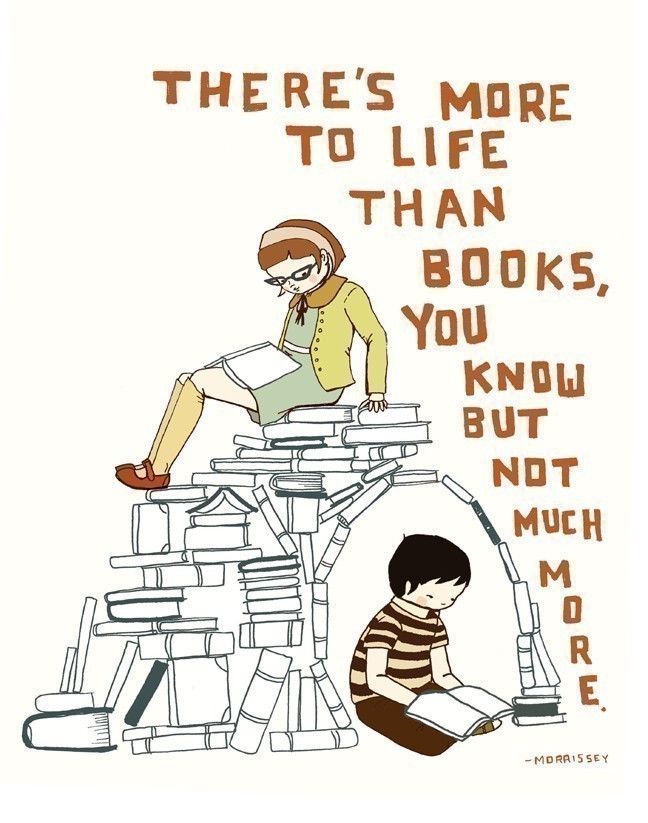
I used a new & an old sharpie marker… it’s a technique i learned in school… a sharpie marker that is expiring provides a charcoal impression…
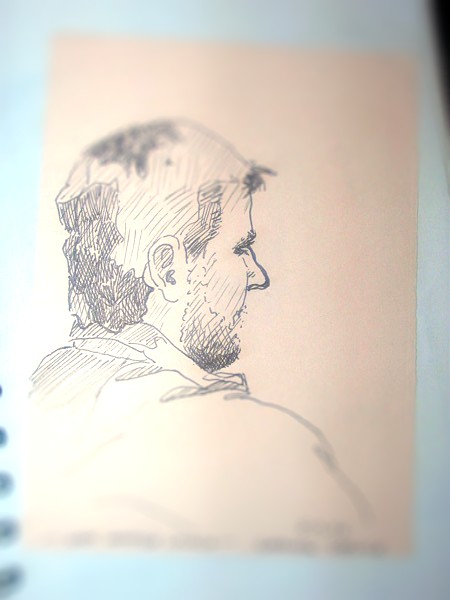
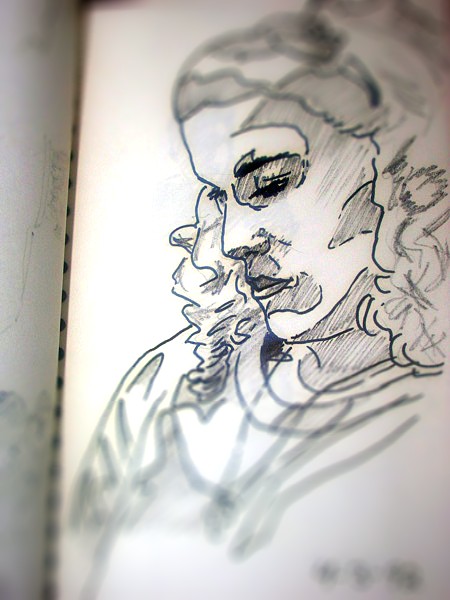
along with those old fountain pens i found some old sketch books from university days… here’s a sketch from the 90s…
Clients are the difference between art and design.
Michael Bierut (via soulellis)
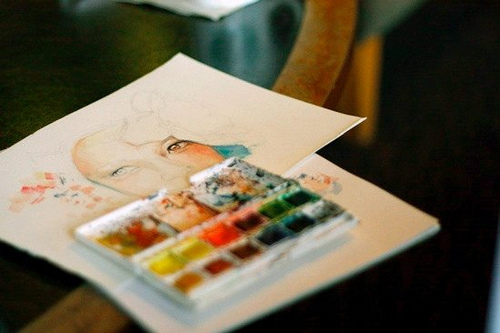
For years have pushed art making away from me. Partly due to lack of space and consolidating my paintings into small sketchbooks. Then I replaced paint for pen and ink, and drew smaller images into Moleskines until my drawings disappeared into lines of characters trying to form poems…
Now, I want to start painting again…
(Image source via creativeinspiration: 472239364: artpixie: love letters and skypaints: http://www.flickr.com/photos/tinycastles/3912498882/)
As newspapers, including mine, have begun to take a nosedive, the powers that be have decided that blogs must pay. The numbers (hits) are watched incessantly, and increasing them has become the criterion for survival, not just of the blog itself, but of the writer behind it. In a real sense, the blog has become an albatross, or a target painted on my chest. If I didn’t have one, no one would be looking at those blog numbers – they’d be looking at other numbers, true, but there’d be no pressure on the blog. There’s the rub: a blog with pressure becomes work, and blogs shouldn’t be work.
—Timothy Mangan1
NOTES:
1) Richard Chang, Paul Hodgins and Timothy Mangan, “To Blog or Not to Blog,” May 25, 2008, ARTSJOURNAL weblog, accessed June 5, 2008, https://www.artsjournal.com/npac/2008/05/to-blog-or-not-to-blog.html
(via Room 116) Link
It has been awhile since mentioning a comic strip I’ve written and illustrated. The Indie has published the series since December. It is called Strange Familiar Place and features a magazine A & E editor (at least in the first two strips) and the main character Hudson Stillwater, a graphic designer.
Strange Familiar Place also features Heather (Hudson’s wife) and presents a slice-of-life drama of living and working (and losing a job) in a cultural creative urban mountain city (or at least a city that looks a lot like Asheville).
 Published in The Indie, March 1, 2007
 Published in The Indie, March 16, 2007
Beginning in mid to late April, Strange Familiar Place will be illustrated by someone else. I’ll still be the principal writer, but I hired an illustrator that I am confident will present the visual narrative with a higher quality of art.
The publisher received the first installment of my creative non-fiction comic this week. It has been almost a year since a posted about a creative non-fiction comic I’ve been illustrating and writing. 1 2 3 4 5
The irony is that Drawn,6 an illustration and cartooning blog, posted this on Monday:7 “Goodbye one-page diary comics; everyone’s blogging now.”
It appears the one the inspirations8 for my work now has a blog (which isn’t bad) but he posted this: “In the old days i’d have made a one-page … but today we squander our narratives in a blog.”
The first installment is due to hit the streets in December and the medium is horribly dated. Another source of inspiration9 has a blog as well but hasn’t updated since 2003. However, Vertigo released a five-issue miniseries by him that began in September.10
Maybe it’s not as bad as Drawn considered.
NOTES:
1) Coffeehousejunkie, “Comics and Narrative Non-Fiction,” November 3, 2005, accessed June 17, 2026, https://coffeehousejunkie.net/2005/11/03/comics-narrative-non-fiction/
2) Coffeehousejunkie, “Comics and Narrative Non-Fiction Continued,” November 18, 2005, accessed June 17, 2026, https://coffeehousejunkie.net/2005/11/18/comics-narrative-non-fiction-continued/
3) Coffeehousejunkie, “Narrative Non-Fiction Comics: part 3,” January 4, 2006, accessed June 17, 2026, https://coffeehousejunkie.net/2006/01/04/narrative-non-fiction-comics-part-3/
4) Coffeehousejunkie, “Narrative Non-Fiction Comics: part 4,” January 11, 2006, accessed June 17, 2026, https://coffeehousejunkie.net/2006/01/11/narrative-non-fiction-comics-part-4/
5) Coffeehousejunkie, “Narrative Non-Fiction Comics: part 5,” February 14, 2006, accessed June 17, 2026, https://coffeehousejunkie.net/2006/02/14/narrative-non-fiction-comics-part-5/
6) Drawn!, accessed June 17, 2026, http://drawn.ca/ (page no longer available, web site deactivated)
7) Matt, “Are blogs killing one-page diary comics?,”November 27, 2006, Drawn!, accessed June 17, 2026, http://drawn.ca/2006/11/27/are-blogs-killing-one-page-diary-comics/ (page no longer available, web site deactivated)
8) Eddie Campbell, November 30, 2006, eddiecampbell.blogspot.com, accessed June 17, 2026, http://eddiecampbell.blogspot.com/
9) Harvey Pekar, November 30, 2006, http://www.harveypekar.com/categories/harveyPekar/, accessed June 17, 2026, https://www.warnerbros.com (page no longer available)
10) DC, November 30, 2006, accessed June 17, 2026, https://www.dc.com/comics?cm=5975 (page no longer available)
A while back, I mentioned that the first installment of my creative non-fiction comic is complete and pending publication. The first installment is titled “Higgins: Inside the Box.” Last weekend I completed half of the second installment (four strips or roughly 12 panels) which is the conclusion to the story arch, “Higgins: Inside the Box.” Then I began scripting a 5-part comic strip for a third installment which features a story line about this event. There isn’t an official title to this one. However, “Higgins: Outside the Box” seems like a logical progression.
Last Tuesday was the SECNCS meeting and fellow artists encouraged me regarding my inking techniques and suggested some tips on lettering comic strips. One artist, who is regularly featured in the Rapid River magazine, recommended that dialogue text be all caps and narrative text be upper and lower case. The recommendation is already being implemented beginning with the second installment.
This endeavor of combining illustration and creative non-fiction, have inspired me to study the poet William Blake. The illuminated text is not a new media; many ancient manuscripts were illuminated. For example, The Book of Kells is famously known for its illuminated text. Years ago, I studied under a calligrapher who taught me the secret of the Celtic knot work and spirals represented in the Book of Kells. The discipline of the knot-work has served me well, though not in my recent illustrations.
But William Blake illuminated his own poems and printed his own collections with the help of his wife. It helped that he was trained as an engraver and went on to apply his trade for book and magazine publishers. Being an innovator in his own right, he applied his trade to illuminate and print his own literature. Like William Blake, I studied graphic design (the modern day digital engravers if you will) and know how to produce books and magazines for clients. I wonder what William Blake would think of creative non-fiction comics?
Previous posts on creative non-fiction comics: [1] [2] [3] [4]
The first installment is done. I’m a little bit nervous about sending it to the editor.
A couple months ago I began exploring the idea of literary comics; more specifically creative non-fiction comics.
I began sketching a 14-panel demo story and showed the drawings to some other cartoonists at a monthly meeting. The narrative non-fiction comic strip was modestly received and they encouraged me on some drawing techniques.
Casually inspired by Harvey Pekar’s American Splendor, Jessica Abel’s Radio: An Illustrated Guide and Eddie Campbell’s Alec McGarry, I began work on a narrative non-fiction comic strip storyline in five parts. Each strip, four panels, needed to be enough of a story to encourage a reader to come back next week. This would make it ideal for a weekly publication. The long term goal is weekly syndication (hah, stop laughing–everyone has dreams). The short term goal is a self-contained 5-page story.
The editor and publisher of a zine, Bitter Black Coffee, requested I put together this 5-page comic for an upcoming issue. In fact, the 14-panel demo story featured our intial meeting. So, this is a bit of a test run to see if I can complete something I started. We’ve been discussing this for over two months.
My personal goal (not the editor’s) was to have all 20-panels drawn, lettered and inked by Thanksgiving. However, personal crisis, illness and a full time day job prevented me from meeting that deadline. So, I adapted and gave myself three more weeks. The week before Christmas all 20-panels (plus a few bonus ones) were completed and scanned and ready to send. Only one hitch (actually two)–I didn’t have a name for the strip. Then I upgraded my laptop to Tiger and somehow lost the files I needed to email the editor. The naming of the comic strip still didn’t come to me. The muse must be on vacation or holiday or something. Maybe she has the stomach flu like I had last week.
During the Christmas holiday I found myself flipping through a copy of Alec: How To Be An Artist and I thought of a working title. I told myself it was too simple and too silly, but I went with it. I haven’t thought of anything else ingenious so the strip will be submitted with a working title. Maybe that’s the whole Malcolm Gladwell thing about snap judgments and split-second decisions.
Last night I got the files ready to email. Tomorrow I submit the self-contained 5-page story to the editor and publisher of Bitter Black Coffee.