Leaving the oak grove office

DSCN3911[sqr-tilt-dallas]

The summer is at an end. Or at least the American tradition of the start of school and Labor Day signify the end of summer. And so, my work at the oak grove office has also concluded.

From the shade of oak trees, I hand-lettered and hand-painted signs for a Renaissance Faire. An anachronistic skill for these highly digital, automated modern times.

“Sure,” he said, the mastermind and owner of the School of Combat. “I can get these signs printed somewhere. But this isn’t a… video game… This is real combat. Real armor. With real swords. The signs need to be real. Anything fake… and the magic is gone.”

DSCN3912[sqr-tilt-dallas]When tasks around the grounds did not occupy his attention, he would take a pencil and sketch out a drawing of a crane or boar on a wooden shield. All the drawings were based on authentic heraldry. My job was to accurately paint the shields.

“Should only take a few hours,” he said after he assigned projects. “Depending on the details.”

All the shields were painted with a combination of six colors. Attention to detail and quickness of brush were essential to the painting of the shields and signs. Some mornings I would draw a double-headed rooster, unicorn or swan. Before noon, paint filled in the background. Red for the swan and unicorn. White for the double-headed rooster and the crow. Water was used to thin the acrylic paint for some techniques like shadows and highlights.

“I like it,” he said after he inspected my work on the wild boar shield. “You should see kids when they enter the ring. They’ll claim one of these shields… They’ll point at it or whack it with their foil. The painted animal or bestiary becomes their totem.”

DSCN3903[sqr-dallas]He asked for my brush. Loaded it with some black. Mixed in some white. A little blue. Touched up a few details on the belly of the boar. I did not mind. Always yield to the master. Some of his crew have told me that other artists did not last past a day with him. Maybe they were untrainable.

“Yeah, this is great,” he said and handed me back the brush. “You don’t know how happy this makes me.”

He took a seat, smiled, slowly ran is hand over his nearly shaved head. I explained a couple details about the boar and the other shields I had worked on that day.

“You know,” he started. “This is spiritual… very spiritual…”

DSCN3904[sqr-tilt-dallas]The fencing ring is violent, he conceded. But it is necessary, he added. America does not have a rite of passage for boys becoming men or girls becoming women. The ring provides a balance to the scales in some manner. Brothers settle festering scores with each other. Young men humiliated for their arrogance. Families learn about justice when they enter the ring of combat. Daughters win matches and glow with achievement. He told me all manner of stories about the ring.

Then he stood up, “No one has ever been injured in the ring. The armor prevents that. Well, maybe injury to their pride. The armor allows for that.”

He smiled his hallmark smile.

After I returned to the task of painting shields, meditation on his words continued. In that oak grove, there was no artificial broadcast of mechanically distributed musical entertainment. The rhythm of framers hammering out their progress on a building competed with bird song. Every so often a circular saw cuts through the hot summer afternoon.

DSCN3421[...]Boys tend to gauge range first before striking, he told me earlier in the summer. Girls go straight for the prize. If you want to win, he told me. Strike first and fast. And don’t stop until someone pulls you off the target.

My brush paused at that thought. I gauged the next brush stroke. Cursed myself for lack of discipline, and applied the next stroke. And the one after that. On target and fast.

Do not stop until someone pulls you away. Until summer fades to autumn. Until the shields and signs are placed.

Book cover illustration – update

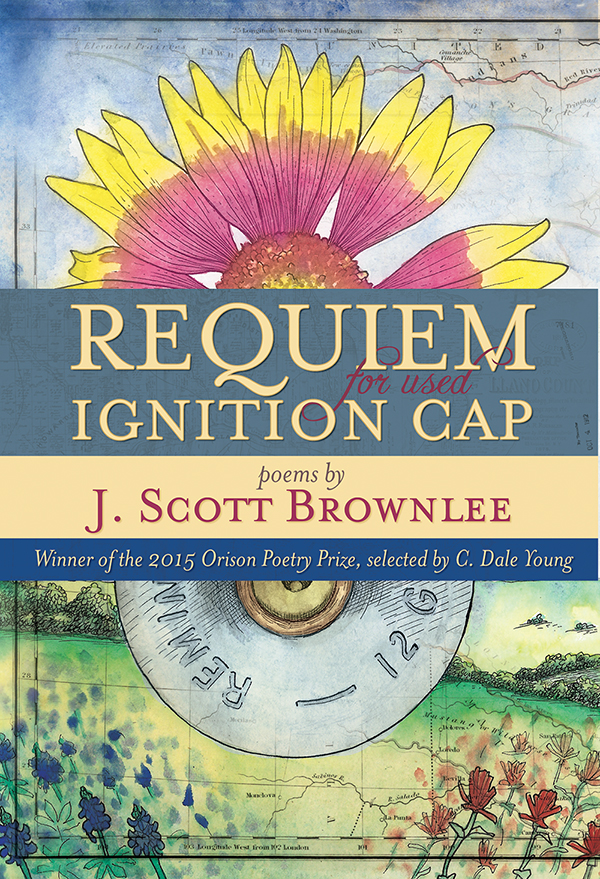
Fear motivates. The paralyzing fear that if I mess up the coloring of this book cover art, I will have to start the whole process over again. And the completion date is fast approaching. But the task needs to be done. So, onward.

DSCN3428[sqr-tilt-dallas]

Watercolor washes begin the color process for the book cover illustration.

DSCN3427[sqr-tilt-dallas]

Paint to the edges and then let the colors bleed. The basic color palette had already been determined weeks prior to the final execution of the cover art. But once the water and pigment are activated on the surface of the paper, the color palette organically builds to its own organized spontaneity.

DSCN3434[sqr-tilt-dallas]

Details. There are always small details that many casual observers may not detect at first glance. For example, the color for the shotgun shell includes multiple wash layers of different pigments — each layer pulling or pushing color from previous layer.

HardCover

Once the final art is approved, I finished the design with title bar and a map overlay to texture the collage art.

The pleasure of drawing

DSCN3386[sqr-tilt-dallas]

Nearly done with the back cover illustration. A brush is often forgotten in the process of keeping a clean drawing surface.

DSCN3396[sqr-tilt-dallas]

Detail of the back cover illustration — a catfish. I have to admit — besides the firewheel flower blossom on the front cover — drawing the catfish was a pleasure.

DSCN3400[sqr--dallas]

Front and back cover pen and ink collage drawing completed. Ready for the next phase — watercolor.

The purpose of drawing

The foundation of a great painting is a solid drawing. At least that was my goal when I worked on this book cover illustration for Orison Books. The collage features a firewheel — sometimes called Indian blanket — blossom, shotgun shell and expansive Texas landscape.

DSCN3395[sqr-tilt-dallas]
Nearly completed pen and ink work on the cover.

DSCN3390[sqr--dallas]

Detail of the firewheel flower blossom.


The purpose of thumbnail illustration

The purpose of thumbnail sketches is to advance the concept of artist, art director and editor to a final product. It seems like a lot of busy work, but three elements are essential: brainstorming, mind-mapping and closing the gap. The following images illustrate the process of thumbnail sketches as it relates to a book cover illustration. DSCN3558[sqr-tilt] Three thumbnail cover comps presented to the publisher a couple months back. DSCN3560[sqr-tilt] Full-size book cover sketch to gauge color temperature and composition of elements.

A sneak peek at the office

DSCN3405[...]

The challenge with working outdoors is no internet connectivity and barely a mobile device signal. It makes checking emails and updating social media status and blog posts nearly impossible. But, really, the technological detox is quite rewarding.

The contract job orders are nearly complete. Word of mouth has lined up another job in the… well… I cannot really disclose the location at this point. But I will say that the red and white oak trees provide wonderful shade and an orchestra of bird song. Or is a symphony of bird song?

Another day at the office

20150619-134401.jpgThe office. Outdoors. Clear skies. For the last couple weeks I’ve been contracted to paint… well, I cannot disclose what I paint at this point. Not where. But it is a beautiful day to paint some art.

Paint until the light fades

20150609-075742.jpg

Last Friday night. Using natural light, I worked on an illustration until sunset. Without a formal art studio, the best place to draw with pen and ink and to paint with watercolor is at the east window. As the time grows close to the longest day of the year, this allowed for more time spent doing art work. But when the light fades it is time to switch tasks and clean brushes and pens.

Box of Poetry

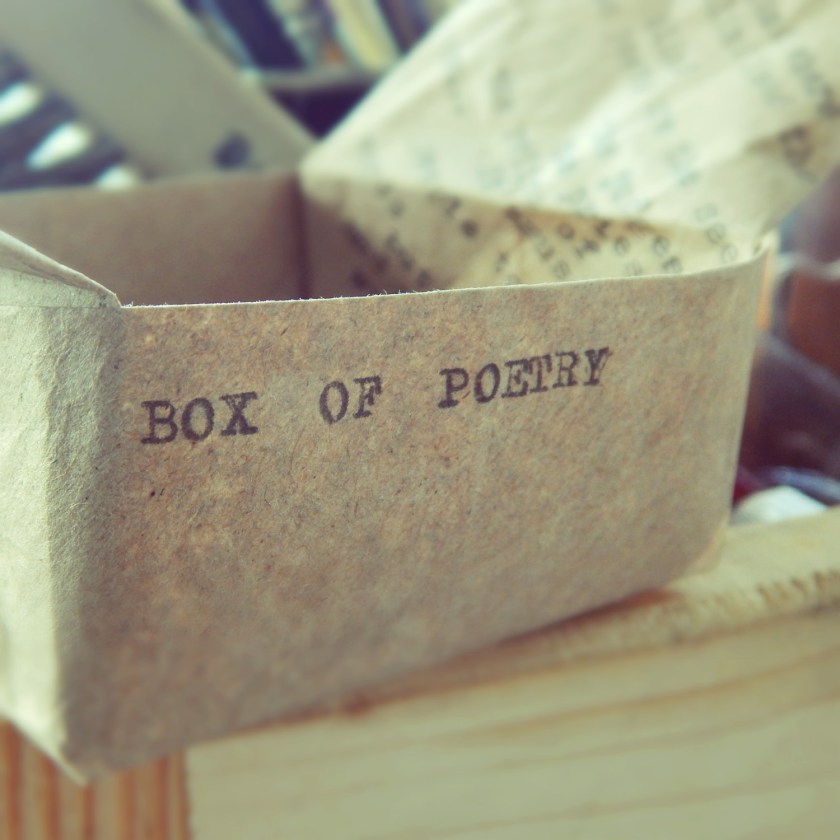
A challenge motivates me to think of solutions. In this case, the challenge was inspired by a reader of this blog who commented: “It would be lovely to cover a little box with beautiful words…” Great idea!

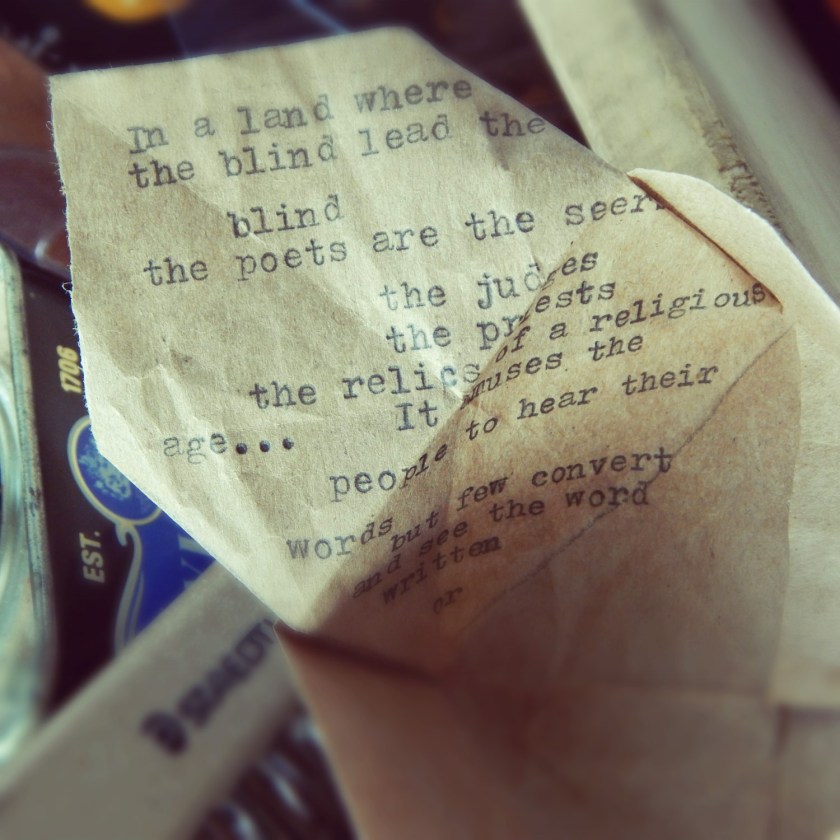
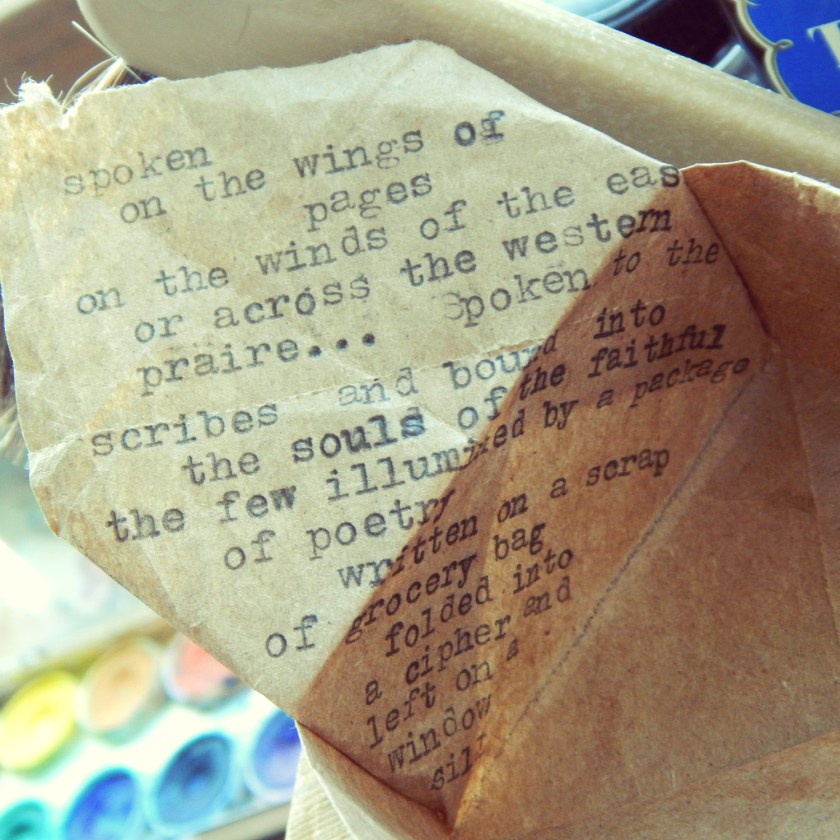
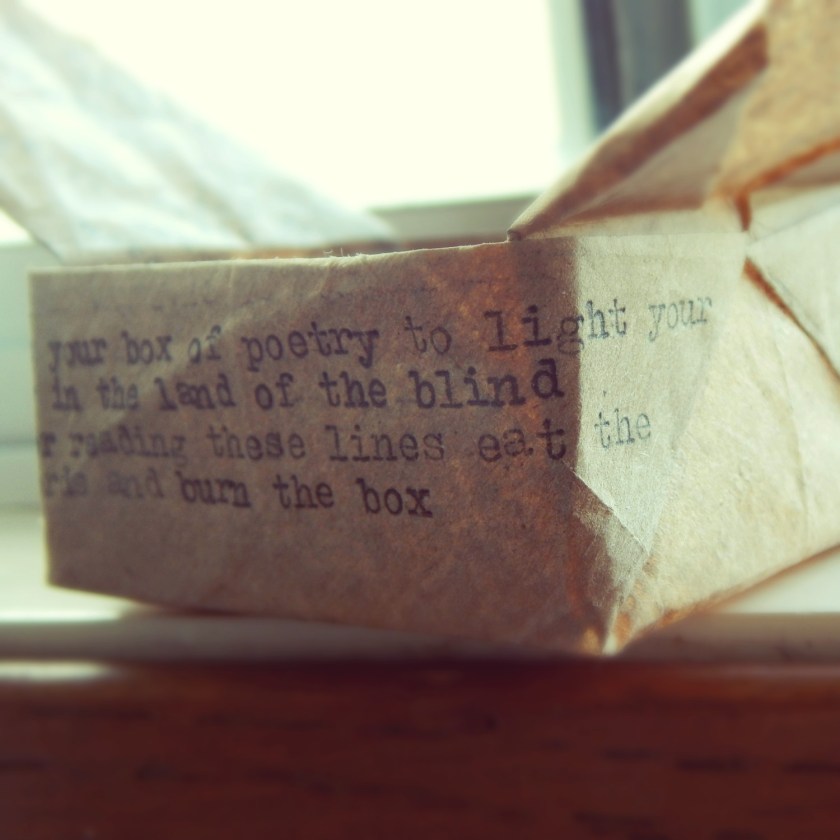
After a couple concepts and a couple drafts of what I hope are “beautiful words” here is a custom origami box of poetry. The reward is to watch the user/reader pick up the box and decipher the order of the poem.

DSCN3314_HD_IG
[Front] “Box of poetry”
DSCN3315_HD_IG
[Left flap] “In a land where/the blind lead the/blind/the poets are the seers/the judges/the priests/the relics of a religious/age… It amuses the/people to hear their words/but few convert/and see the word/written/or
DSCN3316_HD_IG
[Right flap] “spoken/on the wings of/pages/on the winds of the east/or across the western/prairie… Spoken to the/scribes and bound into/the souls of the faithful/the few illuminated by a package/of poetry/written on a scrap/of grocery bag/folded into/a cipher and/left on a/window/sill”
DSCN3319_HD_IG
[Back] “this is your box of poetry to light your way in the land of the blind/after reading these lines eat the words and burn the box”

Pens and Inks

DSCN3278IG

Quote: “The art of writing is…”

“The art of writing is the art of discovering what you believe.”

Gustave Flaubert (via absynthe-words)

Quote: “Art is not a handicraft…”

“Art is not a handicraft, it is the transmission of feeling the artist has experienced.”

Leo Tolstoy (via subcreation)

Strange Familiar Place returns

Stange Familiar Place - Comic Strip

After a very long hiatus, “Strange Familiar Place” will be back in print. Or at least it will be in a very limited capacity. More details on that later.

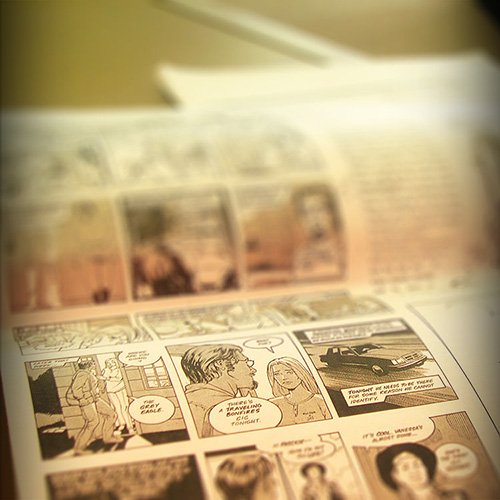
The creative non-fiction comic “Strange Familiar Place” first appeared in The Indie. Inspired by the works of Harvey Pekar, Jessica Abel, and Eddie Campbell, I wrote and illustrated “Strange Familiar Place.” Eventually I collaborated with illustrator and comic book artist James E. Lyle on six comic strips.

Comic Stroll, a publication of the local chapter of the National Cartoonist Society, will feature that collection of previously unpublished comic strips. Read the evolution of what started as a couple drawings and became a creative non-fiction comic:

  1. Comics and Narrative Non-Fiction
  2. Comics and Narrative Non-Fiction Continued
  3. Narrative Non-Fiction Comics: part 3
  4. Narrative Non-Fiction Comics: part 4
  5. Narrative Non-Fiction Comics: part 5
  6. Narrative Non-Fiction Comics: UPDATE
  7. Narrative Non-Fiction Comics: UPDATE
  8. Strange Familiar Place comic series

More details about Comic Stroll distribution will be made available later.

Hidden in the closet

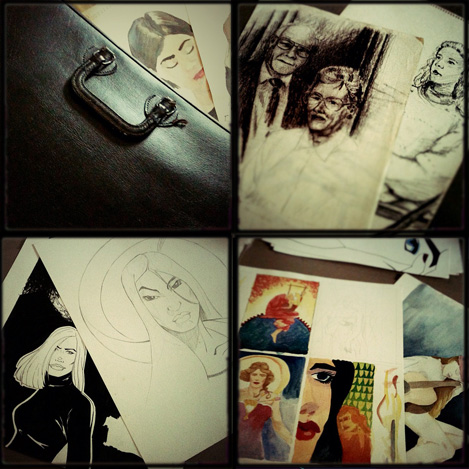
Hidden in an old portfolio

Something hides in the closet. Below the button down shirts and dress slacks for work, behind the winter wardrobe of sweaters, vests and jackets, and against the back wall is an old black leather portfolio with handles. Years ago it was a mandatory item for any and every graphic design student or young professional with goals of becoming an art director, illustrator or creative director. I pulled out the old portfolio and the oversized heavyweight document envelopes behind it and entered a gateway to another time and place.

Like time travel, I am back in the 1990s. There were three main portfolios I presented. One presentation was corporate, ad agency design samples. The kind of material that ranged from logo design, brand campaigns and the like. The second presentation was print design. That portfolio exhibited all manners of print designs from brochures, books, direct marketing collateral, magazine spreads, cover designs, etc. For presentations, I would rotate the design samples in the black leather portfolio based on the interview. Sometimes I presented a hybrid of both that included work that featured my copyrighting and marketing pieces. But the third portfolio was my favorite–the illustration portfolio.

Professors, peers and even my first art director advised it was the weakest of the three. The general critique was that technique needed improvement. So I kept working on improving technique and execution. A black cloth case bound sketch book always accompanied me almost everywhere I traveled. I’d sketch landscapes, still lifes, portraits and tried various techniques using pencils, Sharpie markers, charcoal, ink and watercolor. But soon I learned that I could earn more financially and find more consistent work with digital designs.

It is not that I abandoned illustration. A few years ago, a national news magazine featured one of my illustrations on the cover of its annual books issue. Earlier this year, another illustration was featured as a book cover design. Also this year, a few spot illustrations were published in a book.

As I look at these old illustrations and sketches, I see a younger, self-doubting me at a time before home computer, internet, or smartphone entered my life. Back in those days, the only entertainment devices I had was a stereo set with a five-CD player, a stack of maybe 30 audio CDs and a shelf full of books. Through the portal of this time capsule, I see the mistakes and accomplishments with a new perspective. Hidden away in that closet is a portfolio of dreams, aspirations and ideas that was slowly replaced with a portfolio of duty and responsibility. A thought occurs to me as I examine an unfinished sketch of a female portrait, did I focus on pursuing a career path rather than a vocation? Maybe that is a thought I should hide in the closet while I bring some of these illustrations into the daylight.

Afternoon poetry and jazz

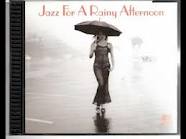
Jazz for a Rainy Afternoon Audio CD

Sometimes a few notes of music follow you for days are weeks or years. Sometimes a line of poetry haunts you like a memory you can’t quite recall. It’s like rain, it permeates the air, wets the ground, even makes tea taste more pronounced.

Here’s part of a story I can share with you. After I was at university studying art and design, I found an audio CD in a music store titled Jazz for a Rainy Afternoon. What attracted me to the album, a compilation, was the fact that the cover art reminded me of a sexier version of Gustave Caillebotte’s famous painting. I purchased the audio CD. It was background music initially. Something to edge off lonely days as a poor graduate beginning a career in graphic design. About the same time I discovered, and purchased, a copy of William Kistler’s poetry book America February.

I have always enjoyed poetry and music, but reading Kistler’s work was rigorous for me. Light verse and traditional poems, the variety that fill American and English school book anthologies, were what I was familiar with. But Kistler’s poetry was a new dish for my inexperienced palate. Equally, understanding the musical selections of Jazz for a Rainy Afternoon as more than a background soundtrack was challenging.

A line from one of Susan L Daniels’s poems has captured my attention this past week—the way jazz and poetry sometimes do. The speaker in the poem answers a question, so you like jazz, by saying: “…the answer is no/I live it sometimes…” That’s what I have come to enjoy about the complicated progression in a song or a poem that avoids a clean resolution.

Jazz and poetry work into you. It takes you down that familiar path of a rainy day afternoon, a common enough subject, but it is a variation of that theme. Never the same way twice. Like reading a poem as a school boy and reading it later as a graduate and later as a professional. Same poem printed on the page, but different. Always different. But familiar, because you “live it.” There’s more to this story. Maybe I’ll share it with you on another rainy day afternoon.

What is your creative space?

An open window to creative space

The window is open on a warm late May day and a cool mountain breeze  moves the curtains like papery fingers. Occasionally, I glance at the Japanese maple outside or the grape vine wildly clinging to a handmade, crude trellis of found pine limbs….

[read more]

UPDATE: This blog post is available as part of an audio podcast.

Listen now:

Or listen on:
PodOmatic: coffeehousejunkie.podomatic.com
SoundCloud: soundcloud.com/coffeehousejunkie

E-book: This blog post will be featured in a forthcoming e-book. More details coming soon.

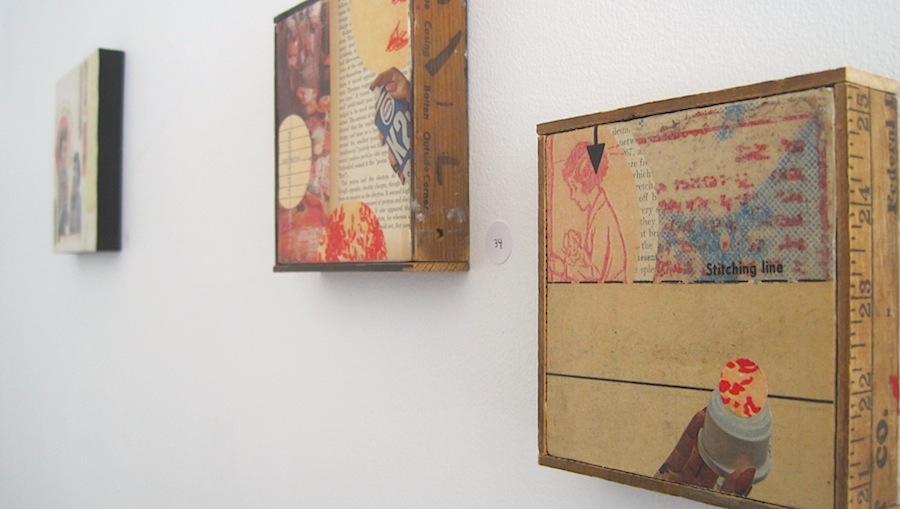
Collages on display

3bythefire:

More Collages by Nicole & Travis

5 Walnut Wine Bar & Gallery

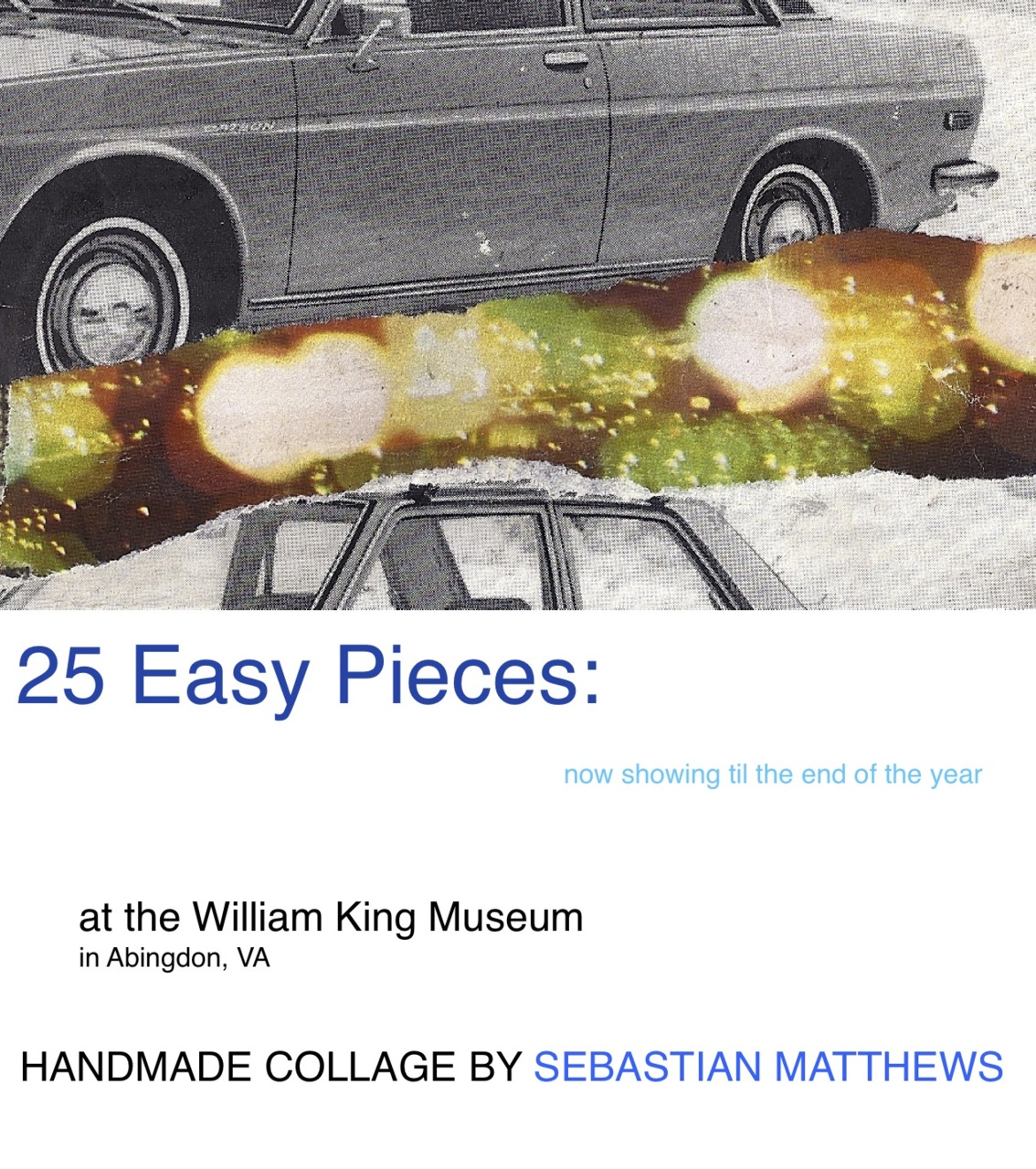
Handmade collage by Sebastian Matthews

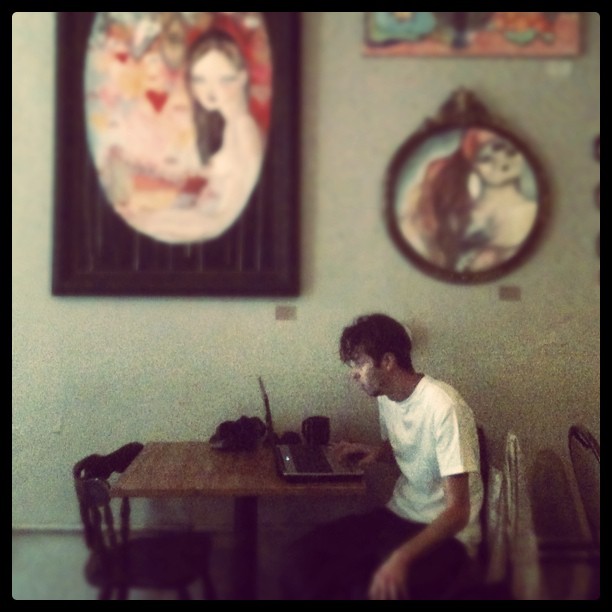
New art show @izzyscoffee

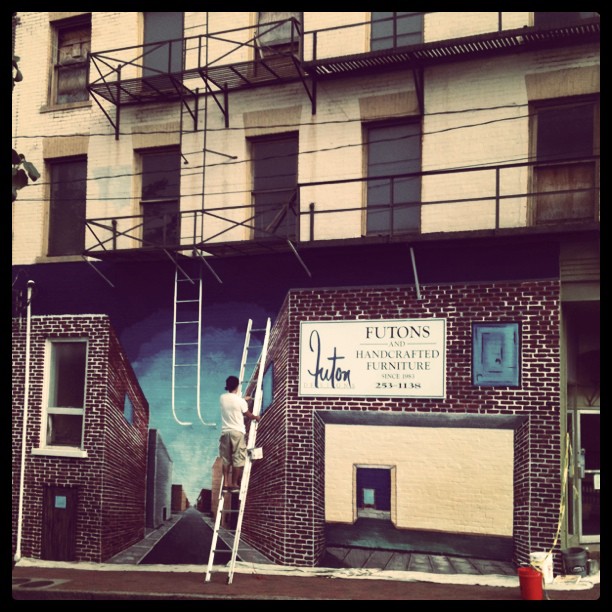
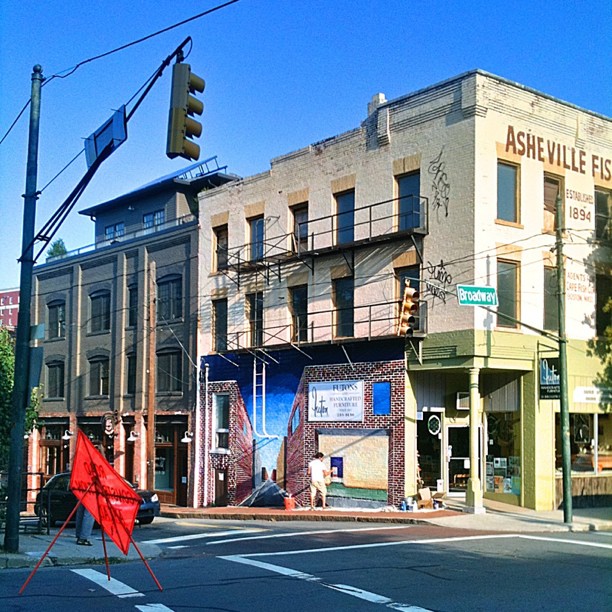
Painter at work on a mural.

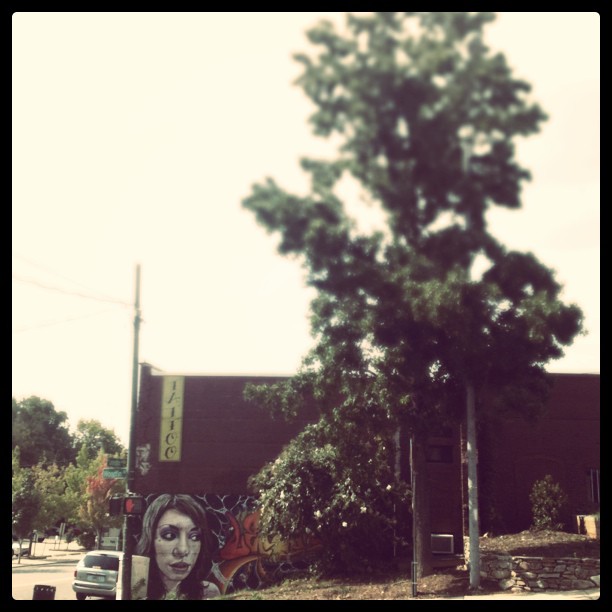
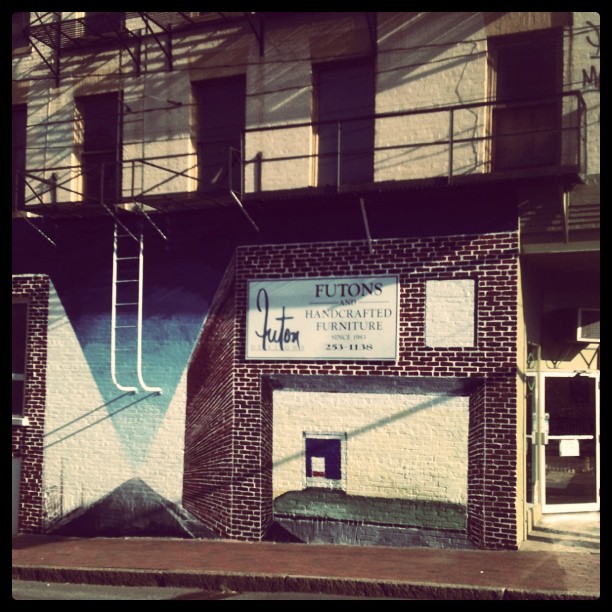
Another #avl mural. Remember what was there before the new mural?

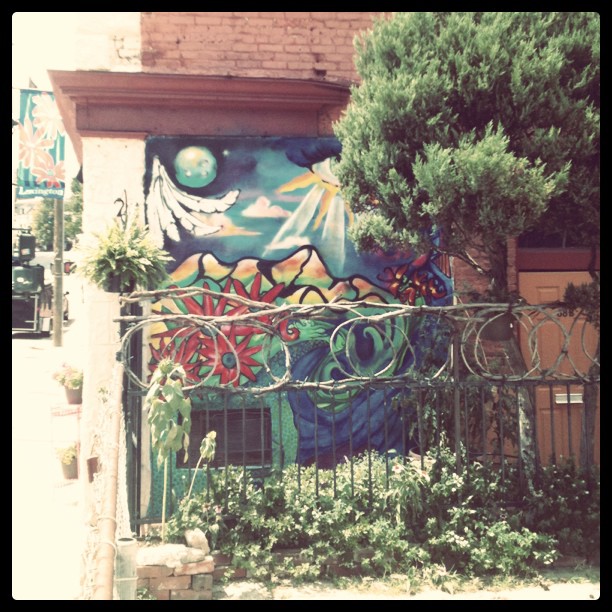
An #AVL mural on Lexington.

Artist at work on a downtown mural.

New downtown mural in progress.