We don’t take [poets] seriously; we don’t think that poetry can move people to do passionate things. But poets did. Poets could change cultures. Before there was so much contest for people’s attention, poets were the ones who literally brought the news from one place to another, walking from town to town, which is how we got everything to be iambic and memorable and rhymed and metered, because the tradition was oral before it was literary.
Tag: poetry
Chapbook: Tomorrow We Sweat Poetry
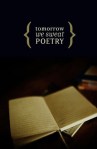
This weekend copies of the chapbook Tomorrow We Sweat Poetry arrived. The publication of the chapbook is born from the Flood Gallery Fine Arts Center writing workshop program — specifically, the workshop I directed called “Write and do not waste time.”
The chapbook features poems by Susan Ryonen Keene and an introductory essay by myself which summarizes the poetry writing workshop.
Chapbook details: 20 pages, paperback, 5″x8″
Copies available for purchase: $8 + shipping.
tomorrow we sweat poetry

the poetry workshop chapbook, tomorrow we sweat poetry, arrived this weekend. review an excerpt here. cover price $8. contact me for your copy.
poetry workshop chapbook

cover art for the poetry workshop chapbook. cover photo & design © 2009 matthew mulder. cover price $8. contact me to reserve your copy.
I rarely hand write.
vela: So when I started writing a note, I paused after a word I typically misspell. For a second I found myself waiting for the red squiggle to appear. FML
at a poetry reading yestarday afternoon, a poet confessed to loosing seven years of poetry when her computer crashed.
my notebooks contain sketches and drafts. composing poems in analog form first is how i begin the process. entering the content into my mac is considered part of the revision process.not that i’m gloating. notebooks can be easily lost, misplaced or stolen.
still, i suspect yesterday’s prizing-winning poet uses a pc.
//
over the weekend i was asked, on a couple occasions, why people abandon the faith of their childhood. i fidgeted, looked out the window, & offered some anecdotal comments anemic of any real answers. anthony bradley offers a more articulate response to why people move from youth group to agnosticism. but i didn’t have an answer, nor do i have fond memories of youth group.
church youth group, for me, was a dull experience in perseverance. most of the youth attended the church’s christian school. a couple of us attended the public school & were reminded that we were pagans within a cathedral. “why would i want to invite friends from school to youth group?” i asked myself. “to be ostracized like me?”
somewhere in those murky years of high school i turned to books for companionship & writing poetry for private enterprise. maybe not in the way wallace stevens did: “after one has abandoned a belief in God, poetry is that essence which takes its place as life’s redemption.” i felt abandoned, but did not seek to abandon.
perseverance, poetry, & a feeble faith have traveled with me, but members of the youth group seem to be pebbles in a path long ago traversed.
found poetry (headlines edition)
if your familiar with found poetry, here’s my find for today (using headlines):
if you’re not familiar with found poetry , it’s sort of like mad libs… but not really…
//
the final session of the poetry workshop is complete… i think i got more out of the class than the students…
“One person’s ‘accessible’ is another’s ‘crass commercialism.'”
What people are really saying when they talk about work as accessible, is that it won’t be making many (if any) demands upon the reader.
—John Gallaher1
NOTE:
1) John Gallaher, “Accessibilty or Crass Commercialism?,” June 16, 2009, Nothing to Say & Saying It, accessed June 19, 2009, https://jjgallaher.blogspot.com/2009/06/accessibilty-or-crass-commercialism.html
“Go to the pine to learn of the pine,” Basho
“A haiku is far more than a concrete image of something ‘out there.’ It is very much about the cognitive awareness ‘in here.’” (via Roadrunner Journal)1
NOTES:
1) William M. Ramsey, “How One Writes in the Haiku Moment: Mythos vs. Logos,” May, 2009, Roadrunner Haiku Journal, Issue IX:2, accessed May 23, 2009, https://thehaikufoundation.org/omeka/items/show/1301
// i woke up from a dream in which coleman barks & i read sufi poetry in translation together…
// & now, a hafiz moment… ‘ever since happiness heard your name, it has been running through the streets trying to find you.’
// love the pejorative tone many bourgeois have toward the idea of poetry readings…
“[Khalil] Gibran’s ‘masterpiece’… turns not so much upon poetry as upon the genre of wisdom literature and its subgenre, the aphorism, which holds a particularly valued place in Arab culture. Like all good aphorists, he uses language that is both plain and metaphorical; it invites understanding yet in a way that brushes against the mysteries of being alive. There’s no doubt that the style occasionally ascends into comical elevations, and that its high tone seems lost in the ironies and specificities of American life. But that sort of spiritual homelessness pretty much describes a large swath of immigrant life.” (via poetry & popular culture)
//
oh, insomnia, thanks for putting the recent issue of the american poetry review in my mailbox today-gives me something to read at 1am…
// i’d rather be reading hafiz; ‘we should make all spiritual talk simple today’ (http://www.powells.com/biblio/1-9780143037811-0)
// just returned from the BMCM+AC poetry reading wordfest event… two hours until the next reading at jubilee…
// drunk on sufi poetry from the reading/performance by Thomas Rain Crowe & Coleman Barks… the hangover should be delicious…
Do you read poetry?
“In 2002, 12% of adults read poetry. 2008 it’s 8.3%.” 1
NOTES:
1) The Chronicle of Higher Education, accessed April 23, 2009, https://www.chronicle.com/review/brainstorm/article/?id=1312&utm_source=at&utm_medium=en (page no longer available)
//
trying to figure out if this poem will work better in a 6-line, 3-stanza form or a 3-line, 6 stanza form…
//
Landon Godfrey reading at the Flood Reading Series, Sunday March 29, 2009.
//
Justin Gardiner reads at the Flood Reading Series, Sunday March 29.
//
Amanda Gardiner reads at the Flood Reading Series, Sunday March 29.
//
Mark Prudowsky introduces the Flood Reading Series, Sunday March 29, 2009, with a poem.

