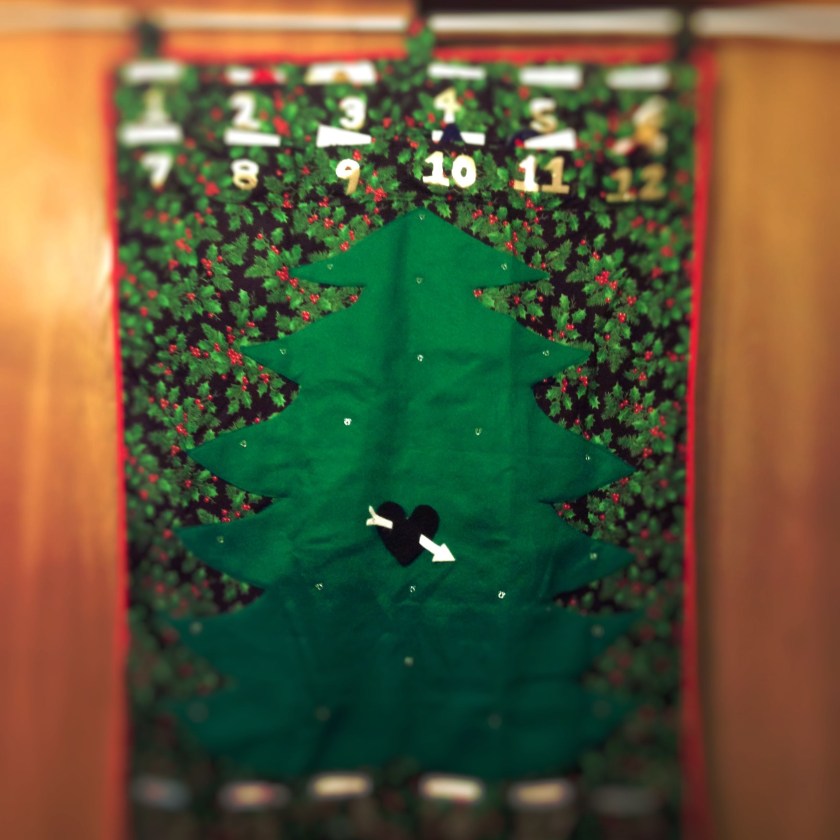
It is Advent again. Here is a one-minute read about the Advent calendar with web links to help you prepare your home for the season.
It is Advent again. Here is a one-minute read about the Advent calendar with web links to help you prepare your home for the season.
Poems well composed haunt readers. Like the ache of an old injury during inclement weather. Good poems never quite disappear. They remain. Like a stubborn clump of April snow and ice on the corner of the street that refuses to melt. Here are five reflections on poems that continue to sparkle and shine throughout the year. At least in my mind.
The May 2011 edition of Poetry magazine featured a Dana Gioia poem with a haunting opening line:
“So this is where the children come to die, . . .”
How can you not keep reading this poem? It is so good. So rich. Later in the poem the speaker says, “but there are poems we do not choose to write.” From the first line of the poem to the last line, “Special Treatments Ward” is an exceptional work.
Poetry continues the Great Conversation. What is truth? How do we know it? Who are we and how should we live? Often reserved for philosophers, these questions are the result of friction from winds of poetry. What came first? Philosophy? Or Poetry? Since Theogony pre-dates many philosophical writings, I submit that poetry came first. Poetry is the wind that troubles the water.
On a gray, stormy afternoon, I retreated to the public library in Racine. A book of translations of Han Shan needed to be renewed for the fourth or fifth time. And the children needed to get out of the apartment. Besides, the more you check out books of poetry the more funding the library gets based on your activity and/or interest in certain subjects. Or so I am led to believe by local librarians.
I was introduced to the Cold Mountain poems during one of the library’s writers groups. Since then I have read and studied several books of translations from Wang Wei, Ryokan, Basho and others.
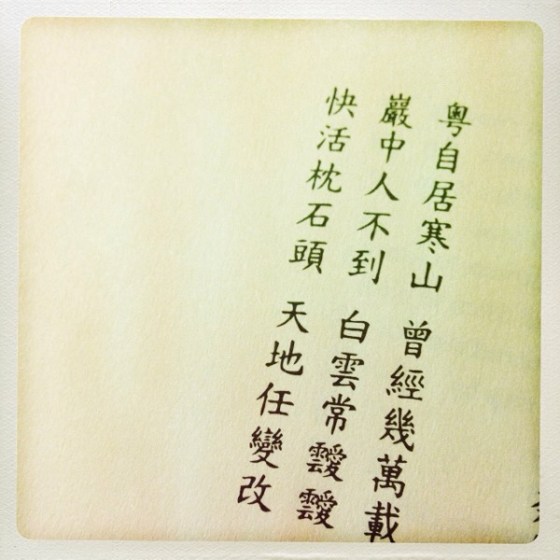
During the last few years, I find my writings turning toward dialogues with these poets. Here is a poem from Han Shan, a Taoist/Buddhist hermit, as translated by Red Pine:
Since I came to Cold Mountain
how many thousand years have passed
accepting my fate I fled to the woods
to dwell and gaze in freedom
no one visits the cliffs
forever hidden by clouds
soft grass serves as a mattress
my quilt is the dark blue sky
a boulder makes a fine pillow
Heaven and Earth can crumble and change
A quick read reveals a surface feast of images and imagination — the woods, the cliffs, soft grass and Heaven and Earth. After reading and thinking about this poem for several months there are questions that come to mind. Is the An Lu-shan Rebellion referred to in the third line? Is there a reference to the bodhisattva Avalokiteshvara? Heaven means the emperor. Earth means the empire. Is the last line political? Or philosophical? What do I say to Han Shan? Why did you flee? What and/or who did you leave behind?
Elsewhere in the world, at that same time Han Shan wrote this poem, Beowulf was composed. Charles Martel expanded the Frankish Empire. Three hundred years later The Song of Roland would commemorate one of the battles.
On a stormy afternoon, twelve- to eighteen-foot waves batter the rocky Lake Michigan shoreline. The world through literature expands and contracts with each line of poetry read.
I like how Dick Allen stated this suggestion:
“Think of books of poetry the way you think of music CDs. A CD may have 12–15 songs on it. A small book of poetry may have 30–50 poems in it. Just as good songs will be played over, so good poems will be read over and over.”
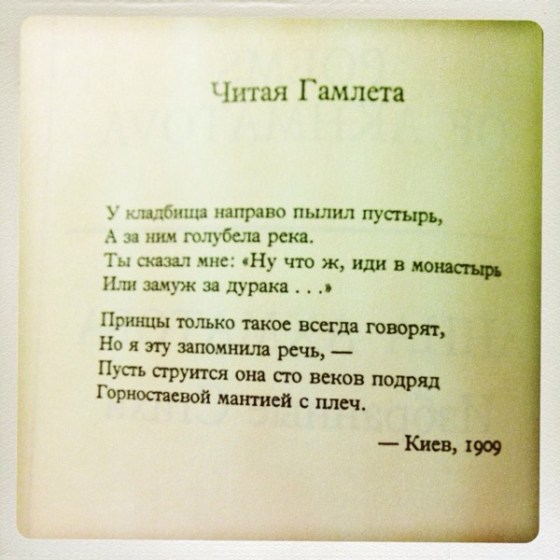
Like a single track on an album, I return to a poem by Anna Akhmatova. A Russian poem about an English play — Hamlet. The line that gets me every time I read it is:
“It was the sort of thing that princes always say.”
To me it is a catchy phrase that I want to play over and over again on the stereo. At full volume. Until it drives the neighbors in the apartment across the hall crazy.
In Sam Hamill’s notes regarding his translation of a Tu Fu poem he wrote about the mingled joy and deep resignation expressed in the work.
“What is implied in the original, . . . is the notion that somehow, . . . he will not waste away sitting before the wine jug. . . . [Tu Fu] asks the question every poet asks under such circumstances: Why do we do it?”
Indeed. Why do we do it? Why read poems? In an old literary journal? Why read a poem more than 1000 years old? Or older? Why write poetry? Some may desire to write poetry in order to express themselves. I thought that was me. But not so much anymore. I write poetry in response to Wang Wei. Or Anna Akhmatova. Or Ghalib. Or Dana Gioia. My modern-day peasant efforts are to continue the Great Conversation. One line at a time.
NOTES:
Edited, condensed and updated from three previous blog posts: National Poetry Month, weekend edition, part one, National Poetry Month, weekend edition, part two, National Poetry Month, weekend edition, part three
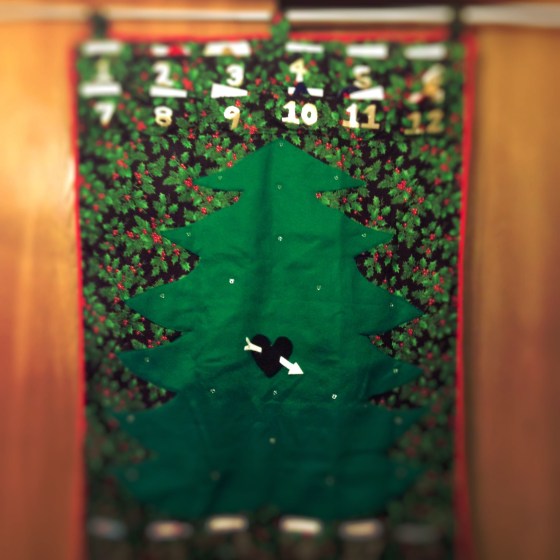
It is the season of Advent. Many years ago, my sister-in-law presented my household with a beautiful, hand-sewn Advent calendar. She said that her daughter did most of the work.
Hanging the Advent calendar is an anticipated part of the season. The family gathers around the dining room table to read selected passages and sing a song. Kidlingers take turns each evening selecting an ornament behind a number and hanging it on the calendar’s tree.
Around the time the hand-sewn Advent calendar was received, I began a search for related, relevant Advent poetry to celebrate the season. This took awhile. But eventually I collected 12 poems and shared them on this blog.[1] It has become the most visited and shared post I have written. A series of Advent podcasts were produced as well,[2] [3] [4] [5] but the list of 12 Advent poems is a perennial favorite.
Slowly I gathered a few more poems for this annual tradition. This year I will share throughout the Advent season poems by Wendell Berry, Patrick Kavanagh, X.J. Kennedy, Jane Kenyon, Mary Jo Salter, and R. S. Thomas.
NOTES:
[1] Advent Poems (or the 12 days of Christmas poetry)
[2] Poems and readings for the First Sunday of Advent
[3] Poems and readings for the Second Sunday of Advent
[4] Poems and readings for the Third Sunday of Advent
[5] Poems and readings for the Fourth Sunday of Advent
National Poetry Month is nearly at an end. One poet, Ann E. Michael, mentioned that she participated in this year’s National Poetry Month “by reading more than by writing.”[1] I agree with that sentiment.
One book I have been reading is a bilingual collection of poems by Anna Akhmatova. The modernist approach Akhmatova displayed in a Russian poem about an English play — Hamlet — amuses me. The line that gets me every time I read it is: “It was the sort of thing that princes always say.”
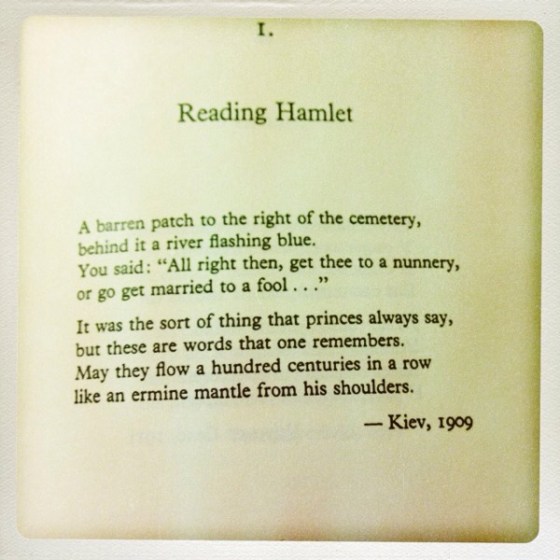
For people who do not know that they may actually like poetry, I like how Dick Allen put it in this blog post:
“Think of books of poetry the way you think of music CDs. A CD may have 12-15 songs on it. A small book of poetry may have 30-50 poems in it. Just as good songs will be played over, so good poems will be read over and over.”[2]
Following the thread of these two poets, I have read and reread some poetry books. A few favorite poems are on my repeat playlist. This poem by Akhmatova. Another poem by Han Shan. A couple poems by Li-young Lee from his book The City in Which I love You. A poem by Tu Fu.
In Sam Hamill’s notes regarding his translation of a Tu Fu poem he wrote about the mingled joy and deep resignation expressed in the work. “What is implied in the original, . . . is the notion that somehow, . . . he will not waste away sitting before the wine jug. . . . [Tu Fu] asks the question every poet asks under such circumstances: Why do we do it?”
Indeed. Why do we do it? My reply is to continue the Great Conversation.
NOTES:
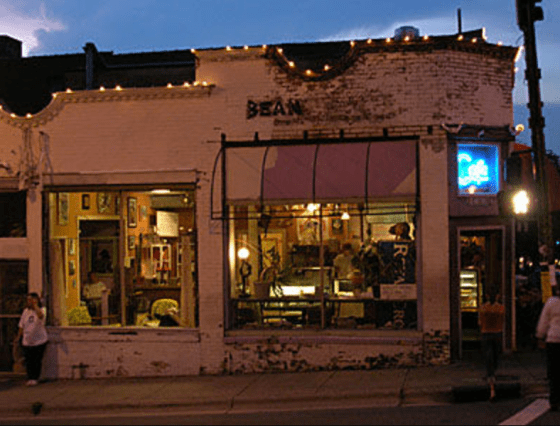
Our paths first met at open mic night at Beanstreet café during a time of national crisis and local transition. The aftermath of 9/11 brought a lot of poets and singer songwriters to open mics for reasons of catharsis and later to protest.
But Barbie Angell[1] brought something different to the Beanstreet musicians and poets. Part Dorothy Parker, part Shel Silverstein, Barbie Angell became a regular favorite of scene and a poetic force.
We first met around the time my book Late Night Writing[2] was published. I was working hard on new material and trying it out on the open mic crowd. We exchanged a few conversations and notes at that time and then we lost track of each other for a couple years.
Beanstreet dramatically closed. The poetry scene was adrift for awhile. Eventually the Courtyard Gallery off Walnut Street filled the space. And that is where Barbie and I reconnected. From those late nights at the Courtyard Gallery open mics until my departure from Asheville, we spent a lot of time sharing poetry, discussing literary world domination, challenging and encouraging each other about all things regarding a poets life.
Roasting Questions,[3] her collection of poems and illustrations, was released a few years ago. We talked much about that publication and the supporting book tour.
Though our poetic styles were different we still sought to encourage one another toward success.
There was one night I remember in particular. Two different events were going on in Asheville and she was to read poetry at one while I read at another. She picked me up at my house, drove downtown, and after the separate events we met up at Sazerac for refreshments. We talked about the night’s events, avoided how jealous we were of the others’ success and then she drove me back home. That is what friends do.
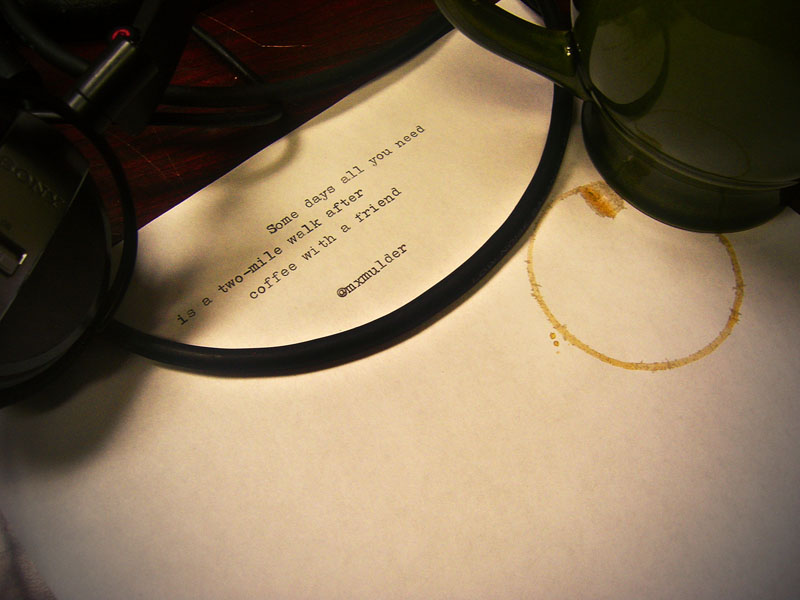
That is a glimpse into the story behind this short poem. With friends like Barbie, you have the strength to walk further, to try harder, and to be better.[4]
NOTES:
Some of you know this, others may not, but there is a lot of labor involved if you put your hand to the practice and turn of poetry. There was a lot of hard work and late nights at cafés, open mics and taverns and copious amounts of coffee and hours of mic time that provided me the opportunity to read poems at an art gallery — the Flood Gallery Fine Art Center.
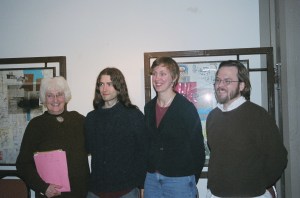
The Flood Gallery Fine Art Center[1] organized a poetry reading series that featured local poets. That evening marked a milestone — in my mind. Before that night at the Flood Gallery, the poets — Britt Kaufmann, Brian Sneeden, Barbara Gravelle and myself — were barely familiar with each other. But something alchemical happened during the reading.
Britt Kaufmann’s Belonging was published sometime after that reading.[2] I remember Britt emailing me drafts of the poems prior to publication as well as discussing the nuances of navigating publishing challenges. Barbara Gravelle has published several books of poetry.[3] Her collection of Greek island poems came together before my eyes. One afternoon we looked at illustrations and poems side by side to consider the flow of art and poetry. Brian Sneeden has several forthcoming books of translations and poetry.[4] The first time I heard him read his work was at Malaprop’s Bookstore/Cafe for a Traveling Bonfires event.
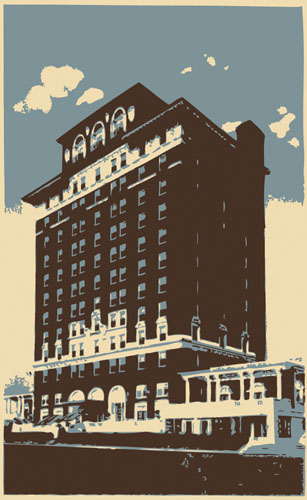
Barbara, Brian and myself went on to form a poetic collective called the Rooftop Poets. We collaborated on an invitation-only event of music and poetry at the private ballroom of the Historic Battery Park Apartments. Attendees were given a commemorative, limited edition anthology of our poems. There were a few more public gatherings of the Rooftop Poets, but for me the treasure was sharing our compositions privately. Discussing everything from modern Greek poetry to religion to archeology to feminism to poetry to local gossip as well other aspects of life. I greatly miss that face-to-face time with these friends.
Shortly before my departure from Asheville,[5] I sat in a side room of a wine bar on a Sunday afternoon. The room was filled with aspiring and novice poets. We went around the room reading poems. At the conclusion of the readings I overheard a few people commenting about the Rooftop Poets. They discussed — even mythologized — who the Rooftop Poets were, what they did, how many people attended a private reading, what happened at that reading and so on and so forth. The eavesdropping made me smiled. I did not correct factual errors. I walked to the main bar. Someone bought me a beer. We talked about employment and jazz and all things Asheville. And I left.
These poets and friends made in impact in my life — as well as the local and regional community.[6]
NOTES:
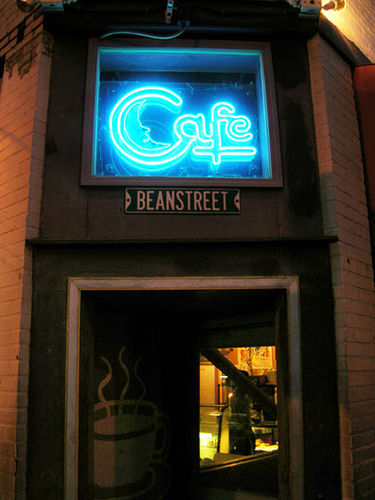
As stated previously, the poetry reading list for National Poetry Month is designed to encourage you to seek out the influence of living poets — where they live and and where they read. Allow me to introduce you to a few of the living poets I met at the open mics and coffee dens of Asheville, North Carolina.
One of those souls is an editor, poet, journalist and friend, Pasckie Pascua.[1] He has published several chapbooks and collections of poetry and prose. We first met at a coffeeshop in West Asheville and later haunted Beanstreets and other places from North Carolina to New York City. He left the back door to the poetry scene open for me and allowed me to grow and mature as a poet and writer. He also published many of my early writings. Lines from his poems still echo in my mind, like this one:
“The color of my poem
is also the color of my brother’s soul,
the color of my friend’s heart.”[2]
Another poet I wrote with and read alongside is Jessica Newton.[3] She facilitated a writers group when I first moved to Asheville. We gathered at the UNCA library or other spots around Asheville to write and read our compositions. Sometimes she brought writing prompts or other sources of inspiration. We shared prompts and poems. One night Mara Leigh Koslen[4] brought examples of haibun.[5] She introduced the poetic form and then we wrote. It was that night that I composed the first draft of a poem that would later be published.[6] Several other poets and writers visited the writers group.
My poetry reading list is really an introduction to friends and poets who I have met face-to-face. We read and wrote poetry together. We drank coffee at sidewalk cafés until dark-thirty. We shared wine after a moonlit poetry reading. Met in cafés and coffeehouse, taverns and art galleries, bookstores and basements and rooftop ballrooms. We did life together.
When I introduce you to poetry, I introduce you to friends.
I’ll continue the reading list, introductions throughout this month. [7]
NOTES:
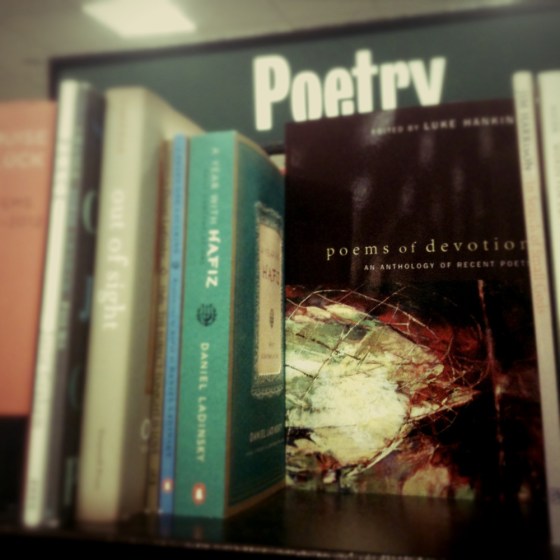
The best way to share poetry with people — who do not know that they may like poetry — is to start by reading the works of living poets. That is the basic idea of my poetry reading list for National Poetry Month.
Most books lists of are just lists. Promotional bullet points. Usually there is an image of the book or photo of the poet, a brief description or summary, sometimes even a list of credentials and awards, and a hyperlink to the poetic work or an online retail store. That is an approach I will try to avoid.
I read recently that the ancient Greeks and Romans enjoyed literature in a very different way than our modern culture — where we silently read books. The ancient poets read and/or recited their work out loud to a public audience.
So, my poetry reading list for National Poetry Month is designed to encourage you to seek out the influence of living poets — where they live and and where they read.[1]
NOTES:
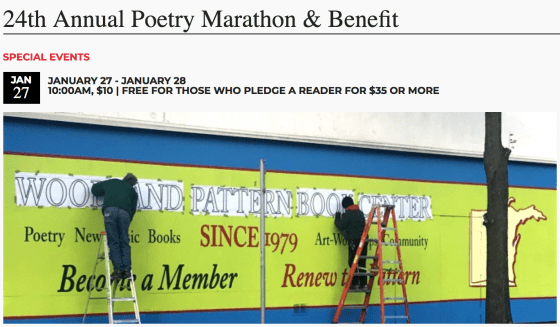
The 24th Annual Poetry Marathon Benefit Reading for Milwaukee’s Woodland Pattern Book Center is next weekend, Saturday, January 27, 2018.
The time slot between 9 PM – 10 PM is when I’ll be reading some poetry. Others reading during that segment include: Patrick Branum, Andrew Cantrell, Nick Demske, Dan Godston, Sara Goodman, Marcy Rae Henry, Jennifer Karmin, Kimberly Lyons and Blake Nemec.
Please consider supporting the effort. Contact me for details. Or visit the links provided. Much gratitude!
No one can celebrate
a genuine Christmas
without being truly poor.
The self-sufficient, the proud,
those who, because they have
everything, look down on others,
those who have no need
even of God- for them there
will be no Christmas.
Only the poor, the hungry,
those who need someone
to come on their behalf,
will have that someone.
That someone is God.
Emmanuel. God-with-us.
Without poverty of spirit
there can be no abundance of God.[1]
This audio podcast features “The House of Christmas” by GK Chesterton, “The God We Hardly Knew” by Óscar Romero and a selection from the Book of Common Prayer.
 Also, special thanks to Folk Angel for permission to use “O Little Town Of Bethlehem” from their album Glad Tidings – Christmas Songs, Vol. 4. If you are looking for some great Christmas records, check out their website, FolkAngel.com.
NOTES:
[1] Source: The God We Hardly Knew by Óscar Romero
[2] Advent Poems (or the 12 days of Christmas poetry)
Immensity cloistered in thy dear womb,
Now leaves His well-belov’d imprisonment,
There He hath made Himself to His intent
Weak enough, now into the world to come;
But O, for thee, for Him, hath the inn no room?
Yet lay Him in this stall, and from the Orient,
Stars and wise men will travel to prevent
The effect of Herod’s jealous general doom.
Seest thou, my soul, with thy faith’s eyes, how He
Which fills all place, yet none holds Him, doth lie?
Was not His pity towards thee wondrous high,
That would have need to be pitied by thee?
Kiss Him, and with Him into Egypt go,
With His kind mother, who partakes thy woe.[1]
This audio podcast features “Mosaic of the Nativity (Serbia, Winter 1993)” by Jane Kenyon, “Nativity” by John Donne, “A Christmas Carol” by Christina Georgina Rossetti and a selection from the Book of Common Prayer.
 Special thanks to Folk Angel for permission to use “God Rest Ye Merry Gentlemen” from their album Comfort & Joy – Christmas Songs, Vol. 3. If you are looking for some great Christmas records, check out their website, FolkAngel.com.
NOTES:
[1] Source: “Nativity” by John Donne
[2] Advent Poems (or the 12 days of Christmas poetry)
When I see the cradle rocking
What is it that I see?
I see a rood on the hilltop
Of Calvary.
When I hear the cattle lowing
What is it that they say?
They say that shadows feasted
At Tenebrae.
When I know that the grave is empty,
Absence eviscerates me,
And I dwell in a cavernous, constant
Horror vacui.[1]
This audio podcast features “Annunciation” by Denise Levertov, “Advent” by Donald Hall, “Into The Darkest Hour” by Madeleine L’Engle[2] and a selection from the Book of Common Prayer.
NOTES:
[1] Source: Poetry Foundation
[2] Advent Poems (or the 12 days of Christmas poetry)
Our paths first met at open mic night at Beanstreet café during a time of national crisis and local transition. The aftermath of 9/11 brought a lot of poets and singer songwriters to open mics for reasons of catharsis and later to protest.
But Barbie Angell[1] brought something different to the Beanstreet musicians and poets. Part Dorothy Parker, part Shel Silverstein, Barbie Angell became a regular favorite of scene and a poetic force.
We first met around the time my book Late Night Writing[2] was published. I was working hard on new material and trying it out on the open mic crowd. We exchanged a few conversations and notes at that time and then we lost track of each other for a couple years.
Beanstreet dramatically closed. The poetry scene was adrift for awhile. Eventually the Courtyard Gallery off Walnut Street filled the space. And that is where Barbie and I reconnected. From those late nights at the Courtyard Gallery open mics until my departure from Asheville, we spent a lot of time sharing poetry, discussing literary world domination, challenging and encouraging each other about all things regarding a poets life.
Roasting Questions,[3] her collection of poems and illustrations, was released a few years ago. We talked much about that publication and the supporting book tour.
Though our poetic styles were different we still sought to encourage one another toward success.
There was one night I remember in particular. Two different events were going on in Asheville and she was to read poetry at one while I read at another. She picked me up at my house, drove downtown, and after the separate events we met up at Sazerac for refreshments. We talked about the night’s events, avoided how jealous we were of the others’ success and then she drove me back home. That is what friends do.
That is a glimpse into the story behind this short poem. With friends like Barbie, you have the strength to walk further, to try harder, and to be better.
NOTES:
As stated last week, I will continue the reading list for National Poetry Month even though it is May 1st. April was a brutal month. Though the plan was to compose thirty days of posts in April, the work/life balance — or chaos — of my life prohibited meeting that goal. But why restrict poetry to one month, right?
Some of you know this, others may not, but there is a lot of labor involved if you put your hand to the practice and turn of poetry. There was a lot of hard work and late nights at cafés, open mics and taverns and copious amounts of coffee and hours of mic time that provided me the opportunity to read poems at an art gallery — the Flood Gallery Fine Art Center.
The Flood Gallery Fine Art Center[1] organized a poetry reading series that featured local poets. That evening marked a milestone — in my mind. Before that night at the Flood Gallery, the poets — Britt Kaufmann, Brian Sneeden, Barbara Gravelle and myself — were barely familiar with each other. But something alchemical happened during the reading.
Britt Kaufmann’s Belonging was published sometime after that reading.[2] I remember Britt emailing me drafts of the poems prior to publication as well as discussing the nuances of navigating publishing challenges. Barbara Gravelle has published several books of poetry.[3] Her collection of Greek island poems came together before my eyes. One afternoon we looked at illustrations and poems side by side to consider the flow of art and poetry. Brian Sneeden has several forthcoming books of translations and poetry.[4] The first time I heard him read his work was at Malaprop’s Bookstore/Cafe for a Traveling Bonfires event.
Barbara, Brian and myself went on to form a poetic collective called the Rooftop Poets. We collaborated on an invitation-only event of music and poetry at the private ballroom of the Historic Battery Park Apartments. Attendees were given a commemorative, limited edition anthology of our poems. There were a few more public gatherings of the Rooftop Poets, but for me the treasure was sharing our compositions privately. Discussing everything from modern Greek poetry to religion to archeology to feminism to poetry to local gossip as well other aspects of life. I greatly miss that face-to-face time with these friends.
Shortly before my departure from Asheville,[5] I sat in a side room of a wine bar on a Sunday afternoon. The room was filled with aspiring and novice poets. We went around the room reading poems. At the conclusion of the readings I overheard a few people commenting about the Rooftop Poets. They discussed — even mythologized — who the Rooftop Poets were, what they did, how many people attended a private reading, what happened at that reading and so on and so forth. The eavesdropping made me smiled. I did not correct factual errors. I walked to the main bar. Someone bought me a beer. We talked about employment and jazz and all things Asheville. And I left.
These poets and friends made in impact in my life — as well as the local and regional community.
NOTES:
As stated earlier this week, my poetry reading list for National Poetry Month is designed to encourage you to seek out the influence of living poets — where they live and and where they read. Allow me to introduce you to a few of the living poets I met at the open mics and coffee dens of Asheville, North Carolina.
One of those souls is an editor, poet, journalist and friend, Pasckie Pascua.[1] He has published several chapbooks and collections of poetry and prose. We first met at a coffeeshop in West Asheville and later haunted Beanstreets and other places from North Carolina to New York City. He left the back door to the poetry scene open for me and allowed me to grow and mature as a poet and writer. He also published many of my early writings. Lines from his poems still echo in my mind, like this one:
“The color of my poem
is also the color of my brother’s soul,
the color of my friend’s heart.”[2]
Another poet I wrote with and read alongside is Jessica Newton.[3] She facilitated a writers group when I first moved to Asheville. We gathered at the UNCA library or other spots around Asheville to write and read our compositions. Sometimes she brought writing prompts or other sources of inspiration. We shared prompts and poems. One night Mara Leigh Koslen[4] brought examples of haibun.[5] She introduced the poetic form and then we wrote. It was that night that I composed the first draft of a poem that would later be published.[6] Several other poets and writers visited the writers group.
My poetry reading list is really an introduction to friends and poets who I have met face-to-face. We read and wrote poetry together. We drank coffee at sidewalk cafés until dark-thirty. We shared wine after a moonlit poetry reading. Met in cafés and coffeehouse, taverns and art galleries, bookstores and basements and rooftop ballrooms. We did life together.
When I introduce you to poetry, I introduce you to friends.
I’ll continue the reading list, introductions throughout this month and maybe beyond. Why should poetry only be celebrated in April?
NOTES:
The best way to share poetry with people — who do not know that they may like poetry — is to start by reading the works of living poets. That is the basic idea of my poetry reading list for National Poetry Month.
Most books lists of are just lists. Promotional bullet points. Usually there is an image of the book or photo of the poet, a brief description or summary, sometimes even a list of credentials and awards, and a hyperlink to the poetic work or an online retail store. That is an approach I will try to avoid.
I read recently that the ancient Greeks and Romans enjoyed literature in a very different way than our modern culture — where we silently read books. The ancient poets read and/or recited their work out loud to a public audience.
So, my poetry reading list for National Poetry Month is designed to encourage you to seek out the influence of living poets — where they live and and where they read.
This is my third year contributing.
Here is a Twitter pic from last year, 2016.
Amazing readings, beautiful community. @WoodlandPattern #wppoets https://t.co/Rf75Pf2YLr—
Jenni Moody (@moodyjenni) January 31, 2016
Heather captured some great photos from the 2015 poetry marathon. Those photos are lost somewhere on Facebook. It was the first time I read at Woodland Pattern. And the first time I read along side the best poets in Racine. It was a magical night.
The Annual Poetry Marathon & Benefit at Woodland Pattern, Milwaukee, begins at 10:00AM. $10 donation taken at the door. I will be reading between 4-5PM. I would love to see you there and say “hi” and “thank you.”
Sponsor me by donating $5 or whatever using Woodland Pattern’s PayPal donation button (click here). Any amount helps. Make sure you enter “Matt Mulder” in the space provided for “Reader’s Name.” And thank you for your support!
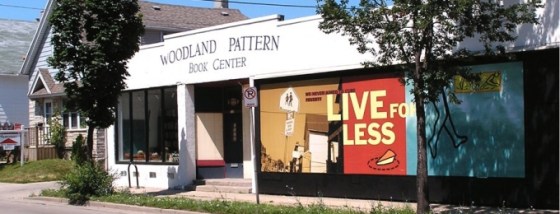 Woodland Pattern celebrates the 23rd Annual Poetry Marathon & Benefit this weekend, January 28, 2017!
Join me and 150 poets as we raise funds for Woodland Pattern’s programming in literature and the arts. Money raised at the poetry marathon funds opportunities such as the Urban Youth Literary Arts Program.
The Annual Poetry Marathon & Benefit at Woodland Pattern, Milwaukee, begins at 10:00AM. $10 donation taken at the door. If you cannot attend, no worries. Sponsor me by donating $5, $10, $20 or more using Woodland Pattern’s PayPal donation button (click here). Any amount helps. Make sure you enter “Matt Mulder” in the space provided for “Reader’s Name.” And thank you for your support!
If you are planning to attend Woodland Pattern’s Annual Poetry Marathon, you may still sponsor me (here). I will be reading between 4-5PM. I would love to see you there and say “hi” and “thank you.”
Should be a great lit-filled weekend event. Hope to see you at Woodland Pattern!
No one can celebrate
a genuine Christmas
without being truly poor.
The self-sufficient, the proud,
those who, because they have
everything, look down on others,
those who have no need
even of God- for them there
will be no Christmas.
Only the poor, the hungry,
those who need someone
to come on their behalf,
will have that someone.
That someone is God.
Emmanuel. God-with-us.
Without poverty of spirit
there can be no abundance of God.[1]
This audio podcast features “The House of Christmas” by GK Chesterton, “The God We Hardly Knew” by Óscar Romero and a selection from the Book of Common Prayer.
Also, special thanks to Folk Angel for permission to use “O Little Town Of Bethlehem” from their album Glad Tidings – Christmas Songs, Vol. 4. If you are looking for some great Christmas records, check out their website, FolkAngel.com.
NOTES:
[1] Source: The God We Hardly Knew by Óscar Romero
[2] Advent Poems (or the 12 days of Christmas poetry)
Immensity cloistered in thy dear womb,
Now leaves His well-belov’d imprisonment,
There He hath made Himself to His intent
Weak enough, now into the world to come;
But O, for thee, for Him, hath the inn no room?
Yet lay Him in this stall, and from the Orient,
Stars and wise men will travel to prevent
The effect of Herod’s jealous general doom.
Seest thou, my soul, with thy faith’s eyes, how He
Which fills all place, yet none holds Him, doth lie?
Was not His pity towards thee wondrous high,
That would have need to be pitied by thee?
Kiss Him, and with Him into Egypt go,
With His kind mother, who partakes thy woe.[1]
This audio podcast features “Mosaic of the Nativity (Serbia, Winter 1993)” by Jane Kenyon, “Nativity” by John Donne, “A Christmas Carol” by Christina Georgina Rossetti and a selection from the Book of Common Prayer.
Special thanks to Folk Angel for permission to use “God Rest Ye Merry Gentlemen” from their album Comfort & Joy – Christmas Songs, Vol. 3. If you are looking for some great Christmas records, check out their website, FolkAngel.com.
NOTES:
[1] Source: “Nativity” by John Donne
[2] Advent Poems (or the 12 days of Christmas poetry)
When I see the cradle rocking
What is it that I see?
I see a rood on the hilltop
Of Calvary.
When I hear the cattle lowing
What is it that they say?
They say that shadows feasted
At Tenebrae.
When I know that the grave is empty,
Absence eviscerates me,
And I dwell in a cavernous, constant
Horror vacui.[1]
This audio podcast features “Annunciation” by Denise Levertov, “Advent” by Donald Hall, “Into The Darkest Hour” by Madeleine L’Engle[2] and a selection from the Book of Common Prayer.
NOTES:
[1] Source: Poetry Foundation
[2] Advent Poems (or the 12 days of Christmas poetry)
![DSCN4098[sqr]](https://coffeehousejunkie.net/wp-content/uploads/2015/10/dscn4098sqr.jpg?w=560)
The intent was to watch the sun set and watch full, strawberry moon rise on the summer solstice.[1] But I fell asleep and awoke after 1 a.m. — cloudy, nighttime pondering of lessons in risk management.[2] A few hours later, I watch the light brighten the room[3] as I prepare for a morning walk.
NOTES:
[1] Bob Berman, “Summer Solstice Full Moon in June!,” The Old Farmer’s Almanac, accessed June 20, 2016 http://www.almanac.com/blog/astronomy/astronomy/summer-solstice-full-moon-june
[2] Gregory Orr, “Farther’s Song,” Academy of American Poets, accessed June 20, 2016 https://www.poets.org/poetsorg/poem/fathers-song.
[3] Charles Simic, “Secret History,” The Writer’s Almanac, June 19, 2016, accessed June 20, 2016 http://writersalmanac.org/episodes/20160619/.
Reposting this interview. Enjoy!
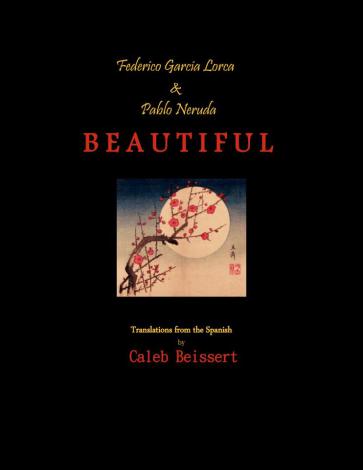 Caleb Beissert is a poet, translator and musician. His published work appears in International Poetry Review, Tar River Poetry, Asheville Poetry Review and Beatitude: Golden Anniversary, 1959-2009.
This week, Poetry at the Altamont celebrates the release of Caleb Beissert’s first book, Beautiful, a selection of poems by Pablo Neruda and Federico García Lorca translated into English. During the last few weeks, Beautiful was well received by enthusiastic audiences at Montford Books & More and Malaprop’s Books & Cafe and is a Small Press Distribution best-seller.
The Altamont theater doors open at 7:00 P.M. for Poetry at the Altamont. Admission is $5 at the door. Beer and wine sold at the bar and lounge will remain open for drinks after the reading. Event link.
UPDATE: Caleb Beissert is the featured guest of the Coffee with the Poet Series, Thursday, February 21st at 10:30 a.m. at City Lights Bookstore. Event…
View original post 741 more words
“Amazing readings, beautiful community,” tweeted one of the poetry marathon attendees Saturday night. Indeed it was a good night to visit Woodland Pattern Book Center to hear poets share their work. To be exact, 150 area poets shared their work.
I participated in the 9 o’clock hour. Featured poets included: Matt Cook, Tom Erickson, Peter Burzynski, Franklin K.R. Cline, Carmen Murguia, Peter Whalen, Bob Koss, Jane Lukic, Michael Wendt. One of the highlights of that hour was to hear a Czesław Miłosz poem read in Polish.
Each poet is afforded five minutes to read. The poems I selected earlier in the day loosely fit the motif of something old, something new, something borrowed and something blue. They were all short poems. One of the poems was a spare two lines. So, I read it slowly. In truth, I try to read all poetry at a slow pace. It is a technique I picked up from some of my favorite poets in Western North Carolina.
After the 9 o’clock hour readings concluded, one of the event coordinators commented that she likes this part of the marathon. She said that the poets are warmed up at this point and the poetry really engages the audience. While milling around after the reading, a board member of Woodland Pattern asked me if I was a visiting professor. I smiled. It is a question I get asked a lot after a public reading.

 Coffeehouse Junkie