It’s true. There is only one article I read from the pages of O: The Oprah Magazine. It is the interview between Maria Shriver and the poet Mary Oliver. [1] “I consider myself kind of a reporter. . .” Mary Oliver says. I think that’s the same sentiment Wordfest director Laura Hope-Gill expresses in this week’s Mountain Xpress article where she describes poetry as “citizens’ journalism.” [2]
“Poetry is a short line between different cultures,” says Laura Hope-Gill. “It can heal the cultural divides that still plague our city. It opens conversations that we need to have.”
The invitation to read my poems at this year’s poetry festival is something I don’t take lightly. I spent the last few nights reviewing poems I’ve written during the last year as well as poems composed during the last decade. The PR/marketing side of me wants to chose poems to read that promote a certain manuscript I’m developing or maybe only read published poems. It’s a promotional game poets play when they read their work publicly. They casually mention that “the next poem I’m going to read was published in the Atlantic Monthly…” or the American Poetry Review or some other notable journal as away to promote their ascendancy of poet extraordinaire.
But my thoughts returned to the idea Laura mentioned in the Mountain Xpress article. I looked through pages of my poems last night searching for material that addresses the idea of healing cultural divides or opening conversations. Selecting poems that fit the general theme presented a bit of a challenge, but there are subtle threads of those ideas in several of the poems I’ve written during the last few years.
Tonight, however, I’ll put aside the task of poem selection and venture to the Vanuatu Kava Bar for Poem-ing the 28801 [3] featuring Barbie Angell, Ten Cent Poetry, Jonathan Santos and Jadwiga McKay.
Next week I’ve been invited to read some of my poems at one of the Asheville Wordfest 2012 events. The schedule is still fluid. So, you’ll have to check the official Wordfest website for the schedule details. Suffice it to say, I am extremely humbled and honored to read with great local and global poets.
The monthly poetry reading series Poetrio continues Sunday, March 4, 2012, 3:00 p.m. at Malaprop’s Bookstore/Café. The March Poetrio features Megan Volpert with SONICS IN WARHOLIA, Rupert Fike with LOTUS BUFFET, and Jethro Clayton Waters with SOUTH OF ORDINARY.
Please note that UNC-A has a champion basketball event downtown this weekend and the public parking garages will charge a special daily “event fee.” Park away from the center of downtown Asheville and enjoy a lovely Sunday afternoon stroll to Malaprop’s. They have a wonderful café with refreshments and poetry for after a nice walk through the city.
Today, I followed a link to a web site that I rather enjoy — the United Nations of Poetry. Serendipitously I found the link and learned that it presents a catalog of international poets. I noticed, however, that some nations are missing from the list. For example, Germany is not represented. Consider including German language poets Durs Grünbein, Michael Hofmann and Sarah Kirsch. Also notably missing are Polish and Russian poets. Vera Pavlova makes a good addition to the United Nations of Poetry representing Russia. For Poland, Eugeniusz Tkaczszyn-Dycki might make a good contribution. And last, but not least, add Greek poet Dimitris Varos to the list of poetry dignitaries. One thing that is unique to the United Nations of Poetry is the inclusion of poets from America representing the indigenous peoples.
Why is this important? I think C. S. Lewis wrote that literature “irrigates the deserts that our lives.” Along that line of thinking, to know and understand the inner life of a nation or culture is to explore the fertile literature of their poets and writers. Film tends to present caricatures and stereotypes of Germans, Russians and Americans, but literature plumbs the depth of cultural nuances. For example, you might miss the significance of the shamrock and the lily in a film about two brothers in North Ireland. In a novel, the weight of those two images will elucidate the drama between the two siblings, and a reader will come to realize that the tensions between two brothers are often the same between nations.
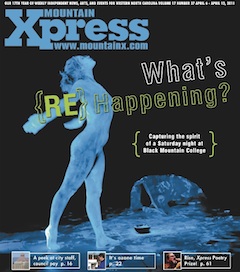
The Poetry Show featured in the Mountain Xpress Apr. 6-12, 2011 issue
Selected from ten finalists by Keith Flynn, founder and managing editor of Asheville Poetry Review, Brian Sneeden’s “The Temple” won the 2011 Mountain Xpress Poetry Prize. Congratulations Brian!
Brian shared double duty Friday night at the 2011 Mountain Xpress Poetry Show as he and I were invited as members of the Rooftop Poets to read at the event as part of “the next generation” of Asheville poets.
The Poetry Show provided an excellent environment to read and hear local poetry. Each one of the finalists read well-crafted verse; from laundry to bath tubs. Laura Hope-Gill kicked off the evening with a wonderful collection of poems. It was also a special delight for me to hear Matt Owens and Mesha Maren of the Juniper Bends reading series present their work. I’ll spare you an event review. But I will mention that Jaye Bartell was the evening’s host and I would like to thank the person whose cell phone rang incessantly during the reading of my poem “The Last Chestnut Tree.” Without you I wouldn’t have been able to pull off that performance.
A wonderful and full evening provided by the Mountain Xpress team and talented local poets!
Instead of writing an eloquent report of last night’s reading, I will just post the notes I scribbled into my notebook. Yeah, if you were there, I was the one with my head buried in a notebook frantically writing. Blame it on my ADD tendencies. Apart from running spell check these notes are as they generally appear in my notebook–complete with poor punctuation, abbreviated thoughts and for some odd reason attention poets’ fashion. Right on … here I go …
Chall Gray
Breaks the ice nicely with a humorous poem about furniture and contrasts it with a poem about a brother and a sister who observe but do not talk about things. He wears a black long-sleeved button down shirt rolled up to the elbow–blue jeans–hair dark, pulled back into tight short ponytail. He ends with a moving homage to his departed father by asking “why.”
Ingrid Carson
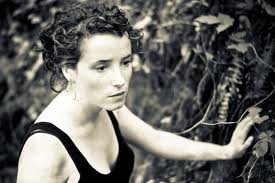
Begins with a poem asking what color is the American dream. “What Now” is read second. She wears a black top, wavy brown hair pulled back, framing her face. “What am I going to do now?” she asks and ends; “What am I going to do now?” Her last poem is in two parts; “Still Life” and “My Hands.” She reads, “a violence of flowers…” She reads with purpose and poise and through delicate lips and intense blue eyes as if to say, I know something you don’t know and I have the floor for a few more lines. “You have pushed the mind to the limits…” She concludes that beauty is found in the ugliest of things.
Thomas Rain Crowe
Wearing all black–he tunes up a wooden flute–poet is participant–reads a letter to the editor of a local newspaper in Jackson county–admits he spent a lot of time writing editors. He reads of beauty and uses metaphor–King Kong movie cements his argument to turn corporate development back to nature’s beauty. He next reads an extended haiku written for Steve Earl for some event last year. “What profit? What Price?” he asks. “We can do better than this,” he concludes the poem powerfully. His poem “Peace Will Come” is accompanied by the evening’s featured keyboardist, Steve Davidowski. “Peace will come one day” is lifted over the ambient keyboard harmonics–his reading intensifies. “When peace comes to stay” ends his poem. He steps back, places the flute to his lips and plays–the keyboardist joins the melody which concludes that session.
Emoke B’Racz
First poem is recited in Hungarian. “Fragmented Life” is about her father who she says is bigger than life–sometimes everyday. “Try not to talk about the time,” she reads. She reads about her father’s internment camp experience: “Now take that.” She shares of the hard life of the punished young men in those camps. “Silently he left.. to give your youth for democracy…taken…” She wears a white blouse, gold necklace with pendant, black suit jacket–1965–“Poets Among Each Other” translated and published in 1970-something (’76?). “This is how we stand my brothers,” she reads her translation. It’s a short work. She rolls her tongue across her lower lip from right to left frequently before saying “I could use some water” then reads her last poem of the evening.
15-minute intermission
Will Hubbard
Reads several poems–long brown hair wrapped behind his ears–as he gazes down upon his papers it rests on his shoulders like a hood–he reads a poem called “Porn” with cynical tones of humor and wry sensibility. “5 for 5 for 3 Straight” is his last poem “and one learns where to leave off” he reads. His left hand casually in his pants pocket, his right hand holds his loose-leaf manuscript. “Saying it how it was originally said…” He reads as one might read a tele marketer’s script.
Rose McLarney
She reads a collection of poems concerning the over development of Madison county–lose of land to corporate contractors–overgrowth of urban/suburban sprawl. “Shouldn’t fight … farms let them go,” she reads. Her thin lips clip her words nervously as if she is unaccustomed to public reading. She wears a black sleeveless top with flowing flowery patterned skirt–hair pulled back, leaving dark curls to cascade down the back of her neck. Her last poem: “… the peace of the American South.”
Laura Hope Gill
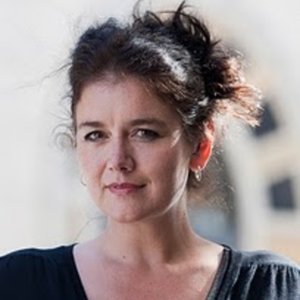
She tells of her BMC connections–reads “Ponco” with an eruption of words and demands social justice “when she was the question” referring to the dead old woman under a poncho many Americans saw after Hurricane Katrina–The image of a woman who died waiting for medical assistance in the aftermath of the hurricane that destroyed New Orleans. She wears hoop earrings, thin gold necklace upon her chest, low-cut white blouse and black sweater. She reads several poems of childhood witness “we slept in our bunk beds … spelled out in silk.” She reads about a stallion. She reads with proficiency and like Ingrid has a smile and sparkle in her eyes suggesting a joke that only she knows the punch line. Her speech skills draw several people forward in their seats. Or maybe its the hard wooden seats we all endure. “The wind of their grandfather’s song… ” she reads.
Glenis Redmond
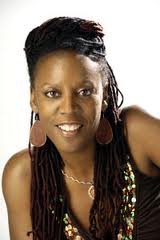
“Enter through the door of war…” she begins after adjusting the microphone. “Grief is an uttering tongue.” She begins with a powerful recitation. She is a performer–practiced in public settings. Her second poem is “Lifting” about the Kenilworth slave cemetery near her neighborhood. “Bid us ride,” she reads. By far she is the most charismatic poet of the evening. “Looking back to the land where courage was born.” Due to the lateness of the evening she says she’ll only read three poems. Her next poem is about Nina Simone: “bitter aint born black.” Her final poem is a recitation: “Every time I hear King speak I feel a rumble…” she starts and concludes, “We shall.”
 It’s true. There is only one article I read from the pages of O: The Oprah Magazine. It is the interview between Maria Shriver and the poet Mary Oliver. [1] “I consider myself kind of a reporter. . .” Mary Oliver says. I think that’s the same sentiment Wordfest director Laura Hope-Gill expresses in this week’s Mountain Xpress article where she describes poetry as “citizens’ journalism.” [2]


 Coffeehouse Junkie