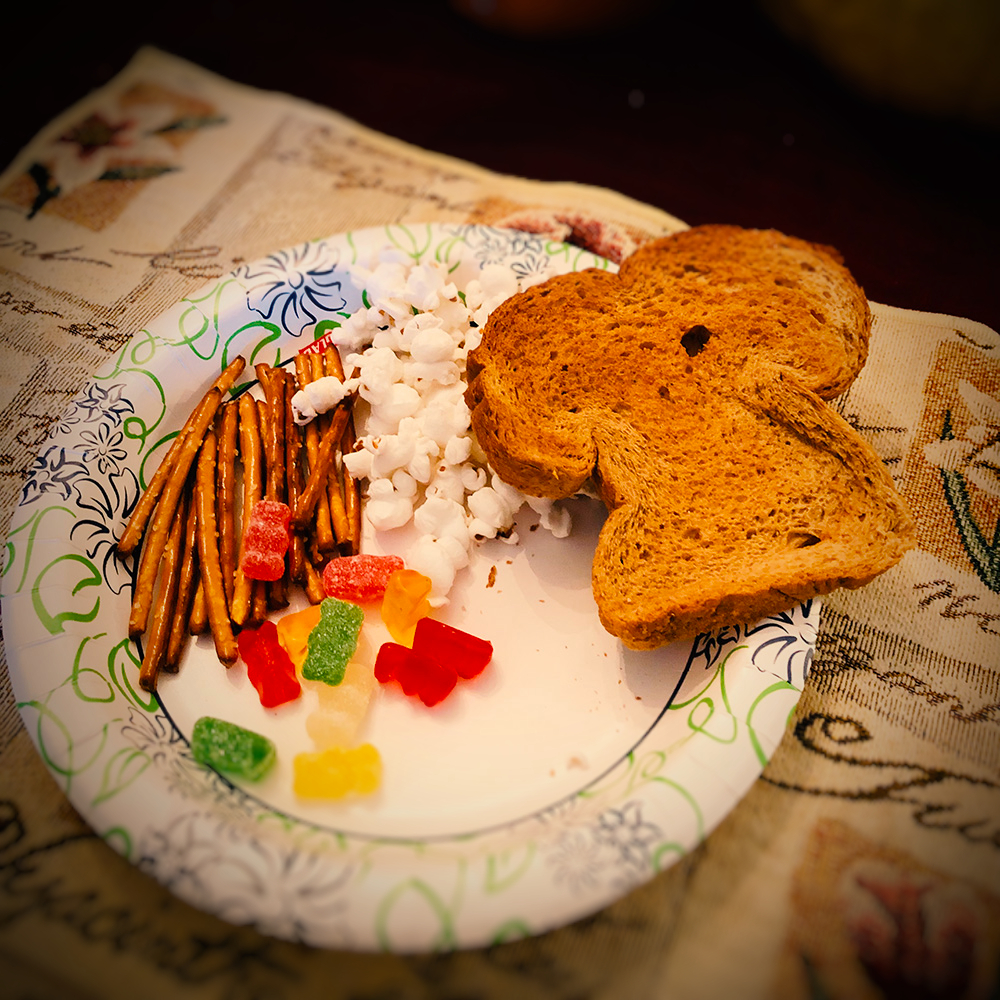
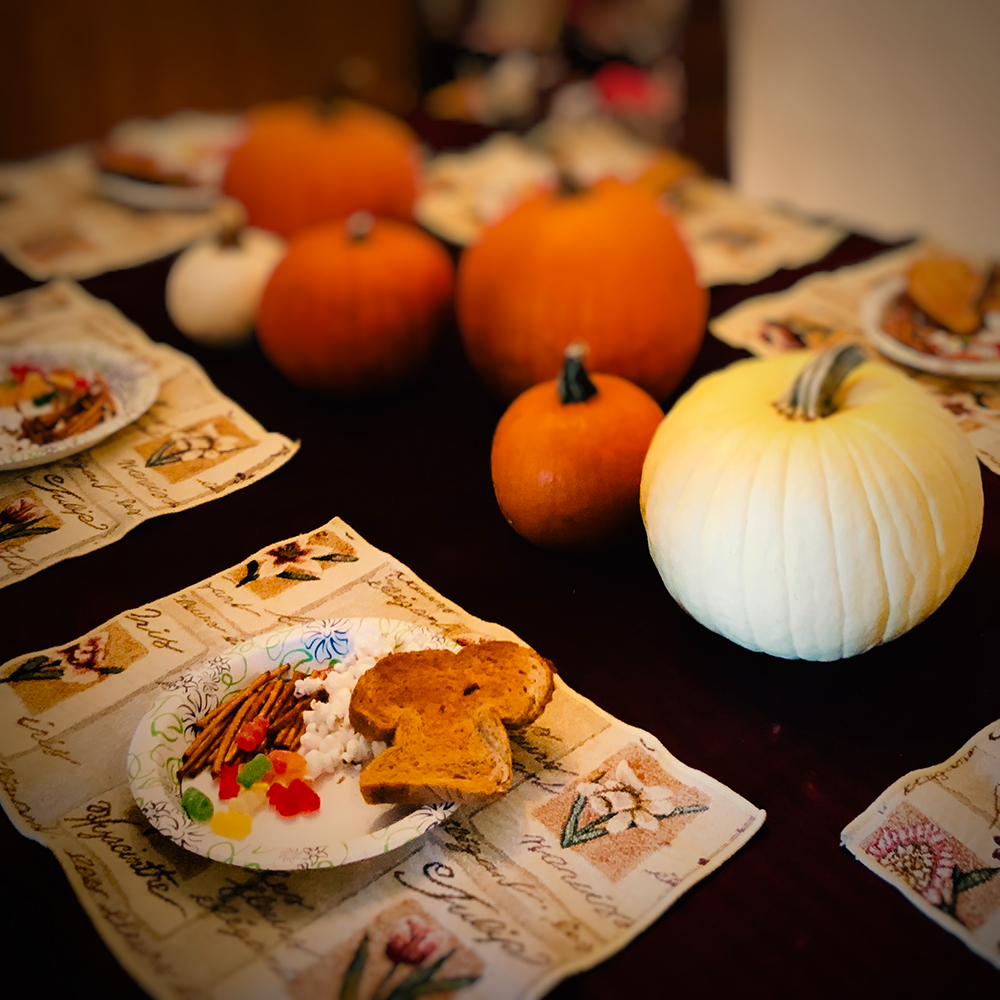
The pressure to perform and succeed at holidays stresses everyone. The lists of things to do, people to see, and places to go is overwhelming. That is the simple and delightful plot of the 1970s film A Charlie Brown Thanksgiving. A favorite scene is when the Peanuts characters prepare the Thanksgiving feast: buttered toast, popcorn, pretzels, jelly beans, and an ice cream parfait.
One year, our family put together a Charlie Brown Thanksgiving feast of toast, popcorn, pretzel sticks and gummy bears (could not find jelly beans at the convenience store) to share. The snacks were placed in brown paper lunch bags and shared at gatherings. The disappointment was that most of those who received the Charlie Brown Thanksgiving snack bags had never scene the film. Or did not remember the feast items. But I am grateful for the lesson.
Are you thankful for a challenge or disappointment that turned out to be better than expected? What teaching or teacher are you grateful for this year? Name a person in your life currently who is a blessing. Who is a person in your past for whom you are grateful? What is something you learned to do that is a blessing?
There so many things and people to be thankful for that an individual might be able to fill a bare November maple tree with bright red paper thanksgiving leaves.
Every small town barbershop is a source of stories. Sad stories. Funny stories. Good stories. Confessions. Tips on how to buy an automobile. Tips on where to find an honest mechanic. The country barbershop was a community center. A public square.
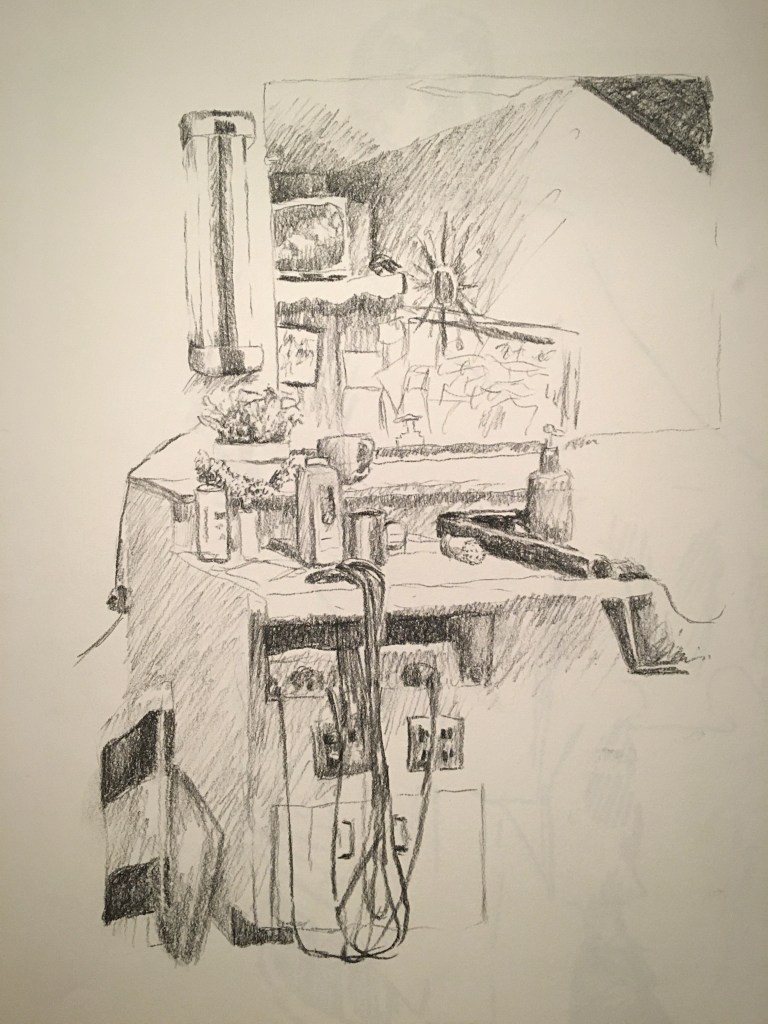
This charcoal sketch captures the old barbershop on Main Street back in the 1990s. No television. No music system playing in the background. Just a couple decks of playing cards. A cribbage board. Back issues of Field & Stream magazine. And a lot of stories.
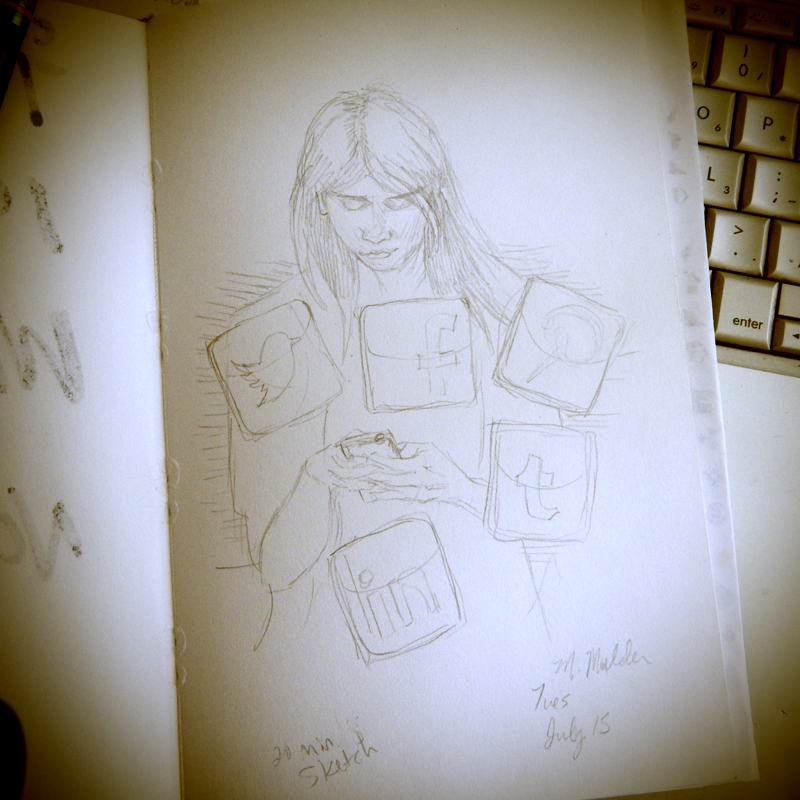
A picture is worth a thousand words. A common expression. Or common illusion. The story behind the image used in a post, “Meformer” (vs “informer”), does not tell the whole story. Not even part of the story. The post deflects the writer’s fears and anxiety. What do you see in the twenty minute sketch captured by an outdated iPhone photo?
Another images portrays an artist’s workspace. An unfinished ink and watercolor painting. The related post reveals part of the story. Fear motivates. But there is a whole story arch of dreams and desires. Hopes and aspirations. And failure. If you were to write a thousand words about this photo, what story would you tell?
Notepads capture interesting details. To do lists. Contact information. Grocery lists. Project tasks. Appointments. Or this photo of an anatomy of print advertising. Why this list? What story does this relate?
The illusion of these photos is the framing. The information that is cropped out of the image is equally as important as what is framed within it.
The world harbors two kinds of strife. One promotes healthy competition among neighbors. The other determined by the will of the gods. Or so the rustic poet proposed.
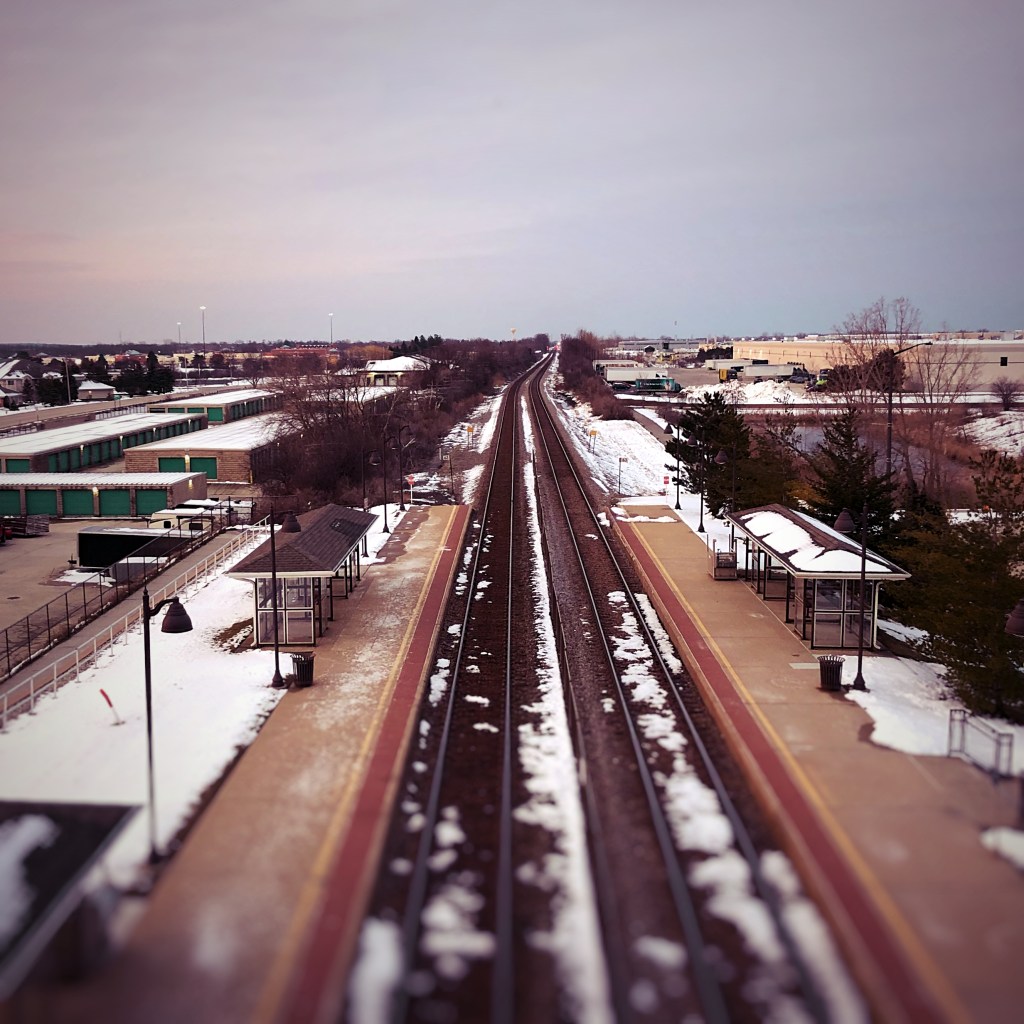
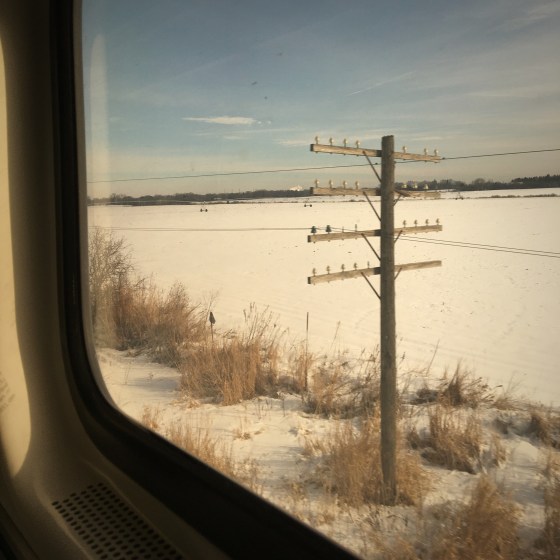
Due to personal and professional reasons, my commuting practice has not included Amtrak®. At least not for the last few months. The last time I took the train to work snow remained on the ground. Yet, in spite of the long absence a fellow commuter kindly informed me of recent service changes. I was on the wrong side of the train platform. Due to summer construction, the northbound train runs on a different track. She shared other details as a long lost friend might. A thread of conversation resumed based on our mutual commuting practice.
When I boarded, one conductor greeted me with a common honorific and my surname. As I took a seat, another conductor passed by with a welcoming, casual good morning and my first name. As if I had only been gone for a long weekend. “Good morning,” I replied.
The idea of relationships and strife are themes I have considered since that summer day. This may be a contrast between the modern (relationships) and the ancient (strife). Personal or professional, the desire to belong or feel wanted or at least tolerated is vital. This is true for individuals as well as community. To nurture a relationship requires work. And intent. The commuter and the conductors thought I was important enough to connect with. If only in a casual or professional capacity, it provided a feeling of belonging. Should relationships be free of conflict? Should relationships exclusively nurture polite exchanges? What about course correction?
If I ignored the commuter, I would have been on the southbound train instead of the northbound train. The poet wrote: “when a person’s lazing about sees his neighbor/getting rich. . .” Or in my case, with headphones on I see my neighbor on the other side of the track and heading north. . . “Strife like this does people good.” In this manner, strife does not need to be abrasive. To achieve good correction and instruction apply decency and respect. Even honor.
Were all summers like this one? What were the stories of previous Augusts?
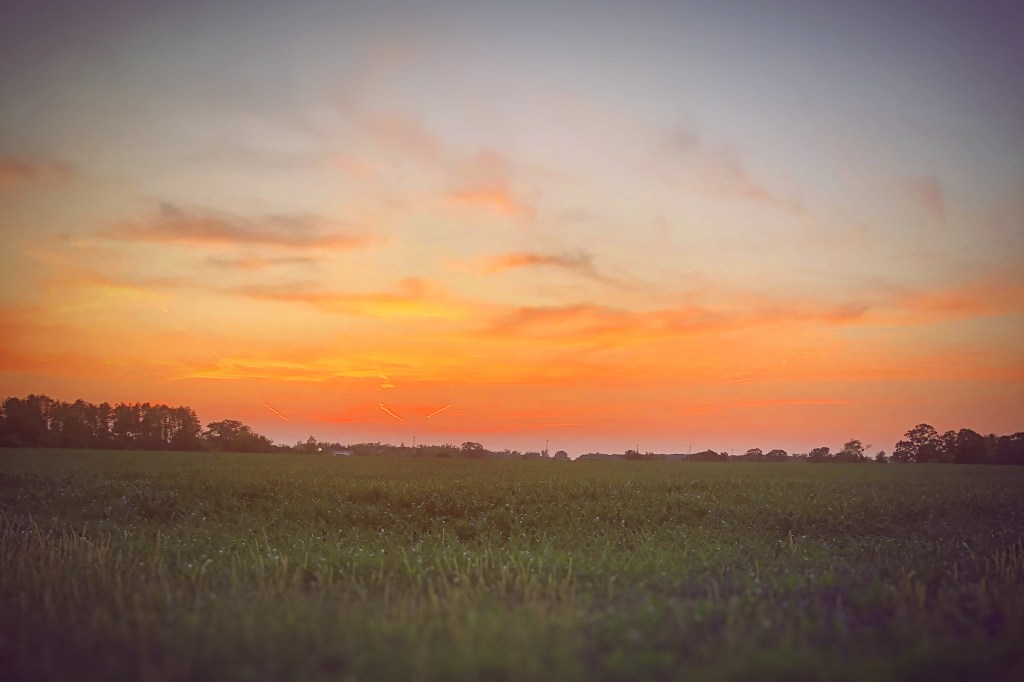
The summer passed. Choked by excessive heat and wildfire smoke. Like the blur of highway signs in the predawn light, it sped by. Were all summers like this one? What were the stories of previous Augusts?
From three years ago:
Something in front of you right now was designed by some unseen modern peasant who worked long hours with short deadlines. . .
“There is juju with these things,” he said inspecting one of the shields I painted. “People connect with this stuff, because it was created with human hands. Not some computer.”
Looking back over these August thoughts, essays, meditations. . . this modern peasant needs to devote more time to things made by human hands. So much of my professional life is filled with screen time, that it is time to return to handmade art, design, and poetry.
West of the highway that heads north and south, the country opens like a John Steinbeck novel. West of the highway, field upon field of alfalfa, corn, and other grains line rural roads reaches to the setting sun. How long has that highway been there; dividing the land? A hundred years ago Highway 57 connected Milwaukee to Chicago. Before that, the land bore the raised scars of the railway system. And before that. . . well, it is difficult to image.
The land east of the highway stretches to the shores of the great lake. A sliver of land, eight to ten miles in width, rests between the lake and the highway. East of the highway bustles with industry and manufacturing. Almost a quarter of the population of the state lives in that corridor. To the east of the highway, a wall of concrete and steel supply chain warehouses and distribution centers fortifies an expanding arcade of streetlights for commercial and residential harbors.
The land west of the highway covers a 150 miles or more to the Mississippi River. It is a different country — quantum distat ortus ab occidente. An ocean of fields and pastures dotted with islands of trees, farm houses and villages contrast against the land to the east of the highway. Occidentis means “region of the setting sun” or “western part of the world/its inhabitants.” The native name for this land is disputed. The original name is “where the waters gather” or “red stone place” or something. The name of the land was Gallicized by explores and later Anglicized by settlers. Aldo Leopold observed, “Land, . . . is not merely soil; it is a fountain of energy flowing through a circuit of soils, plant, and animals.”
The month of May registered a trace of rain along the patchwork landscape of the calendar. The sandhill cranes flew in from the south lands. Nested. And within a month, they cared for hatchlings. Ducks and geese followed the migration pattern. The robins were next. Though this year, a robin was spotted in late February. The red winged blackbirds gathered around the marsh areas.
As June warmed the countryside, mulberry bushes squeezed fruit from its branches. Rabbits and squirrels populated the backyards and fields of the village. The pale cloudless skies led to the longest day of the year. Fields of corn flickered to life with lightning bugs. Summer temperatures arrived. As did wildfire smoke from a thousand miles away.
Turtle doves made their nest in the corner of the apartment’s roof gutter back in May. The nest constructed at the end of the gutter and before the downspout bore two chicks. By summer solstice they had grown and flown away. The nest is empty now.
And now it is July. Bullfrogs sing a deep throaty “jug-o-rum” as the Buck Moon arrives. After sunset, Altair comes in to view high in the eastern sky. Or is that Vega?
It is an early summer morning. It rained the night before as I walk a mile or so before I climb into the car for the morning’s mega commute. The parking lot near my home is dappled with puddles slowly evaporating. It reminds me of when I first started taking black and white photographs in high school. One of my favorite subjects was reflections of the sky in puddles.
I don’t remember what initially attracted me to the subject matter, but I remember loading a 35mm SLR manual camera–either an Olympus or a Pentex–with a spool of film, pulling the leader and lining the sprocket holes with the sprockets, securing the leader to the spindle, closing the back door and advancing the film a couple frames. I’d sling the camera over my shoulder and head outdoors to capture a surreal glimpse of the heavens from the perspective of puddles on…
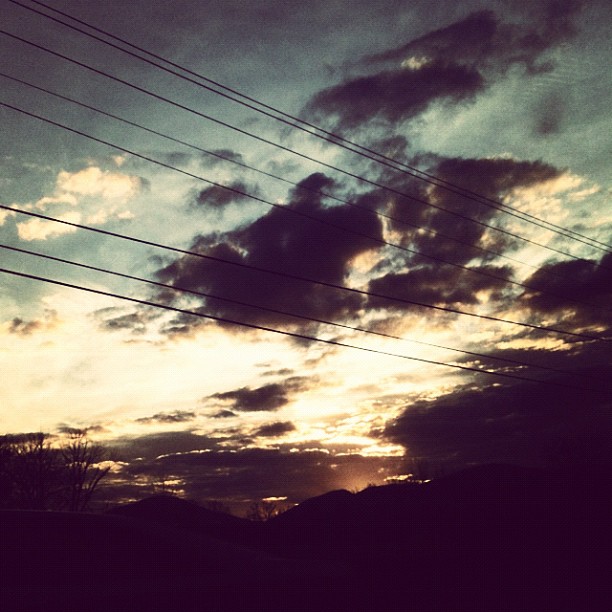
“The first awareness of night was a world of darkness bounded by a streetlight’s glow, the barking of a distant dog, the stars, trees, dim houses. The sense of being enclosed by the night, of being protected, as it were, by the darkness, is ancient.”
–August Derleth
January. The sun set half past four o’clock. Air temperature registered fifteen degrees Fahrenheit. As wind gusts rocked the automobile from side to side, the windchill felt more like five below zero. Pools of parking lot lights blurred from time to time with blowing snow.
I waited outside the grocery store for the oldest child’s shift to end. In better weather, the child walked to the grocery store. Or rode a scooter. But the long expected Wisconsin winter arrived with a fury. And walking, or riding, to work presented challenges.
The old auto’s engine idled as the heater worked to warm the vehicle’s interior. In spite of the effort, my feet were cold after twenty minutes of waiting in the south part of the parking lot. I wore insulated gloves as I read a library book from the glow of the parking lot lights.
As the heater fan moaned and engine grumbled, I thought of night and darkness and protection. From one of the books in the Sac Prairie Saga, these ideas rose before me like my breath in the winter air. The long nights of winter. The home brightened by Christmas tree lights. The contrast of the light and darkness. Protection and vulnerability. Is it vulnerability? Or destruction? Does not Epiphany land during the longest nights of the astronomical year?
A truck parked in front of my automobile. Head lamps blinded me. I looked away to the store exit until the driver turned off the headlamps and shuffled into the grocery store entrance. My eyes returned to the book and reread the passage. And the a half dozen more pages before a familiar stride passed below the parking lot light nearest me. I welcomed the child into the warm protection of the vehicle and drove home.
The young moon, a waxing crescent, appeared in the southwest like a cold smile. Jupiter, above the right tip of the crescent, glared down upon the frozen fields and village. I recalled not what we talked about on the way home, but the idea of shelter and safety persisted in my thoughts.
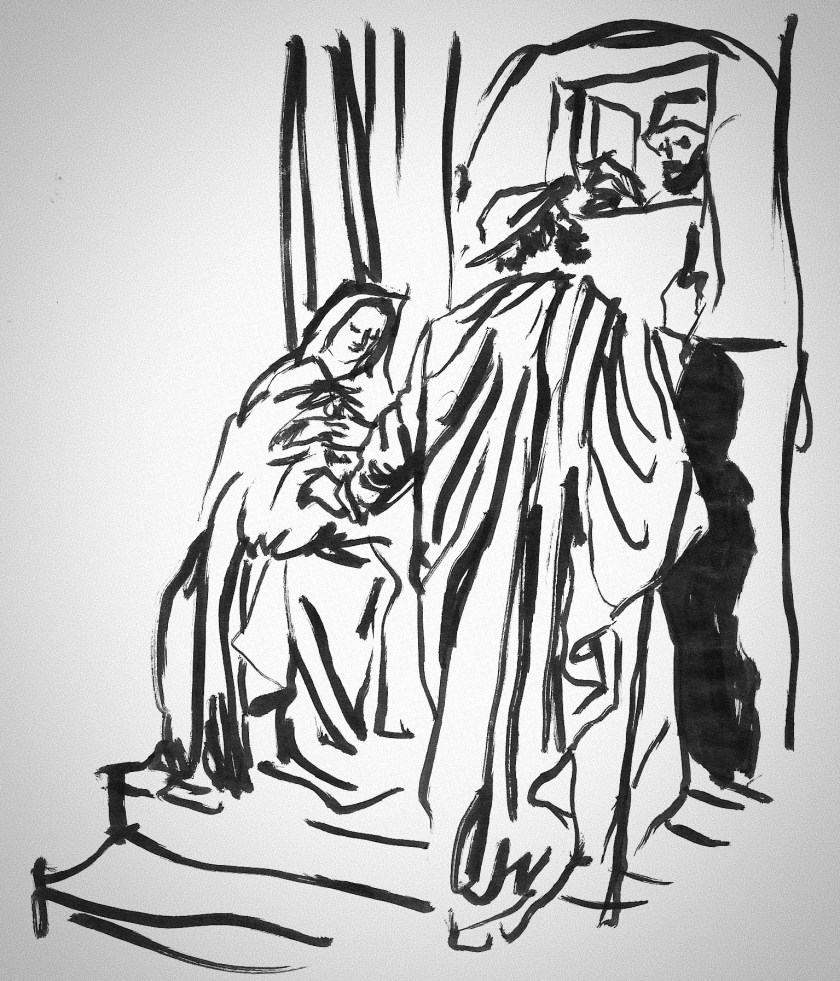
Later that night. After supper. After even prayers. I wrestled with an illustration. Measured, composed, and sketched. A world of darkness “bounded” by street lamps? The image of darkness leaping or jumping over glowing spheres of street lamps captivate my thoughts as I inked over the pencil marks on the illustration paper. Pen stroke after pen stroke filled the page until my eyes grew weary. And I surrendered to that ancient enclosure of night.
The morning was cool for July. The dew point moderate. Not too humid. The sun had risen an hour before my wife and I drove through the countryside to meet a friend for breakfast and coffee. Wildflowers of purple and white filled the ditches along the roadside. The windows of the motor vehicle rolled down just a bit to catch the rush of air and scent of summer.
At the cafe, we enjoyed our morning meal and coffee. I brought an old sketchbook and some Pitt Artist Pens to practice dormant skills during the after-meal conversation. My confidence in these abilities has deteriorated as more and more my job demands extensive screen time. The computer screen, keyboard, and trackpad create a distance between the art and the art maker — between the graphic and the graphic designer. My concern is that of atrophy. Will my mind and body remember how to sketch the lip of a glass? Was this a false concern? Maybe. Maybe not.
Steven Heller wrote of the Polish designer Trepkowski that his posters were “designed for cultural events” and did not depend on weekly sales goals or production reports. The brush of the Pitt Artist Pen handled the curve of the coffee mug and quick short strokes of a plate’s shadow. This ink drawing captured a small cultural event. A meal among friends on a summer morning.
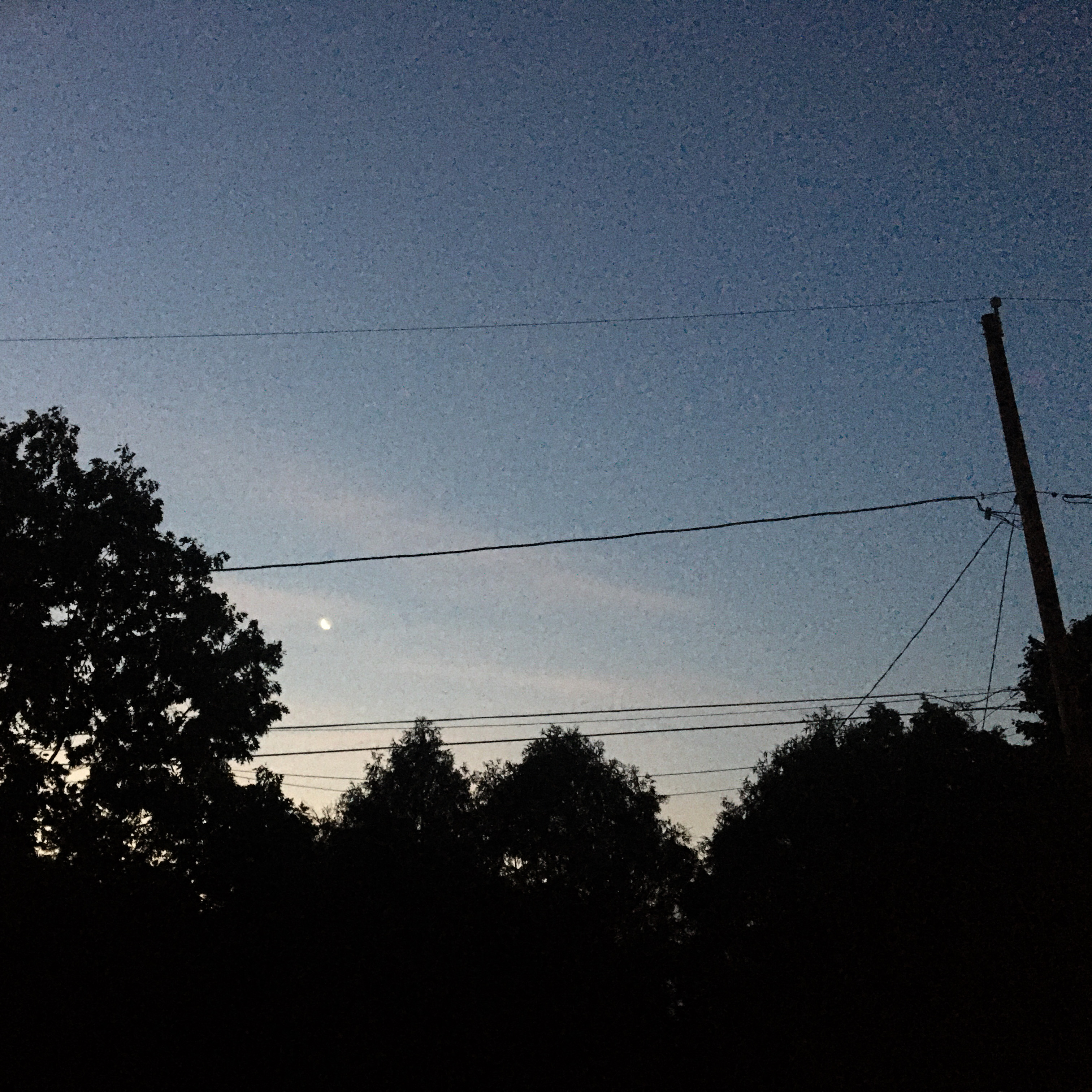
Why wake up at 4:30 a.m.? For a moment like this. A sliver of the moon is barely visible in the pre-dawn hour. Within 45 minutes she will no longer be seen. The sky will be too bright–even at 5:30 a.m. It is not quiet–like some people may think. Birds chirp in choruses deep in the shadows of shrubs and trees. And because it has been so hot recently, the loud buzz and hum of air conditioning units in the apartment complex going on and off at intervals punctuates the hour. Despite the audible sounds, there is a silence that allows the mind, body, and spirit some time to focus before the clatter and clutter of the day disrupt attention.
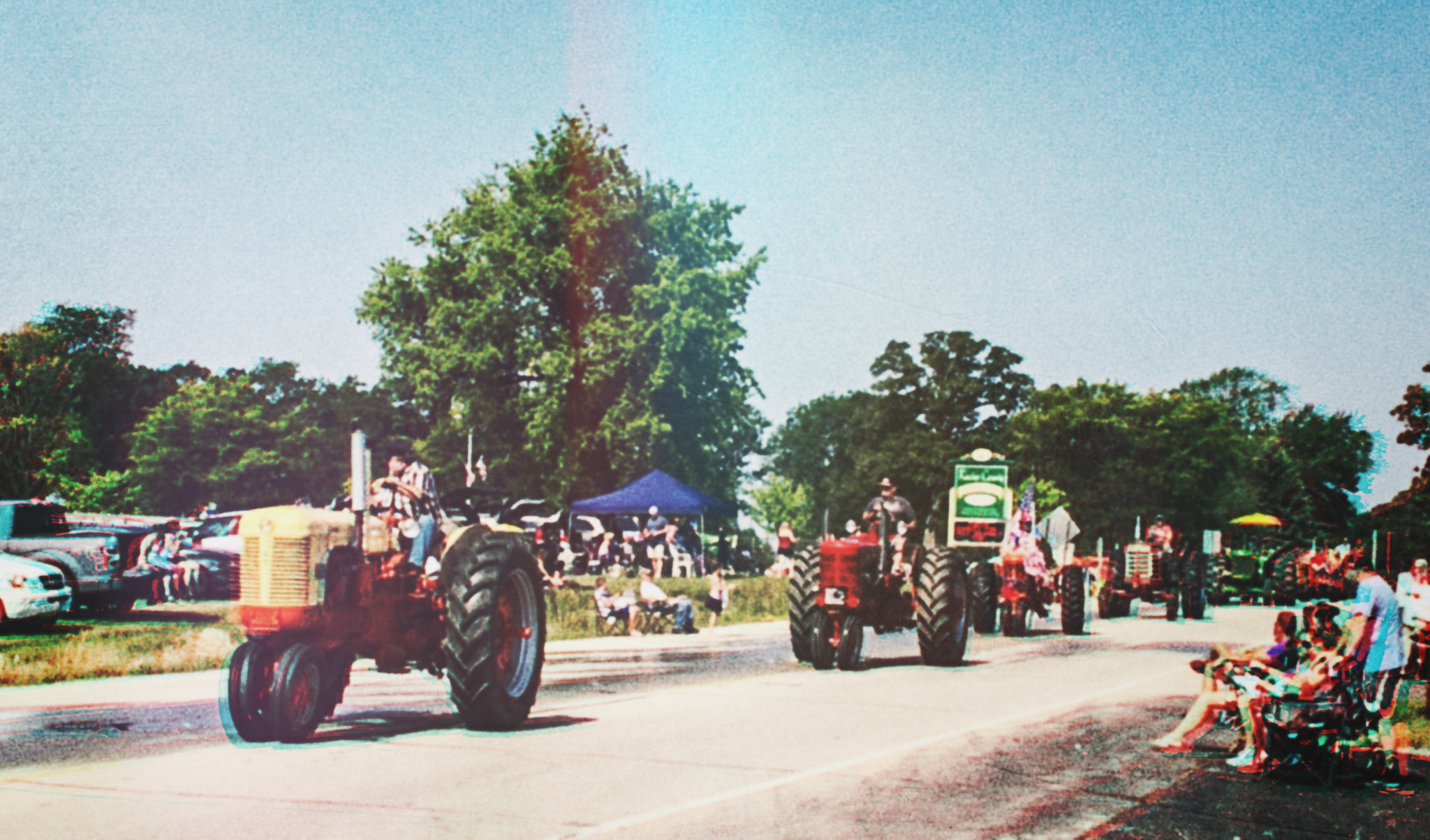
Fourth of July parades in small town America reflect a cross section of a nation. Antique tractors, classic automobiles, fire engines, floats and flatbeds, and horses and riders all pass by crowds of Catholics, Protestants, and Sikhs. United we stand along a two-lane country highway under a blazing hot sun to cheer and wave at family, friends, and neighbors in our community.
Ten years ago today I had no idea that this image — captured during a morning jog — marked the end of one era and the beginning of another. When I look at this image I remember when I took the photo, what I was thinking, where I was, who I needed to talk to, and why. Everything seemed to change that week.
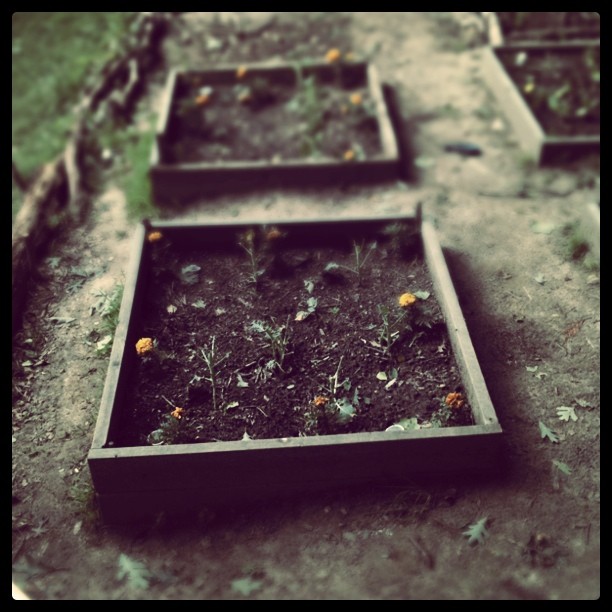
The damage one groundhog did to a garden in a single morning.
I searched through the archives this morning as I waited for the work laptop to install software updates.
Five years ago this month I posted two blogposts. The entire month. Looking back, that may be an average. June is a light month for postings when compared year over year. Except in 2011 — that month 79 blog posts were offered.
Ten years ago to the date I posted the above photo in this blog post. Not mentioned at the time was that a female groundhog had eaten all the young broccoli and greens that had been planted earlier that spring. An expert was called in and he humanely captured the mother and her two pups. He informed me that groundhogs mate in early spring. Female groundhogs have really short pregnancies. So, by June the groundhog in our area was a very busy mother. It was difficult to get angry at the groundhog for eating most of my spring plantings. She was just doing what groundhogs do. Mother and pups were safely relocated to one of the nearest state parks.
Fifteen years ago this month I published a weekly column. I had been invited to contribute a weekly column by another writer. At some point I considered collecting those columns in to a book. But that manuscript, or manuscripts, is probably buried in a junk drawer somewhere in the garage.
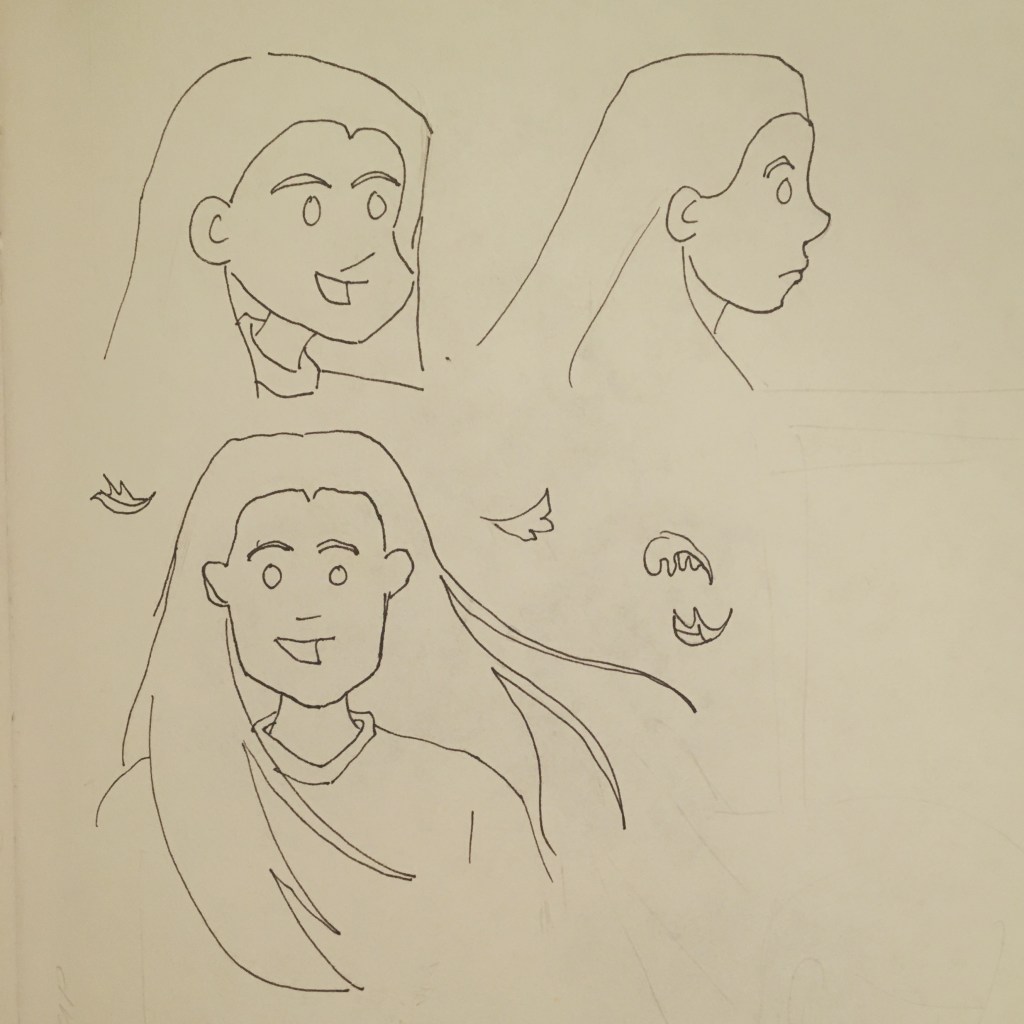
Twenty years ago. No blog. No laptop. Just a black cloth hardback sketchbook. I sketched a model sheet for a comic book proposal.
Previously mentioned, the above image is an old sketch of the Luther Terry painting.
On weekends, I visited an art museum when I was younger. With pen and black cloth sketchbook, I recorded the painting in to my sketchbook. Practiced drawing. Researched an allegory.
But capitalism is a poor cultivator of the arts. For the price of an item of beauty and value, some would pay the same price for a 728 pixel wide by 60 pixel high web banner. A digital item that pastes at the top of a web page or email for a week or two and then disappears.
The lesson I quickly learned is that beauty is not useful. Art and design that is practical and commercial are valued in America. Sacrifice the permanent on the alter of immediate. This utilitarian principle fuels professional success. Or at least provides employment.
This drawing in my sketchbook reminds me that I once believed that beauty is lasting. And, I still do.
“Yeah. I was cleaning up some stuff in the garage and wanted to see of the easel was in working order.”
“Is it?”
“Sort of. . . the base wobbles. . . but that can be repaired with a wooden shim.”
“And you have a canvas on the easel.”
“Yes. . . well. . . wanted so see if the canvas was secure on the front lower horizontal bar. The top bar works. But I may need to replace the wing nut on the lower bar.
“Looks like you started painting.”
“No. Not really. Gessoed over an old painting. . . Several years ago.”
“What was wrong with the old painting?”
“It was a sketch. . .”
“Well, looks like supper is almost ready.”
“Yeah. . . you hungry?”
Later. After supper.
In the garage, old sketch books revealed ideas for paintings. Sharpie marker drawings. Charcoal sketches. Conte crayon drawings. Graphite sketches.
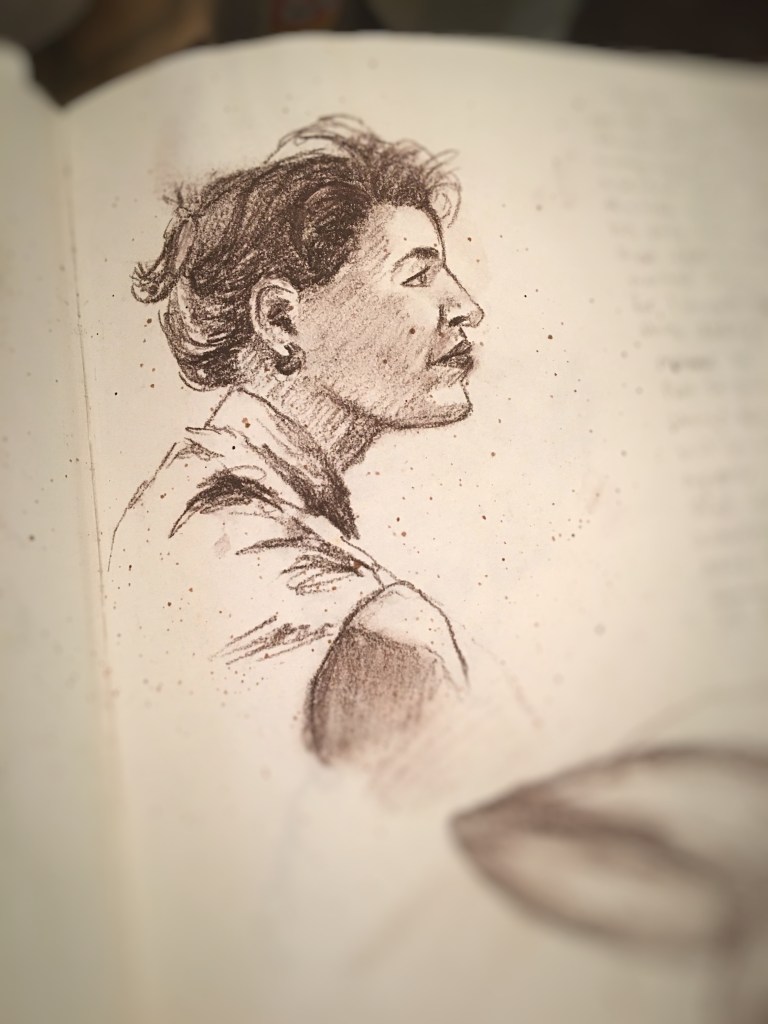
The sketch of a female profile. To be used in a composition inspired by a Luther Terry painting. An allegory. But who should model for the composition’s three figures? Many sketches. Poses. Lighting. All collected in thick hardcover black sketch books. One sketch earns a few minutes of consideration. Maybe. . .
A sigh. A glance outside the garage. Shadows lengthened to darkness. Sun has set.
Ever have one of those moments when you realize you are not what you claimed or thought you were? Where an illusion of yourself, either self-imagined or externally imposed, dissipates.
Well, an interesting thing happened to me on the way to the Intermodal Station. While I had thirty minutes to spend, I lost my way through the labyrinthian shelves of Downtown Books in search of a Latin dictionary. Instead, I found a used English dictionary.
Knowing that half of the English language is built on the foundation of Latin, I found a delicious word: florilegium. Culling flowers is the literal definition. But “a volume of writings” reminded me of something else. The idea of gathering literary flowers or collecting the flowers of one’s reading. Somewhere between the Middle Ages and Renaissance the practice of writing quotes and excerpts from other texts began. Later it manifested itself in European culture as…

![DSCN3428[sqr-tilt-dallas]](https://coffeehousejunkie.net/wp-content/uploads/2015/06/dscn3428sqr-tilt-dallas.jpg?w=560)
![DSCN6003[DSCN6002[sqr-basic-lomo-dusk-tilt]]](https://coffeehousejunkie.net/wp-content/uploads/2016/07/dscn6003dscn6002sqr-basic-lomo-dusk-tilt.jpg?w=560)

 It is an early summer morning. It rained the night before as I walk a mile or so before I climb into the car for the morning’s mega commute. The parking lot near my home is dappled with puddles slowly evaporating. It reminds me of when I first started taking black and white photographs in high school. One of my favorite subjects was reflections of the sky in puddles.





 Coffeehouse Junkie