on the radio : a poem sketch

Rest my head in
hand near the table
where a small black
radio plays an
instrumental I
have never heard but
know it… know its
emotional
audio content.

Notes plucked
from guitar strings
weave and release
a story that
resonates deep
within my soul
and makes me want
to cry and hope.

The announcer
says his name is
Ottmar Liebert
but does not share
the name… the name
of the song that
makes me want to cry.

(Literary) Weekend photo essay (with some comments)

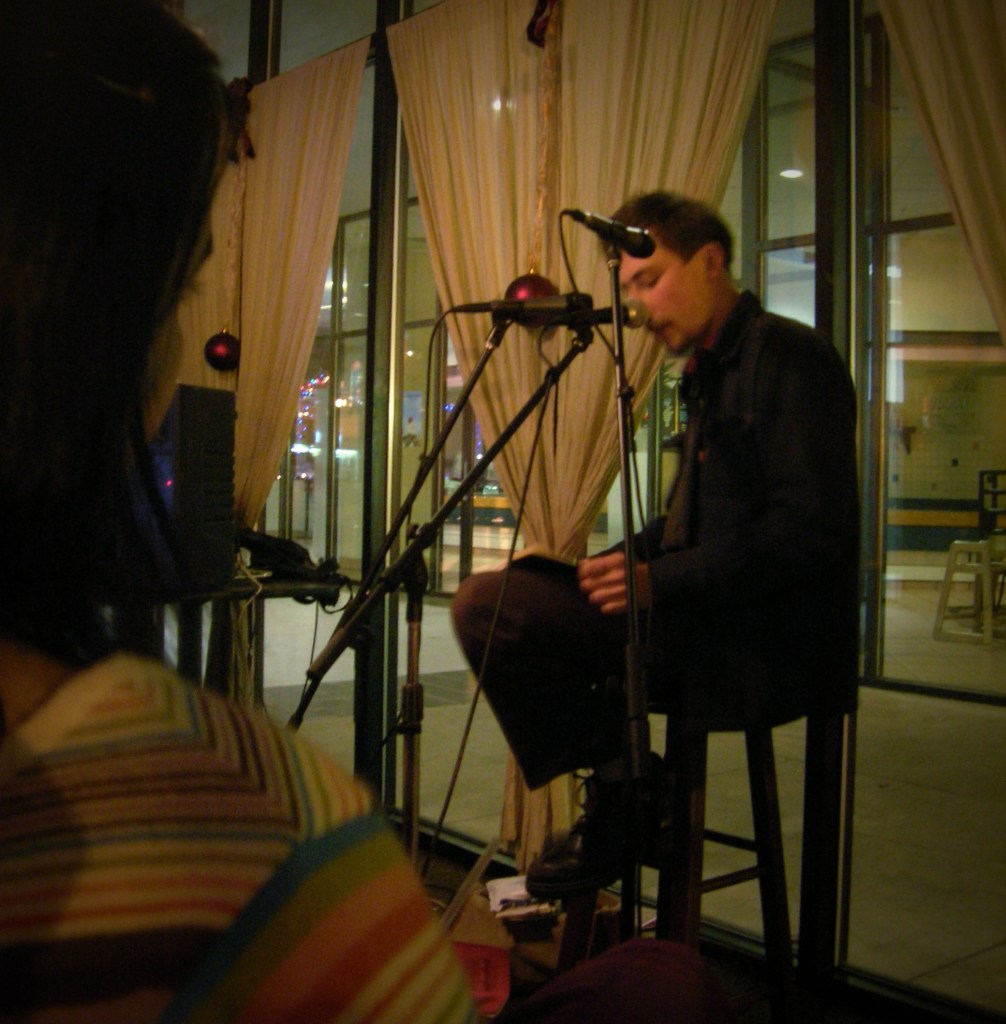
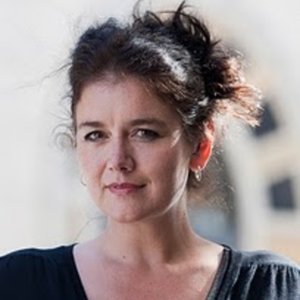
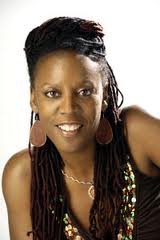
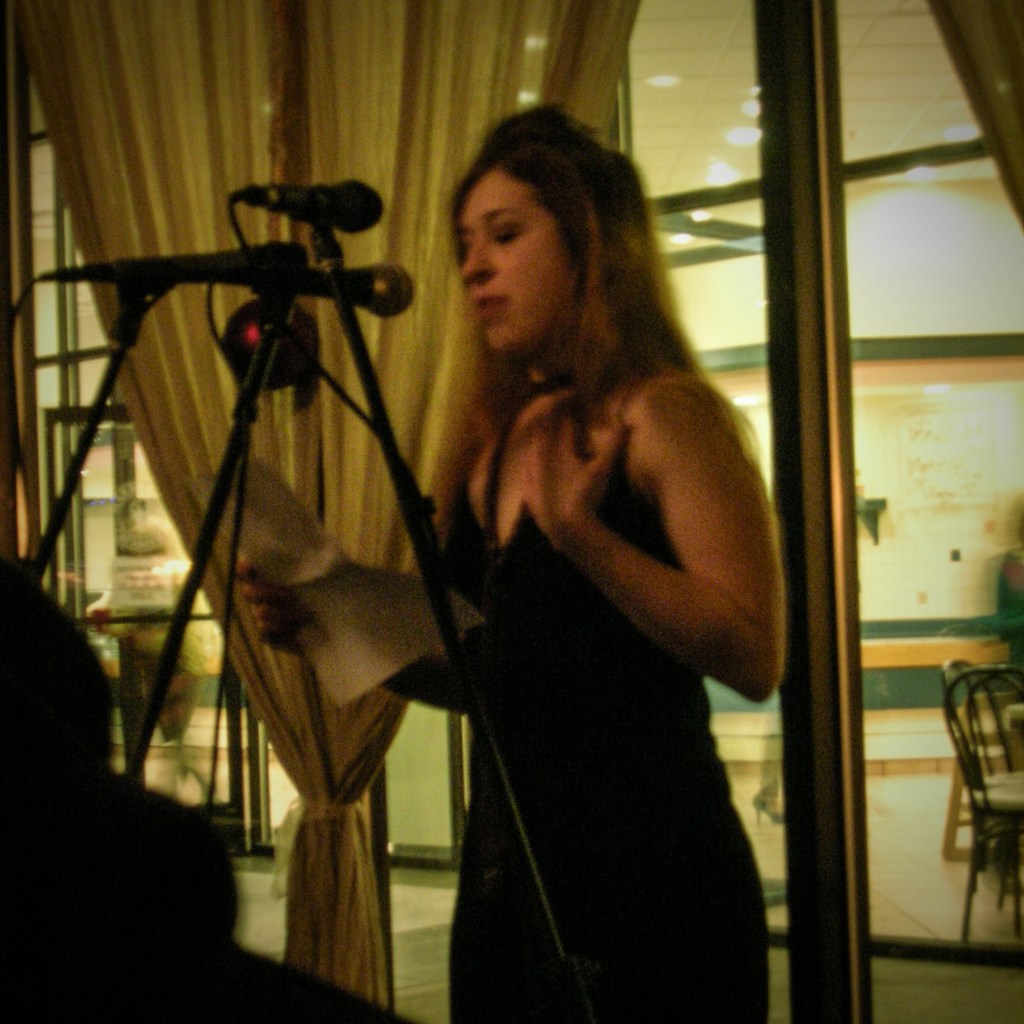
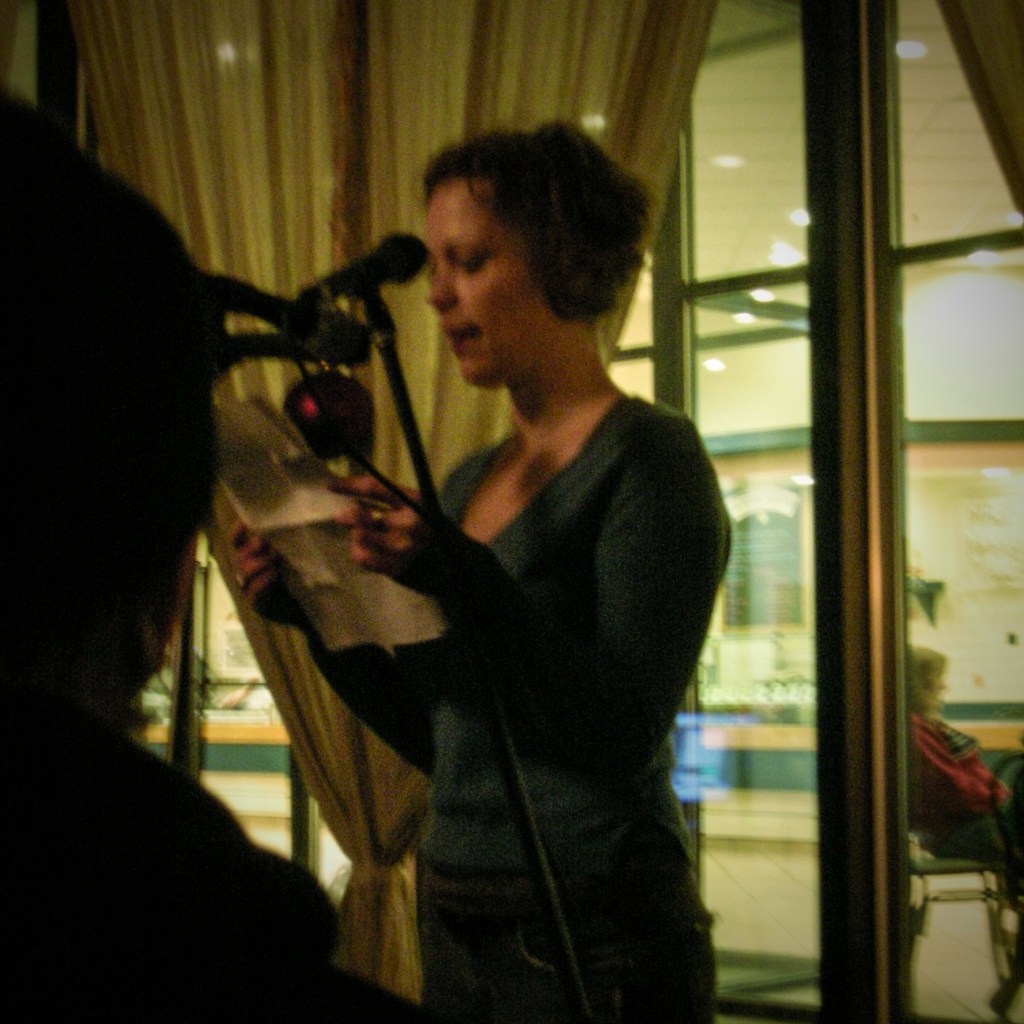
The Flood Fine Art Center poetry reading series Friday night inspired me. Four talented poets read their work to a very supportive audience.

Stephen Kirbach

Shad Marsh

Jennifer Callahan

Lynette James

Sunday afternoon offered a Writers at Home Series at Malaprop’s Cafe & Bookstore. Patrick Finn and Michael McFee read from their work.

Michael McFee

Flood Fine Art Center Poetry Reading Tonight

Flood Fine Art Center

FRI Mar. 16, 8:30pm

Poetry reading series features:

Stephen Kirbach, Shad Marsh, Jennifer Callahan & Lynette James.

Flood Fine Art Center located in the
Phil Mechanic Studios

Poetry : Press Release

Flood Gallery Fine Arts Center, Asheville, North Carolina

On March 16, 2007, Flood Fine Arts Gallery will host its monthly poetry reading at 8:30pm, featuring the following poets:

Stephen Kirbach’s work can be found in Apocryphal Text, Shampoo, and Word for Word. He teaches Humanities at UNC–Asheville, and organizes the web-based writers’ forum, Wire Sandwich. Kirbach also hosts “Stunt-Cipher-Mayhem,” a radio show on WPVM that explores experimental music and sound.

Shad Marsh has published fiction in the flash fiction anthology Blink, and his poetry has appeared in Artvoice, Ghoti, Light, The Muse, The Pebble Lake Review, Vox, and Wire Sandwich. Marsh serves as the poetry editor for the E-zine Edifice Wrecked. He lives in Asheville, NC with his wife and son.

Jennifer Callahan studied creative writing at Austin Peay State University, and attended graduate school at Washington University. Her poetry has been printed in Zone 3. In 2004, Callahan participated in Words of War, an exhibit featuring writers’ and artists’ works about their personal experiences with war. Her photography has been displayed at Maryville College of Art and Design, Studio 101, and Untitled Nashville. Callahan currently lives in WNC, and works as a wedding photographer.

Lynette James will be the fourth poet. Her bio was unavailable at the time of this release.

Flood Gallery Fine Arts Center is located at 109 Roberts Street in the River Arts District of Asheville North Carolina. For more information, please contact Mark Prudowsky at info@floodgallery.org or call 828-776-8438.

I’m on NPR!

Okay, my wife called this morning and said they mentioned my name on the local NPR radio station–WCQS. It is in regards to the Arts & Events Calendar–specifically the poetry reading at the Flood Fine Arts Center. I will be reading 6 to 10 poems with other poets–read press release.

So I had my three seconds of NPR fame. Back to your regular activities. But don’t forget–Friday night, 7PM, Flood Fine Art Center.

(Now if I can get Garrison Keillor to promote this gig…)

Poetry reading, be there

So, there’s this poetry reading Friday night and you’re all invited. And I think there’s drinks and food available. So, like, I guess I’ll see you there.

Write Stuff: Valintine’s Day Card

This week’s contribution to Write Stuff1 is a Valintine’s Day Card.

NOTES:
1) Write Stuff, accessed April 9, 2009, http://www.take2max.com/writing/ (page no longer available, web site deactivated. Write Stuff published blog posts from 2006 to 2008. Write Stuff moved Write Anything, https://writeanything.wordpress.com/)

Poetry : Press Release

Flood Fine Art Center, Asheville, NC

Asheville, NC (January 31, 2007) – On February 16, 2007, Flood Fine Arts Gallery will host its monthly poetry reading at 7:00 PM, featuring the following poets:

Britt Kaufmann lives in Burnsville with her husband and three pre-school aged children. She hosts a local women’s open-mic at Blue Moon Books and serves on the steering committee for the Carolina Mountains Literary Festival. Her work has appeared in The Pedestal, Literary Mama, Rapid River, WNC Woman, SouthLit.com, and The Mennonite.

Matthew Mulder is a senior contributor to an independent monthly newsmagazine, The Indie, a weekly contributor to Write Stuff (a Web log about writing), and had been published in ISM Quarterly, The Blotter Magazine, Rapid River, and other small press publications. His poetry chapbook, “Late Night Writing”, is available from Wasteland Press and Amazon.com. He lives with his wife and children in Asheville.

Brian Sneeden has lived and worked in Asheville for three years. His one-act play, Act of Kindness, is currently in rehearsal for a mid-March world-premier. Brian’s work has been found in Wander, Headwaters, and Eye for an Iris, as well as the spoken word compilation CD, Objects in Mirror. Brian is a recent recipient of the UNC-A Undergraduate Research Grant for Playwriting, and his first manuscript of poetry, Antlers, was completed earlier this year.

Barbara Gravelle spent many years of her writing life in San Francisco’s North Beach poetry scene. There she completed North Beach Women of the Fifties, a series of interviews and discourse with women integral to the Beat movement. Archangel Books published her first full-length poetry book, Dancing the Naked Dance of Love, in 1976. Gravelle is currently active in the local writers’ group, Women on Words, and is completing a new manuscript, The Woman on the Roof.

First publication of the New Year!

Check out four new poems published over at the Southern Cross Review. I don’t know what I like more–being published at SCR or being sandwiched between and W. H. Auden and a Rubens painting (visit the link to see what I mean).

One of my favorite paintings is Rubens’s painting “The Allegory of Peace and War.” In fact I wrote a lengthy paper about that painting during the university years. Though I am more familiar with W. H. Auden’s poem “As I Walked Out One Evening,” I enjoy the gravity of “The Unknown Citizen” and feel a bit comfortably out of place between two great artists.

Saturday lecture review

Saturday morning’s beauty provided a wonderful backdrop to listen to Eleanor Wilner’s lecture about the conception of poems: “Like a piece of ice on a hot stove,
a poem must ride on its own melting….” (Frost)

Poems referenced included Robert Frost’s “The Woodpile” and Louise Glück’s “The Wild Iris.” I recall Denise Levertov mentioned, but I don’t recall the title of the work. I didn’t have access to the handouts that everyone seemed to be reading from.

I sat next to an open door of the Fellowship Hall and wrote a page full of notes, but as I reread them I realize my mind must have drifted a bit off topic. Maybe I was a bit distracted by the two young hipster students who brought their ceramic bowls full of crunchy cereal to the lecture and sat on the floor behind me and proceeded to consume it during the first portion of the lecture. Come on already! If you are to attend a morning lecture on poetry don’t bring crunchy granola feed and eat like cows, suck down some espresso and drag on cigarettes like true bohemians. What is wrong with the young people nowadays?

One point I noted with clarity is how the modernist poets, according to Wilner, fought the institution of formal meter of their predecessors and how the following generations of poets take for granted free verse and blank verse; poets of the 70s and 80s are blurry photocopied reproductions of the original modernist movement.

Flood Fine Art Center Poetry Reading

My wife and I just returned from a poery reading at the Flood Fine Art Center. Four great poets read their work. All I can say is… heavy, man, real heavy.

Had to cut out early because morning comes early when your one of the maniac Americans traveling this weekend. If you’re on 95 heading to NYC look for me… I’ll be cussin’ out drivers in Old English; Geoffrey Chaucer style–thou dryve as if the develes on thyn ers.

Poetry reading at the Flood Fine Art Center

Audrey Hope Rinehart handed my wife an event card about this poetry reading:

Asheville, NC… On Friday, December 22, 2006, at 7:00pm The Flood Fine Art Center in the River District, will host the first in an ongoing series of poetry readings. Four local poets: Jeff Davis, Josh Flaccavento, David Hopes, and Audrey Hope Rinehart will each read in a round robin format.

Jaye Bartell poetry reading at The New French Bar

Jaye Bartell

Here’s some images from last week’s farewell poetry reading at The New French Bar. Sorry I didn’t post these sooner. I have been cur-AY-zee BIZ-ee (that’s listless lingo for “crazy busy”).

Audrey Hope

If you missed it… too, bad. The place was packed–standing room only! The entire Asheville literary scene was there… OK, maybe not the entire literary scene. Jeff Davis, Keith Flynn, Sebastian Matthews (BTW, congrats on your Pushcart nomination), Chall Gray and many more came to enjoy a night of poetry and say good-bye to poet Jaye Bartell.

Ingrid Carson

Jaye invited several local poets to read and then he closed out the evening by reading from his chapbooks and yes–his beer coaster poems. His beer coaster poems are scheduled to be published in April 2008 by someone who I can’t remember. Anyone remember?

Four Poets and a Singer-Songwriter

Traveling Bonfires Show at Malaprop’s.
Nov 18 2006, Saturday, 7pm to 9pm, downtown Asheville, NC.

The Traveling Bonfires presents UNCA-based poets Arielle Carlson and Brian Sneeden, graphic artist and writer Matthew Mulder, Bonfires founder and editor-publisher Pasckie Pascua, and Paul DeCirce, leader and lead vocalist of the Asheville-based band, Peace Jones.

[ ] ARIELLE CARLSON (poet) – 7:00pm to 7:20
[ ] MATTHEW MULDER (poet) – 7:20 to 7:40
[ ] PASCKIE PASCUA (poet) – 7:40 to 8:00
[ ] BRIAN SNEEDEN (poet) – 8:00 to 8:20
[ ] PAUL DeCIRCE (singer-songwriter) – 8:20 to 8:50

Poem published in .ISM Quarterly

Earlier this week I got an email newsletter from .ISM Quarterly. If you are not familiar with .ISM it is self-described as “An artistic democracy created under the banner of free suggestion and national exposure for anyone with the talent, regardless of experience. ‘For the people, by the people’ comes close. ‘For the artist, by the artist” comes closer.'”

Anyway, last summer I submitted at least six poems and hadn’t heard from the editor in almost nine months; that is until this week. The email newsletter featured a block of names that included yours truly. The poem “Loneliness Visits” is published on page twenty-two and follows a story about Found Magazine. If you are in the Asheville area, run to Downtown Books & News and pick up a copy of the Autumn 2006 issue of .ISM Quarterly, or buy it online from the .ISM online store.

Last night’s blind date

It’s been awhile since I’ve been downtown to soak up the poetry scene. Not that I’ve been slacking off, but I’ve been spending some long hours preparing manuscripts for press and that cuts into writing, reading and listening to poetry.

When my wife and I entered the café we were pleasantly surprised to find the publisher and editor of The Indie reading at Blind Date with Poetry. THE INDIE October issue hit the streets this week and features banner stories by Michael Hopping and Gaither Stewart. I contributed a small, no pun intended, chapbook review of RedLine Blues.

The featured poet last night was Jaye Bartell, author of Makes a Bird and contributor to As/Is and Malaprop’s employee. Last time I heard Jaye read was at Bobo’s. It was the first time my wife heard him read and she was impressed.

We had previously attended a poetry reading a couple months ago that featured two poets with multiple books and academic degrees between them and, well, it was a tepid reading. Actually, “tepid” is far too polite . . . I will not repeat the comments I made to my wife after the reading, but I do not think it is too much to expect celebrated poets with such credentials to read with authority and authenticity. However, the tepid reading was mere sloganeering and sophomoric. My wife thought the two poets were pandering to the Asheville crowd, or what they thought the Asheville audience would enjoy. As someone from Asheville, I felt insulted.

But last night, Jaye read his poems with self-conscious authenticity. It is my impression he wasn’t expecting to read. I don’t know if there was a cancellation, but he stepped in and he did a fine job. There is a quick wit and nice precision to his short poems. One can tell he enjoys playing with words, both how they look on the page and how they sound on the lips. I remembered his poem about Vermont from Bobo’s and my wife and I both enjoyed his final poem about cardinals.

Hearing Jaye read last night encouraged me to return to my stack of neglected poems and reconsider submitting them to pulishers. Recently, I have felt I should give up on poetry, but it seems it hasn’t given up on me. Still, later last night when asked to read some of my poems, I couldn’t do it. I can’t explain it, but I just couldn’t.

Courtyard Gallery Open Mic

Courtyard Gallery & Studio Open Mike

Thursday nights
9 PM-12 midnight
Downtown Asheville

Free to Public

Okay, is it “open mic” or “open mike”? I’ve seen the term represented both ways.

If you’ve missed the Beanstreet open mic events of previous years, then head on down to Walnut Street for a free-for-all of lyrics and poetry and eclectic vibes at Courtyard Gallery & Studio. Can’t find the gallery? Find your way to Scully’s and follow the steps downstairs or take a walk down Carolina Lane and look for the sign pointing you to a weekly event featuring singer/songwriters, poets and writers. The open mic is hosted by Jarrett Leone (pictured playing the didge). Also, check out their podcasts, “True Home,” on Apple iTunes.

Notes and Quotes: Ezra Pound

It challenges me to read about poets and their work. I read with notebook in hand. Here are notes and quotes from Ezra Pound: The Voice of Silence by Alan Levy

Pound was a “political prisoner” of the U.S. from 1945 to 1958 for comments made “on his wartime broadcasts for the fascist radio in Rome.” Interesting in light of current events and policies. I doubt he’d even be noticed.

Peter Russell on Pound’s silence: “He can say yes and no with so many shades of inflection that it becomes a language in itself. The rest … is that he’s entered a period of meditation and contemplation.”

Pound’s “official” wife was Dorothy Shakespear though his companion was Olga Rudge. Olga, who remained with him until his death, explained why she was so protective of Pound: “We get hippies … They have embraced the wisdom of Ezra Pound, but they haven’t read him.”
Further she said: “Others come to read him their poetry. They don’t know his poetry, but they want him to praise theirs. And their craftsmanship is so poor. There is no oral tradition anymore. It’s all publicity.”

Among the hippies was Allen Ginsberg whose ‘first question to Pound was … bourgeois: “Do you people need any money?'”

“Olga Rudge was appalled to read an interview in which Ginsberg chided Pound for his bourgeois background and values–and told of his own good deeds, including buying Pound $75 to $85 worth of Dylan records. ‘It was all about money, not about time or poetry,’ Olga Rudge observed.”

Ezra “didn’t enjoy” the Bob Dylan recordings.

Pound’s stay in Venice in 1908 allowed him to “publish, at his own expense, his first collection of poems, A Lume Spento.”

From Thomas Lask’s obit.: “‘Make it new’ was his cry as he went into battle. He sought tautness, compactness, the hard image that both conveyed and, in a sense, was the meaning the poet was after. Every word that was not functional in the line was eliminated. His poetry … had a lyrical and delicate talent, a skillful sense of rhythm and music and a nervous energy that give the poetry a propulsive vigor.”

Pound from P’atria Mia: “With the real artist there is always a residue, there is always something in the man which does not get into his work. There is always some reason why the man is always more worth knowing than his books are. In the long run nothing else counts.”

Pound in a letter to William Carlos Williams he lists his creative goals:
“1 To paint the thing as I see it.
“2 Beauty
“3 Freedom from didacticism
“4 It is only good manners if you repeat a few other men to at least do it better or more briefly.”

Richard H. Rovere: “He believed with Whitman that American experience was fit and even glorious material for poetry, and what he was at war with when he left this country was that spirit that denied this … ‘Make it new’ Pound kept saying, from his colloquial rendering of Confucius, and ‘Make it American,’ as if he were a booster of home manufactures at a trade fair.”

Pound on Walt Whitman from Selected Prose: “I see him America’s poet….
“He is America. His crudity is an exceeding great stench, but it is America. He is the hollow place in the rock that echoes with his time….
“Mentally I am a Walt Whitman who has learned to wear a collar and a dress shirt … Whitman is to my fatherland … what Dante is to Italy …”

“Tching prayed on the mountain and
wrote MAKE IT NEW
on his bath tub
Day by day make it new.”
–From Canto LIII
Measurable, meaningful, attainable

For this week’s Write Stuff column I cannibalized this post in order to offer Go Deep. It is something I have been considering all week.

If you are not familiar with Write Stuff, Karen offers a great column on the importance of establishing writing goals. For accountability, she lists Write Stuff contributors’ goals here.

I scanned the goals of the other writers and I am amazed with their organization. I’m a little jealous too. I submitted one item in my own ambiguous fashion but also to provide a “measurable, meaningful, and attainable” goal. I wish I could offer more goals, but simply have limited time and resources.

Bobo does four writers and spits out an evening

Readers from last night’s event were, in order of appearance: Devin Walsh, Shad Marsh, Jaye Bartell and Selah Saterstrom. I wanted to write a lengthy post about it but I have a very busy morning and many creative projects to involve myself.

In brief, the readers read in “three rounds.” The place was packed with a few people standing along the side and back of the gallery–at least for the first round of readings. The second round of readings the crowd thinned a bit for smokes and drinks. By the end of the second round there was a new crowd filling the gallery.

Because I had to be up before 6 AM I was not able to stay for the third round. The event was a good showing and the artwork on the walls seemed to add to the atmosphere of public expression of art and culture.

I’m inspired to write a fictional account of last night’s reading for the sake of being entirely postmodern.

Pineda, poetry and thoughts about small press publishing

Really enjoyed the reading by Jon Pineda last week. (I would have written about it earlier, but I had a cantankerous iBook that refused to operate to my satisfaction. Thus delaying this post until today.) Being half Pinoy (or Filipino), Pineda explores themes common to those who have been removed from their heritage. He is now discovering it through poetry. The book’s epigraph sums up his theme: “It’s what always begins/In half dark, in half light” — José Gracia Villa.

He read exclusively from his award-winning book, Birthmark. Poems read included, “Matamis,” “Wrestling,” “Arboretum,” “Night Feeding,” “Birthmark,” and others.

The poem “Wrestling” still haunts me:
“At our first match, I wrestled a guy/I had met summers ago at a Filipino gathering, … a few of the boys pinned my shoulders against a tree//while one punched me.”

“I watched the clock as I locked a breath inside his throat.”

I wanted to buy a copy of Birthmark that night but I only had $6 in my pocket and the cover price was $14.95. This displeased me greatly for I wanted a signed copy of Jon Pineda’s book. Why is it that poets cannot afford poetry books? After working on a book project for the last six months, I know that the book (most likely) costs less than $4 to manufacture. This is not the poet’s fault. I recently bought two books at another reading (which is probably why I only had $6 left). One book was a 275-page hard cover book for $18.50 while the other book was a 57-page soft cover book for $16.95. The poetry book was the skinny, expensive book.

Maybe that’s why readers don’t read as much poetry–there’s not much to read for 17 bucks. Forgive me again. This is not the poet’s decision. I understand why this happens. Poetry publishers supposedly schedule small press runs–maybe 500 to 3000 copies per printing. With those quantities, the book production costs range from $3 to $6 per copy–possibly higher. Add mark-up for retail distribution and the cover price is logically $16.95 per copy.

I’d like to challenge that system. If poetry publishers offered a subscription based books program (i.e. an annual subscription offering three to four books), then they could print with more efficiency and pass the savings to readers. As it is currently, poetry publishers risk a lot and have to build that risk into the cover price. For example, if an independant small press offers a poetry book subscription of $39.95 for their annual series of four books, then they could operate with less risk due to the fact that they have a defined audience (i.e. subscribers) rather than a hopeful audience (i.e. retail outlets).

What through yonder window do you spy?

I forgot to mention my weekly contribution to Write Stuff yesterday: Through Yonder Window.

I’m overwhelmed by the kind, warm reception to my contributions. Comments made include:

“That’s a beautiful analogy. The way you write hooks me and I can vividly see what you’re describing.” —Benjamin

“I loved this post. And it sure is a beautiful analogy, as already mentioned above. It’s heart warming! I really loved it! Hugs!” —Anele

“This a truly beautiful and insightful post. Do you think that we can often be “too” educated?

Nothing is more endearing than those innocent little babbles;) I guess balance is the key.” —Tammi

Thanks Benjamin.

Thanks Anele (and hugs).

Thanks Tammi and good question. I like how Kent Nerburn put it: “Education will not inform your spirit and make you full. So, along with knowledge, you must seek wisdom.” Education with out wisdom is simple mathematics. The more one learns the more one realizes there is much more to learm. Soon the pursuit of knowledge for the sake of itself becomes empty. Wisdom provides a balance and purpose by offering an individual how to apply knowledge to those “young unsteady” ones spoken of in the post.

Notes from last night’s poetry reading

Instead of writing an eloquent report of last night’s reading, I will just post the notes I scribbled into my notebook. Yeah, if you were there, I was the one with my head buried in a notebook frantically writing. Blame it on my ADD tendencies. Apart from running spell check these notes are as they generally appear in my notebook–complete with poor punctuation, abbreviated thoughts and for some odd reason attention poets’ fashion. Right on … here I go …

Chall Gray
Breaks the ice nicely with a humorous poem about furniture and contrasts it with a poem about a brother and a sister who observe but do not talk about things. He wears a black long-sleeved button down shirt rolled up to the elbow–blue jeans–hair dark, pulled back into tight short ponytail. He ends with a moving homage to his departed father by asking “why.”

Ingrid Carson
Begins with a poem asking what color is the American dream. “What Now” is read second. She wears a black top, wavy brown hair pulled back, framing her face. “What am I going to do now?” she asks and ends; “What am I going to do now?” Her last poem is in two parts; “Still Life” and “My Hands.” She reads, “a violence of flowers…” She reads with purpose and poise and through delicate lips and intense blue eyes as if to say, I know something you don’t know and I have the floor for a few more lines. “You have pushed the mind to the limits…” She concludes that beauty is found in the ugliest of things.

Thomas Rain Crowe
Wearing all black–he tunes up a wooden flute–poet is participant–reads a letter to the editor of a local newspaper in Jackson county–admits he spent a lot of time writing editors. He reads of beauty and uses metaphor–King Kong movie cements his argument to turn corporate development back to nature’s beauty. He next reads an extended haiku written for Steve Earl for some event last year. “What profit? What Price?” he asks. “We can do better than this,” he concludes the poem powerfully. His poem “Peace Will Come” is accompanied by the evening’s featured keyboardist, Steve Davidowski. “Peace will come one day” is lifted over the ambient keyboard harmonics–his reading intensifies. “When peace comes to stay” ends his poem. He steps back, places the flute to his lips and plays–the keyboardist joins the melody which concludes that session.

Emoke B’Racz
First poem is recited in Hungarian. “Fragmented Life” is about her father who she says is bigger than life–sometimes everyday. “Try not to talk about the time,” she reads. She reads about her father’s internment camp experience: “Now take that.” She shares of the hard life of the punished young men in those camps. “Silently he left.. to give your youth for democracy…taken…” She wears a white blouse, gold necklace with pendant, black suit jacket–1965–“Poets Among Each Other” translated and published in 1970-something (’76?). “This is how we stand my brothers,” she reads her translation. It’s a short work. She rolls her tongue across her lower lip from right to left frequently before saying “I could use some water” then reads her last poem of the evening.

15-minute intermission

Will Hubbard
Reads several poems–long brown hair wrapped behind his ears–as he gazes down upon his papers it rests on his shoulders like a hood–he reads a poem called “Porn” with cynical tones of humor and wry sensibility. “5 for 5 for 3 Straight” is his last poem “and one learns where to leave off” he reads. His left hand casually in his pants pocket, his right hand holds his loose-leaf manuscript. “Saying it how it was originally said…” He reads as one might read a tele marketer’s script.

Rose McLarney
She reads a collection of poems concerning the over development of Madison county–lose of land to corporate contractors–overgrowth of urban/suburban sprawl. “Shouldn’t fight … farms let them go,” she reads. Her thin lips clip her words nervously as if she is unaccustomed to public reading. She wears a black sleeveless top with flowing flowery patterned skirt–hair pulled back, leaving dark curls to cascade down the back of her neck. Her last poem: “… the peace of the American South.”

Laura Hope Gill
She tells of her BMC connections–reads “Ponco” with an eruption of words and demands social justice “when she was the question” referring to the dead old woman under a poncho many Americans saw after Hurricane Katrina–The image of a woman who died waiting for medical assistance in the aftermath of the hurricane that destroyed New Orleans. She wears hoop earrings, thin gold necklace upon her chest, low-cut white blouse and black sweater. She reads several poems of childhood witness “we slept in our bunk beds … spelled out in silk.” She reads about a stallion. She reads with proficiency and like Ingrid has a smile and sparkle in her eyes suggesting a joke that only she knows the punch line. Her speech skills draw several people forward in their seats. Or maybe its the hard wooden seats we all endure. “The wind of their grandfather’s song… ” she reads.

Glenis Redmond
“Enter through the door of war…” she begins after adjusting the microphone. “Grief is an uttering tongue.” She begins with a powerful recitation. She is a performer–practiced in public settings. Her second poem is “Lifting” about the Kenilworth slave cemetery near her neighborhood. “Bid us ride,” she reads. By far she is the most charismatic poet of the evening. “Looking back to the land where courage was born.” Due to the lateness of the evening she says she’ll only read three poems. Her next poem is about Nina Simone: “bitter aint born black.” Her final poem is a recitation: “Every time I hear King speak I feel a rumble…” she starts and concludes, “We shall.”

Reflections of paint from a poetry reading

I’m not sure what to say about tonight’s event. Seven and a half pages in my notebook filled with observations and thoughts of the reading. Though I haven’t the energy to type it all tonight, I’ll post details of the event later.

One thing, of many, did strike me this cool, blue Spring evening. I sat in an old wooden folding chair next to a wall lined with photos by Hazel Larsen Archer. Portraits of Josef and Anni Albers looked over my shoulder. A photo of Josef Albers teaching class displays students’ compositions scattered in the foreground. I know exactly what they are doing because my university art professor, a student of Albers, had his students apply gouche to panel and board in order to create swatches of tint and shade in the same manner. I spent hours painting a dozen variations of blue evenly representing shade to tint (i.e. dark blue to light blue). A whole semester was spent on Albers color theory and related understanding of color.

I examined the students in the photo carefully trying to identify my university art professor Emery Bopp. But I forgot, at the time, that he studied under Albers at Yale not Black Mountain College. Still, I see Josef Albers in that portrait and there is a representative of Bauhaus style. His intensity of gaze from a vintage gelatin silver print hauntingly reminds me of a loose connection to him through my art professor and the hours spent mixing, applying and peeling paint from my fingers. In a physical way, the smell of gouche and the feel of mixing it in trays is that connection to a soft spoken professor, Emery Bopp. And I wonder if he learned his teaching approach from Josef Albers.