What began was a hunt for good Christmas poetry became an annual curation of art, poetry, and reflections. Here are some thoughts and links to many poems you may find helpful during the Advent season.
What began was a hunt for good Christmas poetry became an annual curation of art, poetry, and reflections. Here are some thoughts and links to many poems you may find helpful during the Advent season.
Many years ago I started collecting poems that for the Advent season. Here is a list of twelve poems and some reflections. It is a three-minute read. Enjoy!
‘Tis the season of ennui. That American season between the week before Christmas and the week after New Year’s Day. The seasonal binge of activities, food and drink. How do the faithful resist this powerful cultural vortex? For my household, almost all plans were canceled due to health concerns. Whether in my house or in others’ homes, the concern that a scratchy throat, a sneeze, or a cough may be something worse than a seasonal head cold.
Christmas Day. My wife and I woke early and walked through the village at sunrise. The village was quiet. One pickup truck passed by us; heading south. But that was all.
Edmund Spenser’s sonnet Amoretti LXVIII includes the lines: “This joyous day, dear Lord, with joy begin,/And grant that we for whom thou diddest die,/Being with thy dear blood clean wash’d from sin,/May live for ever in felicity.” Christmas Day was quiet and full of joy and gratitude.
I introduced the family to Gian-Carlo Menotti’s 1950 libretto “Amahl and the Night Visitors.” There was quiet resistance. It is not a Disney musical. There are no Marvel comics superheroes. The cast is spare: three kings, a disabled child, and his mother. Yet as the opera unfolded, like all good stories, the children were captivated by the narrative. They laughed. Asked questions, what is happening now? Why are they singing? Are they really kings? And at the tense, comedic, warm, pivotal moment of the libretto King Melchior sings of love alone. That may be the remedy to ennui. Quiet, persistent, patient love.
The child we seek
doesn’t need our gold.
On love, on love alone he will build his kingdom.
His pierced hand will hold no scepter.
His haloed head will wear no crown.
His might will not be built on your toil.
Swifter than lightning,
he will soon walk among us.
He will bring us new life,
and receive our death,
and the keys to his city belong to the poor.

What is Christmas without
snow? We need it
as bread of a cold
climate, ermine to trim
our sins with, a brief
sleeve for charity’s
scarecrow to wear its heart
on, bold as a robin.

They came over the snow to the bread’s
purer snow, fumbled it in their huge
hands, put their lips to it
like beasts, stared into the dark chalice
where the wine shone, felt it sharp
on their tongue, shivered as at a sin
remembered, and heard love cry
momentarily in their hearts’ manger.
They rose and went back to their poor
holdings, naked in the bleak light
of December. Their horizon contracted
to the one small, stone-riddled field
with its tree, where the weather was nailing
the appalled body that had asked to be born.
Since the tradition curating advent poems[1] was started a few years ago, I found this story[2] particularly interesting.
NOTES:
[1] Advent Poems (or the 12 days of Christmas poetry), December 13, 2012, https://coffeehousejunkie.net/2012/12/13/2013-advent-poems-or-the-12-days-of-christmas-poetry/.
[2] Justin Taylor, “THE TRUE STORY OF PAIN AND HOPE BEHIND “I HEARD THE BELLS ON CHRISTMAS DAY”,” http://www.thegospelcoalition.org, December 21, 2014, accessed December 11, 2016 https://blogs.thegospelcoalition.org/justintaylor/2014/12/21/the-story-of-pain-and-hope-behind-i-heard-the-bells-on-christmas-day/.
To lie back under the tallest
oldest trees. How far the stems
rise, rise
before ribs of shelter
open!
To live in the mercy of God. The complete
sentence too adequate, has no give.
Awe, not comfort. Stone, elbows of
stony wood beneath lenient
moss bed.
And awe suddenly
passing beyond itself. Becomes
a form of comfort.
Becomes the steady
air you glide on, arms
stretched like the wings of flying foxes.
To hear the multiple silence
of trees, the rainy
forest depths of their listening.
To float, upheld,
as salt water
would hold you,
once you dared.
To live in the mercy of God.
To feel vibrate the enraptured
waterfall flinging itself
unabating down and down
to clenched fists of rock.
Swiftness of plunge,
hour after year after century,
O or Ah
uninterrupted, voice
many-stranded.
To breathe
spray. The smoke of it.
Arcs
of steelwhite foam, glissades
of fugitive jade barely perceptible. Such passion—
rage or joy?
Thus, not mild, not temperate,
God’s love for the world. Vast
flood of mercy
flung on resistance.
Dear Lord, I have swept and I have washed but
Still nothing is as shining as it should be
For you. Under the sink, for example, is an
uproar of mice – it is the season of their
many children. What shall I do? And under the eaves
and through the walls the squirrels
have gnawed their ragged entrances– but it is the season
when they need shelter, so what shall I do? And
the raccoon limps into the kitchen and opens the cupboard
While the dog snores, the cat hugs the pillow;
what shall I do? Beautiful is the new snow falling
in the yard and the fox who is staring boldly
up the path, to the door. And still I believe you will
come, Lord: you will, when I speak to the fox,
the sparrow, the lost dog, the shivering sea-goose, know
that really I am speaking to you whenever I say,
As I do all morning and afternoon: Come in, Come in.
Remembering that it happened once,
We cannot turn away the thought,
As we go out, cold, to our barns
Toward the long night’s end, that we
Ourselves are living in the world
It happened in when it first happened,
That we ourselves, opening a stall
(A latch thrown open countless times
Before), might find them breathing there,
Foreknown: the child in the straw,
The mother kneeling over Him,
The husband standing in belief
He scarcely can believe, in light
That lights them from no source we see,
An April morning’s light, the air
Around them joyful as a choir.
We stand with one hand on the door,
Looking into another world
That is this world, the pale daylight
Coming just as before, our chores
To do, the cattle all awake,
Our own white frozen breath hanging
In front of us; and we are here
As we have never been before,
Sighted as not before, our place
Holy, although we knew it not.
A 183-word blog post published a few years ago became the most visited blog post I have written. How did this all begin? Part of the story started with a family tradition of creating handmade greeting cards. Part of the story involved a search for good seasonal, Christmas poems. Part of the story was how a father learned about Advent.
Last year I had the ambition to share a poem a day throughout the season of Advent. Newly discovered poems by Czeslaw Milosz, Christian Wiman, Edmund Spenser, and others. Unfortunately, work life became unmanageable due to circumstances beyond my control. Only six poems shared during last year’s 2018 Advent season.
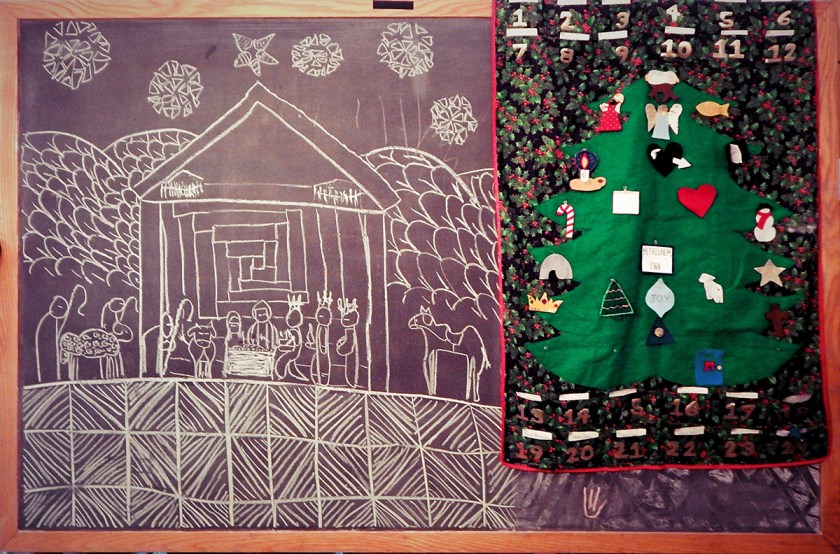
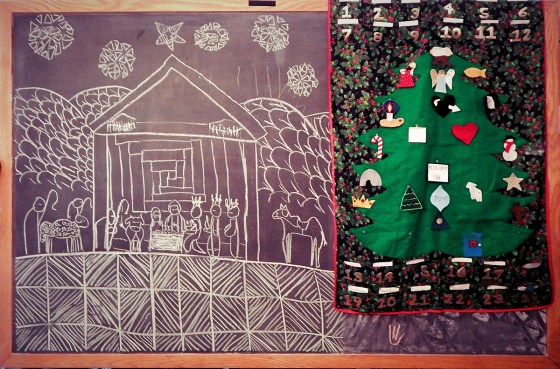
This year the plan was to share twelve poems during the Advent season. But again, work life demands became excessively burdensome. The poems were not released. They remain in the draft category of the content management system. In spite of the hurly-burly of this December, one of the children drew a very nice drawing on the chalkboard. It accompanies the Advent calendar that our family has used each year for more than a decade.
Finally, I wrote a long-ish essay to mark the decade. A story about the handmade greeting cards, the search for good Christmas poems, and how a father learned about Advent. But I decided not to publish it. I doubt anyone is interested in the story. In lieu of that, here are blog links that highlight the last ten years of Advent art, audio recordings, blog posts, and poems.
Let Evening Come, Jane Kenyon
A Scandal in the Suburbs, X.J. Kennedy
Hill Christmas, R. S. Thomas
Remembering that it happened once, Wendell Berry
Advent, Mary Jo Salter
Advent, Patrick Kavanagh
Exploring 12 Days of Advent poetry
A holiday podcast for Christmas Day
It’s that time of year
First Sunday of Advent — Poems
Second Sunday of Advent — Poems
Third Sunday of Advent — Poems
Fourth Sunday of Advent — Poems
Advent Poems (or 12 days of poetry)
Mighty Mercy, John Piper
Advent Calendar, Rowan Williams
Annunciation, Denise Levertov
The God We Hardly Knew, Óscar Romero
Mosaic of the Nativity (Serbia, Winter 1993), Jane Kenyon
Advent, Donald Hall
For Christmas Day, Charles Wesley
Into The Darkest Hour, Madeleine L’Engle
The Winter Is Cold, Is Cold, Madeleine L’Engle
Woodblock printing on a budget
Diy woodblock prints/greeting cards
“Christmas night,” a limited edition woodblock print
Woodblock prints/greeting cards
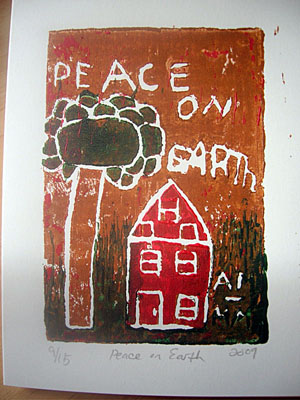
“Peace on earth,” a limited edition woodblock print
Since the tradition curating advent poems[1] was started a few years ago, I found this story[2] particularly interesting.
NOTES:
[1] Advent Poems (or the 12 days of Christmas poetry), December 13, 2012, https://coffeehousejunkie.net/2012/12/13/2013-advent-poems-or-the-12-days-of-christmas-poetry/.
[2] Justin Taylor, “THE TRUE STORY OF PAIN AND HOPE BEHIND “I HEARD THE BELLS ON CHRISTMAS DAY”,” http://www.thegospelcoalition.org, December 21, 2014, accessed December 11, 2016 https://blogs.thegospelcoalition.org/justintaylor/2014/12/21/the-story-of-pain-and-hope-behind-i-heard-the-bells-on-christmas-day/.
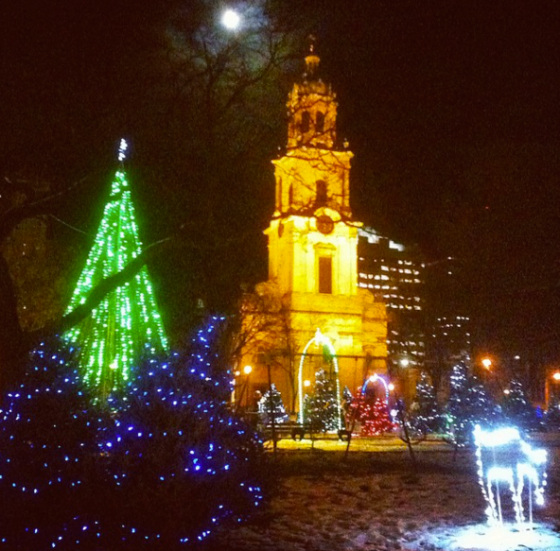
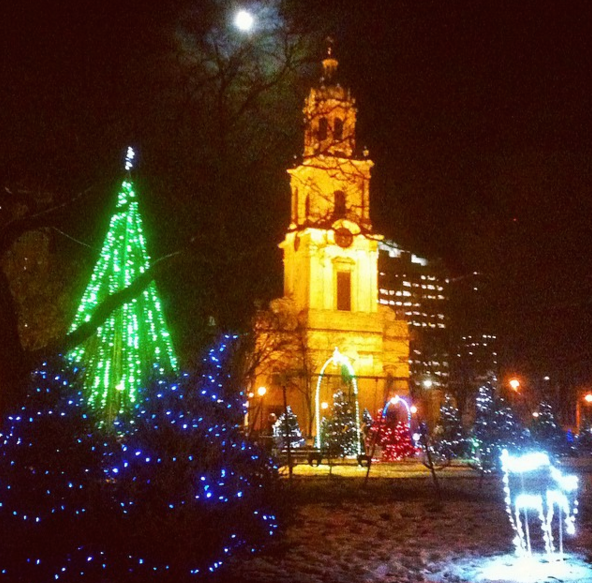
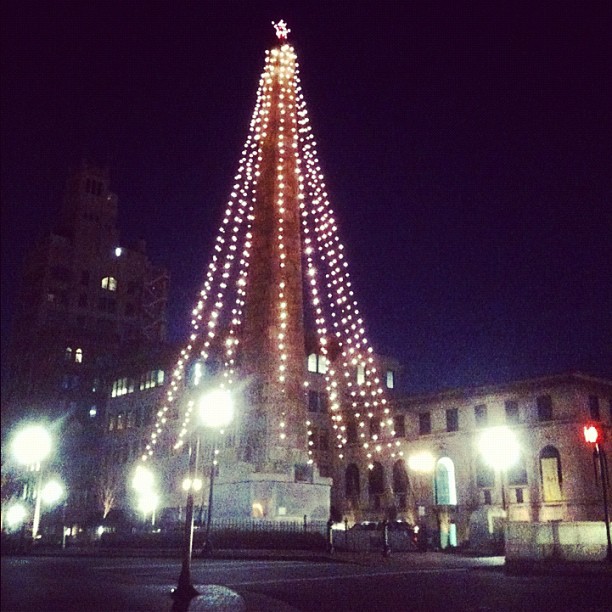
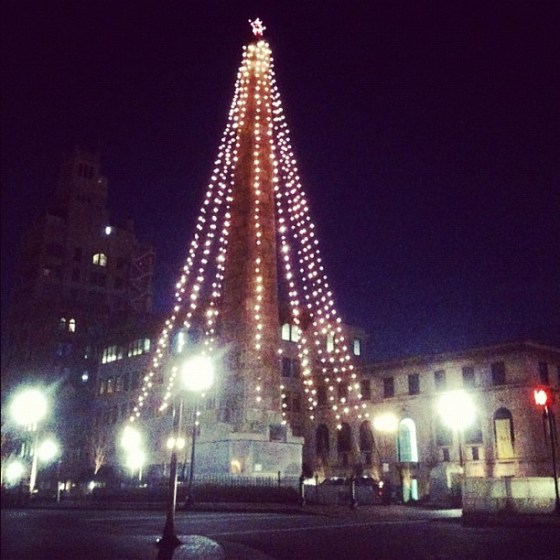
When I saw Christmas decorations and trees begin to populate Milwaukee’s Cathedral Square Park as early as November 1st, I thought, Is it that time of year already? Unbelievable. With this weekend’s snowfall, the Cathedral Square Park’s decorated Christmas trees looks particularly Decemberish.
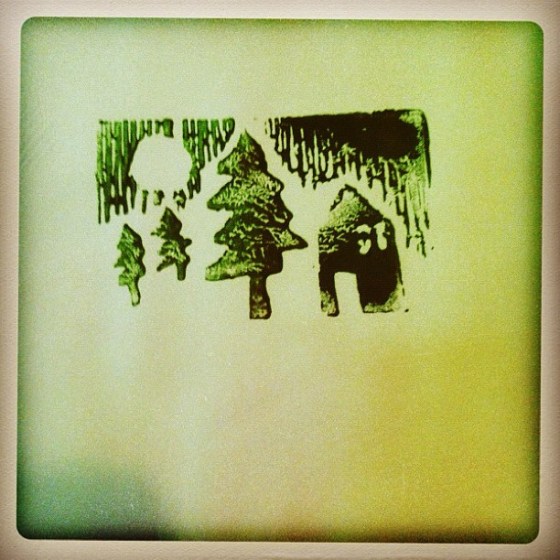
Earlier this month I searched online for some Christmas card ideas. Imagine my surprise when the search displayed a block print I created five years ago.
It seems so long ago and so far away. So much has happened in those few short years that it is difficult to catalog. Curiously, I clicked in the Pinterest link. Then I read the original blog post. It is the most visited post on the blog.
For the last few years, I have received modest feedback on a post I published titled “Advent Poems (or the 12 days of Christmas poetry).”[1] The most intriguing comment regarded a poem by W. S. Beattie. I could not locate the poem online. And the mystery of it excited me. Are there really poems people read that are not on the internet? I thought to myself. A lovely thought.
This year, a digital trail lead me to a PDF file posted by the Brentwood United Reformed Church.[2] Here is the poem recommended by a reader with the preface that the poem’s topic regards the misuse of Advent.
Advent Longing
by W.S. Beattie
These are the greedy days.
It used to be
That Advent was a longing fast,
A time to feel our need
in faith and tingling hope
And keen-eyed looking forward.
Now we cannot wait
But day by day and week by week
We celebrate obsessively
Clutching at Christmas.
When at last it comes,
The day itself,
Our glass is empty.
We have held the feast
Already, and the news is stale
Before it ever reaches us.
We cheat ourselves.
Yet – somehow – still we hope
In these spoiled days
That there may be a child.
It is a humble poem with a good reminder.
Another reader suggested the inclusion of T. S. Eliot’s “Journey of the Magi.”[3]
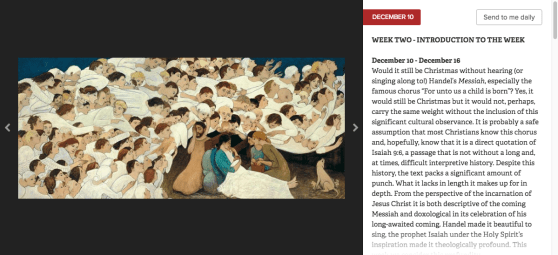
And yet another reader pointed me in the direction of Biola University’s Center for Christianity, Culture, and the Arts (CCCA) The Advent Project.[4] I truly enjoy CCCA’s Advent project as it includes art, literature, music and video.
I need to revisit my “12 days of Advent” poetry list. Maybe next year it will expand to a “24 Days of Advent” poetry list. For now, please enjoy reading 12 days of Advent poems.
NOTES:
[1] Advent Poems (or 12 days of poetry) https://coffeehousejunkie.net/2012/12/13/2013-advent-poems-or-the-12-days-of-christmas-poetry/
[2] Brentwood United Reformed Church, The Courier, December 2014/January 2015. Accessed December 11, 2017. http://www.brentwood-urc.org.uk/The%20COURIER%20-%20Dec%20January%202015.pdf
[3] The Poetry Archive, T. S. Eliot, “Journey of the Magi,” accessed December 11, 2017. https://www.poetryarchive.org/poem/journey-magi
[4] Biola University, Center for Christianity, Culture, and the Arts (CCCA), The Advent Project, accessed December 11, 2017. http://ccca.biola.edu/advent/2017/#day-dec-7
![200612211149529[sqr]](https://coffeehousejunkie.net/wp-content/uploads/2015/12/200612211149529sqr.jpg?w=560)
There was a short story I wrote when I lived in my adopted hometown. I posted it last year.[1] An edited version of it was published in an indie newspaper ten years ago this month.[2] Hope you enjoy the story. Merry Christmas!
by Matthew Mulder
![DSCN3236[sqr-classic-dallas]](https://coffeehousejunkie.net/wp-content/uploads/2015/12/dscn3236sqr-classic-dallas.jpg?w=300)
Westville Pub was busier than I thought for a Christmas Eve. It looked like we were not the only ones escaping the chilly, damp Appalachian December night. My small family arrived a little after eight in the evening to enjoy an energetic performance by Gypsy Bandwagon. There was only one booth available near the back that we quickly populated. The bar maid took my order for a pint of ale, chips and salsa and ginger ale.
Gypsy Bandwagon, self-described as genre-challenged, played lively Irish and Scottish jigs and reels, a bit of Bluegrass, classical piano solos and traditional gypsy pieces. Lead guitarist and vocalist shared singing chores with his wife, an accomplished violinist and keyboardist. The drummer,Uncle Biscuit, complemented his wife, a multi-instrumentalist, who played everything from the violin to the bass guitar. The band put on a free concert for the holiday crowd and brought gifts to give away to people in the Pub. With festive flare they gave away wrapped gifts if you owned a dog or claimed to be a Chicago Cubs fan or if you liked the last number they performed you got a free Gypsy Bandwagon CD.
Many traditional Christmas favorites filled their set list that pleased the crowd. A 16th century carol haunted me. I don’t even remember the name of it, but I imagined a New England tavern must have sounded much like that over two hundred years ago. I wondered about the first Christmas celebration.
Rome. December 25, 336 was the first recorded celebration of Christmas. Was there egg nog? Probably not. St. Francis of Assisi assembled one of the first Nativity scenes in Greccio, Italy on December 25, 1223. Nearly a thousand years between those two dates—and a lot of history. Leap forward nearly 600 hundred years, the well-known Christmas carol “Silent Night” was performed for the first time at the Church of Saint Nikolaus in Oberndorff, Austria on Christmas day in 1818. What will Christmas celebrations will be like in 100 years?
Thinking back to how I was raised by my parents, I suspect the notion of attending a gig in a pub with kids on Christmas Eve must seem odd—if not a bit disturbing. My oldest loved the whole experience. I am not sure if it was the ginger ale or the nachos or the bouncing on the booth seat to the music or the fact that he was up past his bed time. He seemed glad to be there. His baby brother fell asleep.
Uncle Biscuit came back and said hello during a quick intermission. He and his wife are good friends. It was getting late. After wishing him and his wife a Merry Christmas, we left.
It had begun to rain outside as the family gathered into the car. We drove home with the windshield lightly swishing away the rain droplets. When we arrived home my son said, “Our home is waiting for us.” I like that expression—home is waiting for us. The smell of fresh-cut poplar was sweet in the damp night air as we entered our waiting home.
Christmas morning. My family attended church. Coena Domini, or Eucharist, was celebrated. In low church fellowships it is called “the Lord’s Supper” or “communion.” Supper seems so common for a sacred “feast” on Sunday morning. Well, it was twelve ordinary guys that witnessed the death and resurrection of Jesus the Christ.
As the elements of Eucharist were distributed, I thought of Jesus — the babe born in Bethlehem. He reportedly fulfilled more than 300 prophesies. During the morning homily I read of ten of those prophesies. I found the fulfilled prophesies amazing. Ann Rice admitted to discovering similar facts while she researched her book, Christ the Lord: Out of Egypt.
What I did not find fascinating was the small plastic cup filled with grape juice and a crumb of broken Saltines. Is this not a Blessed Sacrament—as some Christians call it. I had a challenge finding anything sacred about a swallow of grape juice and a scrap of cracker. But these are simple reminders of a greater narrative.
Jeremy Huggins, author of literary nonfiction, posed the question, is there “any reason why I couldn’t go through the Communion line more than once?” Initially I responded: “When was the last time anyone ate a suggestion of bread and a swallow of wine and called it supper?”
For some reason I thought of the pale ale and nachos I had consumed the previous night at Westville Pub. Why is it that ale and nachos are not sacred reminders of the holy truth? Maybe that is a bit sacrilegious to be considered on Christmas—a holiday. Holiday means “a religious feast day.” A day like any other day recognized as sacred, hallowed, sanctified seems out-of-place in American culture.
As I held a swallow of grape juice and a scrap of cracker in my hands that Christmas morning, I remembered the night the Christ was betrayed. He shared his last meal of wine and bread with twelve ordinary, mostly nondescript guys who were being prepared to turn the world upside down. I identified with Jesus the Christ by taking the Eucharist. Am I more holy now than I was before? Does a day change its nature simply because it is recognized as sacred? I will leave those questions to the philosophers and theologians. “Our home is waiting for us,” my eldest child said on Christmas Eve. In more ways than the child realizes, that statement just might explain the reality of Christmas.
NOTES:
[1] A Christmas Story
[2] Recently Published Writings
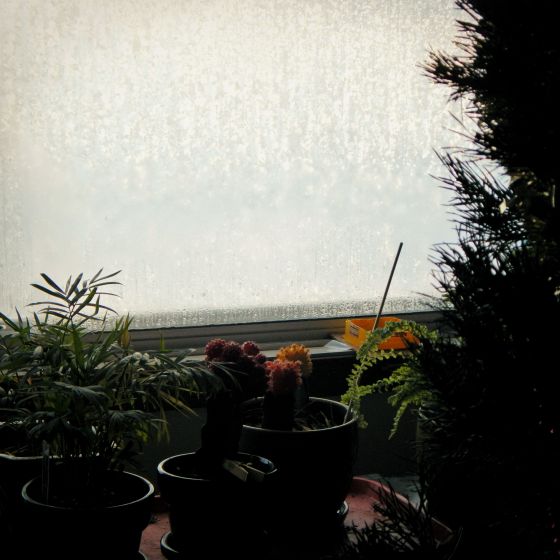
The outside air temperature this morning, when I woke up, was -6°F. Won’t event mention the windchill factor. The window completely frosted over. It is December. Wonderfully cold and beautiful.
Almost wanted to spend the day in bed composing a new list of twelve Advent poems to accompany the ever popular post Advent Poems (or the 12 days of Christmas poetry). Here’s one Advent poem I am considering for a new list.
The birth of wonder[1]
by Madeleine L’Engle
When I am able to pray with the mind in the heart, I am joyfully
able to affirm the irrationality of Christmas.
As I grow older
I get surer
Man’s heart is colder,
His life no purer.
As I grow steadily
More austere
I come less readily
To Christmas each year.
I can’t keep taking
Without a thought
Forced merrymaking
And presents bought
In crowds and jostling.
Alas, there’s naught
In empty wassailing
Where oblivion’s sought.
Oh, I’d be waiting
With quiet fasting
Anticipating
A joy more lasting.
And so rhyme
With no apology
During this time
Of eschatology:
Judgement and warning
Come like thunder.
But now is the hour
When I remember
An infant’s power
On a cold December.
Midnight is dawning
And the birth of wonder.
NOTES:
[1] “The birth of wonder” by Madeleine L’Engle. Published in the book WinderSong by Madeleine L’Engle and Luci Shaw.
Since the tradition curating advent poems[1] was started a few years ago, I found this story[2] particularly interesting.
NOTES:
[1] Advent Poems (or 12 days of poetry), December 13, 2012, https://coffeehousejunkie.net/2012/12/13/2013-advent-poems-or-the-12-days-of-christmas-poetry/.
[2] Justin Taylor, “THE TRUE STORY OF PAIN AND HOPE BEHIND “I HEARD THE BELLS ON CHRISTMAS DAY”,” http://www.thegospelcoalition.org, December 21, 2014, accessed December 11, 2016 https://blogs.thegospelcoalition.org/justintaylor/2014/12/21/the-story-of-pain-and-hope-behind-i-heard-the-bells-on-christmas-day/.
Last weekend, the fields around the village where I live started to turn from green to harvest gold. Like the changing of the season, I noticed the first uptick in traffic to this web log. Or rather to one post in particular — Advent Poems (or the 12 days of Christmas poetry).
From the living room window, I see the full moon rising through the twinkling reflection of Christmas lights. At a glance, the moon might be mistaken for a street lamp. The play of lights off the window and through it remind me of something I read earlier this week: “Keep the ripple going.”[1] There is a short story I wrote that I have been sitting on for nearly a decade. An edited version of it was published in an indie newspaper.[2] Since it is Christmas and a full moon, it seems time to release the unedited/extended version of the text tonight before the clouds roll in and hide the moon. Hope you enjoy the short story. Merry Christmas!
by Matthew Mulder
Westville Pub was busier than I thought for a Christmas Eve. It looked like we were not the only ones escaping the chilly, damp Appalachian December night. My small family arrived a little after eight in the evening to enjoy an energetic performance by Gypsy Bandwagon. There was only one booth available near the back that we quickly populated. The bar maid took my order for a pint of ale, chips and salsa and ginger ale.
Gypsy Bandwagon, self-described as genre-challenged, played lively Irish and Scottish jigs and reels, a bit of Bluegrass, classical piano solos and traditional gypsy pieces. Lead guitarist and vocalist shared singing chores with his wife, an accomplished violinist and keyboardist. The drummer,Uncle Biscuit, complemented his wife, a multi-instrumentalist, who played everything from the violin to the bass guitar. The band put on a free concert for the holiday crowd and brought gifts to give away to people in the Pub. With festive flare they gave away wrapped gifts if you owned a dog or claimed to be a Chicago Cubs fan or if you liked the last number they performed you got a free Gypsy Bandwagon CD.
Many traditional Christmas favorites filled their set list that pleased the crowd. A 16th century carol haunted me. I don’t even remember the name of it, but I imagined a New England tavern must have sounded much like that over two hundred years ago. I wondered about the first Christmas celebration.
Rome December 25, 336 was the first recorded celebration of Christmas. Was there egg nog? Probably not. St. Francis of Assisi assembled one of the first Nativity scenes in Greccio, Italy on December 25, 1223. The well-known Christmas carol “Silent Night” was performed for the first time at the Church of Saint Nikolaus in Oberndorff, Austria on Christmas day in 1818. What will Christmas celebrations will be like in ten years? Or 100 years?
Thinking back to how I was reared up by my parents, I suspect the notion of attending a gig in a pub with kids on Christmas Eve must seem odd—if not a bit disturbing. My oldest loved the whole experience. I am not sure if it was the ginger ale or the nachos or the bouncing on the booth seat to the music or the fact that he was up past his bed time. He seemed glad to be there. His baby brother fell asleep.
Uncle Biscuit came back and said hello during a quick intermission. He and his wife are good friends and he is a local cartoonist and illustrator. It was getting late. After wishing him and his wife a Merry Christmas, we left.
It had begun to rain outside as the family gathered into the car. We drove home with the windshield lightly swishing away the rain droplets. When we arrived home my son said, “Our home is waiting for us.” I like that expression—home is waiting for us. The smell of fresh-cut poplar was sweet in the damp night air as we entered our waiting home.
Christmas morning. My family attended church. Coena Domini, or Eucharist, was celebrated. In a non-denominational church they simply call it “Lord’s Supper.” Supper seems so common for a sacred “feast” on Sunday morning. Well, it was twelve ordinary guys that witnessed the death and resurrection of Jesus the Christ.
As the elements of Eucharist were distributed, I thought of Jesus — the babe born in Bethlehem. He reportedly fulfilled more than 300 prophesies. During the morning service I read of ten of those prophesies. I am not a theologian, but I found the fulfilled prophesies amazing. I am not a mathematician either, but the probability factor is equally fascinating. Ann Rice admitted to discovering similar facts while she researched her book, Christ the Lord: Out of Egypt.
What I did not find fascinating was the small plastic cup filled with grape juice and a crumb of broken Saltines. Is this not a Blessed Sacrament—as some Christians call it. I had a challenge finding anything sacred about a swallow of grape juice and a scrap of cracker. But these are simple reminders of a greater narrative. Nothing wrong with common things.
Jeremy Huggins posed the question, is there “any reason why I couldn’t go through the Communion line more than once?” Initially I responded: “When was the last time anyone ate a suggestion of bread and a swallow of wine and called it supper?”
I wonder if American Christians embrace an ascetic view of communion because they live an epicurean lifestyle. Should followers of Christ not seek the highest pleasure—desiring God? Let us feast Deo favente (with God’s favor).
By practice, the fellowship I attend also observes the Passover Supper each year as part of Passion Week. The elements of the Seder Dinner (Maror: bitter herbs-horseradish, Karpas: vegetable-parsley, Chazeret: bitter vegetable-lettuce, Charoset: apple, nut, spice and wine mixture, Zeroa: shankbone-kosher lamb and Beitzah: egg) are symbolic and common. Likewise, bread and wine are common food items. Still a supper is a supper, not an appetizer.
For some reason I thought of the pale ale and nachos I had consumed the previous night at Westville Pub. Why is it that ale and nachos are not sacred reminders of the holy truth? Maybe that is a bit sacrilegious to be considered on Christmas—a holiday. “Holiday,” from an Old English word “hligdæg,” means “a religious feast day.” Why a holy day? The Middle English word “holi” has Old High German origins from the word “heilag” meaning “sacred” which has Gothic roots meaning “hallow, sanctified” which further has Latin sources in the word “sanctus.” A day like any other day recognized as sacred, hallowed, sanctified seems out-of-place in American culture.
As I held a swallow of grape juice and a scrap of cracker in my hands that Christmas morning, I remembered the night the Christ was betrayed. He shared his last meal of wine and bread with twelve ordinary, mostly nondescript guys who were being prepared to turn the world upside down. I identified with Jesus the Christ by taking the Eucharist. Am I more holy now than I was before? Does a day change its nature simply because it is recognized as sacred? I will leave those questions to the philosophers and theologians. “Our home is waiting for us,” my eldest child said on Christmas Eve. In more ways than the child realizes, that statement just might explain the reality of Christmas.
NOTES:
[1] Who touched your heart forever moment year by Melissa G Wilson
[2] Recently Published Writings
The winter is cold, is cold.
All’s spent in keeping warm.
Has joy been frozen, too?
I blow upon my hands
Stiff from the biting wind.
My heart beats slow, beats slow.
What has become of joy?
If joy’s gone from my heart
Then it is closed to You
Who made it, gave it life.
If I protect myself
I’m hiding, Lord, from you.
How we defend ourselves
In ancient suits of mail!
Protected from the sword,
Shrinking from the wound,
We look for happiness,
Small, safety-seeking, dulled,
Selfish, exclusive, in-turned.
Elusive, evasive, peace comes
Only when it’s not sought.
Help me forget the cold
That grips the grasping world.
Let me stretch out my hands
To purifying fire,
Clutching fingers uncurled.
Look! Here is the melting joy.
My heart beats once again.[1]
This audio podcast features the poem “The Winter Is Cold, Is Cold” by Madeleine L’Engle and concludes with a selection from the Book of Common Prayer that is often read on Christmas Day.
NOTES:
[1] Source: The Winter Is Cold, Is Cold by Madeleine L’Engle
[2] Advent Poems (or the 12 days of Christmas poetry)
No one can celebrate
a genuine Christmas
without being truly poor.
The self-sufficient, the proud,
those who, because they have
everything, look down on others,
those who have no need
even of God- for them there
will be no Christmas.
Only the poor, the hungry,
those who need someone
to come on their behalf,
will have that someone.
That someone is God.
Emmanuel. God-with-us.
Without poverty of spirit
there can be no abundance of God.[1]
This audio podcast features “The House of Christmas” by GK Chesterton, “The God We Hardly Knew” by Óscar Romero and a selection from the Book of Common Prayer.
 Also, special thanks to Folk Angel for permission to use “O Little Town Of Bethlehem” from their album Glad Tidings – Christmas Songs, Vol. 4. If you are looking for some great Christmas records, check out their website, FolkAngle.com.
NOTES:
[1] Source: The God We Hardly Knew by Óscar Romero
[2] Advent Poems (or the 12 days of Christmas poetry)
Immensity cloistered in thy dear womb,
Now leaves His well-belov’d imprisonment,
There He hath made Himself to His intent
Weak enough, now into the world to come;
But O, for thee, for Him, hath the inn no room?
Yet lay Him in this stall, and from the Orient,
Stars and wise men will travel to prevent
The effect of Herod’s jealous general doom.
Seest thou, my soul, with thy faith’s eyes, how He
Which fills all place, yet none holds Him, doth lie?
Was not His pity towards thee wondrous high,
That would have need to be pitied by thee?
Kiss Him, and with Him into Egypt go,
With His kind mother, who partakes thy woe.[1]
This audio podcast features “Mosaic of the Nativity (Serbia, Winter 1993)” by Jane Kenyon, “Nativity” by John Donne, “A Christmas Carol” by Christina Georgina Rossetti and a selection from the Book of Common Prayer.
 Special thanks to Folk Angel for permission to use “God Rest Ye Merry Gentlemen” from their album Comfort & Joy – Christmas Songs, Vol. 3. If you are looking for some great Christmas records, check out their website, FolkAngle.com.
NOTES:
[1] Source: “Nativity” by John Donne
[2] Advent Poems (or the 12 days of Christmas poetry)
When I see the cradle rocking
What is it that I see?
I see a rood on the hilltop
Of Calvary.
When I hear the cattle lowing
What is it that they say?
They say that shadows feasted
At Tenebrae.
When I know that the grave is empty,
Absence eviscerates me,
And I dwell in a cavernous, constant
Horror vacui.[1]
This audio podcast features “Annunciation” by Denise Levertov, “Advent” by Donald Hall, “Into The Darkest Hour” by Madeleine L’Engle[2] and a selection from the Book of Common Prayer.
NOTES:
[1] Source: Poetry Foundation
[2] Advent Poems (or the 12 days of Christmas poetry)
Happy Christmas Eve! Here is the final episode of the Advent series for this year.
This episode features the poem “The Winter Is Cold, Is Cold” by Madeleine L’Engle and concludes with a selection from the Book of Common Prayer that is often read on Christmas Day.
Merry Christmas from the Coffee Den!
Welcome to the third episode of the Advent series audio podcast.
In 2012, I composed a list of Advent poems. It is now one of the most visited Coffeehouse Junkie blog post.
This episode features “The House of Christmas” by GK Chesterton, “The God We Hardly Knew” by Óscar Romero and a selection from the Book of Common Prayer.
Also, special thanks to Folk Angel for permission to use “O Little Town Of Bethlehem” from their album Glad Tidings – Christmas Songs, Vol. 4. If you are looking for some great Christmas records, check out their website, FolkAngle.com. They are a Texas band that performs rearrangements of traditional Christmas songs. And I just found out that their latest album drops today! Right now they are offering a sale on the first five albums (42 songs) for $10 (details here).
Happy holidays from the Coffee Den!

 Coffeehouse Junkie