Yes, it is true

Instagram montage
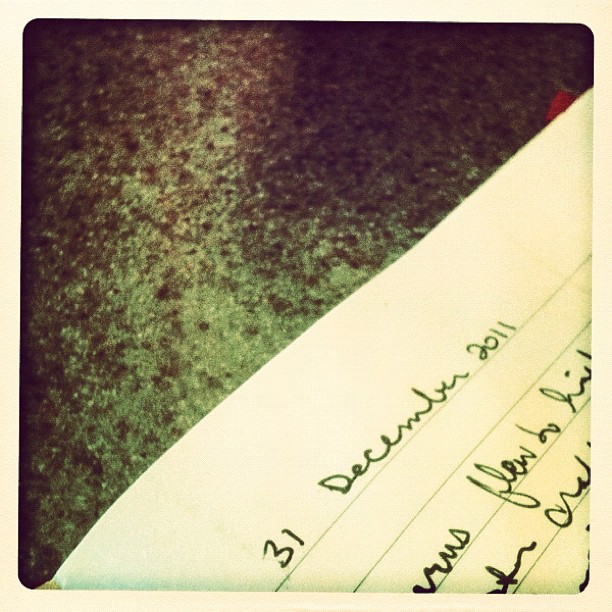
Scenes from a story unfinished

A very observant reader and friend asked of this week’s post: “Is this story related to the teases from other photos?” Yes, they are all teasers for scenes from a narrative non-fiction book I’m writing. Some of the chapters have either been sent or are in the process of being sent to journals and magazines for publication. I am waiting on editors at this phase in the process.

For those who missed it, here’s the sequence so far: There is a story behind this photo, What hides behind this foggy morning photograph?Sisyphus tears down the mountain in a Chevy, and this week’s There’s a story… about double red doors….

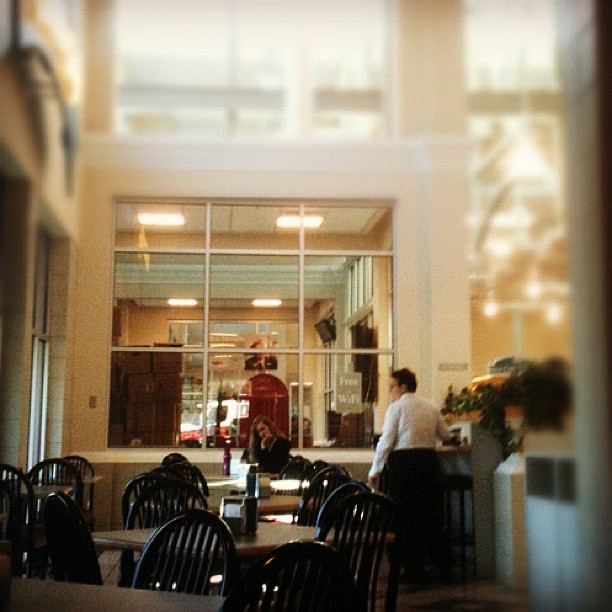
There’s a story… about double red doors…


There’s a story I want to tell you about double red doors, but I can’t. Not yet. You see, the problem is that the story awaits an editor’s approval to publish. I can’t tell you which editor. I can’t tell you which publication. And I can’t post anything online without jeopardizing the publication of that story about her and an empty cup of liquid truffle and a vacant building with double red doors above a flight of steps and I may have said too much.

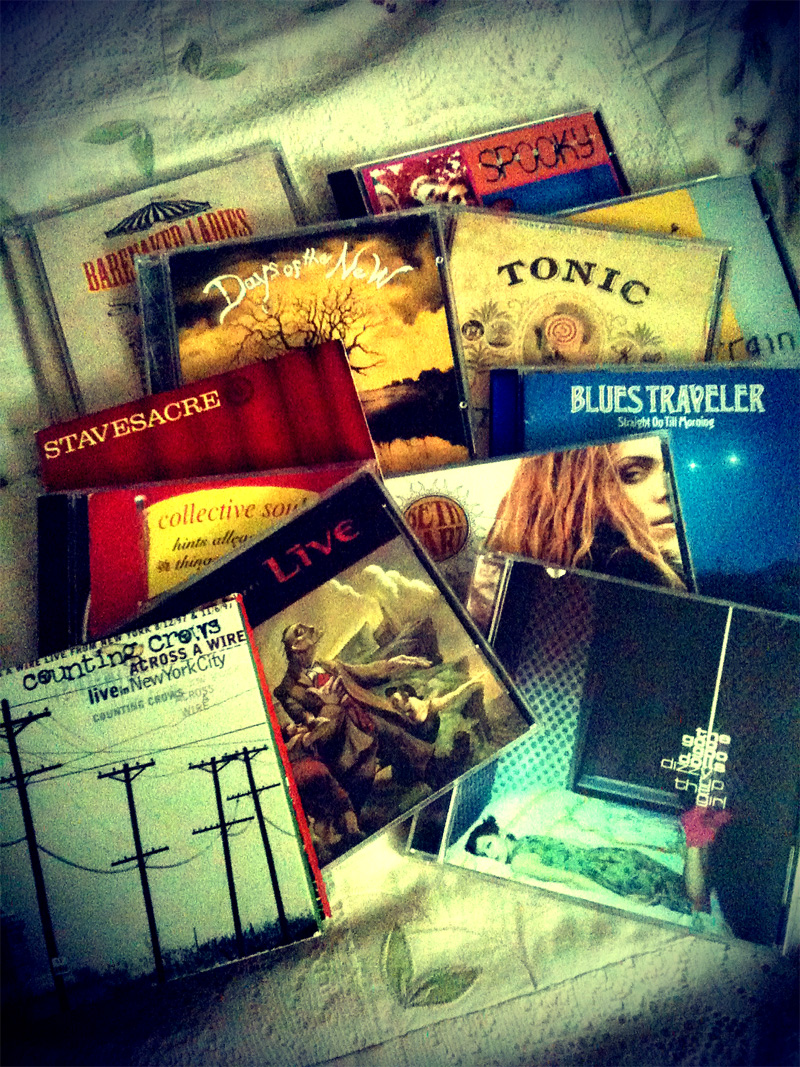
Artifacts from the late 1990s

Hidden in the back of a closet, a box of audio CDs

Is it possible to keep secrets or hide treasure in such an open, immediate society? Think of the secrets between Edward Mayhew and Florence Ponting of On Chesil Beach. It was a different time and place. Or maybe the quiet understanding between Primo and Secondo in the final moments of Big Night. Again, those were different times. A world before the internet and mobile devices and social media. Even in fictional works, you recognize how culture changes and you change with it.

My thoughts kept drifting back to that theme this weekend. A week or so ago, I opened the cardboard box to find two neat rows of artifacts from the late 1990s. Compact discs. CDs. Seems much more tangible than finding two rows of “moving picture experts group” (MPEG) files when referring to audio music. (Even composing that sentence seems clunky and unsophisticated.) This collection of music was packed into a cardboard box and was supposed to be unpacked when I relocated to Asheville. The box remained sealed like a time capsule.

My Beauty and I rented  a space in Asheville that was twice the cost of our previous house and half the size. It was the most affordable place we could find at the time. A lot of boxes remained unpacked because there was no space to expand. Now as we pack things up again, I decide to keep this cardboard box open, listen to Tonic’s Lemon Parade, Goo Goo Doll’s Dizzy Up The Girl, and reflect on how different these times are compared to the late 1990s.

At that time, Bill Clinton was president of the U.S. and Boris Yeltsin was the first president of the Russian Federation. There was no Twitter revolution. Americans would get together in homes or apartments to share supper and snacks while watching the latest episode of the television shows ER, Friends or Party of Five. That was before the rise of the cult of white box worshippers [1] and the advent of Netflix. There seemed to be a greater sense of community. Or maybe that’s just 1990s nostalgia.

During that time, I didn’t own a personal computer or laptop. When I returned home from my job as a graphic designer, I would often read books or listened to Blues Traveler, Beth Hart or unknown indie bands like Spooky Tuesday on a CD player while I worked on illustrations or paintings. As I rediscover these albums, I recall paintings I was working on while listening to Days of the New for the first time. When I listen to Stavesacre’s album, friends I haven’t thought of in years fill my mind.

There was a specific evening with coworkers I recall. After work, we often meet up for dinner and a movie. While waiting for food to be served we were discussing the events of the day while enjoying our drinks. One coworker’s teenage daughter, who often joined us on those evenings, said, “There’s no specific movement in the 90s. Not like the 60’s or 70s. I mean, I grew up in the 90s. Even the music is boring. There’s nothing memorable about the 90s.” Maybe that’s teenage naivety, but I think there is much to remember of the late 1990s.

NOTES: [1] This is a reference to an article by Andrew Sullivan that I mentioned years ago in an essay, iPod, therefore iAm?.
Afternoon poetry and jazz

Jazz for a Rainy Afternoon Audio CD

Sometimes a few notes of music follow you for days are weeks or years. Sometimes a line of poetry haunts you like a memory you can’t quite recall. It’s like rain, it permeates the air, wets the ground, even makes tea taste more pronounced.

Here’s part of a story I can share with you. After I was at university studying art and design, I found an audio CD in a music store titled Jazz for a Rainy Afternoon. What attracted me to the album, a compilation, was the fact that the cover art reminded me of a sexier version of Gustave Caillebotte’s famous painting. I purchased the audio CD. It was background music initially. Something to edge off lonely days as a poor graduate beginning a career in graphic design. About the same time I discovered, and purchased, a copy of William Kistler’s poetry book America February.

I have always enjoyed poetry and music, but reading Kistler’s work was rigorous for me. Light verse and traditional poems, the variety that fill American and English school book anthologies, were what I was familiar with. But Kistler’s poetry was a new dish for my inexperienced palate. Equally, understanding the musical selections of Jazz for a Rainy Afternoon as more than a background soundtrack was challenging.

A line from one of Susan L Daniels’s poems has captured my attention this past week—the way jazz and poetry sometimes do. The speaker in the poem answers a question, so you like jazz, by saying: “…the answer is no/I live it sometimes…” That’s what I have come to enjoy about the complicated progression in a song or a poem that avoids a clean resolution.

Jazz and poetry work into you. It takes you down that familiar path of a rainy day afternoon, a common enough subject, but it is a variation of that theme. Never the same way twice. Like reading a poem as a school boy and reading it later as a graduate and later as a professional. Same poem printed on the page, but different. Always different. But familiar, because you “live it.” There’s more to this story. Maybe I’ll share it with you on another rainy day afternoon.

Sisyphus tears down the mountain in a Chevy

Sisyphus tears down the mountain in a Chevy

In this photo, Sisyphus enters the story. His punishment for sharing secrets on the internet is to daily drive a cheap, two-and-a-half-ton American-made automobile up and down a mountain. You may wonder, what secrets were released on the internet? Does Julian Assange know about this? But that is part of the story I cannot share. Not at this point.

What hides behind this foggy morning photograph?

Flowers in bloom in a fog shrouded city

There is a story behind this foggy morning photograph with a cast of characters that would fill a Kent Haruf novel. I want to tell you this story and how it marks an anniversary, of sorts, but it’s like a Beth Hart song where “nothing’s clear in a bar full of flies” and I’m sobering up as the sun begins to peel back the morning mist.

There is a story behind this photo

A View from Mount Pisgah

There is a story behind this photo. In this story, My Beauty cries and my children are cold and tired. It is a strange time with clouds pushing the daylight into night. There is an interesting plot twist, but it is a story I cannot share with you just yet. It is the story behind this photograph.

Letter writing, a vanishing art

A book is more than a collection of letters and pages.

The week before Fathers Day I completed a book design project that is a “legacy of letters from a decorated World War II hero…” Or so the back copy states.

Reading a manuscript like that, at times, seems voyeuristic. The compelling part of the book is the context of knowing that the author was three when his father passed away suddenly. He grew up hearing friends and family tell him “You sure look like your Daddy” or “I knew your Dad, he was one of the best.” The letters that the author collected for the book shares who is father was and what kind of man he was. But most importantly, for the author, it was the only way to hear the voice of a father he never knew.

At times, during the process of designing the cover and page layout, I glimpsed that boyish tenderness of the author (now in his sixties) as he ached for the presence his father. I cherished Fathers Day all the more as I thought of the author.

A couple of things come to mind as I wrap up this project and send it to press. First, the art of letter writing seems non-existent. The last letter I received was from my oldest child who placed it in my boot for me to find one morning. It was a simple note written in colored pencil. It is placed in my journal. I glance at it periodically.

Last time I received a hand-written letter was years ago. There are the seasonal holiday letters that begin filling my mail box every year between Thanksgiving and New Year’s Day. They usually arrive as letters printed out on decorative stationary purchased at Kinkos or Office Depot. But hand-written letters? Do people still do that in our culture?

Secondly, the legacy left behind of those letters written prior to, during and after a major historical event impresses me. What kind of legacy might we leave our children and grandchildren with a mountain of un-memorable text messages. What will our tweets and status updates mean a half century from now? Will Twitter be obsolete by then? Or Facebook? Can you imagine your grandchildren asking you, “What’s Twitter?” After you explain the whole social media birth of micro blogging they giggle and say, “Twitter is so 2012. I can’t believe how primitive that seems.”

Emails may convey some of the gravitas as a written (or typed) letter. However, as Luddite as this sounds, I still have hand-written letters from family and friends placed in an old shoe box. Letters and notes from a woman who became my wife are stored in a similar fashion. A typed note from my grandfather, when age had crippled his hand-writing, is placed in a book of his poems as a reminder and memento. As a child, my grandmother wrote a brief letter to me each birthday and placed a stick of gum in between the folds. I looked forward to that letter each year. You can’t attach a stick of gum to an email.

Besides, I doubt anyone in our culture would wait, anticipate and enjoy a letter that arrives annually. Everything is so urgent… almost panicked. Why isn’t someone responding to my emails, texts, tweets? It’s been 30 seconds! (Place emoticons here.) In my own life, I notice how differently I process social media and online content. There lacks a linear stretch of the intellect when processing clusters of data points from Twitter, Facebook, HuffPo, etc. My attention span fatigues when I have to wade through a barrage of emails, updates and tweets.

Yet I enjoy the long articles in the Atlantic Monthly, London Review of Books, The New York Review of Books or the like. It stimulates my mind. 700-word news articles for the most part bore me. There’s nothing there but a nut graph. No context. No history. No personality or narrative trajectory. Just a Google-like, or Wikipedia-like, democratized collection of information. There’s nothing there to engage my mind. Nothing that challenges my mind, beliefs or values. A book on the Battle of Agincourt offers nuances that blog posts, tweets and texts don’t offer.

Reading through a legacy of letters, like the book I am ready to send to press, captures the exchange of ideas in a sustained, generational conversation between a father and a son. The more our culture engages in the scatterbrained conflagration of data items, I suspect civil, engaging conversation (like letter writing) may become obsolete.

Quote: Natalie Goldberg

“Stress is an ignorant state. It believes that everything is an emergency. Nothing is that important.”

Natalie Goldberg

What does a goat and a mule have in common with social media?

There’s an old proverb that goes something like this: one should avoid the front of a goat, the back of a mule, and every side of a fool. If you don’t want a private message, comment or opinion printed in 60 point, bold type headlines on the front of The New York Time, you shouldn’t email it, tweet it, post it to Facebook or your blog. That’s what prompted the following advice to job seekers:

1.) Don’t post inappropriate pictures or make any comments on the web that could be offensive to anybody.  If they’re already up, delete them now!

2.) Mark all of your settings on any type of social media as private.  Don’t let people who aren’t connected to you view your pictures or read your comments.  If friends posted a ridiculous comments, delete them now!

3.) If you want to share your personal beliefs, call a friend.  Don’t share them through social media.

4.) Google yourself because future employers will.  If you find things that you don’t think a future employer would like, find a way to get rid of it!

5.) I’ve shared all of the negative things about social media but don’t forget that there are a lot of positive things too.  If you’re actively volunteering, fundraising, running a marathon, or writing a motivational blog these are all things that can help you get a job.  Make sure these are public to future employers.

Link

It’s just common sense and good business practice. Yet it seems missing from the American culture as people display their most private details and opinions. If you truly want to maintain private details avoid the internet entirely. But if you are using the internet for social media and emailing, remember that the internet is immediate, permanent, and global.

Technology cleanse means you unplug…

…for a short time with longer-term benefits for your relationships…

Interested in a tech cleanse?

What is your creative space?

An open window to creative space

The window is open on a warm late May day and a cool mountain breeze  moves the curtains like papery fingers. Occasionally, I glance at the Japanese maple outside or the grape vine wildly clinging to a handmade, crude trellis of found pine limbs….

[read more]

UPDATE: This blog post is available as part of an audio podcast.

Listen now:

Or listen on:
PodOmatic: coffeehousejunkie.podomatic.com
SoundCloud: soundcloud.com/coffeehousejunkie

E-book: This blog post will be featured in a forthcoming e-book. More details coming soon.

Are you dad enough?

Rebuttal to TIME Magazine’s recent cover image and story. [12]
What do you think about all the reaction to TIME magazine’s recent cover featuring an attractive blonde mother breastfeeding her son? [1] [2] [3] [4] The fact that a nurturing mother evokes such outrage is amusing to me. [5]

This public response to a magazine cover begs the question (at least in my mind): would TIME ever run a story titled “Are you Dad Enough?” and cover the nurturing aspects of fatherhood? [6] Another question that comes to mind is: when was the last time you saw a father portrayed as a responsible father on the cover of TIME magazine? Or any other mainstream periodical for that matter? Has the model of a loving father vanished from the landscape of American culture? [7]

Plenty of examples of fathers are portrayed on television, but I’m not talking about the Tim Allen “Aarrrgghh, Aarrrgghh, Aarrrgghh” type dads who think going to a sporting goods store is fatherhood. Nor am I talking about the According to Jim beer-guzzling, television-watching, misogynists who seem to mess up everything and then Cheryl has to come in and fix the problems before the end of the show. [8] This portrait of American dads is degrading to those fathers out there who manage to change a child’s diaper, wash the dishes, do the laundry, fix a plugged tub on a Sunday morning when everyone needs a bath before church, [9] play trains with the younger children or stick ball with the older ones, and, in general, serve and sacrifice for their family. [10] I know plenty of fathers who are working crumby jobs just to feed their families and take care of their homes. They sacrifice their own dreams and aspirations because that’s what dad’s ought to do.

Now there are plenty of derelict dads out there who sit around and play video games all day, try to be cool with their kids and consider their children cultural objects. They are poor examples of fatherhood. Dear boy-dads, grow up. You are fathers now. You are no longer cool, hip, or awesome. Fatherhood is a difficult, thankless but ultimately rewarding vocation. Fathering a child only takes moments. Fatherhood is a lifetime commitment. Join the ranks of nurturing, responsible fathers and own it with dignity and grace. [11]

NOTES: [1] In my opinion, the reaction to the “Are You Mom Enough?” TIME cover is a combination of paleo-puritanism, meso-feminism, and neo-idiocy. [2] “Mika Brzezisnki… suggested on the air that the cover was needlessly sensational…” in the article TIME Magazine cover of breastfeeding mom sparks intense debate on “attachment parenting” [3] “Time magazine staff writer Kate Pickert defended the cover” saying “I think that we knew it would be a provocative cover but we’re thrilled that lots of people are responding to it… We’re happy to see that we’ve sparked a great conversation.” Read more: Breast-Feeding Time Cover Mom Responds to Critics [4] “There is no doubt that the TIME cover strikes the public as shocking. But, as Pickert points out, the women featured are at one extreme end of this always-controversial discussion.” Read: Jamie Lynne Grumet, Breastfeeding Mom On ‘TIME Magazine’ Cover, Illustrates Attachment Parenting [5] It is no longer shocking. At least, not to me. But maybe that’s because, as a culture, Americans are desensitized to shock. What really shocks us, as Americans, any more? [6] Can you imagine a bare-chested attractive father on the cover of TIME magazine? Okay, maybe a bare-chested Brad Pitt with his children might sell magazines. The truth is, magazine publishers need to sell magazines and a female with suckling will sell more copies to the over-sexualized masses than a cover of the opposite proportions. Think of the last few covers of TIME magazine that featured a male figure. Almost all of those covers feature men of power and influence. Has there ever been a magazine cover featuring a nurturing father? [7] If I were a conspiracy theorist, I might propose that there is a war on true, masculine fatherhood in America. But I’m not a conspiracy theorist. Just thought I’d beat you to the punch before I get pushed into that corner and painted as a FoxNews-watching/ditto-head/wing-nut. Which I am not. [8] The only role model on television I can recall that resembles those two characteristics is Heathcliff Huxtable of The Cosby Show. [9] Not that I’m using personal examples to boast of more “real” dad credentials, but fatherhood is about serving and sacrificing. [10] That is where the “amen,” “hell-yas” and other forms of applause is supposed to go. Read this post again and respond accordingly. [11] This post started out as a light-hearted, tongue-in-cheek imagining of a bare-chested father on the cover of TIME magazine, but became a rant. Apologies for the sudden fury. And blessings to those who actually read the small print. [12] PHOTO CREDITS: Though I created the mock TIME magazine cover, I found the retro father with children photo on this Tumblr page.

Two reasons why I quit Tumblr

What is Tumblr? Besides being a highly addictive micro-blogging platform, [1] it was the place I did most of my blogging during the last few years. That is, until a few weeks ago. Two primary reasons why I deep-sixed my Tumblr accounts: simplistic functionality and superficiality.

Those familiar with Tumblr know the distraction of the endless expanse of images that populate the majority of these micro-blogs. Tumblr subscribes to the lowest common denominator of web log functionality to allow for users to post photos, videos, audio & text. The Tumblr interface allows users with absolutely no HTML experience and no blogging experience to post a menagerie of online content without having to really think about it. Add to the mindless uploading or reblogging of content is the liking system. If you “like” a blog post viewed somewhere in the Tumblr stream of people you are following, then you click the heart icon. The system is reciprocated by other users in a virtual validation and comparison of or by other Tumblr users. What makes this system clumsy and superficial is that there is no real communication between users. In a way, it’s like an individual person in a large airport terminal with all the televisions droning on and on. It’s an extremely lonely experience.

The “follow” feature, like Twitter, allows users to track your posts — and you may follow in return. Curious as I am, I often clicked on Tumblr profiles to find out who is following my Tumblr account. Like Twitter, a lot of my account’s followers were users seeking to promote something or looking for personal validation and/or competition by earning return follows (it is a common practice on Twitter to earn more followers in order to expand audience reach or to just boasting rights to having thousands of tweeple following your tweets). Some people prefer Tumblr because it easily integrates with social media sites [2] making it more of a network tool than a blogging platform. When Tumblr was first launched it was very simple to aggregate your Tumblr content to Facebook, Twitter, and other social media outlets. But now most blogging platforms allow that too. Most of the followers to my Tumblr account didn’t connect or even communicate with me. They just “like” something I post and then “follow” my Tumblr account. It’s an empty, hollow interaction if not essentially dehumanizing.

Another issue I had with Tumblr is that the platform really doesn’t work well for long-form blog entries. There are exceptions, [3] but on the whole, most Tumblr users are there for photos or videos or reblogging someone’s photos and videos. As someone who enjoys reading and stimulating conversation, I became very aware of how my thinking was changing as I consumed the endless Tumblr stream of images. One night I speculated that some users must spend all day on Tumblr. There is a schedule feature on Tumblr that allows users to place posts in a queue to be published later, but the time investment to post photos seems vapid. Occasionally, I’d come across an intelligent quote or text-post and “like” it or even “reblog” it. I discovered, to my embarrassment, that not all quotes I reblogged or liked were accurate and stopped the practice.

Increasingly, I was disturbed that the lack of exchange of ideas was altering the way I think as I succumbed to an avalanche of images falling from the blue Tumblr interface screen. One blogger noted that someone said Tumblr is an intellectual version of Twitter, [4] and further noted correctly that most Tumblr users post photos. How is that intellectual? I must confess, when I began to use Tumblr as a blogging platform I posted a lot of text pieces. It was an easy platform to post my writings, art work and photography. I liked the ease that it offered. But I got caught in the cycle of seeking validation of posting content simply to earn “likes” from “followers.” So, like an addict, I’d post more content — images that I didn’t create, but I liked (and sometimes “liked”) or inspired or informed me. But there was little if any engagement with other Tumblr users. Facebook and Twitter offered more discussion and conversation than Tumblr. It felt like a completely self-centered arena that offered nothing but consumption of content with no way to seek the best in others. I was not growing or learning from my Tumblr experience. I wasn’t meeting new people and exchanging ideas.

For me, quitting Tumblr comes down to this. An online community cannot grow and flourish if the lowest common denominator is a micro-blogging platform for web-illiterate users who reblog each others photos with silent alacrity.

NOTES: [1] Not that you need to be introduced to the crack cocaine of blogging — Smashing Magazine provides A Complete Guide To Tumblr [2] Read Compete’s report “Tumblr vs. WordPress vs. Blogger: Fight!” where it states that Tumblr functions more like a social network. . .” and “reduces barriers to publishing content .” [3] Longreads collects long-form online content from various publications [4] Olsen Jay Nelson

Quote

Poetry at its best is the language your soul would speak if you could teach your soul to speak.

—Jim Harrison, from his essay “Poetry as Survival” in Just Before Dark: Collected Nonfiction (Clark City Press, 1991)

(via apoetreflects)

Quote

My exasperation about the cowardly evasiveness of our mainstream press drives me to think that if people in general knew more about history they’d be more likely to demand more honorable governments.

—Robert Wyatt, BOMB 115, 2011

Quote

As the trend frenzy deepens, we can see that fashion is no longer about style and self-expression: it is primarily about judgement – self-judgement and judgement of others.

~The Tyranny of Trends

(via somethingchanged)

Quote

A writer writes not because he is educated but because he is driven by the need to communicate. Behind the need to communicate is the need to share. Behind the need to share is the need to be understood. The writer wants to be understood much more than he wants to be respected or praised or even loved. And that perhaps, is what makes him different from others.
~Leo Rosten (via solitudeandsolicitude)

Quote

You can walk the same path every day—most days it’s not especially memorable—but every now and then something happens that’s incredibly memorable.

—Eve Sussman, BOMB 117, 2011

Twitter etiquette: the rules

Quote

When I am attacked by gloomy thoughts, nothing helps me so much as running to my books. They quickly absorb me and banish the clouds from my mind.

~Michel de Montaigne (via libraryland)

Quote

When you find out that your memories are actually false memories or are skewed in some way, you feel that your history is not quite exactly right. It can be one of the most terrifying and tragic realizations when you realize that there isn’t such a thing.

—Zachary Schomburg, BOMB 2010

And so it ends…