A cure for lean-back listeners

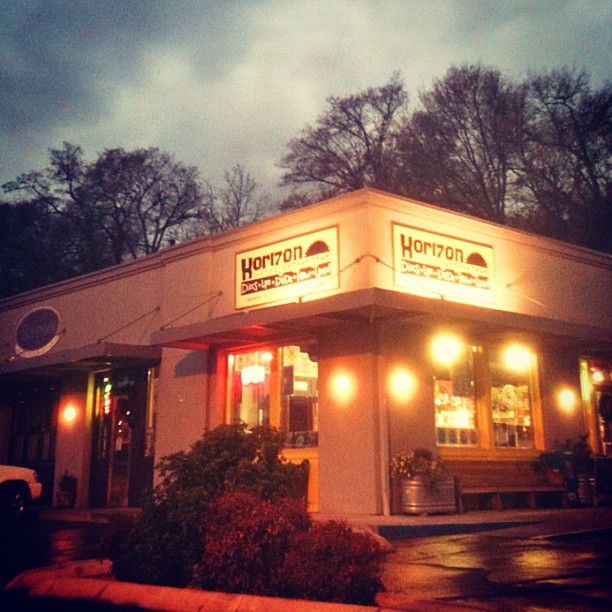
Horizon Records, Greenville, SC circa 2011

What is a “lean-back listener”? According to a leading music streaming service it is their target audience. A person who clicks on a list of songs, a playlist, for background music to help focus on work projects, or an exercise routine, or to relax after a long day on the job. One writer summarizes it: “Low-effort acquisition led to low-effort consumption”. 

Remember what it was like to admire the artwork of a vinyl record or audio CD, to open a CD tray to read liner notes, to place a record on the platter or the compact disc in the tray? 

Remember listening a whole album from start to finish? I mean, Really listening to the order of the songs and how each song relates to each other. Why does the album begin with an explosive tempo (presto) then moves to a walking pace (andante) before slowing to an adagio? And then listen to the album again. And again.

The art of listening to an album requires intent and practice. Plan a musical playlist. Where do you start? For me, the journey began with a cellist playing Adagio in G Minor in a novel set in Sarajevo. What does that music sound like and why is it important to the narrative?

I visited the public library. They no longer provide audio CDs to local patrons. So, I requested CDs using the online interlibrary loan service. This service allows access to libraries across the state. A music playlist developed from many interlibrary loans transactions. 

A Brad Mehlda recording began the daily musical practice. But within a week the Mehlda CD switched positions to the last slot in the five-disc CD player changer. 

During the summer a lot of music CD selections were returned to or retrieved from the library. Liner notes were read and album cover artwork admired. Effort made to learn about the music and the artists and the producers provided a journey. The order of the songs mattered. As Bailey and Micah, folk musicians of the band The Figs Present: The Figs, quip: “If you’re listening to this album on shuffle this won’t make any sense. Right? but also, if you’re listening to this album on shuffle, why?” Streaming music on shuffle is low-effort acquisition for low-effort consumption. By the end of summer the playlist that formed became a rich audio tapestry, an intimate soundtrack, and not unmemorable streaming background static. 
More Thanksgiving leftovers – playlist

For the holiday season, listen to the In the Groove, Jazz and Beyond show: Autumn and Thanksgiving.

You may also enjoy going through the archives of the In the Groove, Jazz and Beyond podcast:

Episode Dec 14 2025 In the Groove, Jazz and Beyond

The core of this episode has some of the best tenor sax players from today and yesteryear. I'm speaking of Potter, Kirk, Rollins and Trane. They are bookended by a new release from Out Of/Into and Zawinul's In A Silent Way. Playlist Artist ~ Name ~ Album Out Of/Into ~ Nacho Supreme ~ Motion II Chris Potter ~ The Mind's Eye (For Michael Becker and Joe Lovano) ~ Gratitude Roland Kirk ~ Alfie (Live at the Penthouse in Seattle September 1967) ~ Single Sonny Rollins ~ Alfie's Theme ~ Alfie John Coltrane ~ Moment's Notice ~ Blue Train Herbie Hancock ~ Watermelon Man ~ Head Hunters Weather Report ~ In a Silent Way ~ 8:30 (Live) Miles Davis ~ In a Silent Way (Rehearsal) ~ The Complete in a Silent Way Sessions
  1. Episode Dec 14 2025
  2. Wonder Jazz
  3. Post Thanksgiving 2025
  4. Autumn and Thanksgiving
  5. All Jack D

Thanksgiving feast leftovers – playlist

15 year anniversary

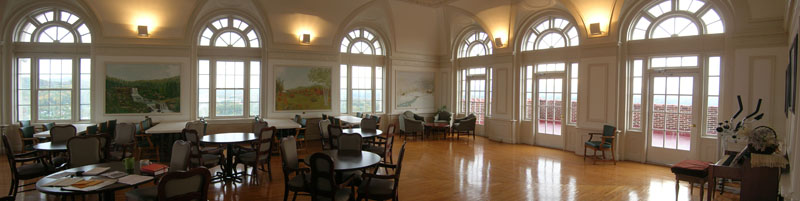
Historic Battery Park Apartments, Asheville, North Carolina
Rooftop Poets

Jazz with Bob Parlocha on a rainy night

The children tucked in to their beds. Stories read. Prayers said. I walked to the kitchen and turned on the radio. A reward for getting the children to bed on schedule. If everything was on time, than I heard Bob Parlocha introduce his radio broadcast. Jazz with Bob Parlocha began at the top of the hour, eight o’clock, on the local public radio station. I washed the dishes, figured out bill payments, or some other domestic chore while listening to music.

That was a different time. And in a different place. The local public radio station signal received is full of static. Their evening programming does not include Jazz with Bob Parlocha. That is understandable. He died almost a decade ago.

The Sageza Group archives jazz radio broadcasts. On their web site, jazzstreams.org, they collect Bob Parlocha’s original broadcasts that were digitized. “Commercial jazz radio is just about gone from North America,” they write.

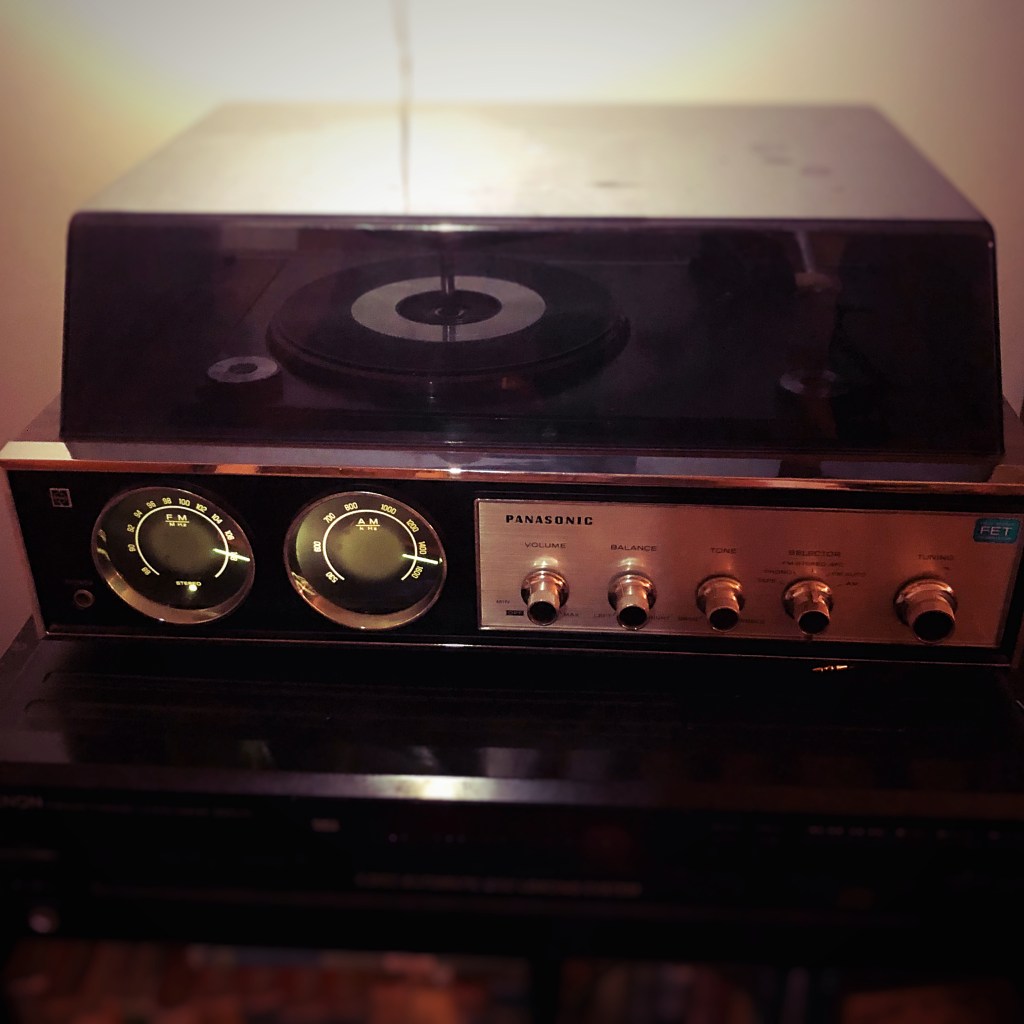
On evenings like tonight, when the radio reception is poor and the needle for the record player needs to be replaced, I find the Jazz with Bob Parlocha archives.[1] What was Bob broadcasting ten years ago on this date? Or eleven years ago? I select the date of a broadcast[2] and I am transported to a different time and a different place.

NOTES:

[1] The Sageza Group, Jazz with Bob Parlocha archives accessed April 16, 2024 http://jazzstreams.org/JwBP/JwBP-index.php

[2] Jazz with Bob Parlocha, April 16, 2013 broadcast accessed April 16, 2024 http://jazzstreams.ddns.net:8808/JwBP/Jazz-with-Bob-Parlocha-(2013-04-16).mp3

The story behind “I Heard the Bells on Christmas Day”

coffeehousejunkie's avatarCoffeehouse Junkie

Since the tradition curating advent poems[1] was started a few years ago, I found this story[2] particularly interesting.

NOTES:
[1] Advent Poems (or the 12 days of Christmas poetry), December 13, 2012, https://coffeehousejunkie.net/2012/12/13/2013-advent-poems-or-the-12-days-of-christmas-poetry/.
[2] Justin Taylor, “THE TRUE STORY OF PAIN AND HOPE BEHIND “I HEARD THE BELLS ON CHRISTMAS DAY”,” http://www.thegospelcoalition.org, December 21, 2014, accessed December 11, 2016 https://blogs.thegospelcoalition.org/justintaylor/2014/12/21/the-story-of-pain-and-hope-behind-i-heard-the-bells-on-christmas-day/.

View original post

Five music albums to listen to in the morning

What is your morning music playlist?

Most mornings — nearly a decade ago — I opened the office and started the work day to music of the following five albums.

There is something refreshing about arriving at the workplace before everyone else. Unlocking the front door. Turning on the lights. Brewing the first pot of coffee. Reviewing the notes from the previous day. Checking voicemail. Planning for the day and week ahead.

Sometimes an album played quietly from the desktop computer speakers. Sometimes from earphones attached to an iPhone. Sometimes I listened to more Brahms than Vivaldi. Sometimes I added Grieg or Beethoven to the mix. Sometimes I listened to various recordings from different artists of the same sonata.

When I took the job as a creative director it was a new start. I approached the career with intent and vigor. The Latin word gravis comes to mind. I was serious about my work and future. The following albums became the soundtrack of that time and place.

When I listen to these music albums now it is a reminder and — if this can be said of music — a friend.


Brouwer: El Decameron Negro and Other Guitar Works performed by Alvaro Pierri


Brahms: Piano Trios Nos. 1-4 by Eskar Trio


Aniello Desiderio, Quartetto Furioso ‎– Vivaldi 4 and 4 Piazzolla Seasons


Federico Moreno Torroba by Ana Vidović


Dvorak: Quartet Op. 106, 6 Cypresses, 2 Waltzes by Cecilia String Quartet

Collision of jazz and Chinese poetry

The train was late. Or rather, I was late for the train. Work ran later than expected. Missed the 5:45. The street car was running. No mechanical problems like Monday. But a few minutes behind schedule due to a presidential rally.

I decided to skip the street car and walk to the station in order to catch the last train home. There is almost two hours between one train and the other. Walking gave me a chance to find a coffee shop and some time to catch up on reading. The Public Market was on the way, but it tends be loud. And crowded.

Stone Creek Coffee is nice and near the train station. And open until 7 p.m. It displays a nice interior design. But sometimes the atmosphere feels a bit too mod. The baristas are often impertinent. And I feel inelegant when I visit. Maybe I am getting too old to haunt swanky coffee shops. Stone Creek coffee is luxurious. In spite of pretentious barista I bought a cup and then walked to the train station to wait and read a book. It is an autobiography of the Chinese poet Tu Fu. The fact that a book published in the 1930s is still in circulation at a public library is impressive. Also interesting are the translator notes. A few weeks ago I finished reading a recent translation of Li Po poetry. The translator, Seaton, made observations similar to those made nearly 100 years ago by Ayscough and Lowell.

I struggled with one passage in the book as the train station grew loud with passengers arriving from one train and departing on a Greyhound bus. Pulling a mobile device out of my pocket I placed in ear buds and cued up episode 88 of the Discovering Jazz podcast. As I listened I read that one Chinese ideogram may require more than one word to transliterate. Sometimes an entire phrase is used to convey the idea of a single Chinese character. The last train arrived. I boarded. Found a seat. Continued reading. And listening.

The jazz podcast explored absolute pitch. The show host mentioned that Asian languages are tonal. Pronouncing a vowel with one pitch may mean one thing while pronouncing the same vowel with a different pitch provides a different meaning. I experienced that when I visited Japan. But I did not have the knowledge to appreciate it then as I do now.

Reading a dozen pages was all I managed to accomplish before the train stopped at the home station. Thankful to be homeward. Grateful for the travel disruption that mingled American jazz and Chinese poetry into one commute.

Dear hipsters, Barnes & Noble has your vinyl

20150408-135335.jpg

Ain’t that the blues

Beedy Eyes stops thumping the skins as Chaney sings an old Leadbelly work song as I recall the first time I heard the blues. It was somewhere between the music I heard as a child–primarily country, gospel and hymns. A skinny toe head growing up on the rolling northern prairies, I perceived the blues was somewhere between country and gospel–something you sing while dangling your feet off a hayrack weighed down with a full load, something you sing with others coming in from the field, something you sing when the sun is tilting toward the western horizon. For a young kid hearing the blues for the first time it was somewhere on my musical landscape between religious and profane, respect and discent, right and wrong, joy and despair and seemed to fit me like a glove.

The window is open to an autumn afternoon as I work on graphic design projects. I listen to Bill, Chaney and Junior sing about hard times. Neighborhood dogs barking and birds singing seem to be appropriate backup. It’s been hard times for a lot of us. The other night I walked into a friend’s home and he asked right off, with a smile, “Anything you need to repent of? We’re talking about repentance.” Yeah, I think to myself. I got a long list. There are times I want to rob and steal, cuss and swear, break stuff and hit someone and be all sizes of trouble. Hard times is life. Doing what I aught to do is not easy. Ain’t that the blues? Or is that gospel? The double edged swing of the blues kicking up the dust of life in your face, choking on pride and praying that you “remember you’re walkin’ up to heaven, don’t let nobody turn you round.”

Peace Is a Flower: A Night of Poetry and Music

Peace is a flower – poetry and music

Tomorrow, 8:30 p.m. join James McKay, Laura Hope-Gill, Caleb Beissert, Pasckie Pascua, and Aaron Price at Battery Park Book Exchange & Champagne Bar, 1 Page Avenue, Asheville on SEPT 11, 8:30 to 11PM. This event is free to the public. Read poet and musician bios as well as other information on the Facebook events page. Link.

Artifacts from the late 1990s

Hidden in the back of a closet, a box of audio CDs

Is it possible to keep secrets or hide treasure in such an open, immediate society? Think of the secrets between Edward Mayhew and Florence Ponting of On Chesil Beach. It was a different time and place. Or maybe the quiet understanding between Primo and Secondo in the final moments of Big Night. Again, those were different times. A world before the internet and mobile devices and social media. Even in fictional works, you recognize how culture changes and you change with it.

My thoughts kept drifting back to that theme this weekend. A week or so ago, I opened the cardboard box to find two neat rows of artifacts from the late 1990s. Compact discs. CDs. Seems much more tangible than finding two rows of “moving picture experts group” (MPEG) files when referring to audio music. (Even composing that sentence seems clunky and unsophisticated.) This collection of music was packed into a cardboard box and was supposed to be unpacked when I relocated to Asheville. The box remained sealed like a time capsule.

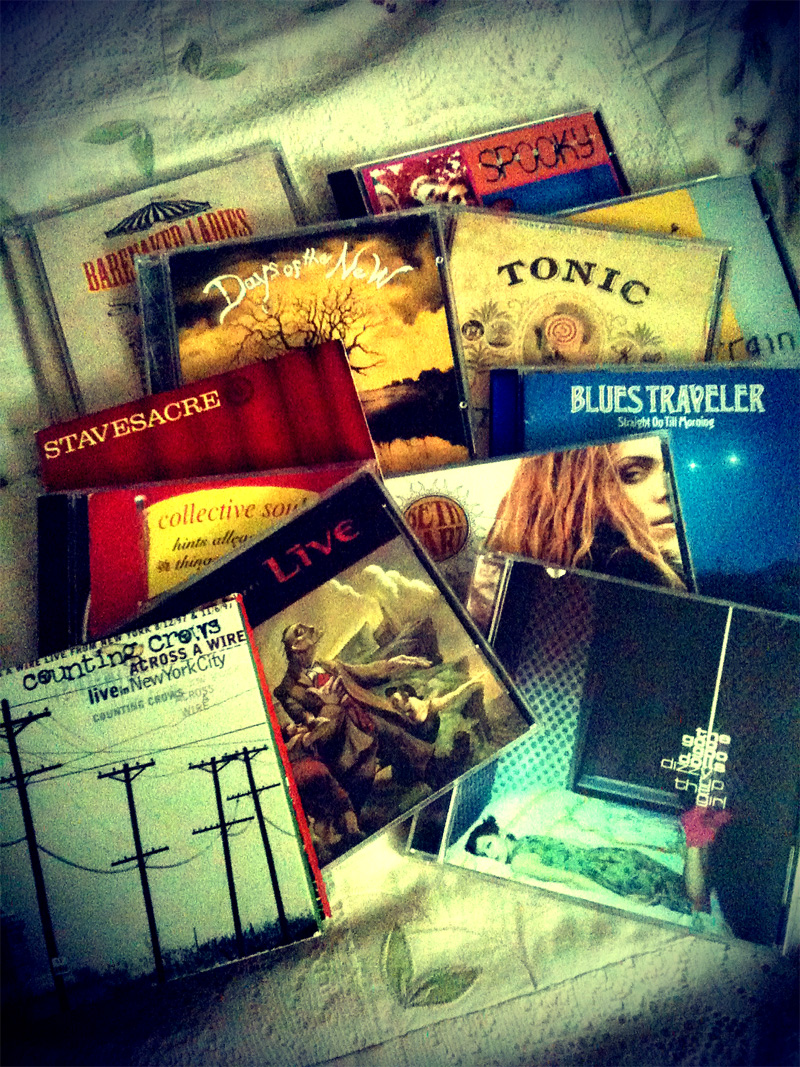
My Beauty and I rented  a space in Asheville that was twice the cost of our previous house and half the size. It was the most affordable place we could find at the time. A lot of boxes remained unpacked because there was no space to expand. Now as we pack things up again, I decide to keep this cardboard box open, listen to Tonic’s Lemon Parade, Goo Goo Doll’s Dizzy Up The Girl, and reflect on how different these times are compared to the late 1990s.

At that time, Bill Clinton was president of the U.S. and Boris Yeltsin was the first president of the Russian Federation. There was no Twitter revolution. Americans would get together in homes or apartments to share supper and snacks while watching the latest episode of the television shows ER, Friends or Party of Five. That was before the rise of the cult of white box worshippers [1] and the advent of Netflix. There seemed to be a greater sense of community. Or maybe that’s just 1990s nostalgia.

During that time, I didn’t own a personal computer or laptop. When I returned home from my job as a graphic designer, I would often read books or listened to Blues Traveler, Beth Hart or unknown indie bands like Spooky Tuesday on a CD player while I worked on illustrations or paintings. As I rediscover these albums, I recall paintings I was working on while listening to Days of the New for the first time. When I listen to Stavesacre’s album, friends I haven’t thought of in years fill my mind.

There was a specific evening with coworkers I recall. After work, we often meet up for dinner and a movie. While waiting for food to be served we were discussing the events of the day while enjoying our drinks. One coworker’s teenage daughter, who often joined us on those evenings, said, “There’s no specific movement in the 90s. Not like the 60’s or 70s. I mean, I grew up in the 90s. Even the music is boring. There’s nothing memorable about the 90s.” Maybe that’s teenage naivety, but I think there is much to remember of the late 1990s.

NOTES: [1] This is a reference to an article by Andrew Sullivan that I mentioned years ago in an essay, iPod, therefore iAm?.

Afternoon poetry and jazz

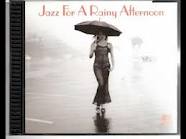
Jazz for a Rainy Afternoon Audio CD

Sometimes a few notes of music follow you for days are weeks or years. Sometimes a line of poetry haunts you like a memory you can’t quite recall. It’s like rain, it permeates the air, wets the ground, even makes tea taste more pronounced.

Here’s part of a story I can share with you. After I was at university studying art and design, I found an audio CD in a music store titled Jazz for a Rainy Afternoon. What attracted me to the album, a compilation, was the fact that the cover art reminded me of a sexier version of Gustave Caillebotte’s famous painting. I purchased the audio CD. It was background music initially. Something to edge off lonely days as a poor graduate beginning a career in graphic design. About the same time I discovered, and purchased, a copy of William Kistler’s poetry book America February.

I have always enjoyed poetry and music, but reading Kistler’s work was rigorous for me. Light verse and traditional poems, the variety that fill American and English school book anthologies, were what I was familiar with. But Kistler’s poetry was a new dish for my inexperienced palate. Equally, understanding the musical selections of Jazz for a Rainy Afternoon as more than a background soundtrack was challenging.

A line from one of Susan L Daniels’s poems has captured my attention this past week—the way jazz and poetry sometimes do. The speaker in the poem answers a question, so you like jazz, by saying: “…the answer is no/I live it sometimes…” That’s what I have come to enjoy about the complicated progression in a song or a poem that avoids a clean resolution.

Jazz and poetry work into you. It takes you down that familiar path of a rainy day afternoon, a common enough subject, but it is a variation of that theme. Never the same way twice. Like reading a poem as a school boy and reading it later as a graduate and later as a professional. Same poem printed on the page, but different. Always different. But familiar, because you “live it.” There’s more to this story. Maybe I’ll share it with you on another rainy day afternoon.

Horizon Records. Since 1975.

#avlent @josepharthur does a third encore at the merc table.

@josepharthur at The Grey Eagle.

This is as close as I’m going to get to attending tonight’s Neko Case show.

Last night at the Kava Bar

Last night at Asheville's Kava Bar
Last night at the open mic at Asheville's Kava Bar

Last night I live blogged the open mic at Vanuatu. Pics and videos of the live blogging session are here.

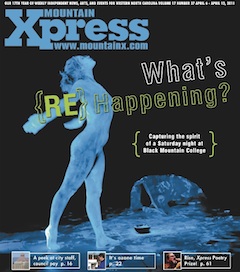
Who will be the winner of the 2011 Mountain Xpress Poetry Prize?

MtnX 04 06 11 cover
The Poetry Show featured in the Mountain Xpress Apr. 6-12, 2011 issue

And the finalists are:

  • Randal Pride, “Coal Palace”
  • Jessie Shires, “Corpus unum”
  • Jesse S. Rice-Evans, “Taking A Bath In Frida Kahlo’s Tub”
  • James Cox, “By the Lake in Northern Michigan”
  • James Davis, “Sourwood”
  • Jessica Claire Newton, “Two Weeks Deep Into the Dirty Laundry”
  • Tamsen Turner, “Sestina”
  • Brian Sneeden, “The Temple”
  • John Eells, “Sleep And Dreams”
  • Andrew Procyk, “Life and Death”

Some good poets represented on this list. Should be great evening of poetry and music.

I am honored and humbled to be on the list of featured poets for event. There’s a nice  write-up in the Mountain Xpress (Rhyme and reason) that mentions my involvement with the Rooftop Poets. Last time I was mentioned in the Xpress was when I was contributing to The Traveling Bonfires.

If you can make it to the big show tomorrow night, here’s some more details from the Mountain Xpress’s Facebook event page:

Featured poets include:
• Laura Hope-Gill, Director of Asheville Wordfest and Blue Ridge Parkway poet laureate.
• Matt Owens and Mesha Maren of the Juniper Bends reading series.
• Matthew Mulder and Brian Sneeden of the Rooftop Poets series.
• The top 10 finalists of the 2011 Mountain Xpress poetry prize will read their poems, and the overall winner of the contest will be announced. (The 10 finalists will also read their winning poems at the Saturday night YMI party during Wordfest in May.)

The evening concludes with a live performance by Keith Flynn & the Holy Men in celebration of the release of their album, “LIVE at the Diana Wortham Theatre.”

The even begins at 7 p.m. with a reception. Poetry readings begin at 8 p.m., and music begins at 9 p.m.

Tickets are $5 and can be purchased in advance at http://www.mountainx.com/mxcore/poem/tickets or at the door.

Hope to see you there!

View of Asheville from the Roof Garden

The sun is setting. The full moon is rising. The room is set up for tonight’s poetry reading and jazz show. The dark mocha stout cupcakes with…

Rooftop Poets party tonight, 8 p.m.

The Rooftop Poets event has begun

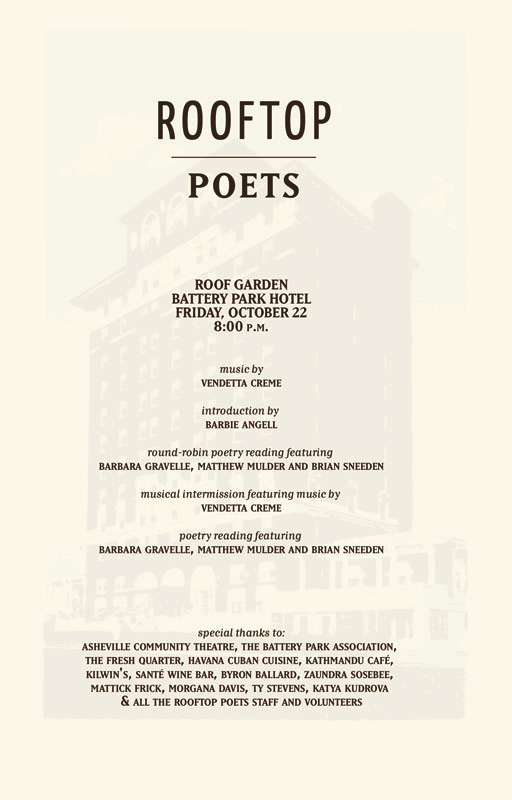
Rooftop Poets Event Program

Rooftop Poets: the doors are open

Battery Park Hotel

It’s 7:30PM! The doors are open and guests are arriving outside the Battery Park Hotel. Time to make my way to the Roof Garden.

Rooftop Poets party tonight, 8 p.m.

View of Asheville from the Roof Garden

The sun is setting. The full moon is rising. The room is set up for tonight’s poetry reading and jazz show. The dark mocha stout cupcakes with Bailey’s frosting look tasty. The supremo chocolate rum balls look like they could break several Prohibition-era laws. Time to get ready for the show.

The doors open at 7:30PM and the event begins at 8PM. Tickets are $10 each. Guests arriving at the Battery Park Hotel will be let in by a doorman who will have your name on a guest list.

See you all in less than two hours!

Poetry at the Roof Garden

Roof Garden Ballroom

Time to set up the Roof Garden of the Battery Park Hotel for tonight’s Prohibition-era poetry reading and jazz show.

More event details are here: link.