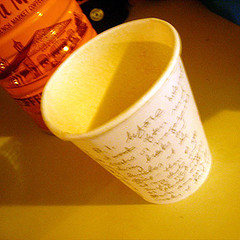
Mighty Mercy

by John Piper


Why did He choose a northern maid
From Nazareth, who had to trade
Her Galilee for Judah just
To get Messiah where He must
Be born? A strange and roundabout
Procedure for a God, no doubt,
Who values His efficiency
And rules the world from sea to sea!
Why not a girl from Bethlehem?
Well half the girls in town would stem
From David’s line. And carpenters
Aplenty there could bear the slurs
And gossip on a virgin got
with child, who blushed and said she’d not
Once kissed her man this whole year past.
Why not? Because God’s power is vast,
And in one little virgin birth
His sovereign joy and mighty mirth
In saving us from evil bent
Could never, never rest content.
Instead He turned and set His sight
To spangle Rome with all His might;
And took a girl from Galilee
To magnify His sovereignty.
And made the Roman king conspire
With God, to serve a purpose higher
Than he or any in the realm
Could see—a stroke to overwhelm
A few with faith and cause their heart
To know the truth, at least in part,
That, though God loves efficiency
And rules the world from sea to sea,
He does not go from here to there
By shortest routes to save His fare.
He’d rather start in Galilee,
Then pass a law in Rome, you see,
To get the child down south at length,
And magnify His sovereign strength.
God rules the flukes of history
To see that Micah’s prophecy
Comes true. Why did He choose a maid
From Nazareth? Perhaps she prayed
That endless mercy might abound
And take the longer way around.
The mighty mercy we adore
As we light advent candle four.

(By John Piper. © Desiring God. Website: desiringGod.org)

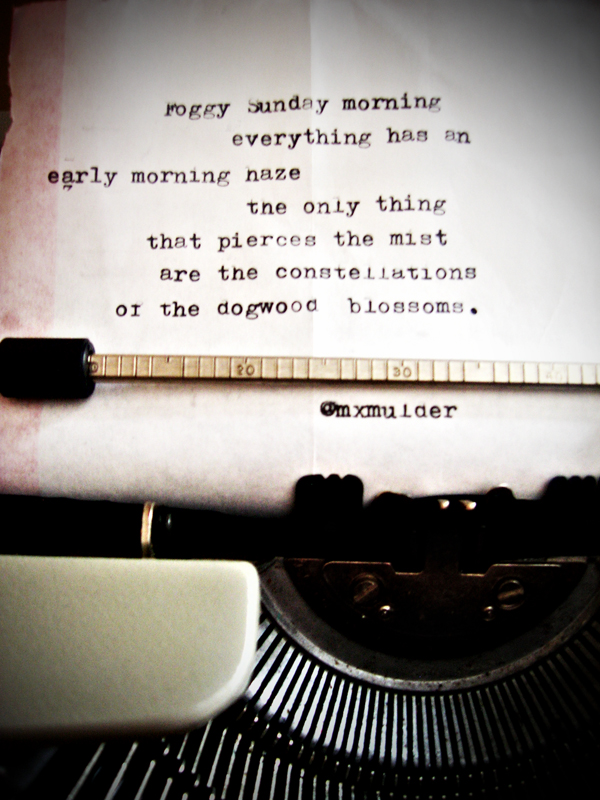
Poem: Foggy Sunday Morning

Poem: Foggy Sunday Morning
Poem sketch: Foggy Sunday Morning

If you’re participating in the 30 poems in 30 days writing challenge, it’s day eleven. How are you doing with the challenge? This poem sketch was written yesterday, but I was offline so here’s poem 10 of 30.

In Those Days, Randall Jarrell

In those days—they were long ago—
The snow was cold, the night was black.
I licked from my cracked lips
A snowflake, as I looked back

Through branches, the last uneasy snow.
Your shadow, there in the light, was still.
In a little the light went out.
I went on, stumbling—till at last the hill

Hid the house. And, yawning,
In bed in my room, alone,
I would look out: over the quilted
Rooftops, the clear stars shone.

How poor and miserable we were,
How seldom together!
And yet after so long one thinks:
In those days everything was better.

(via Poetry 365: In Those Days, Randall Jarrell)

Mosaic of the Nativity (Serbia, Winter 1993)

by Jane Kenyon


On the domed ceiling God
is thinking:
I made them my joy,
and everything else I created
I made to bless them.
But see what they do!
I know their hearts
and arguments:

“We’re descended from
Cain. Evil is nothing new,
so what does it matter now
if we shell the infirmary,
and the well where the fearful
and rash alike must
come for water?”

God thinks Mary into being.
Suspended at the apogee
of the golden dome,
she curls in a brown pod,
and inside her the mind
of Christ, cloaked in blood,
lodges and begins to grow.

(via )

The Winter Is Cold, Is Cold

by Madeleine L’Engle


The winter is cold, is cold.
All’s spent in keeping warm.
Has joy been frozen, too?
I blow upon my hands
Stiff from the biting wind.
My heart beats slow, beats slow.
What has become of joy?

If joy’s gone from my heart
Then it is closed to You
Who made it, gave it life.
If I protect myself
I’m hiding, Lord, from you.
How we defend ourselves
In ancient suits of mail!

Protected from the sword,
Shrinking from the wound,
We look for happiness,
Small, safety-seeking, dulled,
Selfish, exclusive, in-turned.
Elusive, evasive, peace comes
Only when it’s not sought.

Help me forget the cold
That grips the grasping world.
Let me stretch out my hands
To purifying fire,
Clutching fingers uncurled.
Look! Here is the melting joy.
My heart beats once again.

Into The Darkest Hour

by Madeleine L’Engle


It was a time like this,
War & tumult of war,
a horror in the air.
Hungry yawned the abyss-
and yet there came the star
and the child most wonderfully there.

It was time like this
of fear & lust for power,
license & greed and blight-
and yet the Prince of bliss
came into the darkest hour
in quiet & silent light.

And in a time like this
how celebrate his birth
when all things fall apart?
Ah! Wonderful it is
with no room on the earth
the stable is our heart.

Advent

by Donald Hall


When I see the cradle rocking
What is it that I see?
I see a rood on the hilltop
Of Calvary.

When I hear the cattle lowing
What is it that they say?
They say that shadows feasted
At Tenebrae.

When I know that the grave is empty,
Absence eviscerates me,
And I dwell in a cavernous, constant
Horror vacui.

(via Poetry Foundation)

Gardening and fireflies

Organic garden — the last weekend in June
And here on earth come emulating flies,
That though they never equal stars in size,
(And they were never really stars at heart)
Achieve at times a very star-like start.
Only, of course, they can’t sustain the part.

(link: Fireflies in the Garden by Robert Frost)

Some evenings, as the sun sets, I water the garden. A two-gallon water can is used and one can of water per garden box seems to be sufficient. The other night while I watered the garden in the evening, the fireflies appeared to come up from the ground and surround me; almost as if the water droplets transformed upon impact and rose into the gathering darkness as luminous creatures. Within an hour or two I could see their light in the tallest oaks and pines surrounding the cottage. But, alas, like Robert Frost offers “they can’t sustain the part” of the stars above.

Like twilight time, the garden is transitioning. The snap peas began to wither a few days ago. I can’t tell if it is due to the lack of rain or the peas have passed their season of growth. I’ll plant kale and shard to replace the pea plants. So far the most produce comes from the chili pepper plant and the lettuce. The zucchini and squash are disappointing. It appears the leaves have some kind of mold; yielding only four vegetables. It’s too early to tell, but it looks like the tomato plants will yield well this year.

Always be prepared to read your poems

When I mentioned earlier today that you should join the Traveling Bonfires tonight at Malaprop’s, you really were invited to join the reading. Two of the three poets were unable to show up for tonight’s reading. The emcee of the poetry reading and founder of the Traveling Bonfires invited anyone in the audience to read poems. He asked me to read my poems as well.

I wasn’t prepared to read; only to listen. But no one else came prepared to read. So, I frantically dug into my old messenger bag and found two poetry chapbook manuscripts by other poets. For a brief moment I thought I would read from their manuscripts, but I didn’t want to read poems that weren’t ready for the public. Sandwiched between loose papers and a copy of Selected Cantos of Ezra Pound and Narrow Road to the Interior was my red notebook containing poem sketches and revisions. I had half of a thought to read selections from Pound and Basho, but in my notebook I found six poem sketches and revisions to test in front of an audience.

The moral of the story is this: always be prepared to read your poems and if you’re a poet in the Asheville area (or if you’re a poet traveling near the Asheville area) contact me or the Traveling Bonfires (travelingbonfires@yahoo.com) and we’ll find a space and a mic and a crowd of listeners.

Poem: Appalachian omens

“Appalachian omens” by Matthew Mulder

Anticipation
of rain and Sunday dinner,
we see a groundhog
resting on a rock near the
restaurant entrance.

And on the way home,
above the road we see a
hawk gripping a snake
while evading two large crows.

If I were the priest
Kalchas, I might proclaim that
I see the war-like
sons of Atreus, or some
other such omens.

the garden project: late april

April 2010

New feet within my garden go,
New fingers stir the sod;
A troubadour upon the elm
Betrays the solitude.
—Emily Dickinson, “The Garden”

Unlike the poem, the troubadour is a male cardinal and the tree is an red oak. And no, I didn’t color coordinate the bird and tree. Actual bird and tree reside on or near the location of the garden. A cardinal couple made their home east of the garden project and routinely perch on a lower limb of the red oak tree and comment on my gardening progress.

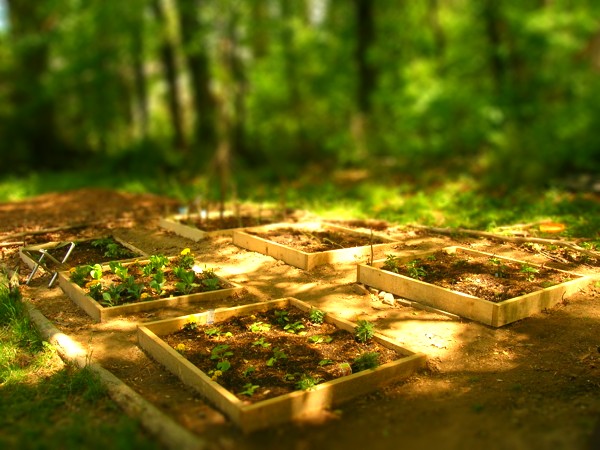
At this point, all six garden boxes are built, soil turned, topsoil added and plants planted. Plants yet to plant include chard and kale and a couple blueberry bushes. The blueberry bushes will go in the northwest corner.

The garden receives at least six to eight hours of direct sunlight each day, but not until after noon. On an early morning in late April the sunlight provides dappled shadows on the garden. By May, the surrounding trees are in full green dress and the garden remains in full shade until noon.

Poem: Saturday Night, Coffee House

“Saturday Night, Coffee House” by Matthew Mulder

The awkwardness is complete—
strangers sitting side by side
with nothing to offer but body heat
on this cold winter night;
and the only thing that
connects us is my brother’s wife
and the wooden bench we sit upon.

Conversation is embarrassingly
fumbled with references to
the chai we sip;
and at long silences we sip
more chai and look
around the coffee house
for more material to
discuss,
or some distraction
to fascinate our senses.

(Originally published in Rapid River Magazine, April 2004.)

I AM NOT YOUR PRINCESS

Sandpaper between two cultures which tear one another apart

I’m not a means by which you can reach spiritual understanding

Or even learn to do beadwork
I’m only willing to tell you how to make fry bread
1 cup flour, spoon of salt, spoon of baking powder
Stir, add milk or water or beer until it holds together
Slap each piece into rounds -let rest
Fry in hot grease until golden
This is Indian food
Only if you know that Indian is a government word
Which has nothing to do with our names for ourselves
I won’t chant for you
I admit no spirituality to you
I will not sweat with you or ease your guilt with fine turtle tales
I will not wear dancing clothes to read poetry Or explain hardly anything at all
I don’t think your attempts to understand us are going to work so
I’d rather you left us in whatever peace we can still
Scramble up- after all you continue to do
If you send me one more damn flyer about how to heal myself
For $300 with special feminist counseling
I’ll probably set fire to something
If you tell me one more time that I’m wise

I’ll throw up on you
Look at me
See my confusion, loneliness, fear, worrying about all our
Struggles to keep what little is left for us
Look at my heart

Not your fantasies

Please don’t ever again tell me about your Cherokee great-great grandmother
don’t assume I know every other Native Activist
In the world personally

That I even know names of all the tribes
or can pronounce names I’ve never heard
or that I’m expert at the peyote stitch
If you ever again tell me
How strong I am
I’ll lay down on the ground & moan so you’ll see
at last my human weakness

Like your own
I’m not strong, I’m scraped
I’m blessed with life while so many I’ve known are dead
I have work to do dishes, to wash a house to clean
There is no magic
See my simple cracked hands which

Have washed the same things you wash

See my eyes dark with fear in a house by myself late at night

See that to pity me or to adore me are the same
1 cup flour, spoon of salt, spoon of baking powder, liquid to hold
Remember this is only my recipe

There are many others
Let me rest
Here
At least

– Chrystos, Menominee

(via deltafoxtrot)1

NOTES:
1) Delta Foxtrot, “I am not your princess,” January 8, 2010, Deltafoxtrot, accessed January 8, 2010, https://deltafoxtrot.tumblr.com/post/323784465/i-am-not-your-princess

Poem Review: “Old Soldier” by Charles Simic

About four months ago I wrote a review of a poem by Charles Simic for an editor, but I have not received word as to its status. So, here’s an abbreviated form of the review.

A couple months ago, my son and I planted seven white pine saplings along the east side of the property. As a three-year old, he doesn’t really “plant” trees but rather roams the near vicinity in search of new wonders to discover. Each dandelion must be plucked and examined and each twig must be picked up and relocated. A chestnut branch, which had fallen during a recent storm, particularly interested his imagination. With chestnut branch in hand, my son defended the homestead from cardinals, squirrels and a trespassing cat.

As I recall my three-year son chasing a yellow rubber ball across the backyard and waving his chestnut branch over his head, I think of how new readers of poetry need to wade into the greater pool of literature by first enjoying what will get their feet wet. This doesn’t diminish the quality of Simic’s work but rather supports the notion that if a poet can speak to the children he will be able to guide them into a broader, deeper appreciation for poetry. The Academy of American Poets recently cited, in their 2003-2004 annual report, that 68% of their active members became interested in poetry before the age of 18.

“Old Soldier” opens with a list of credentials and a storyteller’s wink of wit. The image of this warrior wanting to impishly pull the tail of “a cat lying in the grass” suggests a mischievous tone for Simic’s 22-line poem. The mother figure introduces a contrast of gentleness and the serene garden solitude against the “flying cinders” of aerial bombardment. What’s interesting about the mother figure is that she doesn’t leave the soldier alone but takes him “by the hand.” It’s tempting to wonder if this is a historical account or merely a narrative. Vernon Young, a contributor to the Hudson Review, suggests that Simic writes “by the fable; his method is to transpose historical actuality into a surreal key.“

Simic tells that the soldier’s sword was cardboard and only lacked a horse–particularly a horse which pulled “a hearse/With a merry wave of his tail.” The last lines are striking in that they suggest a ten-year old boy who chooses a funeral horse for his military campaigns instead of a warhorse. Ripe imagery presents numerous literary interpretations.