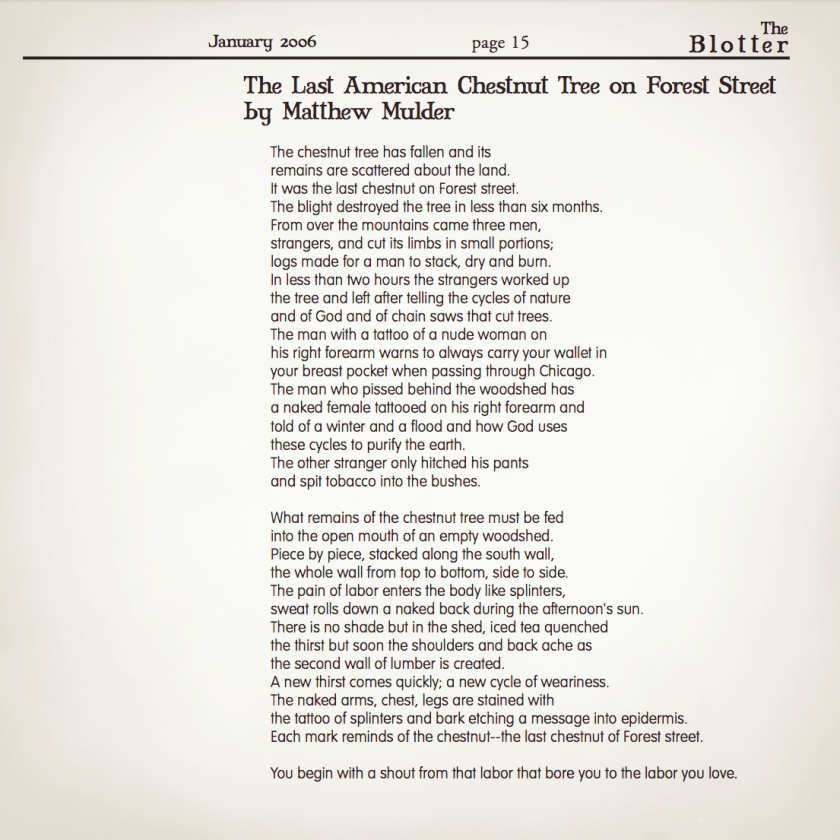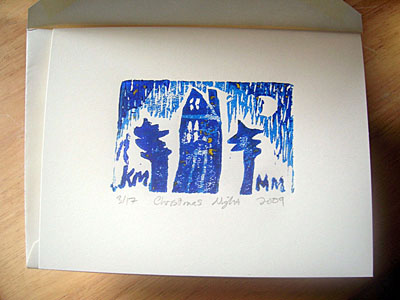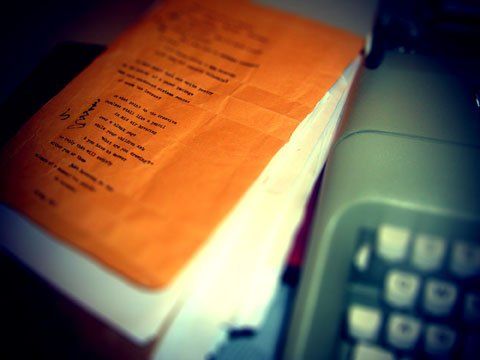
Poem 01: The Last American Chestnut Tree on Forest Street


![DSCN5167[sqr-basic]](https://coffeehousejunkie.net/wp-content/uploads/2016/02/dscn5167sqr-basic.jpg?w=840&h=840)
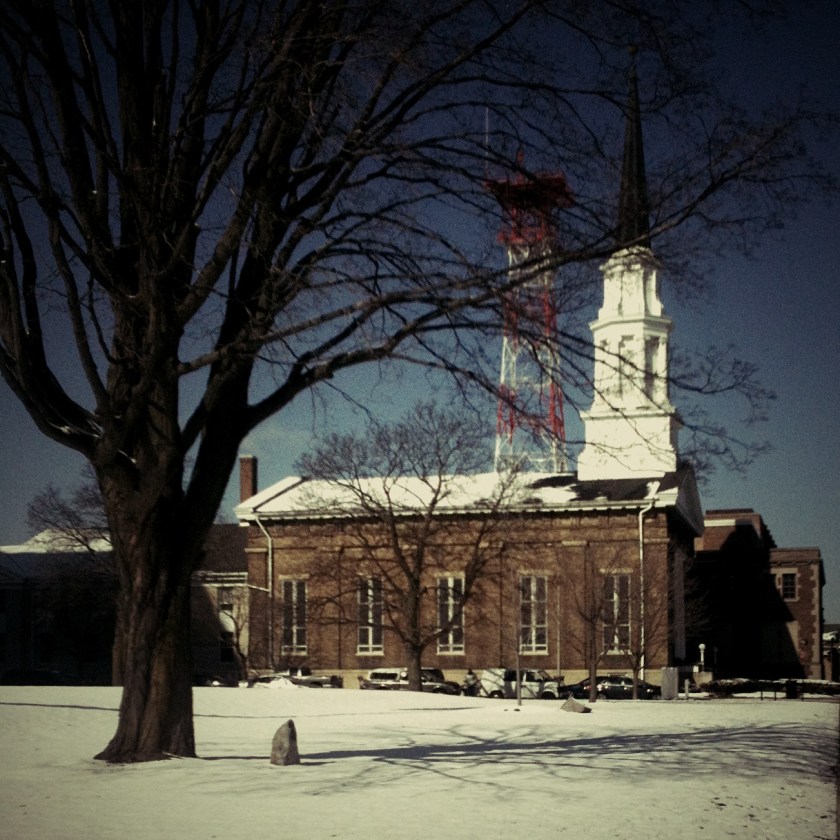
When night winds leaves subzero signatures on the Saturday morning window, it is time for coffee and jazz and few lines of poetry… [1]
Try to count the colors
In a frosted window at sunrise
try to imagine the hues and shades
Of a Wisconsin winter morning…
NOTES
[1] With apologies to Three Crosses, inspired by song “Michelangelo”
“Amazing readings, beautiful community,” tweeted one of the poetry marathon attendees Saturday night. Indeed it was a good night to visit Woodland Pattern Book Center to hear poets share their work. To be exact, 150 area poets shared their work.
I participated in the 9 o’clock hour. Featured poets included: Matt Cook, Tom Erickson, Peter Burzynski, Franklin K.R. Cline, Carmen Murguia, Peter Whalen, Bob Koss, Jane Lukic, Michael Wendt. One of the highlights of that hour was to hear a Czesław Miłosz poem read in Polish.
Each poet is afforded five minutes to read. The poems I selected earlier in the day loosely fit the motif of something old, something new, something borrowed and something blue. They were all short poems. One of the poems was a spare two lines. So, I read it slowly. In truth, I try to read all poetry at a slow pace. It is a technique I picked up from some of my favorite poets in Western North Carolina.
After the 9 o’clock hour readings concluded, one of the event coordinators commented that she likes this part of the marathon. She said that the poets are warmed up at this point and the poetry really engages the audience. While milling around after the reading, a board member of Woodland Pattern asked me if I was a visiting professor. I smiled. It is a question I get asked a lot after a public reading.

How does a poet select poems to read at a poetry marathon? I have been asking myself and my wife that question all week. Tomorrow is the annual poetry marathon at Woodland Pattern Book Center in Milwaukee. Something like 150 poets will be at the all-day event.
As I peruse a collection of publications I am a little startled to realize that there is a decade or more of work published in various journals and reviews.[1] Some of the publications are regional to North Carolina while others are national.
My work does not have a lot of Milwaukee-area credentials and I am not well-known to this region (forthcoming work is to be published by a Milwaukee publisher). Even so, I feel like an outsider at the Woodland Pattern poetry community. This is familiar territory.[2]
During a conversation with my wife this week an idea formed. Selecting poems based on the wedding adage was the plan: something old, something new, something borrowed, something blue. This developed into an engaging exercise of finding poems to fit that motif. Looking forward to sharing the results tomorrow night — between 9 and 10 p.m. — at Woodland Pattern Book Center.
NOTES
[1] A SHORT LIST OF SEVEN PUBLISHED POEMS:”Saturday Night, Coffee House,” Rapid River, 2004; “Reading ‘My American Body’ by W. K. Buckley,” Rapid River, 2005; “Narrative Kernel,” Rapid River, 2005; “Last Bus,” H_NGM_N, 2005; “The Last American Chestnut Tree,” The Blotter, 2006; “Loneliness Visits,” .ISM Quarterly, 2006; “Last Night at the New French Bar,” Crab Creek Review, 2010
[2] A good friend and poet, Barbie Angell, once told me that I am on the cusp as far as a poet and writer is concerned. Meaning, that I am on the border or threshold of the academic (published) poetry scene and the street (unpublished) poetry scene. So, being a stranger to the Milwaukee poetry scene is familiar place for me.
Yesterday’s afternoon walk was a bit chilly. Air temperature was around 10°F with wind chill of -7°F. Especially at the corner of Broadway and East Wisconsin. It was practically a wind tunnel. Crossing Water Street was not much better. But I finally made it across the bridge and to the River Walk.
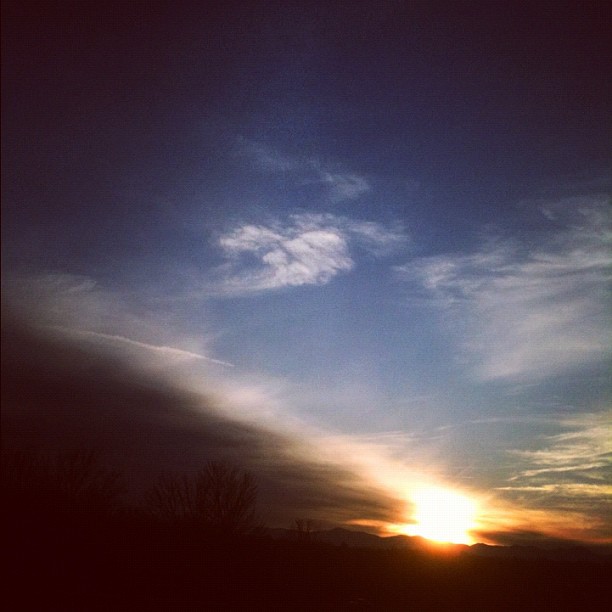
The river was not quite frozen. And for the most part, very few people are out for a wintery stroll. One woman pulled her faux fur lined hood over her head and quickly shuffled out of the Wells Fargo building to a waiting SUV. A couple guys, both dressed in thick dark coats, waited for a bus. There was a man waiting at the street corner smoking a cigarette. He wore a red flannel jacket and no gloves.
Funny how cigarette smoke is so distinct in the frigid air. The subtle distinctions between Camel Turkish Gold 100’s, Marlboro Red, Newport Menthol Blue and Chesterfield Bronze is almost as unmistakable as the scent of a fajita or a falafel. Wondered why he had no gloves.
There was a Tranströmer poem I tried to recall as I walked along the River Walk. My breath, thick clouds, attempted to signal a line of the poem. What was it about? A train? A couple in a hotel? Something about night? Or was it a horizon? The frozen river surface does not help. And forty minutes in the cold temperature sent me back to the warm harbor of the office building.

The winter is cold, is cold.
All’s spent in keeping warm.
Has joy been frozen, too?
I blow upon my hands
Stiff from the biting wind.
My heart beats slow, beats slow.
What has become of joy?
If joy’s gone from my heart
Then it is closed to You
Who made it, gave it life.
If I protect myself
I’m hiding, Lord, from you.
How we defend ourselves
In ancient suits of mail!
Protected from the sword,
Shrinking from the wound,
We look for happiness,
Small, safety-seeking, dulled,
Selfish, exclusive, in-turned.
Elusive, evasive, peace comes
Only when it’s not sought.
Help me forget the cold
That grips the grasping world.
Let me stretch out my hands
To purifying fire,
Clutching fingers uncurled.
Look! Here is the melting joy.
My heart beats once again.[1]
This audio podcast features the poem “The Winter Is Cold, Is Cold” by Madeleine L’Engle and concludes with a selection from the Book of Common Prayer that is often read on Christmas Day.
NOTES:
[1] Source: The Winter Is Cold, Is Cold by Madeleine L’Engle
[2] Advent Poems (or the 12 days of Christmas poetry)

No one can celebrate
a genuine Christmas
without being truly poor.
The self-sufficient, the proud,
those who, because they have
everything, look down on others,
those who have no need
even of God- for them there
will be no Christmas.
Only the poor, the hungry,
those who need someone
to come on their behalf,
will have that someone.
That someone is God.
Emmanuel. God-with-us.
Without poverty of spirit
there can be no abundance of God.[1]
This audio podcast features “The House of Christmas” by GK Chesterton, “The God We Hardly Knew” by Óscar Romero and a selection from the Book of Common Prayer.
Also, special thanks to Folk Angel for permission to use “O Little Town Of Bethlehem” from their album Glad Tidings – Christmas Songs, Vol. 4. If you are looking for some great Christmas records, check out their website, FolkAngle.com.
NOTES:
[1] Source: The God We Hardly Knew by Óscar Romero
[2] Advent Poems (or the 12 days of Christmas poetry)

Immensity cloistered in thy dear womb,
Now leaves His well-belov’d imprisonment,
There He hath made Himself to His intent
Weak enough, now into the world to come;
But O, for thee, for Him, hath the inn no room?
Yet lay Him in this stall, and from the Orient,
Stars and wise men will travel to prevent
The effect of Herod’s jealous general doom.
Seest thou, my soul, with thy faith’s eyes, how He
Which fills all place, yet none holds Him, doth lie?
Was not His pity towards thee wondrous high,
That would have need to be pitied by thee?
Kiss Him, and with Him into Egypt go,
With His kind mother, who partakes thy woe.[1]
This audio podcast features “Mosaic of the Nativity (Serbia, Winter 1993)” by Jane Kenyon, “Nativity” by John Donne, “A Christmas Carol” by Christina Georgina Rossetti and a selection from the Book of Common Prayer.
Special thanks to Folk Angel for permission to use “God Rest Ye Merry Gentlemen” from their album Comfort & Joy – Christmas Songs, Vol. 3. If you are looking for some great Christmas records, check out their website, FolkAngle.com.
NOTES:
[1] Source: “Nativity” by John Donne
[2] Advent Poems (or the 12 days of Christmas poetry)

When I see the cradle rocking
What is it that I see?
I see a rood on the hilltop
Of Calvary.
When I hear the cattle lowing
What is it that they say?
They say that shadows feasted
At Tenebrae.
When I know that the grave is empty,
Absence eviscerates me,
And I dwell in a cavernous, constant
Horror vacui.[1]
This audio podcast features “Annunciation” by Denise Levertov, “Advent” by Donald Hall, “Into The Darkest Hour” by Madeleine L’Engle[2] and a selection from the Book of Common Prayer.
NOTES:
[1] Source: Poetry Foundation
[2] Advent Poems (or the 12 days of Christmas poetry)
![DSCN4066[sqr-dallas]](https://coffeehousejunkie.net/wp-content/uploads/2015/10/dscn4066sqr-dallas.jpg?w=840&h=840)
There is so much to confess. A thousand things must be confessed.
Thirteen moons since last I confessed.
What is confession? The admission of guilt? A written or oral disclosure of activity committed that requires reconciliation, restitution, and restoration?
Confessional poetry of the 1950s and 1960s (think of poets like John Berryman, Sylvia Plath, Robert Lowell) forever changed the course of American poetry. It was less of a religious expression and more of a psychological therapy for the poet(s).
When I first started posting confessions it was somewhere closer to a Japanese renga meets an American confessional poem meets to-do-list.
But those confessions, those poems, those lists, fell into my beard and the rain washed them down Jefferson Street to the Third Ward. I have tried to locate them…
in coffeeshops…
underpasses…
alleys…
and park lots…
Previous confessions: [1] [2] [3] [4] [5] [6] [7] [8] [9] [10]

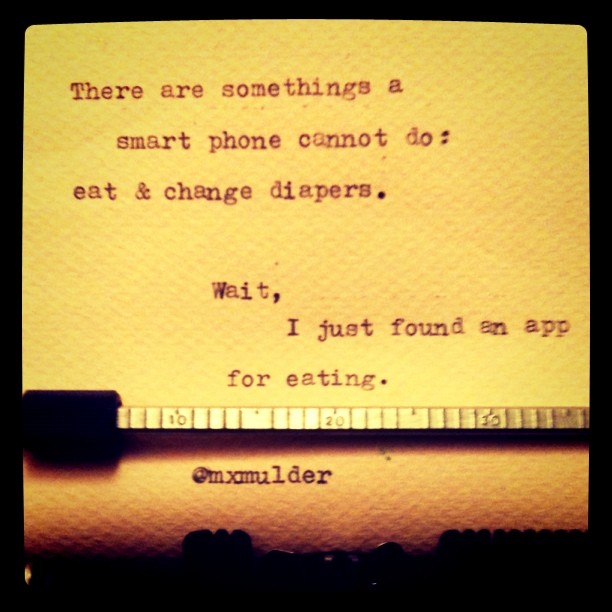
Typewriters are not smartphones; no autocorrect, no spellcheck, no batteries, completely analog
Note: originally POSTED ON JULY 6, 2011
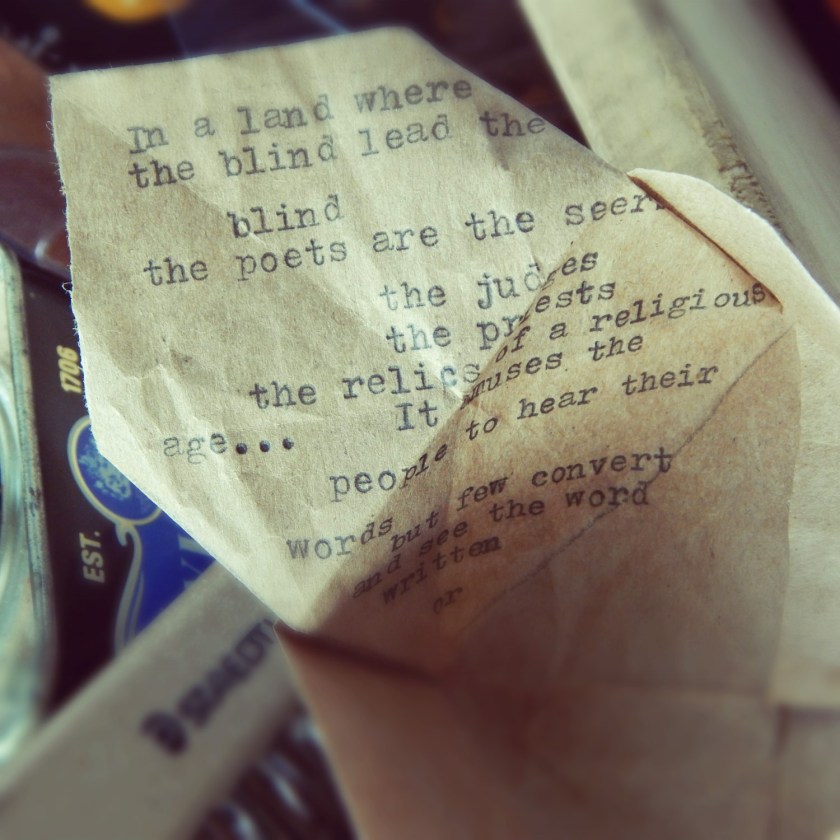
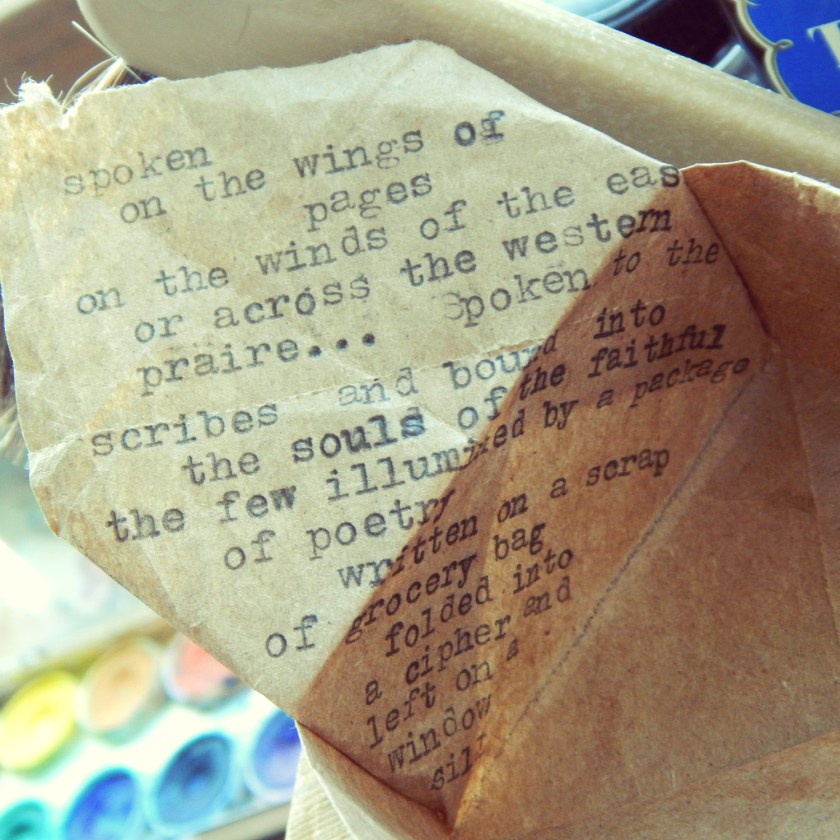
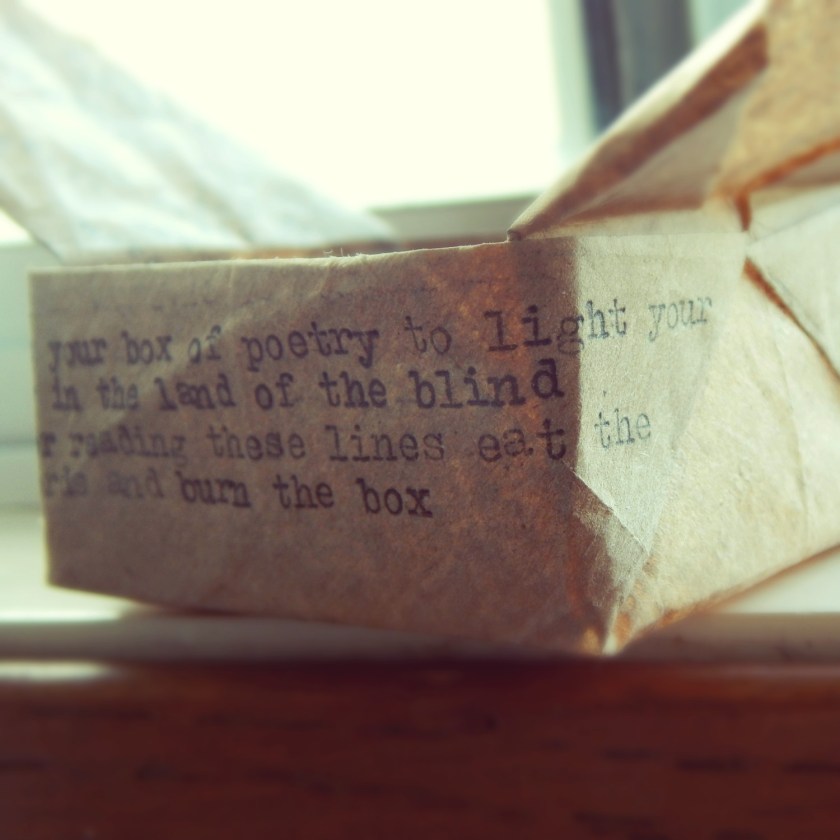
A challenge motivates me to think of solutions. In this case, the challenge was inspired by a reader of this blog who commented: “It would be lovely to cover a little box with beautiful words…” Great idea!
After a couple concepts and a couple drafts of what I hope are “beautiful words” here is a custom origami box of poetry. The reward is to watch the user/reader pick up the box and decipher the order of the poem.


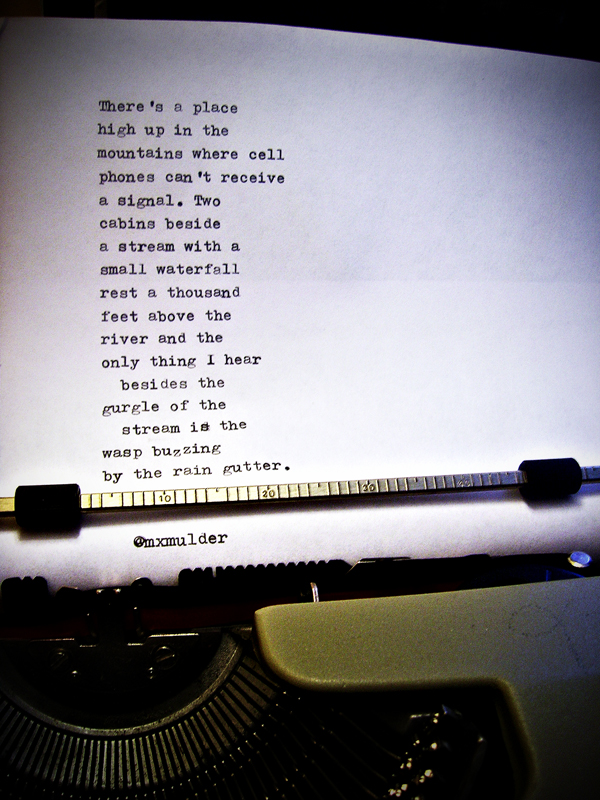
NOTE: Originally published April 12, 2011, https://coffeehousejunkie.net/2011/04/12/poem-theres-a-place/
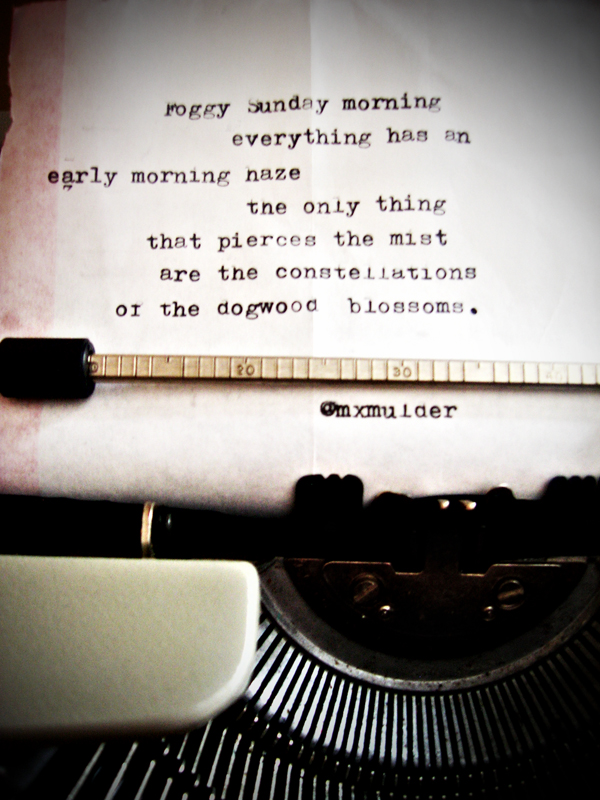
NOTE: Originally published April 11, 2011, https://coffeehousejunkie.net/2011/04/11/poem-foggy-sunday-morning/
NOTES:
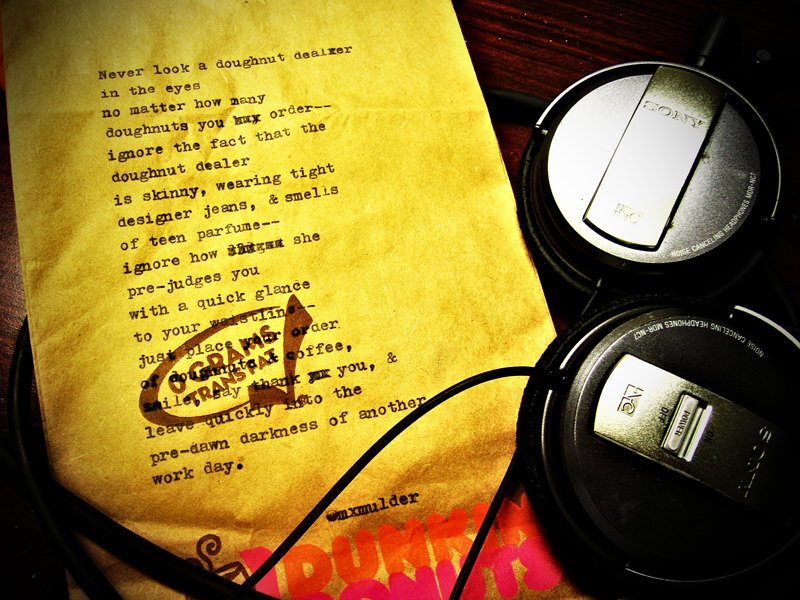
1) Originally published April 5, 2011, https://coffeehousejunkie.net/2011/04/05/poem-never-look-a-doughnut-dealer-in-the-eyes/
2) This is a rough draft and includes typos, erroneous grammar and other literary warts. In this case, perfume is intentionally misspelled to represent a unique American accent.
NOTE: Originally published April 19, 2011, https://coffeehousejunkie.net/2011/04/19/poem-the-honey-bee/

Happy Christmas Eve! Here is the final episode of the Advent series for this year.
This episode features the poem “The Winter Is Cold, Is Cold” by Madeleine L’Engle and concludes with a selection from the Book of Common Prayer that is often read on Christmas Day.
Merry Christmas from the Coffee Den!
Thanksgiving
By Ralph Waldo Emerson
For each new morning with its light,
For rest and shelter of the night,
For health and food,
For love and friends,
For everything Thy goodness sends.
As promised last week, here is a found poem I constructed based on the poets who read at the Asheville 100 Thousand Poets for Change event.
Do not wonder when I say it directly to your ear,[1]
“I am writing a letter to my dead sister. . . “[2]
We anticipate the leap into freedom. [3]
We make our vows in the beach dunes. [4]
We need visual signs of healing. [5]
All that remains is the small few. . . [6]
A home where the family never can return. [7]
They sold their own inheritance. . . [8]
And must return to the center. . . to learn more. . . [9]
It is possible to have everything. . . or at least twenty dollars. . . [10]
NOTES: Each line in this found poem is from the following poets who read at the Asheville 100 Thousand Poets for Change event on September 28, 2013.
[1] Britt Kaufmann
[2] Barbara Gravelle
[3] Steve Brooks
[4] Jeff Davis
[5] Jessica Newton
[6] Jeff Davis
[7] Caleb Beissert
[8] Britt Kaufmann
[9] Jessica Newton
[10] Brian Sneeden

It is so difficult for me to locate well-written Advent poems. A couple years ago I began collecting and posting some of my favorites. The list includes some well known poets as well as some lesser known individuals. As a way to celebrate the season, I offer the 12 days of Advent poetry:
Hope you enjoy the list. Let me know of Advent poems that are not listed here.
Realizing late in the evening that the day had almost past and I had not committed to composing a poem, I set to the task….
[read more]
UPDATE: This blog post is available as part of an audio podcast.
Listen here:
Or listen on:
PodOmatic: coffeehousejunkie.podomatic.com
SoundCloud: soundcloud.com/coffeehousejunkie
E-book: How long does it take to write a haiku?: and other stories
Purchase the e-book Kindle Edition for $0.99!
What do you think about when you see a stack of books? In this short collection of stories you will also learn what a creative director thinks of when he sees a stack of books. Who is the audience for your poems? Is possible to write in your sleep, or not?
How do you explain a poem without revealing its mystery? I thought about that question this weekend after a private poetry reading session. A few poets gathered under a full moon to read new work….
[read more]
UPDATE: This blog post is available as part of an audio podcast.
Listen now:
Or listen on:
PodOmatic: coffeehousejunkie.podomatic.com
SoundCloud: soundcloud.com/coffeehousejunkie
E-book: This blog post will be featured in a forthcoming e-book. More details coming soon.
‘Hail, space for the uncontained God’
From the Agathistos Hymn, Greece, VIc
We know the scene: the room, variously furnished,
almost always a lectern, a book; always
the tall lily.
Arrived on solemn grandeur of great wings,
the angelic ambassador, standing or hovering,
whom she acknowledges, a guest.
But we are told of meek obedience. No one mentions
courage.
The engendering Spirit
did not enter her without consent.
God waited.
She was free
to accept or to refuse, choice
integral to humanness.
____________________________
Aren’t there annunciations
of one sort or another
in most lives?
Some unwillingly
undertake great destinies,
enact them in sullen pride,
uncomprehending.
More often
those moments
when roads of light and storm
open from darkness in a man or woman,
are turned away from
in dread, in a wave of weakness, in despair
and with relief.
Ordinary lives continue.
God does not smite them.
But the gates close, the pathway vanishes.
______________________________
She had been a child who played, ate, slept
like any other child – but unlike others,
wept only for pity, laughed
in joy not triumph.
Compassion and intelligence
fused in her, indivisible.
Called to a destiny more momentous
than any in all of Time,
she did not quail,
only asked
a simple, ‘How can this be?’
and gravely, courteously,
took to heart the angel’s reply,
perceiving instantly
the astounding ministry she was offered:
to bear in her womb
Infinite weight and lightness; to carry
in hidden, finite inwardness,
nine months of Eternity; to contain
in slender vase of being,
the sum of power –
in narrow flesh,
the sum of light.
Then bring to birth,
push out into air, a Man-child
needing, like any other,
milk and love –
but who was God.
(via chriscorrigan.com)
He will come like last leaf’s fall.
One night when the November wind
has flayed the trees to bone, and earth
wakes choking on the mould,
the soft shroud’s folding.
He will come like frost.
One morning when the shrinking earth
opens on mist, to find itself
arrested in the net
of alien, sword-set beauty.
He will come like dark.
One evening when the bursting red
December sun draws up the sheet
and penny-masks its eye to yield
the star-snowed fields of sky.
He will come, will come,
will come like crying in the night,
like blood, like breaking,
as the earth writhes to toss him free.
He will come like child.
(via the guardian)