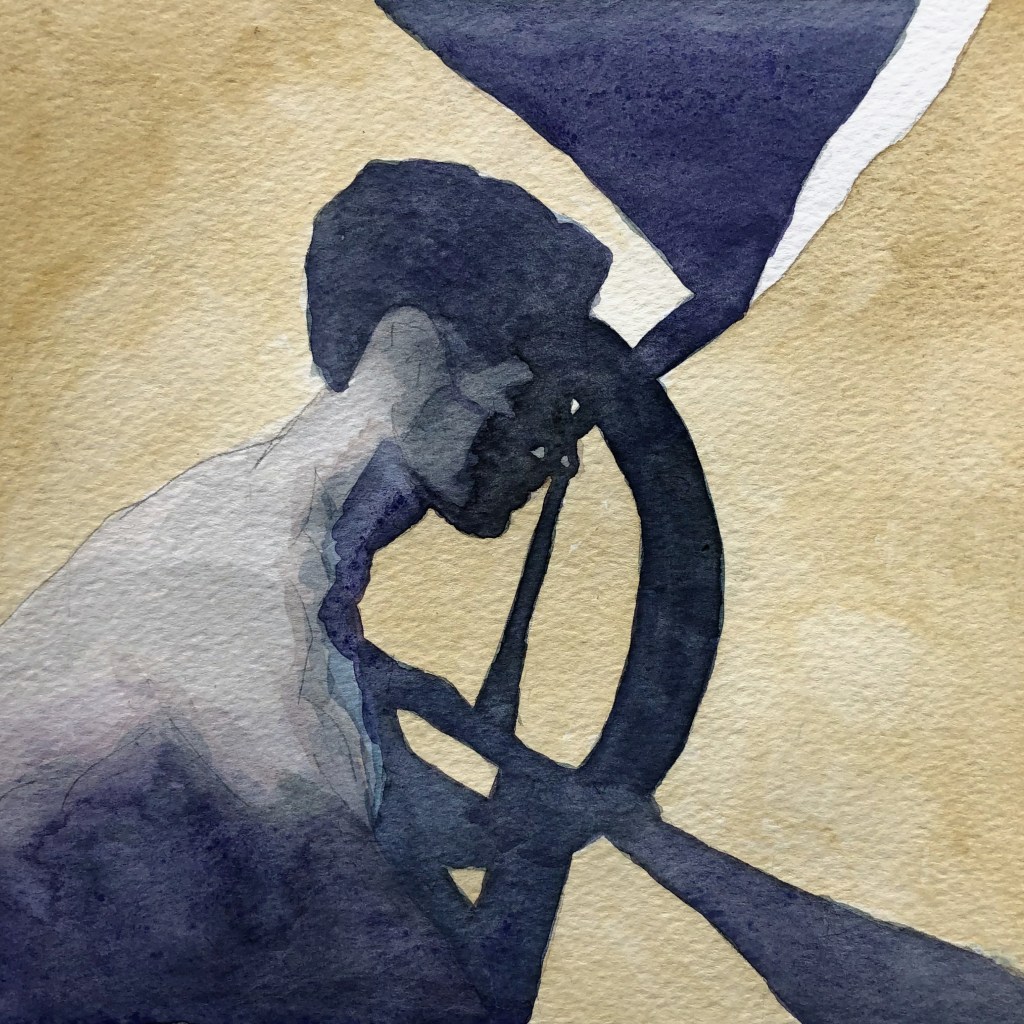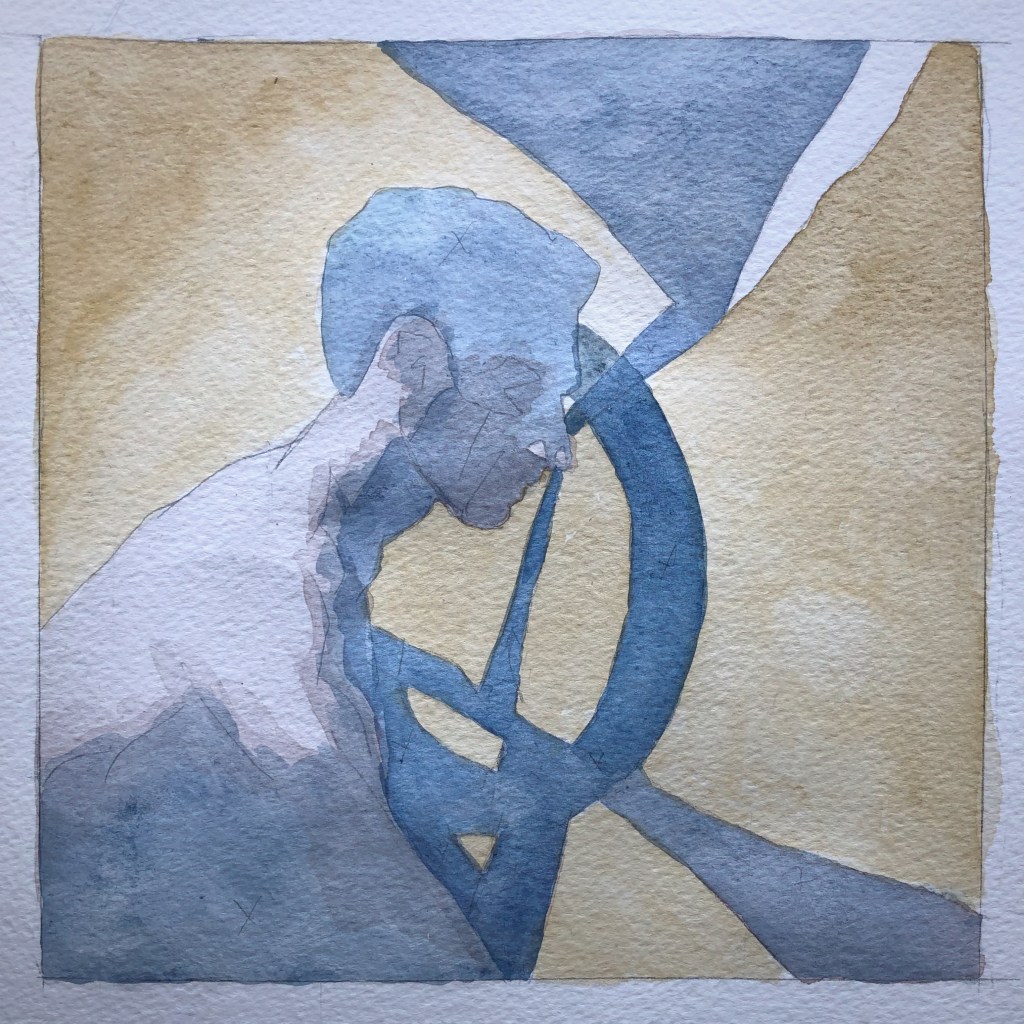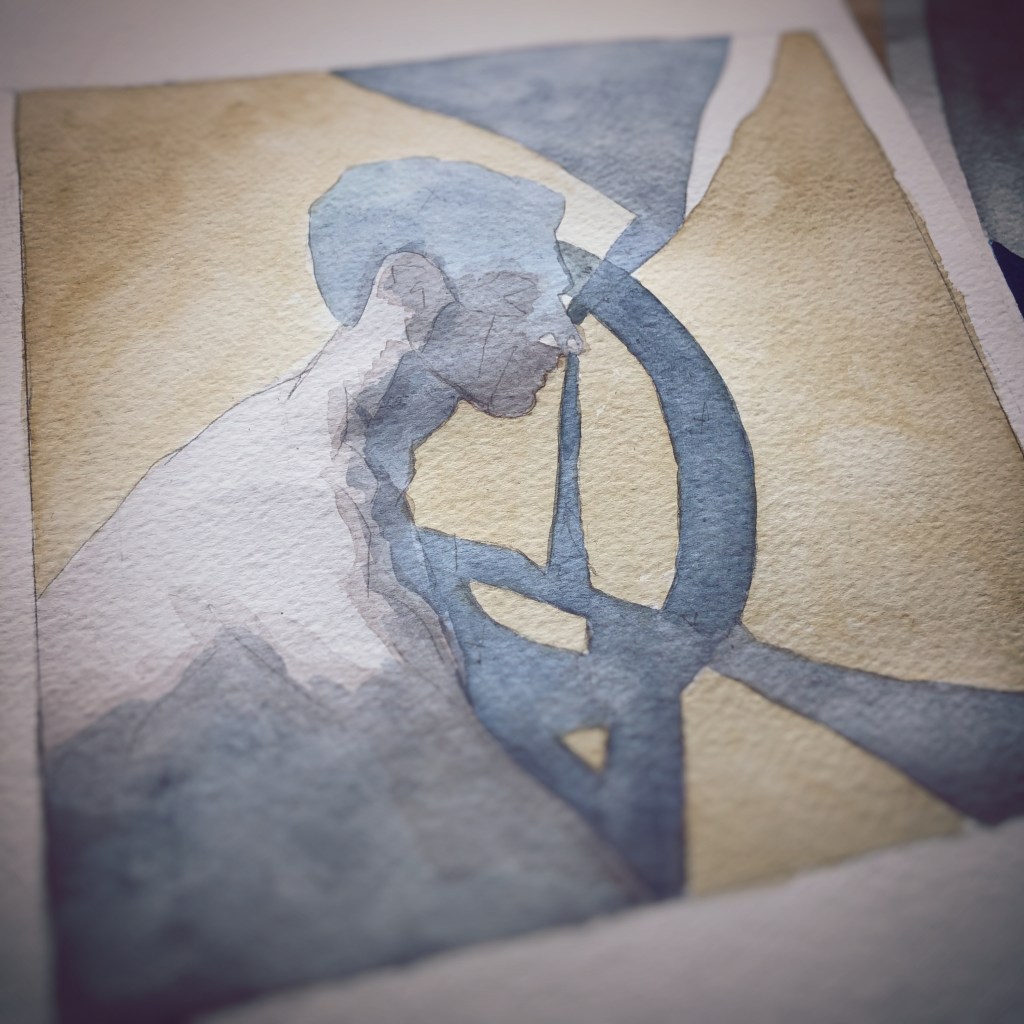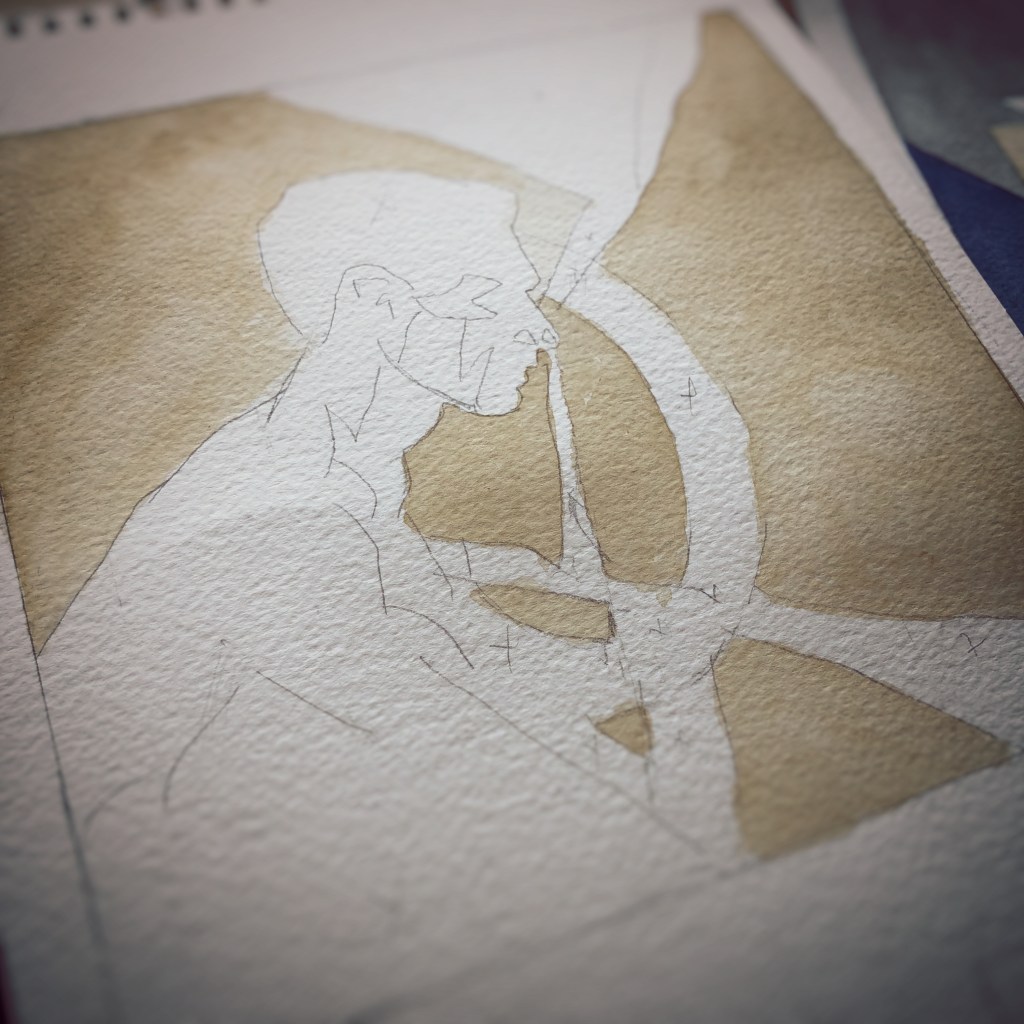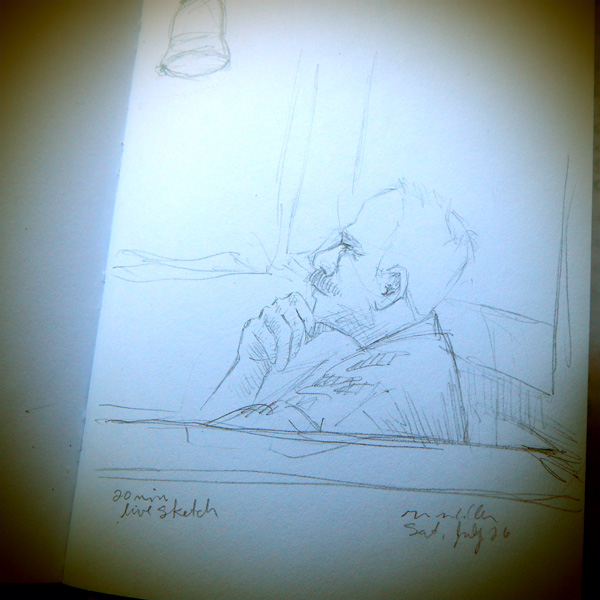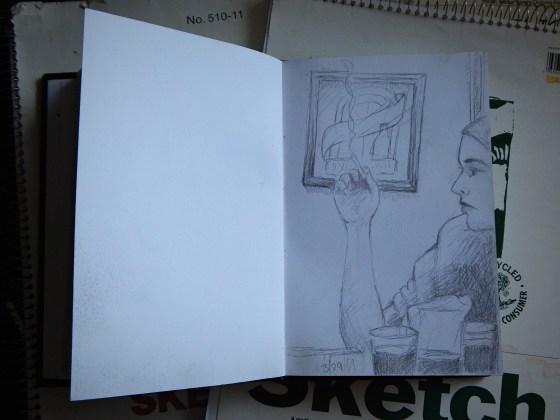
Reading at bookstore


Never waste money on purchasing a tube of black paint, I was told.
With three or four colors you can mix a pigment as dark as black. And a richer shade of pigment. Is black even a color?
These thoughts remind me of color theory and composition class at the university. My professor was a student of Josef Albers. At the time, that fact did not have a great impression on me. But I wonder about the lessons he must have learned. Not so much the academic rigor of craftsmanship and applied fine arts. That is important. But lessons of integrity and legacy. Was it Albers who taught him that quip about black paint? Or did that come from Willem de Kooning?
A couple days later, the middle child looks at this project. “What’s this about?”
I do not answer. It is an exercise. It is practice.

This is practice. An exercise. Form and color.
Do you see a character? As in, a letter of the alphabet.
Or do you see a character in human form?
The daylight quickly fades for this January afternoon. I chose a larger brush to apply pigment. At the university, the art professor instructed, “If you can’t paint well, paint big.”
It was not criticism, but rather a modernist declaration. He provided an atmosphere that allowed guidance rather than dogma.
I load the larger brush with the muddy water from the tray and a touch of pigment found between two watercolor cakes. The transparent layer is applied to the dry paint. A technique called glazing.
This is not an art lesson. It is a conjuring up of an image.

This is an exercise. Form and color. Loading the brush with pigment and applying it to the paper. Quick strokes. Vision in motion.
Painting by the light of the apartment’s living room window. The sun light is best in the morning. But I have continued this project well past the noon hour.
“Why do you keep painting,” asks my child.
“It’s underpainting,” I say as I clean the brushes and prepare for an afternoon walk. “The lighter tones provide the base. When the paint dries I add more color layers.”
It is January. It is Winter. The outdoor temperature is above the freezing point. We walk to the library and return books. We continue to talk.

Trying something new. Or, rather, returning to something old.
Here is a first draft for consideration.
Will provide details as updates are available. Let’s see how this turns out.

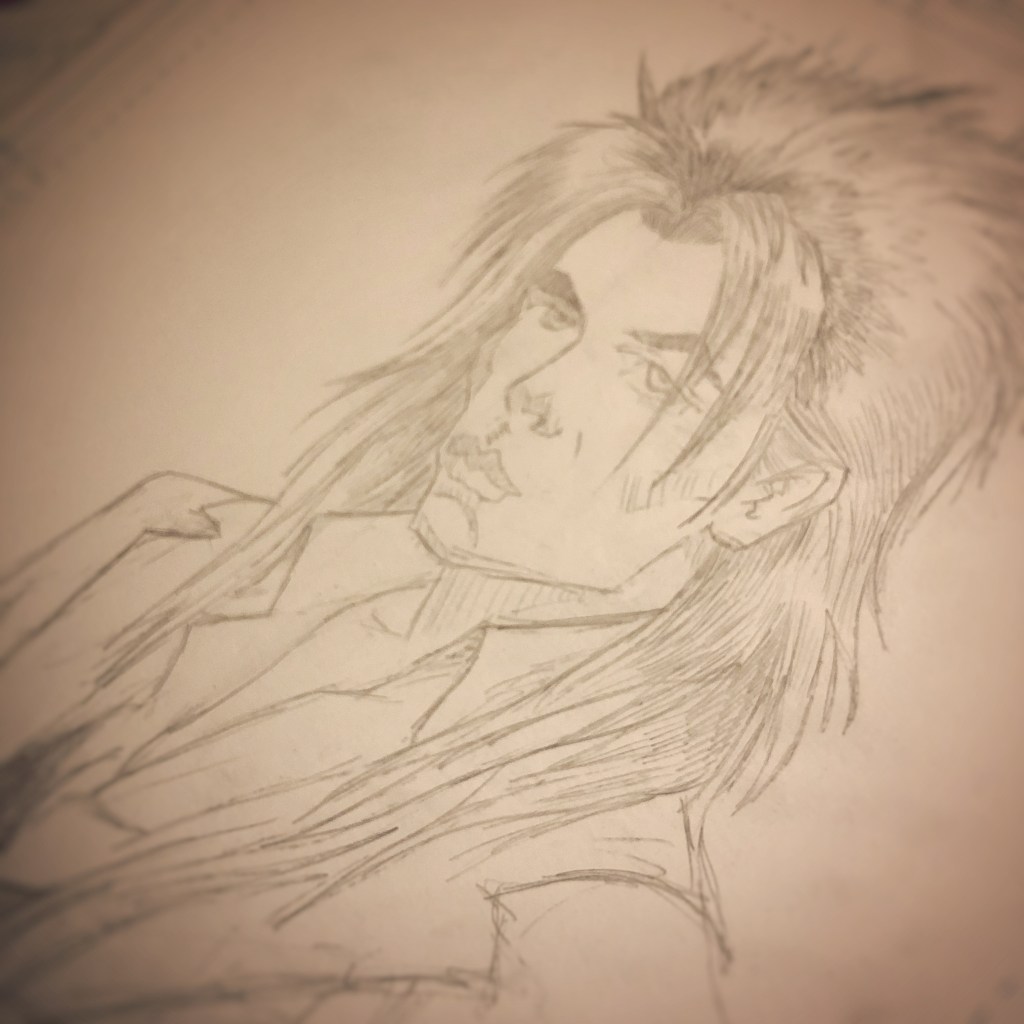
Another sketch from the weekend. Inspired by the film Labyrinth, I reimagined Jareth, the king of the goblins, and Sarah. The first time I saw the film was in art class. The high school art teacher thought it would be inspiring. It has captivated my imagination ever since.

Inspired by the 1986 film Labyrinth, I sketched a portrait of Jareth the Goblin King.

“Are you thinking about painting again?”
“Thinking.”
“I see the easel is up.”
“Yeah. I was cleaning up some stuff in the garage and wanted to see of the easel was in working order.”
“Is it?”
“Sort of. . . the base wobbles. . . but that can be repaired with a wooden shim.”
“And you have a canvas on the easel.”
“Yes. . . well. . . wanted so see if the canvas was secure on the front lower horizontal bar. The top bar works. But I may need to replace the wing nut on the lower bar.
“Looks like you started painting.”
“No. Not really. Gessoed over an old painting. . . Several years ago.”
“What was wrong with the old painting?”
“It was a sketch. . .”
“Well, looks like supper is almost ready.”
“Yeah. . . you hungry?”
Later. After supper.
In the garage, old sketch books revealed ideas for paintings. Sharpie marker drawings. Charcoal sketches. Conte crayon drawings. Graphite sketches.
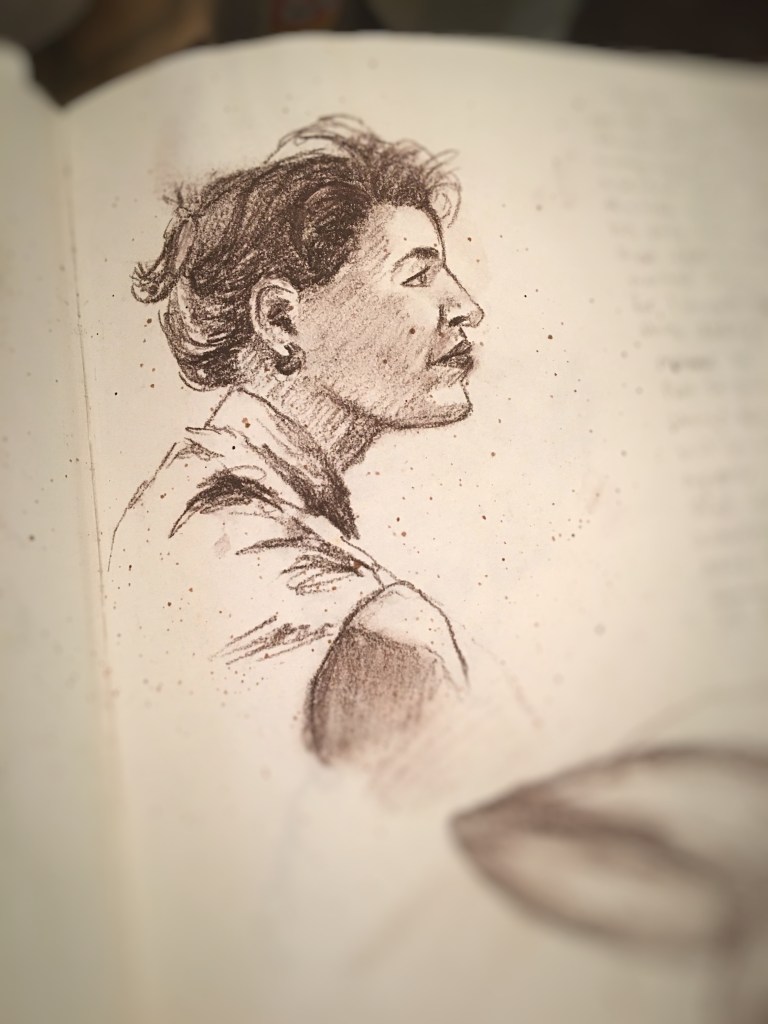
The sketch of a female profile. To be used in a composition inspired by a Luther Terry painting. An allegory. But who should model for the composition’s three figures? Many sketches. Poses. Lighting. All collected in thick hardcover black sketch books. One sketch earns a few minutes of consideration. Maybe. . .
A sigh. A glance outside the garage. Shadows lengthened to darkness. Sun has set.

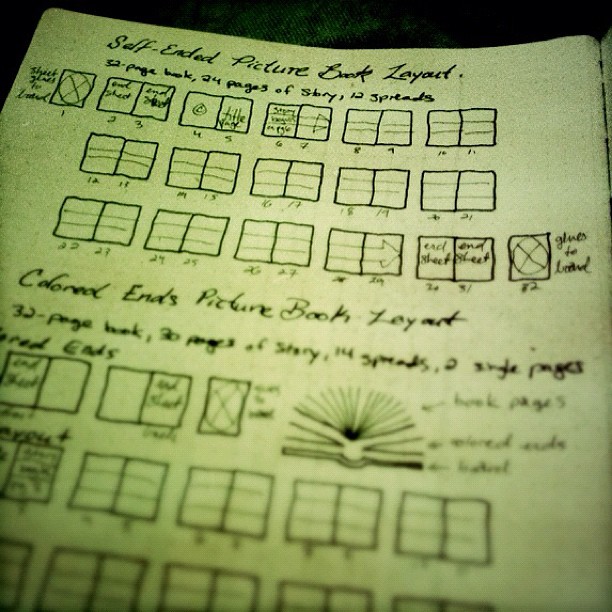
Relocating to Wisconsin was done with such haste that I am still discovering unopened boxes of items. Some items I have not seen in years. One such discovery was a series of old sketchbooks.
A five-minute sketch of a landscape painting on display at an art museum. The composition captured, but not the details.
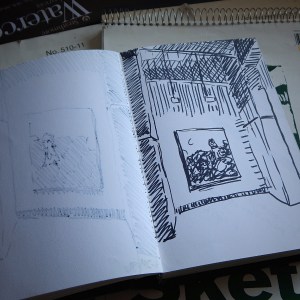
A loose sketch of a production of Shakespeare in the Park.
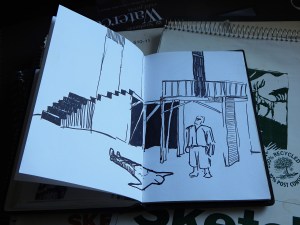
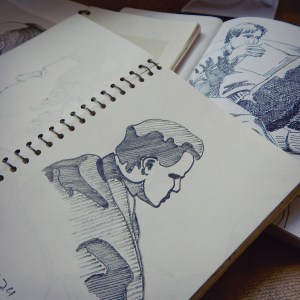
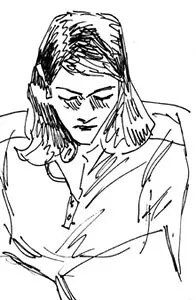
A 30-minute sketch of a roommate reading a magazine. That was back in the days before mobile phones, tablets and laptop computers.
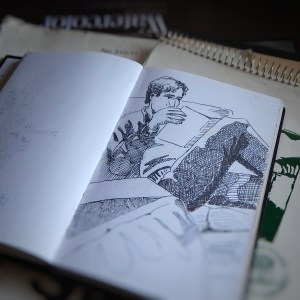
When I flipped through the pages of these sketchbooks there was a mixture of despair and some other unnamed emotion. Is it possible to name every emotion? Is it necessary to catalog everything in the cosmos in hopes of gaining understanding? Or knowledge? Or wisdom? But I digress.
Each sketch had a story. The night at a downtown pub when I learned I was no good at billiards. After the first game, I enjoyed the rest of the evening by doing sketches. I remember the show at the art museum and the artist represented. The friends who invited me to see Shakespeare in the Park. And the rare moment a very charismatic roommate sat on the couch before jetting off to a concert or movie or date or some other activity.
A sketch is an exercise that precedes a painting. But these sketches never received the intended painting. Reportedly, Thomas More’s poems for Epigrammata began as a Latin translation exercise. If I view these sketches as lost paintings, I despair. But if I view these sketches as exercises, I am gratified.
The practice of sketching is an exercise and preliminary draft of an art object. Even today, I still sketch ideas and images. For example, I was asked to create a logo design for a business event.
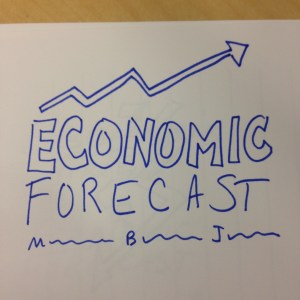
After some discussion the request included the city skyline of Milwaukee.
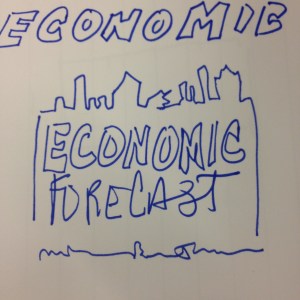
Once a plan was in place, I quickly moved to a digital rendering of the logo design and colors. Securing a piece of stock illustration, I customized the vector image and crafted a logotype used to promote and represent the business event.
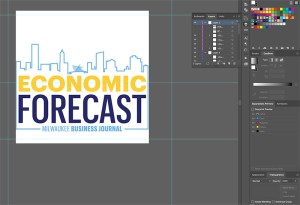
The pace of work is so fast, months go by without me realizing the value of the brand created. What took hours over the span of a few days, was on display on the front page of the newspaper and behind a representative from the Federal Reserve Bank in Chicago.

A few small three-inch square pen sketches became a huge display banner at a business event in Milwaukee. The practice of sketching is twofold: exercise and exhibit. The path to the 2019 Economic Forecast event logo and banner was a thousand unseen sketches. Page after page. Year after year. A lot of practice pieces that remain lost from view. But without them the objects that are visible would not have been created.
Personal archeology.
Discovered these old sketch books in September. Looked at them. Placed them on a shelf. Lost them again.

Rediscovered the sketch books again this weekend. Marveled at how much time was invested. Considered how these books were populated with sketches of classmates, drawings of roommates and other ephemera in a place and time were smart phones, tablets and laptops were not ubiquitous.
Question:
What would you be able to create if you were not glued to your smart phone for more than four hours[1] a day?
NOTES:

Years ago, the practice of capturing a moment or event was accomplished with pencil and sketchbook.