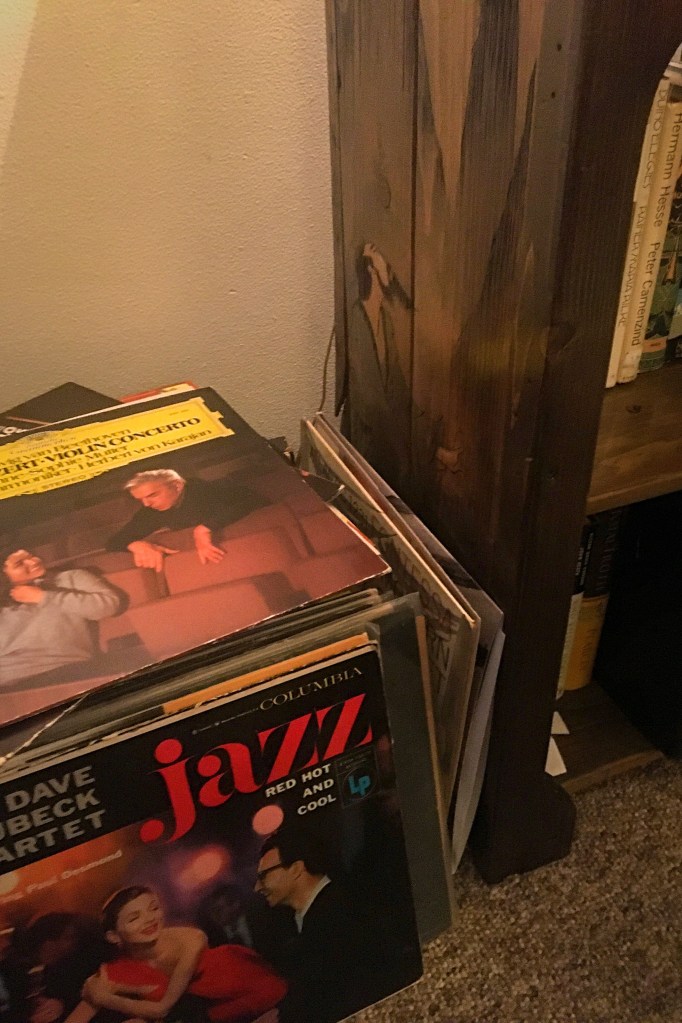
November breeze rattles the brown leaves on the tree
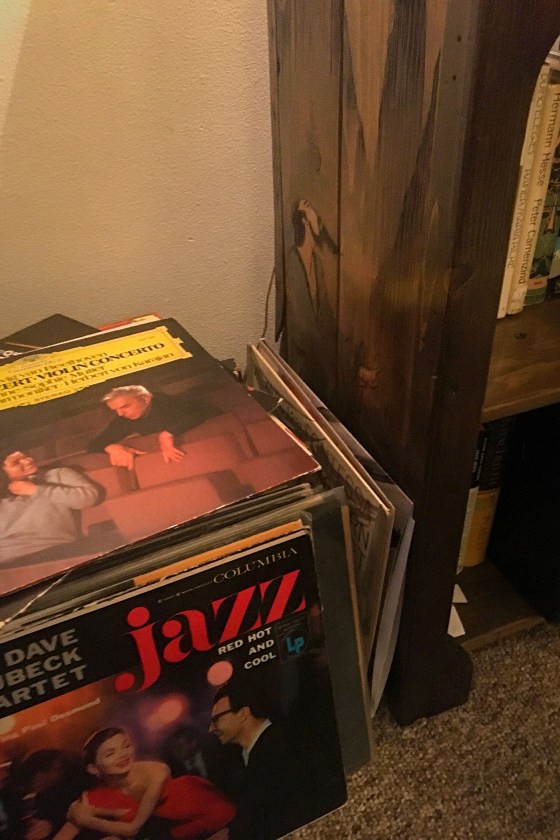
Saturday mornings. The work week is done. Sunrise is an hour or more away. The windows open. And have been all week. Unusual for this time of year and this part of the country. Birds create a pre-dawn cacophony in the evergreens outside the windows to the east.
The oldest kidlinger is up early doing laundry. Needs clean clothes for work later today. We move about the apartment quietly.
Saturday mornings are time for jazz. Brubeck. Coltrane. Evans. Tatum. But it is too early for Saturday morning jazz. It is time for stillness. A time to plan, think, and meditate.
Conversations from the week come to mind. What makes a good book?
There are good books. Or at least, interesting books. There are poorly written books. And bad books. Meaning stylistically bad (as in the content is unsuccessfully researched, appallingly argued, or intentionally misleading). There are well-written books with poorly argued thesis statements. There are dull books with good data. And there is a bookshelf that holds them together.
The no-plan, salvaged-wood bookshelf collects a portion of my library. The space between the work-from-home station and the vintage stereo is the new home of the bookshelf. The summer therapy project was completed so late that the intended use for the bookshelf for school materials was no longer relevant.
The relevance is now my education. My continuing education in art, science and religion. Essentially, philosophy. What is truth? And, how do I know it? Variations on a theme. A book about technology. Another about project and time management. The top shelf nearly all books of poetry and essays. Some memoirs and novels. Several books on theology and spirituality. Books by American writers. British writers. And German writers.
The second shelf. A mix of poetry, fiction, essays, art and design. The third shelf. Memoirs, classical education, technology, theology, and philosophy.
Reading an abundance of books does not make an individual well-read. Reading great books does not make one well-read. Understanding the great conversation makes a reader well-read.
“I don’t read books,” he said. I did not know what to say. “I read the newspaper. Mainly the sports page. But that’s it.”
I recalled the conversation from a few years ago. At lunch. On the patio of the Knickerbocker Hotel. The thought appalled me. Not the person. He’s a good guy. But no book reading? How is that possible?
And I know how this happens. Happened. Long days of work. Long commute. Family responsibilities. Community engagement. And other demands. Priorities need to be made in order to set and accomplish goals.
Found myself in the recliner. Everyone asleep. It was late. The lamp near the recliner was on. All other lights were off. The apartment was dark. A copy of the New Yorker on my chest. The record player was on. Three records on the platter. Waiting to be reloaded on the center spindle.
I had fallen asleep. Midway through the tables for two section of the magazine. Could not even keep my eyes open. Did I eat supper? Or dream of eating it? Or dream of reading that I ate it?
Who has time to read legacy publications? Will try again on the weekend.
I folded the magazine cover to the back so that the page I had read was open. And placed it on the top of the bookshelf to read later. Then turned off the lamp.
How did it get to be noon? How did it get to be Saturday?
The sun is bright. Warm November breeze rattles the remaining brown leaves on the tree outside. Art Tatum plays from the record player.
I return a small book to the bookshelf. I place it open on the top shelf of the no-plan, salvaged-wood bookshelf I built this summer. The shelves are deep. At least a foot deep. Could hold two rows of standard-sized paperback books.
I place the book open on the top shelf. A reminder for me to return to the passage that captured my attention. Imagination. A bread crumb trail back to an idea.
The next vinyl record drops down the spindle. Bill Evens. Peace Piece. It is Saturday morning jazz slouching toward afternoon.
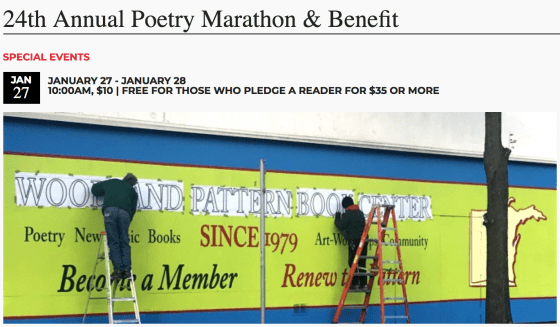
The 24th Annual Poetry Marathon Benefit Reading for Milwaukee’s Woodland Pattern Book Center is next weekend, Saturday, January 27, 2018.
The time slot between 9 PM – 10 PM is when I’ll be reading some poetry. Others reading during that segment include: Patrick Branum, Andrew Cantrell, Nick Demske, Dan Godston, Sara Goodman, Marcy Rae Henry, Jennifer Karmin, Kimberly Lyons and Blake Nemec.
Please consider supporting the effort. Contact me for details. Or visit the links provided. Much gratitude!
This is my third year contributing.
Here is a Twitter pic from last year, 2016.
Amazing readings, beautiful community. @WoodlandPattern #wppoets https://t.co/Rf75Pf2YLr—
Jenni Moody (@moodyjenni) January 31, 2016
Heather captured some great photos from the 2015 poetry marathon. Those photos are lost somewhere on Facebook. It was the first time I read at Woodland Pattern. And the first time I read along side the best poets in Racine. It was a magical night.
The Annual Poetry Marathon & Benefit at Woodland Pattern, Milwaukee, begins at 10:00AM. $10 donation taken at the door. I will be reading between 4-5PM. I would love to see you there and say “hi” and “thank you.”
Sponsor me by donating $5 or whatever using Woodland Pattern’s PayPal donation button (click here). Any amount helps. Make sure you enter “Matt Mulder” in the space provided for “Reader’s Name.” And thank you for your support!
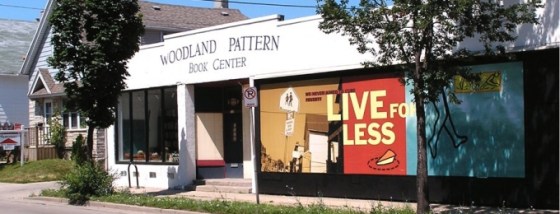 Woodland Pattern celebrates the 23rd Annual Poetry Marathon & Benefit this weekend, January 28, 2017!
Join me and 150 poets as we raise funds for Woodland Pattern’s programming in literature and the arts. Money raised at the poetry marathon funds opportunities such as the Urban Youth Literary Arts Program.
The Annual Poetry Marathon & Benefit at Woodland Pattern, Milwaukee, begins at 10:00AM. $10 donation taken at the door. If you cannot attend, no worries. Sponsor me by donating $5, $10, $20 or more using Woodland Pattern’s PayPal donation button (click here). Any amount helps. Make sure you enter “Matt Mulder” in the space provided for “Reader’s Name.” And thank you for your support!
If you are planning to attend Woodland Pattern’s Annual Poetry Marathon, you may still sponsor me (here). I will be reading between 4-5PM. I would love to see you there and say “hi” and “thank you.”
Should be a great lit-filled weekend event. Hope to see you at Woodland Pattern!
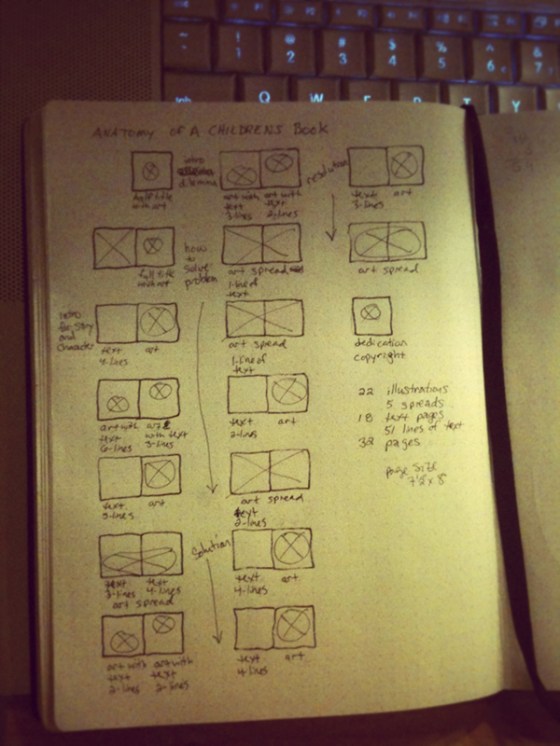
This crude sketch is quite popular. A reader commented recently how the layout template helped his poetry book project.[1] The web site Moving Writers[2] posted “A Collaborative Writing Study That Will Rock Your Students’ World: Children’s Literature”[3] and linked to my rough layout template.
The origin of the drawing began at a local meet-up of illustrators and artists. The topic of children’s books came up. Several of the artists felt intimidated by the idea of creating a children’s book. As well they should. But it is not a path of labyrinthian impossibility. The big question is how to do it. At the time, I was a creative director for an international publishing company and had designed children’s books — specifically, picture books.
To encourage these artists and writers, here is a general anatomy of a children’s book:
Several artists that night asked to take a photo of this sketch of an anatomy of a children’s book with their smart phones. Since then, several readers have expressed similar interest. So, I share this sketch again.
Like all recipes, what you do with the ingredients (i.e. text, words and pages) is up to the artist and writer. And, like any good disclaimer, results do very.
NOTES:
[1] “Anatomy of a children’s book,” coffeehousejunkie.net, December 10, 2012, accessed June 20, 2016 https://coffeehousejunkie.net/2012/12/10/anatomy-of-a-childrens-book/
[2] Moving Writers, accessed June 20, 2016 https://movingwriters.org/.
[3] Allison Marchetti, “A Collaborative Writing Study That Will Rock Your Students’ World: Children’s Literature,” movingwriters.org, May 30, 2016, accessed June 20, 2016 https://movingwriters.org/2016/05/30/a-collaborative-writing-study-that-will-rock-your-students-world-childrens-literature/.
![DSCN3925[sqr-tilt-dallas]](https://coffeehousejunkie.net/wp-content/uploads/2015/08/dscn3925sqr-tilt-dallas.jpg?w=560)
Two authors provided me with food for thought during the last week or so. “Courting the Gargoyle”1 by Sheryl Monks explores the dichotomy many writers experience.
“I’ve taken to describing myself as part cheerleader, part gargoyle. The cheerleader, . . . is a powerful avatar, . . . . hopeful, peace-broker . . . . She sees the world democratically; it’s flawed, . . . but it’s not without beauty. . . . the gargoyle is fragile. The gargoyle sets the bar too high, and as a result, the world and the people in it disappoint.”
While you digest that idea, Ann E. Michael confesses that she is too busy to write. Unlike many writers who become jaded and obsessed with lack of discipline and failure, she is hopeful.
“I have not been weeding, as I have not been writing. Other priorities are claiming the be-here-now of my life; but I’m happy to find that the garden, and my writing life, can be sustained through other things and returned to at better times.”2
I confess, I have not weeded the garden either. Yet, providentially, the tomatoes, beans and chard have grown in abundance. I am part gargoyle. The part that never sees the light of social media. I have not written consistently (or as consistently as I planned. . . the gargoyle again.) Midimike commented that there will be time “to write about all those days when you were too busy to write!”3 I am part cheerleader. The brief smile that flickers across the light of social media.
NOTES:
[1] “Courting the Gargoyle” by Sheryl Monks, August 10, 2015. http://changesevenmag.com/portfolio/courting-the-gargoyle/
[2] “Too busy to write (sigh)” by Ann E. Michael, August 13, 2015. https://annemichael.wordpress.com/2015/08/13/too-busy-to-write-sigh/
[3] https://coffeehousejunkie.net/2015/07/22/the-purpose-of-drawing/#comment-4566
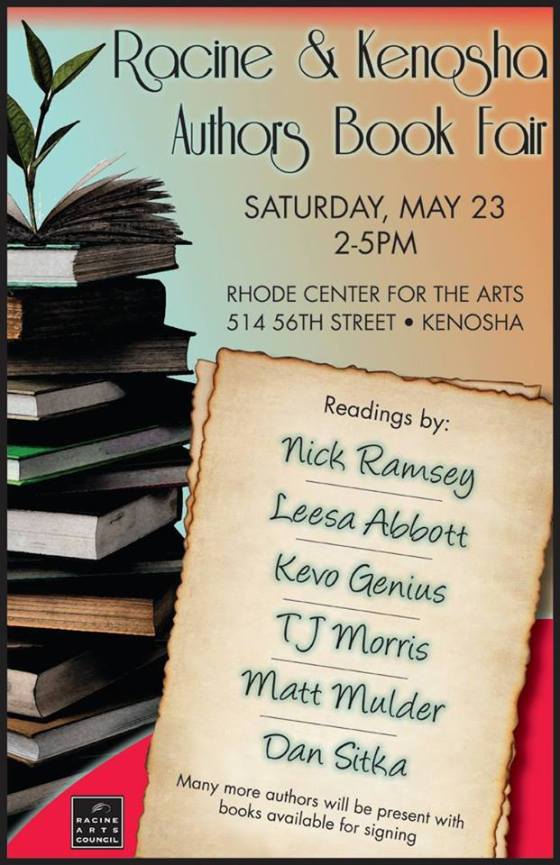
Haitian author Dimitry Elias Léger, in a recent interview, said “We need poets, music, literature to fill in the gaps between news reports,…”
With that in mind, the Racine & Kenosha Authors Book Fair is next weekend, Saturday, May 23, 2015 at Rhode Center for The Arts (514 56th St, Kenosha, WI 53140). The book fair begins at 2 p.m. and concludes at 5 p.m. So you have plenty of time to do your morning errands or yard work, join me and fellow authors and then spend the rest of the day enjoying Kenosha’s lovely lakefront area with an armful of books by local authors.
Copies of my books will be available for sale (and I will personally sign your copies) and I am scheduled to read at the event. Look forward to meeting you at the Racine & Kenosha Authors Book Fair nest weekend!
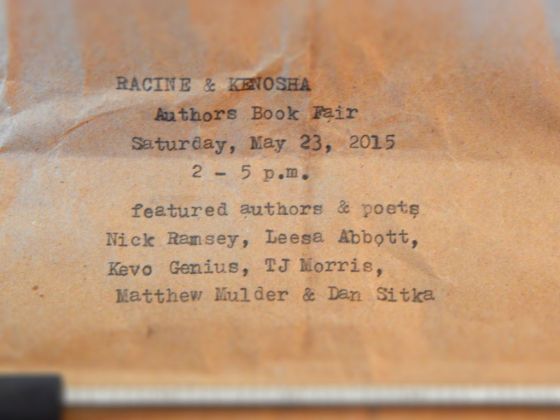 The Rhode Center for The Arts in Kenosha, WI hosts an author reading of local poets and writers (including myself) on May 23, 2015.
I will have copies of How Long Does it Take to Write a Haiku?, The Vanishing Art of Letter Writing, Late Night Writing and other books for sale.
For invitation to the event, please contact me for more details.
The Rhode Center for The Arts in Kenosha, WI hosts an author reading of local poets and writers (including myself) on May 23, 2015. For invitation to the event, please contact me for more details.
You are invited to the Village Ink Creative Writers Guild authors reading open house at
Graham Public Library
Union Grove, Wisconsin
Tuesday, April 7, 2015
6:30 pm
Five local writers (including myself) present selections of their work. The Village Ink Creative Writers Guild meets every Tuesday at the Graham Public Library and is open to writers of all genres and disciplines. The open house is a great way to celebrate National Poetry month and the event will highlight the last six months of creative energy and writing endeavors. Selected works include children’s literature, fiction, poetry and creative non-fiction.
For more details, please leave a comment. Thanks!
The open house is FREE to the public. Light refreshments will be served.
Village Ink Writer’s Group meets tonight, Tuesday, 6:30PM. I’m leading group tonight. Hope to see you there! http://ow.ly/IqlTW

Photo Credit: Woodland Pattern Book Center
Just two more days until the 21st Annual Poetry Marathon Benefit Reading at Woodland Pattern Book Center in Milwaukee. Here are five reasons to support the Annual Poetry Marathon:
Five poets representing Racine, Wisconsin at the Woodland Pattern’s poetry marathon need your support! Help each performer raise at least $35.
Ok, technically, there are more than five, but I saw most of these fine poets perform last night at the Grassroots Open Mic at George’s Tavern. Also, I will be reading during the marathon as part of the Racine delegation. Please consider supporting me with a pledge. It is as easy as one, two, three. Go to the Woodland Pattern Book Center, here, and:
Thanks for your support!

As many listeners know (and readers of this blog), books are important here at the Coffee Den. First segment features three books and a question, where have all the fathers gone? Next, a tale of two city libraries. Sort of. And poets. And books. Finally, a glimmering coming-of-age story by author Justin Grimbol.
If you would like to read along as well as support the authors, here is a list of their books: Memory Won’t Save You: A Haibun by Mimi White; After the Steaming Stops poems by Alice Osborn; Somewhere More Holy by Tony Woodlief; The Kid Who Climbed the Tarzan Tree by D. W. Rozell and Drinking Until Morning by Justin Grimbol.
And finally (because it is mentioned in the podcast), if you would like to support the podcast please consider purchasing Late Night Writing.
Listen to the episode Books on the menu:
PodOmatic: coffeehousejunkie.podomatic.com
SoundCloud: soundcloud.com/coffeehousejunkie
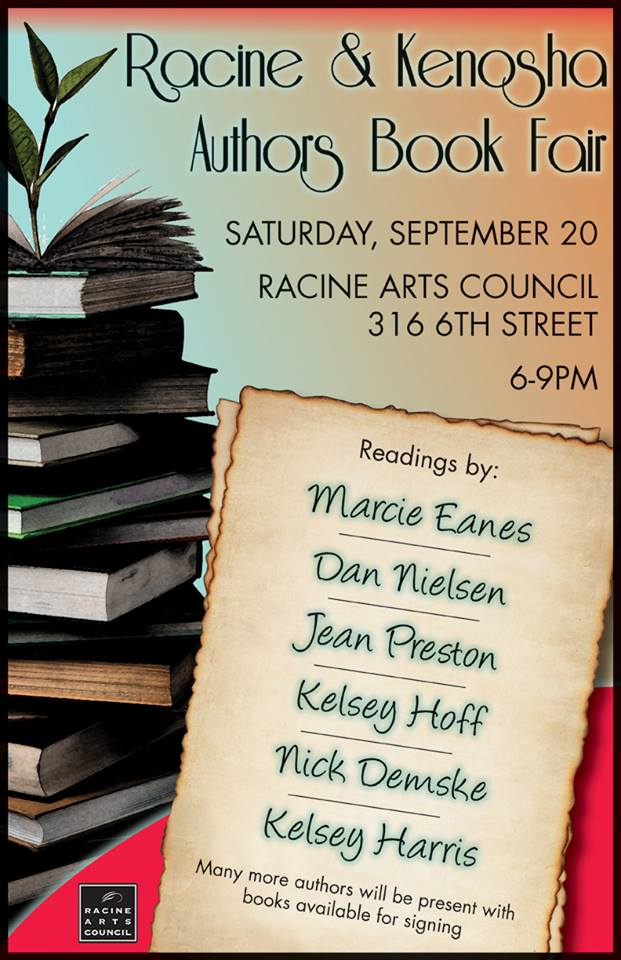
Rumor has it that I am one of the many authors at this event.
Here are details of the event from the Racine and Kenosha Authors Book Fair Facebook page:
September 20 from 6 to 9 pm, authors from all over Racine and Kenosha will converge at the Racine Arts Council. Six featured poets and authors will give readings (Kenosha Poet Laureate Jean Preston, Kelsey Marie Harris, Dan Nielsen, Nick Demske, Marcie Eanes, and Kelsey Hoff), and many more will be present to sign their books and meet with readers. This event is also the official release of Sad Girl Poems, a chapbook self-published by Kelsey Hoff. Light refreshments will be served.
The Racine and Kenosha area is a thriving arts community, with a surprising number of authors and literary publications in residence. This event will represent the diversity of that community, with up-and-coming writers side by side with well-established ones in multiple genres including poetry, fiction, young adult, and nonfiction. Representatives from Left of the Lake and Straylight Literary Arts Magazine will be present with copies of their publications available.
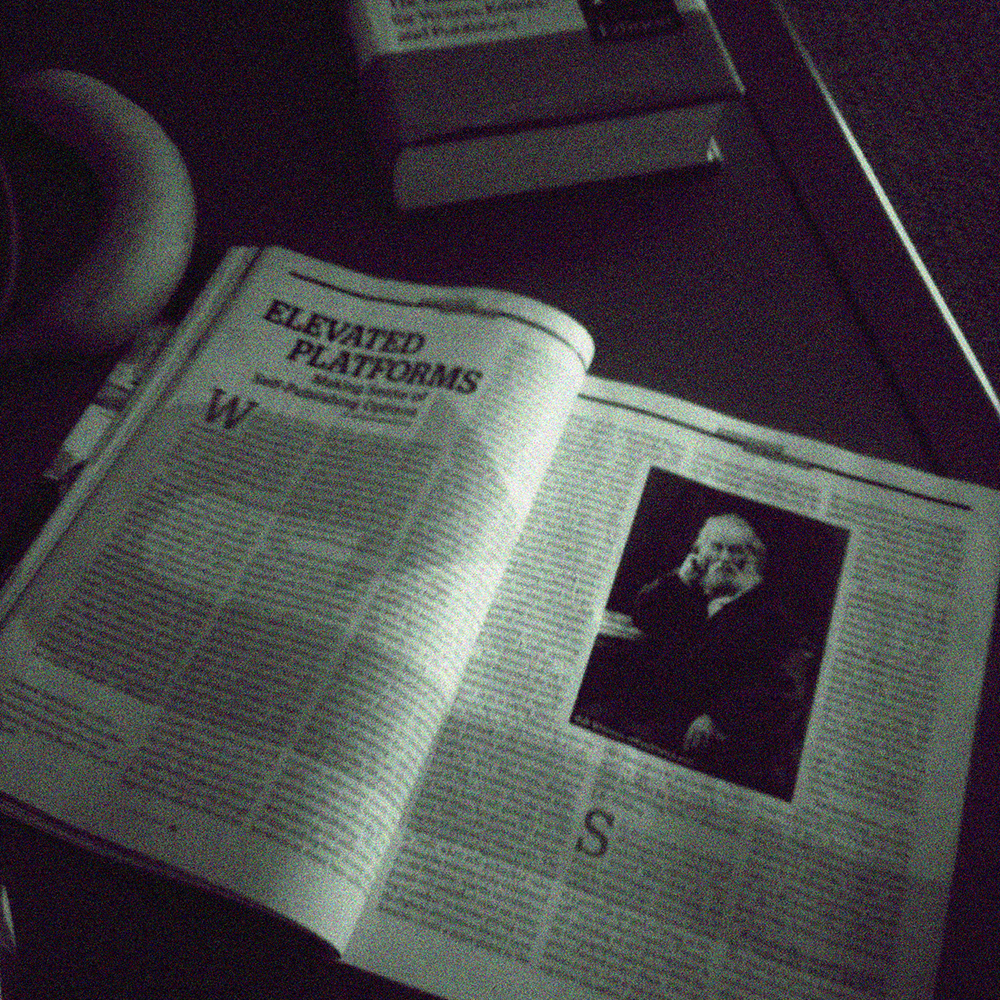
For the last few years, Poets & Writers highlights the independent publishing scene in America. This year is no different.
Recently arrived in the post is the November/December issue of Poets & Writers. In the past, it has been my practice to read each issue from cover to cover. However, (and in light of my post last week that elicited much conversation: Are trade publishers gatekeepers?[1]), I abandoned protocol and started on the self-publishing special section.
As I am still reading and processing the articles in this issue, one item caught my attention that I would like to share. Reportedly, more than 391,000 books were self-published in 2012.[2] That is a large number of self-published books. To be honest, I may have read only a handful of self-published works that year. An article in Poets & Writers offer some perspective on the matter. I would like to learn your response to the following:
A highly regarded agent recently remarked that the odds are stacked heavily against self-published authors—that only three or four titles really “make a splash” each year.[3]
NOTES:
[1] Closing out the blog post, I asked: “What are your thought about publishers as gatekeepers?” One commented suggested that publishers “think that they are [gatekeepers], but they’re not. They are commercial retailers…. They buy what sells. The quality only needs to be high enough not to send readers screaming.” Someone else commented that “I depend on publishers to be gatekeepers. While I know that they publish a lot of crap and don’t publish a lot of great stuff… I still believe that the ratio of things I’d enjoy reading to things I wouldn’t is higher among traditionally published books than among self-published ones. I’m sure I miss some really great reads this way, but I just don’t feel I have time to wade through the slush pile myself.”
[2] Jason Boog, Galleycat, “Bowker Counted 391,000+ Self-Published Books Last Year,” October 9, 2013, accessed October 23, 2013, http://www.mediabistro.com/galleycat/bowker-counted-391000-self-published-books-in-2012_b78844
[3] Kevin Larimer, Poets & Writers, “Self-publishing Perspectives,” November/December 2013

Just received this email from Malaprop’s regarding tonight’s, June 1st, reading at 7 p.m.
Triple reading event, featuring new poems by Sebastian Matthews, and selected poems from his most recent collection: MIRACLE DAY: MID-LIFE SONGS; a reading by Sybil Baker from her novel INTO THIS WORLD; and a reading by novelist Chris Hale from her just-completed memoir, LINE OF SIGHT.
I’m very excited to learn of Sebastian Matthews’s new collection of poems.
Rarely do I read anything published on Gawker, but this is a good read for writers using social media.
Writing about yourself as a character is a process that feeds on itself. If you set out with the intent of making yourself a “brand” with a certain image and persona, you are locking yourself in a prison of your own creation. (via gawker)1
NOTES:
1) Hamilton Nolan, “The Writing about yourself Trap,” May 24, 2011, Gawker, accessed June 6, 2011, https://gawker.com/5804980/the-writing-about-yourself-trap (page no longer available, web site deactivated in 2023)
Telecommuting via laptop and wireless Internet is a relatively new phenomenon. There is, however, a long history of people – especially writers – working from a favorite coffee shop or cafe rather than an office. Today we tend to associate the phenomenon with the Paris of Ernest Hemingway and F. Scott Fitzgerald, or the coffeehouses of Vienna at the turn of the 20th Century. The poet Peter Altenberg was even known to have mail delivered to his favorite hangout.In many ways, however, the golden age of the coffeehouse workday is now, as any barista can attest.
(via utnereader)1 (via The Atlantic)2
NOTES:
1) Utne Reader, accessed May 16, 2011, https://utnereader.tumblr.com/post/4781366430 (page no longer available, Tumblr account deactivated)
2) Conor Friedersdorf, “Working Best at Coffee Shops,” April 15, 2011, The Atlantic, accessed May 16, 2011, https://www.theatlantic.com/business/archive/2011/04/working-best-at-coffee-shops/237372/
In the September issue of Writer’s Digest, Sherman Alexie says:
Every word on your blog is a word not in your book.
As someone who has been blogging for a few years, that’s conflicting advice. I was encouraged by a friend to start a blog as a way to work on my writing skills. So, I started blogging as a way to discipline myself to write every day. Six years later I have several working or completed manuscripts and no books. Mr. Alexie may have a point. He also offers this:
Don’t Google search yourself.
If you’re a writer who has lost a manuscript due to your computer crashing, here are two online options to protect your work.
For a few years, I’ve been using Google docs to organize manuscript drafts and as an online storage, back-up option. The nice thing about Google Docs is that is works almost seamlessly with Word Docs. Google Docs offers the following online apps: text, spreadsheet, form and presentation. Truth be told, I haven’t used a Microsoft product since I began using Google docs.
Recently I began using Dropbox to store audio files, images and other documents and really enjoy it.
The Southern Independent Booksellers Alliance (SIBA) offers advice to authors seeking to work with indie books stores:
This is good advice for authors when working with indie booksellers. The operative words are “with indie booksellers.” Truth be told, the majority of the sales for books I’ve helped publish come from Amazon.com. The reason for this, I suspect, is that Amazon.com is where the masses go to buy books.
Know that I am a big supporter of indie bookstores. But I’m also practical and know that indie bookstores attract a niche audience of readers. Some book titles do better at indie bookstores than others. For example, if you’re a local writer with a book on regional hiking trails or you’re a local poet with a book, you may do better at an indie store than on Amazon.com. That being said, Amazon offers a 45/55 terms of sale (a smidge better than indie stores offering a 40/60 terms of sales). That may not seem like much, but if you’re a small publisher, that 5% difference may cover cost of shipping products to bookstores which directly impacts breakeven numbers for book titles.
As an author (or small press publisher), know that you have sales options. And avoid mentioning Amazon.com when working with indie booksellers — it gives them ulcers.
 Coffeehouse Junkie