Putting the finishing touches on a new book design

Constellarium_Cover_Final
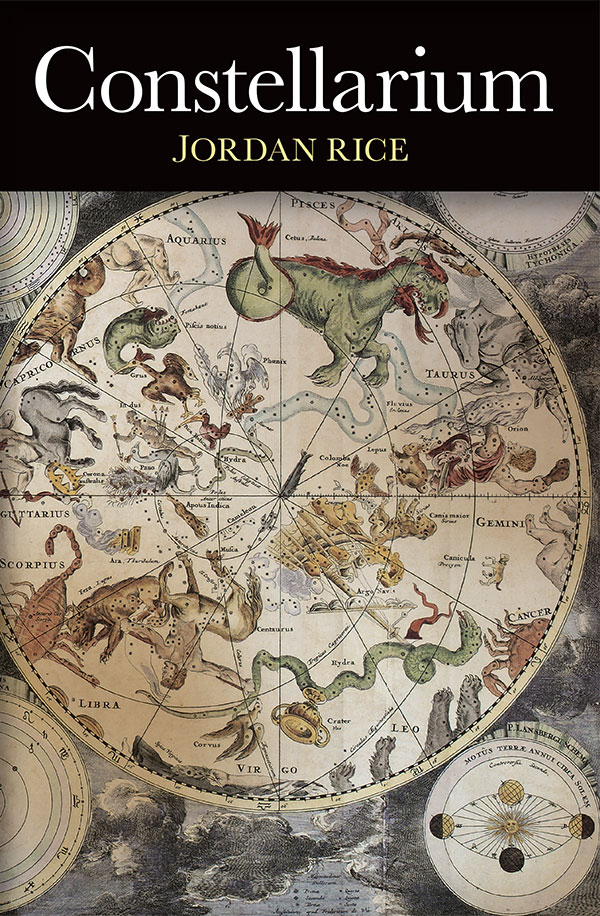
Since the publisher posted the following on Facebook last night, I guess it is alright to unveil a new book I designed:

Jordan Rice’s debut poetry collection, CONSTELLARIUM, a finalist for the 2015 Orison Poetry Prize, is now available for pre-order at a discounted price! Order now and be among the first to receive the book when it’s released in April.

“Constellarium is a bold announcement of a new poetic voice to be reckoned with. These poems make us stare down shame and celebrate transition, celebrate the body inside. Jordan Rice does not flinch from what society would have us try to look away from, instead she carefully constructs a book in which we are forced to reckon, layer by layer, with her being. Let us be thankful that such a voice exists, that it is brilliant and shattering, and here to take us all on her journey.” –Fatimah Asghar

The process of cover design is exciting. Especially when the title of the project is constellarium.

There are so many stories behind the cover design that would be fun to share. Like, for example, how the kidlingers enjoyed the image of cetus — how cetus does not look like any image of a whale they have ever seen in a picture book. And how the eldest kidlinger is writing a report about rhinos.

And how a species of rhino has been reported extinct. And we wonder if these old drawings are accurate. And that maybe the cetus represented in the book cover art is correct. But maybe that species of ceti (is that the correct nominative plural of cetus, Latin students?) is now extinct.

Maybe these behind-the-scenes stories are more interesting to me than you.

See if you can find cetus in the cover art by pre-ordering Jordan Rice’s Constellarium!
How to write a book in 15 minutes

DSCN3180web

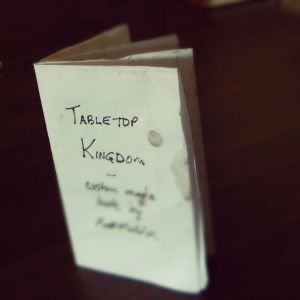
“Give me I subject to write about,” I challenged the oldest kindlinger. It was lunch break and I was home for tea and toast.

After a few moments, the kidlinger offered a subject — a writing prompt, if you will.

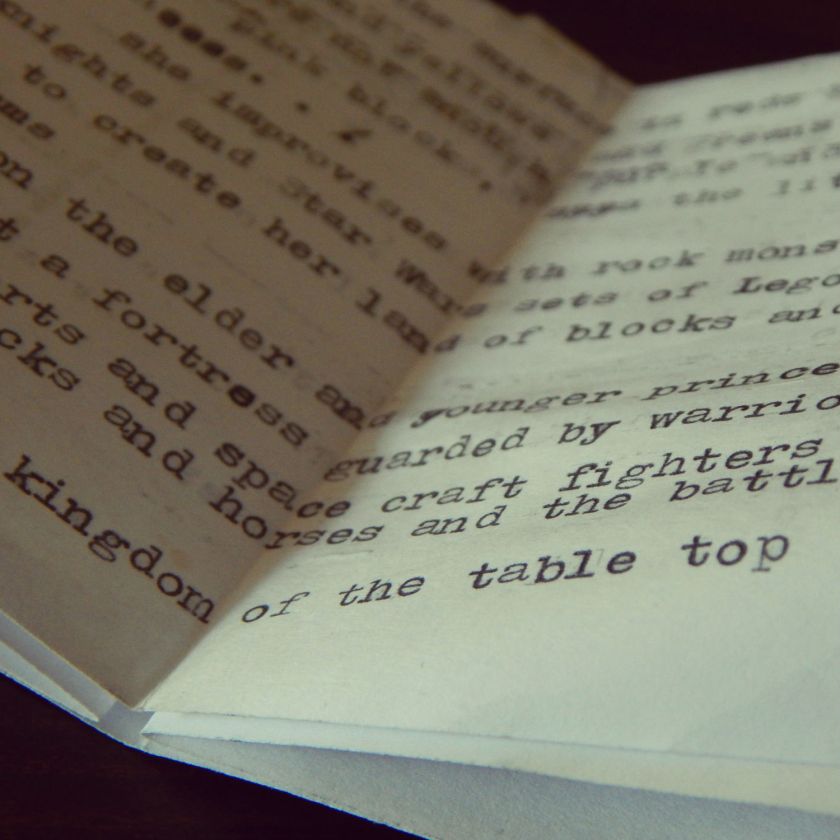
DSCN3177webGrabbing a sheet of paper from the recycled bin, I feed the sheet into an old manual typewriter and began composing a manuscript on the spot. The kidlingers watched at a distance and then approached to watch the keys striking the paper. Their amusement fueled the writing and from time to time I would ask them for a color or word choice.
Within fifteen minutes I had composed a draft of a book custom tailored to the chosen subject. There is no trick here. No spell check. No slight of hand. No editing. And no kidding. Handmade mini-books are very easy to manufacture [see my post on the topic here]. Writing a handmade mini book may be more of a challenge. But for writers and parents, it is a lovely experience.

The oldest kidlinger was dubious of the handmade mini-book. The younger kidlinger was all smiles. Their mother read it aloud. The request to sign and date it was meet and the book was carefully examined by the kidlingers as I returned to the afternoon’s labors.

The return of the Coffeehouse Junkie audio podcast is coming soon

Many, many moons ago in a far distant place there used to be a Coffeehouse Junkie audio podcast. For professional reasons I had to place it on hiatus for an indefinite period of time. In, short, I launched and produced nearly 500 audio podcasts for a national news group earning nearly 800,000 downloads in a little more than two years. Since those professional obligations no longer exist, it is time to resume some Coffeehouse Junkie audio podcasting.

There will be some new features to the audio podcast.

  1. A few topics that seem to be popular on this blog include writing, poetry and publishing. Since I have years of experience in the publishing industry, I will feature some episodes on a behind-the-scenes look at publishing.
  2. Additionally, I plan to open up the request lines (to use an antiquated terrestrial radio expression) . If you have read something on this blog that you would like me to address, I will plan an episode around that topic. Please include your name, Twitter handle and request in the comment section of this blog post.

I will re-release the last three episodes of  the Coffeehouse Junkie audio podcast in the next week or so to prime the pump for the relaunch. The last episodes released featured essays and poems that were presented and discussed in a poetry writing workshop I taught at the Flood Fine Arts Center in Asheville, North Carolina. Episode 12 will be re-released later this week, episode 13 early next week and episode 14 the end of next week.

The “elevated” platform of self-publishing

Poets and Writers - Self Publishing

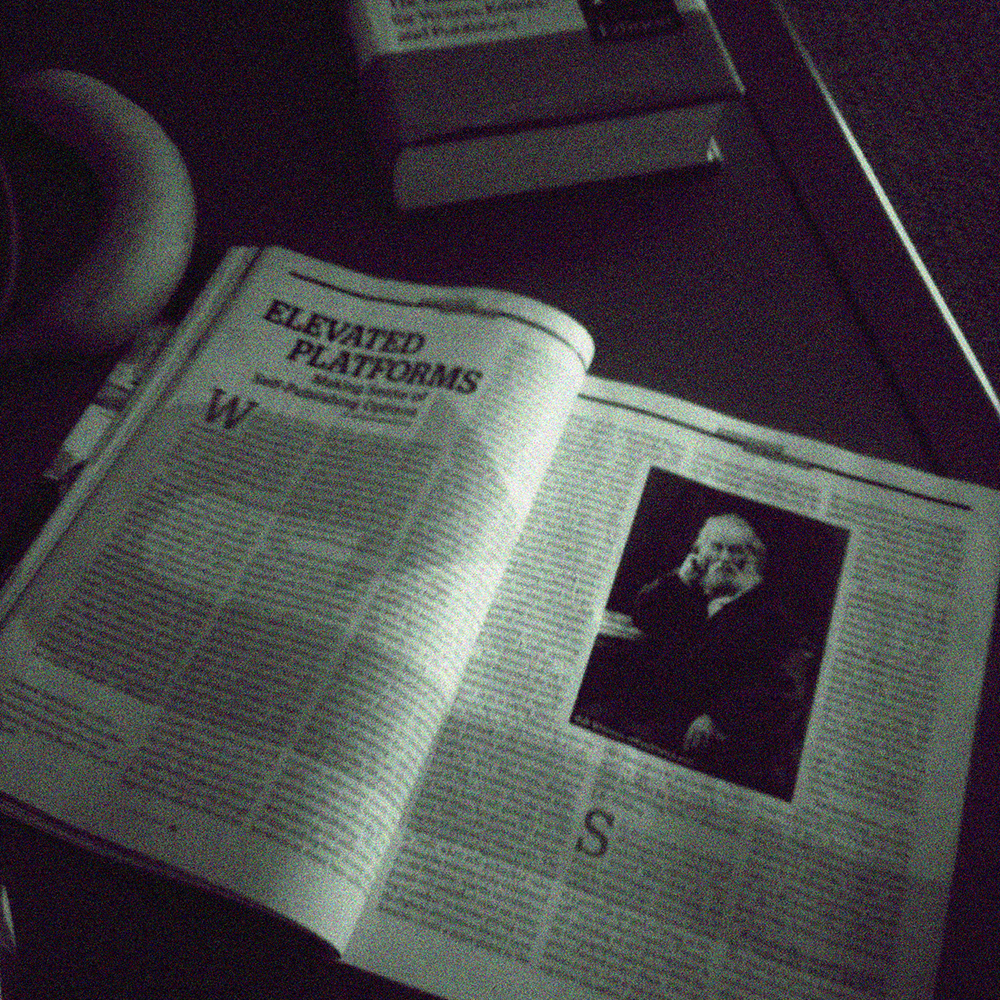
For the last few years, Poets & Writers highlights the independent publishing scene in America. This year is no different.

Recently arrived in the post is the November/December issue of Poets & Writers. In the past, it has been my practice to read each issue from cover to cover. However, (and in light of my post last week that elicited much conversation: Are trade publishers gatekeepers?[1]), I abandoned protocol and started on the self-publishing special section.

As I am still reading and processing the articles in this issue, one item caught my attention that I would like to share. Reportedly, more than 391,000 books were self-published in 2012.[2] That is a large number of self-published books. To be honest, I may have read only a handful of self-published works that year. An article in Poets & Writers offer some perspective on the matter. I would like to learn your response to the following:

A highly regarded agent recently remarked that the odds are stacked heavily against self-published authors—that only three or four titles really “make a splash” each year.[3]

NOTES:
[1] Closing out the blog post, I asked: “What are your thought about publishers as gatekeepers?” One commented suggested that publishers “think that they are [gatekeepers], but they’re not. They are commercial retailers…. They buy what sells. The quality only needs to be high enough not to send readers screaming.” Someone else commented that “I depend on publishers to be gatekeepers. While I know that they publish a lot of crap and don’t publish a lot of great stuff… I still believe that the ratio of things I’d enjoy reading to things I wouldn’t is higher among traditionally published books than among self-published ones. I’m sure I miss some really great reads this way, but I just don’t feel I have time to wade through the slush pile myself.”
[2] Jason Boog, Galleycat, “Bowker Counted 391,000+ Self-Published Books Last Year,” October 9, 2013, accessed October 23, 2013, http://www.mediabistro.com/galleycat/bowker-counted-391000-self-published-books-in-2012_b78844
[3] Kevin Larimer, Poets & Writers, “Self-publishing Perspectives,” November/December 2013

Are trade publishers gatekeepers?

First quarter books

In a book cover designer LinkedIn group, the question came up, Do you think publishers are “gatekeepers?”[1] (For reference, please read this blog post provided by Dave Bricker.[2])

Too often I read self-publishers complain how the Big Six dominate retail/distribution options. Or trade publishers denigrate self-publishers as buffoons. In Dave Bricker’s blog post, he  offers that it is not an “us versus them” scenario. It is a competitive marketplace. Both publishing options are viable. Additionally, both options are equally challenging.

One contributor offered that publishers are like brands. While another contributor reminded the group that publishing is a business.

The article sparked additional thoughts in a different, yet related, line of thinking. First, if trade publishers are brands, should they publish inferior quality literature simply because it’s good business? Next, if publishers do pursue that path, what does that say of their brand?

Dave responded to my questions in this manner:

We indie publishers enjoy the luxury of indulging in a bit of artistic snobbery, but we don’t have conglomerates to support and we’re rarely presented with the opportunity to grow rich by “selling out.”

Ultimately, I suppose we’re all trying to make money and offer the highest quality books we can. One could make a compelling argument that a single “less than excellent” blockbuster could finance a whole lot of artistic expression. It’s a bit like wildlife advocates supporting zoos. A little captivity is acceptable if it supports a certain amount of conservation in the wild.

I love that line: “It’s a bit like wildlife advocates supporting zoos.”

What are your thought about publishers as gatekeepers?

NOTES:
[1] Dave Bricker, LinkedIn group, book cover designer, “Gatekeepers and Self-Publishing,” December, 2012 accessed October 13, 2013 Gatekeepers and Self-Publishing
[2] Dave Bricker, TheWorldsGreatestBook.com, “Gatekeepers and Self-Publishing,” November 25, 2012 accessed October 13, 2013 Gatekeepers and Self-Publishing

Do children’s books sell as e-books?

DoKidsEbooksSell_zhivago_lomo
Photo courtesy of @mxmulder

Let’s face it, e-books are no longer a novelty. With the Kindle, Kobo, Nook and other e-reader devices, the transition to a digital reading experience is no longer a discussion. They are here to stay. But is the e-book market just for adults? How well do children’s books sell on this new platform?

Last year, I worked on a half dozen or so children’s books. Not books I’ve written, mind you, but I did design covers, inside layout and typesetting. All of the titles are available on various e-reader devices. Each book features fully illustrated pages (the industry trade refers to them as picture books) and they print at various formats. The most common — and standard to the trade — is a 32-page, 8.5″x11″, colored ends hardcover book.

This is where the question gets interesting: Do children’s books sell as e-books? According to one report,

“children’s and young adult digital book revenues exploded nearly 300 percent…”[1]

Those sales numbers are quite convincing. Authors request e-books of their picture books in addition to their traditionally printed picture books. At least, the authors I work with are convinced by the published industry sales reports. Best I can tell is that young adult books perform much better than picture books even though children’s and young adult books are lumped together in a single category.

My experience is that the iPad provides the best possible interface as an e-reader with brighter colors and fluid user experience. The more popular e-readers (i.e. Kindle and Nook) seem clumsy by comparison leading some to believe that the e-reader device is a transitional technology that is soon to be replaced by the tablet.[2] Both Kindle and Nook scale down a large format picture book to the default viewing area specific to the individual device. Though the iPad has the better picture book experience, I’ve noticed that children are more interested in apps than e-books.

So, what is an author of children’s picture books to do? Here are some things to keep in mind as a children’s book author:

  • A picture book that is interactive (using apps to feature audio, video, etc.) sells better than a static digital e-book.
  • Young adult fiction titles sell better as an e-book than picture books.
  • Publishers typically provide both print and digital products, and it is wise to have the book in as many formats as financially viable.
  • Scholastic published a report on the reading habits of children stating that: “Eighty percent of kids who read ebooks still read books for fun primarily in print.”[3]
  • The same report shares that: “Fifty-eight percent of kids… want to read books printed on paper even though there are ebooks available”[4]

The tactile interaction with a physical book is an important part of the reading experience for children. In her book The Writing Life, Annie Dillard writes,

“The written word is weak. Many people prefer life to it.”

As e-books gain market share, the written word — whether print or digital — will always compete with life. Readers still seek to retreat into books that don’t offer the distraction of emails, hyperlinks, social media updates, Youtube videos and the like. It’s a choice the reader and the author must make.

NOTES: What prompted this post is a discussion posted on the LinkedIn group Ebooks, Ebook Readers, Digital Books and Digital Content… The specific discussion thread is here http://www.linkedin.com/groups/Do-childrens-books-sell-as-1515307.S.212309551
[1] Jason Boog, “Children’s & Young Adult eBooks Saw Nearly 300% Growth,” Galleycat, September 7, 2012 accessed February 19, 2013 http://www.mediabistro.com/galleycat/category/sales-stats
[2] Dan Eldridge, “The Disappearing Market Share of the E-Reader: Is it now a transitioning technology?,” Teleread.com, November 1, 2012 accessed February 19, 2013 http://www.teleread.com/e-ink/the-disappearing-market-share-of-the-e-reader-is-it-now-a-transitioning-technology/
[3] Kids & Family Reading Report, Scholastic, accessed February 19, 2013 http://mediaroom.scholastic.com/kfrr
[4] Kids & Family Reading Report, Scholastic, accessed February 19, 2013 http://mediaroom.scholastic.com/kfrr

Judging a book by its cover

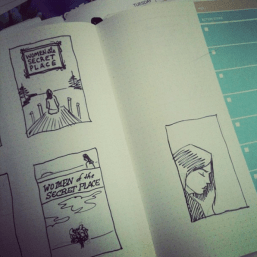
For me, every book cover I design begins with pencil sketches that eventually lead to ink drawings. Actually, I suppose it begins prior to that. The author receives a pre-publication questionnaire from me prior to the design process. The questionnaire asks the author what is his/her elevator pitch, what are the pillars of the book (i.e. what are three main concepts/ideas in the book?), and what is the book’s key audience? There are more questions that help me prepare for the design process, but reading through that document helps me form an idea of who the author is, what the book is about and how best to represent the book’s content with an attractive cover.
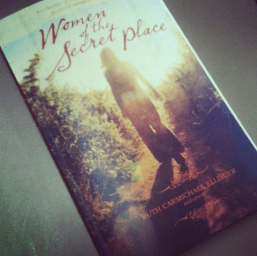
Then I receive the manuscript a few weeks later and begin reading the author’s work. This helps try to envision in my mind an iconic poster image. For me, a book cover is the equivalence of a film poster. At this stage, I produce some concept drawings (like the one’s pictured) and research color schemes and subject themes that I plan to use in the cover design. After a couple rounds of emails with the author, I proceed to the full-color design phase.

The full-color design is often photographic, as in the case of this sample, but can also feature illustrated work or typographic designs. An illustrated cover is sent to a freelance artist who spends a week or so producing the cover art. The final cover design pulls together all the elements (art, photo, type and copy) to present a cover that, in theory, sells a 1000 to 3000 copies on face value. I know what you’re thinking, but books really are judged by their covers. Just watch people at a bookstore. They’re scanning covers before they even pick up a book to read the back copy blurb or open a book to read the first few chapters. If a book has amateurish art or less than professional photography, the audience will move to the next book cover that has great photography or stunning artwork. Further, if a book has poor quality cover art, it will be represented in poor book sales. Let me say it again: if a book has crappy cover art, the book will have crappy sales. No reader wants a crappy book on their bookshelf or e-reader. Half the battle for a reader’s attention is getting him/her to pick the book from the shelf. The same applies to e-book stores. Readers are scanning covers from the Kindle or Nook e-stores and deciding, based on cover design and book blurb, what title to purchase.

From the time the final cover is approved until the product arrives is six to eight weeks depending on circumstances. That’s when the real test of a book’s cover design and interior content begin. And that’s about the time I begin the next round of cover designs.

“High times in publishing!”

There was a brief, shiny moment sometime in the early 90s when Barnes & Nobles and Borders were opening on every corner, and at the same time the bubbling dot-coms were luring editorial talent away from print and into digital publishing. Those two factors converged to make life as a Publisher or Acquisitions editor pretty lush for a few years — salaries in the industry went up by over 30% and the enormous competition to sign talent to fill the shelves of all those miles of shelves in those new stores (and that mysterious new thing called Amazon.com too) made way for expense accounts and advance budgets that were unprecedented. That crazy growth, however, was totally unsustainable. Once the dot-com bubble burst, and new stores were no longer coming online, we were left with no new growth, a significant erosion of independent bookstores, consumer trained to expect cheap prices on books, and a overabundance of new “B-level” titles.

High times in publishing! « ConfessionsOfAnITGirl.com (via fluffynotes)

“A bookstore’s experiment with microdistribution”

The “Recommended” section at the Boulder Book Store, an independent bookseller in Colorado, features a mix of titles and genres. And also: a mix of distribution models. Among the traditionally published works on display stand a smattering of print-on-demand titles — many of them being sold on consignment by authors from the Boulder area.

A bookstore’s experiment with microdistribution

Google says, my bad

Google’s history of scanning books without author/publisher permission to populate their online book catalog makes me suspect there’s something askew with this story. From the WSJ:

Google had previously said it was collecting the location of Wi-Fi hot spots from its StreetView vehicles, but not the information being transmitted over those networks by users.

“It’s now clear that we have been mistakenly collecting samples of payload data from open (i.e. non-password-protected) Wi-Fi networks, even though we never used that data in any Google products,” wrote Mr. Eustace. “We are profoundly sorry for this error and are determined to learn all the lessons we can from our mistake.”

Read more: link

POD to the rescue

About 10% of Cambridge University Press’s sales of academic and professional titles are generated by books printed on demand…. Before POD, if sales of one of the publisher’s books dropped below 50 copies a year, it was taken out of print. Now a publisher can keep titles available forever.

The Economist (link)

Upstart Publishing l Seth Godin

fluffynotes:

Consider this quote from a high-ranking book publisher who should know better, “We must do everything in our power to uphold the value of our content against the downward pressures exerted by the marketplace and the perception that ‘digital’ means ‘cheap.’ …”

Hello?

You don’t have the power. Maybe if every person who has ever published a book or is ever considering publishing a book got together and made a pact, then they’d have enough power to fight the market. But solo? Exhort all you want, it’s not going to do anything but make you hoarse.

Movie execs thought they had the power to fight TV. Record execs thought they had the power to fight iTunes. Magazine execs thought they had the power to fight the web. Newspaper execs thought they had the power to fight Craigslist.

Here’s a way to think about it, inspired by Merlin Mann: Imagine that next year your company is going to make 10 million dollars instead of a hundred million dollars in profit. What would you do knowing that your profits were going to be far less than they are today? Because that’s exactly what the upstart with nothing to lose is going to do. Ten million in profit is a lot to someone starting with zero and trying to gain share. They don’t care that you made a hundred million last year from the old model.

If I’m an upstart publisher or a little-known author, you can bet I’m happy to sell my work at $5 and earn seventy cents a copy if I can sell a million.

Smart businesspeople focus on the things they have the power to change, not whining about the things they don’t.

Existing publishers have the power to change the form of what they do, increase the value, increase the speed, segment the audience, create communities, lead tribes, generate breakthroughs that make us gasp. They don’t have the power to demand that we pay more for the same stuff that others will sell for much less.

And if you think this is a post about the publishing business, I hope you’ll re-read it and think about how digital will change your industry too.

Competition and the market are like water. They go where they want.

Via Seth Godin

Readers Change Publishing Game

After suffering declining revenues, layoffs and widespread closures, magazines and newspapers need to do something to reinvent the future of publishing.

Could New E-Readers Change Publishing Game? – PC World

Has anyone mentioned the fact that an e-reader could just be replaced by an iphone or black berry?

(via fluffynotes)

Magazines won’t die

Speaking from personal experience, I’ve noticed something lately. The more I use technology (and I am on this damn computer a lot…too much), the more I want to read a magazine. But I want different things than I wanted five years ago. Frankly, I want a break. I want to be surprised and delighted …

The Internet is a technology that enables people to go out in SEARCH of things. I’m all for that and love it to pieces. But sometimes, I just want things to FIND me. Sometimes, I am just tired of looking and typing and seeking, and I just want to sit on my comfortable couch and be surprised when I turn the page.

That’s why I believe magazines won’t die.

Maria Rodale

The death of print magazines is… exaggerated?

The year that was 2009 is drawing to a close and data from online magazine database MediaFinder.com reports that 428 titles have ceased publication in 2009, through December 14.

While any magazine going out of business isn’t good news, the silver lining is the total number of foldings this year (although anything could technically happen between now and December 31) is down significantly from 2008 (613) and 2007 (643).

(via folio)

Field notes

// finished the first 7 chapters of a book proposal. now, if the author, editor & publisher agree, then we’re on to the next phase…

Provide valuable content

Four Simple Steps for Online Publishers (and Magazines) to Increase Revenue

They are as follows:

1. Monetize inventory within the existing site framework.

2. Avoid the exclusivity trap.

3. Automate campaign management.

4. Connect with new advertisers.

(via Folio)1

With all due respect: wrong, wrong, wrong, and wrong.

The answer is simple: provide valuable content.

NOTES:
1) Zephrin Lasker, “Four Simple Steps for Online Publishers (and Magazines) to Increase Revenue,” June 22, 2009, FOLIO, accessed June 23, 2009, http://www.foliomag.com/2009/four-simple-steps-online-publishers-and-magazines-increase-revenue (page no longer available, web site deactivated)

Luxury vs. premium

fluffynotes:1

Luxury goods are needlessly expensive. By needlessly, I mean that the price is not related to performance. The price is related to scarcity, brand and storytelling. Luxury goods are organized waste. They say, “I can afford to spend money without regard for intrinsic value.”

That doesn’t mean they are senseless expenditures. Sending a signal is valuable if that signal is important to you.

Premium goods, on the other hand, are expensive variants of commodity goods. Pay more, get more. Figure skates made from kangaroo hide, for example, are premium. The spectators don’t know what they’re made out of, but some skaters believe they get better performance. They’re happy to pay more because they believe they get more.

NOTES:
1) fluffynotes, June 2009, fluffynotes.tumblr.com, accessed June 23, 2009, http://fluffynotes.tumblr.com/post/115174039/luxury-vs-premium (page no longer available, web site deactivated)

“How Much is a Magazine’s Content Worth?”

There’s a lesson here for publishers and marketers alike: impressions have nothing to do with engagement, and in the end, engaging content appropriately packaged will find its audience.

—Guy LeCharles Gonzalez1

NOTES:

1) Guy LeCharles Gonzalez, “How Much is a Magazine’s Content Worth? Part One,” May 26, 2009, FOLIO:, accessed May 26, 2009, http://www.foliomag.com/2009/how-much-magazine-s-content-worth-part-one (page no longer available, web site deactivated. FOLIO: ceased print publications in 2018 and shuddered digital publications in 20202)
2) Bob Sacks, “BoSacks Speaks Out: The Rise and Fall of FOLIO: A Mirror for the Magazine Industry,” July 22, 2025, http://www.bosacks.com, accessed April 15, 2026, https://www.bosacks.com/bosacks-speaks-out/bosacks-speaks-out-the-rise-and-fall-of-folio-a-mirror-for-the-magazine-industry
3) For further reading: “A magazine’s “rate base”… is the rate charged to advertisers in the magazine and is related to the circulation figures of the magazine…The higher the circulation the higher the cost to advertise in the periodical since it reaches more potential buyers.
FOLIO magazine’s Jason Fell wrote an informative article on this subject today:
…for the second half of 2009 made their rate base requirements for the period, many others, including some heavyweights, did not.
Of the 30 or so large circulation magazines with rate bases of 2 million or higher—including AARP, Time and Better Home & Gardens—Reader’s Digest and Playboy were the only titles to fall short of their circ. guarantee….
Generally, when a magazine doesn’t make its rate base, its publisher is required to issue refunds to its advertisers or make other concessions.”
John R. Austin, “Reader’s Digest, Playboy, Others Miss Rate Base,” February 16, 2010, gator1965.wordpress.com, accessed April 15, 2026, https://gator1965.wordpress.com/2010/02/16/reader%E2%80%99s-digest-playboy-others-miss-rate-base/

newsweek’s facelift

folio covered it first & now nyt gives it review of newsweek’s facelift… newsweek’s focus: ‘the reimagined magazine will include reported narratives that rely on intellectual scoops rather than informational ones and pair them with essayistic argument’ while nyt concludes… ‘The big talents and ambitious journalists that remain at Newsweek should probably spend less time reimagining the magazine and more time imagining a future when the physical product does not exist.’

How Big Is Magazine’s Carbon Footprint?

“Each month’s issue of DISCOVER in this process, transportation included, releases the equivalent of 170 tons of CO2 , whereas recycled magazines—only a small portion of the total—produce about 6 tons. Beyond reducing greenhouse gases, recycling saves about 1,000 pounds of solid waste, some 10,000 gallons of water, and 17 million Btu of energy per ton of paper. Furthermore, two tons of trees per ton of paper remain standing due to recycling”1

NOTES:
1) Jennifer Barone, Amber Fields, Karen Rowan, and Jessica Marshall, “How Big Is DISCOVER’s Carbon Footprint?” April 21, 2008, Discover Magazine, accessed April 28, 2009, https://www.discovermagazine.com/how-big-is-discovers-carbon-footprint-16252

The (read) sky (between) is (the) falling (lines)

AdAge.com opens an article with these dismal facts:

Newspaper ad revenue fell almost $2 billion in the third quarter for a record 18.1% decline, according to new statistics from the Newspaper Association of America. What’s worse, newspapers’ online ad revenue fell for the second quarter in a row.

Link

In another, companion article titled “Huffington Post More Valuable Than Some Newspaper Cos.,” AdAge.com offers this regarding blog value versus newspaper value:

The [$100 million] funding means Arianna Huffington’s news blog is now considered more valuable by its backers than quite a few publicly traded newspaper companies…

Link

The irony is that The Huffington Post “rarely provide original content” (to quote myself) but “select and repackage… information.”

In a CJR piece by Robert Kuttner with an urgent deck that reads “Newspapers have a bright future as print-digital hybrids after all — but they’d better hurry,” he writes of an interview with a 21-year old colleague. In their conversation he attempts to establish an argument in defense of the printed newspaper. Mr. Kuttner writes:

By now I was feeling very last century. And then Ezra… handed me a trump. You have one thing right, he volunteered. The best material on the Internet consistently comes from Web sites run by print organizations.

Link

My take away is this:

  1. Newspapers that don’t adapt to the print-digital hybrid should go the way of the buffalo.
  2. Newspapers that embrace the print-digital hybrid should do so quickly and reorganize as a news organization using the full depth of the new media platform. After all, newspapers are content providers who have been relying on a single (print) platform too long.
  3. The Huffington Post is funded. In a little known interview, the publisher of World magazine made the following statement:

As public companies that do most of the news-gathering cut back on their investments… We see an opportunity to increase news resources in the non-profit world. We may be looking at a paradigm shift in this industry from for-profit news-gathering to non-profit news-gathering.

You’re kidding, right? Magazine ad sales increase?

Ad pages in the monthly magazines’ January through September issues had fallen 7.4% from 2007, according to Media Industry Newsletter. The first nine months of 2007, by comparison, slipped only 1% from 2006. Before that, we’d seen a few years of gains.

Okay, so maybe it is not all bad.

The Economist… presented a crisp example of excellence in editorial, ad sales, circulation and marketing. Women’s Health continued its ascent…. Every Day With Rachael Ray even reversed the newsstand decline of first-half 2007.

Some Bright Spots in a Gloomy Year for Magazines

Print is dead, long live print

From Print is Dead blog:

…even though I wrote a book called Print is Dead, even I don’t think that publishing is over. Rather, it just needs to change and be willing to embrace new ideas and business models.
Link