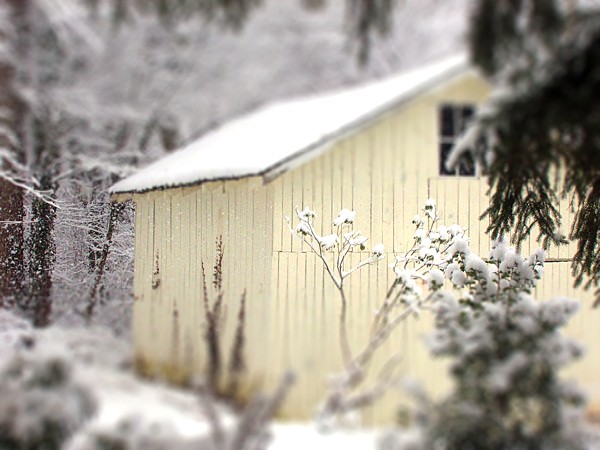
The garden project: marigolds

week two

I came here last, bringing
marigolds from the round garden
outside the kitchen.
—Donald Hall, “Maple Syrup”

The last few weeks have been chaotic and I’ve had a challenge focusing on the garden project. The goal is to build six wood container boxes. But my weekly lumber allowance disappeared rather quickly; cost more over $17 to build two 4’x4′ boxes. The other challenge is the composting I did in the fall of ’09 only filled one box. So know I have to spend a few extra dollars purchasing topsoil.

Since I don’t own a motorized tiller, I resorted to a very old method of preparing the soil for planting. The New Self-sufficient Gardener by John Seymour offers an old English tradition for raised beds preparation. Basically, get a spade and dig down 6 to 10 inches and flip, or turn, the soil. After turning the soil in each box, I used a garden weasel tool to break up the soil even more. Finally, I added about two to three inches of topsoil before I began planting marigolds around the perimeter of the box. One source I read stated that marigolds provide an organic pest repellent. This is the first year I’ve used marigolds in the garden.

The garden project begins

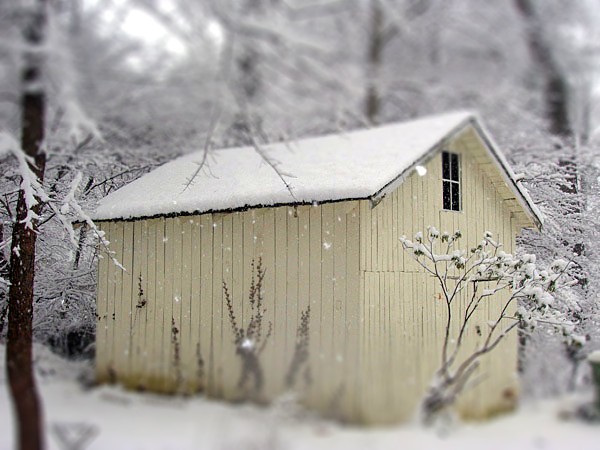
Mid April Garden

The last couple of years the garden project goals have been simple: spend less than $100 on garden supplies (seeds, plants, etc.), use native or found materials (like creek stones or fallen, dead wood from local trees to make garden borders) and avoid using pesticides or herbicides (with the exception of natural, organic pesticides like cayenne pepper, ground cinnamon & the like).

This year I took the liberty to construct garden boxes with the goal of making raised bed/container gardens. The garden boxes are made from 2″x6″ pine boards and measure four feet square.

I began the garden project in April.

I’m using a variety of sources to put together this year’s garden project. But the primary gardening strategy handbooks I use include Trowel & Error by Sharon Lovejoy and The New Self-sufficient Gardener by John Seymour.

No more Free Lunch

This weekend I received a letter in the post informing me that Free Lunch is closing shop. The news really disappointed me for two reasons. One, I was hoping to have some poems published. Two, I reviewed an issue of Free Lunch for Small Press Review and really enjoyed the publication. Some literary/poetry publications are dense with inaccessible poetry and my work doesn’t seem to fit. But Free Lunch felt like a good fit. Here’s an abridged version of the review I submitted to Small Press Review:

Free Lunch presents an engaging 20th Anniversary issue. Unlike many poetry magazines that contain a smattering of good poems and a couple great poems, the Spring 2009 issue of Free Lunch collects stellar work by Billy Collins, Stephen Dunn and many others. It is my habit as a reader to dog-ear pages in books or magazines that elicit some sort of physical response; like smacking a book on my knee and saying “yeah” to the amusement of fellow bus riders. Lyn Lifshin writes, “I love the sense/ of her contentment/ feel it moving/ inside me the/ way when a/ poem works…” in her poem “Writing a poem is like why and when a cat purs.” In “Advice from a Pro,” X. J. Kennedy writes, “I vowed to make my work intensley sober.” There are many great poems by poets Roger Aplon, Denise Duhamel, and others. And, in short, my copy of the 20th Anniversary of Free Lunch has almost every page dog-eared with praise.

Poem: Saturday Night, Coffee House

“Saturday Night, Coffee House” by Matthew Mulder

The awkwardness is complete—
strangers sitting side by side
with nothing to offer but body heat
on this cold winter night;
and the only thing that
connects us is my brother’s wife
and the wooden bench we sit upon.

Conversation is embarrassingly
fumbled with references to
the chai we sip;
and at long silences we sip
more chai and look
around the coffee house
for more material to
discuss,
or some distraction
to fascinate our senses.

(Originally published in Rapid River Magazine, April 2004.)

this is my last post

there is nothing left

a final violent vomiting cough

a gasping for air

a relief that it is

finally over

Are Mondays in Norway are better?

i wonder if mondays in norway are better than mondays here…

Weekly web links of interest

Blogging

Productivity

Labor / Work

DIY / How to

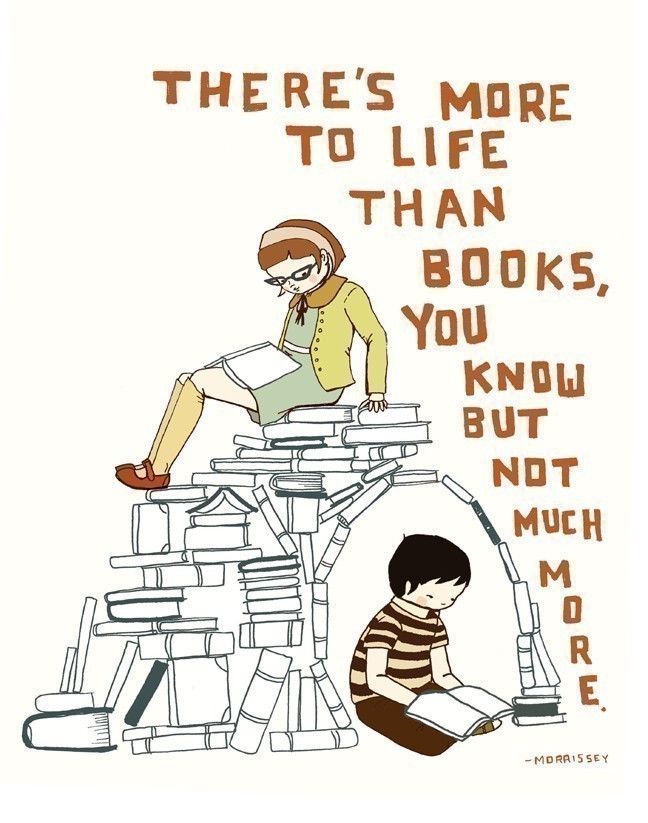
There’s more to life than books.

Knowledge

Knowledge is erotic.

Jane Hirshfield, from her book Nine Gates

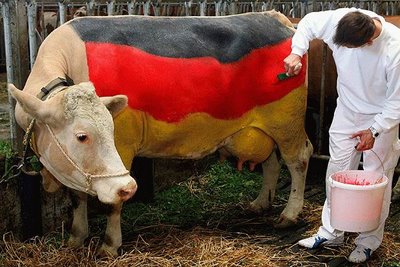
Black, red and gold – schwarz, rot und gold

germanheit:

Germany’s national flag is officially black, red and gold – schwarz, rot und gold. What do the colors actually mean? Well, in the war of liberation against Napolean, the uniforms where black, had golden buttons and red lapels.

“Aus der Schwärze (schwarz) der Knechtschaft durch blutige (rot) Schlachten ans goldene (gold) Licht der Freiheit.” (From the blackness of slavery through bloody battles to the golden light of freedom)

Weekly links of interest

Productivity:

Health / Technology

Coffee / Caffeine

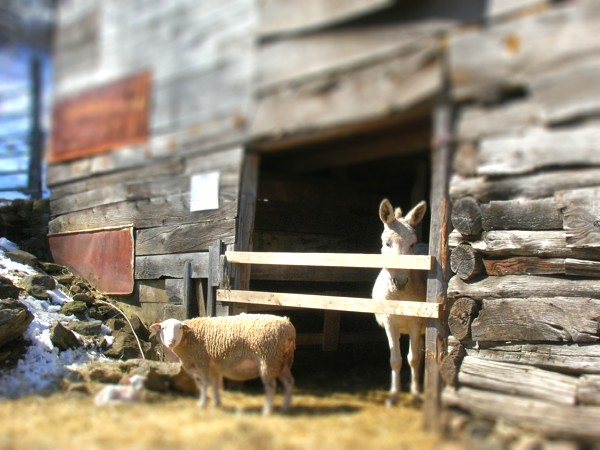
this is the guard donkey for the sheep… seriously…

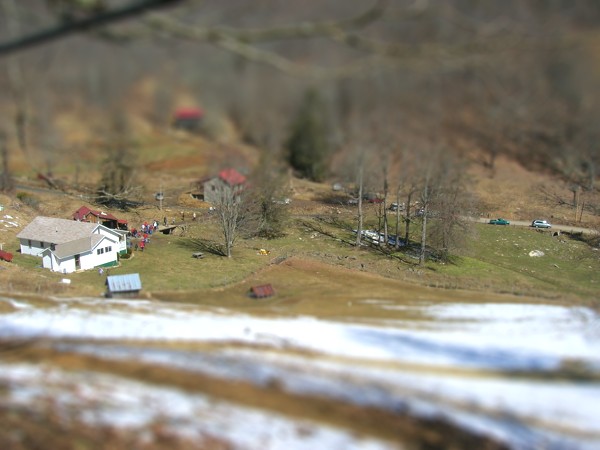
maple creek farm’s 2010 maple tour

Maple Creek Farm tour

maple creek farm’s 2010 maple tour

Maple Creek Farm

maple creek farm’s 2010 maple tour

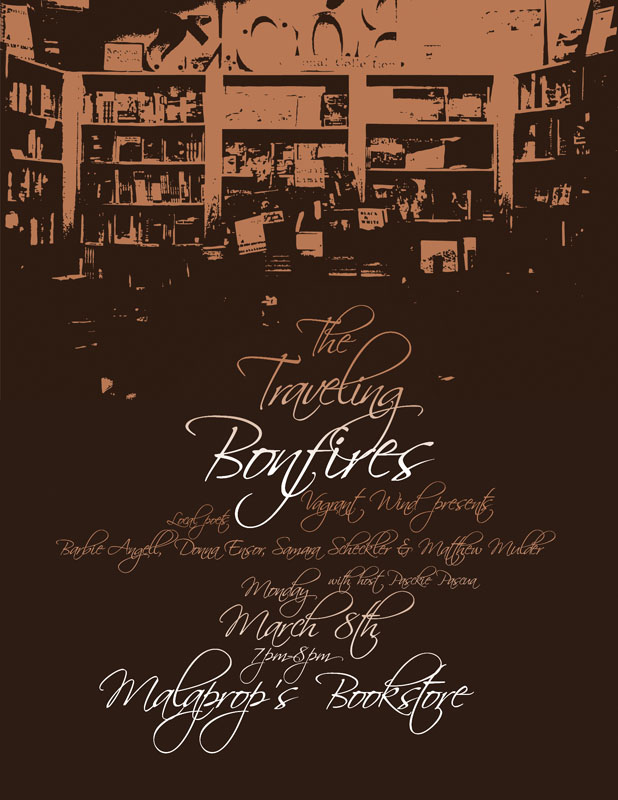
Poetry reading – March 8, 2010, 7:00pm – Malaprop’s

Asheville Tumblrs & Tweeps are cordially invited to a poetry reading Monday, March 8, 2010, 7:00pm at Malaprop’s Bookstore/Café, downtown Asheville, NC.

Samara Scheckler is one of the featured poets for Monday’s reading and plans to read selections from a new chapbook A Body Turning.

Other poets include Barbie Angell, Donna Ensor, and myself with host and international poet Pasckie Pascua.

Poetry reading: March 8, 2010 at Malaprop’s

You are invited to a poetry reading featuring local poets: Barbie Angell, Donna Ensor, Samara Scheckler and Matthew Mulder, and hosted by Pasckie Pascua.

8 MARCH, Monday, 7pm-8pm.
Malaprop’s Bookstore/Cafe, downtown Asheville, NC.
(828) 254-6734

www.malaprops.com

POD to the rescue

About 10% of Cambridge University Press’s sales of academic and professional titles are generated by books printed on demand…. Before POD, if sales of one of the publisher’s books dropped below 50 copies a year, it was taken out of print. Now a publisher can keep titles available forever.

The Economist (link)

Nothing is free

Two regional titles in Germany, Berliner Morgenpost and Hamburger Abendblatt, have put up pay walls around premium content. But two big national titles, Bild and Die Welt (owned by publishing company Axel Springer), are keeping their websites free while selling iPhone-app subscriptions for $2 to $5 a month. And when The Guardian, Britain’s most-visited newspaper website, launched a $3.73 iPhone app — despite outspoken rejection of the pay-wall model — it sold 70,000 in the first month.

Ad Age (link)

Premium content

Le Monde in France, for example, has been charging for premium content since 2002, and has racked up 100,000 subscribers steadily paying $8 a month — even though its traditional newspaper circulation is barely more than 300,000.

Ad Age (link)

Measuring creativity

bobulate:1

When musicians improvise, their brains turn inhibitions down and creativity up.2 Scientists set out to measure exactly what is going on in the heads of musicians, using jazz as the constant:

[T]hey go into what we call a “dissociated frontal activity state.” There’s this notion that someone like Coltrane is “in the zone,” he’s far away from the concerns of everyday life. And he is in some other place where all of these novel ideas are flowing out of him.

How does he do it?

The brain really alters itself into this creative mindframe where its purpose at that moment is to generate novelty and to decrease inhibition.

Consider that for a moment: improv decreases inhibition and increases novelty! As I mentioned recently,3 people are already improvising. With the emergence and adoption of a new set of tools and services, the line between creator and consumer has narrowed and, in many places, blurred completely. And this is the great opportunity for designers (or creators or any kind): to create room for this sort of free flow of ideas4 in our design process and in the products and services we create for people. Plan for improvisation. Make room for novelty. (These are not oxymorons.) In the meantime, head over to hear a series on the field of “neuromusic,”5 research at the intersection of cognitive neuroscience and music.

Measuring creativity

NOTES:
1) Liz Danzico, “Measuring creativity,” Bobulate, Feb 9, 2010, accessed March 2, 2010, https://bobulate.com/2010/02/measuring-creativity/
2) Susan Stamberg, “Study: Jazz Improv Cranks Up Brain’s Creativity,” NPR, MArch 22, 2008, accessed March 2, 2010, https://www.npr.org/2008/03/22/88827029/study-jazz-improv-cranks-up-brains-creativity
3) Liz Danzico, “Frames: Notes on Improvisation and Design,” accessed March 2, 2010, https://www.slideshare.net/slideshow/notes-improv-design-ixd-10/3097395
4) News Staff, “Study: Prefrontal Cortex In Jazz Musicians Winds Down When Improvising,” Science 2.0, February 27, 2008, accessed March 2, 2010, https://www.science20.com/news_releases/study_prefrontal_cortex_in_jazz_musicians_winds_down_when_improvising
5) Library of Congress, Concerts from the Library of Congress, accessed March 2, 2010, https://www.loc.gov/events/concerts-from-the-library-of-congress (event web page no longer available)

“Facebook Friends”

I remain suspicious, however, of anyone who argues that online social networks, like Facebook, will revolutionize human interactions. Whenever I encounter some utopian celebration of Facebook, I always go back and read some Jane Goodall, or Robert Sapolsky, and remind myself that our social lives haven’t changed that much since we were hairy apes patrolling the African forest. In fact, the most obvious parallel for just about every primate troop remains high school. It’s not that Facebook doesn’t matter – it’s just that our social lives are stubborn things, and tend to revolve around the same constants regardless of the technology.

Jonah Lehrer, “Facebook Friends,” The Frontal Cortex (via somethingchanged)

Ten Unexpected Collective Nouns

wordjournal:

  • rout • a rout of wolves
  • clowder • a clowder of cats
  • descension • a descension of woodpeckers
  • disworship • a disworship of Scots
  • mute • a mute of hounds
  • raft • a raft of ducks
  • unbrewing • an unbrewing of carvers
  • neverthriving • a neverthriving of jugglers
  • drunkenship • a drunkenship of cobblers
  • shrewdness • a shrewdness of apes

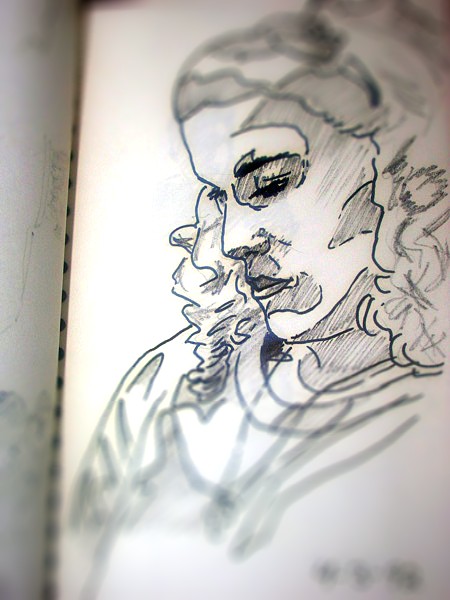
Another drawing from an old sketch book

I used a new & an old sharpie marker… it’s a technique i learned in school… a sharpie marker that is expiring provides a charcoal impression…

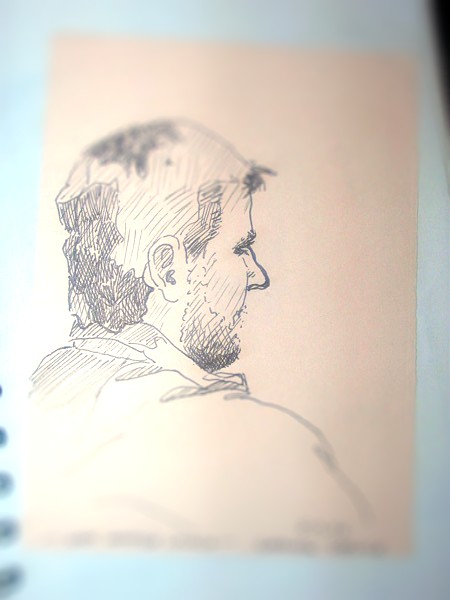
Sketch from the 90s

along with those old fountain pens i found some old sketch books from university days… here’s a sketch from the 90s…