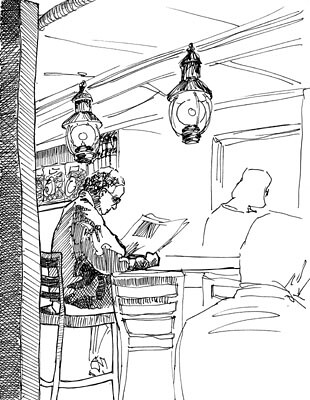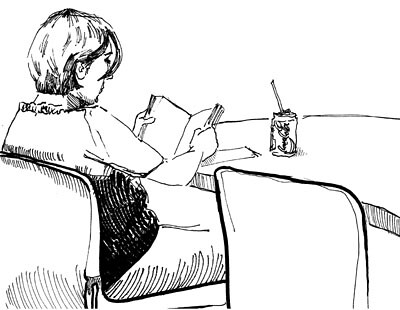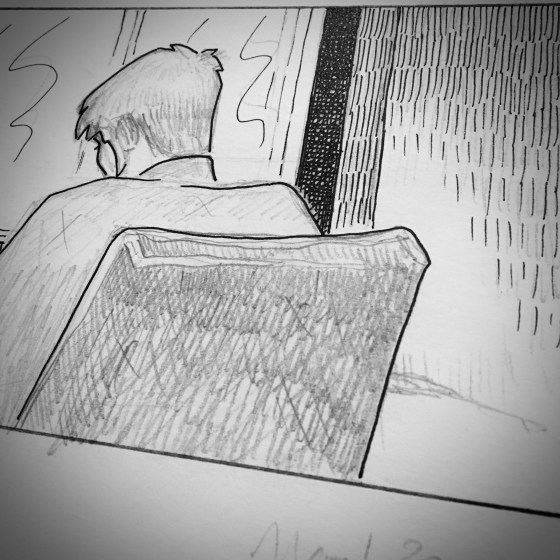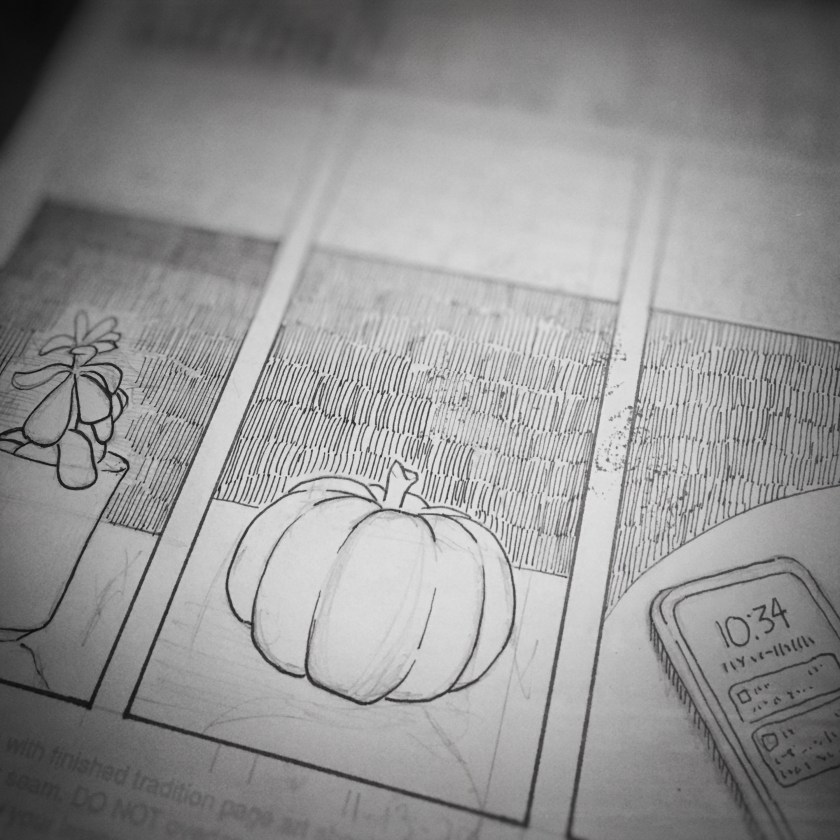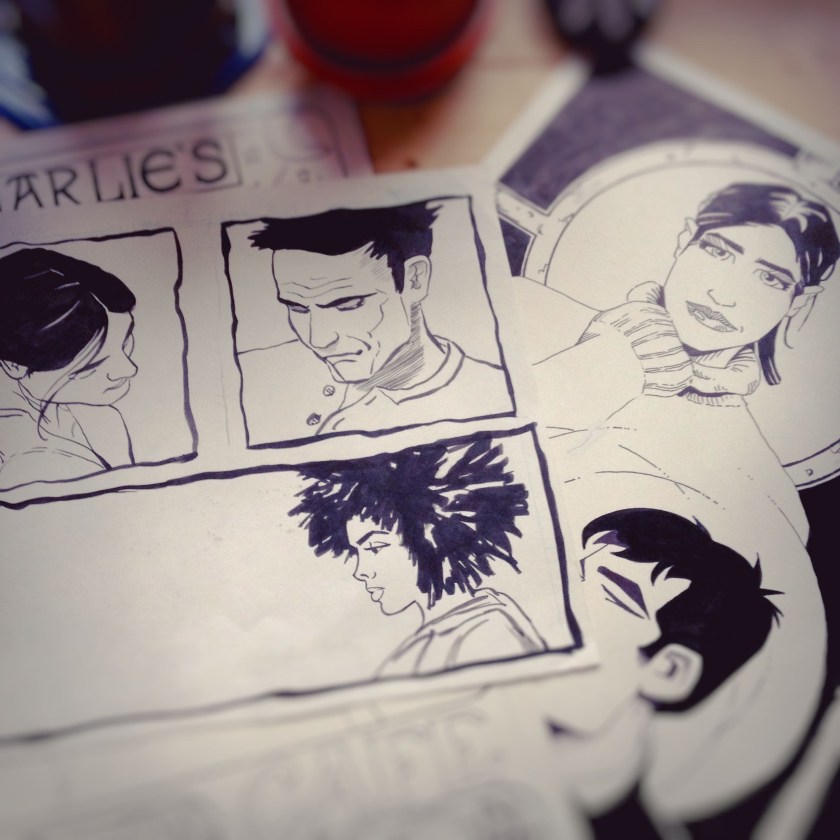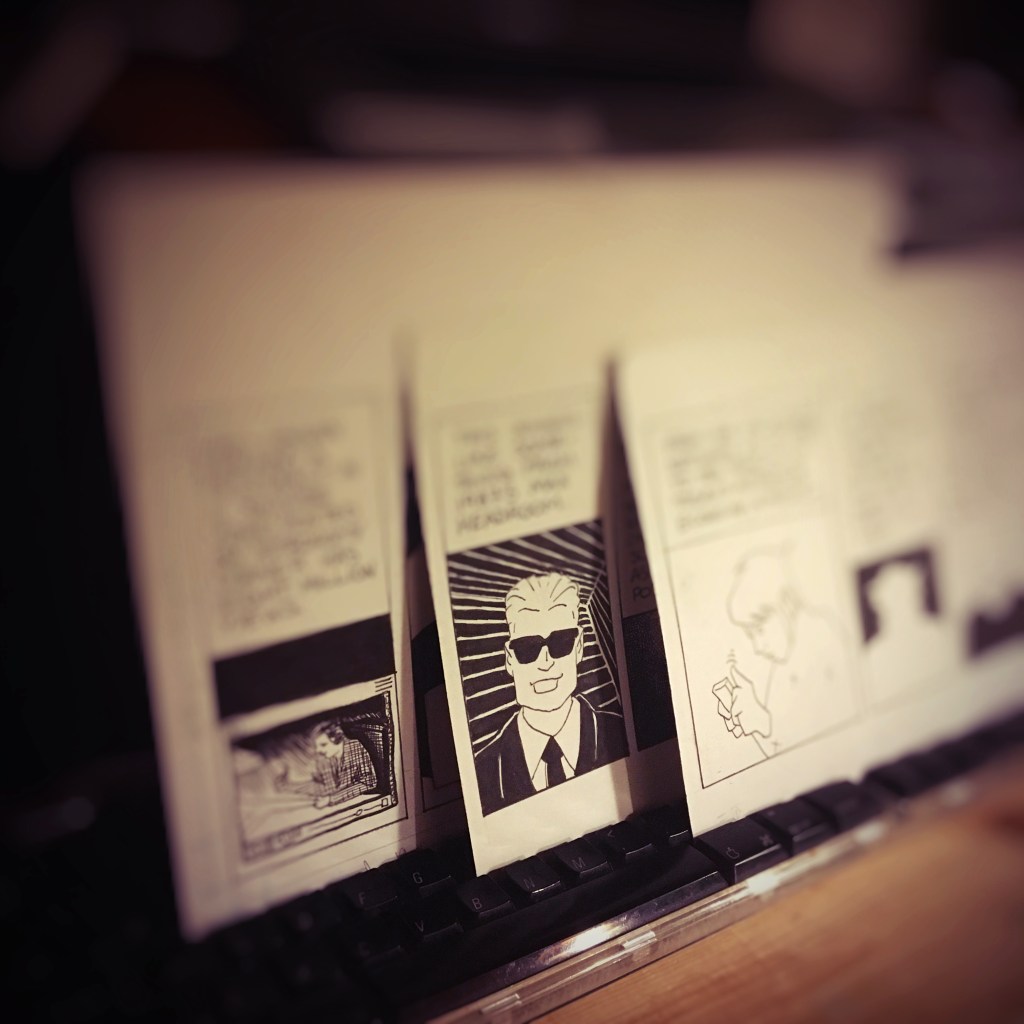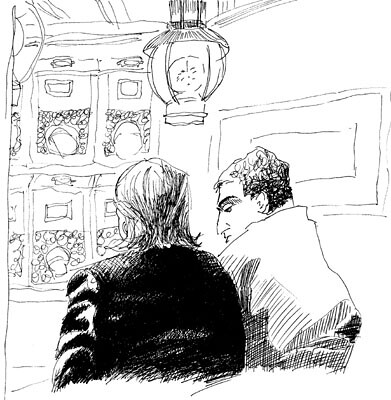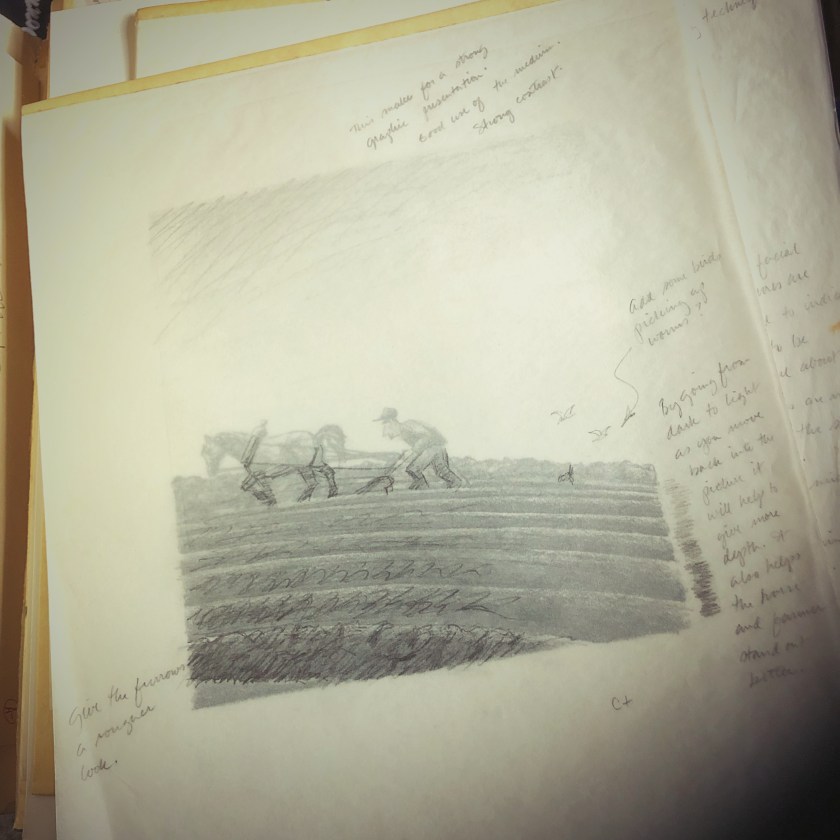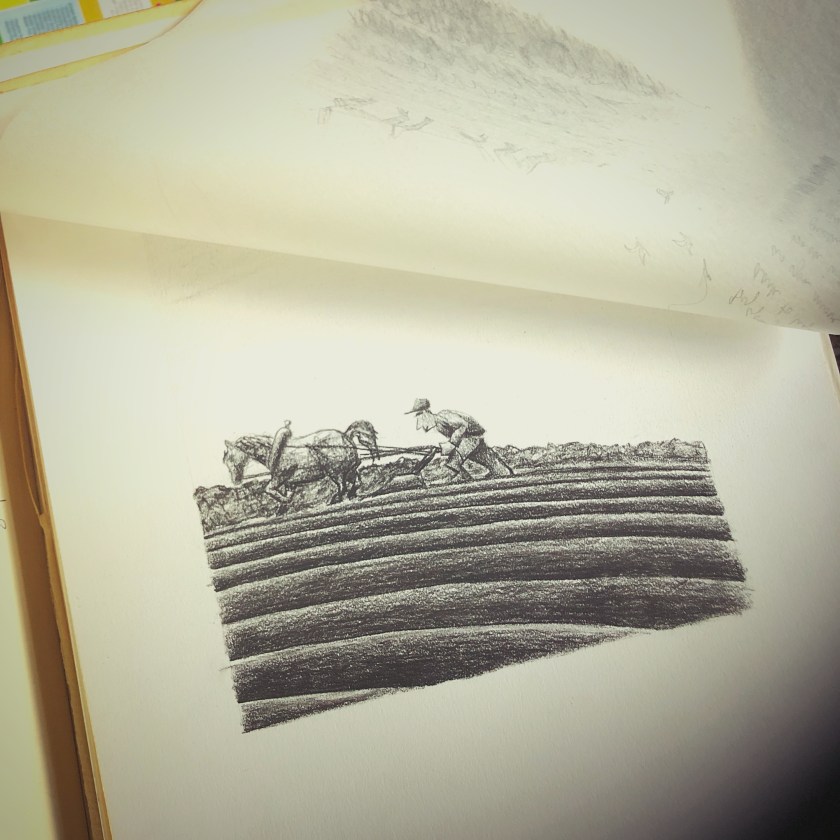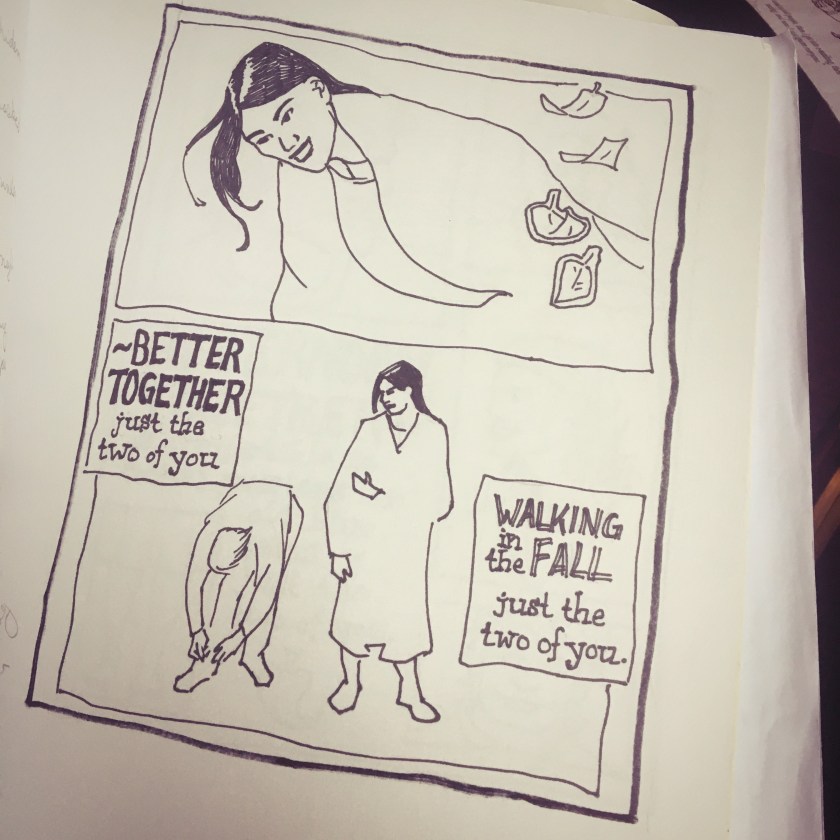
An afternoon reading comic strips

Source: A collection of comic strips

Lost confessions

Searching for lost confessions

Some days all you need…

Over two months of writing a poem a day
Interested in the November PAD (Poem-A-Day) Chapbook Challenge?

October quickly fades

I raise my cup to invite the bright moon

Raised cup to invite the moon

Haiku a morning in a thousand pixels

Haiku a morning in a thousand pixels

Gather ’round the radio

Time to gather ’round the radio

Legend

Inktober — Day 15

After the storm

Asheville after the storm
Asheville, North Carolina

15 year anniversary

Historic Battery Park Apartments, Asheville, North Carolina
Rooftop Poets

Vision in motion, an exercise

Never waste money on purchasing a tube of black paint, I was told.

With three or four colors you can mix a pigment as dark as black. And a richer shade of pigment. Is black even a color?

These thoughts remind me of color theory and composition class at the university. My professor was a student of Josef Albers. At the time, that fact did not have a great impression on me. But I wonder about the lessons he must have learned. Not so much the academic rigor of craftsmanship and applied fine arts. That is important. But lessons of integrity and legacy. Was it Albers who taught him that quip about black paint? Or did that come from Willem de Kooning?

A couple days later, the middle child looks at this project. “What’s this about?”

I do not answer. It is an exercise. It is practice.

Vision in motion, paint big

This is practice. An exercise. Form and color.

Do you see a character? As in, a letter of the alphabet.

Or do you see a character in human form?

The daylight quickly fades for this January afternoon. I chose a larger brush to apply pigment. At the university, the art professor instructed, “If you can’t paint well, paint big.”

It was not criticism, but rather a modernist declaration. He provided an atmosphere that allowed guidance rather than dogma.

I load the larger brush with the muddy water from the tray and a touch of pigment found between two watercolor cakes. The transparent layer is applied to the dry paint. A technique called glazing.

This is not an art lesson. It is a conjuring up of an image.

Vision in motion, layer upon layer

This is an exercise. Form and color. Loading the brush with pigment and applying it to the paper. Quick strokes. Vision in motion.

Painting by the light of the apartment’s living room window. The sun light is best in the morning. But I have continued this project well past the noon hour.

“Why do you keep painting,” asks my child.

“It’s underpainting,” I say as I clean the brushes and prepare for an afternoon walk. “The lighter tones provide the base. When the paint dries I add more color layers.”

It is January. It is Winter. The outdoor temperature is above the freezing point. We walk to the library and return books. We continue to talk.

Vision in motion

Trying something new. Or, rather, returning to something old.

Here is a first draft for consideration.

Will provide details as updates are available. Let’s see how this turns out.

What is the story?

Meformer or Informer

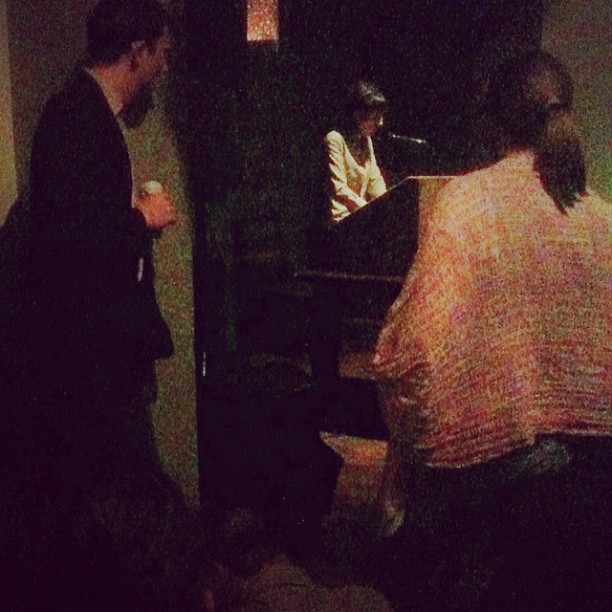
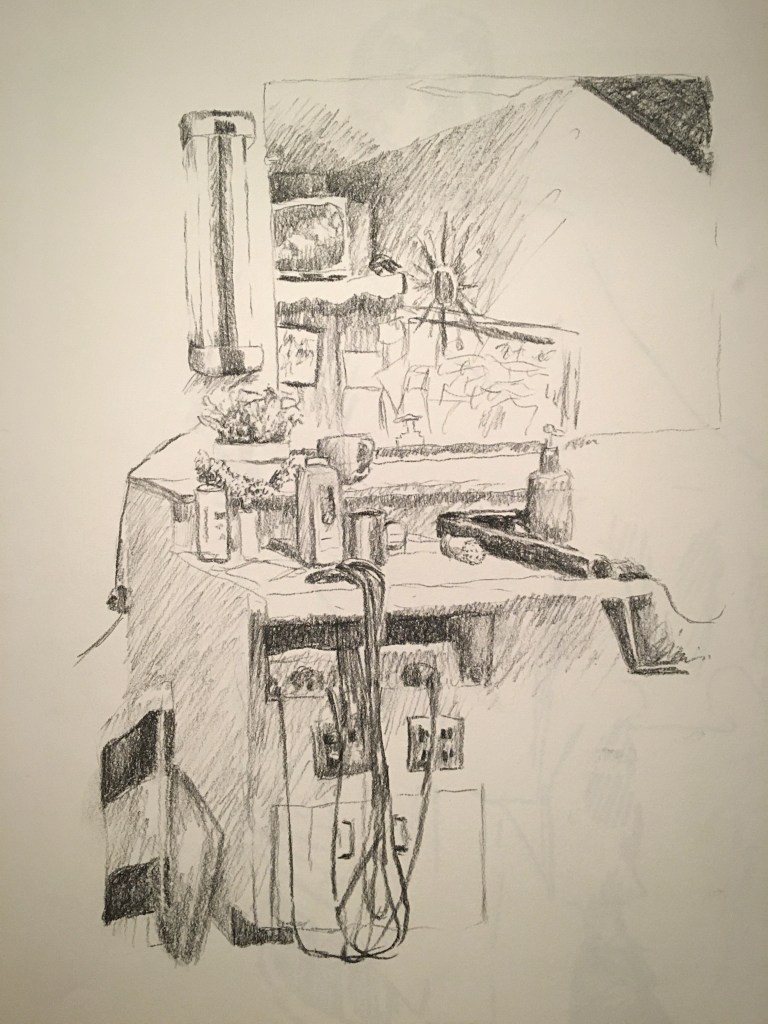
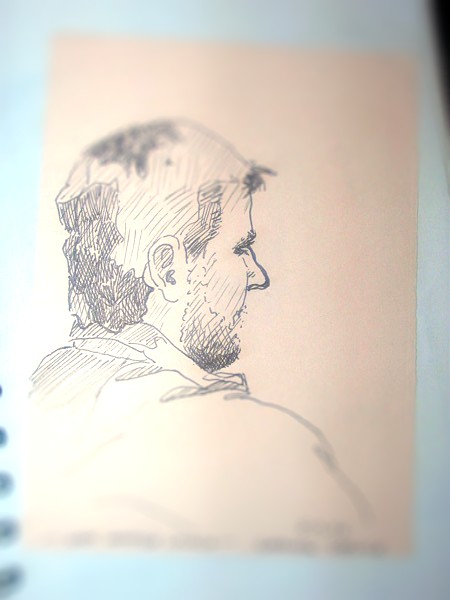
A picture is worth a thousand words. A common expression. Or common illusion. The story behind the image used in a post, “Meformer” (vs “informer”), does not tell the whole story. Not even part of the story. The post deflects the writer’s fears and anxiety. What do you see in the twenty minute sketch captured by an outdated iPhone photo?

DSCN3428[sqr-tilt-dallas]

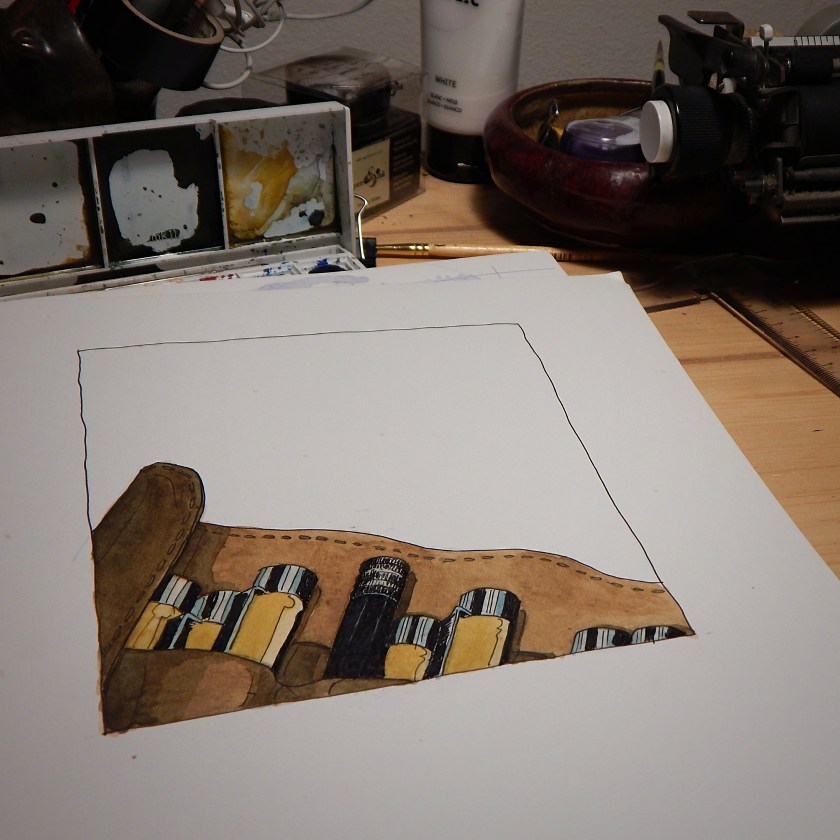
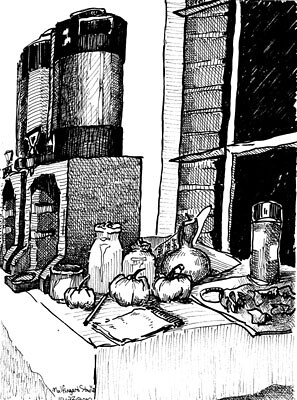
Another images portrays an artist’s workspace. An unfinished ink and watercolor painting. The related post reveals part of the story. Fear motivates. But there is a whole story arch of dreams and desires. Hopes and aspirations. And failure. If you were to write a thousand words about this photo, what story would you tell?

DSCN6003[DSCN6002[sqr-basic-lomo-dusk-tilt]]

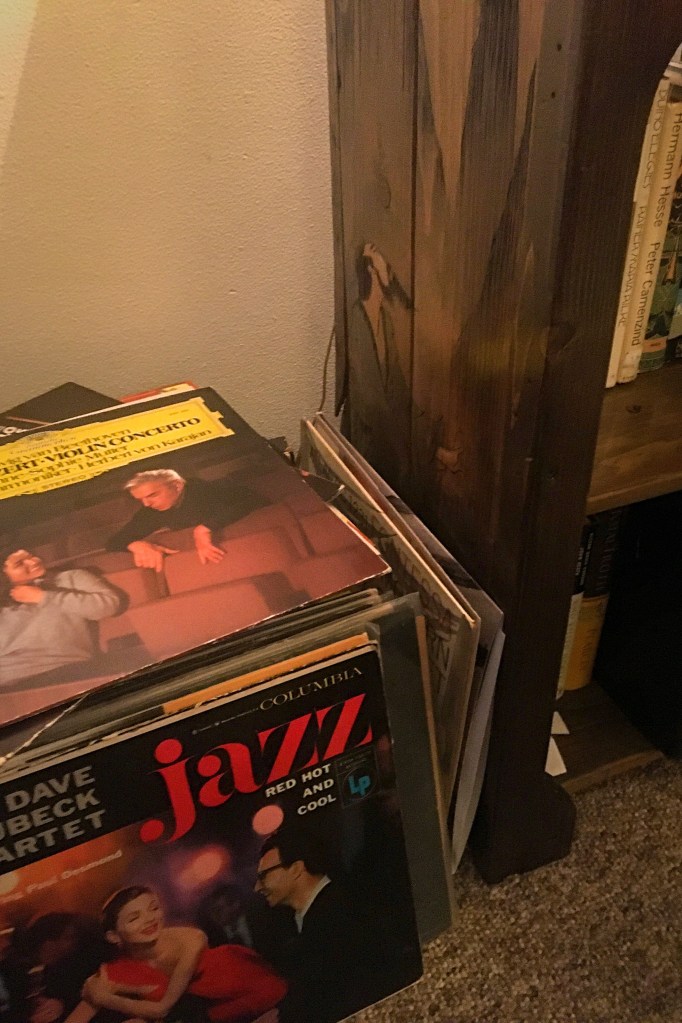
Notepads capture interesting details. To do lists. Contact information. Grocery lists. Project tasks. Appointments. Or this photo of an anatomy of print advertising. Why this list? What story does this relate?

The illusion of these photos is the framing. The information that is cropped out of the image is equally as important as what is framed within it.

Selective reading habits

Interlibrary loan system

The interlibrary loan system provides access to books. Books that are not available at the local rural public library. Books requested using the library system’s web site arrive as they are available. Sometimes the combinations of titles display a curious serendipity. Slow Productivity. And History of Graphic Design Volume 1 1890 – 1959.

The principles featured in Slow Productivity appear to contrast with the other book. At least at first glance.

Graphic design projects and tasks were once defined by art and drafting skills. Tactile skills of cutting an oval with an X-Acto knife for a Rubylith overlay sheet. Or drafting skills of using a T-square ruler and triangle to layout the ad copy for an advertisement. Or the skill of painting a headline with gouache paints or pigment inks. Or the photographic skills of loading, shooting, processing, and printing 35mm film. Graphic design work prior to the 1990s required more physical activity. Often, a design shop featured multiple creative talents. A photographer. An illustrator. A copywriter. A director and assistant. A typographer and designer. A videographer and film and audio editors. That is a team of ten creatives. Now graphic design projects and tasks encompass project management and problem solving. And a single designer needs to do the work of ten creatives.

Can graphic designers do their projects and tasks without burnout? That is the question. And, maybe, that is where the interlibrary loan library books compliment each other. Can the past inform the present? And future? And, more uregently, can I read these books before they are due back to the library?

Weekend sketch – Sarah and the king of the goblins

Another sketch from the weekend. Inspired by the film Labyrinth, I reimagined Jareth, the king of the goblins, and Sarah. The first time I saw the film was in art class. The high school art teacher thought it would be inspiring. It has captivated my imagination ever since.

Weekend sketch – Jareth, the Goblin King

Inspired by the 1986 film Labyrinth, I sketched a portrait of Jareth the Goblin King.

Jazz with Bob Parlocha on a rainy night

The children tucked in to their beds. Stories read. Prayers said. I walked to the kitchen and turned on the radio. A reward for getting the children to bed on schedule. If everything was on time, than I heard Bob Parlocha introduce his radio broadcast. Jazz with Bob Parlocha began at the top of the hour, eight o’clock, on the local public radio station. I washed the dishes, figured out bill payments, or some other domestic chore while listening to music.

That was a different time. And in a different place. The local public radio station signal received is full of static. Their evening programming does not include Jazz with Bob Parlocha. That is understandable. He died almost a decade ago.

The Sageza Group archives jazz radio broadcasts. On their web site, jazzstreams.org, they collect Bob Parlocha’s original broadcasts that were digitized. “Commercial jazz radio is just about gone from North America,” they write.

On evenings like tonight, when the radio reception is poor and the needle for the record player needs to be replaced, I find the Jazz with Bob Parlocha archives.[1] What was Bob broadcasting ten years ago on this date? Or eleven years ago? I select the date of a broadcast[2] and I am transported to a different time and a different place.

NOTES:

[1] The Sageza Group, Jazz with Bob Parlocha archives accessed April 16, 2024 http://jazzstreams.org/JwBP/JwBP-index.php

[2] Jazz with Bob Parlocha, April 16, 2013 broadcast accessed April 16, 2024 http://jazzstreams.ddns.net:8808/JwBP/Jazz-with-Bob-Parlocha-(2013-04-16).mp3

“Strife like this does people good”

The world harbors two kinds of strife. One promotes healthy competition among neighbors. The other determined by the will of the gods. Or so the rustic poet proposed.

Due to personal and professional reasons, my commuting practice has not included Amtrak®. At least not for the last few months. The last time I took the train to work snow remained on the ground. Yet, in spite of the long absence a fellow commuter kindly informed me of recent service changes. I was on the wrong side of the train platform. Due to summer construction, the northbound train runs on a different track. She shared other details as a long lost friend might. A thread of conversation resumed based on our mutual commuting practice.

When I boarded, one conductor greeted me with a common honorific and my surname. As I took a seat, another conductor passed by with a welcoming, casual good morning and my first name. As if I had only been gone for a long weekend. “Good morning,” I replied.

The idea of relationships and strife are themes I have considered since that summer day. This may be a contrast between the modern (relationships) and the ancient (strife). Personal or professional, the desire to belong or feel wanted or at least tolerated is vital. This is true for individuals as well as community. To nurture a relationship requires work. And intent. The commuter and the conductors thought I was important enough to connect with. If only in a casual or professional capacity, it provided a feeling of belonging. Should relationships be free of conflict? Should relationships exclusively nurture polite exchanges? What about course correction?

If I ignored the commuter, I would have been on the southbound train instead of the northbound train. The poet wrote: “when a person’s lazing about sees his neighbor/getting rich. . .” Or in my case, with headphones on I see my neighbor on the other side of the track and heading north. . . “Strife like this does people good.” In this manner, strife does not need to be abrasive. To achieve good correction and instruction apply decency and respect. Even honor.

August archives

Were all summers like this one? What were the stories of previous Augusts?

The summer passed. Choked by excessive heat and wildfire smoke. Like the blur of highway signs in the predawn light, it sped by. Were all summers like this one? What were the stories of previous Augusts?

From three years ago:

Something in front of you right now was designed by some unseen modern peasant who worked long hours with short deadlines. . .

The visible and invisible nature of graphic design

From five years ago:

Have you ever written something that developed a life — even an audience — unexpected?

Patience – your writing finds the right audience

That August Asheville evening, more than a decade ago, was one of the last nights our two families enjoyed supper and stories together.

Language is communal

Eight years ago:

“There is juju with these things,” he said inspecting one of the shields I painted. “People connect with this stuff, because it was created with human hands. Not some computer.”

From the office in the oak grove

Dare I go back any further? Ten years ago. Nothing appears to be written in August. What about fifteen years ago?

It is interesting to learn which individual poems became the foundation of my journey into poetry.

What’s your all time favorite poems

Eighteen years ago:

A poetry reading is like an art gallery portfolio review.

Poetry, a gift

Looking back over these August thoughts, essays, meditations. . . this modern peasant needs to devote more time to things made by human hands. So much of my professional life is filled with screen time, that it is time to return to handmade art, design, and poetry.

And now it is July

West of the highway that heads north and south, the country opens like a John Steinbeck novel. West of the highway, field upon field of alfalfa, corn, and other grains line rural roads reaches to the setting sun. How long has that highway been there; dividing the land? A hundred years ago Highway 57 connected Milwaukee to Chicago. Before that, the land bore the raised scars of the railway system. And before that. . . well, it is difficult to image.

The land east of the highway stretches to the shores of the great lake. A sliver of land, eight to ten miles in width, rests between the lake and the highway. East of the highway bustles with industry and manufacturing. Almost a quarter of the population of the state lives in that corridor. To the east of the highway, a wall of concrete and steel supply chain warehouses and distribution centers fortifies an expanding arcade of streetlights for commercial and residential harbors.

The land west of the highway covers a 150 miles or more to the Mississippi River. It is a different country — quantum distat ortus ab occidente. An ocean of fields and pastures dotted with islands of trees, farm houses and villages contrast against the land to the east of the highway. Occidentis means “region of the setting sun” or “western part of the world/its inhabitants.” The native name for this land is disputed. The original name is “where the waters gather” or “red stone place” or something. The name of the land was Gallicized by explores and later Anglicized by settlers. Aldo Leopold observed, “Land, . . . is not merely soil; it is a fountain of energy flowing through a circuit of soils, plant, and animals.”

The month of May registered a trace of rain along the patchwork landscape of the calendar. The sandhill cranes flew in from the south lands. Nested. And within a month, they cared for hatchlings. Ducks and geese followed the migration pattern. The robins were next. Though this year, a robin was spotted in late February. The red winged blackbirds gathered around the marsh areas.

As June warmed the countryside, mulberry bushes squeezed fruit from its branches. Rabbits and squirrels populated the backyards and fields of the village. The pale cloudless skies led to the longest day of the year. Fields of corn flickered to life with lightning bugs. Summer temperatures arrived. As did wildfire smoke from a thousand miles away.

Turtle doves made their nest in the corner of the apartment’s roof gutter back in May. The nest constructed at the end of the gutter and before the downspout bore two chicks. By summer solstice they had grown and flown away. The nest is empty now.

And now it is July. Bullfrogs sing a deep throaty “jug-o-rum” as the Buck Moon arrives. After sunset, Altair comes in to view high in the eastern sky. Or is that Vega?

Reflections in a mud puddle

From the archives, ten years ago…

coffeehousejunkie's avatarCoffeehouse Junkie

20130701-123531.jpgIt is an early summer morning. It rained the night before as I walk a mile or so before I climb into the car for the morning’s mega commute. The parking lot near my home is dappled with puddles slowly evaporating. It reminds me of when I first started taking black and white photographs in high school. One of my favorite subjects was reflections of the sky in puddles.

I don’t remember what initially attracted me to the subject matter, but I remember loading a 35mm SLR manual camera–either an Olympus or a Pentex–with a spool of film, pulling the leader and lining the sprocket holes with the sprockets, securing the leader to the spindle, closing the back door and advancing the film a couple frames. I’d sling the camera over my shoulder and head outdoors to capture a surreal glimpse of the heavens from the perspective of puddles on…

View original post 227 more words