Caleb Beissert is a poet, translator and musician. His published work appears in International Poetry Review, Tar River Poetry, Asheville Poetry Review and Beatitude: Golden Anniversary, 1959-2009.
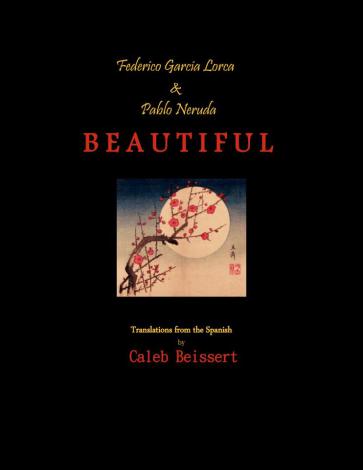
This week, Poetry at the Altamont celebrates the release of Caleb Beissert’s first book, Beautiful, a selection of poems by Pablo Neruda and Federico García Lorca translated into English. During the last few weeks, Beautiful was well received by enthusiastic audiences at Montford Books & More and Malaprop’s Books & Cafe and is a Small Press Distribution best-seller.
The Altamont theater doors open at 7:00 P.M. for Poetry at the Altamont. Admission is $5 at the door. Beer and wine sold at the bar and lounge will remain open for drinks after the reading. Event link.
UPDATE: Caleb Beissert is the featured guest of the Coffee with the Poet Series, Thursday, February 21st at 10:30 a.m. at City Lights Bookstore. Event…
This is the second time I will be reading poetry at the Woodland Pattern Book Center. If you are so inclined, you may sponsor me as I read poetry during the 9 -10 PM portion of the marathon. Details on sponsorship is here.
Or join the event and hear some of the poets in the area and beyond. Last year, if I recall correctly, some of the poets drove from as far as Madison to read at the marathon. Hope to see you there.
Several expressions are used in open mic circles when a poet or a singer songwriter is introduced to the audience. One of those expressions is, “Welcome, So-and-so to the stage. She going to bless the mic with her poetry.” Another expression often heard is, “Ya’ll give it up for What’s-his-name who is here to spit some poetry at you tonight.”
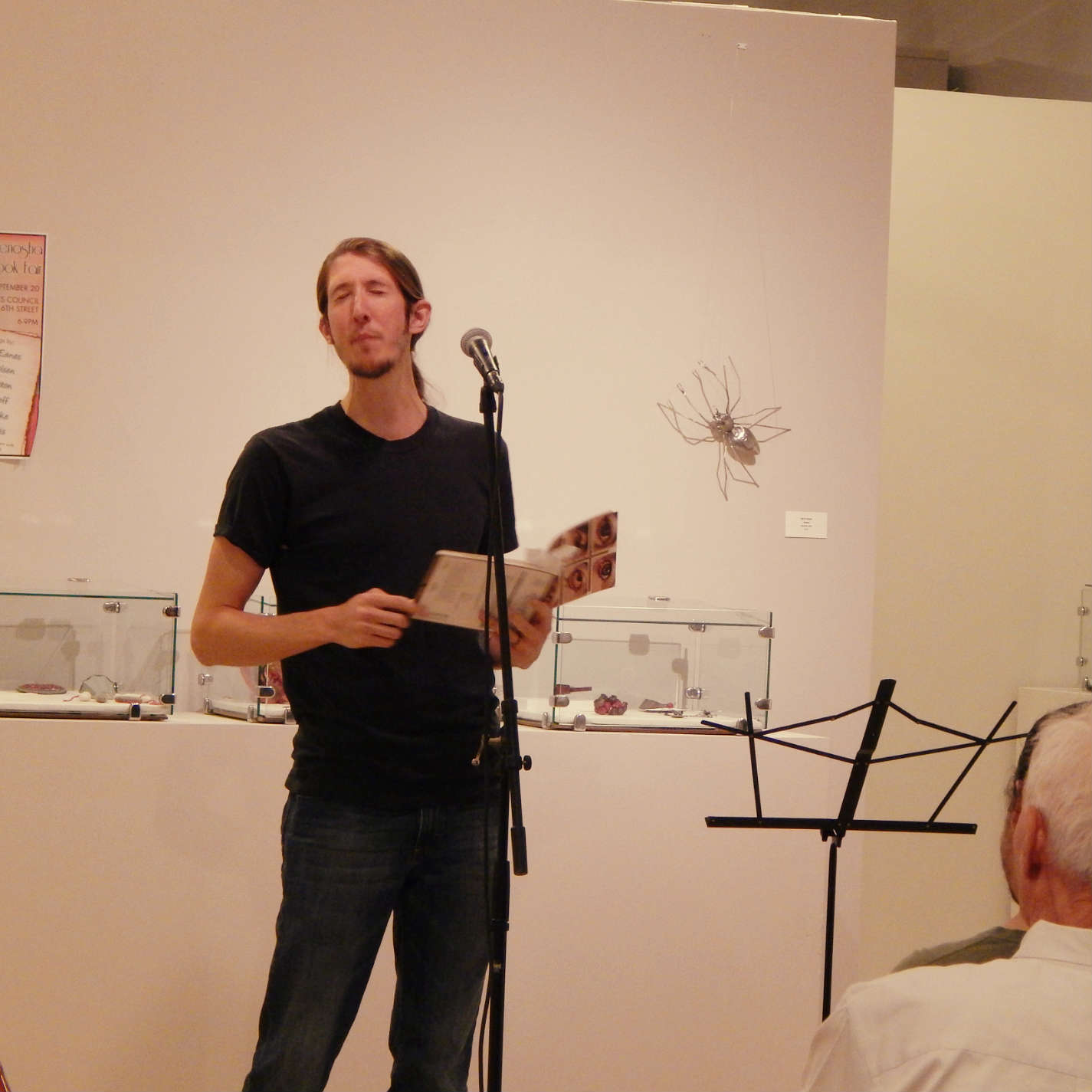
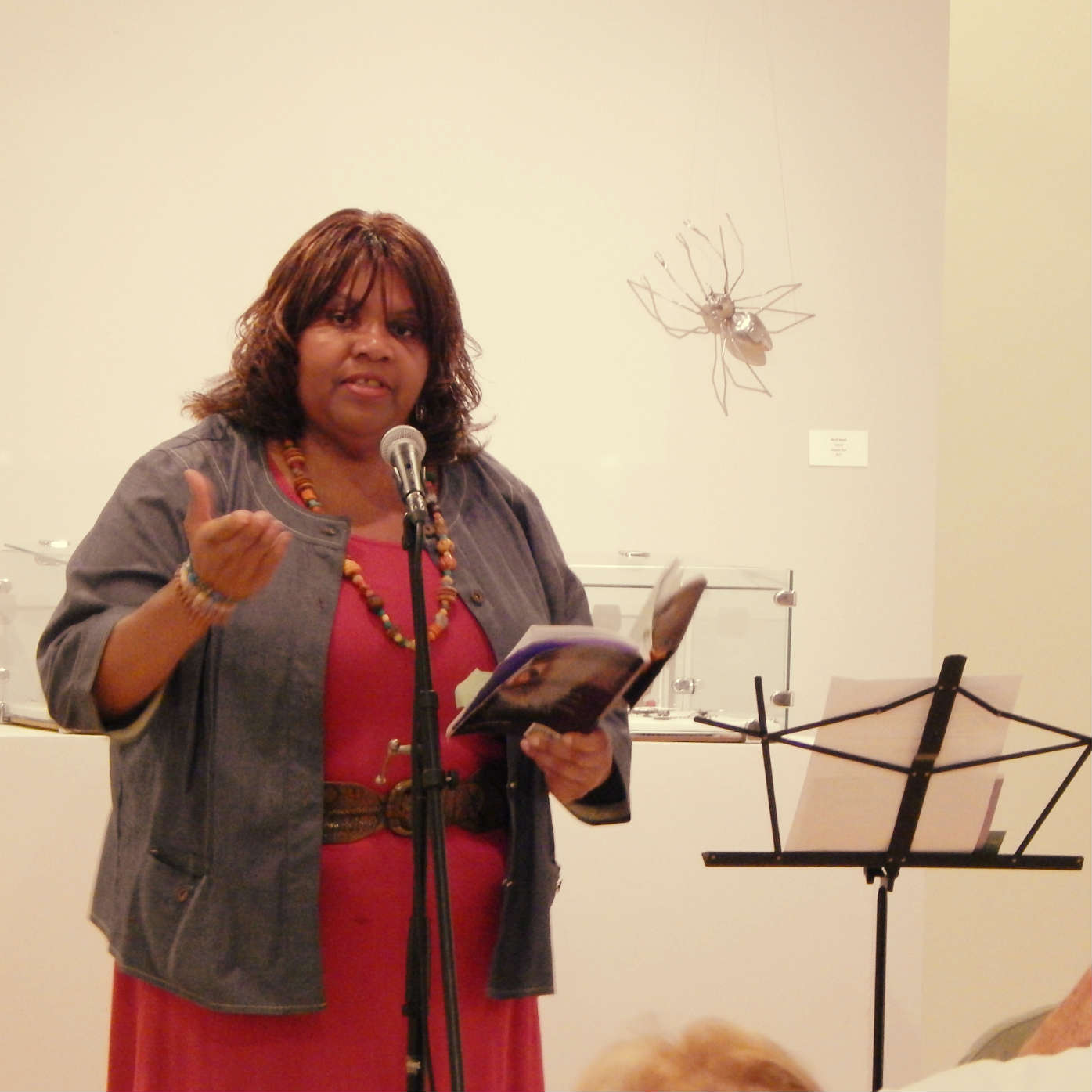
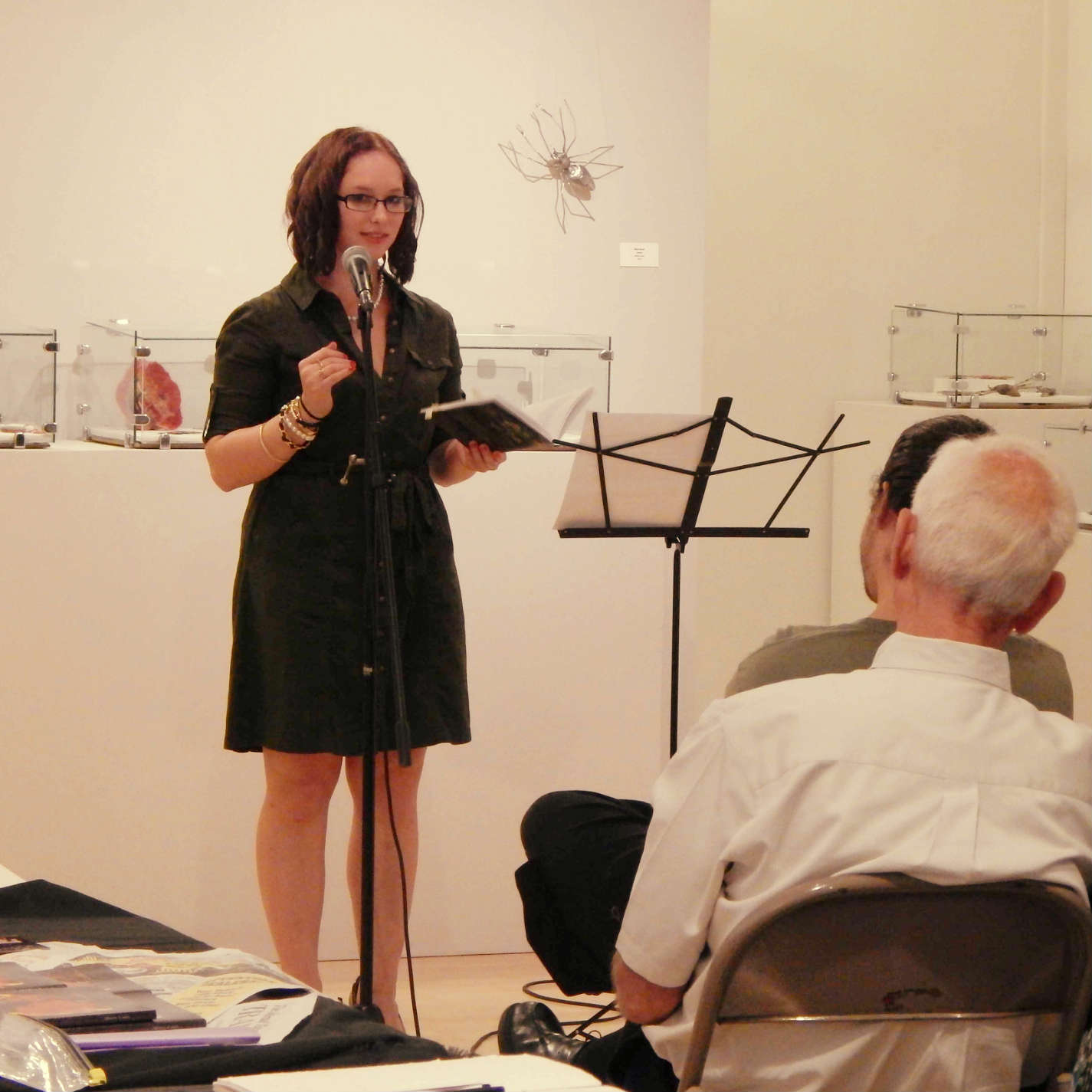
Last night I had the opportunity to read some recent, unpublished poems at the Grassroots open mic in Racine. That was the first time I have read at the Racine Arts Council ArtSpace Gallery (last summer I read some old poems at a Grassroots open mic at George’s Tavern). The poems seemed well received by at least a few people who talked to me at the end of the evening.
There was a time in my life when I used to read my work at open mics and other gigs at least once or twice a week. But those were different times and in a place far from here. Yet, the exercise of public speaking/reading returned quickly. There was fear in my mind that those skills had atrophied.
I will be reading at Woodland Pattern Book Center’s 22nd Annual Poetry Marathon & Benefit. It is a fundraising event. Your support is appreciated. It will be my second time reading at Woodland Pattern. For those interested attending and supporting the event, I will be reading on January 30th at 9 p.m. with a group of other poets — more details on that coming soon. If you would like to sponsor my reading, feel free to leave a note in the comments section or email me.
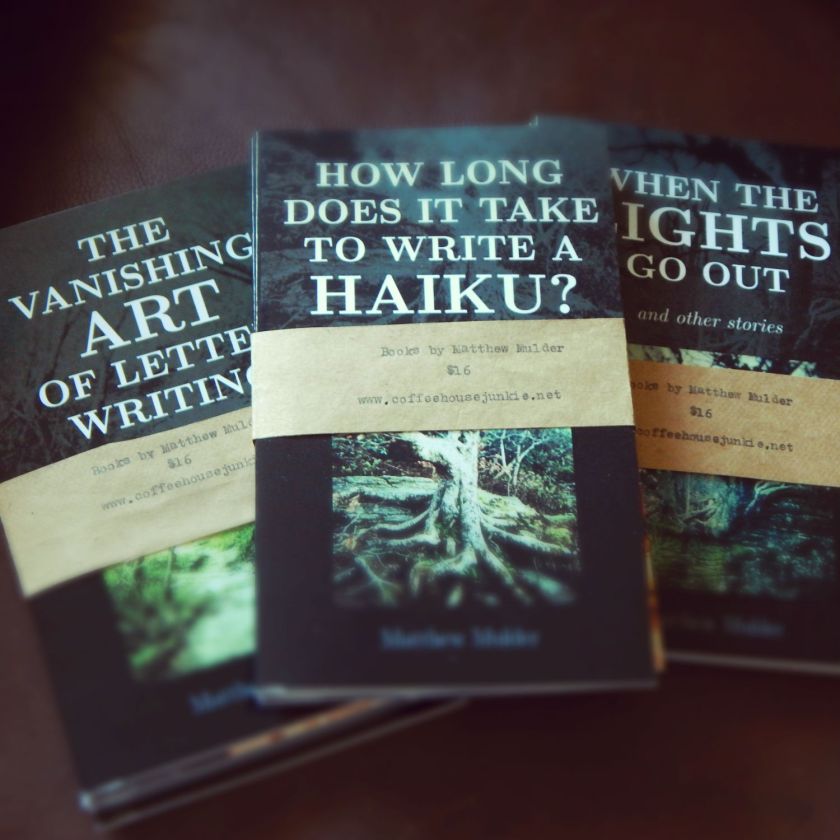
Who doesn’t like a deal? This weekend only at the Racine & Kenosha Authors Book Fair (Saturday, May 23, 2015, 2-5 p.m., Rhode Center for The Arts), you can purchase copies of my books for special book fair price: four books for $16. Limited quantities are available. So come early. See you there.
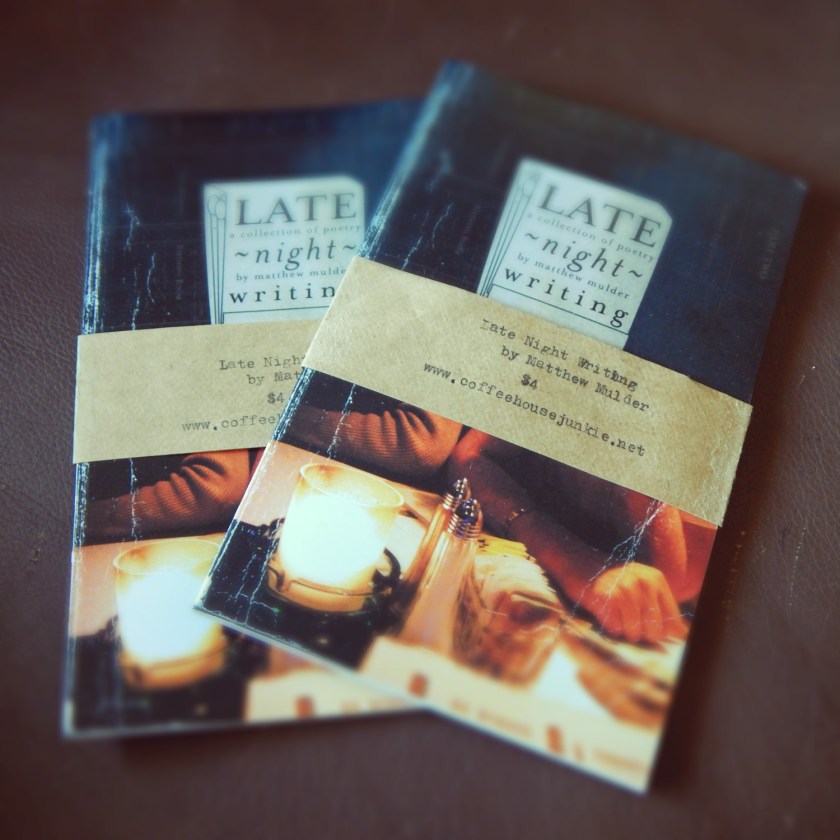
Late Night Writing is now in its third printing and the new edition features a foreword by the poet Pasckie Pascua. Copies of Late Night Writing will be available the Racine & Kenosha Authors Book Fair is this weekend, Saturday, May 23, 2015 at Rhode Center for The Arts. A special book fair price makes it very affordable to purchase and I will personally sign your copy (and if you ask nicely, I may even add a quick drawing/sketch).
Also, special thanks to Folk Angel for permission to use “O Little Town Of Bethlehem” from their album Glad Tidings – Christmas Songs, Vol. 4. If you are looking for some great Christmas records, check out their website, FolkAngle.com. They are a Texas band that performs rearrangements of traditional Christmas songs. And I just found out that their latest album drops today! Right now they are offering a sale on the first five albums (42 songs) for $10 (details here).
Also, special thanks to Folk Angel for permission to use “God Rest Ye Merry Gentlemen” from their album Comfort & Joy – Christmas Songs, Vol. 3. If you are looking for some great Christmas records, check out their website, FolkAngle.com. They are a Texas band that performs rearrangements of traditional Christmas songs. And I just found out that their latest album drops today! Right now they are offering a sale on the first five albums (42 songs) for $10 (details here).
During the last couple years one of the most popular blog posts written is about Advent poetry. So, as a special treat (to you, friends, readers and listeners), I have produced a series of audio podcasts featuring some of those poems and related literature.
The first of this new series of podcasts publishes this weekend. Hope you enjoy these special edition broadcasts from the Coffee Den!
All the words that I utter,
And all the words that I write,
Must spread out their wings untiring,
And never rest in their flight,
Till they come where your sad, sad heart is,
And sing to you in the night,
Beyond where the waters are moving,
Storm-darken’d or starry bright.
— William Butler Yeats, “Where My Books Go” (via bookoasis)
As mentioned earlier this week, here is a re-release of episode 12 of the Coffeehouse Junkie audio podcast.
The Flood Fine Arts Center in Asheville, North Carolina was the home to poetry writing workshops I directed. One of the six-week workshops was called “Coffee at Albiani’s” and featured a syllabus and writing exercises. This episode features an essay from the syllabus entitled “The Echo” and two poems that were discussed during one of the sessions of the poetry writing workshop.
If you have a question or request after listening to this episode please leave it in the comment section of this blog post and I will address it in the upcoming episode 15.
One final note: Episode 13 will be re-released early next week and episode 14 the end of next week. Thanks for listening!
What do you think about when you see a stack of books? In this short collection of stories you will also learn what a creative director thinks of when he sees a stack of books. Who is the audience for your poems? Is possible to write in your sleep, or not?
Over the weekend, an editor made a comment on Facebook that got me thinking about the question, how did you come to poetry?
My response is not an academic reply. The mechanics of poetry make the art good and great. But the best way to ruin poetry for young minds or new readers, is to have people study the architecture of a poem–its meter, rhyme, enjambment, stanzas, etc. Is this the way you learn about a new home? When you enter a friend’s home for the first time, do you inquire as to house’s foundation (is it a slab foundation?), framing (stick frame or post and beam?) or roof (you get the point)? So why do educators insist on destroying poetry for young readers? Make the home inviting. Make poetry inviting.
As a poetry reader, I approach a poem (or body of poems) as I would a new home of a friend I just met. I enter the door, look at the paintings on the wall, run my fingers along the spines of the books on the shelf, scan over the vinyl collection beside the stereo and sit on the futon near the front window. This is how to see what the poet sees through the window of the poem. This is when I see what the poet says about love, injustice or various other subjects and topics.
Not all poems are created equal. Sometimes I get the impression that someone or something is shouting at me from an open door. I tend to quicken my steps along the street and find a more inviting home–a more inviting poem.
Poetry is not something I studied in school. There were, of course, the required literature classes, and some teachers that opened the landscape of great poetry and prose. But for me, someone left the back door to the house of poetry open and I slipped in to explore. A house doesn’t seem so intimidating or formal when you enter, casually, from the backdoor.
So, you write poems. Maybe you read your poems at a local bookstore, music venue or coffeeshop at a monthly or weekly open mic. And maybe you even sign up for a writing workshop and the teacher hosts a public reading at a fine art center or library at the conclusion of the course. But do you submit your poetry for publication?
Last month I submitted over 50 poems for publication. So far I’ve receive quite a few reject letters. Some replies were so quick I wonder if the editor read the submission. A week after I submitted poems to one editor I received this:
“I enjoyed reading your poems but I’m unable to use them…”
A day later I received this from a different editor:
“Thank you for your recent submission…. This group of poems wasn’t right for us, but we’re grateful for the opportunity to consider your work…”
These replies are courteous, non-confrontational and sterile. Last weekend I received my favorite rejection letter so far. It reads,
“We sincerely appreciate your interest … and are very glad you are getting your pieces published…. we wish you the best of luck in your continued writing. Never give up on what your high school literature teacher told you!”
Why do I like that rejection letter? Here’s three reasons:
The editor actually read the cover letter. Not just the first few lines of the cover letter, but all the way to the third paragraph. You see, buried in the third paragraph of my cover letter is an homage to an inspirational high school literature teacher.
Clearly it is not an automated reply to a submission for publication.
The way the letter is crafted is a sandwich. By that I mean, the letter opens positively, nicely rejects the submission with two reasons and concludes with a personal and positive note.
Literary journal editors should take note of this rejection letter. It is a good model to follow.
If you submit your poetry for publication, I am interested to learn how it is going for you. If you don’t submit your poems for publication, I’d like to know why.
More than 50 poems were sent to publishers in January. Encouraged by another poet who submits somewhere in the neighborhood of 60 poems a month, I thought it would be a good discipline as well. It’s exhausting as well.
A few years ago, I was encourage not to post my poems on this blog (or Facebook), because a lot of small press publishers consider those poems “published.” So, I’ve been writing offline and sharing the new poems at private salons, a poetry festival and with friends. But I have not pursued publication until this year.
Talking with Al Maginnes after his recent reading at Malaprop’s, he told me how is first poetry submission was accepted immediately. Encouraged by this, he submitted more poetry to publishers. He said it was years before anything else was published.
So far, two publishers replied with rejection notices. That’s alright. I will submit those poems to other publishers.
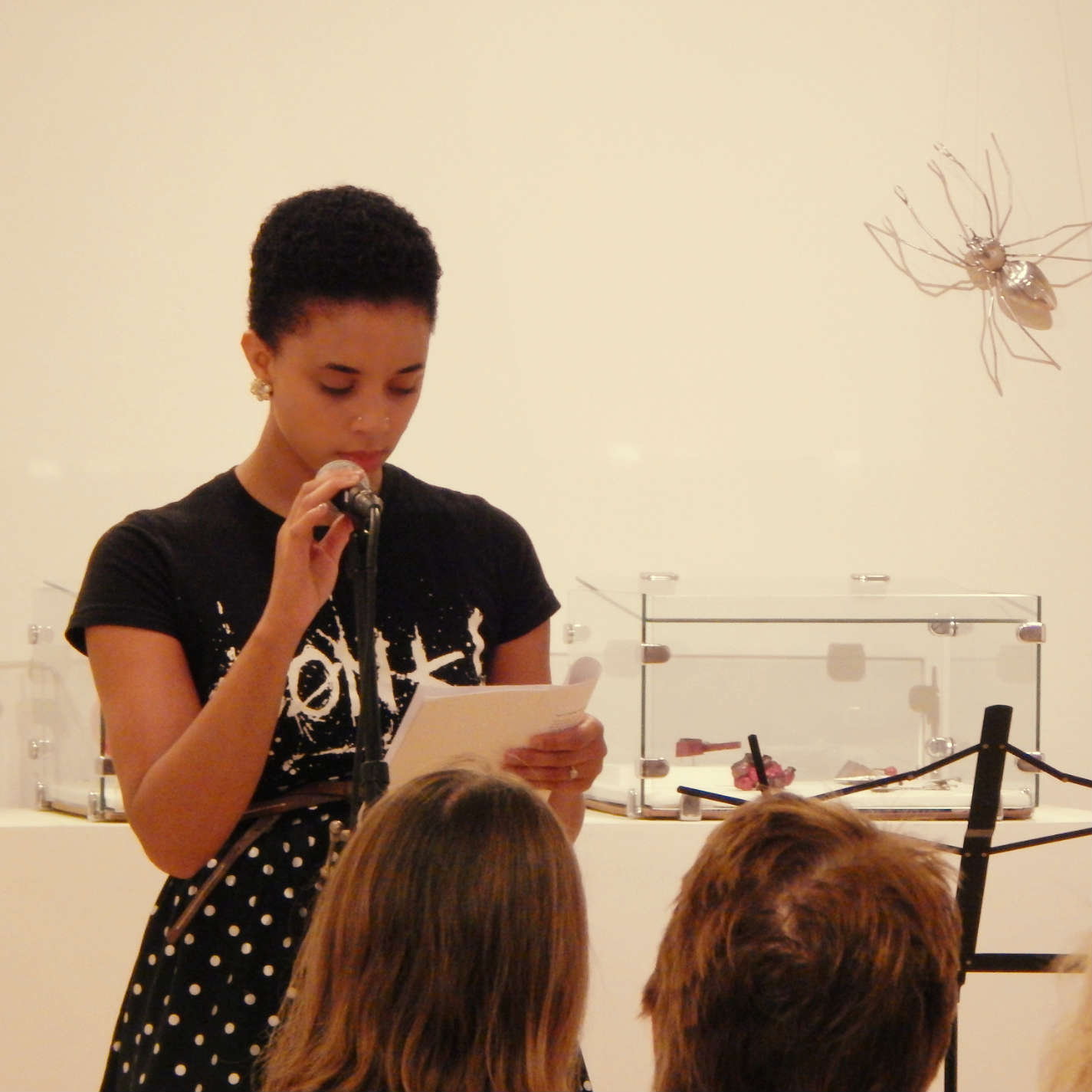
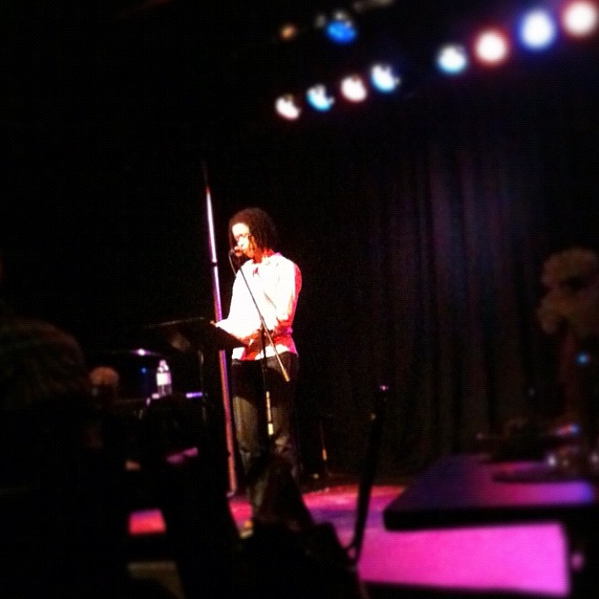
Evie Shockley reading at The Altamont Theater, Asheville, NC
If it is possible to be drunk on poetry, than I am still sobering up from last night’s event Poetry at the Altamont featuring Evie Shockley. It was quite a special night as Evie Shockley read selections from the new black and a half-red sea as well as some new poems in progress.
Other highlights include poems read by notable poets including Lee Ann Brown, Jeff Davis (who also hosted the event), Eric Steineger, Caleb Beissert and many others whom I have forgotten there names, but not their words. There were verses read about five drinks at a bar with reflections of a homeless man in a cardboard box home and another poem about bees and honey and lazy hippies squatting in someone’s home all summer.
I also read some poems last night. Earlier in that day I had mailed off a manuscript to a publisher and had intended to read selections from that manuscript, but I changed up what I read. I can’t tell you what I read. You’ll have to ask someone who was there last night at The Altamont.
It was such a pleasure to join this gathering of poets and share works in progress in sort of literary laboratory. Looking forward to the next gathering.
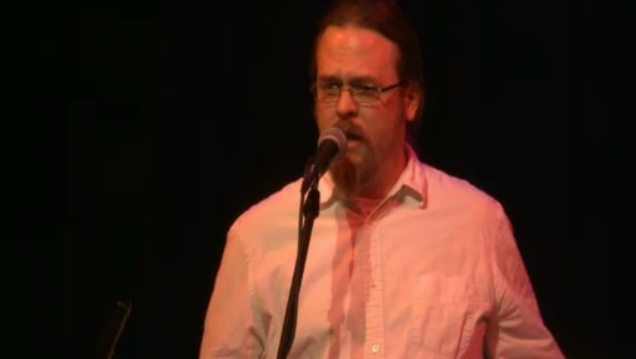
Asheville Wordfest – Reading at The Altamont Theatre, May 4, 2012
It was truly an honor to be invited to read a few poems at this year’s Asheville Wordfest. When I received the invitation I thought it was a mistake. So, I direct messaged the director using Twitter saying: “my twitter acct is wonky today. i received something from you re: wordfest… how can i help?” Previously, I had helped with audio during a previous Wordfest featuring the poet Li-young Lee. She direct messaged me on Twitter with a note of confirmation. So, I began selecting poems for the event.
Since I haven’t read my poetry publicly in more than a year, I was a bit anxious about the invitation to read at this year’s Wordfest. Last year was a busy year of readings at bookstores, [1] a literary salon, [2] and a featured guest at the Mountain Xpress poetry show. [3] Then employment for me became tricky and I endured the challenges of a transition to a new job, lay off, unemployment, and another job transition with a three-hour round trip commute. I kept writing new poems, but the new out-of-state job prevented me from participating in the active literary scene here in Asheville.
There were more than a hundred new poems I wrote last year to consider for the Asheville Wordfest poetry reading. I selected four or five new poems, but I didn’t feel confident enough in their craftsmanship to read publicly. One manuscript I have been developing for awhile had the strongest work that best fit this year’s Wordfest theme, “HOME: Place and Planet.” I started it when I took a writing workshop taught by Ashveille Wordfest Director, Laura Hope-Gill, a few years ago.
Two practices help me decide what poems to read. First, it is my practice to put a poetry manuscript in a presentation book with sheet protectors. That way pages don’t fall to the floor during a reading. You can usually purchase presentation books of that nature at office supply stores. I select a variety of poems on various subjects or themes. Further, it is my practice at an actual poetry reading featuring multiple poets to listen closely to the other poets. While the reading takes place, I select poems that speak to other poets’ work as a way to have a literary conversation. So, I brought four working manuscripts hoping that I might find a poem that might play off a poem read by Ronald Reginald King, DeWayne Barton, and Katherine Soniat.
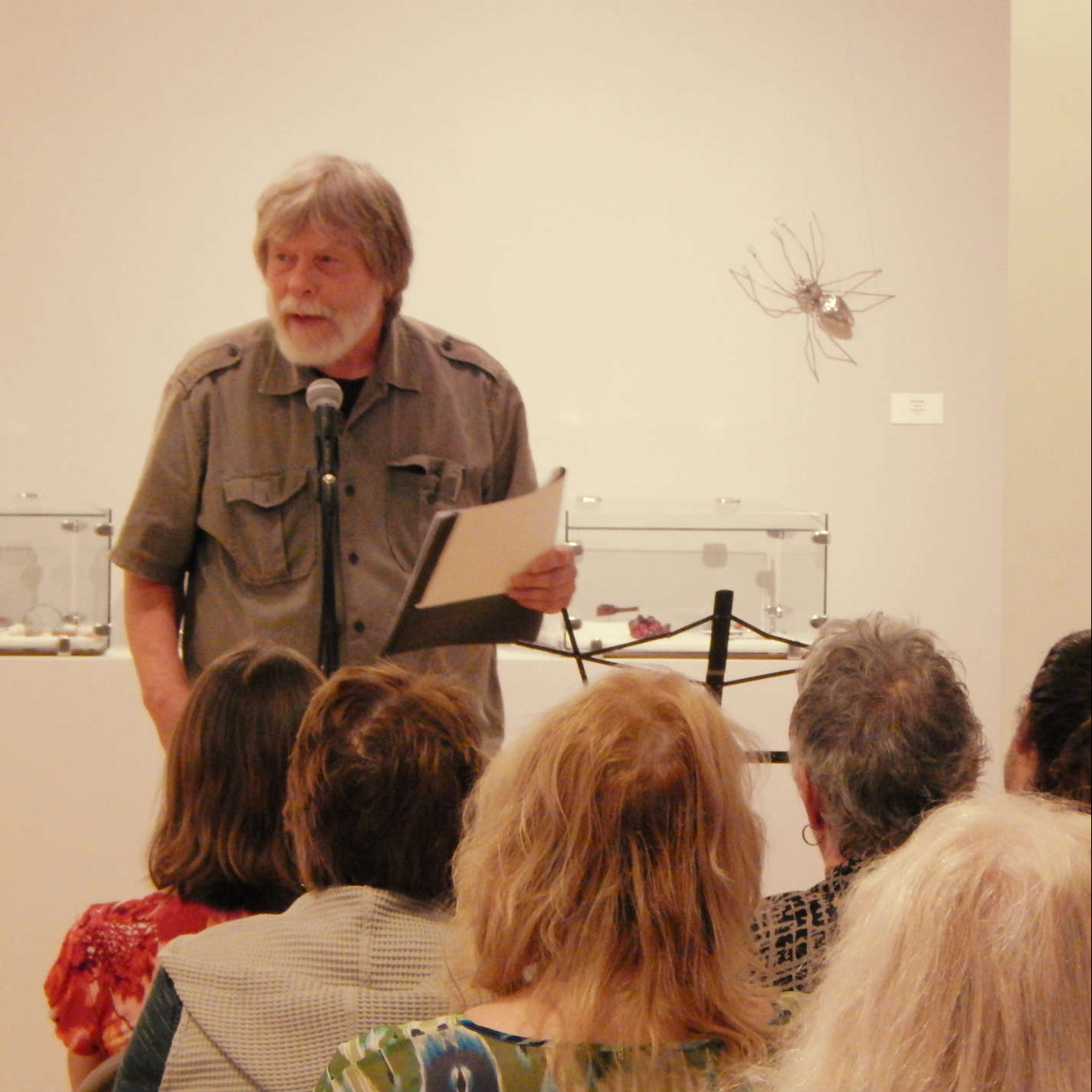
As I walked to the podium after a very generous introduction by Laura Hope-Gill, I still hadn’t decided what poem would complete my reading. I knew the poem I would lead off with and I knew the one to follow, but the third and final poems I hadn’t quite decided. Improvisation is something I am developing in public readings, because each night the audience is different, with individual needs, interests and mood. A bar room poem might work in one setting and audience, but not work another night with a different audience. So, after I clumsily introduced myself, I knew by the time I finished reading the second poem where the narrative of the poem selection would lead. For better or worse, the reading was videocast and a recording is available. Here’s a link to the video [link here].
When I sat down next to my wife after completing my reading, I noticed a couple mentions on Twitter regarding the live videocast. One person [4] tweeted, “Goosebumps: poem dedicated to Jenny.”
It’s less than two hours before the event and I find myself pacing the house with loose leaf pages of poems wondering if I’ve chosen the correct poems for tonight. I’ve been preparing for tonight’s reading all week. Reading poems I’ve written (and avoiding making additional edits). Selecting the poems I plan to bring to tonight’s reading at The Altamont Theater. I’ll read at the Asheville Wordfest event Voices of the City alongside Katherine Soniat, DeWayne Barton, Ronald Reginald King, Ekua Adisa and Roberto Hess. But I can’t help wonder, what do these fine poets do before a poetry reading? What rituals do they observe the day before an event like tonight?
Why is it so difficult to find well-written Advent poems? Last year I posted a few poems on the theme of Advent. It was a project that was more challenging than I anticipated. I learned that there is a wealth of seasonal poems including Christmas or winter related themes and populated with snowflakes, elves, reindeer, snowmen, chestnuts, and other such nostalgia. Also, I discovered many religious poems that are too horrid to post. Maybe ‘horrid’ is too strong of a word, but it did concern me that these religious poems were so badly composed that I almost abandoned the project. Suffice it to say, I did find a few good poems to mark the season of Advent.
If you are of a Christian liturgical or orthodox tradition you already know that Sunday marks the fourth Sunday of Advent. [1] This Sunday I will post an Advent poem a day until Christmas Day. Hope you enjoy the selections, and feel free to add suggestions in the comments section of the blog.
NOTES: [1] November 27 – First Sunday of Advent, December 4 – Second Sunday of Advent, December 11 – Third Sunday of Advent, December 18 – Fourth Sunday of Advent
Coffeehouse Junkie Podcast: An excerpt from Gregory Orr’s essay “Four Temperaments and the Forms of Poetry” will be read on today’s podcast plus an short poem.

 Caleb Beissert is a poet, translator and musician. His published work appears in International Poetry Review, Tar River Poetry, Asheville Poetry Review and Beatitude: Golden Anniversary, 1959-2009.




 Coffeehouse Junkie