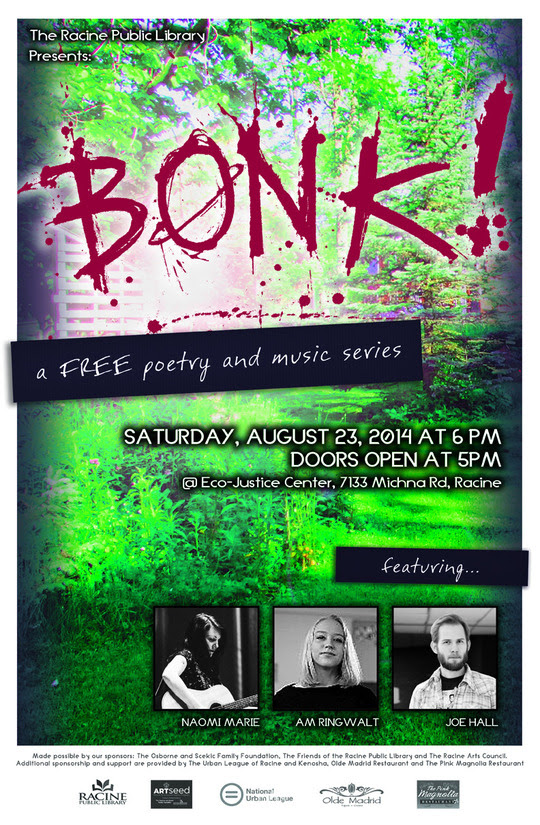
Racine Public Library presents: BONK! 71

From an email about the event:
unnamed

BONK! 71
SATURDAY, AUGUST 23, 2014 
ECO-JUSTICE CENTER
7133 MICHNA ROAD, 
RACINE, WI
6PM (doors open 5:00!)
FEATURING:
AM RINGWALT is a writer and musician (Anne Malin) from Racine, Wisconsin and currently studying in Boston, Massachusetts. Most recently, her words have appeared in:  “Whole Beast Rag;” “DUM DUM Zine: Punks and Scholars;” “The Interlochen Review;” and “BROWN GOD.” Last year, she was a YoungArts finalist in fiction and a US Presidential Scholar in the Arts semi-finalist.  Ringwalt’s debut chapbook entitled “Like Cleopatra” is forthcoming from Dancing Girl Press.  More information about her work can be found at annemalinringwalt.tumblr.com
JOE HALL is the author of three books of poetry: “Pigafetta Is My Wife” (Black Ocean 2010), “The Devotional Poems” (Black Ocean 2013), and, in collaboration with Chad Hardy, “The Container Store” Volumes I & II (SpringGun 2012). He currently resides with fellow poet Cheryl Quimba in Buffalo, New York where he is studying commons, excess, and waste flows.  Learn more about his work at joehalljoehall.wordpress.com
NAOMI MARIE is a born and bred Midwestern minstrel of sorts. Transplanted from the rich musical culture of the twin cities, she has discovered a fresh folk sound and form from the third coast of Lake Michigan. Having recently released her first full length, Primary Colors, in May of 2014, she sets to connect with friends, fans and artists in continued pursuit of her music’s authentic expressions.  For more information about her music and schedule go to naomimariemusic.org

[Podcast] The Vanishing Art of Letter Writing

06 June 2014 Podcast Cover

Listen now:


When was the last time your wrote a letter? Not an email, but a handwritten letter with pen, paper, envelope and postage. Learn about a legacy of letters from a WWII soldier discovered by his son. Also, a short story about poetry, jazz and a rainy afternoon.

This show is unofficially sponsored by Circa Celeste — a cafe located in historic downtown Racine, Wisconsin. Check them out at CircaCeleste.net.

Special thanks to John Hayes. He enjoys several musical incarnations from honky-tonk country to jazz to silent music scenes. His current incarnation involves old blues. Enjoy some of his music on his Bandpage.

Listen on:
PodOmatic: coffeehousejunkie.podomatic.com
SoundCloud: soundcloud.com/coffeehousejunkie

Or subscribe on:
RSS Feed: RSS Feed
iTunes: iTunes

[Podcast] When the lights go out

06 June 2014 Podcast Cover

Listen now:


A light breeze from the south carries echoes of a recent place in memory. In this episode, stories about creative space, laptop versus hand-writing and more.

It is warm enough to finally open the windows and let the Spring air fill the house. The first segment touches on that in a story titled “Creative Space.” Recently, the village where I currently live experienced the first tornado of the year. Everyone is fine. Thankfully, the only dangerous weather was thunder, hail, and rain. But it got me thinking of our culture’s dependency on electricity and technology. “When the lights go out” is the second segment. The third segment answers listeners’s question in “An audience of one.” The final segment for this episode is titled “Life is lived as a messy first draft.”

This episode’s unofficial sponsor is The Steaming Cup located in the beautiful downtown area of Waukesha, Wisconsin. For more details, visit TheSteamingCup.com.

Very special thanks to Lee Tyler Post for permission to use his song “Life Without Fences” in between segments. I first heard his music on The Great America Music Hour hosted by Jerry Jodice. Learn how to get any or all of Lee Tyler’s six studio albums on his website LeeTylerPost.com.

Listen on:
PodOmatic: coffeehousejunkie.podomatic.com
SoundCloud: soundcloud.com/coffeehousejunkie

Or subscribe on:
RSS Feed: RSS Feed
iTunes: iTunes


[Podcast] How long it takes to write a haiku?

08 May 2014 Podcast Cover

Welcome to the relaunch of the Coffeehouse Junkie audio podcast. A lot of things have happened during that time and there is much I plan to share with you, just not in this episode.

Yes, it is true. The last two years or so I have fasted from coffee. I almost had to rename this blog and audio podcast because of it. Thankfully, my sister introduced me to Maniac Coffee Roasting in Bellingham, Washington. Specifically, the Decaf Espresso Royale blend. Check them out at ManiacCoffeeRoasting.com. They are the unofficial sponsor of this episode. If you would like to officially sponsor an episode, email me at coffeehousejunkie [at] gmail [dot] com for details. Please include “podcast” in the subject line so that your email doesn’t end up in the spam folder.

Amy Annelle - A School Of Secret Dangers
Amy Annelle – A School of Secret Dangers

Very special thanks to Amy Annelle for granting permission to use her song “Will Try” between the segments. Years ago, the album A School of Secret Dangers introduced me to her work. If you like her song, check out Amy Annelle’s latest album The Cimarron Banks. Visit the website HighPlainsSigh.com for more info about her music or find her music on Apple iTunes.

Here’s what’s coming up in this episode:

  • How long does it take to write a haiku?
  • So many books, so little time
  • Keep Calm and Write Something
  • Last night, I fell asleep writing a poem


Listen here:


Or listen on:
PodOmatic: coffeehousejunkie.podomatic.com
SoundCloud: soundcloud.com/coffeehousejunkie


Acoustic music and poetry

If you were to match a musician with a poet for an evening of culture and entertainment, who would they be?

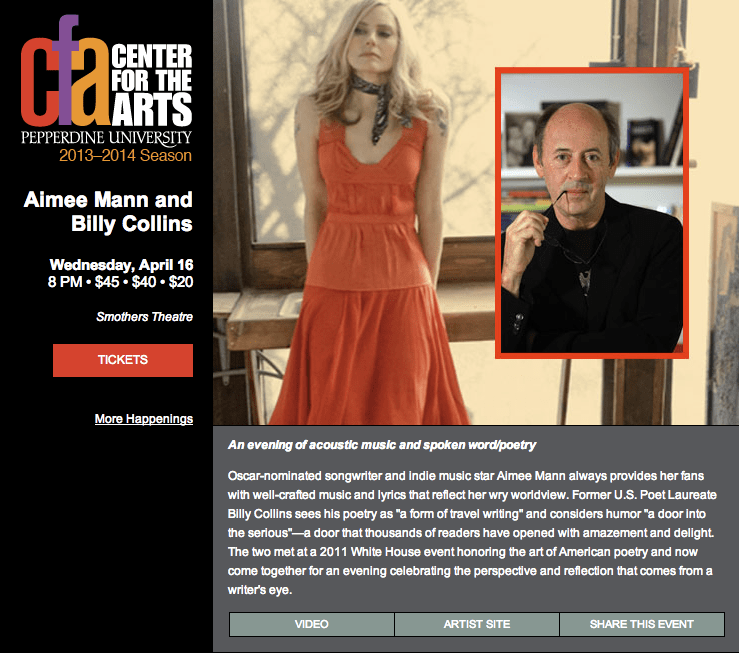
A month ago I noticed this ad:

An evening of acoustic music and spoken word/poetry at Pepperdine University
An evening of acoustic music and spoken word/poetry at Pepperdine University[1]
Who wouldn’t want to attend this event? Two great artists on one stage for one evening. Makes sense to me.

Acoustic music and poetry fit together. Nearly a decade ago, I participated at a bookstore café event with musicians.[2] It is something I really enjoyed doing. The marriage of poetry and music resonates with an audience—especially an audience who does not know that they might enjoy poetry.

A few years ago, the Rooftop Poets (somewhat legendary) roof garden book launch and poetry performance featured jazz to accompany an evening of poetry.[3]  Three poets and two musicians joined for a lively evening of poetry, music and light refreshments.

What about you? As a poet, who would you love to work with for an evening of acoustic music and poetry? I have my wish list. What about you?

NOTES: [1] An evening of acoustic music and spoken word/poetry
[2] Malaprop’s Music/Poetry Gig Meditations
[3] A poetry reading and jazz show on the Roof Garden of the Battery Park Hotel

[Podcast] Re-release of episode 13

As mentioned last week, here is a re-release of episode 13 of the Coffeehouse Junkie audio podcast. This episode features the essay “The Field” as well as two poems that are discussed in the fourth session of the poetry writing workshop I directed at the The Flood Fine Arts Center in Asheville, North Carolina.

As a side note, each poetry writing workshop I lead concluded with a class chapbook featuring the best of the students’ work and a poetry reading. Additionally, the essay featured in this podcast is abridged and will be released in an expanded version in a forthcoming book.

Here is: Episode 013

As always, I look forward to your feedback. Post comments, question and/or requests in the comment section of this blog post and I will address it in the upcoming episode 15. Episode 14 will be re-released later this week. Thanks for listening!

The return of the Coffeehouse Junkie audio podcast is coming soon

Many, many moons ago in a far distant place there used to be a Coffeehouse Junkie audio podcast. For professional reasons I had to place it on hiatus for an indefinite period of time. In, short, I launched and produced nearly 500 audio podcasts for a national news group earning nearly 800,000 downloads in a little more than two years. Since those professional obligations no longer exist, it is time to resume some Coffeehouse Junkie audio podcasting.

There will be some new features to the audio podcast.

  1. A few topics that seem to be popular on this blog include writing, poetry and publishing. Since I have years of experience in the publishing industry, I will feature some episodes on a behind-the-scenes look at publishing.
  2. Additionally, I plan to open up the request lines (to use an antiquated terrestrial radio expression) . If you have read something on this blog that you would like me to address, I will plan an episode around that topic. Please include your name, Twitter handle and request in the comment section of this blog post.

I will re-release the last three episodes of  the Coffeehouse Junkie audio podcast in the next week or so to prime the pump for the relaunch. The last episodes released featured essays and poems that were presented and discussed in a poetry writing workshop I taught at the Flood Fine Arts Center in Asheville, North Carolina. Episode 12 will be re-released later this week, episode 13 early next week and episode 14 the end of next week.

What did I write?

Block print Christmas card

What did I write that got some much traffic?

A few weeks ago I noticed that the traffic on my blog spiked due to a post I wrote a year ago: “Advent Poems (or the 12 days of Christmas poetry)”.[1] At first, I thought it was a fluke, but for weeks now many of you have visited this blog. Many thanks! And I hope the Advent Poems are a blessing and encouragement to you this year.

Also, feel free to look around and enjoy other poetry related blog posts.

NOTE:
[1] Advent Poems (or the 12 days of Christmas poetry)

Thanksgiving by Ralph Waldo Emerson

Thanksgiving
By Ralph Waldo Emerson

For each new morning with its light,
For rest and shelter of the night,
For health and food,
For love and friends,
For everything Thy goodness sends.

Day 8 of the November PAD Challenge

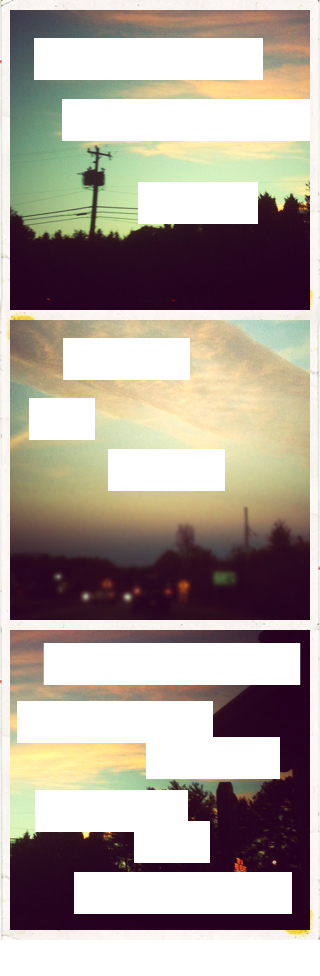
Blank Visual Poem

The Biltmore Coffee Traders new addition is now open for customers. Willie Nelson singing from the house sound system. Earlier, Van Morrison and Dave Matthews warmed up a chilly, windy but sunny sort of November day as patrons enjoyed gluten-free breakfast cookies and granola bars.

It is day eight of the November PAD (Poem-A-Day) Chapbook Challenge (Details are available on Writer’s Digest website.). Senior Content Editor of the Writer’s Digest Writing Community offers this writing prompt for today: “inanimate object poem.” I have not used the prompts for this challenge. Though I am keeping track of the prompts for later use.

For a  gift, I received a limited printing of book on Korean poetry forms. So, the poems composed so far for this challenge have run in a vein of Japanese and Korean inspired forms. Though, to be fair, most of the compositions are corruptions of the poetry forms.

How about you? How has your November PAD Challenge gone so far?

As a bonus, if you want to play along, fill in the blanks with a poem to accompany the images posted above. Next week, I’ll post what I placed in the blanks.

The November PAD challenge begins

Biltmore Coffee Traders

It is the first of November, often celebrated as All Saints’ Day. For me, the day started out with cloudy skies and a light drizzle as I walked to Biltmore Coffee Traders.

It is also the first day of the November PAD (Poem-A-Day) Chapbook Challenge (Details are available on Writer’s Digest website.). Senior Content Editor of the Writer’s Digest Writing Community, Robert Lee Brewer, offers this writing prompt: “write an appearing poem.”

It is not necessary to use a writing prompt for the challenge, but it is a helpful tool. How about you? Have you started composing your first poem for the challenge?

November PAD is almost here

Over two months of writing a poem a day

Anyone interested in the November PAD (Poem-A-Day) Chapbook Challenge? Details are available on Writer’s Digest website.

It has been awhile since I mentioned the writing exercise I often practice of writing 30 poems in 30 days. A couple of years ago I stopped posting poems on this blog under the advice of a published poet. Poems posted on blogs qualify as “published” and therefore are ineligible to be published in a literary journal or magazine.

So, I started writing poems for friends and others on a manual typewriter and posting the photos—like this short poem for a fellow poet, writer and friend: “Some days all you need.” Or this poem written for the wonderful staff at Dunkin Donuts who always know my order and have it ready for me before I get to the counter: “Never look a doughnut dealer in the eyes.” It is not that I wouldn’t like to get published in a literary journal or magazine, but I really enjoy the process of writing to a specific person or persons.

Due to unemployment followed by new employment challenges, the practice of using the manual typewriter to compose poems ceased due to circumstances I can not share at this point. But I kept composing and writing offline—analog, if you will. In lieu of a manual typewriter, I discovered an app awhile ago. There’s always an app for something, right? During the last month or so, I composed several poem sketches. In the next weeks, I shall share some of these visual poems. Tomorrow, the first one will be posted.

For the month of November I plan to compose a poem a day. Who is with me?

What poets wear

What Poets Wear

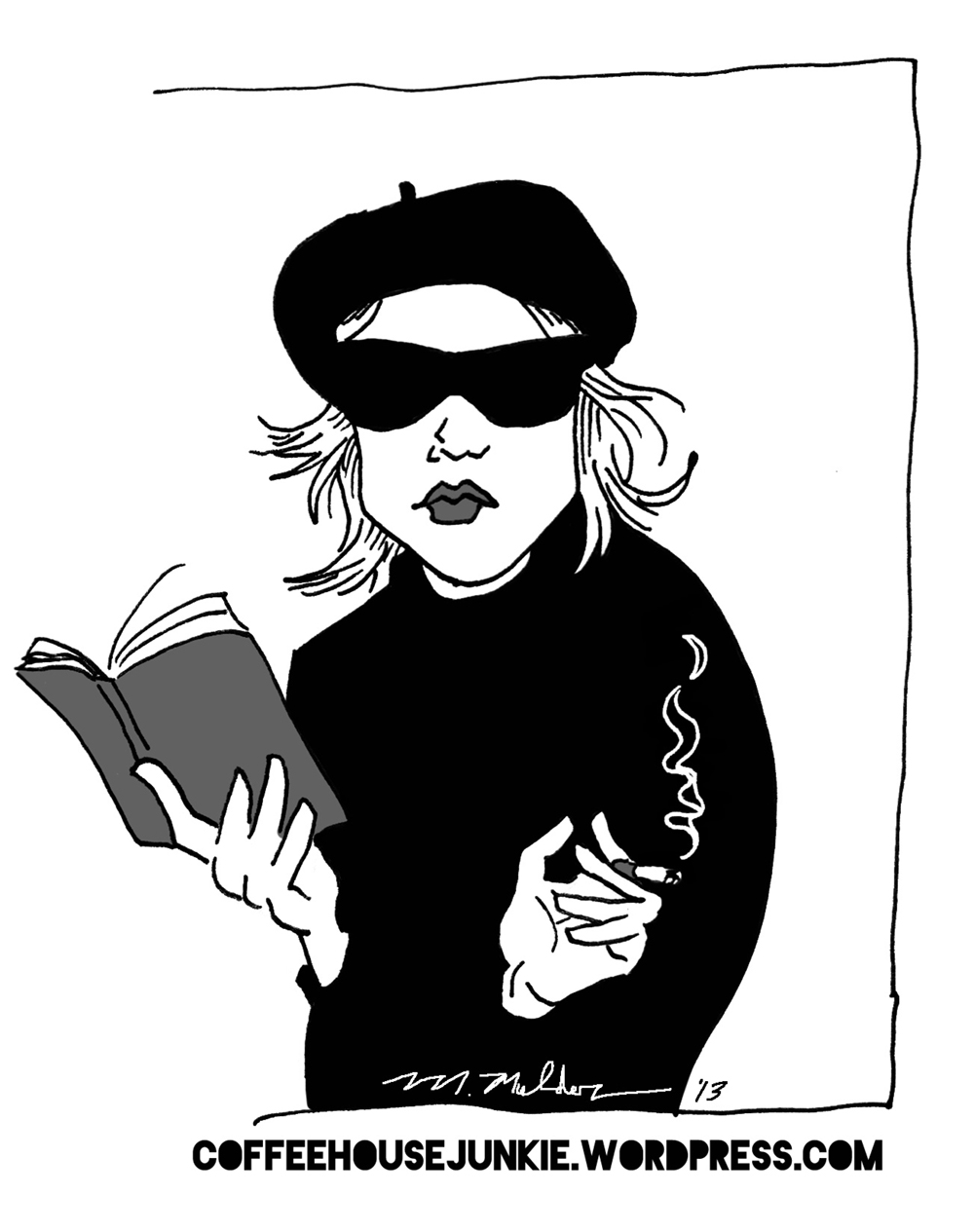
When you think of poets gathering together, what you see? What impression do you have of poets? Do all poets wear black turtlenecks, coordinating berets and dark sunglasses?

There appears to be a cultural impression of poets that promotes stereotype or mythos. Years ago I read a biography of a well established senior poet who was visited by a younger, celebrated poet of the next generation. The long-time partner of the senior poet observed that the younger poet was more enamored by the mythology surrounding the senior poet than the actual, published work of the senior poet. Similarly, our culture seems to have that perception of poets—they are more interesting to observe as an unusual creature of bizarre habits and deviant ways rather than an artist of lyric and verse.

Do you see that as well?

Another aspect to this impression informs young and/or aspiring poets that they need to act or behave in a certain manner because that is what culture dictates—that is how poets are supposed to act. If young/aspiring poets do not participate in the activity of cultural stereotypes, they tend to think that their craft is illegitimate and they will not be taken seriously for their poetry. Further, what impact will this have on the actual art created by young/aspiring poets? Will it change the subject matter of their work? And so on.

Has anyone else observed this?

This weekend I joined some local poets downtown. There were no black turtlenecks or berets worn. Someone did wear a pair of dark sunglasses. And no, it wasn’t me.

Found poem commemorating AVL 100TPC 2013

As promised last week, here is a found poem I constructed based on the poets who read at the Asheville 100 Thousand Poets for Change event.

Poem for 28 September, 2013

Do not wonder when I say it directly to your ear,[1]
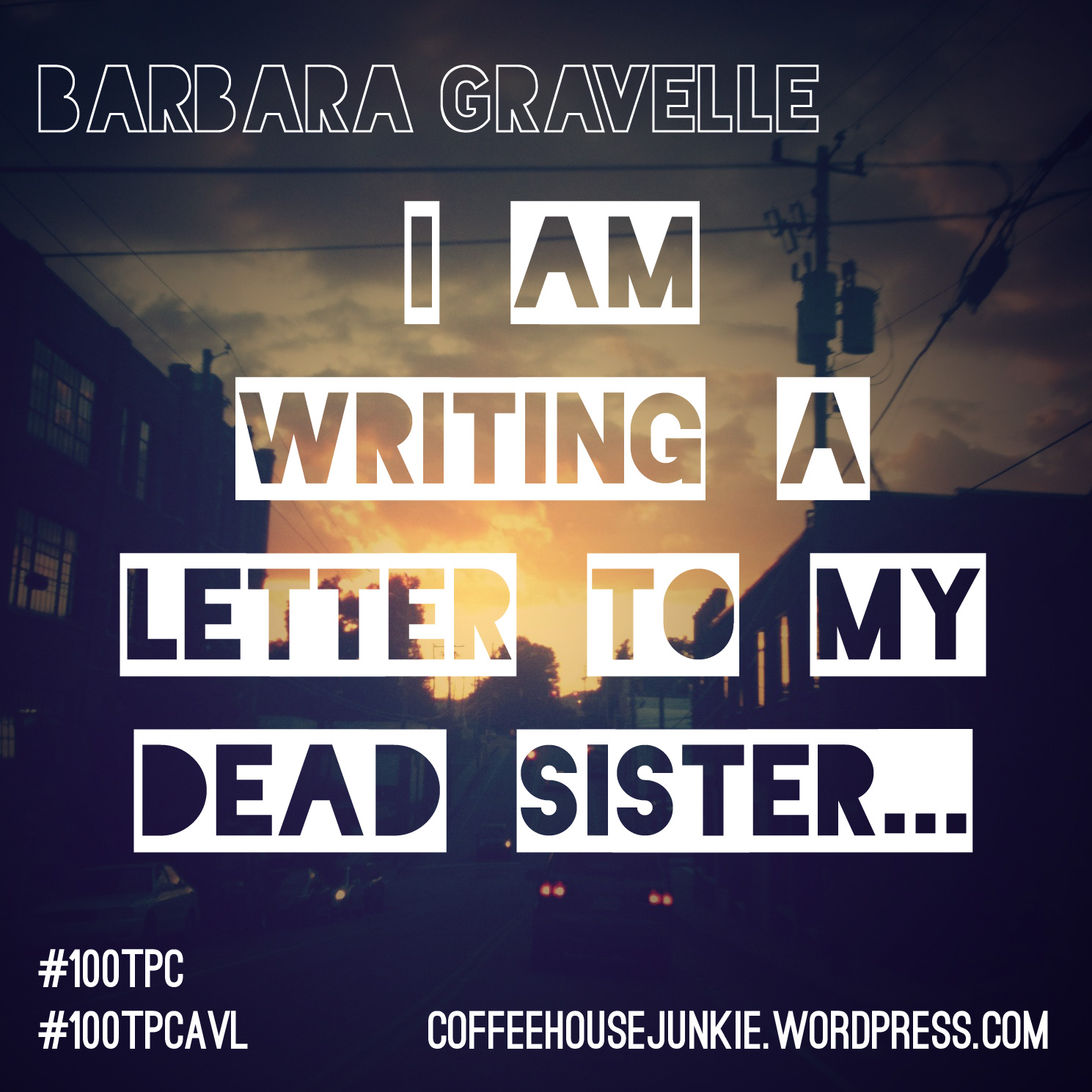
“I am writing a letter to my dead sister. . . “[2]

We anticipate the leap into freedom. [3]
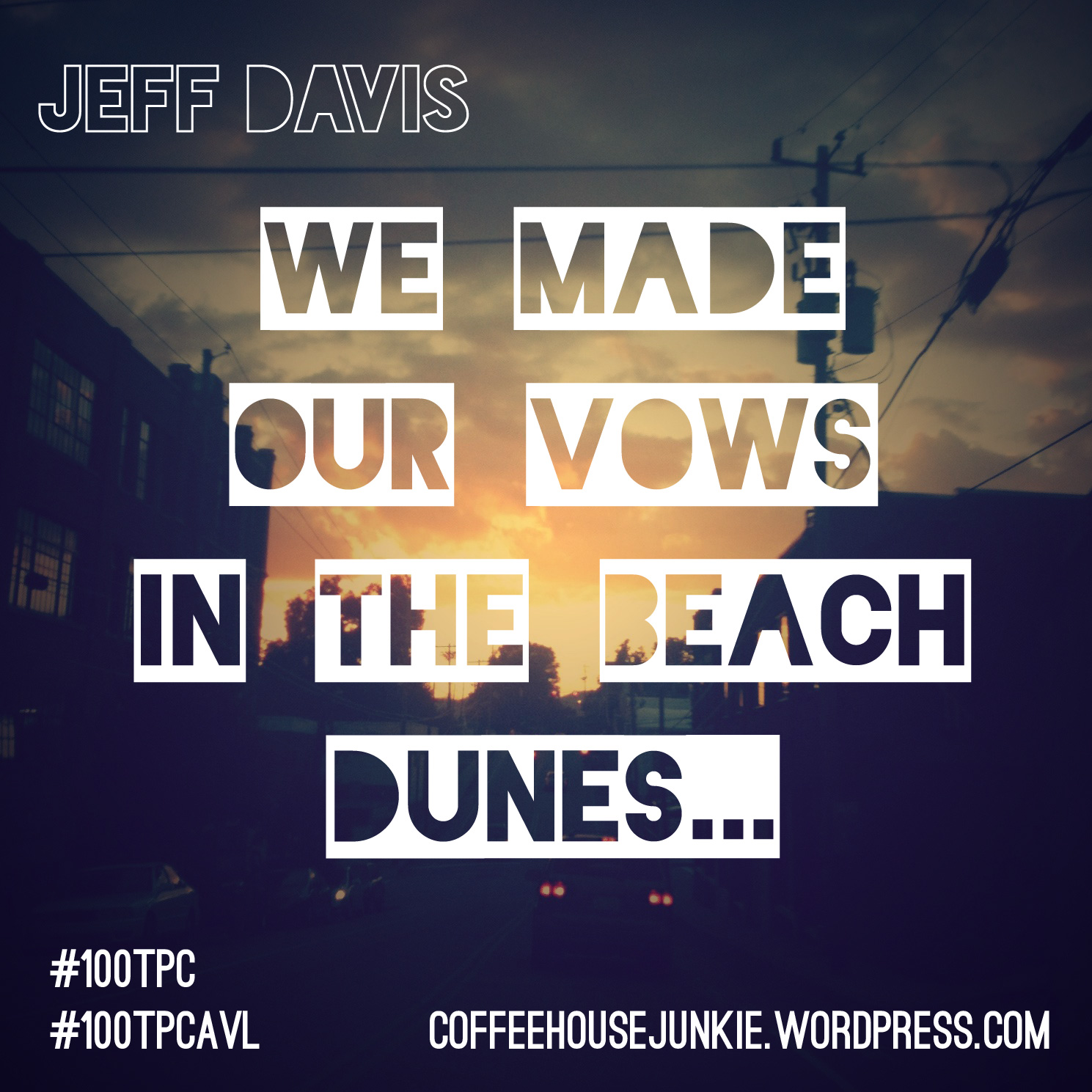
We make our vows in the beach dunes. [4]
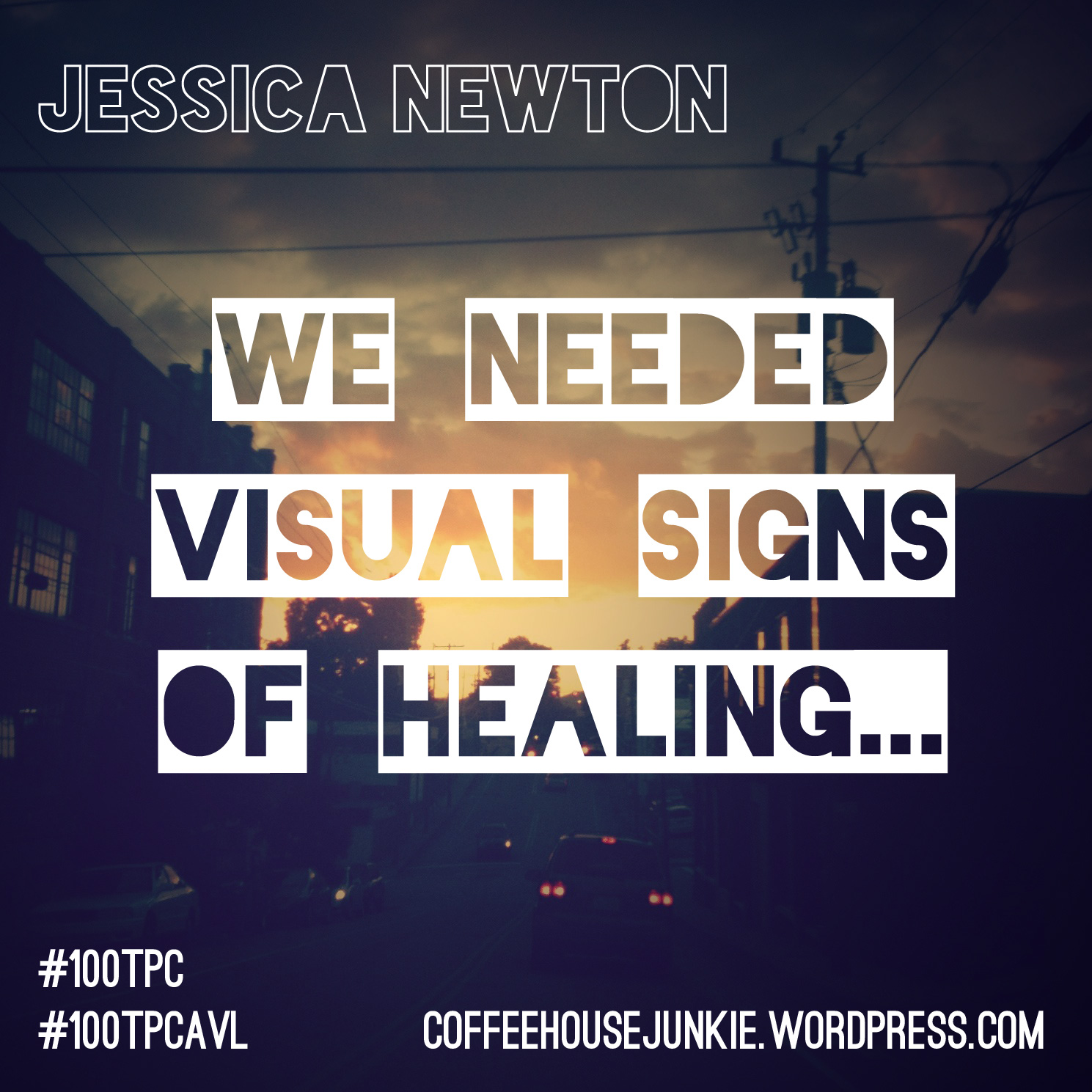
We need visual signs of healing. [5]

All that remains is the small few. . . [6]
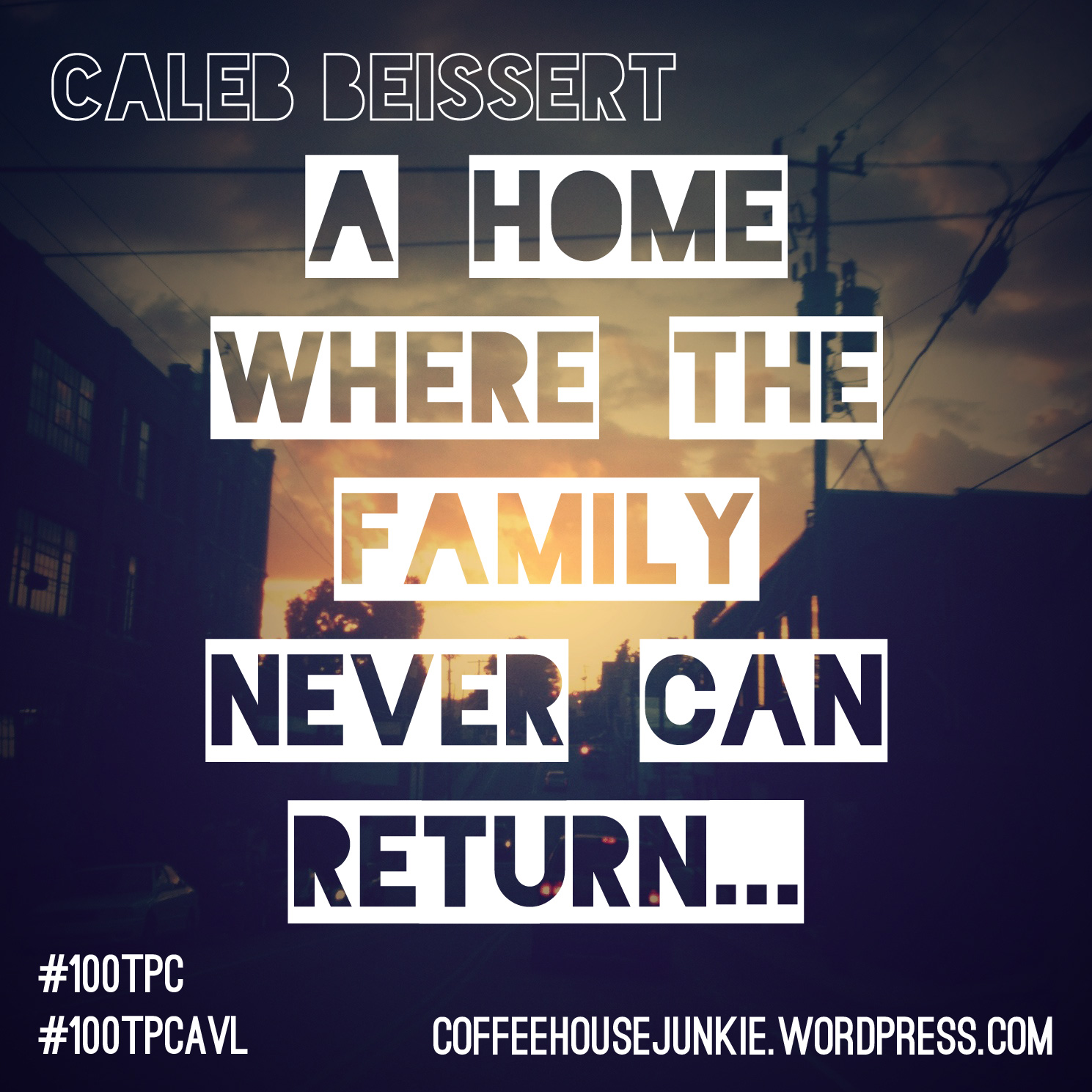
A home where the family never can return. [7]

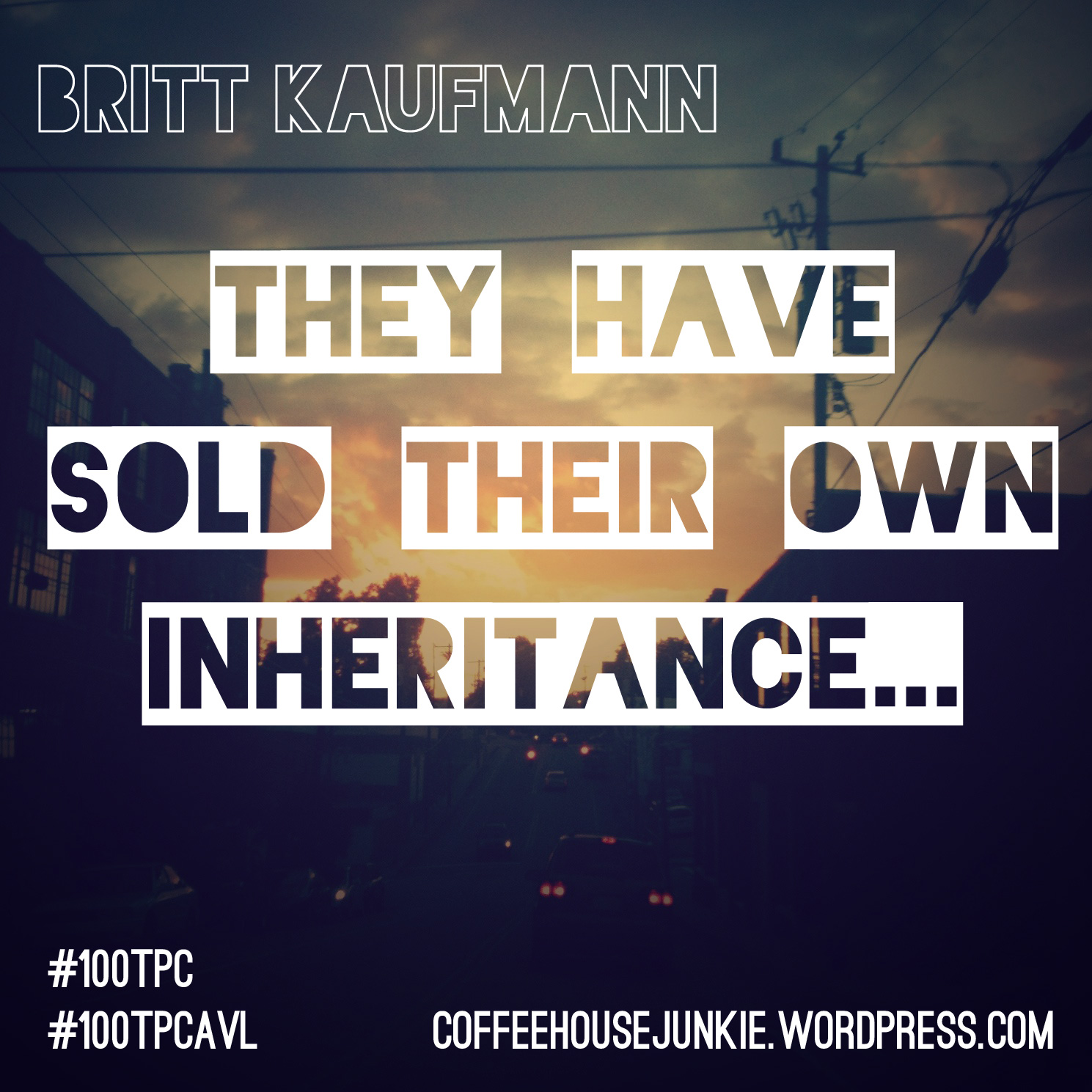
They sold their own inheritance. . . [8]
And must return to the center. . . to learn more. . . [9]
It is possible to have everything. . . or at least twenty dollars. . . [10]

NOTES: Each line in this found poem is from the following poets who read at the Asheville 100 Thousand Poets for Change event on September 28, 2013.

[1] Britt Kaufmann
[2] Barbara Gravelle
[3] Steve Brooks
[4] Jeff Davis
[5] Jessica Newton
[6] Jeff Davis
[7] Caleb Beissert
[8] Britt Kaufmann
[9] Jessica Newton
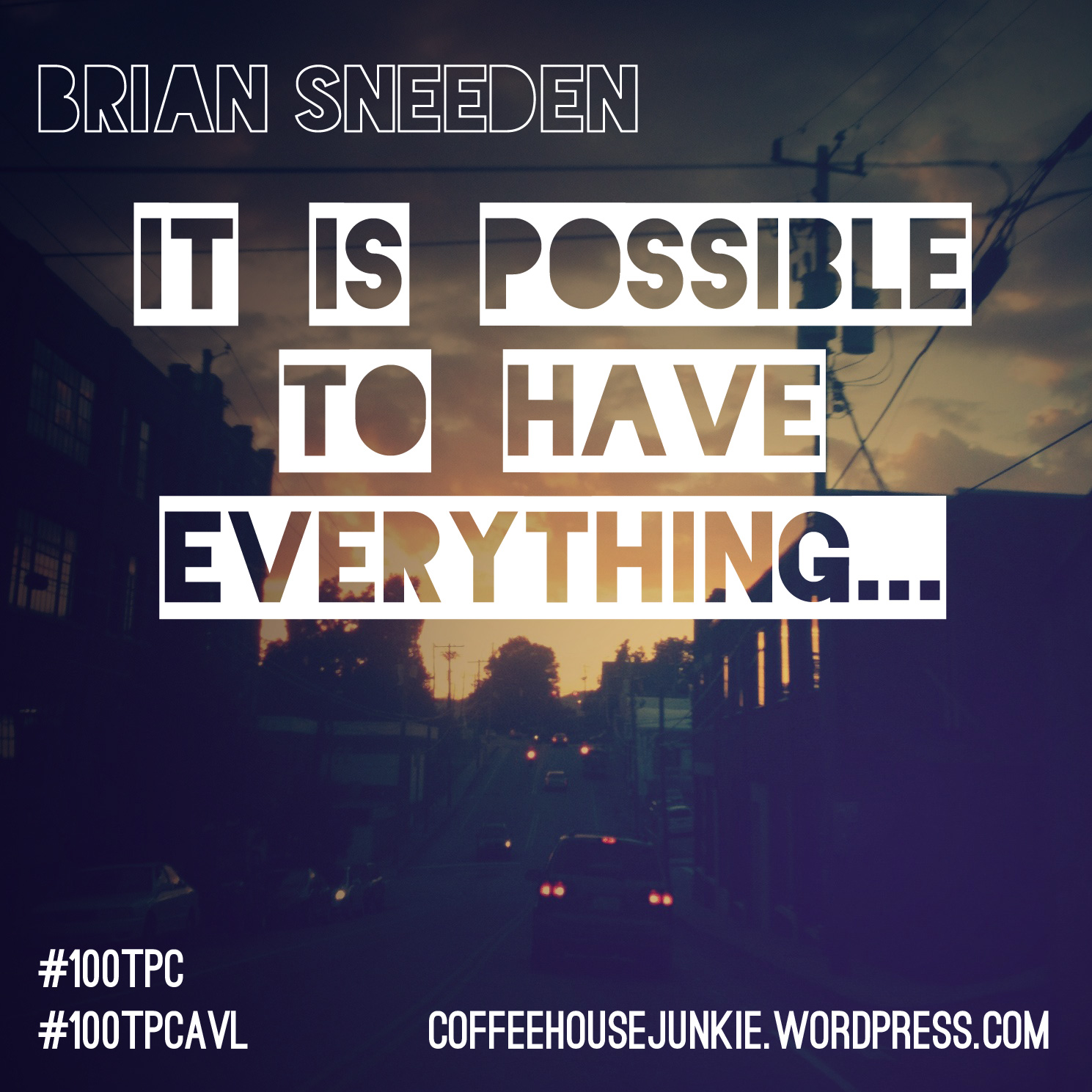
[10] Brian Sneeden

100TPC Quote Brian Sneeden

100TPC QUOTE Sneeden

From 100 Thousand Poets for Change Asheville, a quote from a poem by Brian Sneeden: “It is possible to have everything… or at least twenty dollars…”

100TPC Quote Britt Kaufmann

100TPC QUOTE Kaufmann

From 100 Thousand Poets for Change Asheville, a quote from a poem by Britt Kaufmann: “They have sold their own inheritance…”

100TPC Quote Caleb Beissert

100TPC QUOTE Beissert

From 100 Thousand Poets for Change Asheville, a quote from a poem by Caleb Beissert: “A home where the family never can return…”

100TPC Quote Jessica Newton

100TPC QUOTE Newton

From 100 Thousand Poets for Change Asheville, a quote from a poem by Jessica Newton: “We needed visual signs of healing…”

100TPC Quote Barbara Gravelle

100TPC QUOTE Gravelle

From 100 Thousand Poets for Change Asheville, a quote from a poem by Barbara Gravelle: “I am writing a letter to my dead sister… “

100TPC Quote Jeff Davis

100TPC QUOTE Davis

From 100 Thousand Poets for Change Asheville event last weekend, a quote from a poem Jeff Davis read: “We made our vows in the beach dunes…”

100TPC Quote Steve Brooks

100TPC QUOTE Brooks

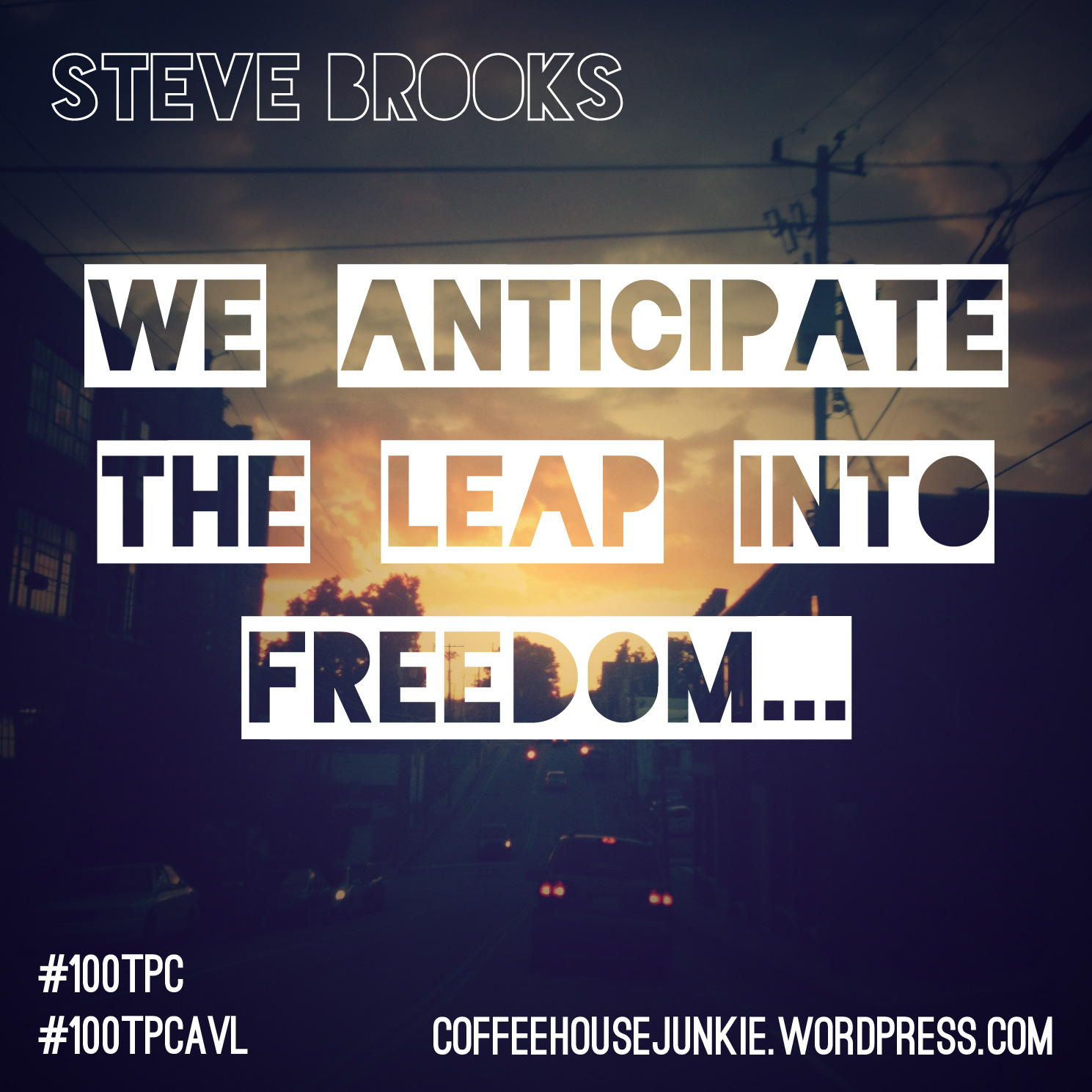
If you missed the 100 Thousand Poets for Change Asheville event last weekend, quotes from each poet will be featured here. The first quote is from a poem Steve Brooks read: “We anticipate the leap into freedom…”

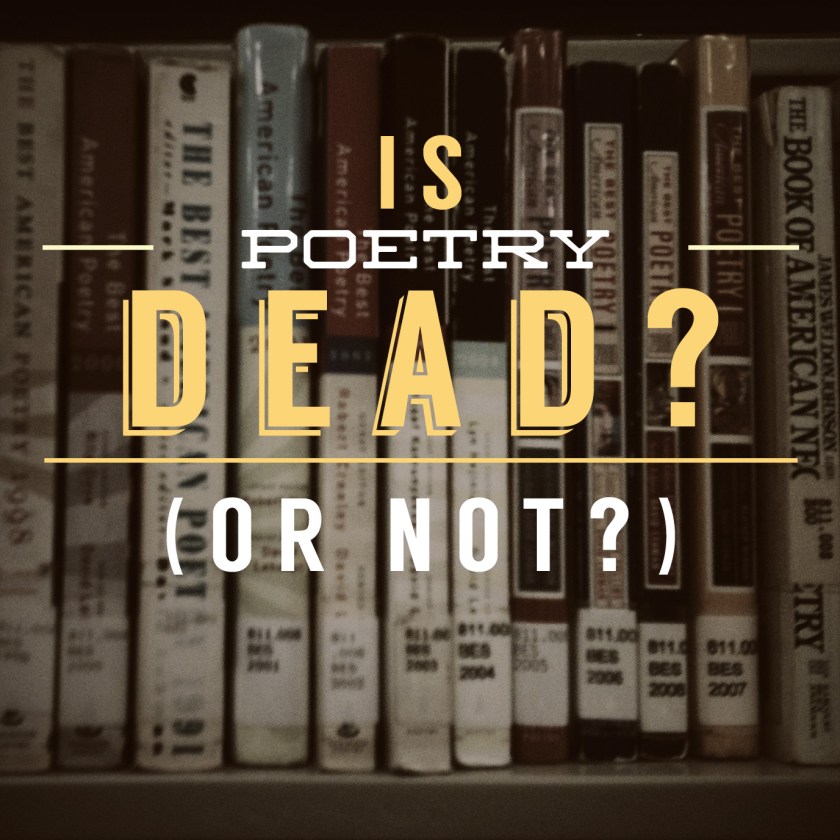
Is poetry dead? or can poetry matter?

Is Poetry Dead?

Earlier this year a quiet and quite active discussion took place in a small corner of the public square. It began with Alexandra Petri’s article “Is Poetry Dead?” [1] John Deming immediately responded with an “Open Letter to Alexandra Petri.” [2] A Few days later, Richard Higgs tossed the question to a group of poets and writers. [3] The topic was actively discussed for months.

Alexandra Petri asked “Is poetry dead?” Referencing Richard Blanco, she writes, “. . . poetry, a field that may very well be obsolete.” She continues:

I say this lovingly as a member of the print media. If poetry is dead, we are in the next ward over, wheezing noisily, with our family gathered around looking concerned and asking about our stereos.

In her article she offers some harsh yet reasonable analysis: “These days, poetry is institutionalized. Everyone can write it. But if you want a lot of people to read it . . . there are a few choked channels of Reputable Publications.”

John Deming immediately replies to this “attack on American poetry” by stating that there are more than “2,000 books of poetry are published each year in the U.S.” He did not reveal where he got that number, but I suspect much of those poetry books are independent or small press publications. Further, knowing intimately how the publishing business works, I suspect that the majority of those poetry books published do not exceed press runs of more than 500 copies. With all due respect to Mr. Deming, his open letter is more a reaction to Ms. Petri’s article and less a defense of American poetry’s life (or death). He does offer a pointed question for both Ms. Petri and for poets: “. . . what kind of ‘change’ [do] you mean. Literal political change?”

Can poetry effect change?

Years ago Dana Gioia asked “Can Poetry Matter?” in his essay published in The Atlantic Monthly [4] [5] I will not go into a lot of detail about his essay because I do not want to spoil his conclusion, but I do encourage you to read it. Mr. Gioia’s question is a better question than Ms. Petri’s. Introducing great poetry in school is part of the equation as well as encouraging the love of reading books to children. Mr. Gioia offers other ways to promote the reading of and love of poetry. The Academy of American Poets published a report years ago that stated that adults who purchase and read poetry books were introduced to poetry at an early age.

Alexandra Petri does present some valid concerns. Like Ms. Petri, I have attended poetry readings where “the attendees were almost without exception students of the poet who were there in the hopes of extra credit.” For that matter, I’ve been that poet (like Charles Bukowski) [6] reading to an audience of “. . . friends, . . . other poets / and the handful of idiots who have wandered / in / from nowhere.” Mr. Deming makes some equally valid points that poetry is “far from obsolete . . .” As someone in the publishing industry I know that poetry books do sell, but not as well as fiction or non-fiction. But lack of book sales revenue does not mean that poetry books are not effective or revolutionary. How many memoirs or novels have you read that feature a few lines of poetry as an epigraph printed at the beginning of the work?

I am convinced that there is a large audience of people that do not know that they enjoy poetry. They have to be introduced to great poetry. The fact that the August 31, 2013 issue of the New York Times featured a large front page photo of the poet Seamus Heaney (printed above the fold in contrast to a small photo of the President of the United States below the fold) testifies to the relevance of poetry in America. [7] Can poetry effect change? The poem “The Names” by Billy Collins was read before a special joint session of Congress in 2002 commemorating the victims of 9/11. [8] Can poetry matter? These are just two examples that attest to it’s impact (if ever so little) in our culture.

NOTES: [1] Alexandra Petri, “Is poetry dead?,” The Washington Post ComPost, January 22, 2013, accessed January 29, 2013 http://www.washingtonpost.com/blogs/compost/wp/2013/01/22/is-poetry-dead/
[2] John Deming, “Open Letter to Alexandra Petri,” Coldfront Magazine , January 22, 2013 accessed January 29, 2013 http://coldfrontmag.com/news/open-letter-to-alexandra-petri?goback=%2Egde_1651527_member_208175181
[3] Richard Higgs, “Is poetry dead? Washington Post blog article, and a brilliant response,” LinkedIn Poetry Editors & Poets Group, January 25, 2013, accessed January 29, 2013 http://www.linkedin.com/groups/Is-poetry-dead-Washington-Post-1651527.S.208175181?qid=64a426de-d879-42c3-b90d-5c25b99fe691&trk=group_most_popular-0-b-ttl&goback=%2Egde_1651527_member_208175181%2Egmp_1651527
[4] The Atlantic Monthly; May, 1991; “Can Poetry Matter?”; Volume 267, No. 5; pages 94-106.
[5] Dana Gioia, “Can Poetry Matter?,” The Atlantic Monthly, May, 1991, accessed January 29, 2013 http://www.theatlantic.com/past/docs/unbound/poetry/gioia/gioia.htm
[6] Charles Bukowski, “poetry readings,” The Writer’s Almanac, September 11, 2008, accessed January 29, 2013 http://writersalmanac.publicradio.org/index.php?date=2008/09/11.
[7] “The New York Times pays tribute to Seamus Heaney,” TheJournal.ie , August 31, 2013, accessed September 25, 2013 http://www.thejournal.ie/new-york-times-seamus-heaney-1063056-Aug2013/
[8] “Poet Billy Collins Reflects on 9/11,” PBSNewsHour, accessed September 25, 2013 http://www.poetryfoundation.org/features/video/301
This week in Asheville, 100 Thousand Poets for Change

100TPCAVL Web Poster
Just a few more days until the Asheville 100 Thousand Poets for Change event!

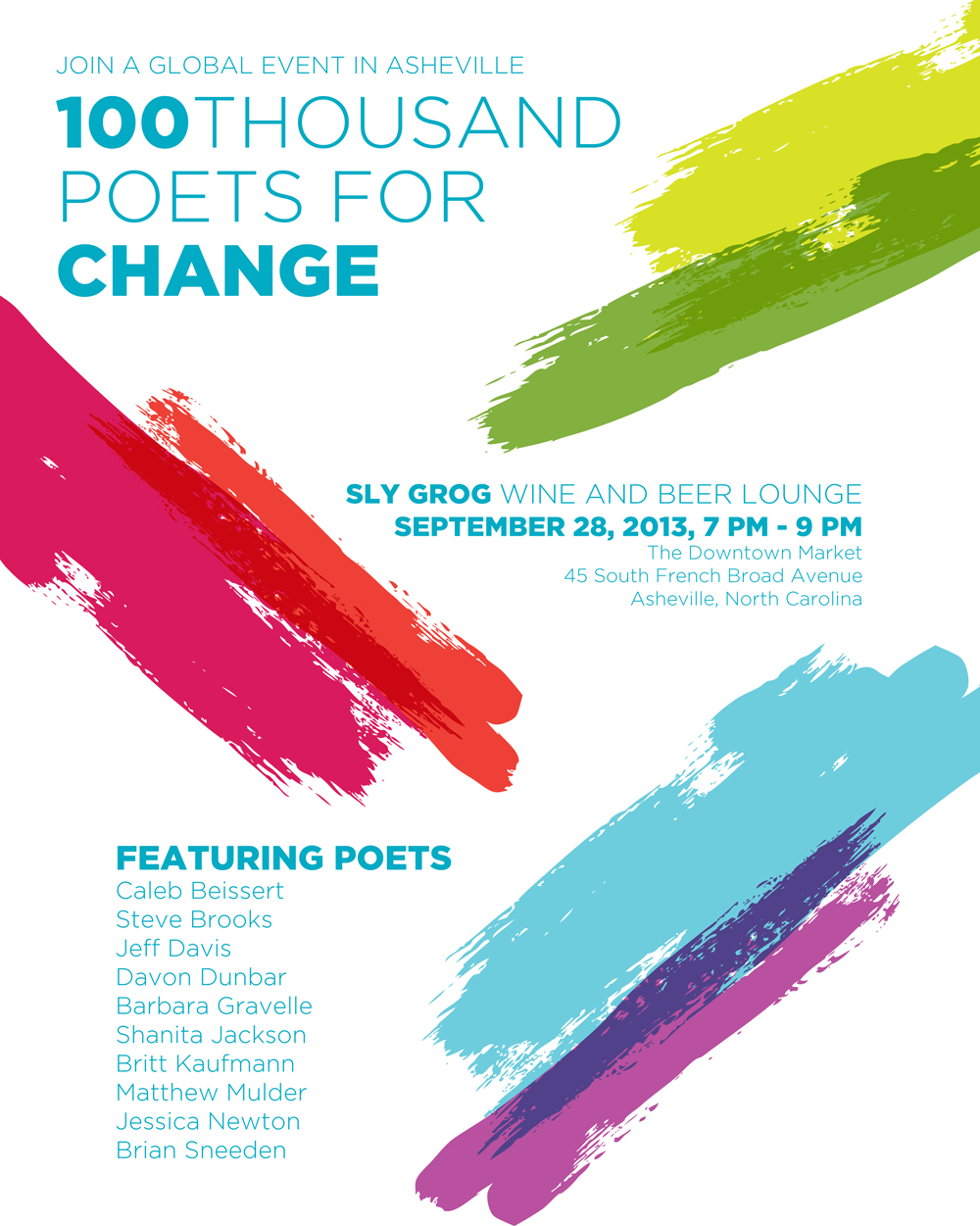
Join Caleb Beissert, Steve Brooks, Jeff Davis, Davon Dunbar, Barbara Gravelle, Shanita Jackson, Britt Kaufmann, Matthew Mulder, Jessica Newton and Brian Sneeden at Sly Grog Wine and Beer Lounge (The Downtown Market, 45 South French Broad Avenue, Asheville, North Carolina), Saturday, September 28, 2013, 7 PM – 9 PM.

Asheville Poets represent 100 Thousand Poets for Change

100TPC2013

Here is your official invitation to join a global event called: 100 Thousand Poets for Change.

The Asheville event will be held September 28, 2013, 7 PM – 9 PM at Sly Grog Wine and Beer Lounge (The Downtown Market, 45 South French Broad Avenue, Asheville, North Carolina). Featured poets include: Caleb Beissert, Steve Brooks, Jeff Davis, Davon Dunbar, Barbara Gravelle, Shanita Jackson, Britt Kaufmann,  Matthew Mulder, Jessica Newton and Brian Sneeden.

Use the hashtag #100tpcAVL when sharing details about Asheville’s 100 Thousand Poets for Change event.

For more information, or if you have questions, please leave a comment. Thanks!

UPDATE: Here’s a PDF file of the event poster for 100 Thousand Poets for Change Asheville event next week. Download here: 100TPC AVL Poster.