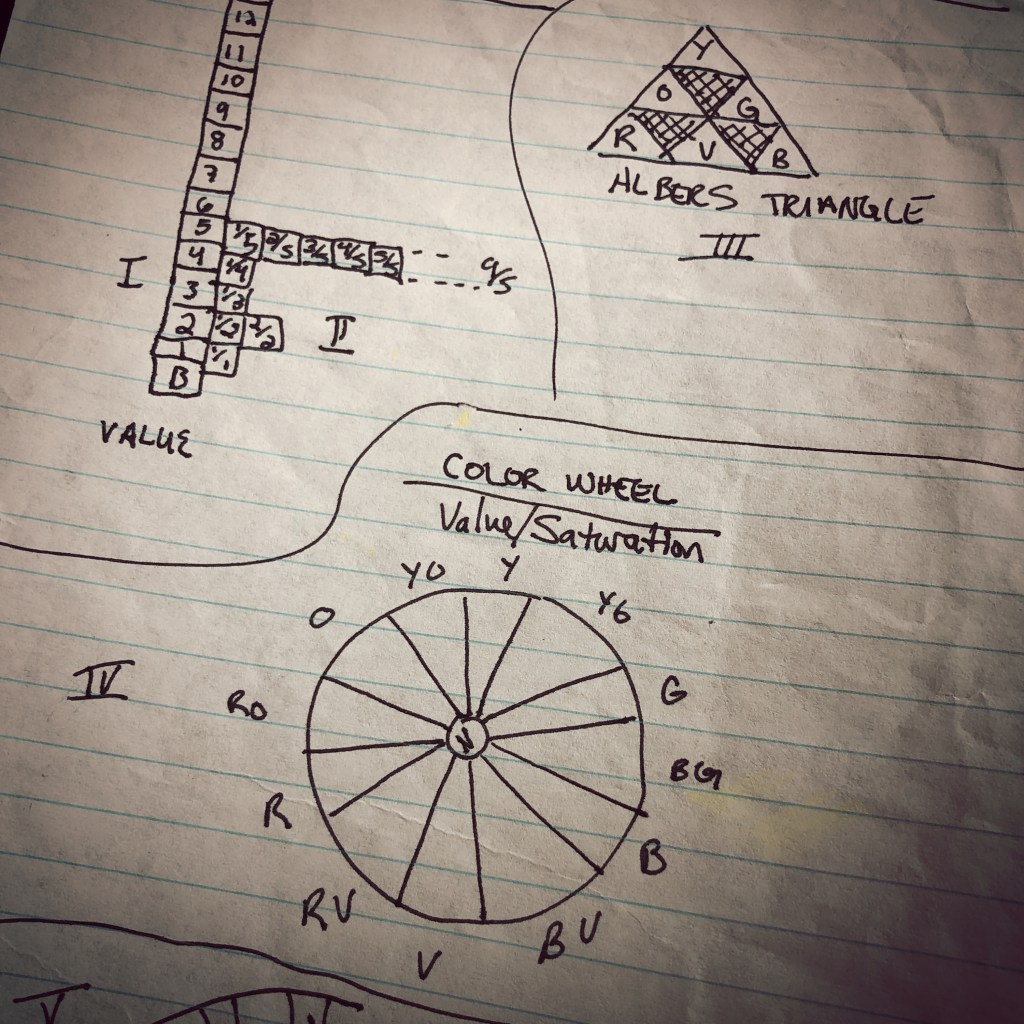
A notebook page from art school


And now he blesses hers who stood and wept
And would not be consoled, or leave her love’s
Last touching place, but watched as low light crept
Up from the east…—“Easter Dawn” by Malcolm Guite1
NOTES:
1) Malcolm Guite, “A Sonnet for Easter Dawn,” April 20, 2025, malcolmguite.wordpress.com, accessed March 15, 2026, https://malcolmguite.wordpress.com/2025/04/20/a-sonnet-for-easter-dawn-9/
2) Word in the Wilderness: A poem a day for Lent and Easter by Malcolm Guite, https://canterburypress.hymnsam.co.uk/books/9781848256781/word-in-the-wilderness
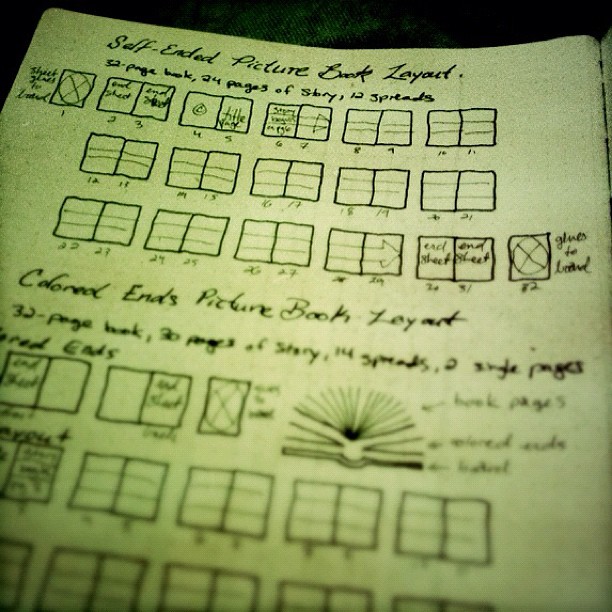
Graphic designers solve problems. They educate clients as much as they create products for clients.
In an old Action Book journal, I sketched the details and differences between two options for a picture book. Most people see picture books all the time, but may not be aware of how they are put together. This sketch helped illustrate for the client and author how best to plan for their project.
That client meeting was years and years ago. Now I have stacks and boxes of these design journals. From time to time, I open these journals to reference an idea or sketch. But maybe it is time to start recycling them.

Oh crowds of easy feelings make a start;
They raise their hands, get caught up in the singing,
And think the battle won. Too soon they’ll find
The challenge, the reversal he is bringing
Changes their tune.—“Palm Sunday” by Malcolm Guite1
NOTES:
1) Malcolm Guite, “Palm Sunday: A Sonnet,” April 13, 2025, malcolmguite.wordpress.com, accessed March 15, 2026, https://malcolmguite.wordpress.com/2025/04/13/palm-sunday-a-sonnet-10/
2) Word in the Wilderness: A poem a day for Lent and Easter by Malcolm Guite, https://canterburypress.hymnsam.co.uk/books/9781848256781/word-in-the-wilderness


And there the logical hook
On which the Mystery is impaled and bent
Into an ideological argument.—“The Incarnate One” by Edwin Muir 1 2
NOTES:
1) Edwin Muir, “The Incarnate One,” Poeticous, accessed March 15, 2026, https://www.poeticous.com/edwin-muir/the-incarnate-one
2) Edwin Muir, “The Incarnate One,” All Poetry, accessed March 15, 2026, https://allpoetry.com/The-Incarnate-One
3) Malcolm Guite, “Palm Sunday: A Sonnet,” April 13, 2025, malcolmguite.wordpress.com, accessed March 15, 2026, https://malcolmguite.wordpress.com/2025/04/13/palm-sunday-a-sonnet-10/
4) “A poem for the fifth Sunday in Lent (Passion Sunday), 2022,” Coffeehouse Junkie, April 3, 2022, accessed March 15, 2026, https://coffeehousejunkie.net/2022/04/03/a-poem-for-the-fifth-sunday-in-lent-passion-sunday-2022/



All things without, which round about we see,
We seek to know, and how therewith to do;
But that whereby we reason, live, and be,
Within ourselves we strangers are thereto.—“Nosce Teipsum” by Sir John Davies1
NOTES:
1) Sir John Davies, “Nosce Teipsum,” Poetry Foundation, accessed March 15, 2026, https://www.poetryfoundation.org/poems/57129/nosce-tiepsum-of-human-knowledge
2) Malcolm Guite, “Week 4: Know Thyself: John Davies and Tennyson,” March 30, 2025, malcolmguite.wordpress.com, accessed March 8, 2026, https://malcolmguite.wordpress.com/2025/03/30/week-4-know-thyself-john-davies-and-tennyson-10/
3) “A poem for the fourth week of Lent (Laetare Sunday), 2022,” Coffeehouse Junkie, March 27, 2022, accessed February 13, 2026, https://coffeehousejunkie.net/2022/03/27/a-poem-for-the-fourth-week-of-lent-laetare-sunday-2022/
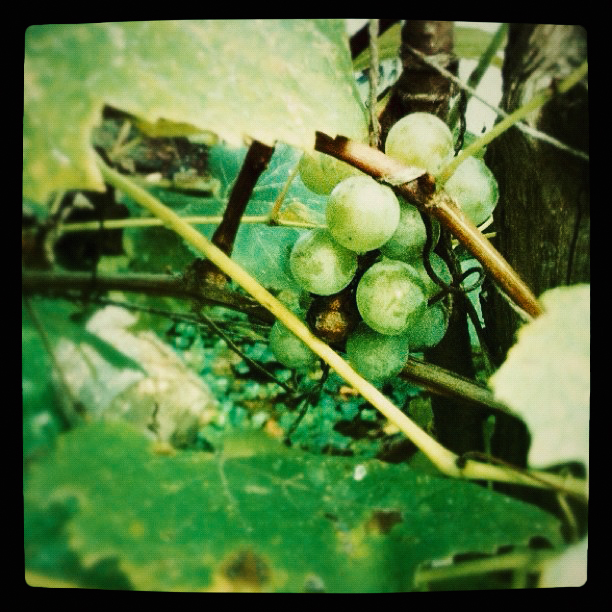
I knew, always, that I would be a worker in the vineyard,
as are all men and women living at the same time,
whether they are aware of it or not.—“Late Ripeness” by Czeslaw Milosz1
NOTES:
1) Czeslaw Milosz, “Late Ripeness,” Poetry Foundation, accessed March 8, 2026, https://www.poetryfoundation.org/poems/49453/late-ripeness
2) Malcolm Guite, “Week 3: Dante and the Companioned Journey,” March 23, 2025, malcolmguite.wordpress.com, accessed March 8, 2026, https://malcolmguite.wordpress.com/2025/03/23/week-3-dante-and-the-companioned-journey-10/
3) Word in the Wilderness: A poem a day for Lent and Easter by Malcolm Guite, https://canterburypress.hymnsam.co.uk/books/9781848256781/word-in-the-wilderness

You are neither here nor there,
A hurry through which known and strange things pass
As big soft buffetings come at the car sideways
And catch the heart off guard and blow it open.— “Postscript” by Seamus Heaney1
NOTES:
1) Seamus Heaney, “Postscript,” July 21, 2019, Poetry Daily, accessed March 1, 2026, https://poems.com/poem/postscript/
2) Malcolm Guite, “WEEK 2 Deepening the Life of Prayer,” March 16, 2025, malcolmguite.wordpress.com, accessed March 1, 2026, https://malcolmguite.wordpress.com/2025/03/16/week-2-deepening-the-life-of-prayer-10/

I have seen the sun break through
to illuminate a small field….
I realise now
that I must give all that I have
to possess it…1
“The Bright Field” by R. S. Thomas
NOTES:
1) R. S. Thomas, “The Bright Field,” All Poetry, accessed February 22, 2026, https://allpoetry.com/poem/14375129-The-Bright-Field-by-Ronald-Stuart-Thomas
2) Malcolm Guite, “Word in the Wilderness Week 1: The Pilgrimage Begins,” March 9, 2025, malcolmguite.wordpress.com, accessed February 22, 2026, https://malcolmguite.wordpress.com/2025/03/09/word-in-the-wilderness-week-1-the-pilgrimage-begins-6/
3) Word in the Wilderness: A poem a day for Lent and Easter by Malcolm Guite, https://canterburypress.hymnsam.co.uk/books/9781848256781/word-in-the-wilderness
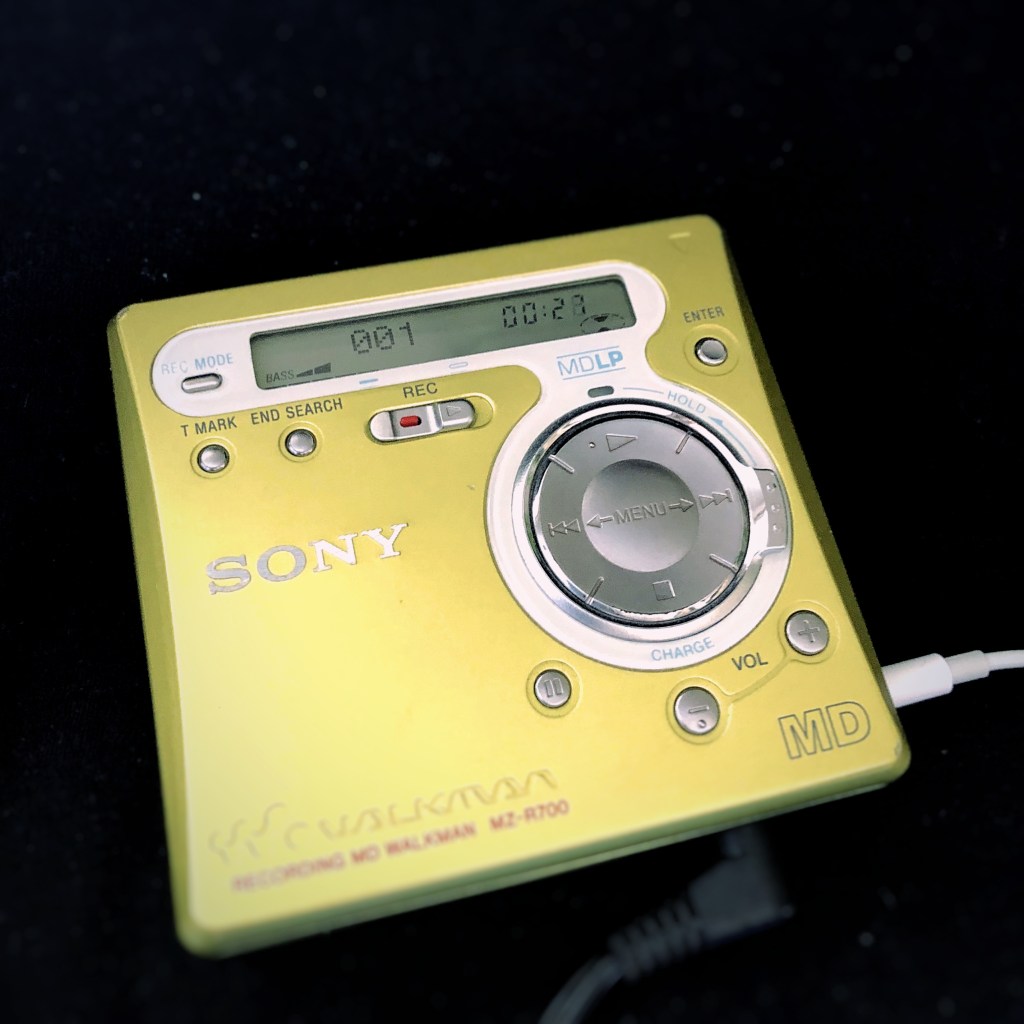
Vintage audio technology still works. Found a stack of minidiscs from back in the day when I did radio.
Some minidiscs contain uncut, uncensored interviews with hard rock musicians from the late 1990s. Some minidiscs store alt rock music playlists. Some of the minidiscs hold dozens and dozens of radio stingers (five to ten second audio used to transition between songs or segments) and bumpers (ten to fifteen second audio featured station ID, show branding, music, or voiceover like “we’ll be right back” to avoid dead air or an abrupt cut or transition to top of the hour news). But the old tech still works!
For a few years in the late 1990s, the technology of recordable/playable minidiscs emerged with market growth opportunity that was quickly destroyed by the first generation Apple iPod. 60 to 80 minutes of audio on a minidisc versus 50 to 60 hours of audio on an iPod is not even a competition.
A first gen iPod holds a thousand songs. By comparison, back in the 1990s, a top 40 radio station had a catalog of 150 or more songs that they played 24 hours a day. An alternative rock radio station (like the one I was on) had a library of 300 to 500 songs. On one minidisc I curated a 12-song playlist that included three songs by Tsunami Bomb, three songs by Big In Japan, P.O.D., Temple of Rain, and Audio Karate. At the time, that musical selection meant enough for me to organize and store it on a minidisc. A thousand songs? That is too much to manage. Pick your 12 favorite songs and enjoy.
What am I going to do with these vintage audio and radio archives? The temptation is to place them online somewhere. But maybe it is better to leave what happened in the 1990s to stay in the 1990s.
 Coffeehouse Junkie