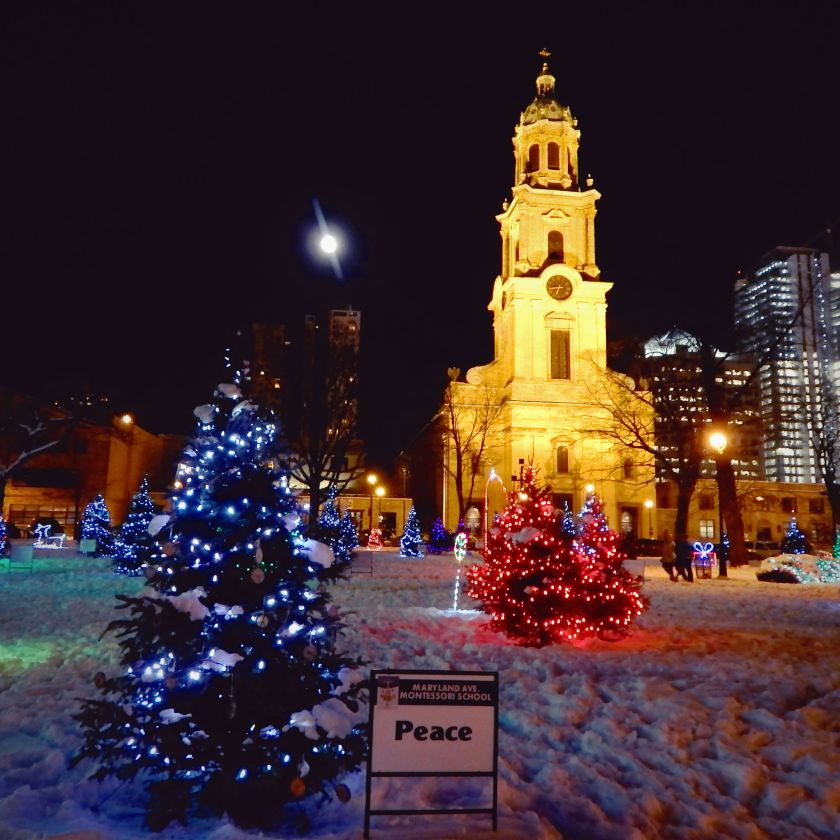
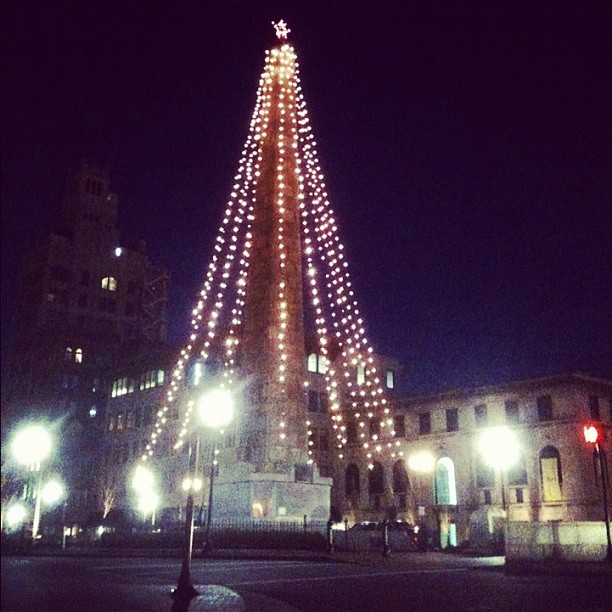
The Cathedral of St. John the Evangelist, full moon (or nearly full moon) rising, and Christmas lights brighten the cold December night.
The Cathedral of St. John the Evangelist, full moon (or nearly full moon) rising, and Christmas lights brighten the cold December night.
Just wanted to say thank you to all the new visitors to this blog!
When I composed Advent Poems (or the 12 days of Christmas poetry) and other related posts and podcasts, I had no idea that they would be the most visited posts each year. For a single post to bring in thousands of visitors a month is amazing.
Again, much thanks to new visitors and hope you enjoy the seasonal poetry and podcasts!
Since the tradition curating advent poems[1] was started a few years ago, I found this story[2] particularly interesting.
NOTES:
[1] Advent Poems (or 12 days of poetry), December 13, 2012, https://coffeehousejunkie.net/2012/12/13/2013-advent-poems-or-the-12-days-of-christmas-poetry/.
[2] Justin Taylor, “THE TRUE STORY OF PAIN AND HOPE BEHIND “I HEARD THE BELLS ON CHRISTMAS DAY”,” http://www.thegospelcoalition.org, December 21, 2014, accessed December 11, 2016 https://blogs.thegospelcoalition.org/justintaylor/2014/12/21/the-story-of-pain-and-hope-behind-i-heard-the-bells-on-christmas-day/.
No one can celebrate
a genuine Christmas
without being truly poor.
The self-sufficient, the proud,
those who, because they have
everything, look down on others,
those who have no need
even of God- for them there
will be no Christmas.
Only the poor, the hungry,
those who need someone
to come on their behalf,
will have that someone.
That someone is God.
Emmanuel. God-with-us.
Without poverty of spirit
there can be no abundance of God.[1]
This audio podcast features “The House of Christmas” by GK Chesterton, “The God We Hardly Knew” by Óscar Romero and a selection from the Book of Common Prayer.
 Also, special thanks to Folk Angel for permission to use “O Little Town Of Bethlehem” from their album Glad Tidings – Christmas Songs, Vol. 4. If you are looking for some great Christmas records, check out their website, FolkAngel.com.
NOTES:
[1] Source: The God We Hardly Knew by Óscar Romero
[2] Advent Poems (or the 12 days of Christmas poetry)
Immensity cloistered in thy dear womb,
Now leaves His well-belov’d imprisonment,
There He hath made Himself to His intent
Weak enough, now into the world to come;
But O, for thee, for Him, hath the inn no room?
Yet lay Him in this stall, and from the Orient,
Stars and wise men will travel to prevent
The effect of Herod’s jealous general doom.
Seest thou, my soul, with thy faith’s eyes, how He
Which fills all place, yet none holds Him, doth lie?
Was not His pity towards thee wondrous high,
That would have need to be pitied by thee?
Kiss Him, and with Him into Egypt go,
With His kind mother, who partakes thy woe.[1]
This audio podcast features “Mosaic of the Nativity (Serbia, Winter 1993)” by Jane Kenyon, “Nativity” by John Donne, “A Christmas Carol” by Christina Georgina Rossetti and a selection from the Book of Common Prayer.
 Special thanks to Folk Angel for permission to use “God Rest Ye Merry Gentlemen” from their album Comfort & Joy – Christmas Songs, Vol. 3. If you are looking for some great Christmas records, check out their website, FolkAngel.com.
NOTES:
[1] Source: “Nativity” by John Donne
[2] Advent Poems (or the 12 days of Christmas poetry)
When I see the cradle rocking
What is it that I see?
I see a rood on the hilltop
Of Calvary.
When I hear the cattle lowing
What is it that they say?
They say that shadows feasted
At Tenebrae.
When I know that the grave is empty,
Absence eviscerates me,
And I dwell in a cavernous, constant
Horror vacui.[1]
This audio podcast features “Annunciation” by Denise Levertov, “Advent” by Donald Hall, “Into The Darkest Hour” by Madeleine L’Engle[2] and a selection from the Book of Common Prayer.
NOTES:
[1] Source: Poetry Foundation
[2] Advent Poems (or the 12 days of Christmas poetry)
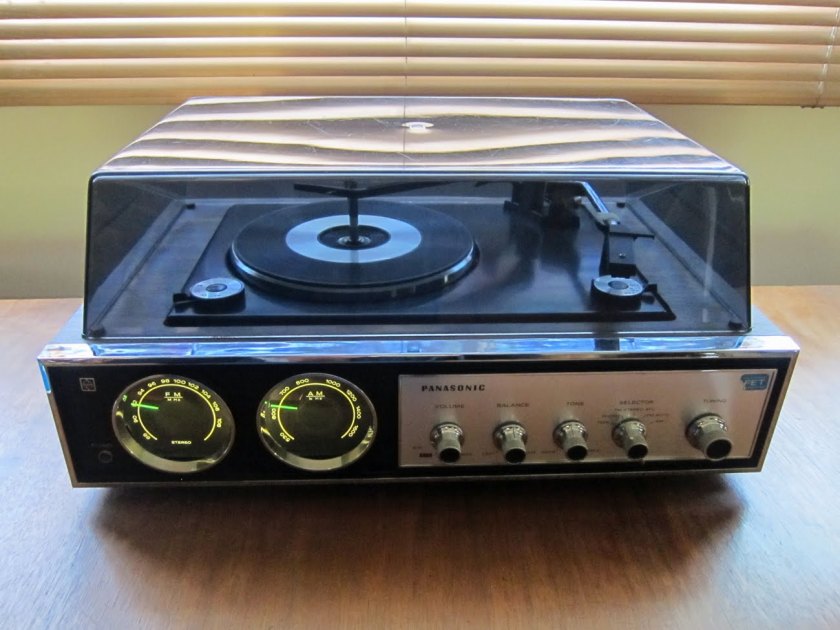 The powder milk biscuits are ready. Rhubarb pie is cooling on the counter top. A bottle of ketchup is on the table. Getting ready for this week’s radio broadcast of A Prairie Home Companion with Chris Thile.
The family chatters about what to expect of the show. Jack White is on the show. Will they still have “Lives of the Cowboys” or “Guy Noir”? Will there be more music and less comedy?
The expectation is high for this family. Who listens to the radio as if it were the Super Bowl or something like that?
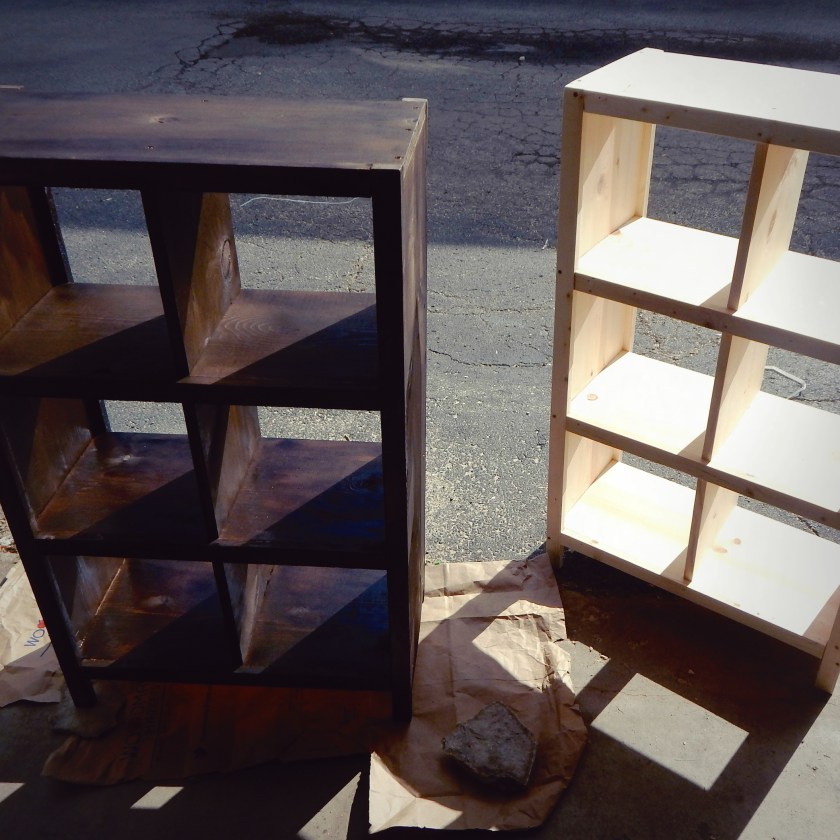
OR. This is not Minecraft, but there are a lot of cubes.
Can you have too many bookshelves? Well, by request, I built two more cube bookshelves from 1″x12″ and 1″x2″ pine boards. It was a fairly simple matter to draw out the blueprint for these shelves based on the previously built cube shelves.
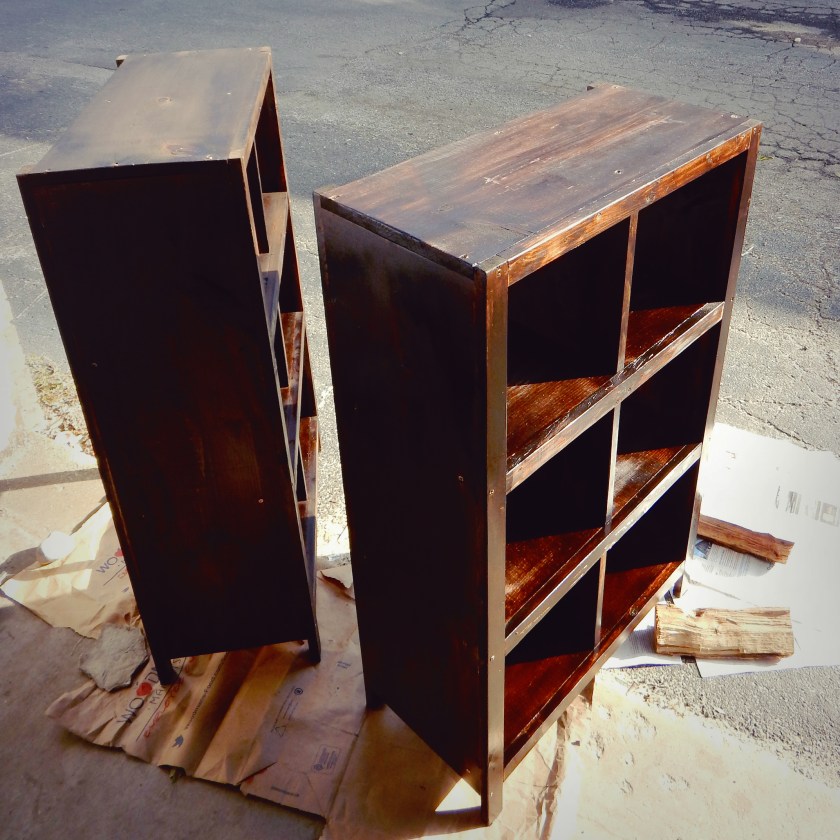
Managed to stain both shelves this past weekend. But as the outdoor temperatures cool, the drying time is longer. And I ran out of coffee. Plan to finish the cube shelves with a coat or two of poly.

This question seems so simple. But, what is money? How is happiness defined? Does the question imply that money means an individual is rich? Is being rich and being wealthy the same? Or different?
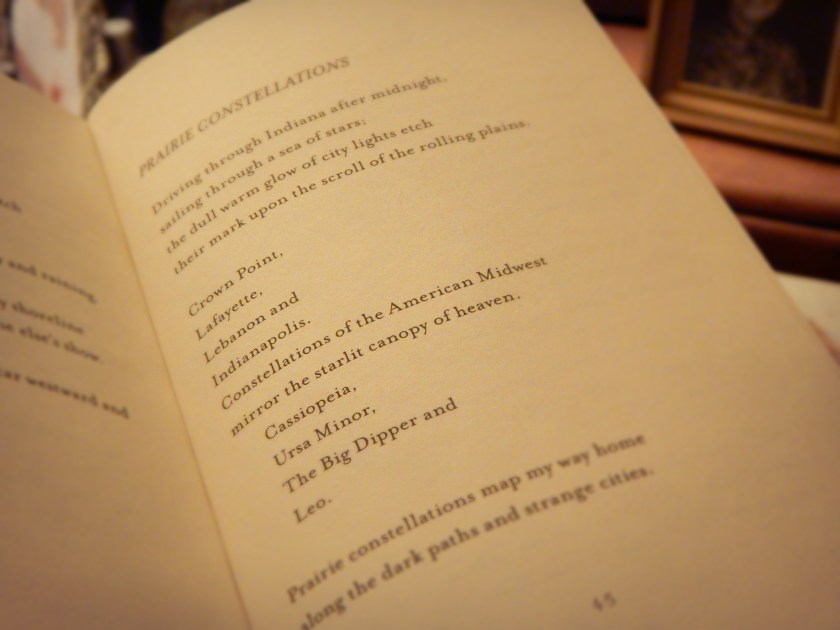
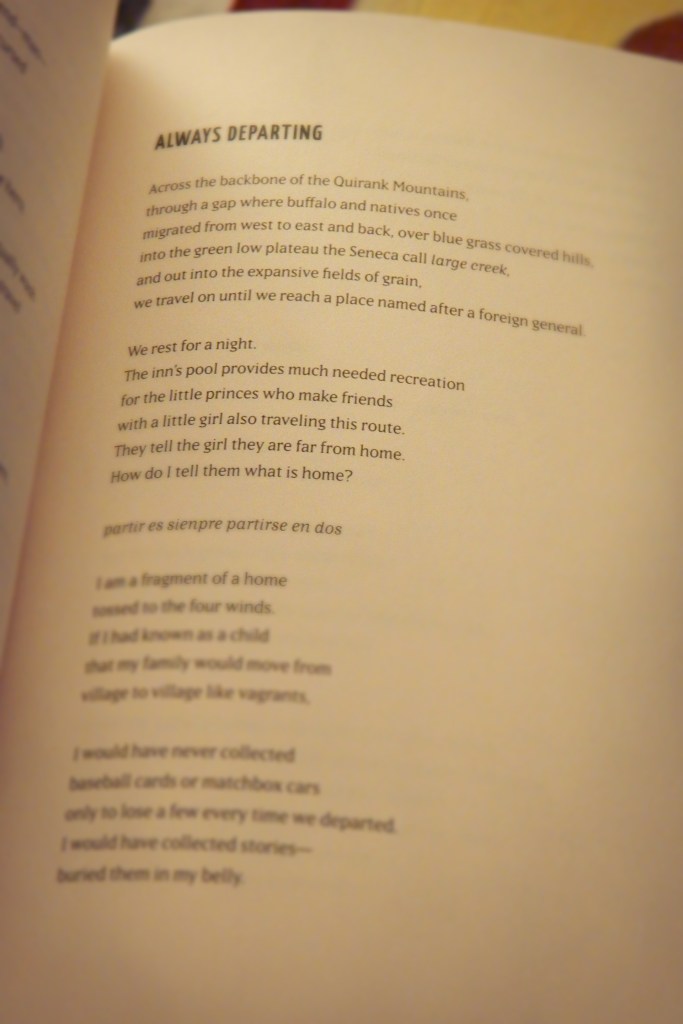
My reading list, as of recent, includes a book on business management, two history books and a book researching the characteristics of the wealthiest Americans. Also, included are several books of poetry by Berryman, Bly and Carruth as well as a novel by A. S. Byatt.
Almost every one of those books mentioned either directly or indirectly touches on the subject of money and happiness.

Received a request for a cube bookshelf to fit under . . . read more ->

The final page of a sketchbook is a peculiar geography. . . read more ->
Last weekend, the fields around the village where I live started to turn from green to harvest gold. Like the changing of the season, I noticed the first uptick in traffic to this web log. Or rather to one post in particular — Advent Poems (or the 12 days of Christmas poetry).
“Design that communicates efficiently is typically more subtractive than additive.” [read more]
![DSCN5313[sqr-basic-lofi]](https://coffeehousejunkie.net/wp-content/uploads/2016/07/dscn5313sqr-basic-lofi.jpg?w=840&h=840)
Do people still diagram sentences?[1] Is writing still important in . . . read more ->

Somedays a walk to the river is a remedy. Amid . . . read more ->
![DSCN6003[DSCN6002[sqr-basic-lomo-dusk-tilt]]](https://coffeehousejunkie.net/wp-content/uploads/2016/07/dscn6003dscn6002sqr-basic-lomo-dusk-tilt.jpg?w=840&h=840)
Very excited about a mentoring opportunity with the Boys & Girls Club of Greater Milwaukee this afternoon. Last October I volunteered and really enjoyed sharing my knowledge and experience of graphic design with the students.
Here are my notes on the five basic elements of a print advertisement.
A print ad includes other components (like, color, shape, logo, etc.), but these five elements are foundational to print advertising.
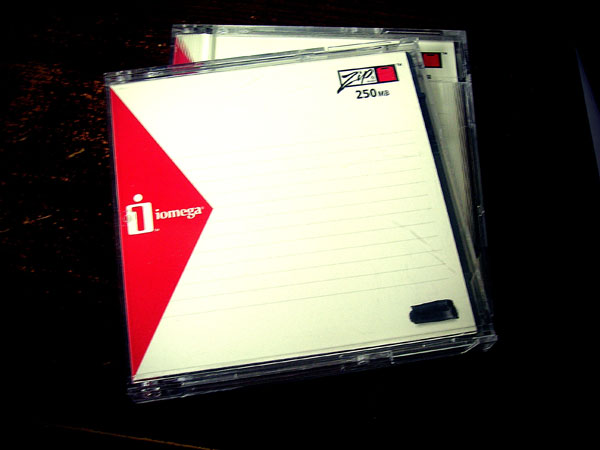
There was a time — somewhere around the Middle and Upper Paleolithic periods of graphic design — when all pre-press art files were saved to a 250 MB Zip disk, packed into a Fed-Ex overnight envelope and delivered to a Fed-Ex pick location.
Working for a weekly newsmagazine, I was the last person to see that package and its digital content before it travelled 384 miles to the press that printed the periodical.
On one occasion I had to deliver the package to the airport due to a late breaking election story. That was before Adobe Photoshop CS arrived. And sometime between versions of QuarkXPress 4 and QuarkXPress 5.
The magazine introduced a virtual private network (VPN) in 2003. This linked the headquarters with various national offices as well as the press that printed the publication.
Soon Zip disks became novel items that were relegated to the bottom drawer of a filing cabinet. Like the extinction of the Neanderthals, the Zip disk has completely disappeared from all graphic design and print production today.
![DSCN5947[sqr-basic-nostalgic-tilt]](https://coffeehousejunkie.net/wp-content/uploads/2016/07/dscn5947sqr-basic-nostalgic-tilt.jpg?w=840&h=840)
Because she asked for a bookshelf, I built one. A simple cube bookshelf was the plan. Nothing fancy. Something simple and useful. Something to fit under the window.
![DSCN5897[sqr-basic-lofi-tilt]](https://coffeehousejunkie.net/wp-content/uploads/2016/07/dscn5897sqr-basic-lofi-tilt.jpg?w=300&h=300)
To begin with, I visited the local lumber shop for 1″x12″s and 1″x2″ pine boards. Also, I picked up some screws and finishing nails. Already had wood glue, left over wood stain and finish in the garage.
![DSCN5924[sqr-basic-lofi-tilt]](https://coffeehousejunkie.net/wp-content/uploads/2016/07/dscn5924sqr-basic-lofi-tilt.jpg?w=300&h=300)
If I was a master craftsman, I would have made the shelf without screws and nails. Due to lack of equipment (like a proper workshop with a bunch of clamps, a router, and maybe a tenon jig) and time (the ever elusive weekend commodity), dado joint shelves were replaced with two-inch screws and Gorilla® Wood Glue. The only power tools used were a cordless drill/driver, a sander and a jig saw.
![DSCN5952[sqr-basic-nostalgic-tilt]](https://coffeehousejunkie.net/wp-content/uploads/2016/07/dscn5952sqr-basic-nostalgic-tilt.jpg?w=300&h=300)
After everything was glued, screwed and sanded, wood stain was selected. The Minwax can of espresso stain was half full, and was sufficient to cover the bookshelf. The stain dried quickly, but I let it dry overnight to let it set.
![DSCN5951[sqr-basic-nostalgic-tilt]](https://coffeehousejunkie.net/wp-content/uploads/2016/07/dscn5951sqr-basic-nostalgic-tilt.jpg?w=300&h=300)
Two coats of wood finish completed the project. The bookshelf was installed in our living space with a vase of roses atop it.
Request for a companion cube bookshelf arrived. More wood was purchased and cut. Request for bookshelf with a honey-colored stain finish followed. A quart of Minwax wood stain was purchased. And so on.
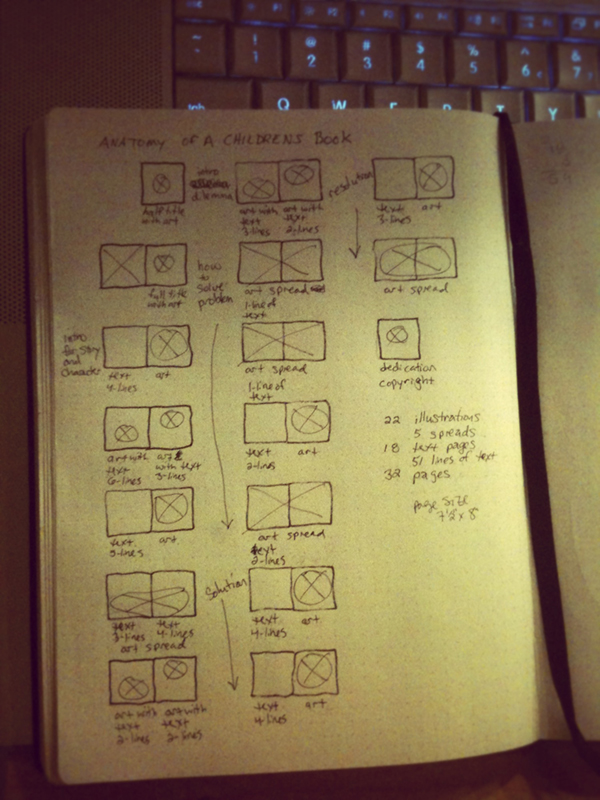
This crude sketch is quite popular. A reader commented recently how the layout template helped his poetry book project.[1] The web site Moving Writers[2] posted “A Collaborative Writing Study That Will Rock Your Students’ World: Children’s Literature”[3] and linked to my rough layout template.
The origin of the drawing began at a local meet-up of illustrators and artists. The topic of children’s books came up. Several of the artists felt intimidated by the idea of creating a children’s book. As well they should. But it is not a path of labyrinthian impossibility. The big question is how to do it. At the time, I was a creative director for an international publishing company and had designed children’s books — specifically, picture books.
To encourage these artists and writers, here is a general anatomy of a children’s book:
Several artists that night asked to take a photo of this sketch of an anatomy of a children’s book with their smart phones. Since then, several readers have expressed similar interest. So, I share this sketch again.
Like all recipes, what you do with the ingredients (i.e. text, words and pages) is up to the artist and writer. And, like any good disclaimer, results do very.
NOTES:
[1] “Anatomy of a children’s book,” coffeehousejunkie.net, December 10, 2012, accessed June 20, 2016 https://coffeehousejunkie.net/2012/12/10/anatomy-of-a-childrens-book/
[2] Moving Writers, accessed June 20, 2016 https://movingwriters.org/.
[3] Allison Marchetti, “A Collaborative Writing Study That Will Rock Your Students’ World: Children’s Literature,” movingwriters.org, May 30, 2016, accessed June 20, 2016 https://movingwriters.org/2016/05/30/a-collaborative-writing-study-that-will-rock-your-students-world-childrens-literature/.
![DSCN4098[sqr]](https://coffeehousejunkie.net/wp-content/uploads/2015/10/dscn4098sqr.jpg?w=840&h=840)
The intent was to watch the sun set and watch full, strawberry moon rise on the summer solstice.[1] But I fell asleep and awoke after 1 a.m. — cloudy, nighttime pondering of lessons in risk management.[2] A few hours later, I watch the light brighten the room[3] as I prepare for a morning walk.
NOTES:
[1] Bob Berman, “Summer Solstice Full Moon in June!,” The Old Farmer’s Almanac, accessed June 20, 2016 http://www.almanac.com/blog/astronomy/astronomy/summer-solstice-full-moon-june
[2] Gregory Orr, “Farther’s Song,” Academy of American Poets, accessed June 20, 2016 https://www.poets.org/poetsorg/poem/fathers-song.
[3] Charles Simic, “Secret History,” The Writer’s Almanac, June 19, 2016, accessed June 20, 2016 http://writersalmanac.org/episodes/20160619/.
![DSCN5427[bsc-lomo-dusk]](https://coffeehousejunkie.net/wp-content/uploads/2016/04/dscn5427bsc-lomo-dusk.jpg?w=840&h=630)
 Coffeehouse Junkie