Returning to Twitter

Two months ago I returned to Twitter.

https://twitter.com/mxmulder/status/1228444287509110789?s=11

After logging into the account through a web browser I was mildly amused. The mobile app was then downloaded to a new late-model mobile device.

The first couple weeks I explored a lot of the Twitter feeds. Shared work-related tweets. Kept it professional. Nothing too personal. But mostly, I searched for friends I once communicated with on a daily basis. They seemed to have disappeared from Twitter. Or maybe I missed them amid the ceaseless flood of poising, posturing, and promotional tweets.

A comment from a kidlinger ceased this activity. The level of profanity used on Twitter is obscene. I had tuned it out, but young eyes saw a string of vulgarities. Kidlinger asked who said that. I did not say. They knew the person. And that individual would never speak like that in front of my children.

Then the pandemic hit. And the tsunami of Covid-19 tweets and updates was both helpful and harmful. But ultimately overwhelming.

Sometime during the past weekend I discovered Twitter’s new preference features and was turning some on and others off to see how the feed was impacted. Late Saturday night, before I went to bed, I checked the Twitter on the mobile device. I was shocked to see someone posted or shared some extremely graphic adult material. It should not have surprised me. Too tired to figure which preferences I needed to reset, I deleted the app from my mobile device.

Before the weekend was over I considered unfollowing everyone I followed on Twitter. Or deleting my Twitter account entirely. My argument was this. With all I have to manage in between work and home, removing Twitter would be one less thing I have to deal with.

My return to Twitter was an attempt to emerge from a self-imposed social media quarantine. To reconnect with old friends and acquaintances. But the debauchery and viciousness I observed on Twitter causes me to wonder. If people are essentially good, than the evidence on Twitter points to the contrary.

I plan to cull those I follow. Half have already been unfollowed. My goal is to cut the list down to 40. It is possible that I have not given Twitter enough time to prove that there are good, virtuous, and honorable people using the social media platform.

The hope was to engage with people on Twitter who enhanced and elevated the lives of those around them. Something inspiring. Something like Andrea Bocelli’s Music of Hope.

Good design is more than this


(image via Jonathan Trier Brikner)

There’s more to being a design genius than this. Truly.

Just because you have a computer, laptop or tablet allowing you to download free fonts and free images and use some free app you discovered on Twitter does not make you a design genius.

Just because you “designed” a cool graphic image the way many misled souls believe they labored and “built” an IKEA bookshelf does not make you a design genius. [1]

Celebrated graphic designer, Milton Glaser, put it best:

Computers are to design as microwaves are to cooking.

Good design solves problems and presents stories. As a creative director for an international publishing house, my chief goal is to attract potential readers to new books by capturing a story in a single cover image. To illustrate the point further, an author (for whom I had just completed a book design) emailed me recently: “I’m getting some great feedback on my Facebook page about the cover. Thank you very much…” Good design is about communication: problem solved, story told.

NOTE: [1] For what it is worth, IKEA is not good design. It is nothing more than cheaper-than-Wal-mart veneer furniture, second-rate fabric products and wax-paper lamps. And don’t call IKEA “modern design” because modern design is so 1948. Seriously, the modernist movement began almost a century ago. But I digress.

The Origin of Titles

It is amusing that modern readers have been spared the lengthy title of the 1859 first edition:

ON THE ORIGIN OF SPECIES.
OR THE PRESERVATION OF FAVOURED RACES IN THE STRUGGLE FOR LIFE.

hm?

British scientists have found scores of fossils the great evolutionary theorist Charles Darwin and his peers collected but that had been lost for more than 150 years (via libraryland)

Read: Digital Maoism

The problem I am concerned with here is not the Wikipedia in itself…. the problem is in the way the Wikipedia has come to be regarded and used; how it’s been elevated to such importance so quickly. And that is part of the larger pattern of the appeal of a new online collectivism that is nothing less than a resurgence of the idea that the collective is all-wise…. This is different from representative democracy, or meritocracy. This idea has had dreadful consequences when thrust upon us from the extreme Right or the extreme Left in various historical periods. The fact that it’s now being re-introduced today by prominent technologists and futurists, people who in many cases I know and like, doesn’t make it any less dangerous….The beauty of the Internet is that it connects people. The value is in the other people. If we start to believe that the Internet itself is an entity that has something to say, we’re devaluing those people and making ourselves into idiots….The hive mind should be thought of as a tool. Empowering the collective does not empower individuals — just the reverse is true. There can be useful feedback loops set up between individuals and the hive mind, but the hive mind is too chaotic to be fed back into itself.

HT: longformorg: A cautionary inquiry into the unchecked hive mind. Jaron Lanier | EDGE | May 2006

Link: Digital Maoism: The Hazards of the New Online Collectivism

To ruminate, or to tweet, that is the question

“For some kinds of thought, especially moral decision-making about other people’s social and psychological situations, we need to allow for adequate time and reflection,” said… author Mary Helen Immordino-Yang.

(via Tweet this: Rapid-fire media may confuse your moral compass) (hat tip: monkeytypist and azspot)

This seems to contradict the premise of the best-selling book, Blink. The article continues:

The study raises questions about the emotional cost… of heavy reliance on a rapid stream of news snippets obtained through television, online feeds or social networks such as Twitter.

My take away: maybe it is best to marinate and ruminate than to tweet.

Twitter is like golf. I feel like an idiot for doing it, but I have to admit that sometimes it’s fun.

The Ad Contrarian (via somethingchanged)

// love the pejorative tone many bourgeois have toward the idea of poetry readings…

“[Khalil] Gibran’s ‘masterpiece’… turns not so much upon poetry as upon the genre of wisdom literature and its subgenre, the aphorism, which holds a particularly valued place in Arab culture. Like all good aphorists, he uses language that is both plain and metaphorical; it invites understanding yet in a way that brushes against the mysteries of being alive. There’s no doubt that the style occasionally ascends into comical elevations, and that its high tone seems lost in the ironies and specificities of American life. But that sort of spiritual homelessness pretty much describes a large swath of immigrant life.” (via poetry & popular culture)

// was asked this weekend if i still blog: yes, no, blogging is so 2004… blogging is not publishing, publishing is not blogging…

“The average church in America has less than a 15% retention rate of first-time visitors. If I owned a pizza parlor and more than 85% of the people who ate there once decided to never come back, I would think a mailer might just kill the business.”

And The Greatest Of These Is Latte

Wikipedia is not the beginning and end of research

…students don’t consult enough sources. Wikipedia is so easy and accessible that it stands out from all other reference works. Thirty years ago, students might check several encyclopedias…. Now, it’s Wikipedia first and, too often, last.

Mark Bauerlein, via The Chronicle of Higher Education. Link.

The ubiquitous Wikipedia

…the Wikipedia site was listed among the top three Google hits 100 percent of the time.

Michael Petrilli. Link.

Lost in translation

Considering that I just read a few books of French prose (translations), I find this vaguely interesting.

“Did you know that in America we publish less literature in translation by far than any other industrialized democracy (in America 1% while in France 60%)?” Link

Based on my reading habits, I am a minority among most American.

Weekend review

Another reason not to visit Disney: Fingertip biometrics at Disney turnstiles

Open society: largest data breaches

If it looks like a moleskine: “stylish little pocket notebook”

Book Design Review’s latest: Kate Christensen Wins PEN/Faulker

And finally, from Seth Godin:

“So, there’s plenty of bad economic news floating around. From the price of oil to Wall Street to bailouts to the death of traditional advertising.

Which is great news for anyone hoping to grow or to make an impact.”

Link

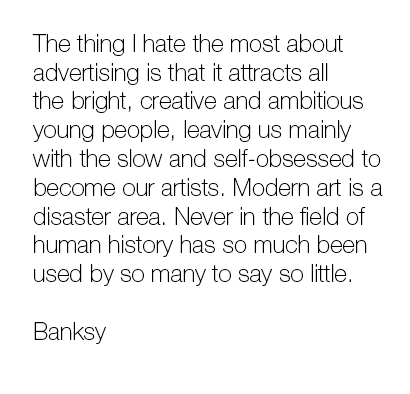
Quote: Modern art is a disaster area…

(via Room 116) Link

Pornographers don’t sell pornography

AdPulp provides this:

“42.7% of consumer time online is spent with content sites, 28.6% is with communication sites, 16.1% with commerce sites and 5% on search sites.” Link

(For more detailed analysis visit OPA Link)

While a lot of content provider sites (i.e. news and entertainment sites) feel pressure to offer their content for free (and some have already removed their firewalls—i.e. TNYT and WSJ) the question remains—how does an organization provide “free” content without going bankrupt?

Jake McKee’s post—You’re selling the wrong thing—sited the McGuire HuffingtonPost Porn Knows What It’s For—Do You? as an answer to that question. To excerpt some notable quote from McGuire’s article:

“Pornographers… don’t seem to care much about how they do it—they’ll just find ways to give people the orgasms however people want them given… magazines… online photos, online videos… why are newspapers… having such a hard time?… they have a fundamental misunderstanding of what they do.

“The value of a newspaper is not that it gives me information; the value of a newspaper is how it selects information…”

And here’s a necessary mainstream-media-sucks, blogs-rule rant from McGuire:

“Blogs are excellent selectors of information, while newspapers are pretty clunky at it—because for the past 300 years they existed in an ecosystem where information was scarce. Now information (and access to it) is abundant.”

McGuire misses the point in the steam of his own blog-rant.

Blogs survive as scavengers of info. Blogs select and repackage recycled information. Blogs—with the exception of maybe 50 techno-intelligentsia sites—rarely provide original content. The mainstream media behemoths still provide the bulk of online content. Here’s were McGuire is correct: pornographers don’t care about how or by what vehicle they deliver the content—online or offline. Pornographers bank on three basic actions: consumption, evangelism, purchase (and repeat).

Or to put it another way: “delivering anticipated, personal and relevant [content] to people who actually want” it. (Source). Do people still consume news? Yes. Do the majority of people want to pay for it? No. How does a news/entertainment organization earn revenue online? IMHO, online advertising + products = revenue. Translation: offer ad rates (dictated by web traffic) plus and an online store with shopping cart for souvenirs related to the content the consumers want.

Is design transitive?

Hugh Graham writes that “design is too often about the transitive and the temporary.” (Transitive—the word comes from the Latin and means “passing over”) Consider how quickly designers have to change and adapt to generational demographics.

Brand Noise offers this:

“According to Princeton sociologist Robert Wuthnow in a new book titled After the Baby Boomers the key differences between Gen Y and Baby Boomers include that the younger generation is ‘spending more time in school, remaining financially independent… and changing jobs more often.’” Link

Now consider the Baby Boomers (again from Brand Noise):

“They comprise nearly 24% of the population, have a buying power of $3 trillion, and include many of the country’s current business and political leaders. But marketers misunderstand—and inefficiently target—this country’s 78 million baby boomers.” Link

Designers, by the nature of their craft, are communication experts and should be able to articulate ideas, brands, and identity to various changing demographics successfully providing they are supplied with reliable research. Hugh Graham agrees that change is the new norm, but pushes beyond that and proposes that “there’s a new form of change on the horizon; we’re heading into a constrained environment where the designer’s artistry and craft will have to encourage what lasts, what matters, what sustains.” Link

Can design be both transitive and sustainable? Only time will tell.

Socrates: wanted dead or alive

“Given the choice between Socrates dead or alive, Western thinkers have preferred him dead. At least as a symbol. A symbol of what? That’s where it gets complicated.”

Socrates in the 21st Century

Marketing campaign incentive and the power of suggestion

This ad pops up a lot when accessing my Hotmail account.

Advertising design has three golden rules that always work when selling products:
1 – beautiful women
2 – puppies
3 – cute babies

That’s the shortlist of golden rules. There are other rules to eye-catching ads like using colors red, black or yellow for maximun impact.

This ad gets one and a half (because the dog isn’t real). But, come on, who really wants to get a free pink stuffed dog with the purchase of Victoria’s Secret products.

Clearly this ad is not targeted toward my demographic. What am I going to do with a pink puppy? Maybe some of my female readers could enlighten me as to why this would be a good incentive to purchase Victoria’s Secret products.

However, when planning customer incentives, the marketing campaign director should have considered: Does this marketing incentive (a pink fluffy dog) fit the Victoria’s Secret demographic? A free pink fluffy dog might be a buyer incentive for FAO Schwarz customers.

According to this article, they are targeting a younger audience:

“We wanted to capture the spirit of the young with Pink,” said Anthony Hebron, spokesman for Victoria’s Secret

and further

“The Pink collection is an excellent idea because it caters to a different customer than the company’s core, slightly older shopper. The college crowd was sort of a white space for Victoria’s Secret that it needed to address…”

Do college coeds like pink fluffy dogs? Seriously, doesn’t a free pink fluffy dog incentive seem more like Victoria’s Secret is targeting a younger than college age demographic — like teens or tweens?

As a designer of ads and a father, this marketing concerns me a bit. I recently designed an ad for a local brewery that targets responsible adults. But I would not design beer ads that appeal to juveniles.

The visual power of suggestion is a very potent tool among art directors, graphic designers and marketers. It should be used effectively, efficiently and responsibly.

This is going to date me a bit, but the “Keep America Beautiful” public service campaign commercial starring Chief Iron Eyes Cody in the 70s challenged people to live responsibly by not polluting the landscape. Visually effective and efficient, it suggested that Americans consider not our own generation but the generations to follow. I need to remember this principle when designing ads or other materials. I hope I am not alone in trying to design responsibly.

Interview: EVA SCRUGGS

It was early February when I visited Eva Scruggs at her River Arts District studio. The recent winter storms had swelled the French Broad River above normal levels and I watched the ominous river on that cloudy afternoon as I drove to meet her.

Eva Scruggs welcomed me into her studio and we exchanged pleasantries. She offered me beer, tea or chai. “Chai would be great.” I said as I retrieved some recording equipment from my canvas messenger bag. She prepared a cup of chai and sweetened it with honey and added soy milk. She offered me the warm drink then sat down in her white floor chair and sipped her beer from an old mason jar. I pressed the red “record” button and began, “Tell me a little about yourself…”

“I guess,” she said. “I started oil painting at the age of six.”

There followed a brief discussion about art school. Eva told me that she had majored in art at the College of Charleston and later received a masters in art education in Tennessee. After that, she took some time off. I asked her if she thought it was important, as an artist, to unplug from art-making.

“Yeah, well, I had to for financial reasons. So, I mean, it isn’t that I ever really wanted to just focus on teaching art. It’s that I had to teach art to make money to feed my habit which is doing art.”

It seems that most of the artists that I know work a day job to fuel their creative passions. Maybe it’s not possible to be a full-time artist. Maybe juggling between art-making and waiting tables is necessary for artists.

“If all I had to do was be here in the studio and paint,” she said. “I would probably go crazy. I would probably get a little too self absorbed. You know how you can really drift into your own world. I need that world and at the same time it helps to keep… balance. So, I teach and I do organic farming during the summer time. And I’m a mom.”

“I really like to teach. I teach at AB Tech and I really, really feed off the new energy of new students… fresh ideas… There is something about the farming thing, too. I have to have at least a certain amount of it, you know. So, no, I wouldn’t want to paint full-time. I think I would go crazy.”

Our conversation weaved into an unsuspected path of artists being the true scientists and modern prophets. But I’ll save that for another time. I wanted to know what direction she thought art education is heading. She suggested that there are two branches of thought. “One is more academic, more exclusive amongst artists. Lots of MFA programs are focusing on what’s relevant to this century or even this half of century. But to me it seems kind of elitist. It seems like that’s going to be a view of art that only a certain amount of people can understand. It’s art for artists.”

“The other, which is sort of my path… is art to the people. Part of the reason I am a figurative painter is because I know that people relate and understand figurative painting. Common, average people understand basic symbolism. Part of my thing… is being able to communicate with people, everyday people. Not just artists who are going to understand the breakdown of elements and principles. So I paint… paintings that… have messages. I don’t paint them for someone to buy. I paint them to express this.” She gestures at the paintings around her. “I’d like people to see and understand and relate. That’s what all those biblical paintings are kind of about, too. Let’s rethink this story. You know, turn it around in a different point of view and modernize it to some extent.”

At the mention of the biblical series, Eva appeared more relaxed, more confident as if she had arrived in her sanctuary. She took a drink from her mason jar. It appeared she was ready to discuss her biblical series.

“Well,” she paused and looked at her hands which were covered in dark fingerless gloves. “It seems like when I started with the biblical theme… I was working on a different series. I was working on the states of human emotion. Trying to capture different emotions… through expression.

“Anyway, so the last one I did, of that series, was a self portrait with my child. After I painted it, I recognized it as a madonna, and I painted in the background a scene from the WTO protests in Seattle. That’s where it all got started. It’s called ‘The Jaded Madonna.’ The madonna is holding this child and she’s obviously concerned, and the child is open, wide open. But behind the mother… the police, decked out in riot gear… smog in the background from the gas that they’re releasing. So, it was kind of a statement.”

“And then it just sort of clicked in my mind,” said Eva as she motioned with her hands. She seemed focused on some point on the floor. “This is something a lot of people will relate to. It’s a biblical theme. It’s a classical theme. People look at it because of that and then… if you can get them in that far then throw something else in there that talks about modern culture. You know, it’s just the juxtaposition that makes a strange commentary. So, I feel I could run wild with that theme.”

I sipped the chai then asked her to tell me about her recent painting series.

“I’ve been working on a dream series just because I’ve had these reoccurring dreams throughout my life. I’m not exactly sure where they come from. But I figured that’s a way to address them, and maybe make them go away.”

“It’s not that they are really bad dreams,” she continued. “I usually have these water dreams where I’m swimming. I can see the top of the water and I know I’m almost out of air. So, I just keep swimming and swimming. But I can never quite make it to the top and I start somehow recirculating my air and… breathing in the water. It feels really good. Anyway, that’s what that one is about…” she said as she pointed to the painting over her right shoulder.

“And that one” she pointed to another painting across the studio resting on an easel. “An image I’ve had in my head for a long time.”

We spent more time discussing ideas, life and art (which I may write about later). But I knew she wanted to do some painting that afternoon. So, I thanked her for the chai (complimenting her on the way she prepared it), packed up my recording equipment, and left Eva Scruggs in her studio with the visions in her head that desired to be translated into pigment on canvas.

(Originally published in The Indie, March 2004 issue.)
Interview: RYAN FORD

Byzantine paintings were created to as icons depicting the eternal while denying the ephemeral. That’s why many 11th and 12th century wooden panel paintings were gilded with gold backgrounds and exhibited floating figures of the Christ, the Madonna and the saints. These images are what inspired River Arts District artist Ryan Ford. “I’ve always been very intrigued by the aesthetics of religious icon art,” he told me in a recent interview in his studio at The Wedge (one of the many warehouse buildings scattered along the French Broad River District). The work that started it all was his replica of St. Anthony Beaten by Devils.

“It’s a fifteenth century, Sienese painting by Stefano di Giovanni,” Ryan Ford began. “The original was an egg tempera painting. I did this in oil paint,” he gestured to the panel on the wall.

“Interesting story about this one… supposedly the peasants were so moved by the piece that they [would] scratch away the beasts faces and genitalia revealing the under sketching. So, that’s what you’re seeing here.” Ford pointed at the portion of the painting where a beast’s groin revealed gold smudges. “I wouldn’t imagine this painting any other way. It’s one of my favorite paintings in the world. That’s why I did an exact copy of it.” Ford explained, “the Sienese artists… capture an air of inquisitiveness. It’s almost timeless and just for them. They paint very simply. They don’t over do anything. I mean, look at the trees in the background. They’re little mushroom shapes. It’s just got this air of truth and beauty that was just so moving to me.”

Ford hit on something that has been missing in contemporary art for a long time, “truth and beauty.” The formula, in the classical school of thought, was to display truth and beauty. Even disturbing images depicted in Stefano di Giovanni painting held a timeless quality and vocabulary that is lost on young, contemporary artists. In Ford’s work he combines violent and comedic elements that resonate.

He moved passed a huge furry mask hanging from the low ceiling and deeper into his studio to a work in progress. “I’m doing a show coming up in April. That’s what this one is for,” He told me as he stood to the left the unfinished painting on an easel.

“I’ve talked [with] friends that have faced the issue of suicide. So, this is kind of a tribute. You’ll notice the brains coming out of the side of his head I painted in gold. Like your ideas are golden. I had this composition in my head and I’ve [wanted] to do it for awhile. I just started yesterday so I’ve gotten this far. There’s a long way to go on it. This for the next show in April.” Ryan Ford is hosting a show April 30th at the Wedge Gallery. The title of the fine arts show is “All Desperate and Golden.”

Behind Ryan Ford hung a large painting dominating the far wall. Its intensity reminds me of an apocryphal vision. Last April, the Mountain Xpress ran an article by Connie Bostic featuring him and Julie Masaoka. In that article Julie wrote: “Ford, who’s now reading the Bible, says he loves the visions these stories inspire. He’s particularly moved… by the Book of Job.” As we moved deeper into his small studio as he told me of the story behind the painting and within the painting.

“I read the Bible. It took me like eight months to read. I’m not going to act like I know everything about the Bible now, because I’m probably just as confused after reading as I was before reading it. So, I was drawn to Revelation. I mean, I love the way it was written. This,” he paused as he looked at his work. “I took from Revelation. The alpha and omega,” Ford pointed to the creature in the upper right hand corner and then casually shuffled to the left side of the painting. “And the angel descending from the sky is dropping seven stars and seven candles. I forget what they are significant of. I’m mixing Revelation with my own little character. His name is Hot-Pants. He’s kind of like the unsung hero. He’s the everyday person. He’s you and me. He’s running blind through his own life. Just kind of taking it as [it] comes, and he’s getting hit from every direction. But he still has a smile on his paper bag.” Hot-Pants is represented by a figure in a red spandex body suit, a blue cap and a paper bag in place of a mask.
“I’ve got a lot of characters,” Ford continued. “This here is our typical businessman who is made a lot of bad decisions. He fears for his life. He’s got his wings right now, but they’re not going to last.”

We discussed other selections of the Bible. We reflected on vibrant imagery in the Bible such as a passage from Zechariah: “I saw by night, and behold, a man riding on a red horse, and it stood among the myrtle trees in the hollow; and behind him were horses: red, sorrel, and white.”

“Yeah that’s how it is in reading it,” Ford responded. “It’s like pieces of it really just grip me. Like I read fragments and… like whoa, you know, and get blown away. Throughout [my] life English and art teachers always move me the most, you know. Of course, Iâ??m retarded in math. But I had an English teacher who said ‘if you read one book, I definitely suggest reading the Bible. If nothing else for the literary quality’.” He turned back to his painting and continued to explain his vision.

“Another central figure here is a rapper. He’s got the armor piercing lyric logo above him, because he’s kind of like the Christ-figure. He’s using his voice as a weapon. And then Jacob’s ladder connecting heaven and earth. I also put [it] in there because it’s one of my favorite movies.”

“It’s just pieces I put together, you know. Actually a lot of the characters I sketch in there one day but a lot of it kind of grows as I go along. The cloud-eater… like what the hell is that? What does that mean? I don’t know. So, I took a cloud-eater [and] made this little monster that’s attractive to me. I don’t try to explain. It just fits for me. And it’s fun.

“My roommate always makes fun of me, ‘All your stuff is like a kid. You can’t grow up.’ Yeah, well, that’s what’s fun to me. I’ve got reference to Mario Brothers with the little bricks. That’s referencing to childhood… nostalgia also.”

Reesa Grushka, in a recent essay, wrote, “Translation usually makes what is foreign familiar. An inverse translation claims what is familiar as the domain of the foreign.” The creations of Ryan Ford seem to translate ancient themes of truth and beauty into contemporary visual stories. Inversely, his use of pop culture icons woven into early renaissance structure communicates well to the modern audience.

(Originally published in The Indie, April 2004 issue.)