Notes from last night’s poetry reading

Instead of writing an eloquent report of last night’s reading, I will just post the notes I scribbled into my notebook. Yeah, if you were there, I was the one with my head buried in a notebook frantically writing. Blame it on my ADD tendencies. Apart from running spell check these notes are as they generally appear in my notebook–complete with poor punctuation, abbreviated thoughts and for some odd reason attention poets’ fashion. Right on … here I go …

Chall Gray
Breaks the ice nicely with a humorous poem about furniture and contrasts it with a poem about a brother and a sister who observe but do not talk about things. He wears a black long-sleeved button down shirt rolled up to the elbow–blue jeans–hair dark, pulled back into tight short ponytail. He ends with a moving homage to his departed father by asking “why.”

Ingrid Carson
Begins with a poem asking what color is the American dream. “What Now” is read second. She wears a black top, wavy brown hair pulled back, framing her face. “What am I going to do now?” she asks and ends; “What am I going to do now?” Her last poem is in two parts; “Still Life” and “My Hands.” She reads, “a violence of flowers…” She reads with purpose and poise and through delicate lips and intense blue eyes as if to say, I know something you don’t know and I have the floor for a few more lines. “You have pushed the mind to the limits…” She concludes that beauty is found in the ugliest of things.

Thomas Rain Crowe
Wearing all black–he tunes up a wooden flute–poet is participant–reads a letter to the editor of a local newspaper in Jackson county–admits he spent a lot of time writing editors. He reads of beauty and uses metaphor–King Kong movie cements his argument to turn corporate development back to nature’s beauty. He next reads an extended haiku written for Steve Earl for some event last year. “What profit? What Price?” he asks. “We can do better than this,” he concludes the poem powerfully. His poem “Peace Will Come” is accompanied by the evening’s featured keyboardist, Steve Davidowski. “Peace will come one day” is lifted over the ambient keyboard harmonics–his reading intensifies. “When peace comes to stay” ends his poem. He steps back, places the flute to his lips and plays–the keyboardist joins the melody which concludes that session.

Emoke B’Racz
First poem is recited in Hungarian. “Fragmented Life” is about her father who she says is bigger than life–sometimes everyday. “Try not to talk about the time,” she reads. She reads about her father’s internment camp experience: “Now take that.” She shares of the hard life of the punished young men in those camps. “Silently he left.. to give your youth for democracy…taken…” She wears a white blouse, gold necklace with pendant, black suit jacket–1965–“Poets Among Each Other” translated and published in 1970-something (’76?). “This is how we stand my brothers,” she reads her translation. It’s a short work. She rolls her tongue across her lower lip from right to left frequently before saying “I could use some water” then reads her last poem of the evening.

15-minute intermission

Will Hubbard
Reads several poems–long brown hair wrapped behind his ears–as he gazes down upon his papers it rests on his shoulders like a hood–he reads a poem called “Porn” with cynical tones of humor and wry sensibility. “5 for 5 for 3 Straight” is his last poem “and one learns where to leave off” he reads. His left hand casually in his pants pocket, his right hand holds his loose-leaf manuscript. “Saying it how it was originally said…” He reads as one might read a tele marketer’s script.

Rose McLarney
She reads a collection of poems concerning the over development of Madison county–lose of land to corporate contractors–overgrowth of urban/suburban sprawl. “Shouldn’t fight … farms let them go,” she reads. Her thin lips clip her words nervously as if she is unaccustomed to public reading. She wears a black sleeveless top with flowing flowery patterned skirt–hair pulled back, leaving dark curls to cascade down the back of her neck. Her last poem: “… the peace of the American South.”
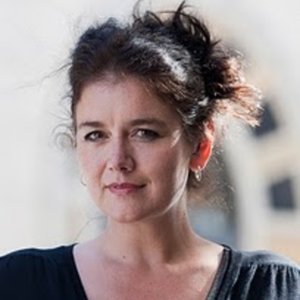
Laura Hope Gill
She tells of her BMC connections–reads “Ponco” with an eruption of words and demands social justice “when she was the question” referring to the dead old woman under a poncho many Americans saw after Hurricane Katrina–The image of a woman who died waiting for medical assistance in the aftermath of the hurricane that destroyed New Orleans. She wears hoop earrings, thin gold necklace upon her chest, low-cut white blouse and black sweater. She reads several poems of childhood witness “we slept in our bunk beds … spelled out in silk.” She reads about a stallion. She reads with proficiency and like Ingrid has a smile and sparkle in her eyes suggesting a joke that only she knows the punch line. Her speech skills draw several people forward in their seats. Or maybe its the hard wooden seats we all endure. “The wind of their grandfather’s song… ” she reads.
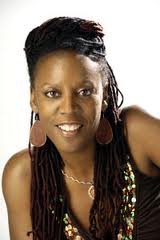
Glenis Redmond
“Enter through the door of war…” she begins after adjusting the microphone. “Grief is an uttering tongue.” She begins with a powerful recitation. She is a performer–practiced in public settings. Her second poem is “Lifting” about the Kenilworth slave cemetery near her neighborhood. “Bid us ride,” she reads. By far she is the most charismatic poet of the evening. “Looking back to the land where courage was born.” Due to the lateness of the evening she says she’ll only read three poems. Her next poem is about Nina Simone: “bitter aint born black.” Her final poem is a recitation: “Every time I hear King speak I feel a rumble…” she starts and concludes, “We shall.”

Reflections of paint from a poetry reading

I’m not sure what to say about tonight’s event. Seven and a half pages in my notebook filled with observations and thoughts of the reading. Though I haven’t the energy to type it all tonight, I’ll post details of the event later.

One thing, of many, did strike me this cool, blue Spring evening. I sat in an old wooden folding chair next to a wall lined with photos by Hazel Larsen Archer. Portraits of Josef and Anni Albers looked over my shoulder. A photo of Josef Albers teaching class displays students’ compositions scattered in the foreground. I know exactly what they are doing because my university art professor, a student of Albers, had his students apply gouche to panel and board in order to create swatches of tint and shade in the same manner. I spent hours painting a dozen variations of blue evenly representing shade to tint (i.e. dark blue to light blue). A whole semester was spent on Albers color theory and related understanding of color.


Josef Albers
photo source

I examined the students in the photo carefully trying to identify my university art professor Emery Bopp. But I forgot, at the time, that he studied under Albers at Yale not Black Mountain College. Still, I see Josef Albers in that portrait and there is a representative of Bauhaus style. His intensity of gaze from a vintage gelatin silver print hauntingly reminds me of a loose connection to him through my art professor and the hours spent mixing, applying and peeling paint from my fingers. In a physical way, the smell of gouche and the feel of mixing it in trays is that connection to a soft spoken professor, Emery Bopp. And I wonder if he learned his teaching approach from Josef Albers.

Mini-Poem

Last night
I heard
crickets

chirp

for the
first time
this Spring.

Reading Write Stuff

Every week I write an article for Write Stuff. This Sunday I posted Under the Holly. Every Sunday I’ll contribute an article.

Tags: [, , , ]

Notes from last night’s Fresh Air Reading Series

Last night was my first time attending the Fresh Air Reading Series at the New French Bar

As always, I had my composition book with me and wrote the following notes during the readings:

Mara Simmons–her series of poems reflect a serious study of the Israeli/Palestinian conflict. Each poem exhibits much research and passion … bringing humanity to news stories which desensitize Americans. The theme is well born out through references in Hebrew and Arabic and native plants and streets. Really inspired by her theme-based poems.

Jeff Davis–the elder poet with long gray hair and soft voice at time almost a whisper … brings a melancholy maturity to the round-robin reading. He offers love poems and poems heavy with nostalgia … he is taller than the other poets and needs to re-adjust the microphone and still he leans down into the foam covered device as if praying … his water poems are most excellent.

Kathy Godfrey–a bawdy poet with spunky, sensual, sensational poems. From what I overheard among the crowd, she teaches poetry at ABTech and many in the audience were her students … ethical question … should a teacher read a graphic poem about masturbation in front of her students … among other poetic subjects include green beans, Tough Man contests

Autumn Choi–slam poet … holds her own … confessional style presentation. Sort of romanticizes the school-of-hard-knocks subject matters … works well in this vehicle of drama.

I left immediately after the readings. I guess that was a bit impolite on my part for several people were in attendance that I knew. But I needed to get away–to think. I walked for several blocks pondering the poems and poets I heard Wednesday night. Why do I write what I write? Do I have what it takes to write poetry on the level of these local poets? Do I have the commitment to follow through with what I’ve started? Or am I merely dabbling in something, which I should leave to professional wordsmiths?

Some of this wondering is directly related to last weekend’s event. Saturday afternoon I found myself at Barley’s sitting across the from a local writer who has received well-deserved accolades for her work. Other local poets were in attendance with comparable merit and distinction. And there was me feeling very much like an outsider or poser.

After reading last night’s notes again at morning light it is apparent that I am partial to poems with academic/intellectual substance. Not to disqualify the other poets mind you. Annie Dillard writes: “The writer … is careful of what he learns, because that is what he will know.” I know what kind of poetry I want to produce. So, I favor and enjoy hearing from poets who seem to exhibit attributes of what I’d like to write in verse.

Tags: [, , , ]

Read the Write Stuff?

By invitation, I’ve begun contributing to Write Stuff. I’ll post new articles every Sunday. Here’s my first piece: Below an Oak Tree.

Tags: [, , , ]

It’s national poetry month and I have a new poem published

The Rapid River just published a poem I wrote. It is featured in the April 2006 issue. I guess I’m on a roll. I think the poetry editor has published four or five of my poems in the last eight months. Furthermore, I have been invited to read some of those poems at a best of Rapid River poetry reading on June 22nd at Malaprop’s Bookstore/Café. Details are pending, but it looks like six local poets will be reading their work that evening. I’ll update the new EVENTS section (located in the left column) as information is available. Regarding the published poem, Values: II–it is part of a series of poems I’m tentatively calling Elements of Design. Surprisingly it stands well on its own, but I have a hard time reading it without knowing its sibling poems.

Tags: [, , , ]

Surprised & embarrassed

You can imagine how surprised I was this morning when I opened the November-December 2005 issue of Small Press Review and read “Guest Editorial” by yours truly on page three. Surprised because it’s February 1st and I just received the issue yesterday, but also because I had submitted that piece over 10 months ago (more on that here and here and here and here). I am a bit embarrassed because in my haste to get that piece published, I posted an abridged version on 1000 Black Lines and later submitted it another editor who published it. Patience is still a virtue I need to practice.

Tags: [, , , , ]

The Blotter publishes poem

The Blotter published my poem, “The Last American Chestnut Tree,” in the January issue.

The World’s Fastest Readings

Just got back from the world’s “second fastest reading” (according to Peter Turchi) at Malaprop’s. Twelve MFA faculty members from Warren Wilson College read from their published work. Each member was given roughly three and half minutes to read.

Last year I attended the first Warren Wilson MFA faculty reading [read here and here.]. This year they scaled it back a bit; from 18 to 12 readers.

WLOS had a camera crew filming portions of the event. I guess Asheville residents may see it on channel 13 tonight (I don’t own a television so I’ll check AshVegas’ blog to see if it was even aired).

Overall it was a good event. I must confess the first reader, whom I cannot recall, didn’t attract my attention and my adult ADD kicked in and I started writing stream of consciously in my notebook. Adria Bernardi read an excerpt from her novel which brought me back to the event and Justin Grotz delivered a fine reading of fiction as well as Peter Turchi.

Somehow the poets didn’t quite do it for me tonight. Maybe I’m overly critical of poets. Maybe the poets didn’t want to be there tonight. However, the second to the last reader, Steve Orlen, read a single poem that worked; and worked well.

After the event, I chatted with a gentleman who hosts Malaprop’s Blind Date with Poetry. He also happens to be one of the members of Eye For An Iris Press. With all the celebrated and award winning poets and writers gathered at Malaprop’s, I spent the most time conversing with this gentleman.

There’s something that has been preventing me from completing my application for the MFA program at Warren Wilson College. I thought it was simply intimidation, but I think it goes deeper than that. I can’t put my finger on it right now, but I intend to explore it later.

Tags: [, , , , , ]

Warren Wilson MFA faculty Public Readings

The MFA Program for Writers at Warren Wilson College Public Schedule
Readings will begin at 8:15 pm in the Fellowship Hall behind the Chapel unless indicated otherwise.

READINGS – 8:15 pm
by MFA faculty and graduating students

Friday, January 6
Marianne Boruch, Peter Turchi, Mary Leader

Saturday, January 7
No readings on campus, but come to “The World’s Fastest Readings” by MFA faculty at Malaprop’s, 55 Haywood Street. Reception at 5:30 pm; readings start at 6:00 pm.

Sunday, January 8
Rick Barot, Wilton Barnhardt, Karen Brennan, Antonya Nelson, Eleanor Wilner

Monday, January 9
Brooks Haxton, C.J. Hribal, Martha Rhodes, Kevin Mcllvoy, Ellen Bryant Voigt

Tuesday, January 10
First night of graduating student readings: Scott Gould, Sandra Nadazdin, Tatjana Soli,
Rosalynde Vas Dias

Tags: [, , , , , ]

Rapid River publishes another poem


With all the holiday hub-bub, I almost forgot to mention that local arts magazine Rapid River published my poem, “Abstract Painting in Blue,” in the December issue. It’s a short poem in a series of poems I’ve been writing on the topic of art theory as explained through the life of an artist.

Tags: [, , , , ]

Intellectual swimsuit contest

A number of poetry submissions were sent out this weekend.

The one thing I abhor about the whole process is the “write a brief bio” portion of the submission letter. I mean, shouldn’t my publicist do that (not that I have one).

It’s like an intellectual swimsuit contest for a literary pageant. How do you look in a two-piece swimsuit with a tiara on your head? If you fit the definition of intellectual beauty and you’ve been published by notable literary magazines than you avoid the slush pile. If not, try finding another line of work.

So, here’s a new bio I wrote to accompany my latest submissions. It’s me in a red thong with a bright yellow Wisconsin cheese wedge on my head.

Bio: I am a cultural creative theory slut from Asheville, NC who is considered by some a true postmodernist. I collect hard cover books in foreign languages, eat critical theory articles for breakfast, bath in Icelandic and mythology and digest ancient manuscripts for light reading.

Do you think it’s too over the top?

H_NGM_N Publishes Poem

Just received an email from the editor of H_NGM_N that the latest issue (#4) is available online. H_NGM_N published my poem “Last Bus” in this issue. I’m still reading through it myself and really enjoy the company… especially, Tim Bradford’s “Scope.” H_NGM_N also offers merchandise (T-shirts, coffee mugs, bumperstickers and journal notebooks) which is just in time for the holidays.

Oh, Look What the Postman Delivered

Yesterday afternoon, I received my first royalty check from my publisher. I thought about celebrating, but then I looked at the amount… it should cover this week’s bus fare. I didn’t expect a big fat royalty check; after all it is a small poetry book by a virtually unknown character. I do find it curious that it’s delivery coincided with the birthday of American poet Emily Dickinson (she only had seven poems published in her lifetime).

Most (if not all) the books were sold through online retailers, and almost half the books were purchased in the last three months.

So, thanks to those who purchased Late Night Writing. The sophomore book cometh soon.

For those who haven’t purchased Late Night Writing… it makes a great gift. Or as my brother put it: “I have it displayed in the most predominant room in the house, the bathroom. I can’t tell you how many times I have enjoyed reading through this quality reading product. But a rough guess is at least once a day.” No, I didn’t pay him to write that.

So, next time you pick up a roll of toilet paper, remember to purchase a copy of Late Night Writing for that special room in your home. Here’s a list of places where you can find Late Night Writing. It is also available at Amazon.com, Abebooks.com, Alibris, Powell’s Books and Barnes & Noble.

One reviewer wrote: “Late Night Writing is easy, feeling-good reading, almost like a Rimbaud sobering up with Miles Davis over tequila sunrises at Venice Beach on a windy September late afternoon.”

Another reviewer wrote: “[T]hese poems are for & of the quiet moments we mostly overlook & are doomed to lose, snapshots of what’s been lost. This collection provides a kind of recollection & understanding,… in that space where we are alone with memory & desire.”

Tags: [, , , , , ]

Rapid River, Publishes Poem


Local arts magazine Rapid River published my poem “Narrative Kernel” in the November issue. Rapid River is published monthly in over 250 high traffic locations in Asheville and Buncombe County. Request a free copy:

Rapid River Art Magazine
70 Woodfin Pl. Ste 212
Asheville, NC 28801

(828) 258-3752

Earlier this week I received letters of rejection regarding a collection of poems and a short story from two publications. I guess the publiscation of “Narrative Kernel” makes up it.

Another Published Poem


Local arts and culture magazine Rapid River published another one of my poems in the October issue. Rapid River is a free monthly magazine published in Asheville with a monthly readership of over 30,000 readers. You can find a Rapid River magazine rack pretty much any where downtown. I got my copy at Indigenous Teahouse & Juice Bar. So, go grab a copy and see what you think of my poem, “Reading ‘My American Body’ by W. K. Buckley.”

Poetry, painting and other thoughts

Fragile

Last year, about this time, I contributed to “Resonance” Art Opening/Multimedia Performance. The Grey Eagle Tavern and Music Hall hosted the event. I read some of my new poems at the time and then Philip (guitarist) and Julie (rock vocalist) joined me with a music/performance set based on my book Late Night Writing. Julie contributed an original song to the set while Philip added an original soundtrack. The collaboration between the three of us was inspiring (to me at least). It was kind of weird hearing Julie sing my poems “Fragile” and “Driftwood” back to me and to the audience. In a way it was a relief to hear someone else claim them, own the words, project the ideas. I miss that. There are a few live bootleg recordings of the three or four gigs we did together. Maybe when I find some server space, I’ll offer them as free downloads.

Three paintings represented me at “Resonance” Art Opening/Multimedia Performance. “Fragile,” named after the poem I wrote, was painted last summer. Previously, I had done a series of four paintings inspired by the poet Kahlil Gibran (which was part of the 2003 “Resonance” art show) with bright, dramatic abstractions using a simple palette of red, yellow and black. With “Fragile,” the colors deepened in order to create a stark, lyrical image. A young poet from South Carolina once confessed he didn’t particularly get into modern art, but he liked “Fragile” because it seemed like a place he would like to visit. The poem I wrote that inspires this work includes these lines: “I am naked/ When truth strips me/ Of a lie.” And later: “I am reborn/ When the old shattered remains/ swept away, replaced with/ a new vessel to contain my soul.”

Among The Myrtle

“Among The Myrtle,” named after a passage from the book of Zechariah, was also painted last summer. Most people who view this painting don’t know the passage that inspires this work. The passage reads:
“In a vision during the night, I saw a man sitting on a red horse that was standing among some myrtle trees in a small valley… I asked the angel who was talking with me, ‘My lord, what are all those horses for?’ ‘I will show you,’ the angel replied. So the man standing among the myrtle trees explained, ‘They are the ones the LORD has sent out to patrol the earth.’ Then the other riders reported to the angel of the LORD, who was standing among the myrtle trees, ‘We have patrolled the earth, and the whole earth is at peace.’

Again, as with the painting “Fragile,” I attempt to present a sparse place for the eye and the mind to roam–a place someone would like to sit and rest and visit often. In a way, I was trying to create a sanctuary were “the whole earth is at peace.”

My son, who was two at the time, painted along side me. We would paint outside, on the front deck on Saturday mornings. It became a weekend ritual. At the time he merely enjoyed mixing the colors on an old canvas I had forsaken. He named one dinosaur and the next weekend he would paint over dinosaur and call it puppy. During the winter we stopped the outdoor painting sessions and he began working with pencil and paper. By springtime he graduated to markers. As spring gave way to summer he had developed a curious visual language that inspired me. He began drawing people with arms and legs that didn’t quite fit and dots and lines representing eyes. The smile became his creative signature–it sliced across the heads as if to say “it is what it is.”

One Saturday, after we resumed our painting ritual, I created “I’m Putting on My Socks” in honor of his drawings. Three other paintings were created that day (which I may post at a later date) and a series of twelve drawings. He told me I needed more gray. I told him gray was not a color I liked to use because it’s too bland. He insisted by adding a few strokes of his own. After moving him back to his canvas, I conceded. Gray became the visual language that supported the red, black, copper and white motifs.

I don’t know if there will be a “Resonance” Art Performance this year. Whether collaborating with adults or children, an artist needs support in order to grow. Hearing a poem or viewing a painting from another perspective opens up a world of opportunity. Irving Stone mused that “Art’s a staple. Like bread or wine or a warm coat in winter… Man’s spirit grows hungry for art in the same way his stomach growls for food.” For those who have supported my growling stomach, I thank you.

Rapid River published poem


Local arts and culture magazine Rapid River published one of my poems in the September issue. Rapid River is a free monthly magazine you can find almost anywhere downtown. So, walk (don’t run) to the closest Rapid River rack and grab a copy and see what you think of my poem, “A Tube of Wet Rage.” Funny thing about writing a poem in first person… an editor or reader assumes the main character in the poem is the actual poet. Maybe that’s part of the mystery of poetry.

I read that poem and others a Beanstreet’s open mic but I didn’t see either of this blog’s unofficial cheerleaders. Beanstreets Cafe was rather quiet last night. Actually, the whole downtown area seemed rather somber which lead to a rather sober open mic event. Real downer when trying to celebrate a published poem.

Poem Review: “Old Soldier” by Charles Simic

About four months ago I wrote a review of a poem by Charles Simic for an editor, but I have not received word as to its status. So, here’s an abbreviated form of the review.

A couple months ago, my son and I planted seven white pine saplings along the east side of the property. As a three-year old, he doesn’t really “plant” trees but rather roams the near vicinity in search of new wonders to discover. Each dandelion must be plucked and examined and each twig must be picked up and relocated. A chestnut branch, which had fallen during a recent storm, particularly interested his imagination. With chestnut branch in hand, my son defended the homestead from cardinals, squirrels and a trespassing cat.

As I recall my three-year son chasing a yellow rubber ball across the backyard and waving his chestnut branch over his head, I think of how new readers of poetry need to wade into the greater pool of literature by first enjoying what will get their feet wet. This doesn’t diminish the quality of Simic’s work but rather supports the notion that if a poet can speak to the children he will be able to guide them into a broader, deeper appreciation for poetry. The Academy of American Poets recently cited, in their 2003-2004 annual report, that 68% of their active members became interested in poetry before the age of 18.

“Old Soldier” opens with a list of credentials and a storyteller’s wink of wit. The image of this warrior wanting to impishly pull the tail of “a cat lying in the grass” suggests a mischievous tone for Simic’s 22-line poem. The mother figure introduces a contrast of gentleness and the serene garden solitude against the “flying cinders” of aerial bombardment. What’s interesting about the mother figure is that she doesn’t leave the soldier alone but takes him “by the hand.” It’s tempting to wonder if this is a historical account or merely a narrative. Vernon Young, a contributor to the Hudson Review, suggests that Simic writes “by the fable; his method is to transpose historical actuality into a surreal key.“

Simic tells that the soldier’s sword was cardboard and only lacked a horse–particularly a horse which pulled “a hearse/With a merry wave of his tail.” The last lines are striking in that they suggest a ten-year old boy who chooses a funeral horse for his military campaigns instead of a warhorse. Ripe imagery presents numerous literary interpretations.

Malaprop’s Gig Tomorrow Night!

Image Hosted by ImageShack.us
I was downtown tonight working on the final touches of a poetry reading manuscript and I thought it was pretty cool to see where Malaprop’s hung the event poster–next to the “featured artist” exhibit. Usually posters compete for space on the double glass doors entering the bookstore, but they placed it alone–minimum visual competition (outside of gazing past it to the rows of books and posted art).

The gig starts at 7 PM. I open the event. If you want to hear me read, then don’t show up at 7:30 PM (I’ll be done by then). For those of you coming from out of town–parking is a bit tricky, so come early in order to secure a good space. If you’re late, please stick around and listen to Kimberly, Vanessa and Pasckie or enjoy a cup of java, chai or a good book.

Poetry, a gift

Tonight I was discouraged to recieve yet another rejection letter. Maybe I should have sent him an invitation to Thursday night’s gig at Malaprop’s instead of six poems.

“Chin up,” I say to myself. “Review the poems,” I tell myself. “Make sure they are a gift to the people who will attend.”

A poetry reading is like an art gallery portfolio review. You want to pick your best 12 to 15 pieces and include a couple talking points per painting. This enables the audience/curator to understand the piece in context. It also allows room for conversation after the reading/viewing.

I read today that it’s the poet Philip Larkin’s birthday. It is reported that it took him three years to complete his 50-line masterpiece “Aubade.” His literary legacy can be found in 4 small books (consisting of 117 poems).

This encourages me, for I have been working on a poem for almost four years. Many poems have been created in that period and maybe they will be collected in four or five small books.

Small books often capture my attention. I guess that’s why I like graphic novels and small books of poetry like Simic’s Wedding in Hell or Flynn’s The Lost Sea.

I also read that Thoreau published Walden on this day. It took him five years to get rid of all 2000 copies. I thought of how I’d like each book I create/publish to be a gift. If it takes three years to compose a poem and five more years to circulate copies, it will still be a rewarding gift.

Unfortunately, an editor did not know he received a gift. Instead, he rejected the gift I sent him–finding no room in his poetry review for it. His lose really–not mine.

Poetry Performance–Be Prepared

Malaprop’s Gig in 3 days!

It’s odd to think that I’ve spent the last four weeks preparing for a short block of time –20 minutes. That seems to be the nature of poetry. I’m sure there are some poets who perform public readings that don’t plan what they will say or read. I find that approach insulting to people who come to hear good poetry.

It is the responsibility of a poet to respect the audience by preparing himself/herself for each performance. So, I carefully select a series of poems–a performance manuscript. Some of the poems have been published. Other’s have not. I read the series outloud to hear how it sounds–how it flows. I make further adjustments. And more adjustments.

All the while, I watch the countdown to Thursday night… 7PM… Malaprop’s Cafe.

Density of Poetry

Malaprop’s Gig in 4 days!

At supper tonight, a friend was telling me that she is looking forward to attending Thursday night’s poetry/music gig. But she couldn’t understand why I chose to read/write poetry.

“Why not stories?” she asked.

I told her that I do write in other genres but I chose poetry as my concentration because it required deep thought to write and read. Not that prose is easy to write, but poetry buries textured truths in metaphor which require those who seek it to search deliberately. What may be investigated in a novel is compressed in 32 lines of a poem.

The German word for poetry is Gedichte or Dichtung. The definition of poetry in German encompasses the idea of compression or density–to condense a thought or theme. The English understanding of poetry embraces beauty and harmony–graceful elegance.

My hope is that in four days I present condensed ideas in a lyrical framework.