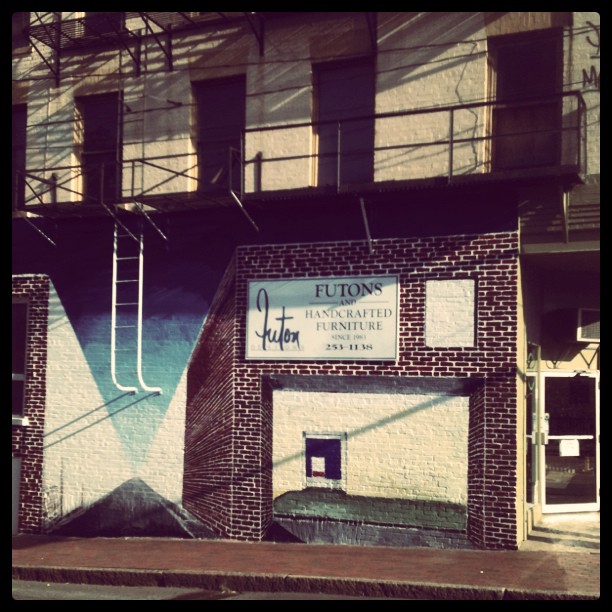
New downtown mural in progress.
New downtown mural in progress.
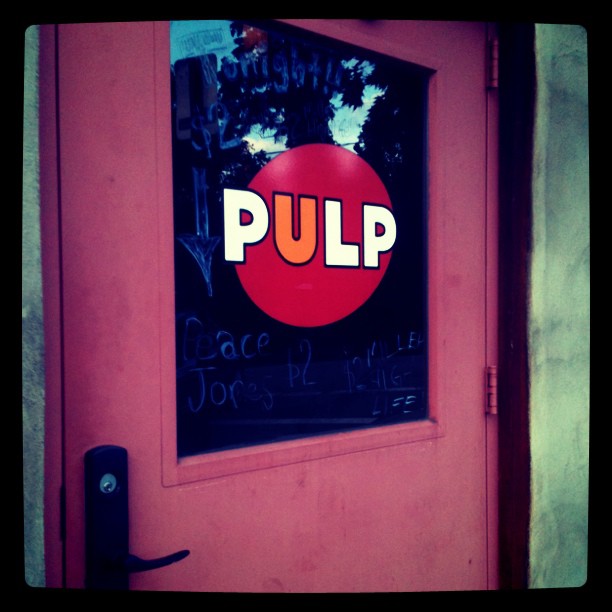
When is the next poetry at the Pulp?
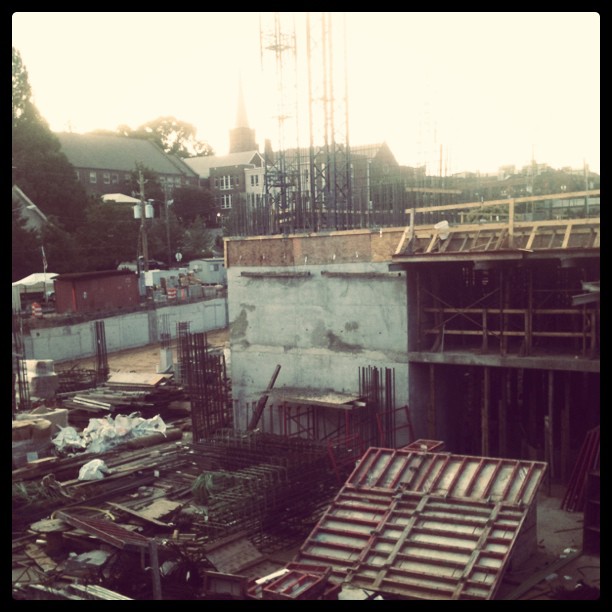
One day all your strange parts will be a monument.
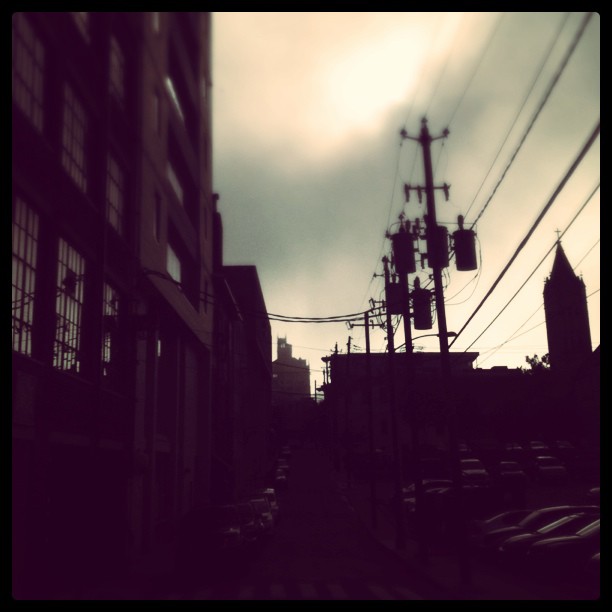
There’s a thick haze over the city this morning.
In September 2010 an idea was born to hold a poetry reading under a full moon at the Roof Garden of the historic Battery Park Hotel. Three weeks after that September afternoon, sixty people attended an invite-only poetry reading, book-signing and jazz show on Friday, October 22, 2010. The event was publicized almost exclusively through Twitter, Facebook and word-of-mouth and featured Asheville, North Carolina poets Barbara Gravelle, myself (Matthew Mulder) and Brian Sneeden with special musical performance by Vendetta Creme and Aaron Price. And thus, Rooftop Poets was born in Asheville under a full moon.
Since the Roof Garden reading, the Rooftop Poets have been invited to read at various venues and interviewed for newspaper and television. Brian’s poem “The Temple” (included in Rooftop Poets poetry book) went on to be the Mountain Xpress’s first place winner in their 2011 poetry contest.
If you missed the memorable evening last October, there are still a few copies of the limited-edition, 64-page book. You may purchase copies at Malaprop’s.
Rooftop Poets is a limited-edition, 64-page book of poems featuring the work of three Asheville, North Carolina poets.
Barbara Gravelle, author of several poetry books including, Keepsake, Dancing the Naked Dance of Love, and her latest collection of poems, Poet on the Roof of the World.
Matthew Mulder, one of the original members of the Traveling Bonfires, his poetry and prose have appeared or are forthcoming in Crab Creek Review, Small Press Review, The Indie, H_NGM_N, and other publications.
Brian Sneeden has produced, designed or written for more than a hundred theatrical performances. He is the current director and MC of Asheville Vaudeville.
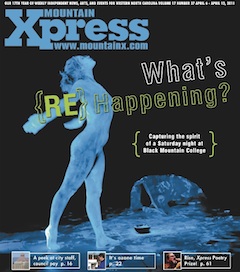
Selected from ten finalists by Keith Flynn, founder and managing editor of Asheville Poetry Review, Brian Sneeden’s “The Temple” won the 2011 Mountain Xpress Poetry Prize. Congratulations Brian!
Brian shared double duty Friday night at the 2011 Mountain Xpress Poetry Show as he and I were invited as members of the Rooftop Poets to read at the event as part of “the next generation” of Asheville poets.
The Poetry Show provided an excellent environment to read and hear local poetry. Each one of the finalists read well-crafted verse; from laundry to bath tubs. Laura Hope-Gill kicked off the evening with a wonderful collection of poems. It was also a special delight for me to hear Matt Owens and Mesha Maren of the Juniper Bends reading series present their work. I’ll spare you an event review. But I will mention that Jaye Bartell was the evening’s host and I would like to thank the person whose cell phone rang incessantly during the reading of my poem “The Last Chestnut Tree.” Without you I wouldn’t have been able to pull off that performance.
A wonderful and full evening provided by the Mountain Xpress team and talented local poets!
The sun is setting. The full moon is rising. The room is set up for tonight’s poetry reading and jazz show. The dark mocha stout cupcakes with…

The sun is setting. The full moon is rising. The room is set up for tonight’s poetry reading and jazz show. The dark mocha stout cupcakes with Bailey’s frosting look tasty. The supremo chocolate rum balls look like they could break several Prohibition-era laws. Time to get ready for the show.
The doors open at 7:30PM and the event begins at 8PM. Tickets are $10 each. Guests arriving at the Battery Park Hotel will be let in by a doorman who will have your name on a guest list.
See you all in less than two hours!
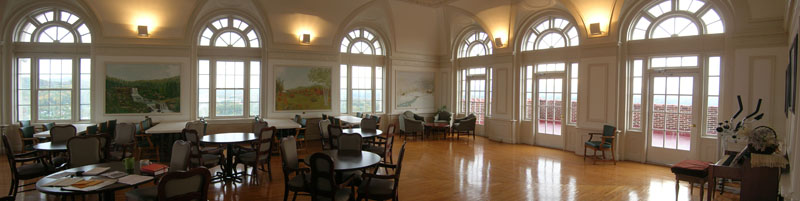
Time to set up the Roof Garden of the Battery Park Hotel for tonight’s Prohibition-era poetry reading and jazz show.
More event details are here: link.

Rooftop Poets
Barbara Gravelle, Matthew Mulder, Brian Sneeden
with music by Vendetta Creme & Aaron Price
1 Battle Square, Asheville, North Carolina
Friday, October 22 · 8:00pm – until
doors open at 7:30pm — event begins at 8:00pm
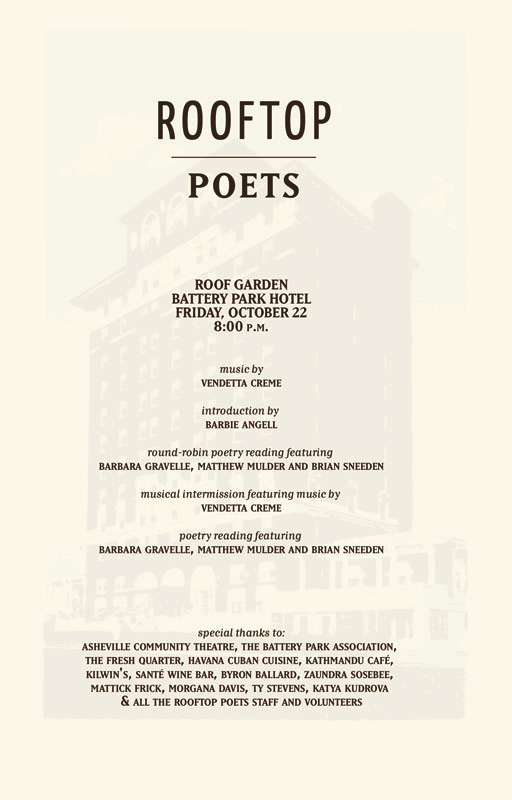
In celebration of the publication of Barbara Gravelle’s latest book, Poet on the Roof of the World, join the Rooftop Poets under a full moon on the Roof Garden of the Battery Park Hotel for a Prohibition-era poetry reading, book-signing and jazz show.
Local poets Barbara Gravelle, Matthew Mulder and Brian Sneeden will perform alongside the French jazz music sensations Vendetta Creme and Aaron Price at the Roof Garden of the illustrious Battery Park Hotel.
Tickets are $10 and include a signed and numbered, limited-edition, 64-page book of poems featuring the work of all three poets, as well as complimentary light refreshments and hors d’oeuvres.
Few people have access to the Battery Park Hotel’s Roof Garden. Join us for a fine evening of poems, songs and full-moon revelry.
Space is limited. Reserve your tickets today by emailing: info@coffeehousejunkie.com
The evening’s cast of characters include:
Barbara Gravelle, author of several poetry books including, Keepsake, Dancing the Naked Dance of Love, and her latest collection of poems, Poet on the Roof of the World.
Matthew Mulder, one of the original members of the Traveling Bonfires, his poetry and prose have appeared or are forthcoming in Crab Creek Review, Small Press Review, The Indie, H_NGM_N, and other publications.
Brian Sneeden has produced, designed or written for more than a hundred theatrical performances. He is the current director and MC of Asheville Vaudeville.
Cabaret singer Vendetta Creme (aka Kelly Barrow) and Aaron Price (piano, guitar) perform lesser-known songs from yesteryear. This duo scour the globe for their songs including material from five continents weaved into a seamless, unforgettable show.
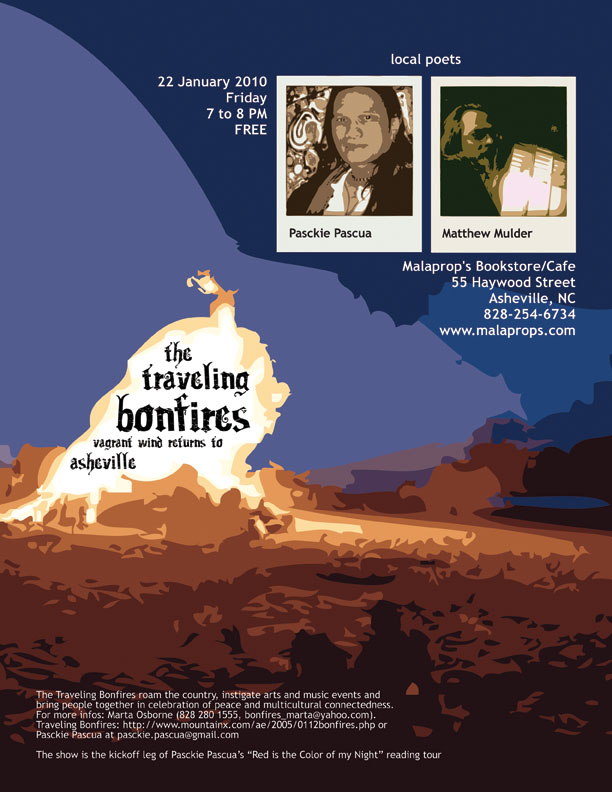
The Traveling Bonfires return to Asheville with a one-hour poetry reading featuring founding members Pasckie Pascua and Matthew Mulder.
Friday, January 22, 2010
7:00pm
Malaprop’s Bookstore/Cafe Street, 55 Haywood Street City/Town: Asheville, NC
// just returned from watching downtown fireworks from beaucatcher mountain somewhere on college st & mountain st. ice cream & fireworks ftw

fiddlin pig: thursday $5 lunch special includes a big boneless rib sandwich, side & drink… except i’m broke today…
// of course, i’ll catch the bus tonight. there’s no buses running today because it’s a holiday….. so much for the working class.

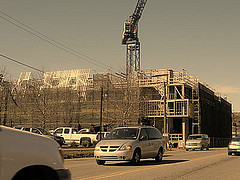
(photo by Coffeehouse Junkie)

Here’s some images from last week’s farewell poetry reading at The New French Bar. Sorry I didn’t post these sooner. I have been cur-AY-zee BIZ-ee (that’s listless lingo for “crazy busy”).

If you missed it… too, bad. The place was packed–standing room only! The entire Asheville literary scene was there… OK, maybe not the entire literary scene. Jeff Davis, Keith Flynn, Sebastian Matthews (BTW, congrats on your Pushcart nomination), Chall Gray and many more came to enjoy a night of poetry and say good-bye to poet Jaye Bartell.

Jaye invited several local poets to read and then he closed out the evening by reading from his chapbooks and yes–his beer coaster poems. His beer coaster poems are scheduled to be published in April 2008 by someone who I can’t remember. Anyone remember?
They arrived yesterday–thousands of them. Last night I received copies of the debut issue of D’licious Magazine. There’s something special–magical–about holding months of hard work, long hours and gallons of coffee in the final form of the printed product. Join me Saturday night for the d’licious magazine release party!
Here’s the details:
Saturday, August 5, 2006 from 7:00pm– until
Contact: D’licious Magazine at info@dliciousmag.com
D’licious Magazine will debut its premier issue. Come experience a taste of Asheville’s cuisine, entertainment, breweries and wineries at the Haywood Park Ballroom (1 Battery Park Ave., Asheville, NC 28801) underneath the Haywood Park Hotel in the heart of downtown Asheville.
Food and beverages provided by: Belly of Buddha Catering, the Flying Frog Cafe, the Frog Bar and Deli, Biltmore Estate Stable Café, Thai Basil, Hannah Flannigans, Skully’s Signature Dine & Drink, Digable Pizza, Greenlife Grocery, Sweet Monkey Bakery & Catering, Clingman Ave. Coffee and Catering, Zuma Too: Chef Oso’s Culinary Passport, Haywood Road Market, Sclafani Distributors, the Biltmore Estate Winery, Hanover Park Winery, the French Broad Brewing Company, Highlands Brewery and the Pisgah Brewery.
Additional sponsors: The Westville Pub, Kabloom, 96.5 WOXL, and the Art of Microbrewing by Stephen Patrick Boland and Kevin Marino.
Entertainment by: David Stevenson, Cabo Verde, Free Planet Radio and Jen and the Juice.
Purchase tickets today: The Haywood Park Hotel, The French Broad Brewery, Greenlife, Hannah Flannigans, Clingman Ave. Coffee and Catering, Skully’s Signature Dine & Drink, The Haywood Road Market, Orbit DVD and Diggin Art.
Tickets are $25 in advance and $35 at the door.
Instead of writing an eloquent report of last night’s reading, I will just post the notes I scribbled into my notebook. Yeah, if you were there, I was the one with my head buried in a notebook frantically writing. Blame it on my ADD tendencies. Apart from running spell check these notes are as they generally appear in my notebook–complete with poor punctuation, abbreviated thoughts and for some odd reason attention poets’ fashion. Right on … here I go …

Chall Gray
Breaks the ice nicely with a humorous poem about furniture and contrasts it with a poem about a brother and a sister who observe but do not talk about things. He wears a black long-sleeved button down shirt rolled up to the elbow–blue jeans–hair dark, pulled back into tight short ponytail. He ends with a moving homage to his departed father by asking “why.”
Ingrid Carson
Begins with a poem asking what color is the American dream. “What Now” is read second. She wears a black top, wavy brown hair pulled back, framing her face. “What am I going to do now?” she asks and ends; “What am I going to do now?” Her last poem is in two parts; “Still Life” and “My Hands.” She reads, “a violence of flowers…” She reads with purpose and poise and through delicate lips and intense blue eyes as if to say, I know something you don’t know and I have the floor for a few more lines. “You have pushed the mind to the limits…” She concludes that beauty is found in the ugliest of things.
Thomas Rain Crowe
Wearing all black–he tunes up a wooden flute–poet is participant–reads a letter to the editor of a local newspaper in Jackson county–admits he spent a lot of time writing editors. He reads of beauty and uses metaphor–King Kong movie cements his argument to turn corporate development back to nature’s beauty. He next reads an extended haiku written for Steve Earl for some event last year. “What profit? What Price?” he asks. “We can do better than this,” he concludes the poem powerfully. His poem “Peace Will Come” is accompanied by the evening’s featured keyboardist, Steve Davidowski. “Peace will come one day” is lifted over the ambient keyboard harmonics–his reading intensifies. “When peace comes to stay” ends his poem. He steps back, places the flute to his lips and plays–the keyboardist joins the melody which concludes that session.
Emoke B’Racz
First poem is recited in Hungarian. “Fragmented Life” is about her father who she says is bigger than life–sometimes everyday. “Try not to talk about the time,” she reads. She reads about her father’s internment camp experience: “Now take that.” She shares of the hard life of the punished young men in those camps. “Silently he left.. to give your youth for democracy…taken…” She wears a white blouse, gold necklace with pendant, black suit jacket–1965–“Poets Among Each Other” translated and published in 1970-something (’76?). “This is how we stand my brothers,” she reads her translation. It’s a short work. She rolls her tongue across her lower lip from right to left frequently before saying “I could use some water” then reads her last poem of the evening.
15-minute intermission
Will Hubbard
Reads several poems–long brown hair wrapped behind his ears–as he gazes down upon his papers it rests on his shoulders like a hood–he reads a poem called “Porn” with cynical tones of humor and wry sensibility. “5 for 5 for 3 Straight” is his last poem “and one learns where to leave off” he reads. His left hand casually in his pants pocket, his right hand holds his loose-leaf manuscript. “Saying it how it was originally said…” He reads as one might read a tele marketer’s script.
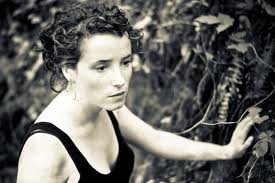
Rose McLarney
She reads a collection of poems concerning the over development of Madison county–lose of land to corporate contractors–overgrowth of urban/suburban sprawl. “Shouldn’t fight … farms let them go,” she reads. Her thin lips clip her words nervously as if she is unaccustomed to public reading. She wears a black sleeveless top with flowing flowery patterned skirt–hair pulled back, leaving dark curls to cascade down the back of her neck. Her last poem: “… the peace of the American South.”
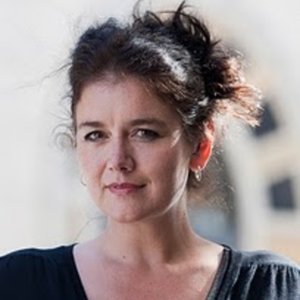
Laura Hope Gill
She tells of her BMC connections–reads “Ponco” with an eruption of words and demands social justice “when she was the question” referring to the dead old woman under a poncho many Americans saw after Hurricane Katrina–The image of a woman who died waiting for medical assistance in the aftermath of the hurricane that destroyed New Orleans. She wears hoop earrings, thin gold necklace upon her chest, low-cut white blouse and black sweater. She reads several poems of childhood witness “we slept in our bunk beds … spelled out in silk.” She reads about a stallion. She reads with proficiency and like Ingrid has a smile and sparkle in her eyes suggesting a joke that only she knows the punch line. Her speech skills draw several people forward in their seats. Or maybe its the hard wooden seats we all endure. “The wind of their grandfather’s song… ” she reads.
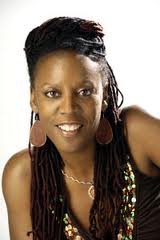
Glenis Redmond
“Enter through the door of war…” she begins after adjusting the microphone. “Grief is an uttering tongue.” She begins with a powerful recitation. She is a performer–practiced in public settings. Her second poem is “Lifting” about the Kenilworth slave cemetery near her neighborhood. “Bid us ride,” she reads. By far she is the most charismatic poet of the evening. “Looking back to the land where courage was born.” Due to the lateness of the evening she says she’ll only read three poems. Her next poem is about Nina Simone: “bitter aint born black.” Her final poem is a recitation: “Every time I hear King speak I feel a rumble…” she starts and concludes, “We shall.”
Flash fiction + Asheville = Flasheville.com
Flasheville published “Another Empty Glass” over the weekend.
Feel free to download a full-size poster I designed for The Traveling Bonfires.
(measures: 11″x17″, resolution: 200 dpi, file size: 631kb):
[Download Poster Here]
Bonfires for Peace at Pritchard Park
Saturday, Aug 6, 2005
3pm to 10pm
Downtown Asheville, NC
Featuring:
Dashvara, Large Lewis, Phuncle Sam, Sunshine
It was early February when I visited Eva Scruggs at her River Arts District studio. The recent winter storms had swelled the French Broad River above normal levels and I watched the ominous river on that cloudy afternoon as I drove to meet her.
Eva Scruggs welcomed me into her studio and we exchanged pleasantries. She offered me beer, tea or chai. “Chai would be great.” I said as I retrieved some recording equipment from my canvas messenger bag. She prepared a cup of chai and sweetened it with honey and added soy milk. She offered me the warm drink then sat down in her white floor chair and sipped her beer from an old mason jar. I pressed the red “record” button and began, “Tell me a little about yourself…”
“I guess,” she said. “I started oil painting at the age of six.”
There followed a brief discussion about art school. Eva told me that she had majored in art at the College of Charleston and later received a masters in art education in Tennessee. After that, she took some time off. I asked her if she thought it was important, as an artist, to unplug from art-making.
“Yeah, well, I had to for financial reasons. So, I mean, it isn’t that I ever really wanted to just focus on teaching art. It’s that I had to teach art to make money to feed my habit which is doing art.”
It seems that most of the artists that I know work a day job to fuel their creative passions. Maybe it’s not possible to be a full-time artist. Maybe juggling between art-making and waiting tables is necessary for artists.
“If all I had to do was be here in the studio and paint,” she said. “I would probably go crazy. I would probably get a little too self absorbed. You know how you can really drift into your own world. I need that world and at the same time it helps to keep… balance. So, I teach and I do organic farming during the summer time. And I’m a mom.”
“I really like to teach. I teach at AB Tech and I really, really feed off the new energy of new students… fresh ideas… There is something about the farming thing, too. I have to have at least a certain amount of it, you know. So, no, I wouldn’t want to paint full-time. I think I would go crazy.”
Our conversation weaved into an unsuspected path of artists being the true scientists and modern prophets. But I’ll save that for another time. I wanted to know what direction she thought art education is heading. She suggested that there are two branches of thought. “One is more academic, more exclusive amongst artists. Lots of MFA programs are focusing on what’s relevant to this century or even this half of century. But to me it seems kind of elitist. It seems like that’s going to be a view of art that only a certain amount of people can understand. It’s art for artists.”
“The other, which is sort of my path… is art to the people. Part of the reason I am a figurative painter is because I know that people relate and understand figurative painting. Common, average people understand basic symbolism. Part of my thing… is being able to communicate with people, everyday people. Not just artists who are going to understand the breakdown of elements and principles. So I paint… paintings that… have messages. I don’t paint them for someone to buy. I paint them to express this.” She gestures at the paintings around her. “I’d like people to see and understand and relate. That’s what all those biblical paintings are kind of about, too. Let’s rethink this story. You know, turn it around in a different point of view and modernize it to some extent.”
At the mention of the biblical series, Eva appeared more relaxed, more confident as if she had arrived in her sanctuary. She took a drink from her mason jar. It appeared she was ready to discuss her biblical series.
“Well,” she paused and looked at her hands which were covered in dark fingerless gloves. “It seems like when I started with the biblical theme… I was working on a different series. I was working on the states of human emotion. Trying to capture different emotions… through expression.
“Anyway, so the last one I did, of that series, was a self portrait with my child. After I painted it, I recognized it as a madonna, and I painted in the background a scene from the WTO protests in Seattle. That’s where it all got started. It’s called ‘The Jaded Madonna.’ The madonna is holding this child and she’s obviously concerned, and the child is open, wide open. But behind the mother… the police, decked out in riot gear… smog in the background from the gas that they’re releasing. So, it was kind of a statement.”
“And then it just sort of clicked in my mind,” said Eva as she motioned with her hands. She seemed focused on some point on the floor. “This is something a lot of people will relate to. It’s a biblical theme. It’s a classical theme. People look at it because of that and then… if you can get them in that far then throw something else in there that talks about modern culture. You know, it’s just the juxtaposition that makes a strange commentary. So, I feel I could run wild with that theme.”
I sipped the chai then asked her to tell me about her recent painting series.
“I’ve been working on a dream series just because I’ve had these reoccurring dreams throughout my life. I’m not exactly sure where they come from. But I figured that’s a way to address them, and maybe make them go away.”
“It’s not that they are really bad dreams,” she continued. “I usually have these water dreams where I’m swimming. I can see the top of the water and I know I’m almost out of air. So, I just keep swimming and swimming. But I can never quite make it to the top and I start somehow recirculating my air and… breathing in the water. It feels really good. Anyway, that’s what that one is about…” she said as she pointed to the painting over her right shoulder.
“And that one” she pointed to another painting across the studio resting on an easel. “An image I’ve had in my head for a long time.”
We spent more time discussing ideas, life and art (which I may write about later). But I knew she wanted to do some painting that afternoon. So, I thanked her for the chai (complimenting her on the way she prepared it), packed up my recording equipment, and left Eva Scruggs in her studio with the visions in her head that desired to be translated into pigment on canvas.
(Originally published in The Indie, March 2004 issue.)
 Coffeehouse Junkie
![[Download Poster Here]](http://img291.imageshack.us/img291/5659/pritchardparkeventaug69tt.jpg)