Does the world need another advertorial[1] on how to be successful in life and business?
This morning I read the article, “Books To Change Your Life And Your Business,”[2] on LinkedIn. It is rubbish. The books listed will not change your life, but might place you in a better neighborhood. Jeffrey J. Fox’s How to Become CEO[3] includes a chapter on required reading for those interested in rising to the top of the corporate ladder. It is a far better and engaging booklist than the one Linda Coles provides.
But, maybe Americans ask the wrong question. Maybe our culture seeks the wrong definition of success in life and business.
Earlier this week, Sunday morning, I was reminded that Americans who have enough to eat, adequate clothing, a place to sleep and a car, are in the top 15 percent of the world’s wealthiest. Further, if you have plenty to eat, a modest collection of clothing, a savings account, two cars and own your home, you are in the top five percent of the wealthiest people in the world.
What if success in life and business is simply a matter of doing what aught to be done? And doing it the best of an individual’s abilities?
NOTES:
[1] A “blend of advertisement and editorial.” http://www.merriam-webster.com/dictionary/advertorial
[2] “Books To Change Your Life And Your Business” by Linda Coles, May 21, 2014, accessed May 21, 2014, https://www.linkedin.com/today/post/article/20140521221520-33236097-7-book-choices-for-a-better-life The books mentioned in the article include: Choose the Life You Want by Tal Ben-Shahar, How to Win Friends and Influence People by Dale Carnegie, The E-Myth Revisited by Michael Gerber, Influence: The Psychology of Persuasion by Robert Cialdini and others
[3] Booklist from How to Become CEO include: The Bible, The Art of War, The Book of Five Rings, The Prince, The Complete Works of William Shakespeare, anything by Thomas Jefferson, The Sun Also Rises by Hemingway, and others.
During the last few weeks I have read an exhaustive non-fiction book on one of the darkest times of modern history. The result of reading such a book penetrates my soul. I wish I had time to share my thoughts and feelings regarding the book I finished reading, but due to mega commuting and long work hours allow me to share this video that merely scratches the surface of what captivates my thoughts.
When I looked at my office desk earlier this week, this question came to mind: Does this make me look Luddite? On the desk was a book on the subject of graphic design, a daily desk diary, a periodical, a mechanical pencil (not pictured), a tin of tea and cup of tea (also not pictured) and a smartphone (not pictured, because it was used to capture the image).
It does not escape my attention that I could use an internet search engine to locate similar content that I found the printed book. But I chose the book. And there are plenty of cloud based software applications that I could use to plan and track daily activity. But that was not my choice. A mechanical pencil is easily replaced with a keyboard and mouse. Again, that was not my choice. To my knowledge, tea cannot be digitized. At least not yet. And the smartphone. Well that is a device that continues to intrigue and perplex me. It is advertised to make life easier, smarter. But I have yet to get it to produce a good cup of Earl Grey tea on a misty morning when I’m tearing down the mountain to get to the publishing house to invest in another book project.
The origin of Friday the Thirteenth, as told by Damond Benningfield, comes from Norse mythology.[1] He writes:
First comes the fear of the number 13. According to one tale, 12 Norse gods held a banquet at Valhalla. A thirteenth god — Loki, the spirit of evil — tried to attend…
If you believe that the Norse have little impact on modern culture other than to inspire Marvel comic book movies (and an Emmy nominated television series on the History channel, Vikings), keep in mind the days of the week are named after Norse gods (Tiu’s Day, Woden’s Day, Thor’s day and Freya’s day). Here’s what Benningfield writes about Freya’s day:
Mythology says that when Norse tribes converted to Christianity, Freya was called a witch and banished to a mountaintop. There, every Friday, she hosted a coven of 11 other witches plus the devil — 13 in all — to plot vengeance against her former believers.
So, TGIF. And while you are in enjoying the day, give a listen to Óláfs Saga Tryggvasonar in the Viking language.[2]
It is an early summer morning. It rained the night before as I walk a mile or so before I climb into the car for the morning’s mega commute. The parking lot near my home is dappled with puddles slowly evaporating. It reminds me of when I first started taking black and white photographs in high school. One of my favorite subjects was reflections of the sky in puddles.
I don’t remember what initially attracted me to the subject matter, but I remember loading a 35mm SLR manual camera–either an Olympus or a Pentex–with a spool of film, pulling the leader and lining the sprocket holes with the sprockets, securing the leader to the spindle, closing the back door and advancing the film a couple frames. I’d sling the camera over my shoulder and head outdoors to capture a surreal glimpse of the heavens from the perspective of puddles on asphalt. Or pools of water on gravel roads or a grassy field.
After collecting images captured and hidden on a roll of exposed black and white film, I returned to the darkroom at the high school and processed the film. First developing the amber film strips and then placing it in the enlarger to make prints. The way the image emerged from the paper as it floated in the developer solution was no end of amazement for me–like watching an unseen ghost suddenly materialize. The image of a lamp post in a puddle near the grainery, the water tower with clouds dancing from the pavement, the side of the building of the Coal Miner’s bar on Main Street or a self-portrait reflecting in a pool of water in an alley.
Something about a reflection seen from a different perspective captivated me. How can I look at a subject differently? How can I view it from a different angle–another perspective? I guess that’s how I approach a lot of things today–asking myself, What’s the wider context? Some days I just need to take a long walk on an early summer morning and look for those puddles, search for a different angle of the sky, watch the fog on the mountain tops from a mud puddle. Maybe a distorted, impressionistic reflection will inform me of something I didn’t see before.
What do you mean by audience of one? one reader replied to “Keep calm and write something.” He is referring to how I concluded a blog post: “If I have an audience of only one, that is sufficient.” So, what does that mean, an audience of one? …
[read more]
UPDATE: This blog post is available as part of an audio podcast.
Over the weekend, an editor made a comment on Facebook that got me thinking about the question, how did you come to poetry?
My response is not an academic reply. The mechanics of poetry make the art good and great. But the best way to ruin poetry for young minds or new readers, is to have people study the architecture of a poem–its meter, rhyme, enjambment, stanzas, etc. Is this the way you learn about a new home? When you enter a friend’s home for the first time, do you inquire as to house’s foundation (is it a slab foundation?), framing (stick frame or post and beam?) or roof (you get the point)? So why do educators insist on destroying poetry for young readers? Make the home inviting. Make poetry inviting.
As a poetry reader, I approach a poem (or body of poems) as I would a new home of a friend I just met. I enter the door, look at the paintings on the wall, run my fingers along the spines of the books on the shelf, scan over the vinyl collection beside the stereo and sit on the futon near the front window. This is how to see what the poet sees through the window of the poem. This is when I see what the poet says about love, injustice or various other subjects and topics.
Not all poems are created equal. Sometimes I get the impression that someone or something is shouting at me from an open door. I tend to quicken my steps along the street and find a more inviting home–a more inviting poem.
Poetry is not something I studied in school. There were, of course, the required literature classes, and some teachers that opened the landscape of great poetry and prose. But for me, someone left the back door to the house of poetry open and I slipped in to explore. A house doesn’t seem so intimidating or formal when you enter, casually, from the backdoor.
Since Sunday was Father’s Day and since it seems like my brief, lunchtime glimpse into the strange land of Facebook yielded streams of my-dad-is-wicked-cool accolades, I thought I’d revisit something I wrote a little more than a year ago.
Rebuttal to TIME Magazine’s cover image. [17]
“Are You Dad Enough?” was initially written as a reply to all the hullabaloo regarding a cover story (and its evocative cover image) published by TIME. Truly, the subject of masculinity and fatherhood has been on my mind for a very long time. I dare say it goes all the way back to a time before mobile devices and internet (and in my case, before color television). I’ll offer two brief thoughts and then repost last year’s “Are You Dad Enough?” piece.
1.
On a school playground miles to the east of the river explorers named Holy Cross, an older classmate told me that my father was not a real man because he had the word reverend in front of his name (like some men have the words officer or doctor in front of their name). So, I did the only civilized thing I could think of at the time and challenged him to a fight. I had read of such noble duels in books. And that began question, what is a real man? There’s a lot more to that story, but you will have to read that another time, but that set the for stage learning about true masculinity and ultimately fatherhood.
2.
Upon being a father for the first time, a friend suggested I read a book called Wild at Heart. I did not get very far into reading this book for a couple of reasons. One reason is the author’s gobbledygook claim that real men do not work in offices or cubicles and that real men are found kayaking down rivers in Colorado. [1] Another reason for putting the book aside is doctrinal error. [2]Iron John is another book on masculinity, or maybe it should be better described as the masculine mythos. [3] The author claims it is more of a fairy tale than a book about men, but he strikes a chord with the need for fathers to be present and be part of the process of the maturation of boys to manhood and fatherhood. [4] One book that made the most impact on my thoughts on masculinity and fatherhood is a book that is now out of print, Missing From Action. [5] It’s more of a history book about American masculinity, but a very good read. Again, I have more thoughts on these books and what I’ve learned, but you’ll have to read that at another time.
Here’s the piece, as it appeared last May:
Are You Dad Enough?
What do you think about all the reaction to TIME magazine’s recent cover featuring an attractive blonde mother breastfeeding her son? [6] [7] [8] [9] The fact that a nurturing mother evokes such outrage is amusing to me. [10]
This public response to a magazine cover begs the question (at least in my mind): would TIME ever run a story titled “Are you Dad Enough?” and cover the nurturing aspects of fatherhood? [11] Another question that comes to mind is: when was the last time you saw a father portrayed as a responsible father on the cover of TIME magazine? Or any other mainstream periodical for that matter? Has the model of a loving father vanished from the landscape of American culture? [12]
Plenty of examples of fathers are portrayed on television, but I’m not talking about the Tim Allen “Aarrrgghh, Aarrrgghh, Aarrrgghh” type dads who think going to a sporting goods store is fatherhood. Nor am I talking about the According to Jim beer-guzzling, television-watching, misogynists who seem to mess up everything and then Cheryl has to come in and fix the problems before the end of the show. This portrait of American dads is degrading to those fathers out there who manage to change a child’s diaper, wash the dishes, do the laundry, fix a plugged tub on a Sunday morning when everyone needs a bath before church, [13] play trains with the younger children or stick ball with the older ones, and, in general, serve and sacrifice for their family. [14] I know plenty of fathers who are working crumby jobs just to feed their families and take care of their homes. They sacrifice their own dreams and aspirations because that’s what dad’s ought to do.
Now there are plenty of derelict dads out there who sit around and play video games all day, try to be cool with their kids and consider their children cultural objects. They are poor examples of fatherhood. Dear boy-dads, grow up. You are fathers now. You are no longer cool, hip, or awesome. Fatherhood is a difficult, thankless but ultimately rewarding vocation. Fathering a child only takes moments. Fatherhood is a lifetime commitment. Join the ranks of nurturing, responsible fathers and own it with dignity and grace. [15]
NOTES FOR THE PREAMBLE: [1] Full disclosure: I never finished reading Wild at Heart because I was so put off by the author’s logical fallacies… I mean, did the author not consider that some of those real men he is insulting work in a dimly lit publishing company office preparing his book for the masses and on the weekends they may have the adventure of kayaking down a Colorado river? [2] Tim Challies, “Book Review – Wild At Heart,” June 3, 2004 accessed June 17, 2013, http://www.challies.com/general-news/book-review-wild-at-heart [3] One book reviewer summarizes the book best, stating: “Iron John’s thesis is provocative yet simple: fathers aren’t doing a very good job of raising their sons because they are “absent” and also because our culture has lost the use of ritual in marking off the phases of maturation.” Read the rest of the review here: Brian Charles Clark, “Iron John: A Book About Men,” 2005 accessed June 17, 2013, http://www.curledup.com/ironjohn.htm [4] Here’s a quote from Iron John: “The inner boy in a messed-up family may keep on being shamed, invaded, disappointed, and paralyzed for years and years…. Most American men today do not have enough awakened or living warriors inside to defend their soul houses. And most people, men or women, do not know what genuine outward or inward warriors would look like, or feel like.” But don’t take my word for it, buy a copy and read it for yourself. [5] It is difficult to find a copy. You may want to try a search on AbeBooks.com. UPDATE: I located a website that hosts the content of Missing From Action, accessed June 17, 2013, http://www.ccel.us/missingfromaction.toc.html. NOTES FOR ARE YOU DAD ENOUGH?: [6] In my opinion, the reaction to the “Are You Mom Enough?” TIME cover is a combination of paleo-puritanism, meso-feminism, and neo-idiocy. Accessed June 17, 2013, http://www.time.com/time/covers/0,16641,20120521,00.html [7] “Mika Brzezisnki… suggested on the air that the cover was needlessly sensational…” in the article TIME Magazine cover of breastfeeding mom sparks intense debate on “attachment parenting.” Accessed June 17, 2013, http://www.cbsnews.com/8301-204_162-57432374/time-magazine-cover-of-breastfeeding-mom-sparks-intense-debate-on-attachment-parenting/. [8] “Time magazine staff writer Kate Pickert defended the cover” saying “I think that we knew it would be a provocative cover but we’re thrilled that lots of people are responding to it… We’re happy to see that we’ve sparked a great conversation.” Read more: Breast-Feeding Time Cover Mom Responds to Critics. Accessed June 17, 2013, http://abcnews.go.com/blogs/lifestyle/2012/05/breast-feeding-cover-mom-responds-to-critics/. [9] “There is no doubt that the TIME cover strikes the public as shocking. But, as Pickert points out, the women featured are at one extreme end of this always-controversial discussion.” Read: Jamie Lynne Grumet, Breastfeeding Mom On ‘TIME Magazine’ Cover, Illustrates Attachment Parenting. Accessed June 17, 2013, http://www.huffingtonpost.com/2012/05/10/jamie-lynne-grumet-breastfeeding-time-magazine-cover_n_1506096.html. [10] It is no longer shocking. At least, not to me. But maybe that’s because, as a culture, Americans are desensitized to shock. What really shocks us, as Americans, any more? [11] Can you imagine a bare-chested attractive father on the cover of TIME magazine? Okay, maybe a bare-chested Brad Pitt with his children might sell magazines. The truth is, magazine publishers need to sell magazines and a female with suckling will sell more copies to the over-sexualized masses than a cover of the opposite proportions. Think of the last few covers of TIME magazine that featured a male figure. Almost all of those covers feature men of power and influence. Has there ever been a magazine cover featuring a nurturing father? [12] If I were a conspiracy theorist, I might propose that there is a war on true, masculine fatherhood in America. But I’m not a conspiracy theorist. Just thought I’d beat you to the punch before I get pushed into that corner. [13] Not that I’m using personal examples to boast of more “real” dad credentials, but fatherhood is about serving and sacrificing. [14] That is where the “amen,” “hell-yas” and other forms of applause is supposed to go. Read this post again and respond accordingly. [15] This post started out as a light-hearted, tongue-in-cheek imagining of a bare-chested father on the cover of TIME magazine, but became a rant. Apologies for the sudden fury. And blessings to those who actually read the small print. [16] PHOTO CREDITS: Though I created the mock TIME magazine cover, I found the retro father with children photo on this Tumblr page.
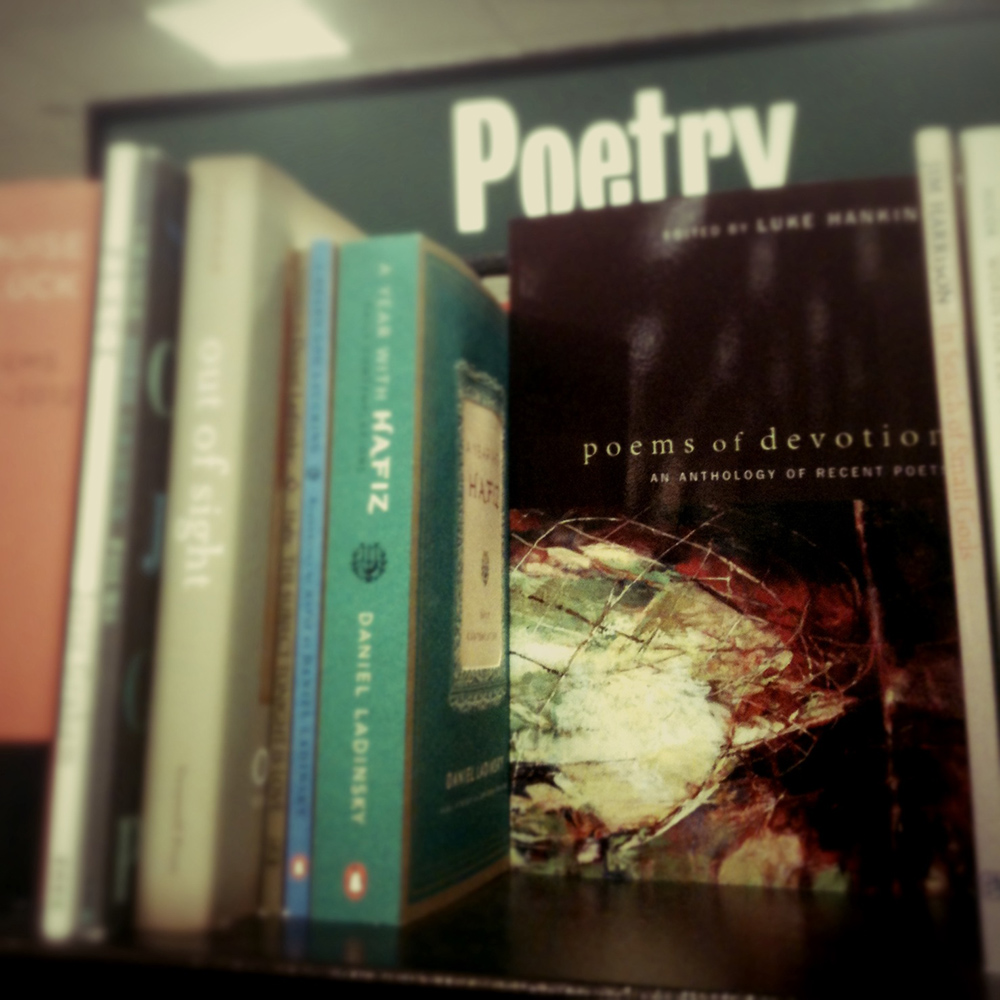
That’s the question I asked myself when I saw four copies of Outliers and three copies of The Tipping Point at the downtown public library. Does the library need that much Malcolm Gladwell? Yet, I can hardly find seven books written by Vonnegut. I was able to locate at least seven books by Hemingway but not all that much on Steinbeck. The experience got me thinking.
Gladwell’s book The Tipping Point is an interesting book, but how will it stand up over the years? It’s a bestseller now, but in 50 years, or 100 years, will it still be impacting readers?
Along a parallel track, will your favorite blogs have the same readership in 50 years? Some of the blogs I used to enjoy reading eight years ago have disappeared from the webosphere a few short years ago and the writer’s voice I looked forward to hearing is no longer there.
But books remain. Whatever their legacy, they have a space, or more, on the bookshelves of a library. At least for now.
What do you think about when you see a stack of books? In this short collection of stories you will also learn what a creative director thinks of when he sees a stack of books. Who is the audience for your poems? Is possible to write in your sleep, or not?
Have you ever typed a message into your smartphone and the autocorrect delivers an amusing sometimes intriguing option? That’s were the title of this post comes from. I was trying to text: scrambled eggs and toast please. Don’t ask. It’s been a long weekend, but I wanted to provide an update to a February post [1] where I detailed the number of poems submitted to publication and how many have been accepted. And the grand total is: none. I haven’t heard from all the publishers yet, but so far it has been rejection letters and emails. [2]
And now, scrambled eggs and poets.
It is a rare evening these days when I am able to attend a literary reading in my adopted hometown. The Juniper Bends Reading Series for May [3] featured Mandy Gardner, Collin Garrity, Rose McLarney and Jerry Stubblefield. I arrived late, but enjoyed a truly amazing reading. The highlight, for me, was Rose McLarney’s reading. It had been almost seven years since I first heard Rose McLarney read her poems at the Black Mountain College Museum + Arts Center. And since then, her acclaimed collection of poems was published by Four Way Books. [4]
After the reading concluded, and this is where things get a bit scrambled, I waited with others to chat with the poets and writers. The longer I waited the more I wanted to ask her about the publishing process. How did she manage to get her collection published? What tips would she recommend? You know, all those predictable, pithy questions unpublished poets ask published poets.
And then, like Billy Pilgrim, [5] I sort of time travelled. No longer standing inside the crowded Downtown Books & News, [6] it was night and I was walking up Eagle Street toward Pack Square Park with a poet how was asking me, “How do I get my poems published? What tips do recommend?” With my experience in publishing, I began telling her any information that I thought might help. And then, as we were parting ways, I was telling her not to sweat it, “When the poems are ready, the audience will be there.”
And then, I time traveled back to May 2013, it was night again. I walked to my auto as a SUV full of kids drove by with the windows down. Their ruckus noise spilt onto the street. They slowed and someone threw hot pennies at me. They sped away. Why do kids heat pennies with cigarette lighters and throw them at complete strangers? I entered my car and drove home saying, “When the poems are ready, the audience will be there.”
More scrambled eggs and poets.
Scrambled yet? Don’t worry. It’s Monday. You have the whole week ahead of you.
Let’s do some more time traveling. Last year, I provided some teasers for an upcoming book. [7] The manuscript is nearly novel length and I’ve sought out a couple editors to assist me. Truly, this is not a story I wanted to write, but it has found me and apparently an audience.
NOTES:
[1] So far, I’ve submitted almost 70 poems for publication. You can read the details in the post: 50 poems in 30 days
[2] Why do poets write, if not to be published? These thought have occupied my thoughts since last week’s post.
[3] Juniper Bends Reading Series
[4] Four Way Books
[5] Everyone knows who who that is, right? And if you have to google it, just know that it is not the American folk musicians from Atlanta.
[6] Downtown Books and News
[7] You may read the teasers here
“If you don’t know where you’re going any road will get you there.”[1]Is it writer’s block? Procrastination? What’s keeping you from completing that collection of poetry or that novel you started years ago and you can’t quite get around to finishing it?
A few years ago I sat in a writing workshop and noticed that I was the only member of the group under the age of 50 years old. Further, most of the students at the workshop had been working on a memoir or a novel or something that began at a university. Now enjoying their retirement, the nostalgic desire to complete these literary works grip those writers who had been dribbling out small passages of poetry and prose for what seems to be my lifetime.
I determined at that time to set writing goals and not let time slowly bleed me of creative efforts. So, I adapted some of the productivity and time management skills I use at work to my writing life. Here’s some productivity, or time management, habits I practice at the office.
1. Don’t check email first thing in the morning.
At the office, I schedule two times a day were I read and reply to emails: once in the morning and then again in the afternoon. If I reply to every email that lands in my inbox at the moment it arrives, I would spend more than half the work day reading and replying to emails. I found that if I batch tasks, like emailing, I can maintain focus on accomplishing those tasks more efficiently.
2. Make a list.
First thing I do when I get to the office is make a list. This is a combination of project management and mind-sweeping. This activity allows me to organize and prioritize large and small tasks for the day and week.
3. Declutter the desktop.
This is something that is both on- and offline. And by “declutter” I don’t mean empty your desktop of everything. Declutter has to do with a collection system. How do you collect the papers or files? Years ago I began the practice of collecting items in folders based on the 43 folders system. Here’s how it is presented by Merlin Mann:
identify all the stuff in your life that isn’t in the right place (close all open loops)
get rid of the stuff that isn’t yours or you don’t need right now
create a right place that you trust and that supports your working style and values
put your stuff in the right place, consistently
do your stuff in a way that honors your time, your energy, and the context of any given moment
iterate and refactor mercilessly[2]
Again, the goal of this practice is not to have a clean, empty desktop, but a productivity system in place to help get things done.
4. Plan. Revisit the plan. Stay on task.
Your co-workers and supervisors think every task is an emergency and everything is a priority. Planning and staying on task is one of the most annoying practices my co-workers and supervisors must endure. Yet, unless I identify the goals and chart a trajectory to hit those goals, I’ll never me able to meet deadlines on time or successfully accomplish projects. How does the old adage go? If you don’t know where you’re going, any road will get you there.
Let’s do this!
Avoid waiting until you retire to complete that novel you’ve been working on, or that collection of poems you’ve been tinkering with for years. Find a writers group that can help you with accountability and encouragement. It is written that no one knows the number of his or her days. Our life is a shadow.[3] Whether it is writer’s block, procrastination, internal or external distraction, find that writing project you’ve been working on and commit to finishing it.
This is a question like a sliver that gets under your skin. It is like that wood splinter you received from running your hand along a wooden fence and the painful acceptance of it to the soft spot below your thumb sends you to the medicine cabinet where you try to remove it with tweezers. But it’s too deep and requires a poultice to draw the splinter to the surface for removal. It is that way with answering the question, why do poets and writers write?
In an online discussion[1] of poets and writers and arm-chair philosophers, I offered this to the ongoing conversation: Emerson wrote that “The poet is the sayer, the namer, and represents beauty.”[2][3] This rings true as to why writers write. Years ago I heard someone say, “We are God’s poème.”[4] (Poème derives from the Latin word poema meaning poem.) I have often pondered that as an answer for why writers write and wonder if that is what Emerson had in mind when he wrote those lines. We are God’s poem, that is why we say, name, and represent beauty.
What are your thoughts on the matter? What motivates you to write? and why?
How do you manage your online and offline activities? Okay, I am assuming you do manage your online and offline activities. For many people, time management is something that is not practiced–especially as it relates to blogging and social media. If you have an idea or thought, you post it on Twitter, Tumblr, Facebook or blog it.
True confession: I was one of those who did not manage online and offline activities. When I finally purchased a smartphone, I immediately downloaded all the latest and greatest social media mobile apps to stay connected. Or, at least, that was the reasoning. It was difficult for me to understand why some of my friends (online and in-real-life) were not more engaged in social media. For the most part, I disregarded them off as neo-luddites. Yes, I was a social media snob.
That all changed when I joined the ranks of the mega-commuters.[1] With long commutes to the office, there is limited time to engage in blogging and social media with out planning. Or at least, not a safe way to do it while driving through city traffic and mountains roads. Additionally, with the weight of leadership decisions and somewhere between 50 to 75 tasks per week, I rarely check my personal email or check social networks until the weekend.
So, for the last year or so my blogging and social media posts and updates have been automated. More accurately, most blog posts are scheduled using a WordPress feature and social media posts and updates scheduled using Hootsuite.
Saturday mornings or Sunday nights tend to be the time when I write online posts/updates. However, that doesn’t seem the best time to engage people. A couple articles I read [2] [3] suggest when the best time to post content on blogs and social media. So, I preschedule the posts, tweets, and other social media updates on the weekend. Sometimes I preschedule posts and updates as much as 14 days to a month in advance.
The downside of automating posts and updates as the lack of engagement. Sure, the content gets out there on a regular basis, but there’s little or no conversation taking place. This also means I miss a lot of the activity and conversation that is taking place on blogs and social networks. Some Saturday mornings I will spend a whole hour replying to comments on social media sites from the previous week. The point of social media is sharing and interaction.
In a manner of speaking and due to my present circumstances, I’ve sort of become one of those neo-luddites I used to snarkily snicker at. It’s humbling to realize how much of an idiot I had been regarding social media snobbery. Not everyone has the luxury of being accessible to social media. And, quite honestly, terra will continue her daily rotation speed of 1070 miles per hour regardless of my social media activity (or lack thereof).
Where did April go? It’s a blur to me. In truth, most of this year has been a blur. If you journal or keep a diary, you understand the benefit of review. If you blog you know that you should be able to write a blog post in 70 minutes or less[1] and should have five main components including:
Lead Paragraph.
Relevant Image.
Personal Experience.
Main Body.
Discussion Question.[2]
Make sure you publish your post between 8 AM and 11 AM on a Monday morning[3] and include bullet points. A blog post without images and bullet points is highly ineffective. Yes, I’m a bit sarcastic. But don’t you feel that blog posts seem dehumanized by formulas for effectiveness and templates for success?
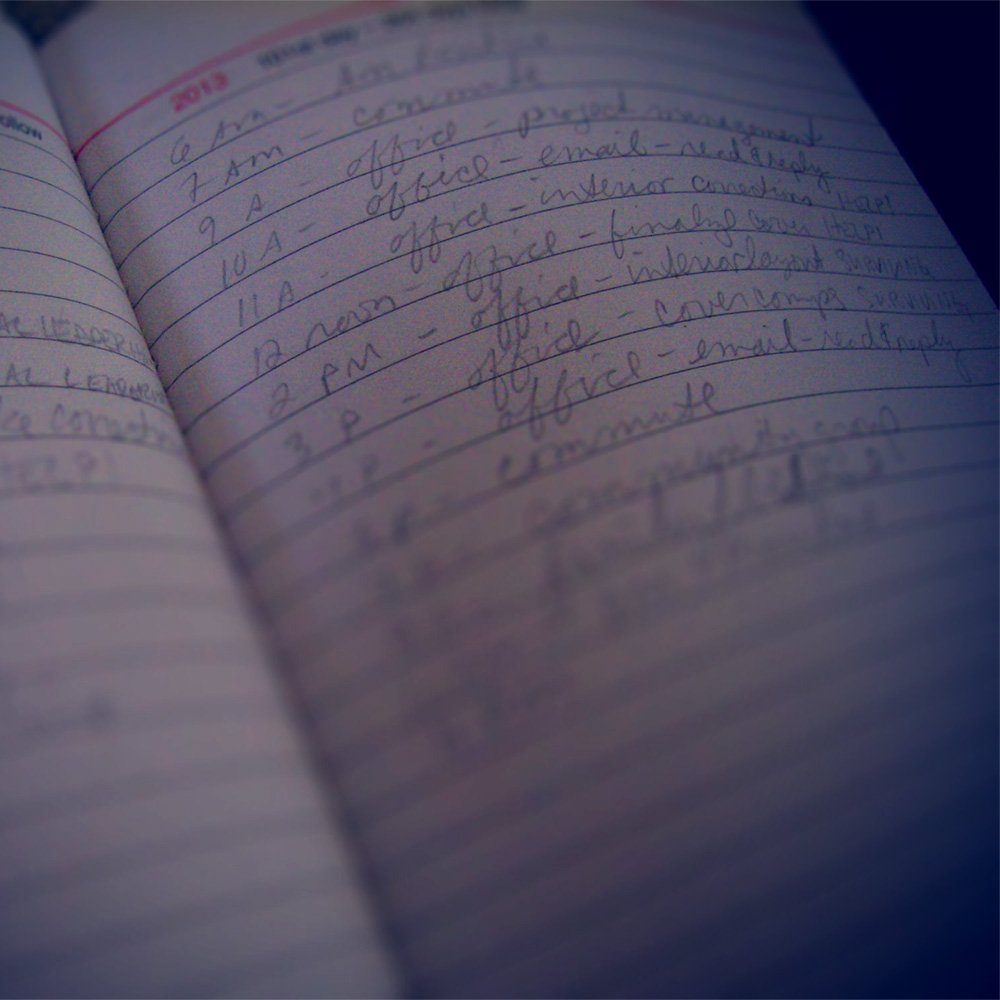
I look at my journal pages and see business cards and receipts stuffed between pages. On one page there’s a list of numbers (after deciphering them, I realized they are the CMYK break down of a turquoise color for a book project). Another page has an appointment date and time crossed out. My favorite is an unfinished note at the bottom of one page that simply ends mid-sentence. No conclusion. Random, incomplete entry. Even productivity guru and author of Getting Things Done David Allen tweeted a few months ago:
“Life is messy; that’s why it’s so dynamic.”[4]
May is almost here. Glancing in the rearview mirror of analog and digital review helps me set goals for the horizon seen through the windshield. If this were a highly effective blog post, I would include a discussion question like: “How does journaling help you create dynamic goals for the next 30 to 90 days?” But this is not a successful blog post even though it has bullet points and an image.
One of the book cover designs I promote on the social network Behance.
“Why share our work in social networks?” was a question recently asked on a professional forum. My reply: two reasons: 1) promotion and 2) personal brand. It was a Malcolm-Gladwell-Blink response and I clicked the “add comment” button without much thought (which is not my usual practice). My thoughts still linger on that question, “Why…?”
A few months ago I came across a few articles asking the question “Does social media promote or enable narcissism?” [1] [2] The article that impacted me most was from a source I never read. In the post, the author, Dodai Stewart, reflects on piece in The New Yorker and her comments are stinging and self-revelatory.
Just look around: Between Twitter, Facebook, Tumblr, Instagram and Pinterest, the whole ME ME ME thing has swept the nation. Here are MY thoughts, MY pictures, MY shopping wish lists! We call it sharing, but it’s just egoistic self-indulgence, usually. LET ME TELL YOU WHAT I WANT. But wait: Enough about me… what do you think about me? [3]
Hm, narcissism and self-absorption. Herein rests the lingering thoughts of a week or so ago.
As a professional, promoting my goods, services and whatnot help to grease the gears of capitalism, right? Conventional wisdom (or at least American business wisdom), purports that if consumers are not aware of your product/service, customers will not purchase from ME. So, I am advised by business owners and other professionals to promote MY skills, services, products, etc. And not only that, I need to establish MY personal brand (so that consumers can be more emotionally and psychologically invested in the products/services I provide).
Maybe social networks are not promoting narcissism and self-absorption as much as one might think. There may be a greater systemic issue that only social networks magnify.
It is twilight. A meager meal of potatoes and cheese provides a father and his children sustenance. As they eat he tells them about a son who lived a long time ago in a far, distant land. He was the son of a samurai and is famously know for his poetry…. [read more]
UPDATE: This blog post is available as part of an audio podcast.
What do you think about when you see a stack of books? In this short collection of stories you will also learn what a creative director thinks of when he sees a stack of books. Who is the audience for your poems? Is possible to write in your sleep, or not?
Earlier today I notice that Poetryblogs.org features my blog (I guess this means I should update the blog more often). Thanks for visiting Coffeehouse Junkie’s Blog and hope you return and share what you like. If you’re a new reader of Coffeehouse Junkie’s Blog check out the 10 most recent blog posts listed in the right column, the most liked posts in the left column and search through the subject list in the lower right column for content that I’ve contributed since 2004. You may also sign up for email subscription to this blog so that every time I post something new, you receive an email.
Dear friends and loyal followers of Coffeehouse Junkie’s Blog, I do intend to write more posts. Presently, I am buried in work as creative director for an international publishing company. Until I finish designing other writers’s book covers, blogging will be limited. Enjoy browsing some of the recent book designs here, here, here and here.
Beedy Eyes stops thumping the skins as Chaney sings an old Leadbelly work song as I recall the first time I heard the blues. It was somewhere between the music I heard as a child–primarily country, gospel and hymns. A skinny toe head growing up on the rolling northern prairies, I perceived the blues was somewhere between country and gospel–something you sing while dangling your feet off a hayrack weighed down with a full load, something you sing with others coming in from the field, something you sing when the sun is tilting toward the western horizon. For a young kid hearing the blues for the first time it was somewhere on my musical landscape between religious and profane, respect and discent, right and wrong, joy and despair and seemed to fit me like a glove.
The window is open to an autumn afternoon as I work on graphic design projects. I listen to Bill, Chaney and Junior sing about hard times. Neighborhood dogs barking and birds singing seem to be appropriate backup. It’s been hard times for a lot of us. The other night I walked into a friend’s home and he asked right off, with a smile, “Anything you need to repent of? We’re talking about repentance.” Yeah, I think to myself. I got a long list. There are times I want to rob and steal, cuss and swear, break stuff and hit someone and be all sizes of trouble. Hard times is life. Doing what I aught to do is not easy. Ain’t that the blues? Or is that gospel? The double edged swing of the blues kicking up the dust of life in your face, choking on pride and praying that you “remember you’re walkin’ up to heaven, don’t let nobody turn you round.”
While I wait for editors to reply to my narrative non-fiction submissions, I grow impatient and want to post these writings on this blog. Some teasers like Shuffling through the ruins of a summer and Ma Rainey, don’t sing them blues no more were released. One astute reader provoked this post: Yes, it is true. But on the advice of published writers, I can’t post much more without jeopardizing publication. So, I wait. Keep writing. And reading. This weekend one blogger reminded me of OctPoWriMo–31 poems/31 days. This seems to me like a good exercise to do while I wait on editors.
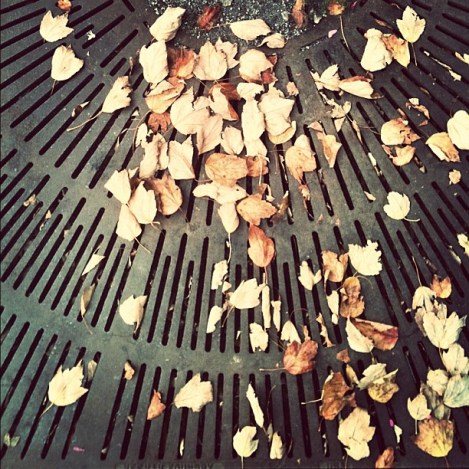
In this scene, the main character stands on a busy sidewalk beside a slender tree. He looks down at the scattered ruins of a summer of expectations. “How should I have prepared for this?” he asks himself. “What do I do now?” He feels relief and that surprises him. This is a new beginning. A fresh start. Unlimited opportunities. However, this is also the first time in his adult life he is unemployed. And without an automobile. Adjusting the strap of his laptop attache, he walks up Lexington Avenue to catch a bus. The feeling of relief is quickly replaced with a deep, consuming despair. In this scene, the crowds of tourists walking down College Street talk loudly and trample the gathering leaves under their shoes as the main character weaves his way toward Pritchard Park. He doesn’t hear them, only hears the sound of his own boots on the sidewalk and wonders where will he be a year from now.
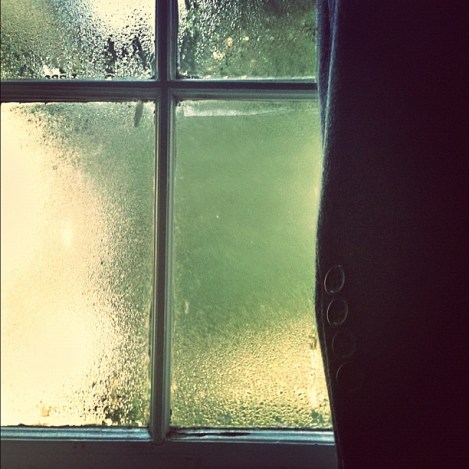
There’s a story behind this image that wants to be told. It’s a reminder that seasons and people transition. Loyalty tested against the panes of transparency. Everything goes sideways when turning the corner and down the street of uncertainty, when faith and doubt pressed up against a steamy autumn window and all they see is loss. It’s a story still worrying the line. Still blue enough, blue enough, still bluer than Ma Rainey singing “Bo Weevil Blues.” It’s a story where the clarinet sweeps back and forth, sweeps low and easy, sweeps in a song looking for a place to stay, sweeps in a song saying “don’t sing them blues no more…” Don’t tell me ’bout the job you lost. Don’t tell me ’bout your broken down car. Ma Rainey, Ma Rainey, “don’t sing them blues no more…”
A very observant reader and friend asked of this week’s post: “Is this story related to the teases from other photos?” Yes, they are all teasers for scenes from a narrative non-fiction book I’m writing. Some of the chapters have either been sent or are in the process of being sent to journals and magazines for publication. I am waiting on editors at this phase in the process.
There’s a story I want to tell you about double red doors, but I can’t. Not yet. You see, the problem is that the story awaits an editor’s approval to publish. I can’t tell you which editor. I can’t tell you which publication. And I can’t post anything online without jeopardizing the publication of that story about her and an empty cup of liquid truffle and a vacant building with double red doors above a flight of steps and I may have said too much.
 Does the world need another advertorial[1] on how to be successful in life and business?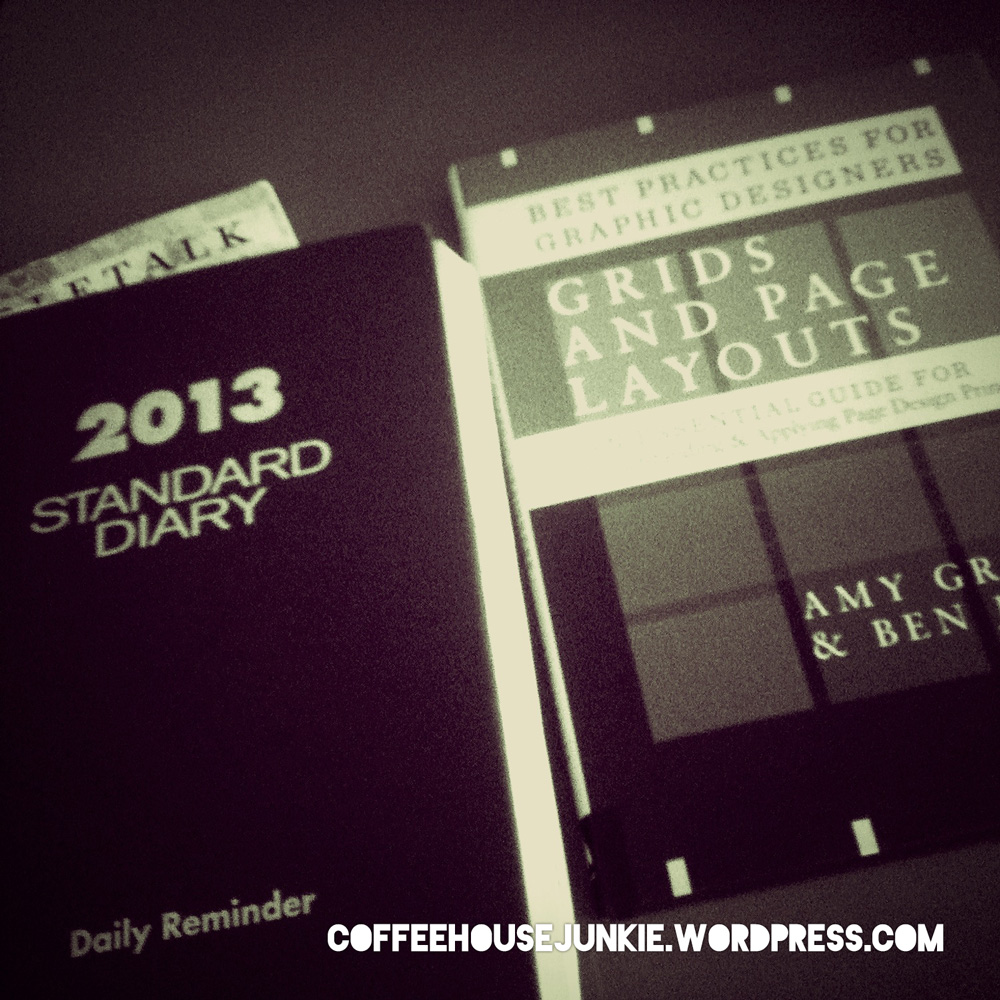




![...any road wil get you there.[1]](https://coffeehousejunkie.net/wp-content/uploads/2013/05/tumblr_mlgvegmtir1qz6f9yo1_500.png)





 Coffeehouse Junkie