You know you can download your Twitter archive, right?

Screen shot 2015-02-18 Lomo Blue Jay
You probably already know this, but Twitter allows users to download every tweet they ever tweeted.

While trying to search for an old tweet about the real sales numbers behind ebook revenue, I came across an article by Dave Larson.[1] In the article, the author references a step-by-step guide by, Danny Sullivan, on how to download a users entire Twitter archive.[2]

Who wants to download all those tweets? Not sure. But the download feature does allow a user to search every single tweet tweeted for that one unique tweet the user thought he or she tweeted but can not locate that specific tweet.

Anyway, the links to the articles are in the note section below. Enjoy the free info and be sure to tweet about it.

NOTES:
[1] “How To Search Old Tweets Until Twitter Lets You Download Yours” by Dave Larson, August 11, 2010: http://blog.tweetsmarter.com/twitter-search/10-ways-and-20-features-for-searching-old-tweets/
[2] “Step-By-Step: How To Download All Your Tweets With The New Twitter Archive Service” by Danny Sullivan, December 19, 2012: http://marketingland.com/soon-youll-be-able-to-keep-your-tweets-with-download-all-tweets-feature-29104

Black screen or Apple agnostic

DSCN2374[square-tiltshift-minioven]

How does the expression go, three on a Mac?[1] So, what do you do when the old Macbook Pro’s[2] hard drive fails while you are working on a web site design project? Use the back up machine. That is what a back up laptop is for, right? Until, it no longer is able to function and black screens. Complete disconnection from all client work files and emails.

Thankfully, emails can still be received and sent from the iPhone. Maintaining contact with client is essential. Sure it is a 3G model[3] from late 2008 or early 2009, but it still works. Sort of. Actually, the only applications that work well are Instagram and WordPress. And only when the mobile device stops announcing “No Service” and connects to the network. So, no email contact either. Had to call clients and inform them of technical difficulties, please stand by. They are very understanding and supportive.

No worries. Life is full of challenges. And solutions. Will be happily washing dishes and scrubbing floors in the mean time. And writing stories on scrap paper. Happy New Year.

NOTES:
[1] Reference to an antiquated superstition, “three on a match,” tracing back to World War One: http://en.wikipedia.org/wiki/Three_on_a_match_%28superstition%29
[2] “MacBook Pro/1.83GHZ and 2.0 GHz” by Jason Snell, Macworld, Feb 25, 2006: http://www.macworld.com/article/1049555/mbpromain.html
[3] “iPhone 3G announced” by Robert Palmer, Jun 9th 2008: http://www.tuaw.com/2008/06/09/iphone-3g-announced/

Best reads of 2014 (or what I found in my notebook)

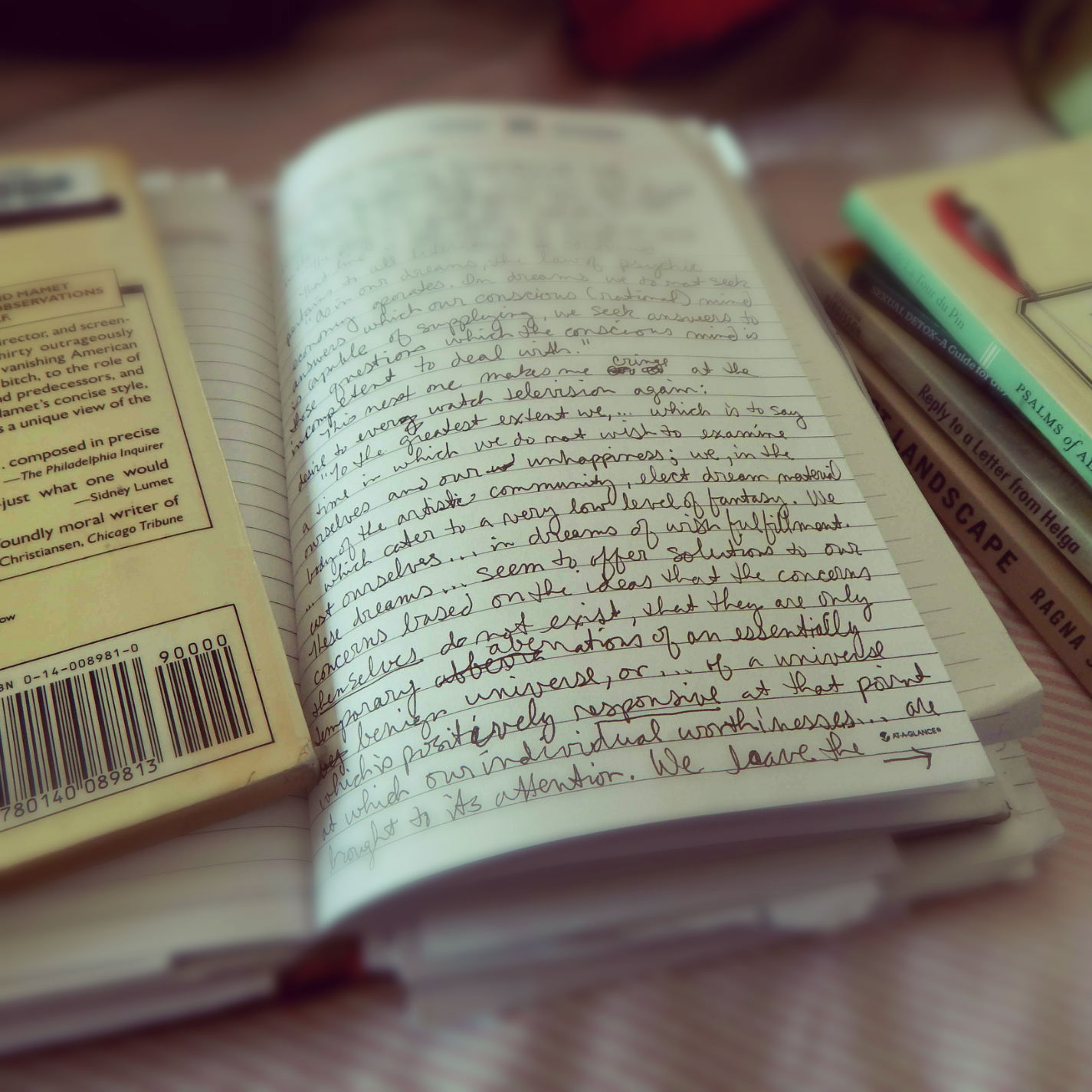
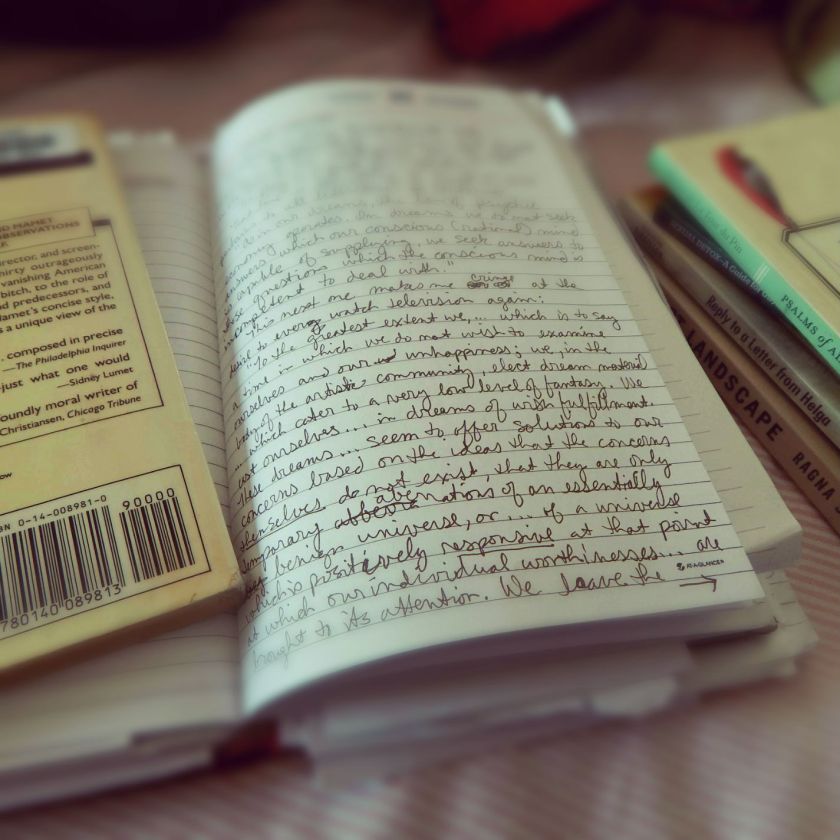
BestReads2014_DSCN2263When I read and write, I connect dots. Maybe you do too. Earlier this month, I noticed — and commented on — a Facebook post that linked to an article on how writing thoughts, ideas and quotes into notebooks makes one smarter. That article reminded me of how commonplace books house many notes and quotes from books read. [Link to article on commonplace books] The art of notations in commonplace books has been a practice of mine for decades. Whether it makes me smarter is yet to be evident.

Connecting some dots. Last week I came across a tweet that read:

“Ranking artists and making lists is a dead culture’s version intellectualism.”
@marcmaron

Considering this originated on twitter, I am inclined to disregard it. Yet, oddly, it resonates with me on some levels. Maybe it is because of the blogs I follow that list and present authors’s reading statistics (examples here and here).

Connecting dots. Over a year ago, sitting in front of the large windows of the Pack Library, I pondered the best of lists of 2013. My response is documented in this post. In brief, I listed my best books I read during the year — that were not printed in 2013.

Should I do a list for this year, 2014? The Seattle Times published their 2014 list. The Economist presented their austere list of best reads of 2014. Of course, the New York Times presented there top books of the year as well as a number of other publishers and blogs that try to capitalize on the posting their lists in time for holiday purchasing.  

For 2014, allow me to open up the pages of my commonplace book — a thick red daily reminder journal used for both a calendar of events and appointments and day book — and share with you some of the notes and quotes found therein. Starting in March there is an entry on the following book:

Nobel Lecture: Czeslaw Milosz by Czeslaw Milosz

Found a hardcover, bilingual edition at the public library. That edition appears to be out of print based on internet searches. (If you find a first edition, hardcover edition please let me know.) Here are a line I wrote in my commonplace book/day journal:

“Two attributes of the poet, avidity of the eye and desire to describe that which he sees.”

And this one:

“In the minds of modern illiterates, however, who know how to read and write and even teach in schools and at universities, history is present but blurred, in a state of strange confusion. Moliére becomes a contemporary of Napoleon.”

Crediting Poetry: The Nobel Lecture by Seamus Heaney

“Ahistorical, pre-sexual, in suspension between the archaic and the modern, we were as susceptible and impressionable as the drinking water that stood in a bucket in our scullery: every time a passing train made the earth shake, the surface of the water used to ripple delicately, concentrically, and in utter silence.”

This Year You Write Your Novel by Walter Mosley

“The first thing you have to know about writing is that it is something you must do every day — every morning or every evening, whatever time it is that you have.”

And…

“The process… is… a journey by boat…. If you get distracted or allow yourself to drift, you will never make it to the destination…. The journey is your narrative.”

A Region Not Home: Reflections from Exile by James Alan McPherson

From the opening paragraph, this book drew me in:

“In 1974,… I lived in San Francisco, California. My public reason for leaving the East and going there was that my wife had been admitted to the San Francisco Medical Center School of Nursing, but my private reason for going was that San Francisco would be a very good place for working and walking.”

What other reason is there to move, right? Here is another selection:

“Friendships grounded in mutual alienation and self-consciously geared to the perception of others are seldom truly tested. They lack an organic relationship to a common landscape, a common or ‘normal’ basis for the evolution of trust and mutual interest.”

More along the theme as well as reference to Ralph Ellison:

“It was Aristotle who thought the most deeply about friendship as a moral virtue. He [referring to Ralph Ellison] distinguished between friendships grounded in pleasure and utility, which friendships last as long as pleasure and usefulness last. These two grounds of friendship are common. For Aristotle, the best of all grounds for friendship was what he termed ‘perfected friendship.’ This degree of friendship obtains when one person wants for the other what is good for him simply because it is good for him. He believed that only people with comparable virtues could sustain this kind of friendship. Aristotle did not mean equality of virtue; he meant proportionate virtue. He meant that each is prepared to render to the other what the other deserved.”

Somewhere More Holy: Stories from a Bewildered Father, Stumbling Husband, Reluctant Handyman, and Prodigal Son by Tony Woodlief

There are so many selections written in my journal that I turned it into a book review and later featured it in a podcast. Listen to it here.

One for the Rose by Philip Levine

This is another jewel found in the public library. Again, it appears out of print according to online retailers and first editions seem to be rare. (Contact me if you find a first printing of this one.) Here are two excerpts of poems from this collection of poems:

“I was born in Lucerne
I faced the longest night
of my life with tight fists and closed eyes
beside a woman of independence and courage
Who sang the peasant songs of her region.”

And

“and I could sit for a moment
remembering what it was
to rise slowly to a world
that seemed at peace on the long
Sunday mornings of lonely first manhood
when I knew nothing
except there was no work that day”

Scrambled Eggs & Whiskey: Poems, 1991-1995 by Hayden Carruth

This book drew a lot of ink into my daily journal. Here are two samples I wrote during the summer:

“and I still cannot believe you wouldn’t
give me a job when I needed one so badly”

And

“Old men converse across the abyss of time
on a hot evening in elusive light—”

Okay, one more…

“Somehow his eyes get lost
in the words and the snow”

Pigafetta Is My Wife by Joe Hall

This is a book I struggled with. A lot. Eventually it won me over and — ahem — became my wife. You will have to read it to understand the allusion. Here is a couple lines to entice you:

“I need to stop imagining that
some straight lines connect us”

Finding the Islands by W. S. Merwin

At some point in autumn, I realized I had written down some many lines from this book I practically transcribed the book into my journal. One day, during the noon meal I quoted a few lines from the book. Everyone at the table went silent. Here is an excerpt that still haunts me:

“How time disappears
while we live under
the big tree”

The Name and Nature of Poetry: and Other Selected Prose by A. E. Housman

What can I say about this book? Well, read some of the things I copied into a commonplace book:

“We should beware of treating the word poetry as chemists have treated the word salt…. If we apply the word poetry to an object which does not resemble, either in form or content, anything which has heretofore been so called, not only are we maltreating and corrupting language, but we may be guilty of disrespect and blasphemy.”

And

“Man had ceased to live from the depths of his nature; he occupied himself for choice with thoughts which do not range beyond the sphere of the understanding; he lighted the candles and drew down the blind to shut out that patroness of poets, the moon.”

There are more notes and books referenced in my commonplace book/day journal that are not included. May this inspire you to connect dots, make notes and start a commonplace book of your own.
Greetings and salutations (as a multiple choice)

Ever wonder what a greeting and salutations might sound like if offered as a multiple choice?

Barista: Good morning! How you doing this morning?

Customer:

A) Fine. But I’m lying.

B) I am well. And grammatically challenged. Please forgive the sentence fragment.

C) Not bad. Which means, I’m good. But not in an ethical or moral manner, but in a colloquial, conversational manner.

D) None of the above. Please ignore me, but not my order.

It is the last Monday of the year. Enjoy!

Nanowritetips: 30 Writing Tips Inspired by NaNoWriMo

This is a great list of tips for writers. Not just for NaNoWriMo, but for all year long.

Starting something new

This weekend something new is on the way.

During the last couple years one of the most popular blog posts written is about Advent poetry. So, as a special treat (to you, friends, readers and listeners), I have produced a series of audio podcasts featuring some of those poems and related literature.

The first of this new series of podcasts publishes this weekend. Hope you enjoy these special edition broadcasts from the Coffee Den!

2014 National Book Award Winners

“We need writers who know the difference between the production of a market commodity and a practice of an art.”

—Ursula K. Le Guin

New poetic discovery

New for me anyway. Discovered a book of poems by Raymond Carver. Amazing. Why have I never read his work before? That is all. I need to plunge deeper into his work.

So, what do you write?

Is it difficult for you, as a writer, to classify your literary work? You have spent much of your time writing it and rewriting it, but when someone asks you what it is how do you respond?

That is a challenge I am struggling through with novella-length non-fiction manuscript. One publisher seeks manuscripts that focus on spirituality, personal growth, women’s interest and religion. The manuscript I completed includes two out of the four — and loosely at that. 

Should I rewrite chapters to fit the publisher’s preferences? Or find a different publisher? Or better yet, find a literary agent to help get the manuscript published so I can work on the next project?

So many questions.

Personal

After reviewing the near final edit, my wife commented, “That is your most personal podcast yet.”


Now I am really nervous. I look forward to learning your response to the upcoming audio podcast. It delivers tomorrow. Here’s an extended teaser:

What would you tell someone if they told you that your internet behavior was categorically a mental disorder? How much time do you spend on Facebook? These and other confessions make up the content of the next Coffeehouse Junkie audio podcast. 


Excited. Nervous.

Putting final touches on the upcoming Coffeehouse Junkie audio podcast.

The podcast is exciting, to me anyway, because it explores a topic that interests many — social media. As a teaser, here’s a question: would your internet behavior be considered a mental illness?

The podcast makes me nervous because it is part confession.

For readers of this blog, it will be available before the weekend.

Pageantry of vanity

It sort of overturns my apple cart when a script for an upcoming podcast — that I have worked on for months — seems to be summed up in under four minutes . . . on Youtube . . .

Are you part of the one percent?

Is the Myers–Briggs Type Indicator an accurate assessment of your personality type? Or just an extension of Jung’s four main archetypes?

Have you completed one of those online personality tests to determine your career path?

Here’s Memorado’s personality type: link.

What is your personality type? And how has this helped your career? Life?

Quote: Most people believe that technology is a staunch friend

“. . . most people believe that technology is a staunch friend. There are two reasons for this. First, technology is a friend. It makes life easier, cleaner, and longer. Can anyone ask more of a friend? Second, because of its lengthy, intimate, and inevitable relationship with culture, technology does not invite a close examination of its own consequences. It is the kind of friend that asks for trust and obedience, which most people are inclined to give because its gifts are truly bountiful. But, of course, there is a dark side to this friend. Its gifts are not without a heavy cost.”

–Neil Postman

Confessions : 10

01. It has been many winters since my last confession.

02. Yesterday, I jogged three miles west of the village.

03. In the rain. And wind.

04. A woman stopped her SUV along the road to ask if I needed a ride. I thanked her and declined.

05. I am reading a volume of poetry by Robert Lowell for the first time.

06. And also reading Lamentations.

07. Last week, the faithful MacBook Pro of seven years — named Hagar — nose-dived into hard drive oblivion.

08. Nearly seven days without a laptop and connection to the internet.

09. Hagar’s replacement arrived. Now connected to the matrix.

10. Somehow, I miss those days of non-digital, non-internet existence.

Previous confessions: [1] [2] [3] [4] [5] [6] [7] [8] [9]

Sunday paper, book fair and other notes

For those of you following my Sunday search for a copy of the New York Times in a fly over state, I finally found a copy last weekend. And I enjoyed reading it Sunday afternoon and evening. There is something about flipping through the printed pages of the weekend edition of a newspaper that is a luxurious activity.

Other notes of interest:

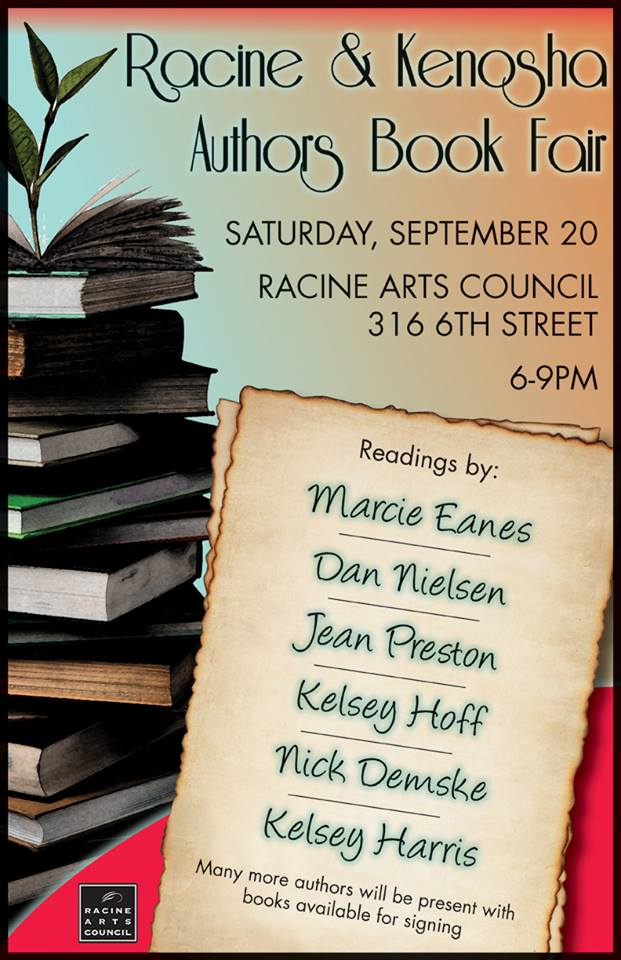
  • Last weekend was the Racine & Kenosha Authors Book Fair. Photos of the event will be posted here later this week.
  • The production and editing of the upcoming audio podcast is almost complete. It is running a bit long for this episode. So, I may cut one segment to fit the desired time slot of 20 to 25 minutes. What am I going to do with the extra segment? Suggestions?
  • On that note, Nick Demske — who curates the BONK! performance series in Racine — suggested contacting a few of the musicians and singer/songwriters to feature on upcoming audio podcasts. I am very excited to announce that two musicians — who performed at BONK! performances — have provided permission to feature their work on future episodes of the Coffeehouse Junkie audio podcast.

That is all for now, friends!

If you are interested, here are a few things said elsewhere:
[1] I really should not be allowed on social media. It no doubt alters and disrupts neural pathways.
[2] One feature I like about the @Kenosha_News paper is the Off the Shelves section. Kenosha Public Library staff feature authors & books.
[3] According to @WSJ (pg D2), corduroy is back in fashion. Yay! Since @goodwill is where I shop, my wardrobe is finally in style. I haven’t been this excited since the 90s… when grunge rockers brought flannel to the mainstream…

Autumn bee in a cafe

“There are not enough bees on the planet,” he tells his daughter as he captures a bee in a disposable cup from the coffee shop. He has gray hair and wears camouflage fatigue pants and an white maintenance and management crew t-shirt. He releases the bee outside the cafe and returns to get his coffee and sit with his daughter.

Google reports that it is the first day of autumn. Technically, Google is correct. It is the first day. Though my calendar says the first day of autumn was yesterday. At 10 p.m.

Ever feel like a bee bouncing around the inside of a cafe trying to make sense of this strangely confusing world?

Top read posts of the day

Every year around this time (and through to the end of the year), the most read blog post is a list of Christmas poems I compiled. So it did not surprise me that the most read posts of the day included that one. What did amuse me is that only one of the top read posts was written this year. Here is what you are reading today:

  1. Is commercial radio extinct? (2010)
  2. Advent Poems (or the 12 days of Christmas poetry) (2012)
  3. Two reasons why I quit Tumblr (2012)
  4. The purpose of sketching your ideas (2011)
  5. [Podcast] When the lights go out (2014)

Thanks for visiting (and reading)! Please be sure to share it.

This week: Racine & Kenosha Authors Book Fair

10565080_10152376419532804_4810709820636602796_n

The countdown is nearly complete. The Racine & Kenosha Authors Book Fair us this Saturday from 6-9 p.m. Since I am somewhat new to the regional literary scene, I am looking forward to meeting local poets and writers.

Here is a link the event’s Facebook page: Racine & Kenosha Authors Book Fair.

Podcasts – delayed, but not forgotten

To all three of you have inquired as to the absence of the monthly podcast, please forgive the delay.

My voice got sidelined for almost a month by a horrible summertime flu/virus/thingy. And then I had a week or so of heavy design projects. And then lost my voice again for a couple weeks due to another summertime allergy/virus/whatnot.

And then there is the issue of selecting and securing the rights to use guest music on the podcast.

I know, enough excuses. Thanks for your patience. I think you may enjoy the upcoming episodes.

Thanks for your support!

Free e-book. New e-book. Book Fair.

When it comes to promoting my own work, I am extremely self-consciousness. However, here are three announcements that may interest you.

Continue reading “Free e-book. New e-book. Book Fair.”

How much time do you spend on Facebook?

FB-Screen-shot-2014-08-22

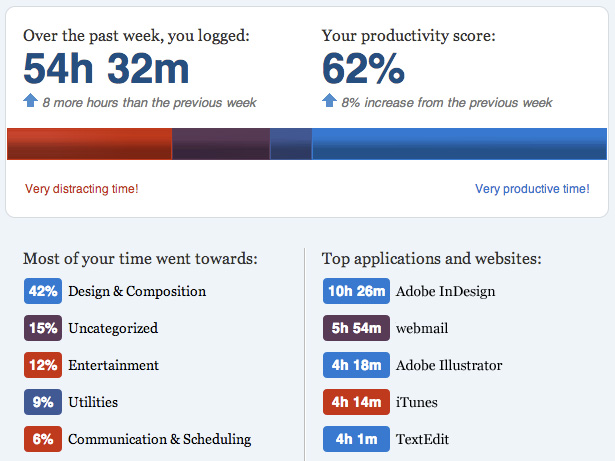
In a GTD[1] effort to increase productivity, I studied my online activity this spring using time tracking software. Currently self-employed, I wanted to make sure time is not wasted but used wisely.

For the most part, social media is out. Same goes for video games and online audio and video streaming sites (not that I ever play video games online anyone, but I do allow myself to listen to music and audio podcasts while working).

A couple times during this period I noticed that the weekly report showed that I spent four hours on Facebook. I was shocked. Maybe I left the computer on while running an errand (which could take hours due to my current rural location) and left the internet browser window open during that whole time. I made immediate efforts to close that open loop of un-productivity.

Those reports intrigued me and I wanted to find out how many hours most Americans spend on Facebook per day. According to a 2011 source, the average American spends

“15.5 minutes … on Facebook every single day.”[2]

But, as you know, three years ago is a century ago in the digital world. A 2013 study reports that an

“average user spends 23 hours a week emailing, texting and using social media and other forms of online communication.”[3]

23 hours! That is a lot of online time. But that statistic does not surprise me. As a professional graphic designer, I spend at least 40 hours a week in front of a screen. And now, most design and communication applications are cloud based or at least supported online. So, as you can see by the screen shot at the beginning of this post, much of my time is designing books, book covers and other marketing and print materials while listening to podcasts or music.

A month ago a new report says

“the average American now spends 40 minutes a day checking a Facebook feed.”[4]

That is a huge increase from three years ago — 280 minutes a week spent on Facebook. 4.6 hours a week. 18 hours a month! I can layout a 240-page book in that time and maybe have time left over to design the book cover (of course, that depends on editor and author changes and corrections, but I digress).

I am sure there is a lot of news from family and friends that I miss by avoiding Facebook. But when you are self-employed those 18 hours can be used resourcefully and effectively to provide for your household — and to secure and maintain future clients. Or, at least, that is the strategy.

NOTES:
[1] GTD, or Getting Things Done. http://lifehacker.com/productivity-101-a-primer-to-the-getting-things-done-1551880955
[2] “You Spend 8 Hours Per Month on Facebook” by Ben Parr, September 30, 2011, accessed August 22, 2014, http://mashable.com/2011/09/30/wasting-time-on-facebook/
[3] “Americans Spend 23 Hours Per Week Online, Texting” by David Mielach, July 2, 2013, accessed August 22, 2014, http://www.businessnewsdaily.com/4718-weekly-online-social-media-time.html
[4] “Americans Now Spend More Time on Facebook Than They Do on Their Pets” by Joshua Brustein, July 23, 2014, accessed August 22, 2014, http://www.businessweek.com/articles/2014-07-23/heres-how-much-time-people-spend-on-facebook-daily

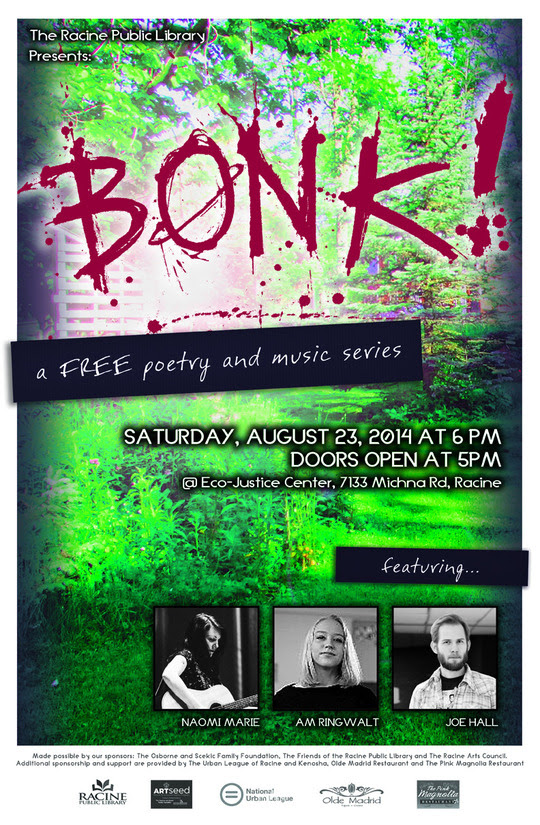
Racine Public Library presents: BONK! 71

From an email about the event:
unnamed

BONK! 71
SATURDAY, AUGUST 23, 2014 
ECO-JUSTICE CENTER
7133 MICHNA ROAD, 
RACINE, WI
6PM (doors open 5:00!)
FEATURING:
AM RINGWALT is a writer and musician (Anne Malin) from Racine, Wisconsin and currently studying in Boston, Massachusetts. Most recently, her words have appeared in:  “Whole Beast Rag;” “DUM DUM Zine: Punks and Scholars;” “The Interlochen Review;” and “BROWN GOD.” Last year, she was a YoungArts finalist in fiction and a US Presidential Scholar in the Arts semi-finalist.  Ringwalt’s debut chapbook entitled “Like Cleopatra” is forthcoming from Dancing Girl Press.  More information about her work can be found at annemalinringwalt.tumblr.com
JOE HALL is the author of three books of poetry: “Pigafetta Is My Wife” (Black Ocean 2010), “The Devotional Poems” (Black Ocean 2013), and, in collaboration with Chad Hardy, “The Container Store” Volumes I & II (SpringGun 2012). He currently resides with fellow poet Cheryl Quimba in Buffalo, New York where he is studying commons, excess, and waste flows.  Learn more about his work at joehalljoehall.wordpress.com
NAOMI MARIE is a born and bred Midwestern minstrel of sorts. Transplanted from the rich musical culture of the twin cities, she has discovered a fresh folk sound and form from the third coast of Lake Michigan. Having recently released her first full length, Primary Colors, in May of 2014, she sets to connect with friends, fans and artists in continued pursuit of her music’s authentic expressions.  For more information about her music and schedule go to naomimariemusic.org

Wordshop

Wordshop
The weekly Racine Public Library Wordshop gathering of poets and writers is always lively and engaging. Last week there was a special presentation of Beat literature.