A poem for the first Sunday of Christmas 2021

Christmas Day.[1] Last year. The Advent candles lit and allowed to burn all day. And into the evening hours. And until they extinguished themselves. With a death in the family, last year’s Christmas day was surreal and somber. Many activities that would have normally taken place did not due to pandemic restrictions.

This photo, from last year, captures many memories and thoughts. The white candle, sometimes called Christ’s candle in the Advent wreath, represents light, purity, and victory.

Light shines brightest in the dead of winter, in the confusion of depression and folly, and in the feeble snatching after victory from the gutter of defeat.

The poet, speaking in the voice of the magnus, asks “Birth or Death?” Whether King Baltazar, Kasper, or Melchior, the poet does not reveal. “I should be glad of another death.” This line echoes in my mind. Why not, I should be glad for another death? Or, I should be glad of death? Wrestle with this poem during the “worst time of the year.” Consider if the liotodes in the poem is “satisfactory.” Avoid googling what it means. Close the laptop. Turn off the mobile device. Watch the candle light and ruminate.


The Journey Of The Magi[2]

by T. S. Eliot

“A cold coming we had of it,
Just the worst time of the year
For a journey, and such a long journey:
The ways deep and the weather sharp,
The very dead of winter.”
And the camels galled, sore-footed, refractory,
Lying down in the melting snow.
There were times we regretted
The summer palaces on slopes, the terraces,
And the silken girls bringing sherbet.
Then the camel men cursing and grumbling
and running away, and wanting their liquor and women,
And the night-fires going out, and the lack of shelters,
And the cities hostile and the towns unfriendly
And the villages dirty and charging high prices:
A hard time we had of it.
At the end we preferred to travel all night,
Sleeping in snatches,
With the voices singing in our ears, saying
That this was all folly.

Then at dawn we came down to a temperate valley,
Wet, below the snow line, smelling of vegetation;
With a running stream and a water-mill beating the darkness,
And three trees on the low sky,
And an old white horse galloped away in the meadow.
Then we came to a tavern with vine-leaves over the lintel,
Six hands at an open door dicing for pieces of silver,
And feet kicking the empty wine-skins.
But there was no information, and so we continued
And arriving at evening, not a moment too soon
Finding the place; it was (you might say) satisfactory.

All this was a long time ago, I remember,
And I would do it again, but set down
This set down
This: were we led all that way for
Birth or Death? There was a Birth, certainly
We had evidence and no doubt. I had seen birth and death,
But had thought they were different; this Birth was
Hard and bitter agony for us, like Death, our death.
We returned to our places, these Kingdoms,
But no longer at ease here, in the old dispensation,
With an alien people clutching their gods.
I should be glad of another death.


NOTES:
[1] Post updated December 30, 2021.

[2] The Poetry Archive, “Journey of the Magi” by T. S. Eliot read by the poet. Accessed December 30, 2021. https://poetryarchive.org/poem/journey-magi/
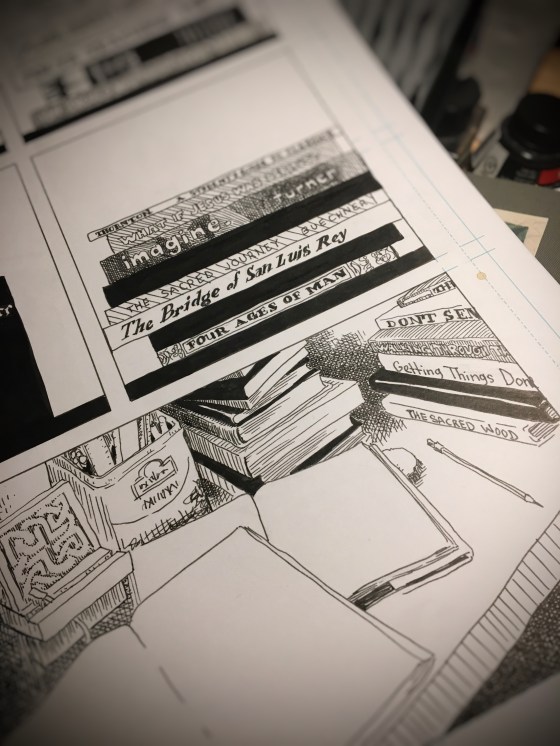
“Art is work”

A drawing of my desk with books read, unread, or partially read.

It is a challenge for me. When I am introduced as an artist and/or poet. Still not comfortable with either of those nouns. The next question is inevitable. It usually goes something like this:

My wife turns and introduces me to her friend and adds, “He’s also an artist and poet, too.”

“Wow, can I see your art work on Facebook?”

“No. I am not on Facebook.”

“Oh. Instagram?”

“No. Not on Instagram, either.”

“Well. Um. What do you do? Oil paintings? Do you have a gallery somewhere?”

“He posts some of his work on his blog,” my wife offers.

About that time the bread crumb trail ends and the conversation shifts to something else.

The trouble is that some of the work I create I cannot contractually share. Technically, I do not own the copyrights to the final art. And so, I cannot distribute or display it on this or other online platforms. Frustrating. Yes. Bad. No. It is the cost of commercial arts.

For example, a couple weeks ago I drew a portrait. A line art drawing. The portrait will be featured as an etching in either crystal or acrylic as part of a lifetime award. Sometime in March. You may have seen such awards in business offices. A crystal award on black base sitting on someone’s desk or shelf or trophy case.

I am reminded of one of Milton Glaser’s mottos: “Art is work.”

Milton Glaser, celebrated graphic designer, may not be a household name. Not even in my home. But most Americans will recognize the I [heart] NY logo. It is highly unlikely that school children will study designers as part of their art curriculum. (My children are presently studying the American painter Andrew Wyeth.)

Too often I lament, or rather, complain that I spend too much time creating work in front of a screen. It was so nice to ditch the screen and work in ink on vellum and illustration paper. Took nearly four hours to draw the portrait. And that is with the interruptions of replying to emails and designing elements for a multi-page editorial piece. It would take four weeks if I tried to craft the portrait as an oil painting.

In order to answer a request (Where may I find your art work?), I drew the above page last weekend. Inspired by Jane Mount’s Ideal Bookshelf, I managed to draw the stacks of books on my desk by the bedroom window. At least fifty books. So many books. So little time. I enjoyed the exercise. It felt good to pencil a sketch, flesh out the details, and ink the page.

“Wait. You write poetry, too?”

“Um…” I start.

“Have you been published?”

“Yes,” I say.

And this time the bread crumb trail ends quickly. Because most people do not know where to begin to look for published poetry.

“He posts some of his published poems on his blog,” my wife adds.

One night at a kava bar

One night at a kava bar I read a poem about. . . well, . . . that was many years ago. As National Poetry month concludes I hope you enjoy this recording. I do not believe I have read that poem in public since that night. Much gratitude to Caleb Beissert for recording and sharing the video.

Hill Christmas by R. S. Thomas

“Hill Christmas”
by R. S. Thomas

They came over the snow to the bread’s
purer snow, fumbled it in their huge
hands, put their lips to it
like beasts, stared into the dark chalice
where the wine shone, felt it sharp
on their tongue, shivered as at a sin
remembered, and heard love cry
momentarily in their hearts’ manger.

They rose and went back to their poor
holdings, naked in the bleak light
of December. Their horizon contracted
to the one small, stone-riddled field
with its tree, where the weather was nailing
the appalled body that had asked to be born.

A Scandal in the Suburbs by X.J. Kennedy

A Scandal in the Suburbs
by X.J. Kennedy

We had to have him put away,
For what if he’d grown vicious?
To play faith healer, give away
Stale bread and stinking fishes!
His soapbox preaching set the tongues
Of all the neighbors going.
Odd stuff: how lilies never spin
And birds don’t bother sowing.
Why, bums were coming to the door—
His pockets had no bottom—
And then-the foot-wash from that whore!
We signed. They came and got him.

Let Evening Come by Jane Kenyon

“Let Evening Come”
By Jane Kenyon

Let the light of late afternoon
shine through chinks in the barn, moving
up the bales as the sun moves down.
Let the cricket take up chafing
as a woman takes up her needles
and her yarn. Let evening come.
Let dew collect on the hoe abandoned
in long grass. Let the stars appear
and the moon disclose her silver horn.
Let the fox go back to its sandy den.
Let the wind die down. Let the shed
go black inside. Let evening come.
To the bottle in the ditch, to the scoop
in the oats, to air in the lung
let evening come.
Let it come, as it will, and don’t
be afraid. God does not leave us
comfortless, so let evening come.

Poetry reading list for National Poetry Month, part four

Beanstreet coffeehouse, July 2005

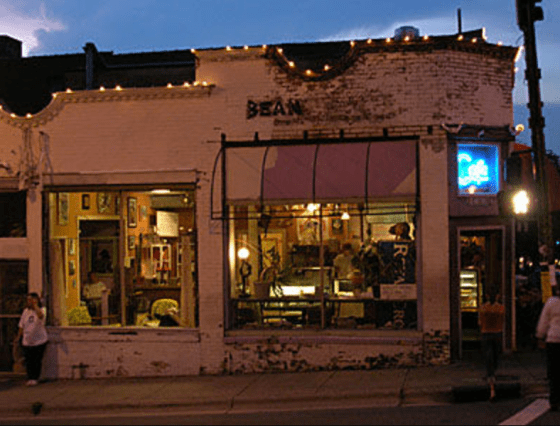
Our paths first met at open mic night at Beanstreet café during a time of national crisis and local transition. The aftermath of 9/11 brought a lot of poets and singer songwriters to open mics for reasons of catharsis and later to protest.

But Barbie Angell[1] brought something different to the Beanstreet musicians and poets. Part Dorothy Parker, part Shel Silverstein, Barbie Angell became a regular favorite of scene and a poetic force.

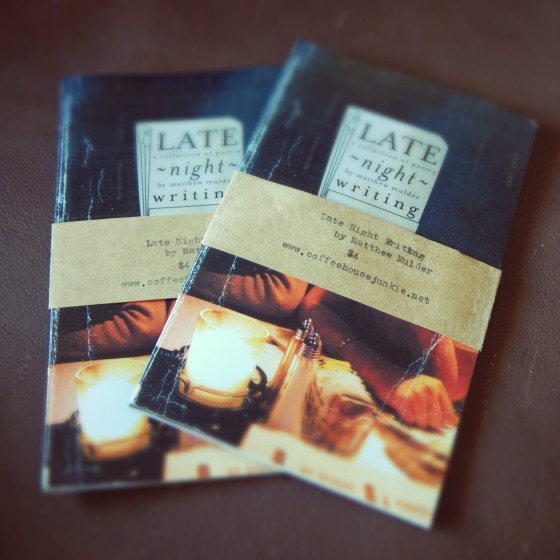
We first met around the time my book Late Night Writing[2] was published. I was working hard on new material and trying it out on the open mic crowd. We exchanged a few conversations and notes at that time and then we lost track of each other for a couple years.

Beanstreet dramatically closed. The poetry scene was adrift for awhile. Eventually the Courtyard Gallery off Walnut Street filled the space. And that is where Barbie and I reconnected. From those late nights at the Courtyard Gallery open mics until my departure from Asheville, we spent a lot of time sharing poetry, discussing literary world domination, challenging and encouraging each other about all things regarding a poets life.

Roasting Questions,[3] her collection of poems and illustrations, was released a few years ago. We talked much about that publication and the supporting book tour.

Though our poetic styles were different we still sought to encourage one another toward success.

There was one night I remember in particular. Two different events were going on in Asheville and she was to read poetry at one while I read at another. She picked me up at my house, drove downtown, and after the separate events we met up at Sazerac for refreshments. We talked about the night’s events, avoided how jealous we were of the others’ success and then she drove me back home. That is what friends do.

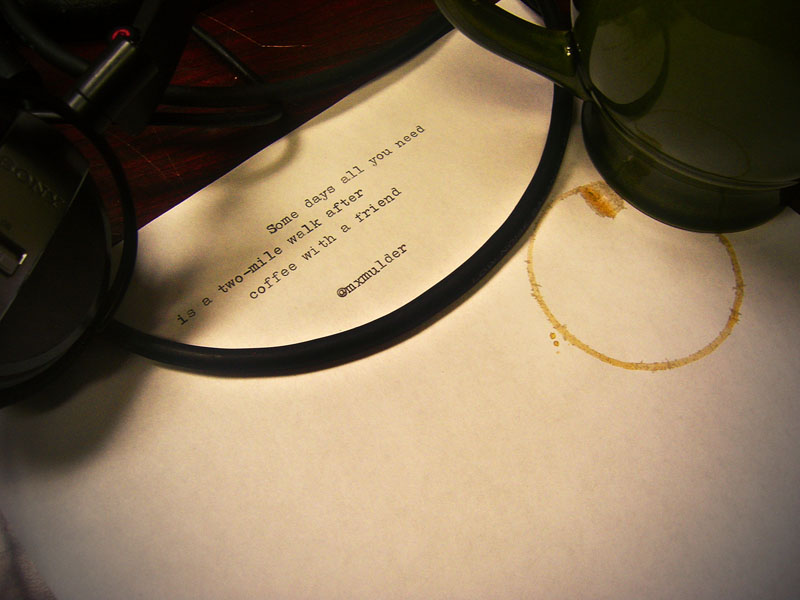
That is a glimpse into the story behind this short poem. With friends like Barbie, you have the strength to walk further, to try harder, and to be better.[4]

NOTES:

[1Read all about Barbie Angell: http://www.barbieangell.com/about-barbie-angell/
[2Late Night Writing is still available in print. Contact me for details. Or you can purchase an e-book version here: https://www.amazon.com/Late-Night-Writing-Matthew-Mulder/dp/1932852204
[3Find out more about Barbie’s book, Roasting Questions: http://www.barbieangell.com/roasting-questions/
[4Originally published May 4, 2017 https://coffeehousejunkie.net/2017/05/04/poetry-reading-list-for-national-poetry-month-part-three/

PODCAST: Poems and readings for the Fourth Sunday of Advent

The Winter Is Cold, Is Cold

by Madeleine L’Engle

The winter is cold, is cold.
All’s spent in keeping warm.
Has joy been frozen, too?
I blow upon my hands
Stiff from the biting wind.
My heart beats slow, beats slow.
What has become of joy?

If joy’s gone from my heart
Then it is closed to You
Who made it, gave it life.
If I protect myself
I’m hiding, Lord, from you.
How we defend ourselves
In ancient suits of mail!

Protected from the sword,
Shrinking from the wound,
We look for happiness,
Small, safety-seeking, dulled,
Selfish, exclusive, in-turned.
Elusive, evasive, peace comes
Only when it’s not sought.

Help me forget the cold
That grips the grasping world.
Let me stretch out my hands
To purifying fire,
Clutching fingers uncurled.
Look! Here is the melting joy.
My heart beats once again.[1]


This audio podcast features the poem “The Winter Is Cold, Is Cold” by Madeleine L’Engle and concludes with a selection from the Book of Common Prayer that is often read on Christmas Day.

NOTES:
[1] Source: The Winter Is Cold, Is Cold by Madeleine L’Engle
[2] Advent Poems (or the 12 days of Christmas poetry)

Poetry reading list for National Poetry Month, part three

Beanstreet coffeehouse, July 2005

Our paths first met at open mic night at Beanstreet café during a time of national crisis and local transition. The aftermath of 9/11 brought a lot of poets and singer songwriters to open mics for reasons of catharsis and later to protest.

But Barbie Angell[1] brought something different to the Beanstreet musicians and poets. Part Dorothy Parker, part Shel Silverstein, Barbie Angell became a regular favorite of scene and a poetic force.

We first met around the time my book Late Night Writing[2] was published. I was working hard on new material and trying it out on the open mic crowd. We exchanged a few conversations and notes at that time and then we lost track of each other for a couple years.

Beanstreet dramatically closed. The poetry scene was adrift for awhile. Eventually the Courtyard Gallery off Walnut Street filled the space. And that is where Barbie and I reconnected. From those late nights at the Courtyard Gallery open mics until my departure from Asheville, we spent a lot of time sharing poetry, discussing literary world domination, challenging and encouraging each other about all things regarding a poets life.

Roasting Questions,[3] her collection of poems and illustrations, was released a few years ago. We talked much about that publication and the supporting book tour.

Though our poetic styles were different we still sought to encourage one another toward success.

There was one night I remember in particular. Two different events were going on in Asheville and she was to read poetry at one while I read at another. She picked me up at my house, drove downtown, and after the separate events we met up at Sazerac for refreshments. We talked about the night’s events, avoided how jealous we were of the others’ success and then she drove me back home. That is what friends do.

That is a glimpse into the story behind this short poem. With friends like Barbie, you have the strength to walk further, to try harder, and to be better.

NOTES:

[1Read all about Barbie Angell: http://www.barbieangell.com/about-barbie-angell/
[2Late Night Writing is still available in print. Contact me for details. Or you can purchase an e-book version here: https://www.amazon.com/Late-Night-Writing-Matthew-Mulder/dp/1932852204
[3Find out more about Barbie’s book, Roasting Questions: http://www.barbieangell.com/roasting-questions/

Poetry podcast for the Fourth Sunday of Advent

The Winter Is Cold, Is Cold

by Madeleine L’Engle


The winter is cold, is cold.
All’s spent in keeping warm.
Has joy been frozen, too?
I blow upon my hands
Stiff from the biting wind.
My heart beats slow, beats slow.
What has become of joy?

If joy’s gone from my heart
Then it is closed to You
Who made it, gave it life.
If I protect myself
I’m hiding, Lord, from you.
How we defend ourselves
In ancient suits of mail!

Protected from the sword,
Shrinking from the wound,
We look for happiness,
Small, safety-seeking, dulled,
Selfish, exclusive, in-turned.
Elusive, evasive, peace comes
Only when it’s not sought.

Help me forget the cold
That grips the grasping world.
Let me stretch out my hands
To purifying fire,
Clutching fingers uncurled.
Look! Here is the melting joy.
My heart beats once again.[1]


This audio podcast features the poem “The Winter Is Cold, Is Cold” by Madeleine L’Engle and concludes with a selection from the Book of Common Prayer that is often read on Christmas Day.

NOTES:
[1] Source: The Winter Is Cold, Is Cold by Madeleine L’Engle
[2] Advent Poems (or the 12 days of Christmas poetry)

April – National Poetry Month

DSCN5411[sqr-basic-lomo-lofi]
It is no joke. It is April. And it is the beginning of National Poetry Month.

For poets and poetry fans, April is a special month-long celebration of poems and poets. For most of America, it is the beginning of baseball season.

One question that is asked of me when an individual learns that I compose lines poetry is this: “Are you published?”

The answer is yes.

Throughout the month of April I will post selections of my published work for your reading pleasure.

April is a good month to test your poetry writing skills. A few years ago I took up the challenge[1] to write 30 poems in 30 days.[2] You are invited to the challenge as well.

NOTES:
[1] 30 poems in 30 days challenge
[2] Write 30 poems in 30 days: a challenge

Interview: Caleb Beissert on Beautiful translations of Federico García Lorca and Pablo Neruda

Reposting this interview. Enjoy!

coffeehousejunkie's avatarCoffeehouse Junkie

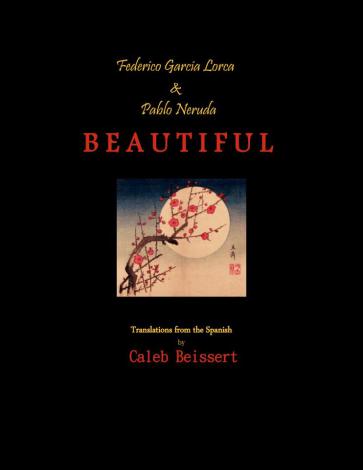
Beautiful by Caleb Beissert Caleb Beissert is a poet, translator and musician. His published work appears in International Poetry Review, Tar River Poetry, Asheville Poetry Review and Beatitude: Golden Anniversary, 1959-2009.

This week, Poetry at the Altamont celebrates the release of Caleb Beissert’s first book, Beautiful, a selection of poems by Pablo Neruda and Federico García Lorca translated into English. During the last few weeks, Beautiful was well received by enthusiastic audiences at Montford Books & More and Malaprop’s Books & Cafe and is a Small Press Distribution best-seller.

The Altamont theater doors open at 7:00 P.M. for Poetry at the Altamont. Admission is $5 at the door. Beer and wine sold at the bar and lounge will remain open for drinks after the reading. Event link.

UPDATE: Caleb Beissert is the featured guest of the Coffee with the Poet Series, Thursday, February 21st at 10:30 a.m. at City Lights Bookstore. Event…

View original post 741 more words

Old, New, Borrowed and Blue

How does a poet select poems to read at a poetry marathon? I have been asking myself and my wife that question all week. Tomorrow is the annual poetry marathon at Woodland Pattern Book Center in Milwaukee. Something like 150 poets will be at the all-day event.

As I peruse a collection of publications I am a little startled to realize that there is a decade or more of work published in various journals and reviews.[1] Some of the publications are regional to North Carolina while others are national.

My work does not have a lot of Milwaukee-area credentials and I am not well-known to this region (forthcoming work is to be published by a Milwaukee publisher). Even so, I feel like an outsider at the Woodland Pattern poetry community. This is familiar territory.[2]

During a conversation with my wife this week an idea formed. Selecting poems based on the wedding adage was the plan: something old, something new, something borrowed, something blue. This developed into an engaging exercise of finding poems to fit that motif. Looking forward to sharing the results tomorrow night — between 9 and 10 p.m. — at Woodland Pattern Book Center.

NOTES
[1] A SHORT LIST OF SEVEN PUBLISHED POEMS:”Saturday Night, Coffee House,” Rapid River, 2004; “Reading ‘My American Body’ by W. K. Buckley,” Rapid River, 2005; “Narrative Kernel,” Rapid River, 2005; “Last Bus,” H_NGM_N, 2005; “The Last American Chestnut Tree,” The Blotter, 2006; “Loneliness Visits,” .ISM Quarterly, 2006; “Last Night at the New French Bar,” Crab Creek Review, 2010
[2] A good friend and poet, Barbie Angell, once told me that I am on the cusp as far as a poet and writer is concerned. Meaning, that I am on the border or threshold of the academic (published) poetry scene and the street (unpublished) poetry scene. So, being a stranger to the Milwaukee poetry scene is familiar place for me.

Late Night Writing – second edition – third printing

DSCN3141HR

Late Night Writing is now in its third printing and the new edition features a foreword by the poet Pasckie Pascua. Copies of Late Night Writing will be available the Racine & Kenosha Authors Book Fair is this weekend, Saturday, May 23, 2015 at Rhode Center for The Arts. A special book fair price makes it very affordable to purchase and I will personally sign your copy (and if you ask nicely, I may even add a quick drawing/sketch).

Quote: The ancient Celts distinguished the poet…

“The ancient Celts… distinguished the poet, who was originally a priest and judge as well and whose person was sacrosanct, from the mere gleeman. He was in Irish called fili, a seer, which is Welsh derwydd, or oak-seer, which is the probable derivation of Druid. Even kings came under his moral tutelage.”

–Robert Graves

Quote: “Two attributes of a poet…”

“Two attributes of a poet, avidity of the eye and the desire to describe that which he sees.”

–Czeslaw Milosz

Quote: “All the words that I utter…”

All the words that I utter,
And all the words that I write,
Must spread out their wings untiring,
And never rest in their flight,
Till they come where your sad, sad heart is,
And sing to you in the night,
Beyond where the waters are moving,
Storm-darken’d or starry bright.

—  William Butler Yeats, “Where My Books Go” (via bookoasis)

Quote: “poems are like dreams…”

But poems are like dreams: in them you put what you don’t know you know.

Adrienne Rich, ‘When We Dead Awaken: Writing as Re-Vision’ On Lies, Secrets, and Silence (via thedaysarenotfullenough) (via libraryland)

Interview: Caleb Beissert on Beautiful translations of Federico García Lorca and Pablo Neruda

Beautiful by Caleb Beissert Caleb Beissert is a poet, translator and musician. His published work appears in International Poetry Review, Tar River Poetry, Asheville Poetry Review and Beatitude: Golden Anniversary, 1959-2009.

This week, Poetry at the Altamont celebrates the release of Caleb Beissert’s first book, Beautiful, a selection of poems by Pablo Neruda and Federico García Lorca translated into English. During the last few weeks, Beautiful was well received by enthusiastic audiences at Montford Books & More and Malaprop’s Books & Cafe and is a Small Press Distribution best-seller.

The Altamont theater doors open at 7:00 P.M. for Poetry at the Altamont. Admission is $5 at the door. Beer and wine sold at the bar and lounge will remain open for drinks after the reading. Event link.

UPDATE: Caleb Beissert is the featured guest of the Coffee with the Poet Series, Thursday, February 21st at 10:30 a.m. at City Lights Bookstore. Event link

Caleb graciously agreed to an interview to discuss poetry, translation work and Beautiful.

Coffeehouse Junkie Blog

First, for those who don’t know you, Caleb, please share a little about yourself and how you came to poetry.

Caleb Beissert

I arrived naturally at poetry. I had a strong interest in writing as a child, which stemmed from my mother’s and father’s both being journalists. They read to me constantly, even while I was in utero. I still love being read to, hence the poetry readings I attend. During my fugitive teenage years, I wrote notebooks full of song lyrics—songwriters such as Bob Dylan, Tom Petty, Robert Hunter, Kurt Cobain, Roger Waters, and The Beatles among my influences. When I went to college and took a poetry writing class, I discovered I’d been writing poetry for years. Of course songwriting is a different beast, but one does inform the other.

Throughout my time at Western Carolina University, I studied writing, foreign languages, philosophy, music, art—I wasn’t satisfied with the notion of going to college to get a job, rather I wanted to learn everything I could for the sake of knowing. I began publishing my poetry, traveling abroad, corresponding with accomplished writers, and I participated in the Gilbert-Chappell Distinguished Poet Series.

My literary heritage largely came from the American Beats, especially Allen Ginsberg and Richard Brautigan; the British poets, namely Blake and Coleridge; and mystics, like Hafiz, Rumi, Kabir, Mirabai; as well as Walt Whitman, E.E. Cummings, W.S. Merwin, early on Shel Silverstein, and then later the great Hispanic poets, particularly Federico García Lorca and Pablo Neruda. Now I’m living in Asheville, writing, producing poetry events, and also working as a musician.

Coffeehouse Junkie Blog

How did the translation work of these two poets, Federico García Lorca and Pablo Neruda, come about?

Caleb Beissert

As I glossed over previously, I was at WCU studying poetry and foreign language when I began translating these two poets. It must have been my attraction to Surrealism that led me to García Lorca. I had read a few translations in Bly’s Leaping Poetry, eaten up Lorca’s lecture Theory and Play of the Duende, and fallen into Poema del cante jondo. I was fascinated by this idea of the duende and also with the marriage of poetry with music, seen in the influence of Andalusian flamenco music on his work.

An interest in Neruda also came through my gravitating toward Surrealism, though I must acknowledge that neither of these poets wrote exclusively or even primarily in this style. One day my Spanish professor assigned the students to attempt a translation of Neruda’s famous “Poema 20” from Veinte poemas de amor y una canción desesperada. I thoroughly enjoyed the assignment—probably the only one who did—and it was then I realized I could translate. From there, of course, the complexities of poetry translation began to unravel. I studied essays by Gregory Rabassa, John Felstiner, Margaret Sayers Penden, Eliot Weinberger, and read many bilingual or “bisexual” editions, as a good friend likes to call them.

Eventually, I timidly showed my translations to a few trusted poet friends/mentors, among them Dr. Mary Adams and Thomas Rain Crowe, who encouraged me to continue the work. It has been a process of frustration, learning and accomplishment. Many late nights of pulling out my hair. I’ve dabbled in other Spanish-writing poets, such as César Vallejo, Rafael Alberti, Pedro Salinas, Vicente Aleixandre, Nicanor Parra, and Manuel González Prada; however, it was García Lorca and Neruda I spent the most time with, grew to know them through their words, heard their voices, conversed in dreams, and eventually compiled enough English-language adaptations for two books.

Coffeehouse Junkie Blog

How the translation work inform the craft of your own poetry?

Caleb Beissert

I find myself writing odes to people and places I’ve never known. I’ve written poems to or after these poets, places and ideas from their poetry, even employed mimicry for effect sometimes, but going deeper, I’m sure it has changed the way I think about language, construct lines, choose words, though the translation process itself does that as well. I have developed my own poetry while spending a great amount of time with these poets, therefore their impact on my work is tremendous. It is hard for me to see, because often one must step away from his or her work to get an accurate picture of it, but I know the influence is there.

50 poems in 30 days

Over two months of writing a poem a day
Photo courtesy of coffeehousejunkie.

More than 50 poems were sent to publishers in January. Encouraged by another poet who submits somewhere in the neighborhood of 60 poems a month, I thought it would be a good discipline as well. It’s exhausting as well.

A few years ago, I was encourage not to post my poems on this blog (or Facebook), because a lot of small press publishers consider those poems “published.” So, I’ve been writing offline and sharing the new poems at private salons, a poetry festival and with friends. But I have not pursued publication until this year.

Talking with Al Maginnes after his recent reading at Malaprop’s, he told me how is first poetry submission was accepted immediately. Encouraged by this, he submitted more poetry to publishers. He said it was years before anything else was published.

So far, two publishers replied with rejection notices. That’s alright. I will submit those poems to other publishers.

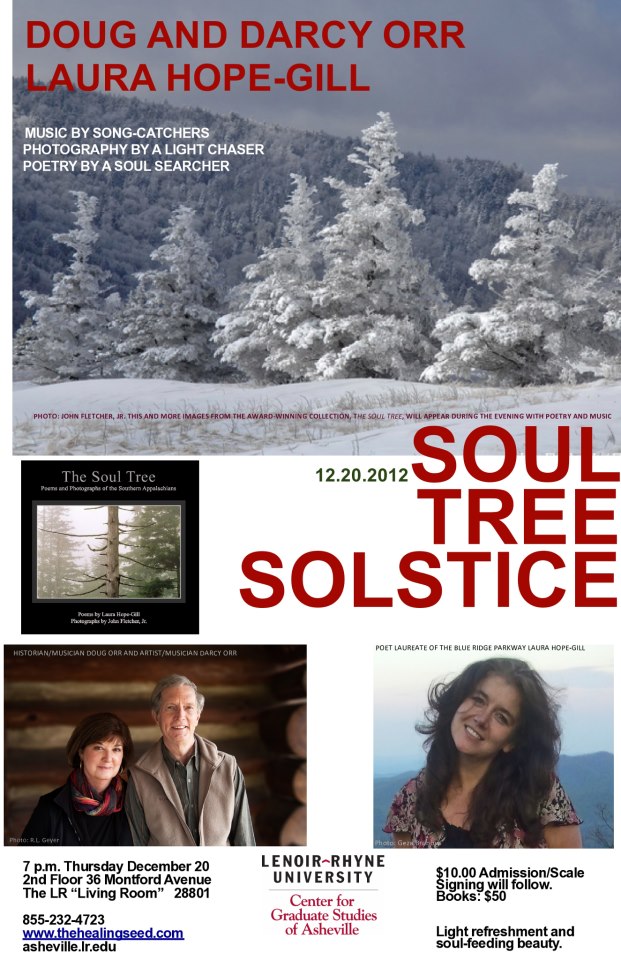
Interview: Laura Hope-Gill on Soul Tree Solstice

Soul Tree Solstice

Laura Hope-Gill is a poet, teacher and author of Look Up Asheville: An Architectural Journey and Look Up Asheville II. She is a NCArts Fellow, founding director of Asheville Wordfest and Coordinator of M.A. in Writing Program at Lenoir-Rhyne University Center for Graduate Studies in Asheville. Laura was named the first poet laureate of the Blue Ridge Parkway following the publication of The Soul Tree: Poems and Photographs of the Southern Appalachians. On December 20th she will perform selections from The Soul Tree with musicians at the “Living Room” above the Asheville Visitors Center at 36 Montford at 7 p.m. There is a $10.00/sliding scale admissions cost. Laura graciously agreed to a short interview regarding the book The Soul Tree and the event Thursday night, Soul Tree Solstice.

Coffeehouse Junkie Blog

You recently wrote on Facebook that The Soul Tree poems “were the poems I had been preparing (… being prepared?) to write since I first fell in love with the music of language as a child…” If you would, please explain that statement and then tell how they developed into the book The Soul Tree.

Laura Hope-Gill

I view the Soul Tree poems as a miracle in my life. They were the “finishing touch” on a years-long journey to understand something. That something has its stirrings in my childhood. I was a very nature-bound child. I could sit for hours out there just watching, absorbing the air, the sounds, the presences of animals. These poems took me back to that, only it was with the knowledge of what felt like all I’ve read and learned and wondered about since that time. I felt all that wonder we can hold as children but lose as we grow older. Somehow the music of language opened it up in me again. What a gift.

Coffeehouse Junkie Blog

The Soul Tree poems were (still are?) healing and transformative for you. Explain that process and how these poems have grown you (or are continuing growing you).

Laura Hope-Gill

Still, when I read them, they take me back to that space of awe and wonder. They unjade me, and they bring me back to nature, back to my soul, and that’s where all the medicine is. They grow me because we don’t live in a world where we can walk around with that wonder and awe, that innocence and still work at the good we need to bring into the world. We need to shelve our innocence. We can’t check out and still be effective. What we can do is catch a glimpse from time to time of our divine state, that nascence. I think that’s our awe, the way we feel when a view of the mountains takes our breath away, when something deep inside us connects with something deep inside the earth. It’s a sort of recognition. Writing the poems was a submersion in that recognition. It taught me a lot, much of which I’m still learning to hear when I read them.

Coffeehouse Junkie Blog

The upcoming Soul Tree Solstice event on December 20th will be the second time that you and Doug and Darcy Orr will perform together. Share about the first time you preformed with them and what people might expect of the upcoming event.

Laura Hope-Gill

Doug and Darcy have invited Joe and Karen Holbert to perform in their place due to a family sadness. We do have plans to continue collaborating, the five of us. A mutual friend gave Doug a copy of The Soul Tree a few years ago. He has since given it to his friends. Recently, he forwarded a note one of these friends had sent to him, thanking him for the book. I was so moved. Also, at that time, I had just given a reading at Lenoir-Rhyne University, and I realized while reading that I was finally “ready” to collaborate musically. I remembered playing with Doug and Darcy in a circle on the grounds of Warren Wilson College at Swannanoa Gathering. That night I was supposed to read on stage with Doug but due to some motherhood scheduling problems I arrived late. We ended up reading and playing together much later, in a much less intentional setting, and there was a magic to it. It was like the poems were home. It’s taken some time, though, for me to be able to read the poems whole. I mean I could get up in front of people and say them, but I was afraid to embody them, because they hold stuff that’s enormous to me. I have long believed that poet has a responsibility when performing to hold the audience in a safe place. The poet has to be solid, to be strong. I can do that with poems written in a voice people are more accustomed to. But the Soul Tree poems had their own voice, something more core. Maybe they were a promise of what I would one day be able to hold. Maybe they were a challenge inviting me to grow into them, that when I did I would be fully standing in myself. I can do that now,and I can read the poems. And I’m thrilled to read them with this extraordinary group of musicians.

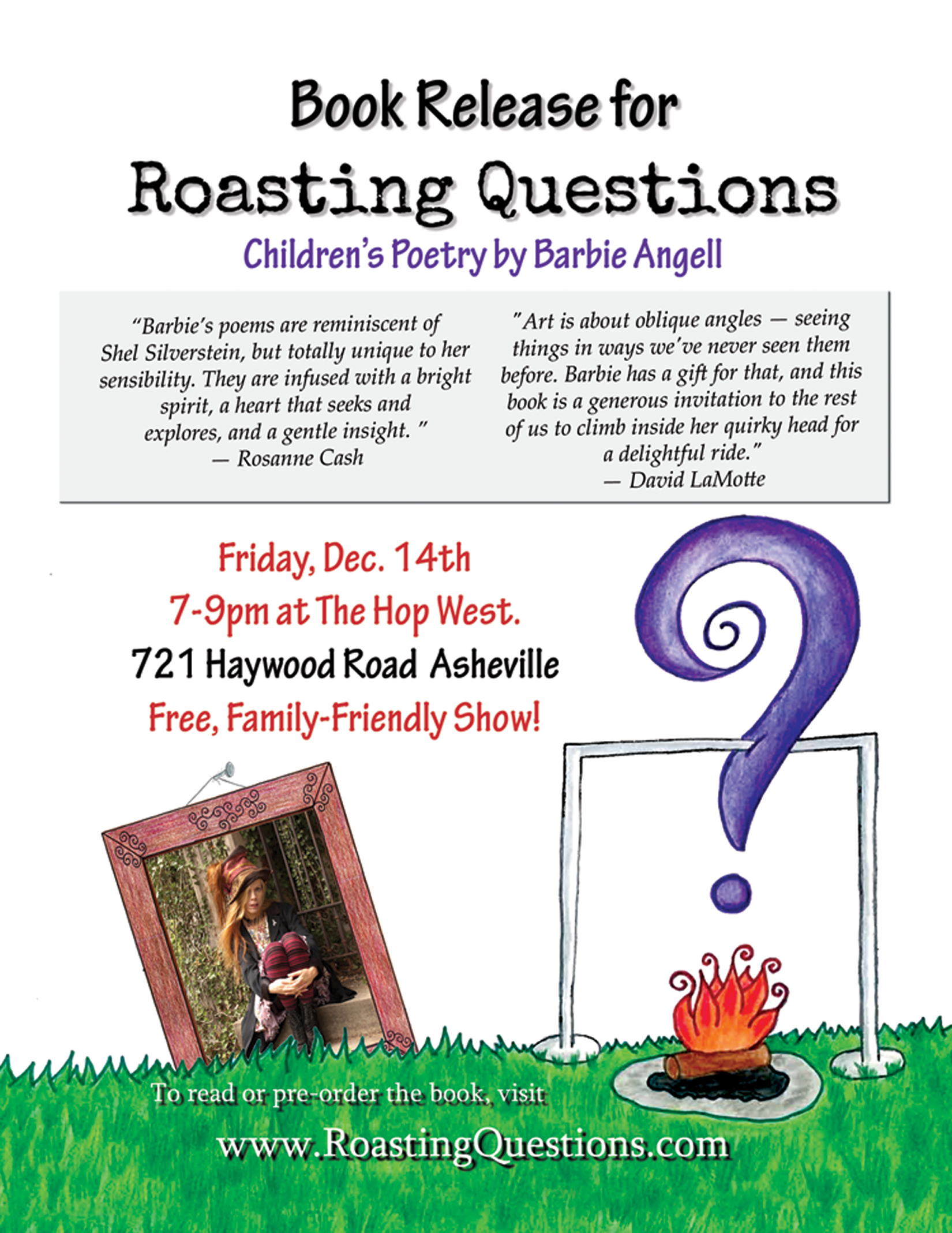
Interview: Barbie Angell on Roasting Questions

Roasting Questions Flyer

Barbie Angell is Asheville’s “poetess extraordinaire.” She has performed her poetry before audiences at bars, coffee shops and this Friday she’ll be at The Hop West promoting her new book Roasting Questions, a collection of children’s poems. The Hop West book release event is free and runs from 7 – 9 p.m. Visit Barbie’s web site for more details or visit The Hop West for directions.

Her previous self-published volumes of poetry have sold over 500 copies, according to her publisher, and she has earned a loyal audience from people who don’t know they like poetry to celebrated artists like Rosanne Cash and David LaMotte. Barbie kindly agreed to an interview to discuss the release of her first book Roasting Questions.

Coffeehouse Junkie Blog

For those who don’t know a thing about you, tell a little about yourself and how you came to poetry.

Barbie Angell

As a child, I loved reading Shel Silverstein. I was sick a lot & often alone and Shel’s poetry really grabs hold of loneliness and pushes the reader into a new world with quite tilted perspectives. My first Christmas in Mooseheart, a sort of orphanage, I was given a diary. Knowing I didn’t have the privacy required to keep an actual diary, I chose to hide my thoughts in poems. When I was in college I realized that, while poets didn’t appreciate my rhyming style, people who didn’t normally go to poetry events really loved my work. I was able to tap into an entirely new audience who had previously been ignored. In 1997 I was offered a children’s poetry gig which paid $75 for a half hour of performing. I didn’t write children’s poetry, but I needed the money, so I chose some of my rhyming pieces that were G-rated and the event was so successful that they gave me the job the next 2 years.

Coffeehouse Junkie Blog

Roasting Questions has been in the works for a little more than a year. Tell how the Roasting Questions developed as a collection of poems for children of all ages.

Barbie Angell

The book has changed a great deal since its inception. Originally it was going to have poems with blank sections for the children to draw a picture and also pictures with blank sections to write a poem. I still plan to do that book, most likely as a black and white supplemental to Roasting Questions. The pieces that ended up in this book were all given final approval by my seven year-old son. About half of them are also ones which I perform when I do bar shows and get the same incredible response from adults as they do at my children’s performances.

I’m unbelievably proud of Roasting Questions. Laura Hope-Gill assisted in the editing of the pieces and Michele Scheve and I brainstormed about the layout. With each “problem” that arose, I ended up finding a solution that made the book even more rich and quirky. Those two ladies from Grateful Steps Publishing House taught me a great deal and because of them the book is everything I could have hoped for.

Coffeehouse Junkie Blog

This is your first published book. Years from now, and hopefully many published books down the road, when you look back at Roasting Questions what do you hope readers will remember as the enduring idea of the book?

Barbie Angell

I absolutely hope you’re right and that this is the first of many books. The main philosophies behind Roasting Questions are fairly simple. I try to speak to the reader the way that Shel did, not over their heads or talking down to them, but speaking directly to them. Letting them know that we are all confused at times, all struggling with who we are and who we want to be. In the end, even though we’re all different, we want to connect with each other and be the best “us” we can be.

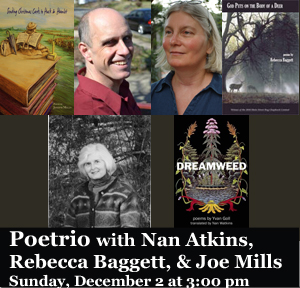
Rebecca Baggett, Joseph Mills & Nan Watkins

Poetry, December 2, 2012
Poetrio, December 2, 2012, 3 P.M.

Join poets Rebecca Baggett, Joseph Mills, and Nan Watkins for Malaprop’s monthly reading series Poetrio, Sunday, December 2, 2012, 3:00 p.m.

From Malaprop’s Bookstore’s Virginia McKinley news release:

Rebecca Baggett…. earned a bachelor’s degree in classical languages at Salem College and is the author of two previous chapbook collections…. GOD PUTS ON THE BODY OF A DEER, the poetry collection Rebecca Baggett will present on December 2, won the 2010 Main Street Rag chapbook contest.  Sarah Gordon has this praise for GOD PUTS ON THE BODY OF A DEER: “Rebecca Baggett’s strong collection…. The voice in these lyrics is original, the imagery fresh and vital, the subject matter compelling….  Throughout these poems the poet emerges as a soul leaning, leaning toward the light.”

Joseph Mills has…. has published fiction, drama, and criticism, as well as four books of poetry from Press 53…. Poet Anthony S. Abbot offered this enthusiastic response to Joseph Mills’ most recent book: “SENDING CHRISTMAS CARDS TO HUCK & HAMLET… is one of the most original collections of poetry I have ever encountered — original because it treats the whole world of books, poems, stories, fairy tales not only as being somehow more real than reality itself but as our most important lifelines to reality itself. There is about this book a sense of everything happening for the first time, even those literary events that seem to happen over and over.  What a pleasure this book gives the reader.”

Nan Watkins is a writer, translator, and musician who lives in the Blue Ridge Mountains of Western North Carolina. She holds degrees in German from Oberlin College and Johns Hopkins University, with further study at the University of Munich and the Academy of Music in Vienna…. Nan Watkins’ DREAMWOOD is the first English translation of Traumkraut, the final (and posthumously published) poems of Yvan Goll (1891-1950).  Goll is considered one of the finest European poets of the twentieth century.  He was born in Alsace-Lorraine and was bilingual in French and German.  In addition to writing as a poet, he became known as a novelist, playwright, translator and publisher who produced collaborations with Chagall, Dali, Picasso, Leger, Weill, Joyce, and others. Among those he published during his exile years in New York were W.C. Williams, Breton, Patchen, and Henry Miller.  In New York he also published his own book in English, Fruit From Saturn.  Poet Neeli Cherkovski has written of DREAMWEED, “This collection not only brings forth… a great poet’s voice, but also stands as a remarkable achievement in the art of translation.”

Hope to see you there.

For more info, contact: Malaprop’s Bookstore/Cafe, 55 Haywood Street, Asheville, NC 28801 (828) 254-6734

www.malaprops.com

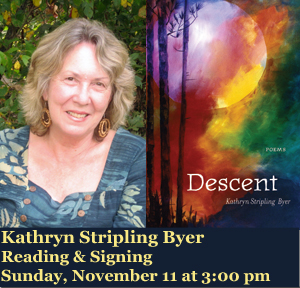
Kathryn Stripling Byer Poetry Reading & Booksigning

Sunday, November 11, 2012, 3:00 p.m., Malaprop’s presents a poetry reading and book signing for Kathryn Stripling Byer.

From Malaprop’s news release:

Poetry reading and booksigning event with Kathryn Stripling Byer, former North Carolina Poet Laureate and another favorite here at Malaprop’s.  On November 11 she will read from and sign DESCENT, a collection of poems described as “navigating the dangerous currents of family and race,” in which Byer “confronts the legacy of southern memory, where too often ‘it’s safer to stay blind.'”