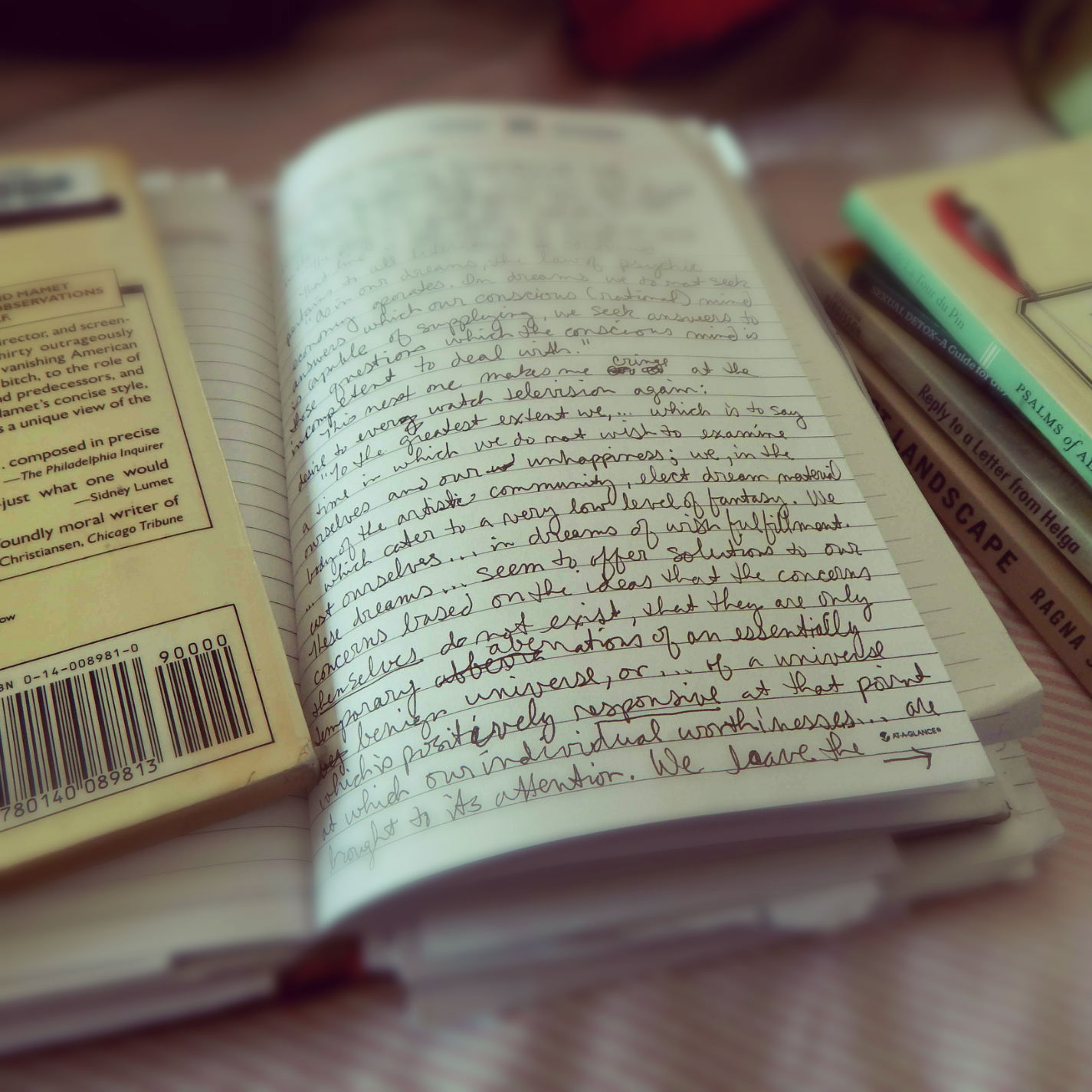
 When I read and write, I connect dots. Maybe you do too. Earlier this month, I noticed — and commented on — a Facebook post that linked to an article on how writing thoughts, ideas and quotes into notebooks makes one smarter. That article reminded me of how commonplace books house many notes and quotes from books read. [Link to article on commonplace books] The art of notations in commonplace books has been a practice of mine for decades. Whether it makes me smarter is yet to be evident.
Connecting some dots. Last week I came across a tweet that read:
“Ranking artists and making lists is a dead culture’s version intellectualism.”
@marcmaron
Considering this originated on twitter, I am inclined to disregard it. Yet, oddly, it resonates with me on some levels. Maybe it is because of the blogs I follow that list and present authors’s reading statistics (examples here and here).
Connecting dots. Over a year ago, sitting in front of the large windows of the Pack Library, I pondered the best of lists of 2013. My response is documented in this post. In brief, I listed my best books I read during the year — that were not printed in 2013.
Should I do a list for this year, 2014? The Seattle Times published their 2014 list. The Economist presented their austere list of best reads of 2014. Of course, the New York Times presented there top books of the year as well as a number of other publishers and blogs that try to capitalize on the posting their lists in time for holiday purchasing.
For 2014, allow me to open up the pages of my commonplace book — a thick red daily reminder journal used for both a calendar of events and appointments and day book — and share with you some of the notes and quotes found therein. Starting in March there is an entry on the following book:
Nobel Lecture: Czeslaw Milosz by Czeslaw Milosz
Found a hardcover, bilingual edition at the public library. That edition appears to be out of print based on internet searches. (If you find a first edition, hardcover edition please let me know.) Here are a line I wrote in my commonplace book/day journal:
“Two attributes of the poet, avidity of the eye and desire to describe that which he sees.”
And this one:
“In the minds of modern illiterates, however, who know how to read and write and even teach in schools and at universities, history is present but blurred, in a state of strange confusion. Moliére becomes a contemporary of Napoleon.”
Crediting Poetry: The Nobel Lecture by Seamus Heaney
“Ahistorical, pre-sexual, in suspension between the archaic and the modern, we were as susceptible and impressionable as the drinking water that stood in a bucket in our scullery: every time a passing train made the earth shake, the surface of the water used to ripple delicately, concentrically, and in utter silence.”
This Year You Write Your Novel by Walter Mosley
“The first thing you have to know about writing is that it is something you must do every day — every morning or every evening, whatever time it is that you have.”
And…
“The process… is… a journey by boat…. If you get distracted or allow yourself to drift, you will never make it to the destination…. The journey is your narrative.”
A Region Not Home: Reflections from Exile by James Alan McPherson
From the opening paragraph, this book drew me in:
“In 1974,… I lived in San Francisco, California. My public reason for leaving the East and going there was that my wife had been admitted to the San Francisco Medical Center School of Nursing, but my private reason for going was that San Francisco would be a very good place for working and walking.”
What other reason is there to move, right? Here is another selection:
“Friendships grounded in mutual alienation and self-consciously geared to the perception of others are seldom truly tested. They lack an organic relationship to a common landscape, a common or ‘normal’ basis for the evolution of trust and mutual interest.”
More along the theme as well as reference to Ralph Ellison:
“It was Aristotle who thought the most deeply about friendship as a moral virtue. He [referring to Ralph Ellison] distinguished between friendships grounded in pleasure and utility, which friendships last as long as pleasure and usefulness last. These two grounds of friendship are common. For Aristotle, the best of all grounds for friendship was what he termed ‘perfected friendship.’ This degree of friendship obtains when one person wants for the other what is good for him simply because it is good for him. He believed that only people with comparable virtues could sustain this kind of friendship. Aristotle did not mean equality of virtue; he meant proportionate virtue. He meant that each is prepared to render to the other what the other deserved.”
Somewhere More Holy: Stories from a Bewildered Father, Stumbling Husband, Reluctant Handyman, and Prodigal Son by Tony Woodlief
There are so many selections written in my journal that I turned it into a book review and later featured it in a podcast. Listen to it here.
One for the Rose by Philip Levine
This is another jewel found in the public library. Again, it appears out of print according to online retailers and first editions seem to be rare. (Contact me if you find a first printing of this one.) Here are two excerpts of poems from this collection of poems:
“I was born in Lucerne
I faced the longest night
of my life with tight fists and closed eyes
beside a woman of independence and courage
Who sang the peasant songs of her region.”
And
“and I could sit for a moment
remembering what it was
to rise slowly to a world
that seemed at peace on the long
Sunday mornings of lonely first manhood
when I knew nothing
except there was no work that day”
Scrambled Eggs & Whiskey: Poems, 1991-1995 by Hayden Carruth
This book drew a lot of ink into my daily journal. Here are two samples I wrote during the summer:
“and I still cannot believe you wouldn’t
give me a job when I needed one so badly”
And
“Old men converse across the abyss of time
on a hot evening in elusive light—”
Okay, one more…
“Somehow his eyes get lost
in the words and the snow”
Pigafetta Is My Wife by Joe Hall
This is a book I struggled with. A lot. Eventually it won me over and — ahem — became my wife. You will have to read it to understand the allusion. Here is a couple lines to entice you:
“I need to stop imagining that
some straight lines connect us”
Finding the Islands by W. S. Merwin
At some point in autumn, I realized I had written down some many lines from this book I practically transcribed the book into my journal. One day, during the noon meal I quoted a few lines from the book. Everyone at the table went silent. Here is an excerpt that still haunts me:
“How time disappears
while we live under
the big tree”
The Name and Nature of Poetry: and Other Selected Prose by A. E. Housman
What can I say about this book? Well, read some of the things I copied into a commonplace book:
“We should beware of treating the word poetry as chemists have treated the word salt…. If we apply the word poetry to an object which does not resemble, either in form or content, anything which has heretofore been so called, not only are we maltreating and corrupting language, but we may be guilty of disrespect and blasphemy.”
And
“Man had ceased to live from the depths of his nature; he occupied himself for choice with thoughts which do not range beyond the sphere of the understanding; he lighted the candles and drew down the blind to shut out that patroness of poets, the moon.”
There are more notes and books referenced in my commonplace book/day journal that are not included. May this inspire you to connect dots, make notes and start a commonplace book of your own.

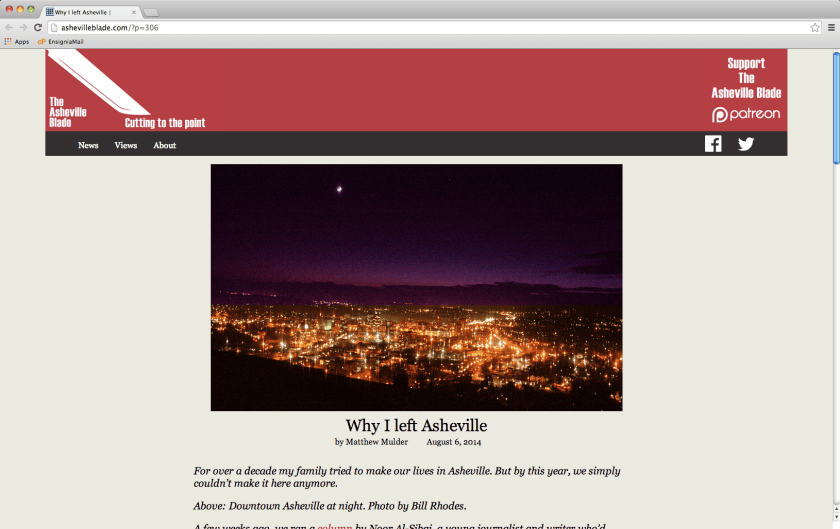 There was something else I intended to share today. But a story I wrote that was published in August is making its rounds again. [Read the full story here:
 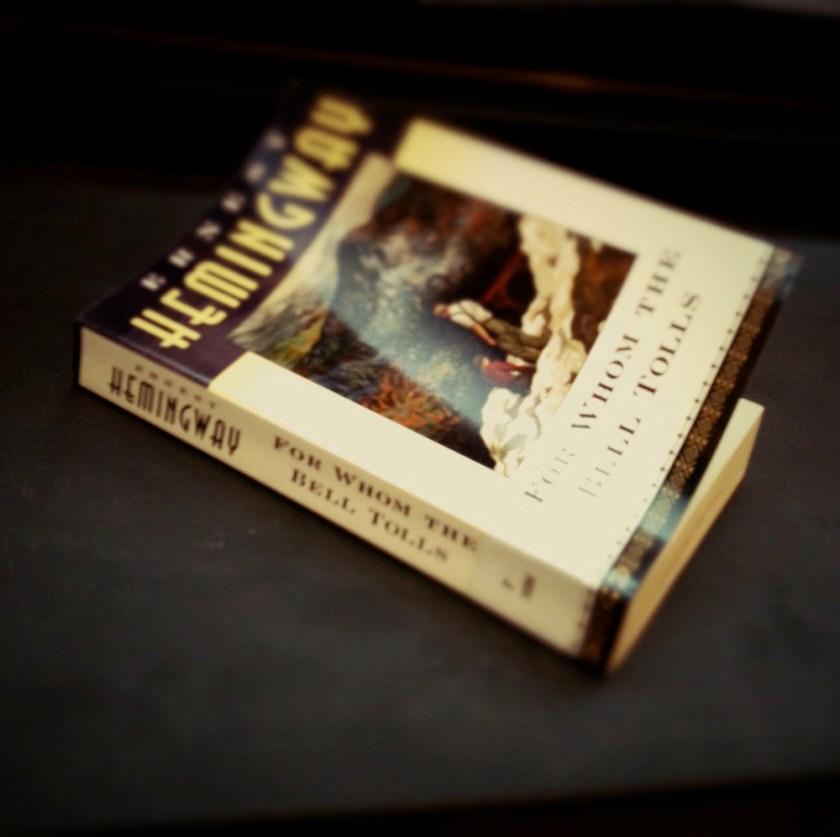 If a book could represent your year, this year, what would it be?



 Coffeehouse Junkie