The pleasure of drawing

DSCN3386[sqr-tilt-dallas]

Nearly done with the back cover illustration. A brush is often forgotten in the process of keeping a clean drawing surface.

DSCN3396[sqr-tilt-dallas]

Detail of the back cover illustration — a catfish. I have to admit — besides the firewheel flower blossom on the front cover — drawing the catfish was a pleasure.

DSCN3400[sqr--dallas]

Front and back cover pen and ink collage drawing completed. Ready for the next phase — watercolor.

The purpose of drawing

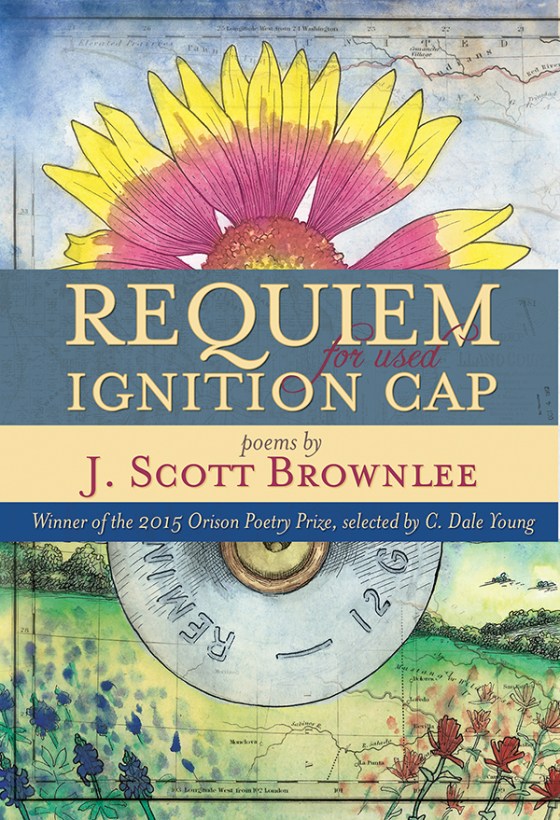
The foundation of a great painting is a solid drawing. At least that was my goal when I worked on this book cover illustration for Orison Books. The collage features a firewheel — sometimes called Indian blanket — blossom, shotgun shell and expansive Texas landscape.

DSCN3395[sqr-tilt-dallas]
Nearly completed pen and ink work on the cover.

DSCN3390[sqr--dallas]

Detail of the firewheel flower blossom.


The purpose of thumbnail illustration

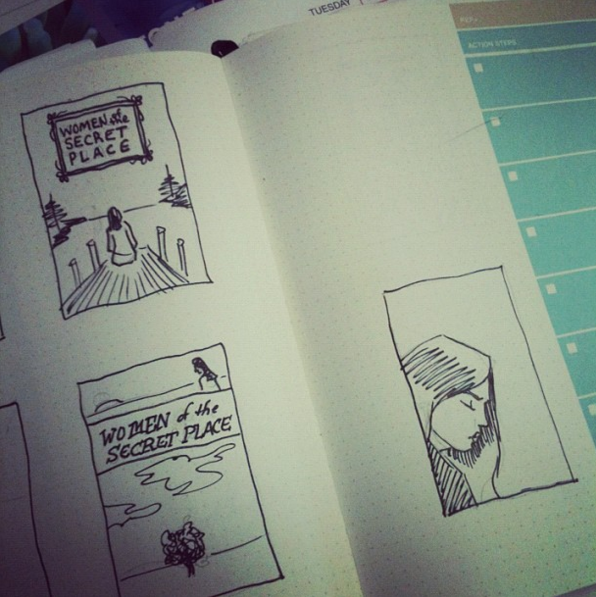
The purpose of thumbnail sketches is to advance the concept of artist, art director and editor to a final product. It seems like a lot of busy work, but three elements are essential: brainstorming, mind-mapping and closing the gap. The following images illustrate the process of thumbnail sketches as it relates to a book cover illustration. DSCN3558[sqr-tilt] Three thumbnail cover comps presented to the publisher a couple months back. DSCN3560[sqr-tilt] Full-size book cover sketch to gauge color temperature and composition of elements.
Paint until the light fades

20150609-075742.jpg

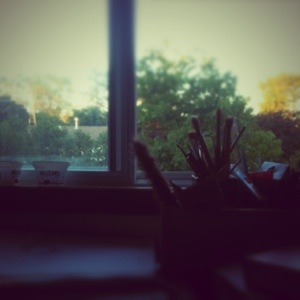
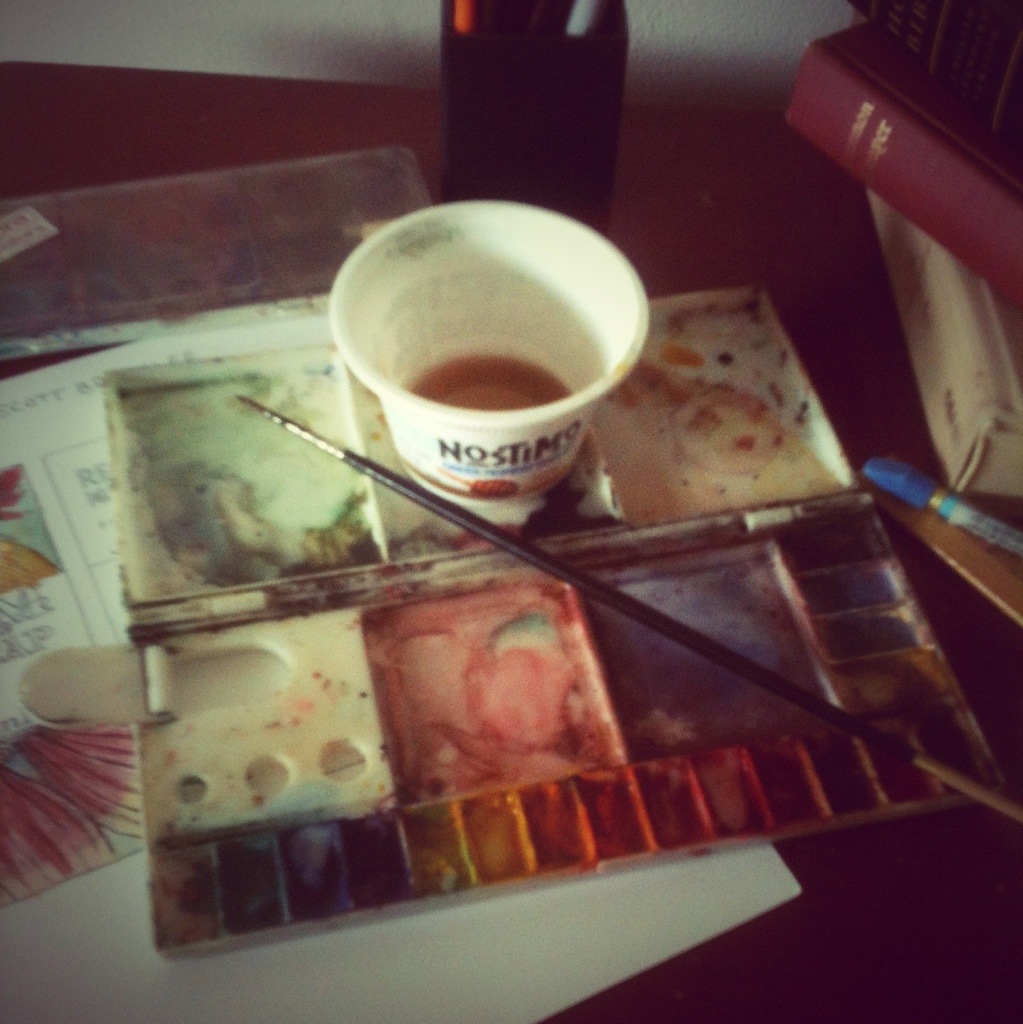
Last Friday night. Using natural light, I worked on an illustration until sunset. Without a formal art studio, the best place to draw with pen and ink and to paint with watercolor is at the east window. As the time grows close to the longest day of the year, this allowed for more time spent doing art work. But when the light fades it is time to switch tasks and clean brushes and pens.

Afternoon work, windows open, listening to Joseph Arthur

20150410-150554.jpg
Listening to “It takes a lot of time to live in the moment” by Joseph Arthur while working on an illustration comp for a book cover.

Strange Familiar Place returns

Stange Familiar Place - Comic Strip

After a very long hiatus, “Strange Familiar Place” will be back in print. Or at least it will be in a very limited capacity. More details on that later.

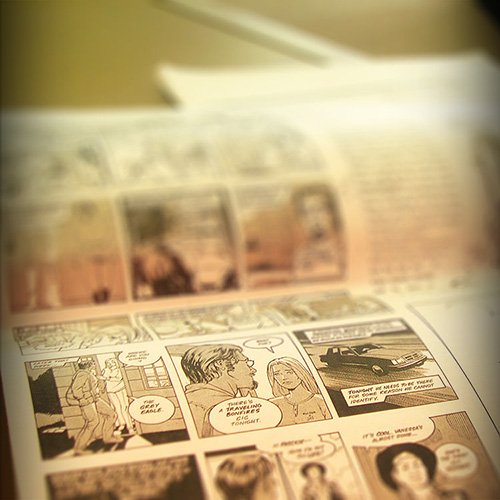
The creative non-fiction comic “Strange Familiar Place” first appeared in The Indie. Inspired by the works of Harvey Pekar, Jessica Abel, and Eddie Campbell, I wrote and illustrated “Strange Familiar Place.” Eventually I collaborated with illustrator and comic book artist James E. Lyle on six comic strips.

Comic Stroll, a publication of the local chapter of the National Cartoonist Society, will feature that collection of previously unpublished comic strips. Read the evolution of what started as a couple drawings and became a creative non-fiction comic:

  1. Comics and Narrative Non-Fiction
  2. Comics and Narrative Non-Fiction Continued
  3. Narrative Non-Fiction Comics: part 3
  4. Narrative Non-Fiction Comics: part 4
  5. Narrative Non-Fiction Comics: part 5
  6. Narrative Non-Fiction Comics: UPDATE
  7. Narrative Non-Fiction Comics: UPDATE
  8. Strange Familiar Place comic series

More details about Comic Stroll distribution will be made available later.

Anatomy of a children’s book

Updated - Anatomy of a Children's Book
Updated – Anatomy of a Children’s Book

UPDATE: A new image of the anatomy of a children’s book replaced the smartphone photo.

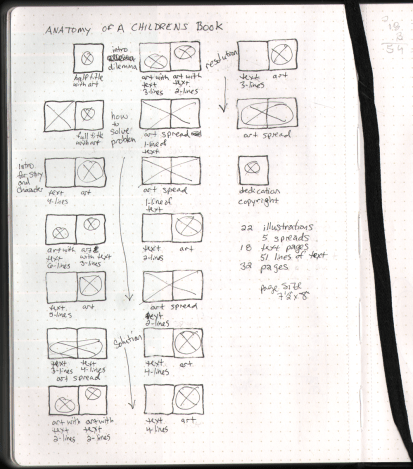
This crude sketch was quite popular at a recent meet-up of illustrators and comic book artists. Basically, the topic of children’s books came up and I got the impression that the idea of creating a children’s book was intimidating to artists. As well it should be. But it is not a path of labyrinthian impossibility. The big question is how to do it.

So, to encourage these artists, I showed them this dissection of a children’s book: 22 illustrations (five spreads), 18 pages of text (51 lines to be specific) an 32 pages (including title pages, front matter and back matter), intro story and character on page four, intro dilemma on page 14, how to solve problem (pages 15 to 23), problem solved on page 24 and resolution on page 28. It didn’t take long before a several artists were asking to take a photo of this anatomy of a children’s book with their smart phones.

Like all recipes, what you do with the ingredients (i.e. text, words and pages) is up to the artist and writer. And, like any good disclaimer, results do very.

Hidden in the closet

Hidden in an old portfolio

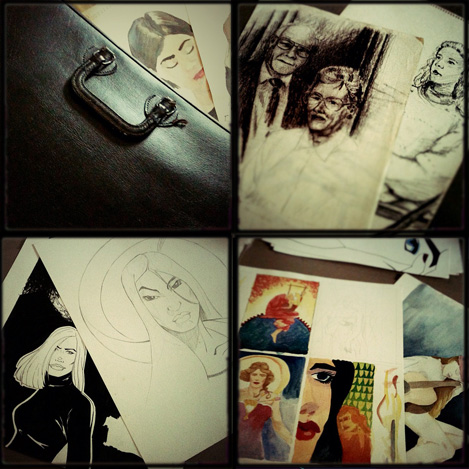
Something hides in the closet. Below the button down shirts and dress slacks for work, behind the winter wardrobe of sweaters, vests and jackets, and against the back wall is an old black leather portfolio with handles. Years ago it was a mandatory item for any and every graphic design student or young professional with goals of becoming an art director, illustrator or creative director. I pulled out the old portfolio and the oversized heavyweight document envelopes behind it and entered a gateway to another time and place.

Like time travel, I am back in the 1990s. There were three main portfolios I presented. One presentation was corporate, ad agency design samples. The kind of material that ranged from logo design, brand campaigns and the like. The second presentation was print design. That portfolio exhibited all manners of print designs from brochures, books, direct marketing collateral, magazine spreads, cover designs, etc. For presentations, I would rotate the design samples in the black leather portfolio based on the interview. Sometimes I presented a hybrid of both that included work that featured my copyrighting and marketing pieces. But the third portfolio was my favorite–the illustration portfolio.

Professors, peers and even my first art director advised it was the weakest of the three. The general critique was that technique needed improvement. So I kept working on improving technique and execution. A black cloth case bound sketch book always accompanied me almost everywhere I traveled. I’d sketch landscapes, still lifes, portraits and tried various techniques using pencils, Sharpie markers, charcoal, ink and watercolor. But soon I learned that I could earn more financially and find more consistent work with digital designs.

It is not that I abandoned illustration. A few years ago, a national news magazine featured one of my illustrations on the cover of its annual books issue. Earlier this year, another illustration was featured as a book cover design. Also this year, a few spot illustrations were published in a book.

As I look at these old illustrations and sketches, I see a younger, self-doubting me at a time before home computer, internet, or smartphone entered my life. Back in those days, the only entertainment devices I had was a stereo set with a five-CD player, a stack of maybe 30 audio CDs and a shelf full of books. Through the portal of this time capsule, I see the mistakes and accomplishments with a new perspective. Hidden away in that closet is a portfolio of dreams, aspirations and ideas that was slowly replaced with a portfolio of duty and responsibility. A thought occurs to me as I examine an unfinished sketch of a female portrait, did I focus on pursuing a career path rather than a vocation? Maybe that is a thought I should hide in the closet while I bring some of these illustrations into the daylight.

Judging a book by its cover

For me, every book cover I design begins with pencil sketches that eventually lead to ink drawings. Actually, I suppose it begins prior to that. The author receives a pre-publication questionnaire from me prior to the design process. The questionnaire asks the author what is his/her elevator pitch, what are the pillars of the book (i.e. what are three main concepts/ideas in the book?), and what is the book’s key audience? There are more questions that help me prepare for the design process, but reading through that document helps me form an idea of who the author is, what the book is about and how best to represent the book’s content with an attractive cover.

Then I receive the manuscript a few weeks later and begin reading the author’s work. This helps try to envision in my mind an iconic poster image. For me, a book cover is the equivalence of a film poster. At this stage, I produce some concept drawings (like the one’s pictured) and research color schemes and subject themes that I plan to use in the cover design. After a couple rounds of emails with the author, I proceed to the full-color design phase.

The full-color design is often photographic, as in the case of this sample, but can also feature illustrated work or typographic designs. An illustrated cover is sent to a freelance artist who spends a week or so producing the cover art. The final cover design pulls together all the elements (art, photo, type and copy) to present a cover that, in theory, sells a 1000 to 3000 copies on face value. I know what you’re thinking, but books really are judged by their covers. Just watch people at a bookstore. They’re scanning covers before they even pick up a book to read the back copy blurb or open a book to read the first few chapters. If a book has amateurish art or less than professional photography, the audience will move to the next book cover that has great photography or stunning artwork. Further, if a book has poor quality cover art, it will be represented in poor book sales. Let me say it again: if a book has crappy cover art, the book will have crappy sales. No reader wants a crappy book on their bookshelf or e-reader. Half the battle for a reader’s attention is getting him/her to pick the book from the shelf. The same applies to e-book stores. Readers are scanning covers from the Kindle or Nook e-stores and deciding, based on cover design and book blurb, what title to purchase.

From the time the final cover is approved until the product arrives is six to eight weeks depending on circumstances. That’s when the real test of a book’s cover design and interior content begin. And that’s about the time I begin the next round of cover designs.

Narrative Non-Fiction Comics: UPDATE

The Indie features part one of my creative non-fiction comic, Strange Familiar Place, this month. It has been a year of trying to find a place courageous enough to take the risk on a no-name amateur artist.

The Indie is available at: Malaprops, True Blue Arts, Pack Library, Woolworth Walk, Rosetta’s Kitchen, Mellow Mushroom, Hannah Flannagan’s, Fine Arts Theater, Early Girl Eatery, Port City Java, Burgermeisters, Lucky Otter, West End Bakery and many other locations.

Previous thoughts and intimations on creative non-fiction comics: [1] [2] [3] [4] [5] [6]

Narrative Non-Fiction Comics: UPDATE


inked comic page

The publisher received the first installment of my creative non-fiction comic this week. It has been almost a year since a posted about a creative non-fiction comic I’ve been illustrating and writing. Previous posts on creative non-fiction comics: [1] [2] [3] [4] [5]

The irony is that Drawn, an illustration and cartooning blog, posted this on Monday:”Goodbye one-page diary comics; everyone’s blogging now.”

It appears the one the inspirations for my work now has a blog (which isn’t bad) but he posted this: “In the old days i’d have made a one-page … but today we squander our narratives in a blog.”

What a pisser.

The first installment is due to hit the streets in December and the medium is horribly dated. Another source of inspiration has a blog as well but hasn’t updated since 2003. However, Vertigo released a five-issue miniseries by him that began in September.

Maybe it’s not as bad as Drawn considered.

Narrative Non-Fiction Comics: part 5

A while back, I mentioned that the first installment of my creative non-fiction comic is complete and pending publication. The first installment is titled “Higgins: Inside the Box.” Last weekend I completed half of the second installment (four strips or roughly 12 panels) which is the conclusion to the story arch, “Higgins: Inside the Box.” Then I began scripting a 5-part comic strip for a third installment which features a story line about this event. There isn’t an official title to this one. However, “Higgins: Outside the Box” seems like a logical progression.

Last Tuesday was the SECNCS meeting and fellow artists encouraged me regarding my inking techniques and suggested some tips on lettering comic strips. One artist, who is regularly featured in the Rapid River magazine, recommended that dialogue text be all caps and narrative text be upper and lower case. The recommendation is already being implemented beginning with the second installment.

This endeavor of combining illustration and creative non-fiction, have inspired me to study the poet William Blake. The illuminated text is not a new media; many ancient manuscripts were illuminated. For example, The Book of Kells is famously known for its illuminated text. Years ago, I studied under a calligrapher who taught me the secret of the Celtic knot work and spirals represented in the Book of Kells. The discipline of the knot-work has served me well, though not in my recent illustrations.

But William Blake illuminated his own poems and printed his own collections with the help of his wife. It helped that he was trained as an engraver and went on to apply his trade for book and magazine publishers. Being an innovator in his own right, he applied his trade to illuminate and print his own literature. Like William Blake, I studied graphic design (the modern day digital engravers if you will) and know how to produce books and magazines for clients. I wonder what William Blake would think of creative non-fiction comics?

Previous posts on creative non-fiction comics: [1] [2] [3] [4]

Narrative Non-Fiction Comics: part 3

The first installment is done. I’m a little bit nervous about sending it to the editor.

A couple months ago I began exploring the idea of literary comics; more specifically creative non-fiction comics.

I began sketching a 14-panel demo story and showed the drawings to some other cartoonists at a monthly meeting. The narrative non-fiction comic strip was modestly received and they encouraged me on some drawing techniques.

Casually inspired by Harvey Pekar’s American Splendor, Jessica Abel’s Radio: An Illustrated Guide and Eddie Campbell’s Alec McGarry, I began work on a narrative non-fiction comic strip storyline in five parts. Each strip, four panels, needed to be enough of a story to encourage a reader to come back next week. This would make it ideal for a weekly publication. The long term goal is weekly syndication (hah, stop laughing–everyone has dreams). The short term goal is a self-contained 5-page story.

Bitter Black Coffee, Issue 6, Summer 2005

The editor and publisher of a zine, Bitter Black Coffee, requested I put together this 5-page comic for an upcoming issue. In fact, the 14-panel demo story featured our intial meeting. So, this is a bit of a test run to see if I can complete something I started. We’ve been discussing this for over two months.

My personal goal (not the editor’s) was to have all 20-panels drawn, lettered and inked by Thanksgiving. However, personal crisis, illness and a full time day job prevented me from meeting that deadline. So, I adapted and gave myself three more weeks. The week before Christmas all 20-panels (plus a few bonus ones) were completed and scanned and ready to send. Only one hitch (actually two)–I didn’t have a name for the strip. Then I upgraded my laptop to Tiger and somehow lost the files I needed to email the editor. The naming of the comic strip still didn’t come to me. The muse must be on vacation or holiday or something. Maybe she has the stomach flu like I had last week.

During the Christmas holiday I found myself flipping through a copy of Alec: How To Be An Artist and I thought of a working title. I told myself it was too simple and too silly, but I went with it. I haven’t thought of anything else ingenious so the strip will be submitted with a working title. Maybe that’s the whole Malcolm Gladwell thing about snap judgments and split-second decisions.

Last night I got the files ready to email. Tomorrow I submit the self-contained 5-page story to the editor and publisher of Bitter Black Coffee.

Previous posts on creative non-fiction comics: [1] [2]

Sketch: Another Cafe Reader


Sketch: Cafe Reader


Sketch: Coffee Underground

Sketch: Art Studio Still Life

Comics and Narrative Non-Fiction

pencil layout

A few years ago I illustrated a four-page comic version of a poem by Nate Pritts. To my knowledge there aren’t too many literary comics that tackle the idea of visually representing a poem in comic format. Not that my four pages was ground breaking. It was good exercise for me and provided the kernel of expanding comics into the literary realm.

You’re probably familiar with the publisher of Great Illustrated Classics. However, comics as a whole tends to be marginalized as tights-and-capes adventures at best or adolescent porn at worst.

comic page layout

A couple weeks ago, another comics aficionado presented me with the idea of illustrating concert reviews, interviews, non-fiction narratives and personal memoir. I jumped at the opportunity and began sketching out ideas immediately.

The biggest challenge for me was the limitation of the form. Illustrating a concert review requires a simple plot: I went, I saw, I reviewed. But will anyone read something that simple? I thought about adding a bit of narrative. In other words, tell a story about people who attend a concert; include brief backstory, dramatic tension, climax and conclusion.

inked comic page

Last weekend I began with two pages. The story was simple: my meeting with the other comic aficionado/publisher.

Backstory: artist has been trying to publish his comics for over ten years.

Tension: interviewer loves artist’s work and desires some new samples.

Climax: artist feels intimidated by the task but accepts.

Conclusion: artist begins a new direction in creative communication–comics.

Sketch: Woman Reading