The youngest child asked, “Why is the candle purple?”
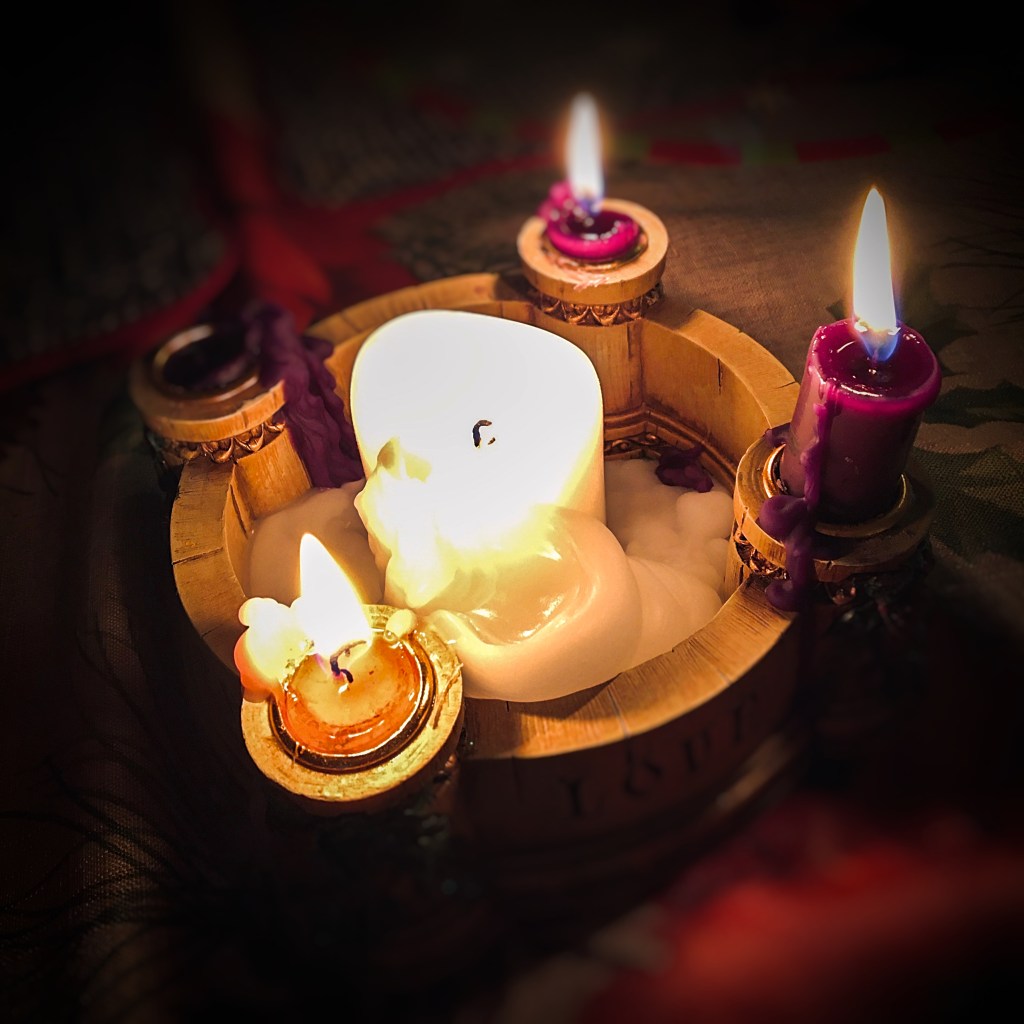
I lit the first candle of the Advent wreath as we gathered around the dining table and prepared to celebrate the first Sunday of Advent.
It is called the “prophets candle” and it is purple to represent royalty, I said. The first candle reminds us of the hope God’s people had that a King was promised.
How does it do that? the child asked.
Let’s read and find out.
We read passages from the prophet Isaiah and the gospel of Luke.
After the first Sunday of Advent celebration, my tired mind tried to find a suitable poem. Thankfully, I had set aside a half dozen poems for consideration last year. This Sabbath poem from Wendell Berry seems to fit with the theme of the prophets candle.
Sabbath Poem VII
Wendell Berry
The clearing rests in song and shade. It is a creature made By old light held in soil and leaf, By human joy and grief, By human work, Fidelity of sight and stroke, By rain, by water on The parent stone. We join our work to Heaven’s gift, Our hope to what is left, That field and woods at last agree In an economy Of widest worth. High Heaven’s Kingdom come on earth. Imagine Paradise. O Dust, arise!
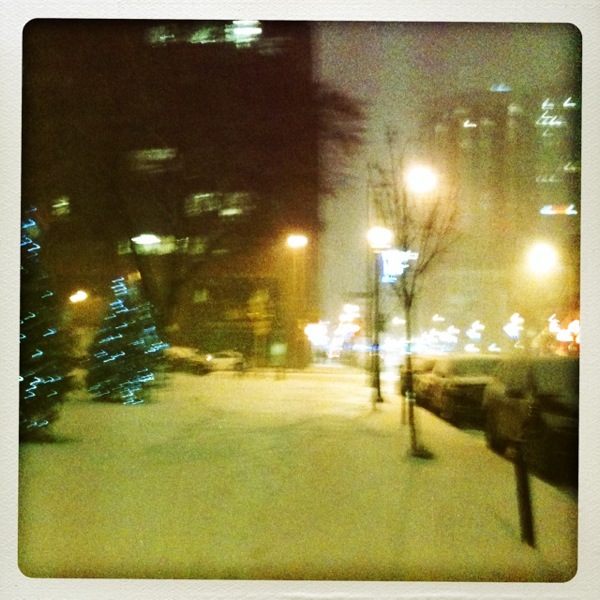
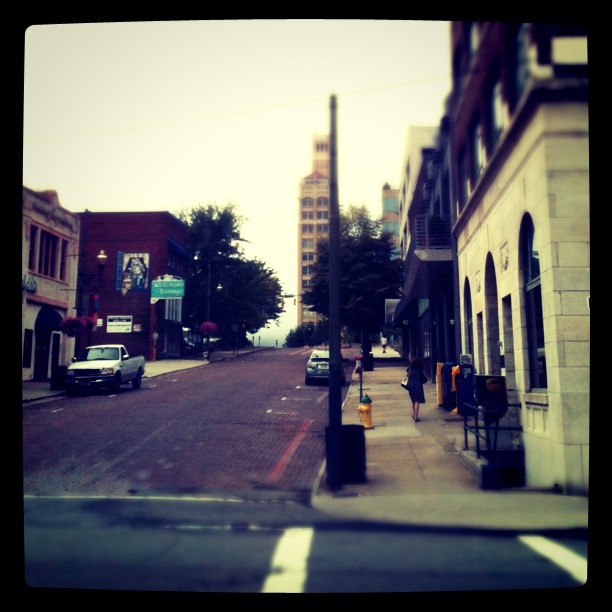
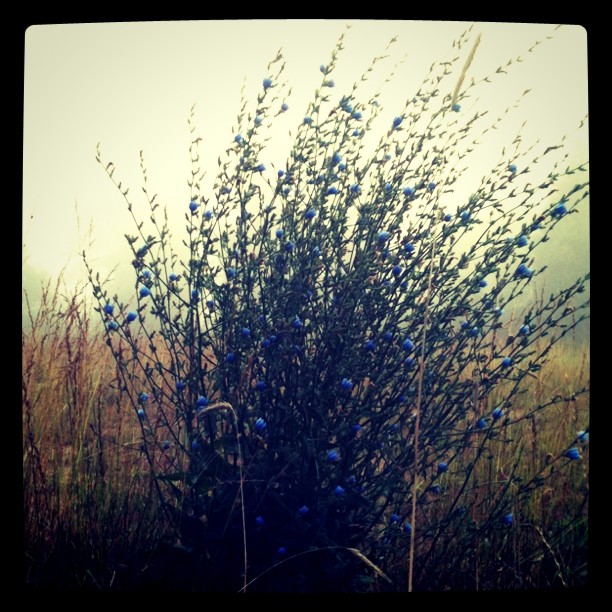
A lot of things have changed in the last ten years. This photo captures an early Monday morning in downtown Asheville, North Carolina. When I look at this photo, I see a thousand words of visual storytelling. But I also see what is left out. Each photo is framed in such a manner as to communicate what the photographer intends. What do you see in this photo? If you had to write a thousand words about this photo, how would the first sentence read?
The morning was cool for July. The dew point moderate. Not too humid. The sun had risen an hour before my wife and I drove through the countryside to meet a friend for breakfast and coffee. Wildflowers of purple and white filled the ditches along the roadside. The windows of the motor vehicle rolled down just a bit to catch the rush of air and scent of summer.
At the cafe, we enjoyed our morning meal and coffee. I brought an old sketchbook and some Pitt Artist Pens to practice dormant skills during the after-meal conversation. My confidence in these abilities has deteriorated as more and more my job demands extensive screen time. The computer screen, keyboard, and trackpad create a distance between the art and the art maker — between the graphic and the graphic designer. My concern is that of atrophy. Will my mind and body remember how to sketch the lip of a glass? Was this a false concern? Maybe. Maybe not.
Steven Heller wrote of the Polish designer Trepkowski that his posters were “designed for cultural events” and did not depend on weekly sales goals or production reports. The brush of the Pitt Artist Pen handled the curve of the coffee mug and quick short strokes of a plate’s shadow. This ink drawing captured a small cultural event. A meal among friends on a summer morning.
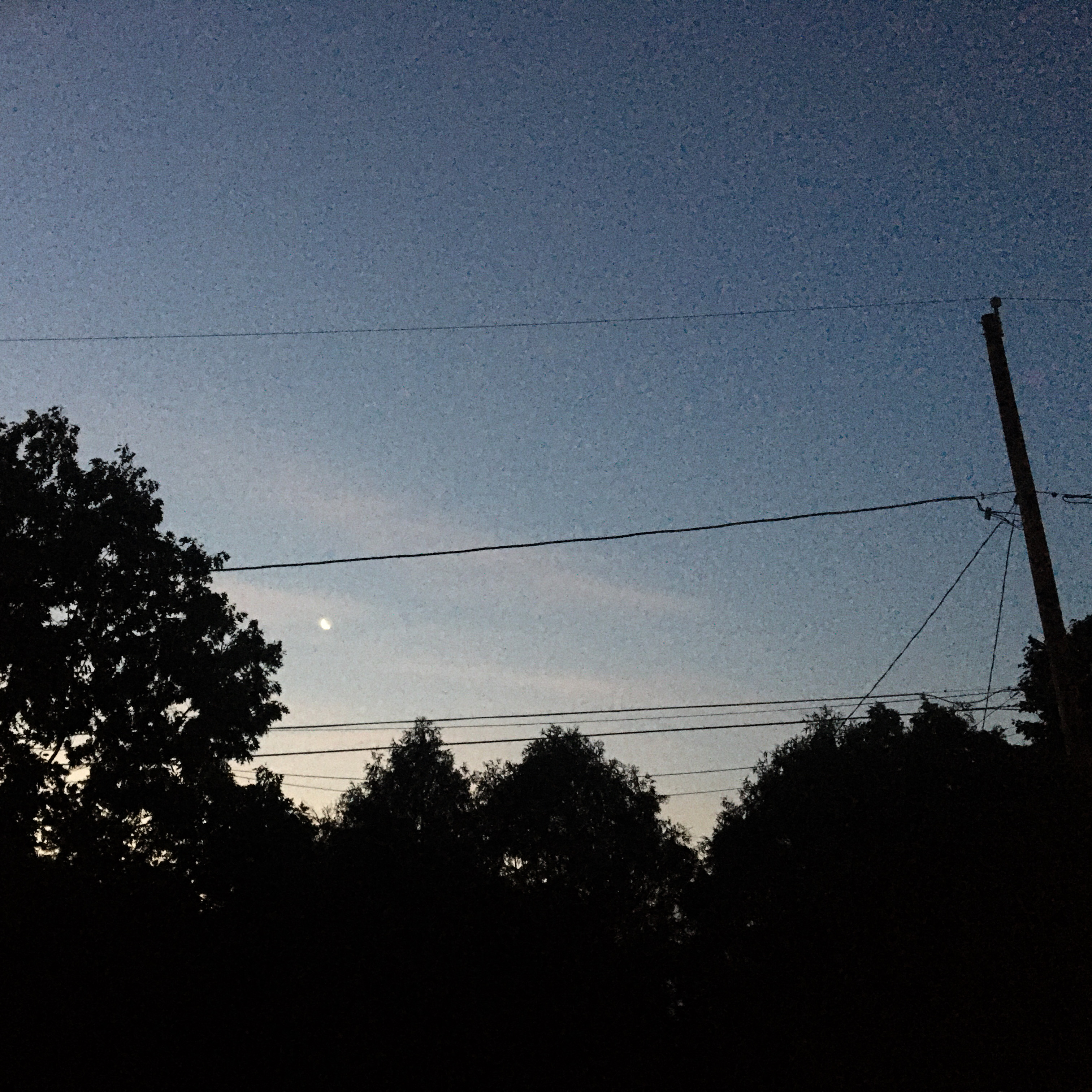
Why wake up at 4:30 a.m.? For a moment like this. A sliver of the moon is barely visible in the pre-dawn hour. Within 45 minutes she will no longer be seen. The sky will be too bright–even at 5:30 a.m. It is not quiet–like some people may think. Birds chirp in choruses deep in the shadows of shrubs and trees. And because it has been so hot recently, the loud buzz and hum of air conditioning units in the apartment complex going on and off at intervals punctuates the hour. Despite the audible sounds, there is a silence that allows the mind, body, and spirit some time to focus before the clatter and clutter of the day disrupt attention.
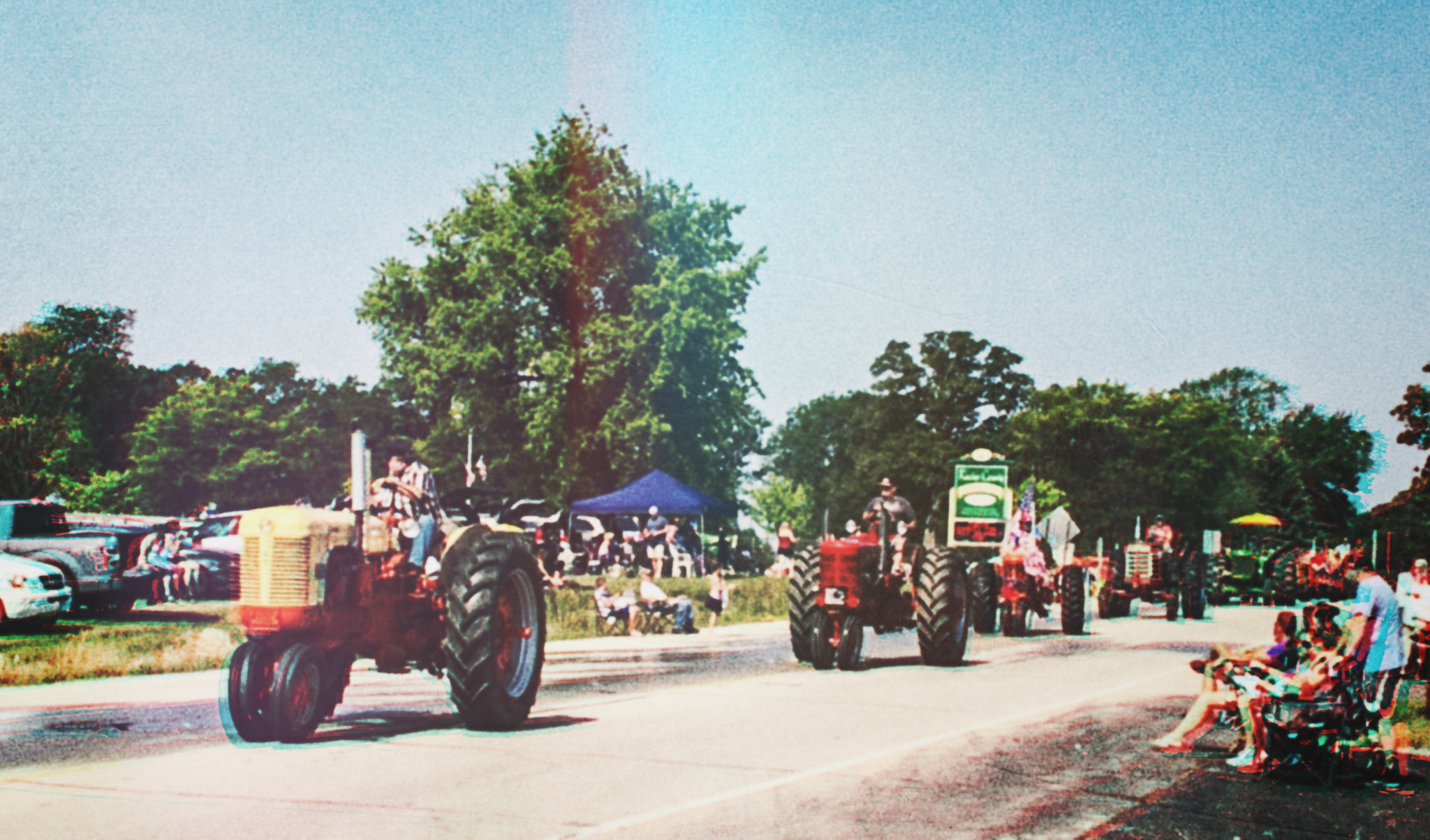
Fourth of July parades in small town America reflect a cross section of a nation. Antique tractors, classic automobiles, fire engines, floats and flatbeds, and horses and riders all pass by crowds of Catholics, Protestants, and Sikhs. United we stand along a two-lane country highway under a blazing hot sun to cheer and wave at family, friends, and neighbors in our community.
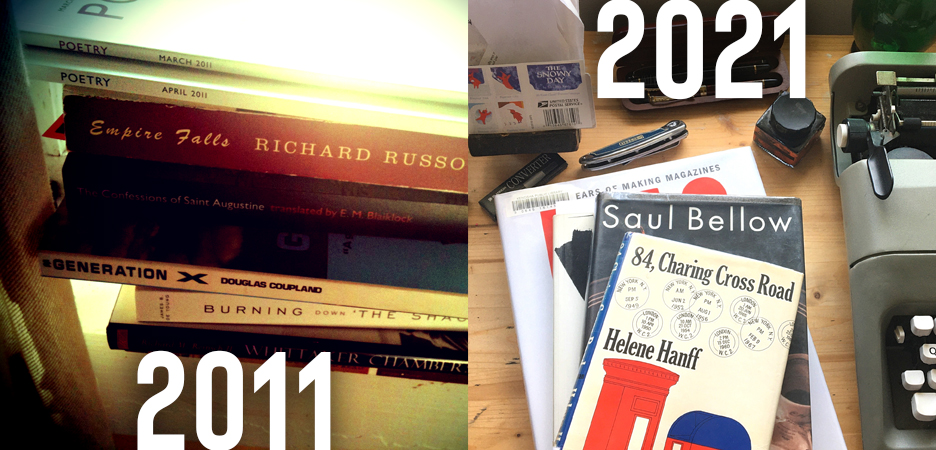
Ten years ago I published this photo of a nightstand stack of books. I looked at the photo and wondered what changes occurred in my reading habits or tastes during the last ten years. Then I asked, what is on my desk today? After some thought, I wrote a blog post. Or rather an essay regarding my observation. But it was long.
I did not publish the post. Instead, I merged the photos together for comparison. Pictures are worth a thousand words. In this case, two thousand words. And this post will only take a minute to read, rather than 15 to 20 minutes.
Ten years ago today I had no idea that this image — captured during a morning jog — marked the end of one era and the beginning of another. When I look at this image I remember when I took the photo, what I was thinking, where I was, who I needed to talk to, and why. Everything seemed to change that week.
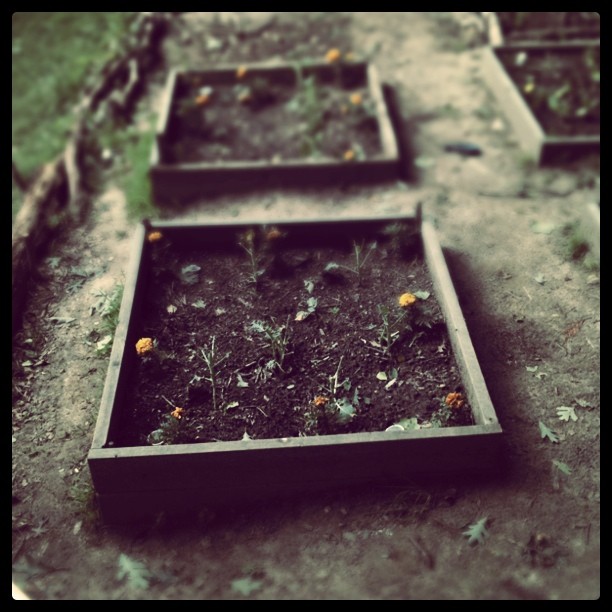
The damage one groundhog did to a garden in a single morning.
I searched through the archives this morning as I waited for the work laptop to install software updates.
Five years ago this month I posted two blogposts. The entire month. Looking back, that may be an average. June is a light month for postings when compared year over year. Except in 2011 — that month 79 blog posts were offered.
Ten years ago to the date I posted the above photo in this blog post. Not mentioned at the time was that a female groundhog had eaten all the young broccoli and greens that had been planted earlier that spring. An expert was called in and he humanely captured the mother and her two pups. He informed me that groundhogs mate in early spring. Female groundhogs have really short pregnancies. So, by June the groundhog in our area was a very busy mother. It was difficult to get angry at the groundhog for eating most of my spring plantings. She was just doing what groundhogs do. Mother and pups were safely relocated to one of the nearest state parks.
Fifteen years ago this month I published a weekly column. I had been invited to contribute a weekly column by another writer. At some point I considered collecting those columns in to a book. But that manuscript, or manuscripts, is probably buried in a junk drawer somewhere in the garage.
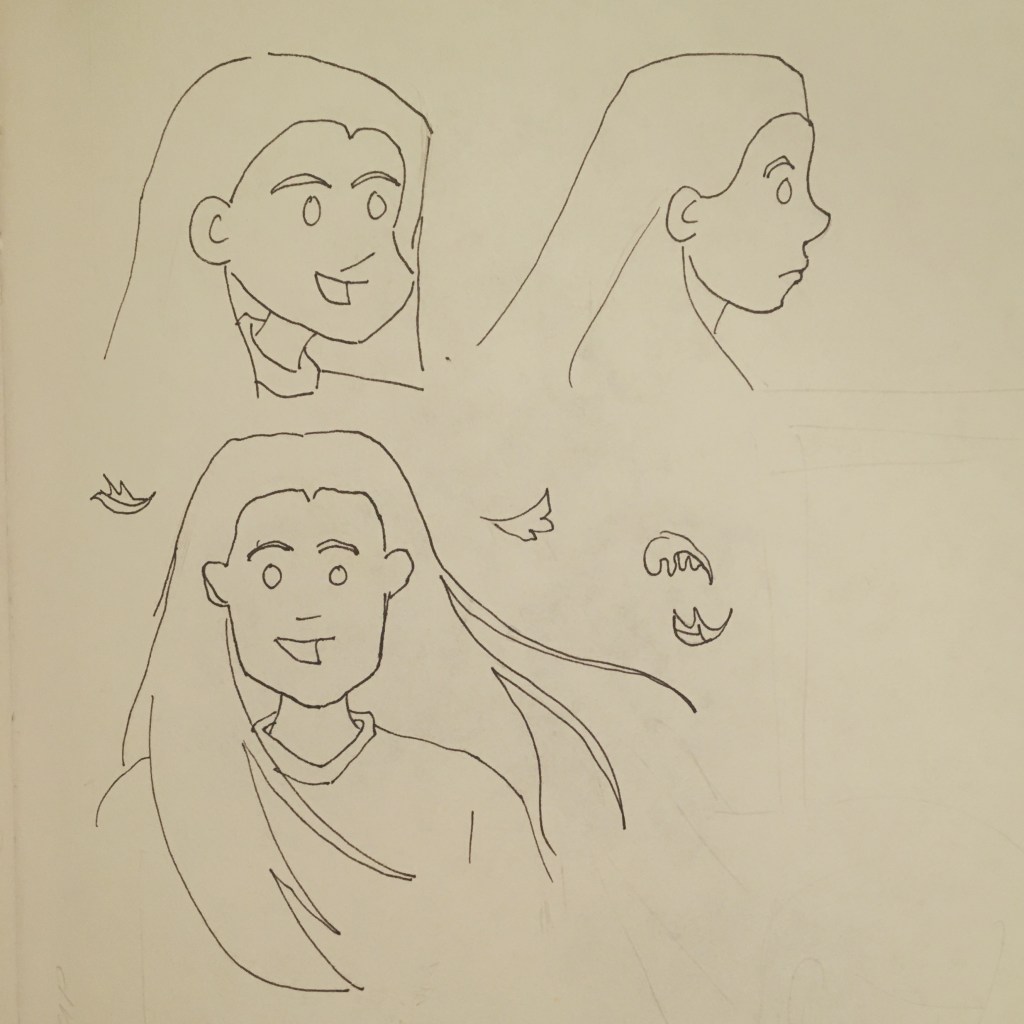
Twenty years ago. No blog. No laptop. Just a black cloth hardback sketchbook. I sketched a model sheet for a comic book proposal.
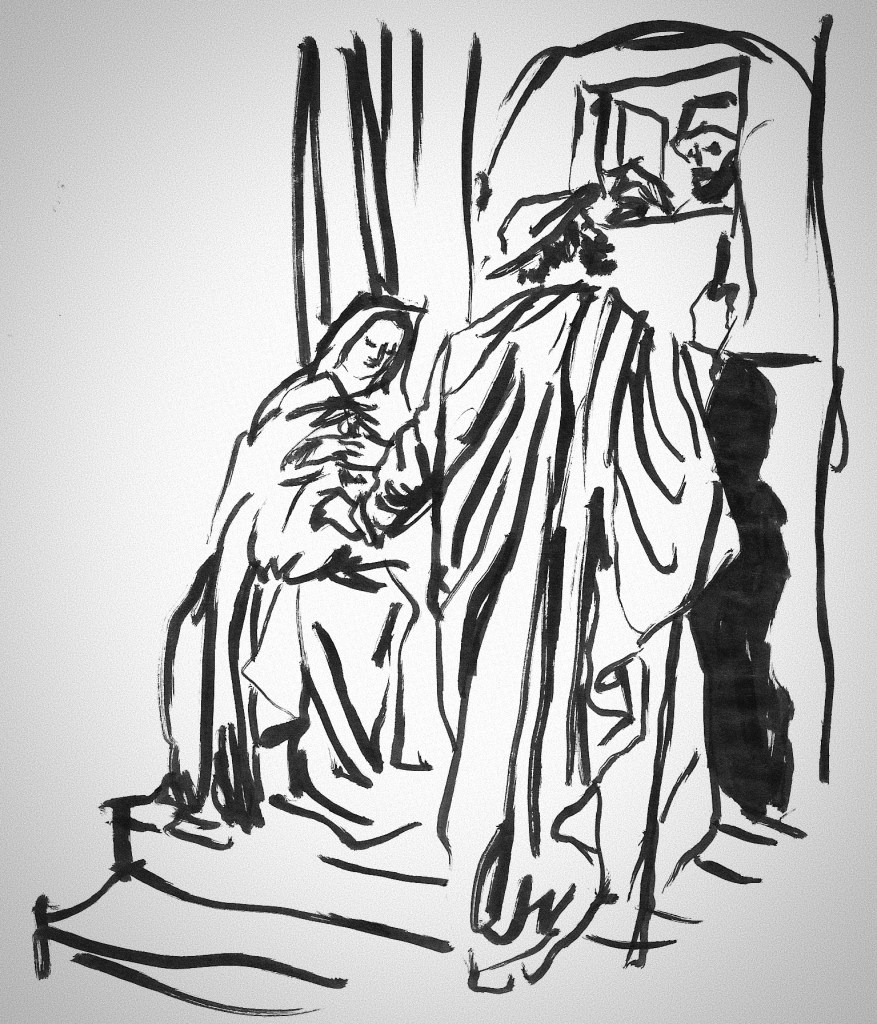
Previously mentioned, the above image is an old sketch of the Luther Terry painting.
On weekends, I visited an art museum when I was younger. With pen and black cloth sketchbook, I recorded the painting in to my sketchbook. Practiced drawing. Researched an allegory.
But capitalism is a poor cultivator of the arts. For the price of an item of beauty and value, some would pay the same price for a 728 pixel wide by 60 pixel high web banner. A digital item that pastes at the top of a web page or email for a week or two and then disappears.
The lesson I quickly learned is that beauty is not useful. Art and design that is practical and commercial are valued in America. Sacrifice the permanent on the alter of immediate. This utilitarian principle fuels professional success. Or at least provides employment.
This drawing in my sketchbook reminds me that I once believed that beauty is lasting. And, I still do.
“Yeah. I was cleaning up some stuff in the garage and wanted to see of the easel was in working order.”
“Is it?”
“Sort of. . . the base wobbles. . . but that can be repaired with a wooden shim.”
“And you have a canvas on the easel.”
“Yes. . . well. . . wanted so see if the canvas was secure on the front lower horizontal bar. The top bar works. But I may need to replace the wing nut on the lower bar.
“Looks like you started painting.”
“No. Not really. Gessoed over an old painting. . . Several years ago.”
“What was wrong with the old painting?”
“It was a sketch. . .”
“Well, looks like supper is almost ready.”
“Yeah. . . you hungry?”
Later. After supper.
In the garage, old sketch books revealed ideas for paintings. Sharpie marker drawings. Charcoal sketches. Conte crayon drawings. Graphite sketches.
The sketch of a female profile. To be used in a composition inspired by a Luther Terry painting. An allegory. But who should model for the composition’s three figures? Many sketches. Poses. Lighting. All collected in thick hardcover black sketch books. One sketch earns a few minutes of consideration. Maybe. . .
A sigh. A glance outside the garage. Shadows lengthened to darkness. Sun has set.
The genre of blog writing is nearly obsolete. As far as I can tell. This is based on a conversation I had a couple months ago.
“You’re son told me you have a blog,” she said.
“Huh?” I replied.
My family was invited to a small, casual dinner party.
“Yeah, he also said you’re an artist and poet,” she said. “I used to have a blog. I mean. That was years ago. I’m not really a writer, but I blogged.”
She continued to tell me what she blogged about and where. We were both active around the same time period (by active I mean posting writings nearly daily). That was before the rise of the major social media platforms. I shared that part of what I enjoyed about the genre was the interaction with people. The exchange of ideas. The sense of being part of a greater community.
“I mostly just write on Facebook now,” she confessed. “Remember, back when, you could only leave a comment on a blog post?”
“That’s right,” I recalled out loud. “There were no like buttons or social media share icons.”
After that dinner party, I updated the art page of my blog. And planned to contribute more time and resources to blogging again.
2.
I composed a post about the value of journaling with plan to publish it the first week of March. But it ended up in the draft folder.
Mid-March I wrote another post. This one was about discovering a collection of my old art work. But it too is in the draft folder. Well. Actually. I eventually posted it near the end of April.
But the genre of blog writing is passé. Outdated. Why do I still do this?
Then I remembered rule number eight: “Every word on your blog is a word not in your book.”
3.
Shifting focus, I started work on a book. Or rather a series of books. Inspired by August Derleth’s Sac Prairie books, like Walden West and Countryman’s Journey. I set to work on the first manuscript.
Derleth presented a non-linear collection vignettes and entries about his home town. I moved in the direction of a daybook, or journal. Instead of spending a year at Walden Pond, or Sac Prairie, I collected entries and stories of a year in the life of a cultural creative edging toward a digital nomad.
Thoreau and Derleth drew from nature, whether from a pond or prairie. I discovered the ubiquitous screen became the prominent pool of inspiration for the first manuscript. One book manuscript became two and three. The metaphor of the glowing computer laptop screen began to crack and shatter by the fourth book manuscript.
The book series is part confession and part cautionary tale.
4.
I deleted the blog. The only thing that remains of that original blog is the screen shot featured in this post.
In truth, I deleted all blogs I maintained. Except this one.
After supper, kidlingers helped with laundry. And kitchen dishes. Provided a few minutes for me to organize and store some of my art work.
Some ink on paper drawings fell to the floor. Collected at the back of an art portfolio presentation book, they escaped when I opened it. Not sure why they were loose. Too small? Or, I was in a hurry and stuffed them there years ago. Now scattered on the floor, I considered their future.
I picked up a mocked up advertisement for Charlie’s Golden Beetle Café. It was part art deco and part art nouveau. And had a dash of Alphonse Mucha-inspired design with a Patrick Nagel homage. Inked with crow quill and brush, the shellac of the pigment still shined. I placed it on my desk and picked up another page. A character model sheet for a comic book proposal displayed across several pages. Half pages and scrap illustration board. Some in black ink. Some had splashes of red to highlight an aspect of the character’s costume. I gathered up a couple pages of ink brush sketches. Practice sheets. Or illustration exercises.
What to do with this stuff?
Someone called from the other room. It sounded urgent. And yet not desperate. But still. Family duties called.
I picked up the presentation book. It collected a comic book art pages I drew many years ago. A sixteen-page indie comic book story and two other short comic stories. There were no empty clear pockets to place the loose art.
I grabbed the ink drawing pages from the desk and began placing them. The presentation book featured 24 clear pockets. Each pocket sandwiched two comic book art pages and a black paper divider. I slide one of the ink drawings between the black paper divider and a finished comic art page. I continued hiding drawings in that manner until all the desk was clean.
And someone called again.
I closed the presentation book. And placed it in The New Yorker magazine tote bag along with another art portfolio. I paused. Looked at the pencils, pens, and brushes on the desk. Then answered the call.
Ever have one of those moments when you realize you are not what you claimed or thought you were? Where an illusion of yourself, either self-imagined or externally imposed, dissipates.
Well, an interesting thing happened to me on the way to the Intermodal Station. While I had thirty minutes to spend, I lost my way through the labyrinthian shelves of Downtown Books in search of a Latin dictionary. Instead, I found a used English dictionary.
Knowing that half of the English language is built on the foundation of Latin, I found a delicious word: florilegium. Culling flowers is the literal definition. But “a volume of writings” reminded me of something else. The idea of gathering literary flowers or collecting the flowers of one’s reading. Somewhere between the Middle Ages and Renaissance the practice of writing quotes and excerpts from other texts began. Later it manifested itself in European culture as…
From the archives. This goes back quite a few years. Before social media. And iPhones. How did I manage to create a regular comic strip with a full-time day job?
In truth it took a few years. Little by little. The style developed from pen and brush inking techniques — more realistic illustrations — to Sharpie® marker and Sakura Micron pen illustrations — more graphic and cartoonish. The intent was to streamline the process and art style in order to work quicker. However, the reality is that the graphic, cartoonish style takes just as much time as pen and brush. Just in different applications.
The character remains unnamed — loosely referred to as a young artist. Dressed with black turtleneck and unkept hair. The comic strip ran for maybe a year before the newspaper ended publication. A lot of newspapers and magazines shuddered that year.
I return to the “young artist.” To practice art work. A creative workout. Similar to physical fitness routines. An effort to keep the motor skills of drawing and illustration in shape.
Recent practice comic strips created remain unpublished. Private exercises. Not published in an independent newspaper. Not for public show on Instagram. Or Facebook. I do not have accounts on those social media platforms.
I may share them here. This has become a digital repository of material I find in old art portfolios and sketch books.
A drawing of my desk with books read, unread, or partially read.
It is a challenge for me. When I am introduced as an artist and/or poet. Still not comfortable with either of those nouns. The next question is inevitable. It usually goes something like this:
My wife turns and introduces me to her friend and adds, “He’s also an artist and poet, too.”
“Wow, can I see your art work on Facebook?”
“No. I am not on Facebook.”
“Oh. Instagram?”
“No. Not on Instagram, either.”
“Well. Um. What do you do? Oil paintings? Do you have a gallery somewhere?”
“He posts some of his work on his blog,” my wife offers.
About that time the bread crumb trail ends and the conversation shifts to something else.
The trouble is that some of the work I create I cannot contractually share. Technically, I do not own the copyrights to the final art. And so, I cannot distribute or display it on this or other online platforms. Frustrating. Yes. Bad. No. It is the cost of commercial arts.
For example, a couple weeks ago I drew a portrait. A line art drawing. The portrait will be featured as an etching in either crystal or acrylic as part of a lifetime award. Sometime in March. You may have seen such awards in business offices. A crystal award on black base sitting on someone’s desk or shelf or trophy case.
I am reminded of one of Milton Glaser’s mottos: “Art is work.”
Milton Glaser, celebrated graphic designer, may not be a household name. Not even in my home. But most Americans will recognize the I [heart] NY logo. It is highly unlikely that school children will study designers as part of their art curriculum. (My children are presently studying the American painter Andrew Wyeth.)
Too often I lament, or rather, complain that I spend too much time creating work in front of a screen. It was so nice to ditch the screen and work in ink on vellum and illustration paper. Took nearly four hours to draw the portrait. And that is with the interruptions of replying to emails and designing elements for a multi-page editorial piece. It would take four weeks if I tried to craft the portrait as an oil painting.
In order to answer a request (Where may I find your art work?), I drew the above page last weekend. Inspired by Jane Mount’s Ideal Bookshelf, I managed to draw the stacks of books on my desk by the bedroom window. At least fifty books. So many books. So little time. I enjoyed the exercise. It felt good to pencil a sketch, flesh out the details, and ink the page.
“Wait. You write poetry, too?”
“Um…” I start.
“Have you been published?”
“Yes,” I say.
And this time the bread crumb trail ends quickly. Because most people do not know where to begin to look for published poetry.
“He posts some of his published poems on his blog,” my wife adds.
Three years ago I rediscovered these 11 inch by 17 inch pages. Illustrated comic book pages hidden in a storage container. A gray Rubbermaid® Roughneck® storage tote of the 18 gallon variety. I stored art supplies, books, family keepsakes, manuscripts, and tools in dozens of similar totes. Living in a humid subtropic climate at the time, I did this to avoid water damage and mold ruining art and other supplies. Additionally, heavy duty polypropylene bags also prevent mold and water damage. To offer an added level of protection I used the technique of poly bagging art pages and then placing them within totes. When I moved across the country this also acted as a good way to pack.
However, that was not the case with these pages of art I discovered three years ago. Like an archeologist, I excavated those pages from a gray Rubbermaid® tote. They were loose in the tote. Not poly bagged. Print samples of graphic design projects filled the tote as well. And also old newspapers and magazines. Either these publications featured something I wrote or something I designed.
In an effort to preserve the illustrated comic book pages, I found an old presentation book used for interviews. The Itoya Original Art Portfolio presentation books work the best. Good for professional presentation and storage.
During the holiday season I found one of the portfolio books with those illustrated comic book pages. Examined them again. This time one of the kidlingers was spying over my shoulder.
“These are really good,” the kidlinger said. “Better than I can draw.”
“These are practice pages.” I said. Paused to let the kidlinger read the panels on the page. For a brief moment a wave of vulnerability washed over me. A child-like anxiety of examinations. The kind of fear I had when a school teacher reviewed my arithmetic work during class. Found an error and announced it so that all the class might hear. Why had I felt that way about my child reading this page? There were no objectionable elements to the story. Nor art. Nothing inappropriate for the kidlinger’s age. The moment passed.
“What language is this?” Kidlinger pointed at one of the panels on the page.
“German.” I answered. “Deutsche.”
The kidlinger hesitated. I considered translating the passage: Im Schatten sah ich. . .
“Lines from a German poem,” I said. “I added it to the story to help me remember the poem.”
Or to add texture to the short slice-of-life comic book story I composed. Sequential art as some have called it. A clever way of renaming comic book art.
I did not purchase my own comic book until I was in high school. An art teacher suggested that it may be a good way to study human anatomy. And it was. Exaggerated, dynamic anatomy. Superhero comic books were the only type sold at the local gas station on the way to school. The public library carried collections of Peanuts. But nothing like Superman or Batman. They did, however, carry the Classics Illustrated book series. Excalibur was the name of the comic book I bought at the gas station.
Though superhero comic books introduced me to sequential art, it was the slice-of-life stories that intrigued me. At the time, I had not heard of nor read American Splendor, Berlin, Cerebus, or Strangers in Paradise. But that was the direction I was headedcreatively.
I probably added lines of German poetry to seem more sophisticated. To elevate comic book pages to sequential art.
“You wrote each of these stories, too?”
“Yes,” I answered the kidlinger. “Every one.”
I started to say something. To explain that these were practice stories and drawings. I wrote the script and illustrated the pages a decade ago. No. Maybe two. Each page, each panel pencilled and inked with crow quill and brush. It was practice for greater things.
My goal in those days was to publish a comic book or a childrens book. I did not know how. But the owner of a comic book store suggested I visit some comic book conventions. I did. And even booked a table on artists alley for a couple comic cons.
Artists alleys are a feature in nearly every comic con. The alleys feature artists and writers showing their work in hopes of securing a job with a major publisher. Or any publisher for that matter. Or trying to sell their own artwork. I met several artist and writers at these comic cons. And learned how hard I needed to work. Over time, I connected with writers and got a few independent projects. Some of them published. Most remained unpublished.
The kidlinger flipped through the entire portfolio. Read through several 2-page and 5-page stories.
“Nice,” said the kidlinger. An expression newly formed in the teenager’s mind to mean awesome or fantastic or good.
“What do you think?” I asked.
“I don’t know,” said the kidlinger and ambled out of the room.
I thought about that for awhile. What had the kidlinger found in looking through these pages? These artifacts? In a way, this portfolio is a childrens book for at least one child — my child — mein Kind. But these pages remain unpublished. Hidden in a black portfolio book. Even a fragment of a German poem remained hidden: Im Schatten sah ich/Ein Blümchen stehn. . .
I stumble through a translation:
In shadow I saw
a flower stand. . .
Or maybe:
In shade I saw
a flower grow. . .
What is that? Goethe? Was I reading Goethe back then?
I will not deny the desire that someday I would like these early drawings and writings published. But why? Maybe my desire is misplaced. Maybe these pages should remain in the shadow. In the shade. They are practice pages after all.
And then I have discovered something else. I was reading Goethe when I illustrated those pages. A fragment from Goethe’s poem “Gefunden.” Or, in English, “Found.”
They came over the snow to the bread’s
purer snow, fumbled it in their huge
hands, put their lips to it
like beasts, stared into the dark chalice
where the wine shone, felt it sharp
on their tongue, shivered as at a sin
remembered, and heard love cry
momentarily in their hearts’ manger.
They rose and went back to their poor
holdings, naked in the bleak light
of December. Their horizon contracted
to the one small, stone-riddled field
with its tree, where the weather was nailing
the appalled body that had asked to be born.
To lie back under the tallest
oldest trees. How far the stems
rise, rise
before ribs of shelter
open!
To live in the mercy of God. The complete
sentence too adequate, has no give.
Awe, not comfort. Stone, elbows of
stony wood beneath lenient
moss bed.
And awe suddenly
passing beyond itself. Becomes
a form of comfort.
Becomes the steady
air you glide on, arms
stretched like the wings of flying foxes.
To hear the multiple silence
of trees, the rainy
forest depths of their listening.
To float, upheld,
as salt water
would hold you,
once you dared.
To live in the mercy of God.
To feel vibrate the enraptured
waterfall flinging itself
unabating down and down
to clenched fists of rock.
Swiftness of plunge,
hour after year after century,
O or Ah
uninterrupted, voice
many-stranded.
To breathe
spray. The smoke of it.
Arcs
of steelwhite foam, glissades
of fugitive jade barely perceptible. Such passion—
rage or joy?
Thus, not mild, not temperate,
God’s love for the world. Vast
flood of mercy
flung on resistance.
Dear Lord, I have swept and I have washed but
Still nothing is as shining as it should be
For you. Under the sink, for example, is an
uproar of mice – it is the season of their
many children. What shall I do? And under the eaves
and through the walls the squirrels
have gnawed their ragged entrances– but it is the season
when they need shelter, so what shall I do? And
the raccoon limps into the kitchen and opens the cupboard
While the dog snores, the cat hugs the pillow;
what shall I do? Beautiful is the new snow falling
in the yard and the fox who is staring boldly
up the path, to the door. And still I believe you will
come, Lord: you will, when I speak to the fox,
the sparrow, the lost dog, the shivering sea-goose, know
that really I am speaking to you whenever I say,
As I do all morning and afternoon: Come in, Come in.
Remembering that it happened once,
We cannot turn away the thought,
As we go out, cold, to our barns
Toward the long night’s end, that we
Ourselves are living in the world
It happened in when it first happened,
That we ourselves, opening a stall
(A latch thrown open countless times
Before), might find them breathing there,
Foreknown: the child in the straw,
The mother kneeling over Him,
The husband standing in belief
He scarcely can believe, in light
That lights them from no source we see,
An April morning’s light, the air
Around them joyful as a choir.
We stand with one hand on the door,
Looking into another world
That is this world, the pale daylight
Coming just as before, our chores
To do, the cattle all awake,
Our own white frozen breath hanging
In front of us; and we are here
As we have never been before,
Sighted as not before, our place
Holy, although we knew it not.