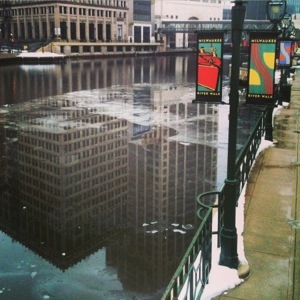
To make a cube bookshelf

DSCN5947[sqr-basic-nostalgic-tilt]

Because she asked for a bookshelf, I built one. A simple cube bookshelf was the plan. Nothing fancy. Something simple and useful. Something to fit under the window.

DSCN5897[sqr-basic-lofi-tilt]

To begin with, I visited the local lumber shop for 1″x12″s and 1″x2″ pine boards. Also, I picked up some screws and finishing nails. Already had wood glue, left over wood stain and finish in the garage.

DSCN5924[sqr-basic-lofi-tilt]

If I was a master craftsman, I would have made the shelf without screws and nails. Due to lack of equipment (like a proper workshop with a bunch of clamps, a router, and maybe a tenon jig) and time (the ever elusive weekend commodity), dado joint shelves were replaced with two-inch screws and Gorilla® Wood Glue. The only power tools used were a cordless drill/driver, a sander and a jig saw.

DSCN5952[sqr-basic-nostalgic-tilt]

After everything was glued, screwed and sanded, wood stain was selected. The Minwax can of espresso stain was half full, and was sufficient to cover the bookshelf. The stain dried quickly, but I let it dry overnight to let it set.

DSCN5951[sqr-basic-nostalgic-tilt]

Two coats of wood finish completed the project. The bookshelf was installed in our living space with a vase of roses atop it.

Request for a companion cube bookshelf arrived. More wood was purchased and cut. Request for bookshelf with a honey-colored stain finish followed. A quart of Minwax wood stain was purchased. And so on.

Best intentions

DSCN4098[sqr]

The intent was to watch the sun set and watch full, strawberry moon rise on the summer solstice.[1] But I fell asleep and awoke after 1 a.m. — cloudy, nighttime pondering of lessons in risk management.[2] A few hours later, I watch the light brighten the room[3] as I prepare for a morning walk.

NOTES:
[1] Bob Berman, “Summer Solstice Full Moon in June!,” The Old Farmer’s Almanac, accessed June 20, 2016 http://www.almanac.com/blog/astronomy/astronomy/summer-solstice-full-moon-june
[2] Gregory Orr, “Farther’s Song,” Academy of American Poets, accessed June 20, 2016 https://www.poets.org/poetsorg/poem/fathers-song.
[3] Charles Simic, “Secret History,” The Writer’s Almanac, June 19, 2016, accessed June 20, 2016 http://writersalmanac.org/episodes/20160619/.

Confessions : 12

DSCN5358[sqr-basic-helsinki]

01. Monday: the yogurt was a wee bit past its edible state. I ate it anyway.
02. Tuesday: the milk was a starting to go sour. I drank it anyway.
03. Stomach produced loud gurgling disapproval for two days.
04. I threw out the milk and yogurt, and drank ginger tea all day.
05. Last week: wore mismatched socks all week. To the office.
06. No one noticed.
07. Or did not tell me.
08. I aced this silly test [link]. It felt good to earn the “A+” badge. But it also made me feel stupid that even took the quiz at all.
09. Most lunch breaks I walk through the city.
10. Or walk along River Walk.
11. Or walk to the lakefront.
12. Or sometimes find a coffeeshop and read ghazals.

Previous confessions: [1] [2] [3] [4] [5] [6] [7] [8] [9] [10] [11]

Ever have one of those days

DSCN5385[sqr-basic-lomo-lofi]

Ever have one of those days (or weeks) when you know you should have spent a few dollars to fix a small problem to avoid larger difficulty? And you did not.

Okay, maybe it is more like this.

Ever have a month so crazy busy that all the small tasks that should get done are not completed? And then the phone does not recharge overnight. Which means the alarm clock app does not wake you up. You are late for work. With a smart phone is about as dumb as a rock. And panic sets in when you realize you have to drive more than 70 miles to work without a mobile device? How are you going to make it through the day? The week?

When will the blessed power cable arrive from the magical land of Amazon?

That is when you realize, you will survive. It is just like the 90s. Completely unplugged. (Just like Nirvana’s 1993 MTV Unplugged session in New York City.)

Springtime in Milwaukee

DSCN5377[sqr-basic-lomo-lofi]
Yes. It is snowing. In Milwaukee. On Maundy Thursday.

Milwaukee Fog, tea latte

DSCN5321[sqr-basic-lofi]

It is not on the menu, but if you ask a barista for a London fog tea latte, in most cases, he or she will know how to make it.

And since Milwaukee is cloaked in dense fog, I asked the barista for London fog tea latte. He looked at me twice, smiled and said, “Yeah, I can do that.”

Judging a book by its cover

coffeehousejunkie's avatarCoffeehouse Junkie

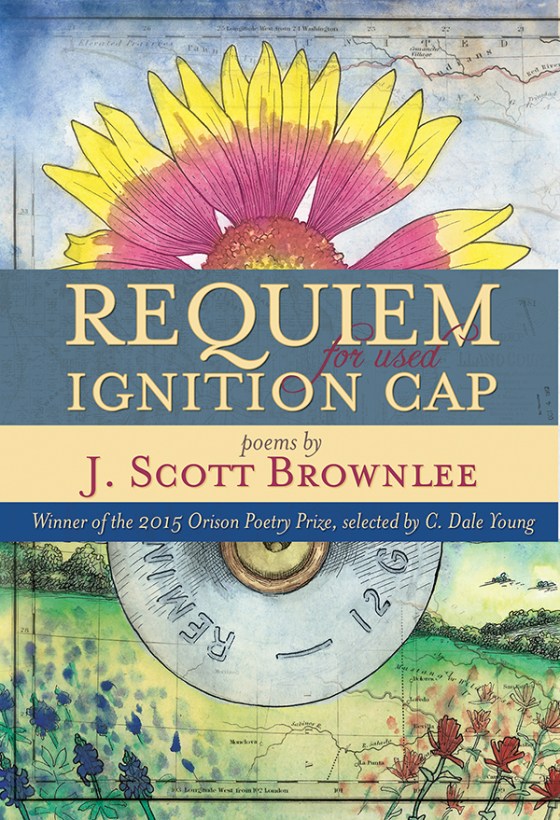
For me, every book cover I design begins with pencil sketches that eventually lead to ink drawings. Actually, I suppose it begins prior to that. The author receives a pre-publication questionnaire from me prior to the design process. The questionnaire asks the author what is his/her elevator pitch, what are the pillars of the book (i.e. what are three main concepts/ideas in the book?), and what is the book’s key audience? There are more questions that help me prepare for the design process, but reading through that document helps me form an idea of who the author is, what the book is about and how best to represent the book’s content with an attractive cover.
Then I receive the manuscript a few weeks later and begin reading the author’s work. This helps try to envision in my mind an iconic poster image. For me, a book cover is the equivalence of a film poster. At…

View original post 324 more words

Ice Circles

20160223-184201.jpgAn ice circle, or ice disc, forms in slow moving water in cold climates.

Imagine my surprise when I spotted several ice circles slowly spinning in the waters north of the art museum on an afternoon walk. Beautiful. Like gears grinding away rough edges into glistening discs in the afternoon sun. The delicate slushy, glassy sound reminds me of wind chimes. But there is no wind today. Flags like wilted flowers hang on the poles around the war memorial building. A hawk is perched on a lamp post.

The noisy hurly burly of East Town’s traffic and many construction projects is a dim echo to the mesmerizing music of ice circles.

I could sit here beside those circling ice discs the rest of the day. Or at least until the sun sets.

But only a few minutes remain of my break. And there is work to be done — projects to complete. Matters of consequence.

With hesitation, I leave the spinning ice circles to perform their tranquil charms to the neighboring ducks, gulls and the lone hawk.

Everyone is Polish on Pączki Day

So, it is Fat Tuesday.[1] Meaning it is almost Lent.[2] In Milwaukee. Meaning it is Pączki Day.[3] And the office fun committee made sure those special Polish pastries[4] are available for staff in the lunch room.

Not from Milwaukee? Not Polish? A member of the fun committee smiled and said, “Everyone is Polish on Pączki Day.”

NOTES
[1] Fat Tuesday, also named Mardi Gras
[2] On Lent, fasting and feasting
[3] For a primer, OnMilwaukee provides a word on pączki and seven Milwaukee locations to enjoy the treat.
[4] Here is the correct pronunciation of pączki:
https://www.youtube.com/watch?v=PxhAfHgJyxU&feature=youtu.be

When you get to the top

20160128-164211.jpgSome days, I walk to Grand Avenue — or rather, The Shops of Grand Avenue — in the afternoon. It breaks up the work day. Offers exercise. Occasionally lunch. Or coffee.

My breath — a smoke signal

DSCN5088[sqr-basic-vintage-HKfilm]Yesterday’s afternoon walk was a bit chilly. Air temperature was around 10°F with wind chill of -7°F. Especially at the corner of Broadway and East Wisconsin. It was practically a wind tunnel. Crossing Water Street was not much better. But I finally made it across the bridge and to the River Walk. 

The river was not quite frozen. And for the most part, very few people are out for a wintery stroll. One woman pulled her faux fur lined hood over her head and quickly shuffled out of the Wells Fargo building to a waiting SUV. A couple guys, both dressed in thick dark coats, waited for a bus. There was a man waiting at the street corner smoking a cigarette. He wore a red flannel jacket and no gloves.

Funny how cigarette smoke is so distinct in the frigid air. The subtle distinctions between Camel Turkish Gold 100’s, Marlboro Red, Newport Menthol Blue and Chesterfield Bronze is almost as unmistakable as the scent of a fajita or a falafel. Wondered why he had no gloves.

There was a Tranströmer poem I tried to recall as I walked along the River Walk. My breath, thick clouds, attempted to signal a line of the poem. What was it about? A train? A couple in a hotel? Something about night? Or was it a horizon? The frozen river surface does not help. And forty minutes in the cold temperature sent me back to the warm harbor of the office building.

What is the best recipe for perfect hot toddy?

DSCN5084[edit]

So, the highways and roads were a bit slippery with tonight’s snowfall. Traffic was slow due to multiple auto accidents and road conditions.

But it is Wisconsin. And it is January. And it warmed up to 13°F — which is better than this morning at -8°F.

Glad to be off the roads. Time to warm up with a hot toddy. Awhile back I read this article from The Guardian on how to make the best hot toddy. My tonic is pretty simple: 2 ounces of boiled water, 1 ounce Knob Creek, 1 teaspoon honey, 1 teaspoon lemon juice, a pinch of nutmeg and 3 cloves.

But what if I am out of cloves?

Here is the big question for tonight, do I substitute nutmeg and cloves with a stick of cinnamon?  What is your recipe for the perfect winter night hot toddy?

Rainy river walk

20160108-133453.jpgIt is difficult to believe that it is winter in Wisconsin. The weather reports offer that snowfall is in the forecast for this weekend and sub zero temperatures. But for now, a lunch time walk along Milwaukee’s River Walk is a damp pleasure.

Serendipity, anonymity and photography

DSCN5082[edited]

Often, lunch time is in opportunity for a walk. It breaks the day up and offers a time to disengage from work-related tasks and refresh the mind. Walking also allows some exercise for the body. Or at least that is what I try to tell myself as I walk down Mason to Prospect in below freezing—but sunny—weather.

I brought my camera along to see if I could capture some construction site photos for an ad I am designing. Once I get to The Calling sculpture by the art museum, I start thinking about composing shots of the subject. It is a high-rise building under construction.

I remove the lens cover, select camera filters, and compose a shot; the sound of heavy machinery fill the lakefront. It is a sound of one clattering, moaning creature that rises into the sky. The sound from the building site can be heard blocks away—as far as Cathedral Square. Some days I get to the office early—before the construction site roars to life—and I hear the call of lake gulls echo off the crowded buildings of East Town.

I take a dozen shots before walking a block to get a different angle of the subject—new perspective, change of lighting, and so on. That’s when I notice her.

I had been scanning through the photos on the camera’s display screen and dodging patches of ice on the bridge walkway to the War Memorial Center before I noticed her. She stands to the south of the bridge in a space outside the War Memorial Center that overlooks Lincoln Memorial Drive.

She looks at me as she switches cameras. There is a vintage quality to the camera in her gloved hands. Looks like a Hasselblad 500C/M. The other camera looks like a Yashica-Mat. And a third camera looks more like mine—a DSRL. I slow my pace. Do I want to photograph the high-rise building from the same spot has her? Based on her gear, she knows what she is doing. I hate to disturb her shot.

But she packs her camera gear. We pass on the bridge. I take a dozen photos where she once stood. I cross the bridge, pass by the Cudahy Tower, take a few more shots on Mason Street and return to the office.

A thought follows me like a shadow. In anonymity we captured the same subject matter. On the same spot. The same day. During the same hour. We will both have a record of that moment. But we will never meet.

Top 10 blog posts of the year 2015

DSCN3558[sqr-tilt]

For new visitors to the Coffeehouse Junkie site, here is a list of the most read blog posts of the year 2015.

10 (tie) – The purpose of thumbnail illustration  and Book cover illustration update

9 – It’s that time of year

8 – Behind the camera

7 – A moment with a stranger

6 – Say something creative

5 – Typewriter Poetry and blogging

4 – 5 reasons to support the poetry marathon

3 – Help Support the Poetry Marathon

2 (tie) – Poem: The Honey Bee  and Poem: Foggy Sunday Morning

1 – First Sunday of Advent poems

A moment with a stranger

DSCN4161[sqr]
Sometimes you have to share a moment with a stranger.

The wind chilled my hands as I walked. Needed to stretch my legs after a long commute. I had watched the sky from the green space west of Oak Leaf Trail. Had not planned to compose a photo of the scene. Only enjoy it.

But the desire to compose a photograph won over and I moved closer to the walking bridge over Lincoln Memorial Drive. I stood for awhile watching the beauty of the morning unfold. There will never be another morning like this. Not in thousand years. Once a morning is spent, it can never be duplicated. I have read how the great masters of haiku captured moments in a few lines. Saved them for centuries. Could I do the same? With a photograph?

I do not know how long I stood there. But after I composed a few shots, I placed my camera back in my bag. I noticed an older man to the north. He stood near the walking bridge. I had seen him while walking, but did not notice him while photographing the scene.

We stood there for a moment together watching the sun rise, the clouds, the lake, the lights, the darks. Amid the roar of construction behind us and the wind, it was a quiet moment. My hands grew cold. I saw the stranger pull a mobile device from his pocket. He held it to the sky. Tried to capture the same thing I did. We tried to haiku a morning in a thousand pixels.

He still stood there when I departed and walked north on Prospect Drive.

Searching for lost confessions

DSCN4066[sqr-dallas]

There is so much to confess. A thousand things must be confessed.

Thirteen moons since last I confessed.

What is confession? The admission of guilt? A written or oral disclosure of activity committed that requires reconciliation, restitution, and restoration?

Confessional poetry of the 1950s and 1960s (think of poets like John Berryman, Sylvia Plath, Robert Lowell) forever changed the course of American poetry. It was less of a religious expression and more of a psychological therapy for the poet(s).

When I first started posting confessions it was somewhere closer to a Japanese renga meets an American confessional poem meets to-do-list.

But those confessions, those poems, those lists, fell into my beard and the rain washed them down Jefferson Street to the Third Ward. I have tried to locate them…
in coffeeshops…
underpasses…
alleys…
and park lots…

Previous confessions: [1] [2] [3] [4] [5] [6] [7] [8] [9] [10]

I have not weeded, I have not written

DSCN3925[sqr-tilt-dallas]

Two authors provided me with food for thought during the last week or so. “Courting the Gargoyle”1 by Sheryl Monks explores the dichotomy many writers experience.

“I’ve taken to describing myself as part cheerleader, part gargoyle. The cheerleader, . . .  is a powerful avatar, . . . . hopeful, peace-broker . . . .  She sees the world democratically; it’s flawed, . . . but it’s not without beauty. . . . the gargoyle is fragile. The gargoyle sets the bar too high, and as a result, the world and the people in it disappoint.”

While you digest that idea, Ann E. Michael confesses that she is too busy to write. Unlike many writers who become jaded and obsessed with lack of discipline and failure, she is hopeful.

“I have not been weeding, as I have not been writing. Other priorities are claiming the be-here-now of my life; but I’m happy to find that the garden, and my writing life, can be sustained through other things and returned to at better times.”2

I confess, I have not weeded the garden either. Yet, providentially, the tomatoes, beans and chard have grown in abundance. I am part gargoyle. The part that never sees the light of social media. I have not written consistently (or as consistently as I planned. . . the gargoyle again.) Midimike commented that there will be time “to write about all those days when you were too busy to write!”3 I am part cheerleader. The brief smile that flickers across the light of social media.

NOTES:
[1] “Courting the Gargoyle” by Sheryl Monks, August 10, 2015. http://changesevenmag.com/portfolio/courting-the-gargoyle/
[2] “Too busy to write (sigh)” by Ann E. Michael, August 13, 2015. https://annemichael.wordpress.com/2015/08/13/too-busy-to-write-sigh/
[3] https://coffeehousejunkie.net/2015/07/22/the-purpose-of-drawing/#comment-4566

From the office in the oak grove

DSCN3413[...]

Two full moons ago, I shared a glimpse at my outdoor office. Yesterday, I asked the boss if I might share few details about the location and the unique job I enjoyed under the shade of red and white oak trees. And he said yes.

The adventure started with a phone call and brisk interview. It was a working interview. The interviewer wore a leather flat cap and showed me wooden shields and signs.

“Can you paint?” he said.

“Yes, I can,” I said. “I brought my own brushes. Should I have brought my own paint?”

He didn’t answer. He was sorting through a stack of shields piled on a wooden table. He explained that some shields required touch up work due to weathering and use while other shields need to be painted — originals, as he put it.

“If I like your work, I can keep you busy all summer,” he said as he produced cans of paint and assigned a place to work. “If I don’t like your work…” Well, suffice it to say he related that my working interview would be concluded and I should not return.

“I’ll be back in a few hours,” he said and assigned two projects for me to complete. Then he got in his truck and drove down a service road to do something somewhere else on the property.

DSCN3405[...]

It took a few moments for me to gauge what to start with. I picked up each shield and sign and weighed where to start. After I opened a couple of paint cans, I searched for a water bucket or anything to keep the brushes clean and for mixing colors. I salvaged a water bottle for a trash bin and began to paint. Long story short, he liked the work I did and told me I should show up the next day. That routine continued for most of the summer.

One, of many, comments he shared with me continues to intrigue me. It involved the idea of hand-painted art versus computer-generated, printed signs.

“There is juju with these things,” he said inspecting one of the shields I painted. “People connect with this stuff, because it was created with human hands. Not some computer.”

DSCN3411[...]

I listened to him. I examined the source material that he shared with me. He sketched bestiary on a wood panel and I watched. He asked for my brush and corrected a shadow and I learned.

DSCN3416[...]
As I drew the typography of a sign for the ring, it became clear to me what he had been telling me and showing me this summer. The clean, manufactured sterility of our culture separates the element of human touch. When I painted the “y” from the word “only” it was similar but not an exact facsimile of the “y” in “beyond” on the line below. Yes. Precision could have improved the exactness of the two letters. My lettering and painting captures my technique as well as foibles. 

DSCN3418[...]

During this summer, I read several books by Ryōkan and Bashō. The historical footnotes and commentary on the calligraphy of the poets were as exciting as the literary work itself. The fact that scholars continue to examine the brushstrokes hundreds of years after the poets passed from this earth testify to the essence of human connectivity. The falter of a stroke — a brush loaded with ink that lacks the energy to complete a long stroke remains a signature of the poet. Was it intentional? Or accidental?

As I examined a finished sign with him one afternoon, I said, “It’s not perfect.”

“Only God is perfect,” he said. “These are magic. When people see these signs, they will know that this is real. This is the real thing. Not a duplicate. This is OS. Original standard. Good stuff. See you tomorrow.”

Forthcoming publication – Mortal Coil


DSCN3549[sqr-tilt-dallas]

Received notification earlier this month that a piece I wrote earned second place in a writing contest. It will be published in the August 2015 issue.

The contest judge is a faculty member at Columbia College Chicago. So, the acceptance of the prose piece submitted seems to have some merit. Or at least that is what I try to convince myself, because all month I have received notification of other submissions that have all been rejected.

Much gratitude goes to the members of the writers group that meets at the Graham Public Library who saw the first handwritten draft of the story. Their support has been amazing. And special thanks to novelist Justin Grimbol, for encouraging me in the craft of fiction.

Book cover illustration – update

Fear motivates. The paralyzing fear that if I mess up the coloring of this book cover art, I will have to start the whole process over again. And the completion date is fast approaching. But the task needs to be done. So, onward.

DSCN3428[sqr-tilt-dallas]

Watercolor washes begin the color process for the book cover illustration.

DSCN3427[sqr-tilt-dallas]

Paint to the edges and then let the colors bleed. The basic color palette had already been determined weeks prior to the final execution of the cover art. But once the water and pigment are activated on the surface of the paper, the color palette organically builds to its own organized spontaneity.

DSCN3434[sqr-tilt-dallas]

Details. There are always small details that many casual observers may not detect at first glance. For example, the color for the shotgun shell includes multiple wash layers of different pigments — each layer pulling or pushing color from previous layer.

HardCover

Once the final art is approved, I finished the design with title bar and a map overlay to texture the collage art.

The pleasure of drawing

DSCN3386[sqr-tilt-dallas]

Nearly done with the back cover illustration. A brush is often forgotten in the process of keeping a clean drawing surface.

DSCN3396[sqr-tilt-dallas]

Detail of the back cover illustration — a catfish. I have to admit — besides the firewheel flower blossom on the front cover — drawing the catfish was a pleasure.

DSCN3400[sqr--dallas]

Front and back cover pen and ink collage drawing completed. Ready for the next phase — watercolor.

The purpose of drawing

The foundation of a great painting is a solid drawing. At least that was my goal when I worked on this book cover illustration for Orison Books. The collage features a firewheel — sometimes called Indian blanket — blossom, shotgun shell and expansive Texas landscape.

DSCN3395[sqr-tilt-dallas]
Nearly completed pen and ink work on the cover.

DSCN3390[sqr--dallas]

Detail of the firewheel flower blossom.


The purpose of thumbnail illustration

The purpose of thumbnail sketches is to advance the concept of artist, art director and editor to a final product. It seems like a lot of busy work, but three elements are essential: brainstorming, mind-mapping and closing the gap. The following images illustrate the process of thumbnail sketches as it relates to a book cover illustration. DSCN3558[sqr-tilt] Three thumbnail cover comps presented to the publisher a couple months back. DSCN3560[sqr-tilt] Full-size book cover sketch to gauge color temperature and composition of elements.