Three ways for authors to promote their new book

This is obvious, but essential. Connecting with a local bookseller is vital to promoting your book. Most booksellers see your book title listed in their wholesale catalogs. All you need to do is remind them it’s there and then see if they’ll host an event. Be sure to contact the bookstore’s event coordinator, not the store’s book buyer. The PR  & Events Coordinator schedules store events like readings and book signings and is the best point of contact for a newly published author.

Consider non-bookstore venues. Schools, public libraries, or other venues may have suitable audiences for your book title. Don’t just assume that your audience only buys books at Barnes & Noble. Libraries are great places to read. I’ve read in various locations including a tavern, café, ballroom, art studio, church and several other places. One author I know had a reading at a chocolate shop. Be creative with your events.

Social media sites like Twitter, Facebook, etc. are great tools to promote your book. If you don’t have an account, you’re already behind. Be authentic and approachable on these sites. If you sound like you’re a pushy salesperson, you’ll lose your audience. Share with your social media audience the same way you approach your book reading audience. Make converts from social media followers to book buyers.

Discussion Forum Etiquette – Promoting Your Book

So yeah, I think the TV interview went well

That is, until the interviewer realized I wasn’t Viggo [1] Mortensen [2]. The irony is that I don’t have a television and haven’t for years. And cable. Well, I think maybe I had cable service about a decade ago to watch the Olympics. So I was a bit embarrassed when the interviewer asked me if I had seen her show.

What the interviewer found fascinating is that the event I helped organize with two other people was promoted exclusively through social media and word of mouth. Most people who manage events work up a press release and send it to local print, radio, and television outlets. And in turn, local newspapers, radio and television stations pick up local entertainment news and add it to the calendar of events to fill in programming space. But that’s not how three people on a September afternoon began to plan an event.

Three weeks after that September afternoon, sixty people attended an invite-only poetry reading, book-signing and jazz show on a Friday night with almost no coverage [3] by the Mountain Xpress or Asheville Citizen-Times. The event was so far under the radar that it didn’t garner a mention on Ashvegas’s Asheville Hot Sheet [4]. To be honest, at the time I didn’t know if an event publicized exclusively through Twitter and Facebook and word-of-mouth would work. But it did. And I guess that’s why I was invited to a television interview regarding that event.

One comment made during the taping of the interview hasn’t left me. I don’t recall who said it, but someone observed that if poets watched a lot of television there would be less poetry in the world. Television has been around for at least 85 years. Most people reading this have grown up with access to television. This means most of you — specifically Gen-X and younger — grew up in a mass media culture. Interestingly, less than 60 years ago, the poet T.S. Eliot packed an university gymnasium with 15,000 people [5] to hear him lecture about literary criticism. Not exactly what you might call primetime broadcast material. At the time Eliot delivered his lecture, the average American earned a salary of $5300. A car cost $2100. A color television set cost between $500 to $1000 and a gallon of gasoline cost $0.30. [6] Cable television was on the horizon [7], but like network television it was only just becoming accessible to most Americans.

Now, an average gallon of gasoline costs $2.81. The average annual salary is $42,000. [8] And it seems ironic that now a cable television program may be making poetry more accessible to Americans. [9]

[1] Poet, painter and, oh, yeah, an actor. [2] He founded Perceval Press to publish his own books and CDs as well as other artist, poets, musicians and photographers. [3] Full disclosure, Mountain Xpress Blogwire did mention the event twice, but it’s not quite the same as opening a copy of Mountain Xpress on a Wednesday afternoon and reading a nice piece by Alli Marshall or one of the other writers covering Asheville’s vibrant entertainment scene. [4] There is always a lot of entertainment going on in Asheville. So I don’t fault Ashvegas for neglecting to mention an event that was not publicized in the traditional manner on the Asheville Hot Sheet. Maybe the event might get a mention if Dehlia Low or the Avett Brothers were part of it.  [5] Is there a poet alive today that could lecture about literary criticism and pack out a gymnasium?. [6] When I look through the television history archives, I can help thinking that a lot of those old television screens were not much larger than an iPhone screen. [7] Now that there is Netflix, will that be the end of cable television? [8] I wonder if the average American salary includes under-employed and unemployed Americans? [9] Estimated viewership of local cable television ranges between 150,000 to 180,000.

Advice to authors regarding indie bookstores and Amazon.com

The Southern Independent Booksellers Alliance (SIBA) offers advice to authors seeking to work with indie books stores:

  • Know the Marketplace
  • Know Who And How To Contact
  • Know the Terms (i.e. your business arrangement with the bookstore)
  • Don’t shoot yourself in the foot (avoid mentioning that you book is available on Amazon.com)

This is good advice for authors when working with indie booksellers. The operative words are “with indie booksellers.” Truth be told, the majority of the sales for books I’ve helped publish come from Amazon.com. The reason for this, I suspect, is that Amazon.com is where the masses go to buy books.

Know that I am a big supporter of indie bookstores. But I’m also practical and know that indie bookstores attract a niche audience of readers. Some book titles do better at indie bookstores than others. For example, if you’re a local writer with a book on regional hiking trails or you’re a local poet with a book, you may do better at an indie store than on Amazon.com. That being said, Amazon offers a 45/55 terms of sale (a smidge better than indie stores offering a 40/60 terms of sales). That may not seem like much, but if you’re a small publisher, that 5% difference may cover cost of shipping products to bookstores which directly impacts breakeven numbers for book titles.

As an author (or small press publisher), know that you have sales options. And avoid mentioning Amazon.com when working with indie booksellers — it gives them ulcers.

Link: How To Market Your Book to Independent Bookstores

When to sell and when to market

Often I hear people use the term “marketing” when they mean “sales” and vice versa. A Melbourne advertising professional succinctly defines the terms this way:

Marketing tells a story that spreads.

Sales overcomes the natural resistance to say yes.

Link: The difference between marketing and sales

So, If your “marketing” campaign isn’t yielding the “sales” you projected, it’s probably because you need to rewrite your campaign story and retool your pitch.

Sometimes I feel so used

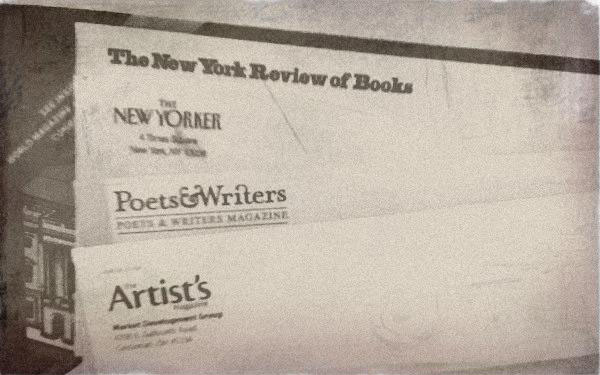
Five Magazine Direct Mail Envelopes

Last week I received five direct mail envelopes from five different magazine publishers. Only two of those magazines have I actually had subscriptions (guess which ones). That means those two magazine publishers sell my name to other publications with similar demographic audiences.

Business: Growth versus Innovation

Recently, I heard, or read, someone responding to the question of which is more important: growth or innovation. The person responded innovation, because innovation feeds growth and not the other way around. HBR provided the following points of innovation:

  • population
  • penetration
  • price
  • purchase

Link: The 4 Ps of Innovation

Is it possible to be a polymath in today’s culture?

Are polymaths extinct? In the ancient world polymaths shared expertise in various fields of knowledge. One example is Leonardo da Vinci — not merely a painter, but sculptor, architect, musician, scientist, mathematician, engineer, cartographer, botanist and writer. More recently, Thomas Jefferson fits that definition as a horticulturist, political leader, architect, inventor, and founder of the University of Virginia. Is it possible to be a polymath in this modern world? As it relates to blogging, can effective bloggers be polymaths?

Copyblogger offers some habits of effective bloggers. The list includes:

  • prolific
  • concise
  • focused and consistent

(Link: 8 Habits of Highly Effective Bloggers)

One of the things stated as an attribute of an effective blogger is:

Successful bloggers choose a topic and stick to it.

They write consistently about their chosen subject… Even when they write about something that seems to be off-topic, they relate it back to the niche they know…

This makes practical sense as far as marketability. You don’t expect comic books sold at a doughnut shop. But what about a gas station? Of course, you purchase gas at a gas station, but most gas station owners don’t make profits from the sale of gasoline. Most of their revenue comes from products sold inside the gas station. In high school, I stopped by the gas station routinely to purchase comic books. Should blogs be doughnut shops or gas stations?

In the marketing world, as in the blogosphere, an individual who chooses a topic and sticks to it is a specialist or consultant. In Peter Rubie’s Telling the Story, he presents this definition of genres:

The development of genres came about as a marketing necessity. “Category” and “genre” are marketing terms… Their purpose is basically to help you more easily find what it is you’re looking for.

Telling the Story then goes on to list seven narrative nonfiction categories: adventure, travel books, biography, history, military, memoir and true crimes. The music industry follows the same protocol: country, pop, rock, hip-hop, and so on into the sub-genres of goth-metal, indie-folk-americana, afro-celt, etc. What Copyblogger proposes is to be marketable to your online audience. If you’re a tech blog, write about technology. If you’re an organic gardener, write about gardening. If you’re a mom, write about mommy stuff. That way your online readers are trained to expect only doughnuts at the doughnut shop.

The question is this: if blogs are specialized, will that make the community more or less knowledgable? I’ve noticed that art blogs often link to other art blogs. I understand that the reason for this is to create a strong community. The challenge with specializing content is that the specialists become islands of highly focused, topical knowledge surrounded by the waters of ignorance of other general knowledge. Jacques Barzun explores the idea of specialized knowledge and more in The House of Intellect. Let me go back to the opening paragraph where I stated “more recently, Thomas Jefferson…” Between Thomas Jefferson and our present information age, the society and culture has changed so dramatically that I wonder if our institutions of intellect suppress the nurture and nature of polymaths.
Getting things done: first define your goals

The simplest approach is not always the most effective. Seth Godin offers a Simple five step plan for just about everyone and everything. The operative word is “simple.” The one-size-fits-all approach may work for someone, but other situations are complicated with many variables. So, when you want to “make something happen,” try this:

  • Define your goals.
  • Determine a desired outcome.

Once those two actions are accomplished, prioritize tasks by:

  • doing
  • delegating
  • deferring
  • or deleting nonessential actions that don’t contribute to the defined goal and determined outcome.

More advice about GTD (getting things done) is available at GTD Times.

Publishers, present a reason to buy your artifact

“Consumers need powerful emotional & psychological reasons to buy your books rather than just grab the nearest free e-book,” says Audry Taylor, creative director of Go! Comi. Earlier this month, Robot 6 announced that Go! Comi closed shop “due to a combination of economic downturn and digital theft.” In a recent article she offers five suggestions for publishers who want to avoid going out of business due to digital piracy:

  1. Make a story available world-wide simultaneously in all major languages.
  2. In a digital format.
  3. With perks for pre-orders.
  4. And goodies that digital pirates can’t reproduce. (And yes, that’s possible. Goodies they can’t compete with, like author chats.)
  5. Rip off business model 4 pirate sites & one-up them. They offer a Wii raffle for a subscription to a d/l site, u offer author-signed Wii

Though this is written primarily for a manga/comic publishing audience, I think this is good advice for any book publisher.

I’ve said this before, but books need to be designed in way that compels consumers to buy a souvenir, dead-tree product (maybe in a decade a book will be called an artifact). In light of Audry Taylor’s comments, I plan to amend that note to encompass a broader reach than well-designed, dead-tree products. She continues by saying, “My dream pub company is multimedia + print + Etsy + Cafepress + Goodreads + Facebook + fan community.” I agree. The more you compel readers/content users to make emotional and psychological investments in your content, the better the relationship your brand will have with your loyal followers (dare I say, your brand’s evangelists?).

Interview: Seth Godin on How Often to Post to Your Blog

From AdAge.com:

Seth Godin: My goals in blogging are:

  1. To spread ideas
  2. To put my ideas out there and get them out of the way of the next idea
  3. To encourage people to add alacrity to their diet

I find that I have about six bloggable ideas a day. I also find that writing twice as long a post doesn’t increase communication, it usually decreases it. And finally, I found that people get antsy if there are unread posts in their queue.

Hence, the compromise on daily.

Link

Pornographers don’t sell pornography

AdPulp provides this:

“42.7% of consumer time online is spent with content sites, 28.6% is with communication sites, 16.1% with commerce sites and 5% on search sites.” Link

(For more detailed analysis visit OPA Link)

While a lot of content provider sites (i.e. news and entertainment sites) feel pressure to offer their content for free (and some have already removed their firewalls—i.e. TNYT and WSJ) the question remains—how does an organization provide “free” content without going bankrupt?

Jake McKee’s post—You’re selling the wrong thing—sited the McGuire HuffingtonPost Porn Knows What It’s For—Do You? as an answer to that question. To excerpt some notable quote from McGuire’s article:

“Pornographers… don’t seem to care much about how they do it—they’ll just find ways to give people the orgasms however people want them given… magazines… online photos, online videos… why are newspapers… having such a hard time?… they have a fundamental misunderstanding of what they do.

“The value of a newspaper is not that it gives me information; the value of a newspaper is how it selects information…”

And here’s a necessary mainstream-media-sucks, blogs-rule rant from McGuire:

“Blogs are excellent selectors of information, while newspapers are pretty clunky at it—because for the past 300 years they existed in an ecosystem where information was scarce. Now information (and access to it) is abundant.”

McGuire misses the point in the steam of his own blog-rant.

Blogs survive as scavengers of info. Blogs select and repackage recycled information. Blogs—with the exception of maybe 50 techno-intelligentsia sites—rarely provide original content. The mainstream media behemoths still provide the bulk of online content. Here’s were McGuire is correct: pornographers don’t care about how or by what vehicle they deliver the content—online or offline. Pornographers bank on three basic actions: consumption, evangelism, purchase (and repeat).

Or to put it another way: “delivering anticipated, personal and relevant [content] to people who actually want” it. (Source). Do people still consume news? Yes. Do the majority of people want to pay for it? No. How does a news/entertainment organization earn revenue online? IMHO, online advertising + products = revenue. Translation: offer ad rates (dictated by web traffic) plus and an online store with shopping cart for souvenirs related to the content the consumers want.

Targeting your book’s demographic? Or manufacturing your book’s audience?

Positioning one’s book in an already cluttered publishing arena is essential. Niching-down is another way of targeting a reader audience. Consider horror novels with all the sub genres: macabre, goth, post-apocalyptic, mystery, Victorian, etc. Authors and agents understand that before a manuscript is finished it needs to fit a market. Genre-defying books tend to be a challenge to position and are often avoided by major publishers. Is it a mystery or romance or high literature?

Cory Doctorow appears to either be a happy capitalist or a guerrilla marketeer by taking advantage of his online prominence (secure, soft market) and publishing leverage (200-copy give-aways are not cheap if one considers obscene postal rates) to penetrate a teen reader market.

“Since this book is intended for high-school-age kids, my publisher has agreed to send 200 advance review copies of the book to school newspaper reviewers, along with the same press-kit… (actually, the school kit has even more stuff — it also includes a signed personal letter explaining why I wrote this book and why I hope kids will read it).” (via Boing Boing) Link

Strategically this is a smart move—even for smaller, independent publishers. The best marketing device is the actual product. However, I wonder if offering a free downloadable preview—or entire book—would be more effective. Why bother with book reviewers? The actually end-user, the reader, is the one who will purchase the product—not the high school book reviewer.

Your community gathering spot

From AdPulp:

The web is social. Coffee is social.

Link.

Books that… Take Your Breath Away

It is all about packaging, whether one likes it or not. The British design/publishing company knew that when they released their catalog of books produced in cigarette packaging.

When browsing bookstore shelves the standard trade paperback size becomes overwhelmingly boring. Packaging matters. Cover design matters. Page layout matters.

Anyone who has ever been in a bookstore knows that you’re not browsing books; you’re browsing covers. To have a chance in a sea of covers, you’ve got to have a compelling visual that grabs people.

(via Andre Brocatus) Link.

If a designer can make a book’s packaging and cover attract a reader, the page layout and text should create a literary (and art) experience with an archaic technological device–a book.

How to write a marketing poem

Step One:
Read anything and everything Seth Godin writes.

From Seth Godin:

used bookstores hate Amazon
And so do independent bookstores

Link.

Who vs. how many.

Link.

More marketing links than you can read…

Link.

Step Two:
Write a 31-syllable waka.
Step Three:
Publish the waka on your own blog, because no prestigious literary journal would waste the time to print it.

Used bookstore owners
hate Amazon. But why? The
staff and owners of
used bookstores know the hands and
faces of bibliophiles.

Wanna be a groupie?

This fits/agrees with the post about audio quality of MP3 files.

From Seth Godin:

The thing is, when you dumb stuff down, you know what you get?

Dumb customers.

And (I’m generalizing here) dumb customers don’t spend as much, don’t talk as much, don’t blog as much, don’t vote as much and don’t evangelize as much. In other words, they’re the worst ones to end up with.

Link.

You want quality customers/fans/groupies, give them quality schtuff. For example, the books I design are carefully crafted. A book is a book is a book, you may say. But in this info age, a book needs to be packaged as a souvenir in much the same way an album is packaged as a CD. Why is this important? Regarding the books I design, they are lifestyle objects. When people buy a copy of one of the books I design I want them to emotionally and intellectually connect with the book as one might connect with a new friend. My desire is that these book buyers invite/introduce other people to the experience. This translates to quality customers/fans/groupies.

Marketing campaign incentive and the power of suggestion

This ad pops up a lot when accessing my Hotmail account.

Advertising design has three golden rules that always work when selling products:
1 – beautiful women
2 – puppies
3 – cute babies

That’s the shortlist of golden rules. There are other rules to eye-catching ads like using colors red, black or yellow for maximun impact.

This ad gets one and a half (because the dog isn’t real). But, come on, who really wants to get a free pink stuffed dog with the purchase of Victoria’s Secret products.

Clearly this ad is not targeted toward my demographic. What am I going to do with a pink puppy? Maybe some of my female readers could enlighten me as to why this would be a good incentive to purchase Victoria’s Secret products.

However, when planning customer incentives, the marketing campaign director should have considered: Does this marketing incentive (a pink fluffy dog) fit the Victoria’s Secret demographic? A free pink fluffy dog might be a buyer incentive for FAO Schwarz customers.

According to this article, they are targeting a younger audience:

“We wanted to capture the spirit of the young with Pink,” said Anthony Hebron, spokesman for Victoria’s Secret

and further

“The Pink collection is an excellent idea because it caters to a different customer than the company’s core, slightly older shopper. The college crowd was sort of a white space for Victoria’s Secret that it needed to address…”

Do college coeds like pink fluffy dogs? Seriously, doesn’t a free pink fluffy dog incentive seem more like Victoria’s Secret is targeting a younger than college age demographic — like teens or tweens?

As a designer of ads and a father, this marketing concerns me a bit. I recently designed an ad for a local brewery that targets responsible adults. But I would not design beer ads that appeal to juveniles.

The visual power of suggestion is a very potent tool among art directors, graphic designers and marketers. It should be used effectively, efficiently and responsibly.

This is going to date me a bit, but the “Keep America Beautiful” public service campaign commercial starring Chief Iron Eyes Cody in the 70s challenged people to live responsibly by not polluting the landscape. Visually effective and efficient, it suggested that Americans consider not our own generation but the generations to follow. I need to remember this principle when designing ads or other materials. I hope I am not alone in trying to design responsibly.

Humbled

Imagine my surprise when I visited one of my favorite marketing weblogs, The Marketing Playbook, and found that they had linked to my weblog. The Marketing Playbook linked to a meager post about strategy and tactics. All I did was post two quotes (one from a book I read and the other from a post from The Marketing Playbook.

The reason I have been studying marketing (specifically strategy and tactics) is partly to support marketing clients at my current company and partly for the marketing of my upcoming poetry book. Trust me, poetry books need all the marketing genius you can throw at them.

Last night, at writer’s group, I was asked how I organized the collection of poems that make up Late Night Writing. The short answer is that I wanted to create a purchasing/reading experience that left the reader with a feeling that they made a good buy and literary investment. That’s how I buy music albums and books. The packaging and content work together to create an intellectual and emotional reaction. For example, I just received Over the Rhine’s latest release and the packaging art and the band’s musical offerings work well together. I enjoyed (and continue to enjoy) that experience and naturally evangelize that product. That’s how I want my books or products to be received. And that’s why I’ve been researching marketing.

Like a narrative, marketing will do you no good unless you know the desired target. The first thing most established writers will tell a novice is that you can’t start writing a novel unless you know the ending. Marketing without strategy (the plot) and tactics (chapters, paragraphs, sentences) is pointless.

Now if I can just make sense of distribution…

“The map is not the terrain”

Strategy and tactics intertwine in their usefulness, but they are not synonymous.

“Strategy is the art of making war upon the map, and comprehends the whole theater of operations. Grand Tactics is the art of posting troops upon the battle-field according to the accidents of the ground, of bringing them into action, and the art of fighting upon the ground, in contradistinction to planning upon a map.”
–from the The Art of War by Baron Henri de Jomini

And here’s how it applies to marketing:

“To really understand the terrain you have to go to it. If trying to understand the gaps/needs of your targets/customers – be one, use your products, talk to other users, spend a day with them (not just an hour in a focus group drugging them with M&Ms). If trying to understand your competition don’t just read their website and read their reports – use their products, go to their trade-show booths, interview their customers, try to think like them, maybe even hire some of them. And if trying to understand your own strengths and vulnerabilities, don’t rely on yourself – go back and ask those above. It’s great to map all the gaps in your playing field, but remember the map is not the terrain.”
–from the post The map is not the terrain by Marketing Playbook

New Media Marketing Strategy

With homage to and help from Seth Godin’s Music Industry: Aspen Report, I assembled this strategy.

Last summer I suggested to a publisher of a national newsmagazine the possibility of creating downloadable (PDF) versions of his publication. With micro payment purchases ($0.50), he could add revenue to the Web side the company. I withdrew that position recently after reading up on the concept of permission marketing.

Here’s two reasons why I think newsmagazine Web content should be free:

One, the Web audience contains individuals that will copy/paste, reference or hyperlink to the newsmagazine’s Web site. It’s a personal positioning statement (here are my friends’ links and my trusted news source link). The newsmagazine does not pay them and they spread news content more efficiently than the USPS. These individuals trust this newsmagazine as a reliable source and in turn share it with people who trust them. It’s the best and cheapest public relations effort.

Two, the newsmagazine’s Web site could potentially provide an enormous email list for potential paid subscribers. In order to read the newsmagazine content, a reader must click on “This week’s issue.” With one click, the newsmagazine can ask a reader to submit their email address. That’s all. Simple and free. The “email request” window could offer a monthly “newsletter direct to your email box” message or something along that line. This would offer newsmagazine’s marketing department an avenue to target online marketing and deliver value to already loyal, influential readers.

How is this newsmagazine supposed to the bills with that kind of strategy? Simple. It’s the same basic principle as direct mailing.

OLD STRATEGY: On a small direct mail campaign of 500,000 names, the newsmagazine might acquire 5000 new subscribers. Of those new subscribers, the newsmagazine may lose as much as 1500 due to unpaid subscribers. Direct mail campaigns cost hundreds of thousands of dollars to acquire 3500 new paid subscribers.

NEW STRATEGY: What if the newsmagazine received 20,000 new email addresses monthly? If we apply the same numbers, then the newsmagazine could benefit from 100 to 200 new paid subscribers. Though the newsmagazine may want to offer something other than subscriptions (gift subscriptions may work) in email campaigns. Possible product suggestions would include company branded day-timers, coffee mugs or other existing branded product. Each one of these branded product ideas would help maintain loyal online readers and support their personal positioning as well as promote the newsmagazine beyond our current subscriber base.

Any thoughts on this strategy are welcomed.