Which book best represents you this year?

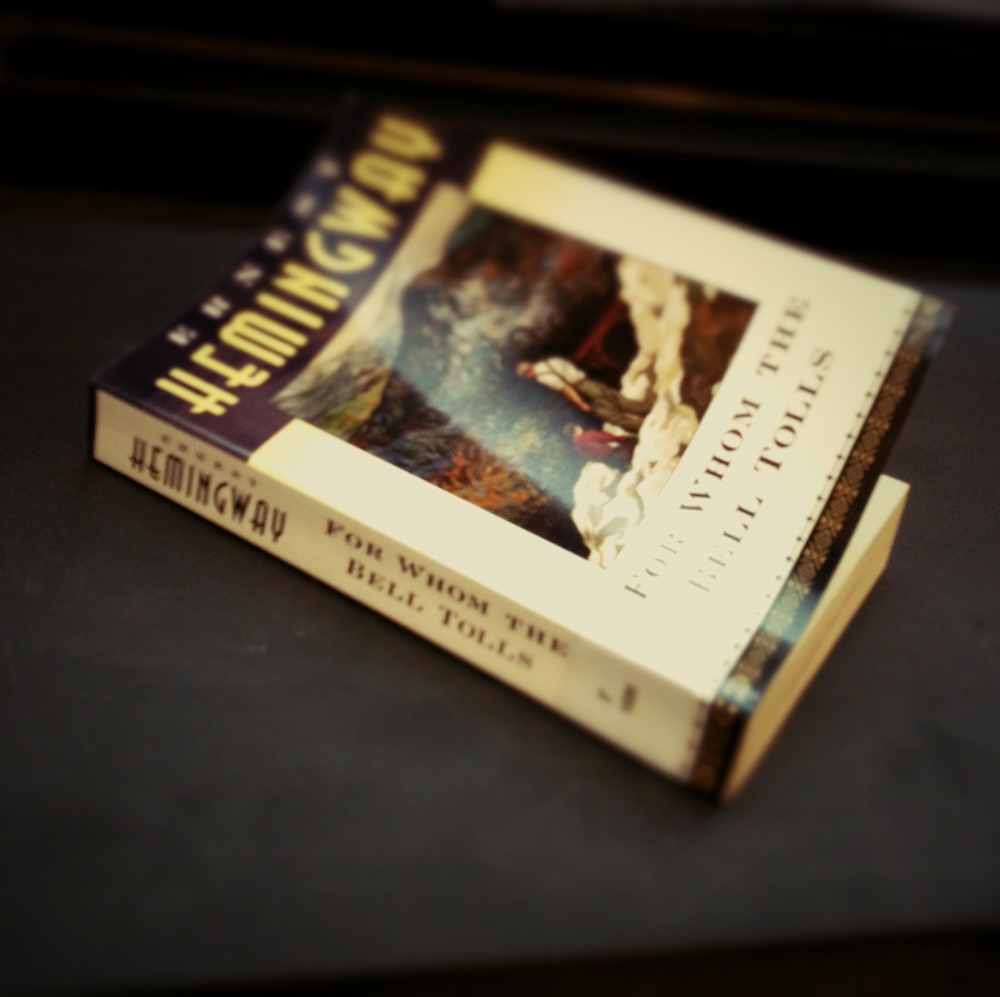
Hemingway - bookIf a book could represent your year, this year, what would it be?
Every year, like Christmas, booklists appear like neatly wrapped gifts in heritage and new media outlets. They announce the top ten books published during the calendar year. You are familiar with the practice. A year ago I was employed at an international publishing house and had learned that the one of the best things to happen to a book title is to be on one of those lists.

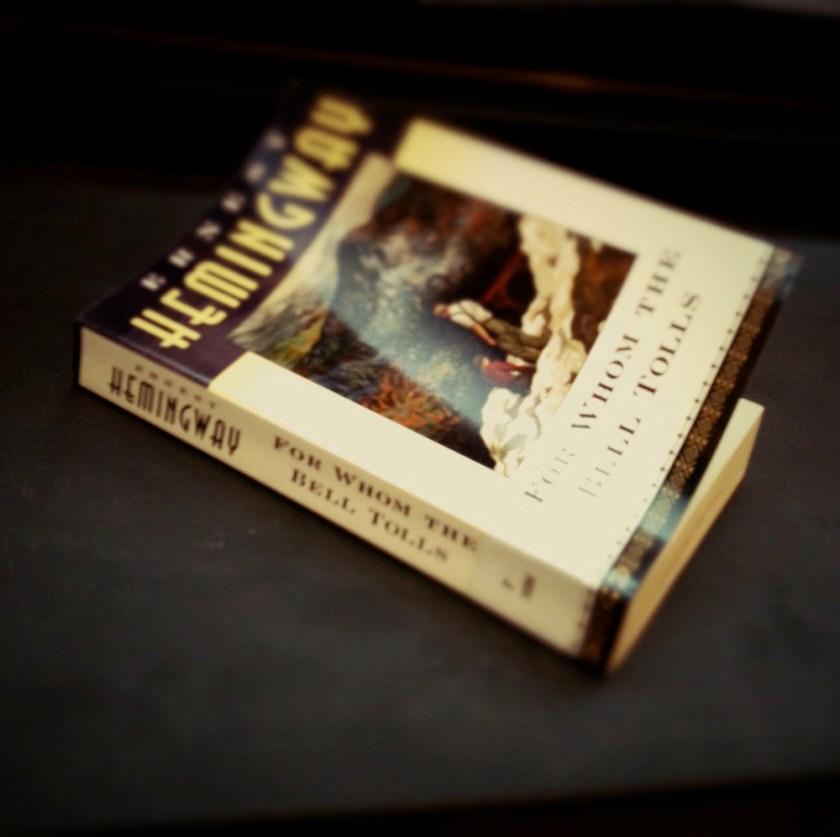
Last year, during a particularly awful time, I was sitting at the Pack Library in downtown Asheville, North Carolina. It was a December afternoon and I was working on a book design project. And I was thinking about work and life and money and decisions that required answers — and I had just finished reading For Whom the Bell Tolls. Why haven’t I read this book sooner? I asked myself.

In a dismal mood, I wrote a blog post about the best books I should have read before 2013. Later, I thought of the books that stayed with me that year. Like friends. And wrote another blog post featuring the best books I read during during that year.

Today, I am sitting in another library hundreds and hundreds of miles from that place a year ago — both physically and metaphorically. Which books have befriended me this year? How about you? If you could sum up your year as a book, which book — or books — might it be?

[Podcast] Books on the menu

NOV2014_26_iTunes_Image

As many listeners know (and readers of this blog), books are important here at the Coffee Den. First segment features three books and a question, where have all the fathers gone? Next, a tale of two city libraries. Sort of. And poets. And books. Finally, a glimmering coming-of-age story by author Justin Grimbol.

If you would like to read along as well as support the authors, here is a list of their books: Memory Won’t Save You: A Haibun by Mimi White; After the Steaming Stops poems by Alice Osborn; Somewhere More Holy by Tony Woodlief; The Kid Who Climbed the Tarzan Tree by D. W. Rozell and Drinking Until Morning by Justin Grimbol.

And finally (because it is mentioned in the podcast), if you would like to support the podcast please consider purchasing Late Night Writing.

Listen to the episode Books on the menu:
PodOmatic: coffeehousejunkie.podomatic.com
SoundCloud: soundcloud.com/coffeehousejunkie

When books find you and do not let go

Other than “To an Athlete Dying Young,” my familiarity with A. E. Housman is very limited. But serendipitously a published lecture of his found me and I have been deeply reading it for a couple of months now. The lecture is titled The Name and Nature of Poetry.

In contrast, another book found me in late August. It is Finding the Islands by W. S. Merwin. This too have I read deeply for the last few months (and I dare not confess how much my library fine is to date).

These authors speak to be in a manner that few contemporary writers do. Modern readers consume modern fiction and poetry, but modern literary works seem less and less able to engage me. I feel — at times — as if I am drifting backwards in time as my years advance.

Banned Book Week

Something is missing. If you haven’t already noticed, Banned Book Week 2014 is celebrated September 21 to September 27.

Powell’s Books presented a catalog of banned books to purchase. CNN reported the top 10 books banned in 2013. The Huffington Post features a great infographic on banned books in America.

But one book, banned in 52 countries, is not listed in the Banned Book Week stories. Banned from Banned Book Week?

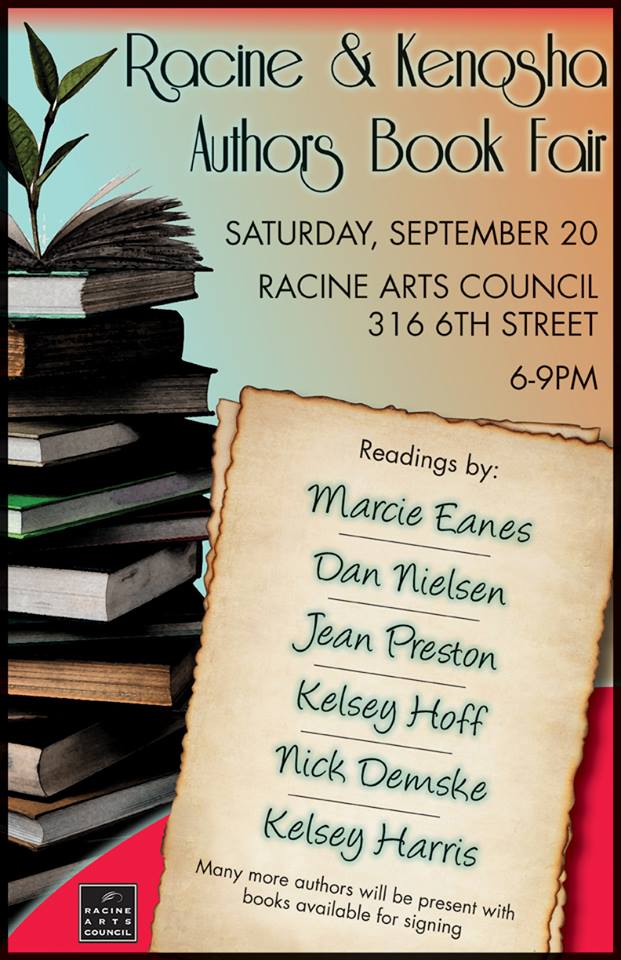
Racine and Kenosha Authors Book Fair

10565080_10152376419532804_4810709820636602796_n

Rumor has it that I am one of the many authors at this event.

Here are details of the event from the Racine and Kenosha Authors Book Fair Facebook page:

September 20 from 6 to 9 pm, authors from all over Racine and Kenosha will converge at the Racine Arts Council. Six featured poets and authors will give readings (Kenosha Poet Laureate Jean Preston, Kelsey Marie Harris, Dan Nielsen, Nick Demske, Marcie Eanes, and Kelsey Hoff), and many more will be present to sign their books and meet with readers. This event is also the official release of Sad Girl Poems, a chapbook self-published by Kelsey Hoff. Light refreshments will be served.

The Racine and Kenosha area is a thriving arts community, with a surprising number of authors and literary publications in residence. This event will represent the diversity of that community, with up-and-coming writers side by side with well-established ones in multiple genres including poetry, fiction, young adult, and nonfiction. Representatives from Left of the Lake and Straylight Literary Arts Magazine will be present with copies of their publications available.

Free e-book. New e-book. Book Fair.

When it comes to promoting my own work, I am extremely self-consciousness. However, here are three announcements that may interest you.

Continue reading “Free e-book. New e-book. Book Fair.”

Quote: “All the words that I utter…”

All the words that I utter,
And all the words that I write,
Must spread out their wings untiring,
And never rest in their flight,
Till they come where your sad, sad heart is,
And sing to you in the night,
Beyond where the waters are moving,
Storm-darken’d or starry bright.

—  William Butler Yeats, “Where My Books Go” (via bookoasis)

[Podcast] When the lights go out

06 June 2014 Podcast Cover

Listen now:


A light breeze from the south carries echoes of a recent place in memory. In this episode, stories about creative space, laptop versus hand-writing and more.

It is warm enough to finally open the windows and let the Spring air fill the house. The first segment touches on that in a story titled “Creative Space.” Recently, the village where I currently live experienced the first tornado of the year. Everyone is fine. Thankfully, the only dangerous weather was thunder, hail, and rain. But it got me thinking of our culture’s dependency on electricity and technology. “When the lights go out” is the second segment. The third segment answers listeners’s question in “An audience of one.” The final segment for this episode is titled “Life is lived as a messy first draft.”

This episode’s unofficial sponsor is The Steaming Cup located in the beautiful downtown area of Waukesha, Wisconsin. For more details, visit TheSteamingCup.com.

Very special thanks to Lee Tyler Post for permission to use his song “Life Without Fences” in between segments. I first heard his music on The Great America Music Hour hosted by Jerry Jodice. Learn how to get any or all of Lee Tyler’s six studio albums on his website LeeTylerPost.com.

Listen on:
PodOmatic: coffeehousejunkie.podomatic.com
SoundCloud: soundcloud.com/coffeehousejunkie

Or subscribe on:
RSS Feed: RSS Feed
iTunes: iTunes


How to be successful in life and business

WP_IMG_9959Does the world need another advertorial[1] on how to be successful in life and business?

This morning I read the article, “Books To Change Your Life And Your Business,”[2] on LinkedIn. It is rubbish. The books listed will not change your life, but might place you in a better neighborhood. Jeffrey J. Fox’s How to Become CEO[3] includes a chapter on required reading for those interested in rising to the top of the corporate ladder. It is a far better and engaging booklist than the one Linda Coles provides.

But, maybe Americans ask the wrong question. Maybe our culture seeks the wrong definition of success in life and business.

Earlier this week, Sunday morning, I was reminded that Americans who have enough to eat, adequate clothing, a place to sleep and a car, are in the top 15 percent of the world’s wealthiest. Further, if you have plenty to eat, a modest collection of clothing, a savings account, two cars and own your home, you are in the top five percent of the wealthiest people in the world.

What if success in life and business is simply a matter of doing what aught to be done? And doing it the best of an individual’s abilities?

NOTES:
[1] A “blend of advertisement and editorial.” http://www.merriam-webster.com/dictionary/advertorial
[2] “Books To Change Your Life And Your Business” by Linda Coles, May 21, 2014, accessed May 21, 2014, https://www.linkedin.com/today/post/article/20140521221520-33236097-7-book-choices-for-a-better-life The books mentioned in the article include: Choose the Life You Want by Tal Ben-Shahar, How to Win Friends and Influence People by Dale Carnegie, The E-Myth Revisited by Michael Gerber, Influence: The Psychology of Persuasion by Robert Cialdini and others
[3] Booklist from How to Become CEO include: The Bible, The Art of War, The Book of Five Rings, The Prince, The Complete Works of William Shakespeare, anything by Thomas Jefferson, The Sun Also Rises by Hemingway, and others.

Weekend reading

20140518-154923.jpg

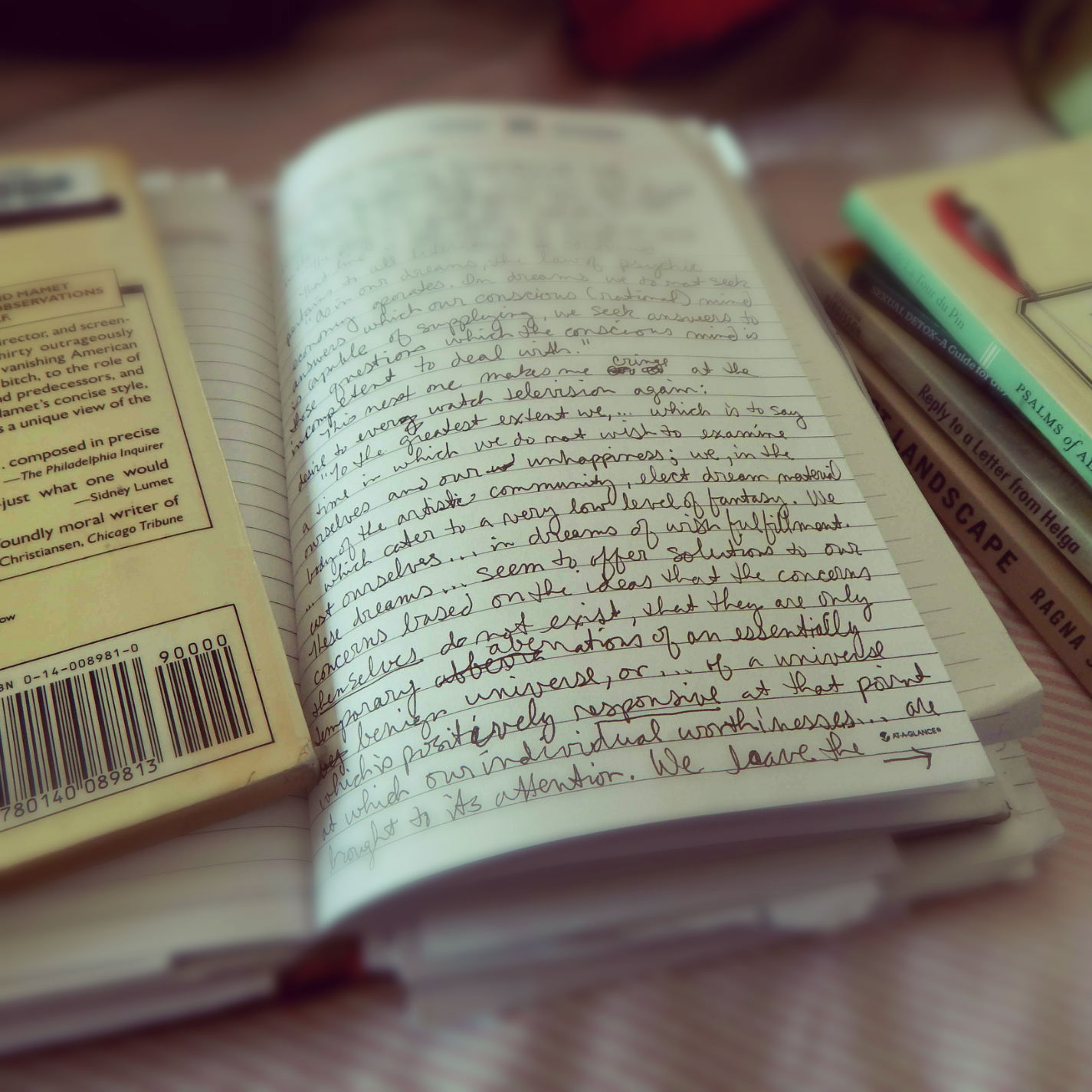
A light breeze from the south, sunshine, blue skies, and the chirp and trill of birds set the stage for a lovely Sunday afternoon. I am sitting outside the apartment reading a book. Or rather reading through a stack of books.

Across the courtyard a guy enthusiastically shouts at his television regarding the baseball game. To the south, the theme music for the television show Dr. Who is heard from an open second-floor window. Why not sit outside and read a good book? Or two. In this northern climate there have been only a few days like this so far this year.

One of the books I have already read, but wanted to reread a selection of poems. One book I bought because I ran up such a large fine at the public library it made practical sense to purchase a copy and finish reading it. Others were on a list of books I have intended to read. One book I put off reading, but am more than 50 pages into it and wonder why I put it off for so long.

What about you? What are you reading this weekend?

[Podcast] How long it takes to write a haiku?

08 May 2014 Podcast Cover

Welcome to the relaunch of the Coffeehouse Junkie audio podcast. A lot of things have happened during that time and there is much I plan to share with you, just not in this episode.

Yes, it is true. The last two years or so I have fasted from coffee. I almost had to rename this blog and audio podcast because of it. Thankfully, my sister introduced me to Maniac Coffee Roasting in Bellingham, Washington. Specifically, the Decaf Espresso Royale blend. Check them out at ManiacCoffeeRoasting.com. They are the unofficial sponsor of this episode. If you would like to officially sponsor an episode, email me at coffeehousejunkie [at] gmail [dot] com for details. Please include “podcast” in the subject line so that your email doesn’t end up in the spam folder.

Amy Annelle - A School Of Secret Dangers
Amy Annelle – A School of Secret Dangers

Very special thanks to Amy Annelle for granting permission to use her song “Will Try” between the segments. Years ago, the album A School of Secret Dangers introduced me to her work. If you like her song, check out Amy Annelle’s latest album The Cimarron Banks. Visit the website HighPlainsSigh.com for more info about her music or find her music on Apple iTunes.

Here’s what’s coming up in this episode:

  • How long does it take to write a haiku?
  • So many books, so little time
  • Keep Calm and Write Something
  • Last night, I fell asleep writing a poem


Listen here:


Or listen on:
PodOmatic: coffeehousejunkie.podomatic.com
SoundCloud: soundcloud.com/coffeehousejunkie


Calling antiquarian book collectors

For those how love a well-crafted book, AbeBooks.com has a special featured titled “The Wonder of Woodcuts” by Scott Laming. The selections posted here, The Wonder of Woodcuts, are high quality (and high priced) books for antiquarian collectors.

Best reads of 2013

The best books I read in 2013 (that may or may not have been published during the calendar) follow an eclectic path―from fiction to poetry, non-fiction to graphic novels. Instead of providing a review of each book or why I consider it a “best read,” I will provide a quote from each book if possible.

1. A Wrinkle in Time by Madeleine Lengle

“A straight line is not the shortest distance between two points.”
― Madeleine L’Engle, A Wrinkle in Time

“Life, with its rules, its obligations, and its freedoms, is like a sonnet: You’re given the form, but you have to write the sonnet yourself. – Mrs. Whatsit”
― Madeleine L’Engle, A Wrinkle in Time

2. American Primitive by Mary Oliver

3. Blankets by Craig Thompson

“I wanted a heaven. And I grew up striving for that world– an eternal world- that would wash away my temporary misery.”
― Craig Thompson, Blankets

“How satisfying it is to leave a mark on a blank surface. To make a map of my movement – no matter how temporary.”
― Craig Thompson, Blankets

4. Bonhoeffer: Pastor, Martyr, Prophet, Spy by Eric Metaxas

“The worlds of folklore and religion were so mingled in early twentieth venture German culture that even families who didn’t go to church were often deeply Christian.”
― Eric Metaxas, Bonhoeffer: Pastor, Martyr, Prophet, Spy

“Bonhoeffer thought of death as the last station on the road to freedom.”
― Eric Metaxas, Bonhoeffer: Pastor, Martyr, Prophet, Spy

5. Channel Zero by Brian Wood

“…and all of a sudden, world cultures become the Monoculture, the same conversation, the same clothes, the same show.”
― Brian Wood, Channel Zero

“And, all over the world, one by one, we quit fighting it.”
― Brian Wood, Channel Zero

“It’s about learning how to give a shit again, about finding ways to make things better. It’s about anger as a positive force of creation. It’s about your right to not have to live in the world they’ve built for you.”
― Brian Wood, Channel Zero

6. The Cost of Discipleship by Dietrich Bonhoeffer

“Judging others makes us blind, whereas love is illuminating. By judging others we blind ourselves to our own evil and to the grace which others are just as entitled to as we are.”
― Dietrich Bonhoeffer, The Cost of Discipleship

“Cheap grace is the grace we bestow on ourselves. Cheap grace is the preaching of forgiveness without requiring repentance, baptism without church discipline, Communion without confession…. Cheap grace is grace without discipleship, grace without the cross, grace without Jesus Christ, living and incarnate.”
― Dietrich Bonhoeffer, The Cost Of Discipleship

7. For Whom the Bell Tolls by Ernest Hemingway

“For what are we born if not to aid one another?”
― Ernest Hemingway, For Whom the Bell Tolls

“The world is a fine place and worth fighting for and I hate very much to leave it.”
― Ernest Hemingway, For Whom the Bell Tolls

8. Jayber Crow by Wendell Berry

“What can’t be helped must be endured.”
― Wendell Berry, Jayber Crow

“This religion that scorned the beauty and goodness of this world was a puzzle to me.”
― Wendell Berry, Jayber Crow

9. The Old Man and the Sea by Ernest Hemingway

“But man is not made for defeat,” he said. “A man can be destroyed but not defeated. ”
― Ernest Hemingway, The Old Man and the Sea

“Perhaps I should not have been a fisherman, he thought. But that was the thing that I was born for.”
― Ernest Hemingway, The Old Man and the Sea

10. The Prodigal God  by Timothy Keller

“Jesus’s teaching consistently attracted the irreligious while offending the Bible-believing, religious people of his day. However, in the main, our churches today do not have this effect. The kind of outsiders Jesus attracted are not attracted to contemporary churches, even our most avant-garde ones. We tend to draw conservative, buttoned-down, moralistic people. The licentious and liberated or the broken and marginal avoid church. That can only mean one thing. If the preaching of our ministers and the practice of our parishioners do not have the same effect on people that Jesus had, then we must not be declaring the same message that Jesus did.”
― Timothy Keller, The Prodigal God

11. The Red Tent by Anita Diamant

“If you want to understand any woman you must first ask about her mother and then listen carefully. Stories about food show a strong connection. Wistful silences demonstrate unfinished business. The more a daughter knows about the details of her mother’s life – without flinching or whining – the stronger the daughter.”
― Anita Diamant, The Red Tent

“The painful things seemed like knots on a beautiful necklace, necessary for keeping the beads in place.”
― Anita Diamant, The Red Tent

12. River Inside the River: Three Lyric Sequences by Gregory Orr

13. Sailing Alone Around the Room: New and Selected Poems by Billy Collins

14. The Shallows: What the Internet Is Doing to Our Brains by Nicholas Carr

“What the Net seems to be doing is chipping away my capacity for concentration and contemplation. Whether I’m online or not, my mind now expects to take in information the way the Net distributes it: in a swiftly moving stream of particles. Once I was a scuba diver in the sea of words. Now I zip along the surface like a guy on a Jet Ski.”
― Nicholas G. Carr, The Shallows

“Culture is sustained in our synapses…It’s more than what can be reduced to binary code and uploaded onto the Net. To remain vital, culture must be renewed in the minds of the members of every generation. Outsource memory, and culture withers.”
― Nicholas G. Carr, The Shallows

15. Who Killed Homer?: The Demise of Classical Education and the Recovery of Greek Wisdom by Victor Davis Hanson, John Heath

“[We owe the Greeks] our present Western notions of constitutional government, free speech, individual rights, civilian control over the military, separation between religious and political authority, middle-class egalitarianism, private property, and free scientific inquiry.”
― Victor Davis Hanson, John Heath, Who Killed Homer?

The best books I should have read before 2013

Hemingway - book

The 2013 lists are in. From The Seattle Times[1] to The Economist,[2] from NPR[3] to Publisher’s Weekly[4] to The Paris Review[5] and even Bianca Stone’s Poetry Picks[6], everyone seems to be sharing the best books to read of the year.

In some unknown manner, I feel obligated as a reader, and a dabbler in spilled ink and exploded pens, that I should offer a list of best reads of 2013. However, when I look back at the last twelve months of reading material only a few of them were published in the last calendar year.

It is true that as a practice my family congregates at the public library at least once a week, sometimes more. And, since I am an agnostic[7] as far booksellers go, at least a couple nights a week myself and some family members can be observed wandering through the aisles of a Barnes & Noble or a used bookstore. Often I am disappointed in bookstores and libraries because they tend to focus on the bestsellers and popular trends rather than the well-written and perennial books.

So, maybe I should title the list, “the best books I should have read before 2013”. Next week I will share some of the best books I read in 2013 (that may or may not have been published during the calendar).

UPDATE: Here is my list best reads of 2013.

NOTES:
[1] The Seattle Times, 31 of the best titles of 2013
[2] The Economist, A bountiful offering
[3] Our Guide To 2013’s Great Reads
[4] Publisher’s Weekly, Best 20 Books of 2013
[5] The Paris Review, Best of the “Best”
[6] My Poetry Picks for 2013
[7] By agnostic, I refer to the lesser used denotation of the word meaning unwilling to commit to an opinion. This is my quiet response to local matters. Bumper stickers and posters decorate the downtown area declaring “Local is the new black” or “Choose Independents, Buy Local”. This is all well and good, but I am not dogmatic on the point. To demonize corporate retail outlets is a moral pretense that I disagree with on the grounds that the people of Asheville need work. In these economic hard times, any work is good work. Why should I shame one hard worker who is employed at Barnes & Noble and not also shame one hard worker who is employed at a local independent bookseller? Seems like undeserved discrimination to me. My preference is to visit corporate and independent bookstores alike and maintain a bookseller agnosticism in the hopes that neither employees of Barnes and Noble or Malaprop’s loss their jobs as they try to support their families and communities. And no, I am not running for city council.

The “elevated” platform of self-publishing

Poets and Writers - Self Publishing

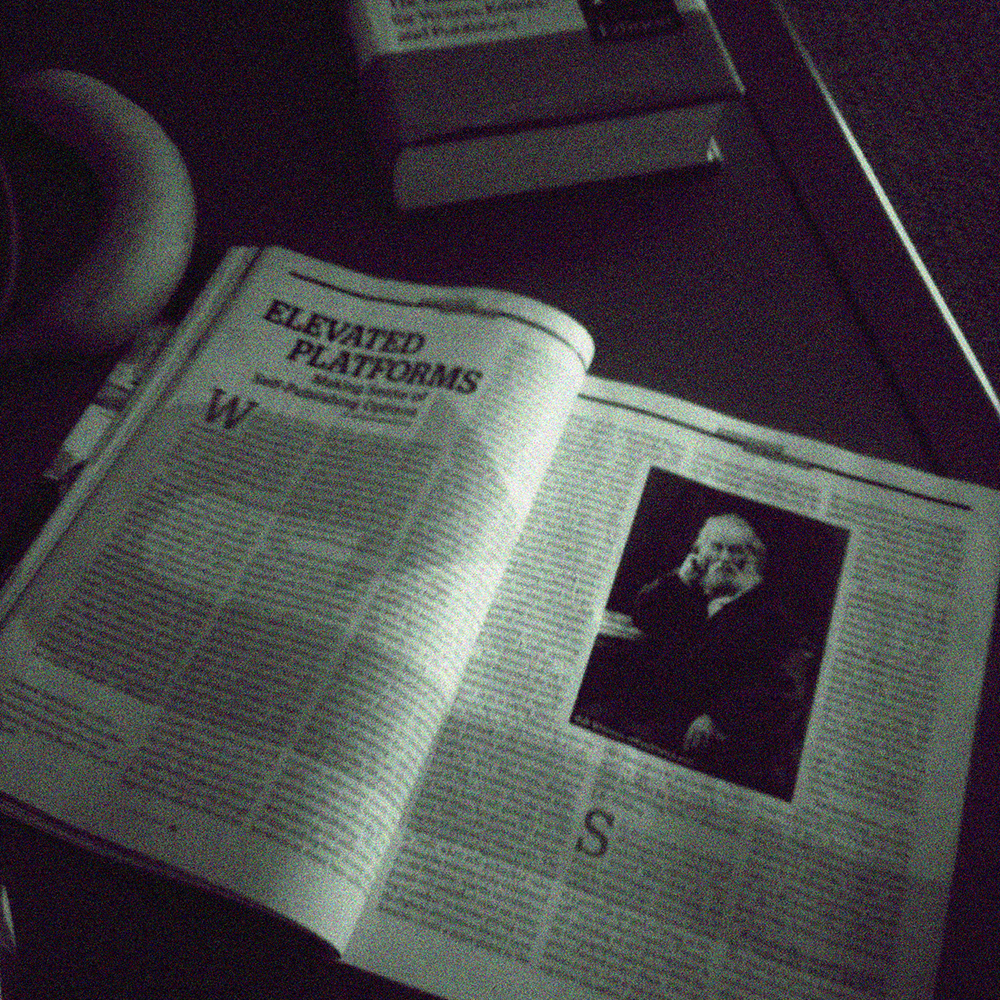
For the last few years, Poets & Writers highlights the independent publishing scene in America. This year is no different.

Recently arrived in the post is the November/December issue of Poets & Writers. In the past, it has been my practice to read each issue from cover to cover. However, (and in light of my post last week that elicited much conversation: Are trade publishers gatekeepers?[1]), I abandoned protocol and started on the self-publishing special section.

As I am still reading and processing the articles in this issue, one item caught my attention that I would like to share. Reportedly, more than 391,000 books were self-published in 2012.[2] That is a large number of self-published books. To be honest, I may have read only a handful of self-published works that year. An article in Poets & Writers offer some perspective on the matter. I would like to learn your response to the following:

A highly regarded agent recently remarked that the odds are stacked heavily against self-published authors—that only three or four titles really “make a splash” each year.[3]

NOTES:
[1] Closing out the blog post, I asked: “What are your thought about publishers as gatekeepers?” One commented suggested that publishers “think that they are [gatekeepers], but they’re not. They are commercial retailers…. They buy what sells. The quality only needs to be high enough not to send readers screaming.” Someone else commented that “I depend on publishers to be gatekeepers. While I know that they publish a lot of crap and don’t publish a lot of great stuff… I still believe that the ratio of things I’d enjoy reading to things I wouldn’t is higher among traditionally published books than among self-published ones. I’m sure I miss some really great reads this way, but I just don’t feel I have time to wade through the slush pile myself.”
[2] Jason Boog, Galleycat, “Bowker Counted 391,000+ Self-Published Books Last Year,” October 9, 2013, accessed October 23, 2013, http://www.mediabistro.com/galleycat/bowker-counted-391000-self-published-books-in-2012_b78844
[3] Kevin Larimer, Poets & Writers, “Self-publishing Perspectives,” November/December 2013

Are trade publishers gatekeepers?

First quarter books

In a book cover designer LinkedIn group, the question came up, Do you think publishers are “gatekeepers?”[1] (For reference, please read this blog post provided by Dave Bricker.[2])

Too often I read self-publishers complain how the Big Six dominate retail/distribution options. Or trade publishers denigrate self-publishers as buffoons. In Dave Bricker’s blog post, he  offers that it is not an “us versus them” scenario. It is a competitive marketplace. Both publishing options are viable. Additionally, both options are equally challenging.

One contributor offered that publishers are like brands. While another contributor reminded the group that publishing is a business.

The article sparked additional thoughts in a different, yet related, line of thinking. First, if trade publishers are brands, should they publish inferior quality literature simply because it’s good business? Next, if publishers do pursue that path, what does that say of their brand?

Dave responded to my questions in this manner:

We indie publishers enjoy the luxury of indulging in a bit of artistic snobbery, but we don’t have conglomerates to support and we’re rarely presented with the opportunity to grow rich by “selling out.”

Ultimately, I suppose we’re all trying to make money and offer the highest quality books we can. One could make a compelling argument that a single “less than excellent” blockbuster could finance a whole lot of artistic expression. It’s a bit like wildlife advocates supporting zoos. A little captivity is acceptable if it supports a certain amount of conservation in the wild.

I love that line: “It’s a bit like wildlife advocates supporting zoos.”

What are your thought about publishers as gatekeepers?

NOTES:
[1] Dave Bricker, LinkedIn group, book cover designer, “Gatekeepers and Self-Publishing,” December, 2012 accessed October 13, 2013 Gatekeepers and Self-Publishing
[2] Dave Bricker, TheWorldsGreatestBook.com, “Gatekeepers and Self-Publishing,” November 25, 2012 accessed October 13, 2013 Gatekeepers and Self-Publishing

Strange Familiar Place returns

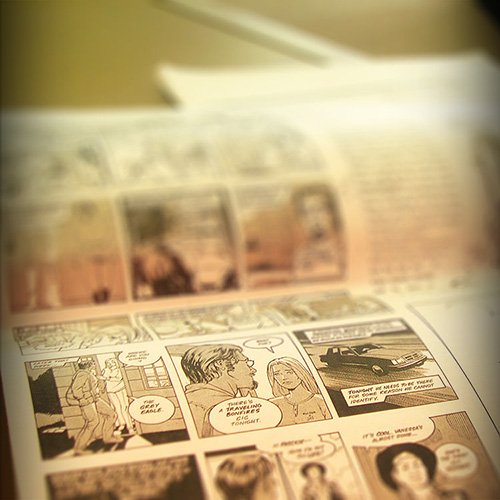
Stange Familiar Place - Comic Strip

After a very long hiatus, “Strange Familiar Place” will be back in print. Or at least it will be in a very limited capacity. More details on that later.

The creative non-fiction comic “Strange Familiar Place” first appeared in The Indie. Inspired by the works of Harvey Pekar, Jessica Abel, and Eddie Campbell, I wrote and illustrated “Strange Familiar Place.” Eventually I collaborated with illustrator and comic book artist James E. Lyle on six comic strips.

Comic Stroll, a publication of the local chapter of the National Cartoonist Society, will feature that collection of previously unpublished comic strips. Read the evolution of what started as a couple drawings and became a creative non-fiction comic:

  1. Comics and Narrative Non-Fiction
  2. Comics and Narrative Non-Fiction Continued
  3. Narrative Non-Fiction Comics: part 3
  4. Narrative Non-Fiction Comics: part 4
  5. Narrative Non-Fiction Comics: part 5
  6. Narrative Non-Fiction Comics: UPDATE
  7. Narrative Non-Fiction Comics: UPDATE
  8. Strange Familiar Place comic series

More details about Comic Stroll distribution will be made available later.

How many copies do you need?

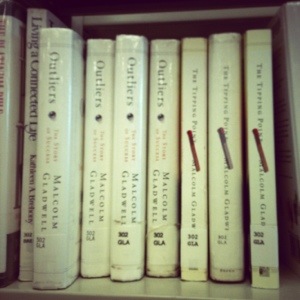
20130530-102758.jpg That’s the question I asked myself when I saw four copies of Outliers and three copies of The Tipping Point at the downtown public library. Does the library need that much Malcolm Gladwell? Yet, I can hardly find seven books written by Vonnegut. I was able to locate at least seven books by Hemingway but not all that much on Steinbeck. The experience got me thinking.

Gladwell’s book The Tipping Point is an interesting book, but how will it stand up over the years? It’s a bestseller now, but in 50 years, or 100 years, will it still be impacting readers?

Along a parallel track, will your favorite blogs have the same readership in 50 years? Some of the blogs I used to enjoy reading eight years ago have disappeared from the webosphere a few short years ago and the writer’s voice I looked forward to hearing is no longer there.

But books remain. Whatever their legacy, they have a space, or more, on the bookshelves of a library. At least for now.

So many books, so little time

First quarter books
What do you think of when you look at a stack of books?

Maybe, so many books, so little time. Or, can’t wait to get home and read this novel/memoir/biography tonight after supper….

[read more]

UPDATE: This blog post is available as part of an audio podcast.

Listen here:

Or listen on:
PodOmatic: coffeehousejunkie.podomatic.com
SoundCloud: soundcloud.com/coffeehousejunkie

E-book: How long does it take to write a haiku?: and other stories

Purchase the e-book Kindle Edition for $0.99!

What do you think about when you see a stack of books? In this short collection of stories you will also learn what a creative director thinks of when he sees a stack of books. Who is the audience for your poems? Is possible to write in your sleep, or not?

Write now, set writing goals

...any road wil get you there.[1]
“If you don’t know where you’re going any road will get you there.”[1]
Is it writer’s block? Procrastination? What’s keeping you from completing that collection of poetry or that novel you started years ago and you can’t quite get around to finishing it?

A few years ago I sat in a writing workshop and noticed that I was the only member of the group under the age of 50 years old. Further, most of the students at the workshop had been working on a memoir or a novel or something that began at a university. Now enjoying their retirement, the nostalgic desire to complete these literary works grip those writers who had been dribbling out small passages of poetry and prose for what seems to be my lifetime.

I determined at that time to set writing goals and not let time slowly bleed me of creative efforts. So, I adapted some of the productivity and time management skills I use at work to my writing life. Here’s some productivity, or time management, habits I practice at the office.

1. Don’t check email first thing in the morning.

At the office, I schedule two times a day were I read and reply to emails: once in the morning and then again in the afternoon. If I reply to every email that lands in my inbox at the moment it arrives, I would spend more than half the work day reading and replying to emails. I found that if I batch tasks, like emailing, I can maintain focus on accomplishing those tasks more efficiently.

2. Make a list.

First thing I do when I get to the office is make a list. This is a combination of project management and mind-sweeping. This activity allows me to organize and prioritize large and small tasks for the day and week.

3. Declutter the desktop.

This is something that is both on- and offline. And by “declutter” I don’t mean empty your desktop of everything. Declutter has to do with a collection system. How do you collect the papers or files? Years ago I began the practice of collecting items in folders based on the 43 folders system. Here’s how it is presented by Merlin Mann:

  1. identify all the stuff in your life that isn’t in the right place (close all open loops)
  2. get rid of the stuff that isn’t yours or you don’t need right now
  3. create a right place that you trust and that supports your working style and values
  4. put your stuff in the right place, consistently
  5. do your stuff in a way that honors your time, your energy, and the context of any given moment
  6. iterate and refactor mercilessly[2]

Again, the goal of this practice is not to have a clean, empty desktop, but a productivity system in place to help get things done.

4. Plan. Revisit the plan. Stay on task.

Your co-workers and supervisors think every task is an emergency and everything is a priority. Planning and staying on task is one of the most annoying practices my co-workers and supervisors must endure. Yet, unless I identify the goals and chart a trajectory to hit those goals, I’ll never me able to meet deadlines on time or successfully accomplish projects. How does the old adage go? If you don’t know where you’re going, any road will get you there.

Let’s do this!

Avoid waiting until you retire to complete that novel you’ve been working on, or that collection of poems you’ve been tinkering with for years. Find a writers group that can help you with accountability and encouragement. It is written that no one knows the number of his or her days. Our life is a shadow.[3] Whether it is writer’s block, procrastination, internal or external distraction, find that writing project you’ve been working on and commit to finishing it.

NOTES:
[1] Source: This Isn’t Happiness, accessed May 8, 2013 http://thisisnthappiness.com/post/48296644589/any-road
[2] Merlin Mann, “Getting started with ‘Getting Things Done’,” September 8, 2004 accessed May 4, 2013 http://www.43folders.com/2004/09/08/getting-started-with-getting-things-done
[3] Shane Claiborne, Jonathan Wilson-Hartgrove and Enuma Okoro, Common Prayer: A Liturgy for Ordinary Radicals (Zondervan, 2010), 271.

Do children’s books sell as e-books?

DoKidsEbooksSell_zhivago_lomo
Photo courtesy of @mxmulder

Let’s face it, e-books are no longer a novelty. With the Kindle, Kobo, Nook and other e-reader devices, the transition to a digital reading experience is no longer a discussion. They are here to stay. But is the e-book market just for adults? How well do children’s books sell on this new platform?

Last year, I worked on a half dozen or so children’s books. Not books I’ve written, mind you, but I did design covers, inside layout and typesetting. All of the titles are available on various e-reader devices. Each book features fully illustrated pages (the industry trade refers to them as picture books) and they print at various formats. The most common — and standard to the trade — is a 32-page, 8.5″x11″, colored ends hardcover book.

This is where the question gets interesting: Do children’s books sell as e-books? According to one report,

“children’s and young adult digital book revenues exploded nearly 300 percent…”[1]

Those sales numbers are quite convincing. Authors request e-books of their picture books in addition to their traditionally printed picture books. At least, the authors I work with are convinced by the published industry sales reports. Best I can tell is that young adult books perform much better than picture books even though children’s and young adult books are lumped together in a single category.

My experience is that the iPad provides the best possible interface as an e-reader with brighter colors and fluid user experience. The more popular e-readers (i.e. Kindle and Nook) seem clumsy by comparison leading some to believe that the e-reader device is a transitional technology that is soon to be replaced by the tablet.[2] Both Kindle and Nook scale down a large format picture book to the default viewing area specific to the individual device. Though the iPad has the better picture book experience, I’ve noticed that children are more interested in apps than e-books.

So, what is an author of children’s picture books to do? Here are some things to keep in mind as a children’s book author:

  • A picture book that is interactive (using apps to feature audio, video, etc.) sells better than a static digital e-book.
  • Young adult fiction titles sell better as an e-book than picture books.
  • Publishers typically provide both print and digital products, and it is wise to have the book in as many formats as financially viable.
  • Scholastic published a report on the reading habits of children stating that: “Eighty percent of kids who read ebooks still read books for fun primarily in print.”[3]
  • The same report shares that: “Fifty-eight percent of kids… want to read books printed on paper even though there are ebooks available”[4]

The tactile interaction with a physical book is an important part of the reading experience for children. In her book The Writing Life, Annie Dillard writes,

“The written word is weak. Many people prefer life to it.”

As e-books gain market share, the written word — whether print or digital — will always compete with life. Readers still seek to retreat into books that don’t offer the distraction of emails, hyperlinks, social media updates, Youtube videos and the like. It’s a choice the reader and the author must make.

NOTES: What prompted this post is a discussion posted on the LinkedIn group Ebooks, Ebook Readers, Digital Books and Digital Content… The specific discussion thread is here http://www.linkedin.com/groups/Do-childrens-books-sell-as-1515307.S.212309551
[1] Jason Boog, “Children’s & Young Adult eBooks Saw Nearly 300% Growth,” Galleycat, September 7, 2012 accessed February 19, 2013 http://www.mediabistro.com/galleycat/category/sales-stats
[2] Dan Eldridge, “The Disappearing Market Share of the E-Reader: Is it now a transitioning technology?,” Teleread.com, November 1, 2012 accessed February 19, 2013 http://www.teleread.com/e-ink/the-disappearing-market-share-of-the-e-reader-is-it-now-a-transitioning-technology/
[3] Kids & Family Reading Report, Scholastic, accessed February 19, 2013 http://mediaroom.scholastic.com/kfrr
[4] Kids & Family Reading Report, Scholastic, accessed February 19, 2013 http://mediaroom.scholastic.com/kfrr

Interview: Caleb Beissert on Beautiful translations of Federico García Lorca and Pablo Neruda

Beautiful by Caleb Beissert Caleb Beissert is a poet, translator and musician. His published work appears in International Poetry Review, Tar River Poetry, Asheville Poetry Review and Beatitude: Golden Anniversary, 1959-2009.

This week, Poetry at the Altamont celebrates the release of Caleb Beissert’s first book, Beautiful, a selection of poems by Pablo Neruda and Federico García Lorca translated into English. During the last few weeks, Beautiful was well received by enthusiastic audiences at Montford Books & More and Malaprop’s Books & Cafe and is a Small Press Distribution best-seller.

The Altamont theater doors open at 7:00 P.M. for Poetry at the Altamont. Admission is $5 at the door. Beer and wine sold at the bar and lounge will remain open for drinks after the reading. Event link.

UPDATE: Caleb Beissert is the featured guest of the Coffee with the Poet Series, Thursday, February 21st at 10:30 a.m. at City Lights Bookstore. Event link

Caleb graciously agreed to an interview to discuss poetry, translation work and Beautiful.

Coffeehouse Junkie Blog

First, for those who don’t know you, Caleb, please share a little about yourself and how you came to poetry.

Caleb Beissert

I arrived naturally at poetry. I had a strong interest in writing as a child, which stemmed from my mother’s and father’s both being journalists. They read to me constantly, even while I was in utero. I still love being read to, hence the poetry readings I attend. During my fugitive teenage years, I wrote notebooks full of song lyrics—songwriters such as Bob Dylan, Tom Petty, Robert Hunter, Kurt Cobain, Roger Waters, and The Beatles among my influences. When I went to college and took a poetry writing class, I discovered I’d been writing poetry for years. Of course songwriting is a different beast, but one does inform the other.

Throughout my time at Western Carolina University, I studied writing, foreign languages, philosophy, music, art—I wasn’t satisfied with the notion of going to college to get a job, rather I wanted to learn everything I could for the sake of knowing. I began publishing my poetry, traveling abroad, corresponding with accomplished writers, and I participated in the Gilbert-Chappell Distinguished Poet Series.

My literary heritage largely came from the American Beats, especially Allen Ginsberg and Richard Brautigan; the British poets, namely Blake and Coleridge; and mystics, like Hafiz, Rumi, Kabir, Mirabai; as well as Walt Whitman, E.E. Cummings, W.S. Merwin, early on Shel Silverstein, and then later the great Hispanic poets, particularly Federico García Lorca and Pablo Neruda. Now I’m living in Asheville, writing, producing poetry events, and also working as a musician.

Coffeehouse Junkie Blog

How did the translation work of these two poets, Federico García Lorca and Pablo Neruda, come about?

Caleb Beissert

As I glossed over previously, I was at WCU studying poetry and foreign language when I began translating these two poets. It must have been my attraction to Surrealism that led me to García Lorca. I had read a few translations in Bly’s Leaping Poetry, eaten up Lorca’s lecture Theory and Play of the Duende, and fallen into Poema del cante jondo. I was fascinated by this idea of the duende and also with the marriage of poetry with music, seen in the influence of Andalusian flamenco music on his work.

An interest in Neruda also came through my gravitating toward Surrealism, though I must acknowledge that neither of these poets wrote exclusively or even primarily in this style. One day my Spanish professor assigned the students to attempt a translation of Neruda’s famous “Poema 20” from Veinte poemas de amor y una canción desesperada. I thoroughly enjoyed the assignment—probably the only one who did—and it was then I realized I could translate. From there, of course, the complexities of poetry translation began to unravel. I studied essays by Gregory Rabassa, John Felstiner, Margaret Sayers Penden, Eliot Weinberger, and read many bilingual or “bisexual” editions, as a good friend likes to call them.

Eventually, I timidly showed my translations to a few trusted poet friends/mentors, among them Dr. Mary Adams and Thomas Rain Crowe, who encouraged me to continue the work. It has been a process of frustration, learning and accomplishment. Many late nights of pulling out my hair. I’ve dabbled in other Spanish-writing poets, such as César Vallejo, Rafael Alberti, Pedro Salinas, Vicente Aleixandre, Nicanor Parra, and Manuel González Prada; however, it was García Lorca and Neruda I spent the most time with, grew to know them through their words, heard their voices, conversed in dreams, and eventually compiled enough English-language adaptations for two books.

Coffeehouse Junkie Blog

How the translation work inform the craft of your own poetry?

Caleb Beissert

I find myself writing odes to people and places I’ve never known. I’ve written poems to or after these poets, places and ideas from their poetry, even employed mimicry for effect sometimes, but going deeper, I’m sure it has changed the way I think about language, construct lines, choose words, though the translation process itself does that as well. I have developed my own poetry while spending a great amount of time with these poets, therefore their impact on my work is tremendous. It is hard for me to see, because often one must step away from his or her work to get an accurate picture of it, but I know the influence is there.

Welcome new readers!

Earlier today I notice that Poetryblogs.org features my blog (I guess this means I should update the blog more often). Thanks for visiting Coffeehouse Junkie’s Blog and hope you return and share what you like. If you’re a new reader of Coffeehouse Junkie’s Blog check out the 10 most recent blog posts listed in the right column, the most liked posts in the left column and search through the subject list in the lower right column for content that I’ve contributed since 2004. You may also sign up for email subscription to this blog so that every time I post something new, you receive an email.

Dear friends and loyal followers of Coffeehouse Junkie’s Blog, I do intend to write more posts. Presently, I am buried in work as creative director for an international publishing company. Until I finish designing other writers’s book covers, blogging will be limited. Enjoy browsing some of the recent book designs here, here, here and here.

David Hopes, Holly Iglesias & Richard Krawiec

Malaprop’s presents Poetrio, November 4, 2012, 3 P.M., featuring David Hopes, Holly Iglesias and Richard Krawiec.

From Malaprop’s:

Richard Krawiec is an extraordinarily versatile writer who has published novels and short fiction as well as nonfiction (including textbooks on teaching writing), plays, and two books of poetry, Breakdown, and She Hands Me the Razor.  …AND LOVE… is the fifth anthology for which he has served in an editorial role, and this anthology includes his own poem “She Hands Me the Razor.”  The editors’ introduction to …AND LOVE… offers an enormous (and still not exhaustive) list of varieties and aspects of love, summarized, at least for the moment, in this way: “Whatever it brings, love is the only thing that makes everything else ring true.  And that’s what this collection is all about.  This burgeoning landscape of love, collected here, in the words of 125 poets.”

Holly Iglesias is well known to those who attend Malaprop’s poetry events regularly.  She last read at Malaprop’s for the October 2012 all-poetry Writers at Home event, and she has previously read on more than one occasion at Poetrio.  She has published several collections of poetry, the latest of which is Fruta Bomba (February 2012), and is the author of the critical study Boxing Inside the Box: Women’s Prose Poetry. Among her many honors is a 2011 fellowship in creative writing from the National Endowment for the Arts.  She teaches in the Master of Liberal Arts program at UNC-Asheville and contributed the poem “American Impressionists” (from her book Souvenirs of a Shrunken World) to the anthology …AND LOVE….

Poet David Brendan Hopes is also a prize-winning playwright, memoirist, and actor who lives in Asheville and is Professor of Literature and Language at UNC-Asheville.  His poetry has earned him the Juniper and Saxifrage prizes in poetry, and he continues his work as a playwright with a Lincoln trilogy for theater (the first two parts are completed), while working as well on a novel about Asheville.  He has published a number of poetry collections, and he read from his book Dream of Adonis at the Malaprop’s Poetrio event in 2008.  We are very happy to welcome him back for the presentation of …AND LOVE.., to which he contributed the poem “Before Supper.”