 Caleb Beissert is a poet, translator and musician. His published work appears in International Poetry Review, Tar River Poetry, Asheville Poetry Review and Beatitude: Golden Anniversary, 1959-2009.
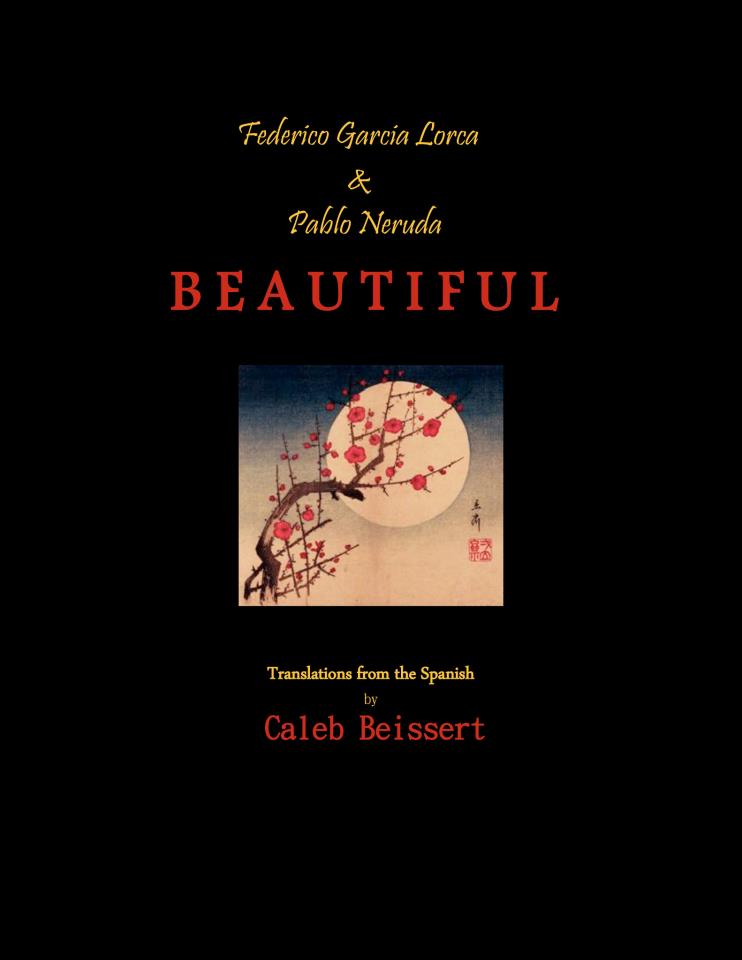
This week, Poetry at the Altamont celebrates the release of Caleb Beissert’s first book, Beautiful, a selection of poems by Pablo Neruda and Federico García Lorca translated into English. During the last few weeks, Beautiful was well received by enthusiastic audiences at Montford Books & More and Malaprop’s Books & Cafe and is a Small Press Distribution best-seller.
The Altamont theater doors open at 7:00 P.M. for Poetry at the Altamont. Admission is $5 at the door. Beer and wine sold at the bar and lounge will remain open for drinks after the reading. Event link.
UPDATE: Caleb Beissert is the featured guest of the Coffee with the Poet Series, Thursday, February 21st at 10:30 a.m. at City Lights Bookstore. Event link
Caleb graciously agreed to an interview to discuss poetry, translation work and Beautiful.
Coffeehouse Junkie Blog
First, for those who don’t know you, Caleb, please share a little about yourself and how you came to poetry.
Caleb Beissert
I arrived naturally at poetry. I had a strong interest in writing as a child, which stemmed from my mother’s and father’s both being journalists. They read to me constantly, even while I was in utero. I still love being read to, hence the poetry readings I attend. During my fugitive teenage years, I wrote notebooks full of song lyrics—songwriters such as Bob Dylan, Tom Petty, Robert Hunter, Kurt Cobain, Roger Waters, and The Beatles among my influences. When I went to college and took a poetry writing class, I discovered I’d been writing poetry for years. Of course songwriting is a different beast, but one does inform the other.
Throughout my time at Western Carolina University, I studied writing, foreign languages, philosophy, music, art—I wasn’t satisfied with the notion of going to college to get a job, rather I wanted to learn everything I could for the sake of knowing. I began publishing my poetry, traveling abroad, corresponding with accomplished writers, and I participated in the Gilbert-Chappell Distinguished Poet Series.
My literary heritage largely came from the American Beats, especially Allen Ginsberg and Richard Brautigan; the British poets, namely Blake and Coleridge; and mystics, like Hafiz, Rumi, Kabir, Mirabai; as well as Walt Whitman, E.E. Cummings, W.S. Merwin, early on Shel Silverstein, and then later the great Hispanic poets, particularly Federico García Lorca and Pablo Neruda. Now I’m living in Asheville, writing, producing poetry events, and also working as a musician.
Coffeehouse Junkie Blog
How did the translation work of these two poets, Federico García Lorca and Pablo Neruda, come about?
Caleb Beissert
As I glossed over previously, I was at WCU studying poetry and foreign language when I began translating these two poets. It must have been my attraction to Surrealism that led me to García Lorca. I had read a few translations in Bly’s Leaping Poetry, eaten up Lorca’s lecture Theory and Play of the Duende, and fallen into Poema del cante jondo. I was fascinated by this idea of the duende and also with the marriage of poetry with music, seen in the influence of Andalusian flamenco music on his work.
An interest in Neruda also came through my gravitating toward Surrealism, though I must acknowledge that neither of these poets wrote exclusively or even primarily in this style. One day my Spanish professor assigned the students to attempt a translation of Neruda’s famous “Poema 20” from Veinte poemas de amor y una canción desesperada. I thoroughly enjoyed the assignment—probably the only one who did—and it was then I realized I could translate. From there, of course, the complexities of poetry translation began to unravel. I studied essays by Gregory Rabassa, John Felstiner, Margaret Sayers Penden, Eliot Weinberger, and read many bilingual or “bisexual” editions, as a good friend likes to call them.
Eventually, I timidly showed my translations to a few trusted poet friends/mentors, among them Dr. Mary Adams and Thomas Rain Crowe, who encouraged me to continue the work. It has been a process of frustration, learning and accomplishment. Many late nights of pulling out my hair. I’ve dabbled in other Spanish-writing poets, such as César Vallejo, Rafael Alberti, Pedro Salinas, Vicente Aleixandre, Nicanor Parra, and Manuel González Prada; however, it was García Lorca and Neruda I spent the most time with, grew to know them through their words, heard their voices, conversed in dreams, and eventually compiled enough English-language adaptations for two books.
Coffeehouse Junkie Blog
How the translation work inform the craft of your own poetry?
Caleb Beissert
I find myself writing odes to people and places I’ve never known. I’ve written poems to or after these poets, places and ideas from their poetry, even employed mimicry for effect sometimes, but going deeper, I’m sure it has changed the way I think about language, construct lines, choose words, though the translation process itself does that as well. I have developed my own poetry while spending a great amount of time with these poets, therefore their impact on my work is tremendous. It is hard for me to see, because often one must step away from his or her work to get an accurate picture of it, but I know the influence is there.
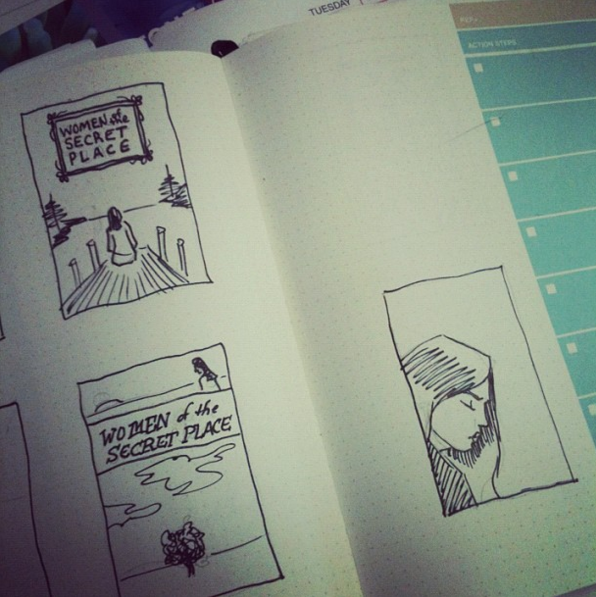 For me, every book cover I design begins with pencil sketches that eventually lead to ink drawings. Actually, I suppose it begins prior to that. The author receives a pre-publication questionnaire from me prior to the design process. The questionnaire asks the author what is his/her elevator pitch, what are the pillars of the book (i.e. what are three main concepts/ideas in the book?), and what is the book’s key audience? There are more questions that help me prepare for the design process, but reading through that document helps me form an idea of who the author is, what the book is about and how best to represent the book’s content with an attractive cover.
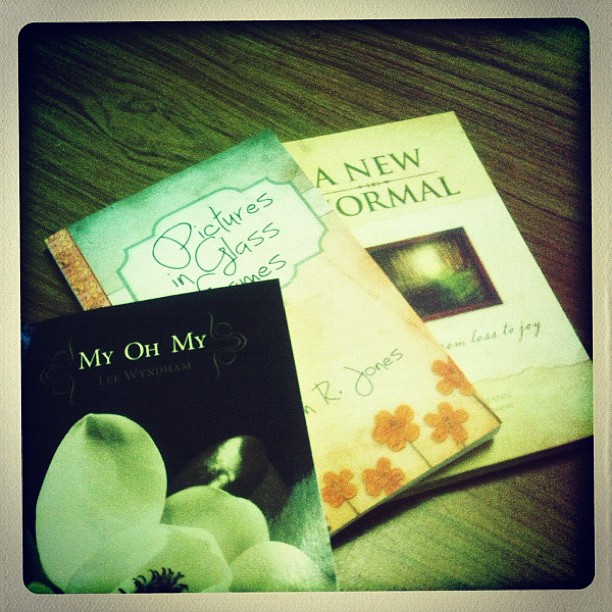
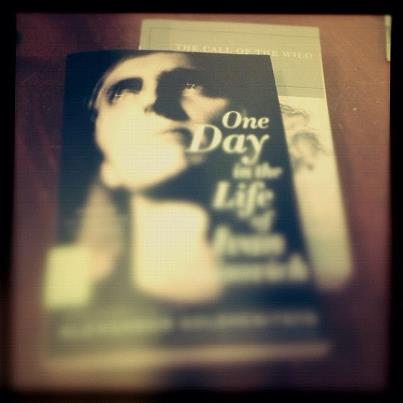
 The full-color design is often photographic, as in the case of this sample, but can also feature illustrated work or typographic designs. An illustrated cover is sent to a freelance artist who spends a week or so producing the cover art. The final cover design pulls together all the elements (art, photo, type and copy) to present a cover that, in theory, sells a 1000 to 3000 copies on face value. I know what you’re thinking, but books really are judged by their covers. Just watch people at a bookstore. They’re scanning covers before they even pick up a book to read the back copy blurb or open a book to read the first few chapters. If a book has amateurish art or less than professional photography, the audience will move to the next book cover that has great photography or stunning artwork. Further, if a book has poor quality cover art, it will be represented in poor book sales. Let me say it again: if a book has crappy cover art, the book will have crappy sales. No reader wants a crappy book on their bookshelf or e-reader. Half the battle for a reader’s attention is getting him/her to pick the book from the shelf. The same applies to e-book stores. Readers are scanning covers from the Kindle or Nook e-stores and deciding, based on cover design and book blurb, what title to purchase.