Graphic designers solve problems. They educate clients as much as they create products for clients.
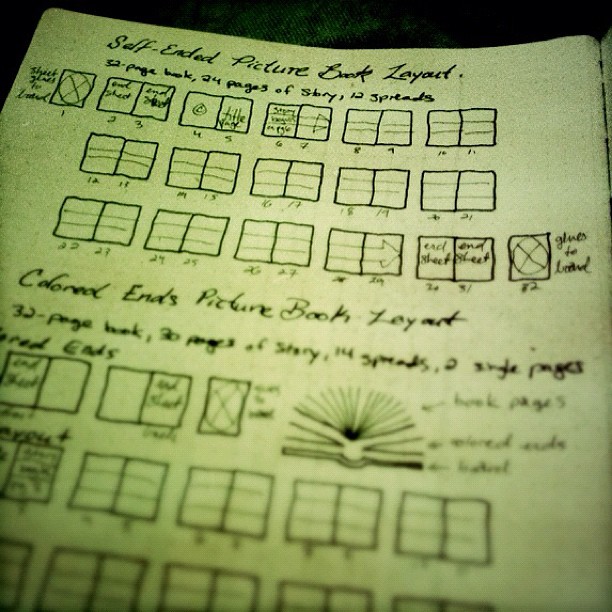
In an old Action Book journal, I sketched the details and differences between two options for a picture book. Most people see picture books all the time, but may not be aware of how they are put together. This sketch helped illustrate for the client and author how best to plan for their project.
That client meeting was years and years ago. Now I have stacks and boxes of these design journals. From time to time, I open these journals to reference an idea or sketch. But maybe it is time to start recycling them.
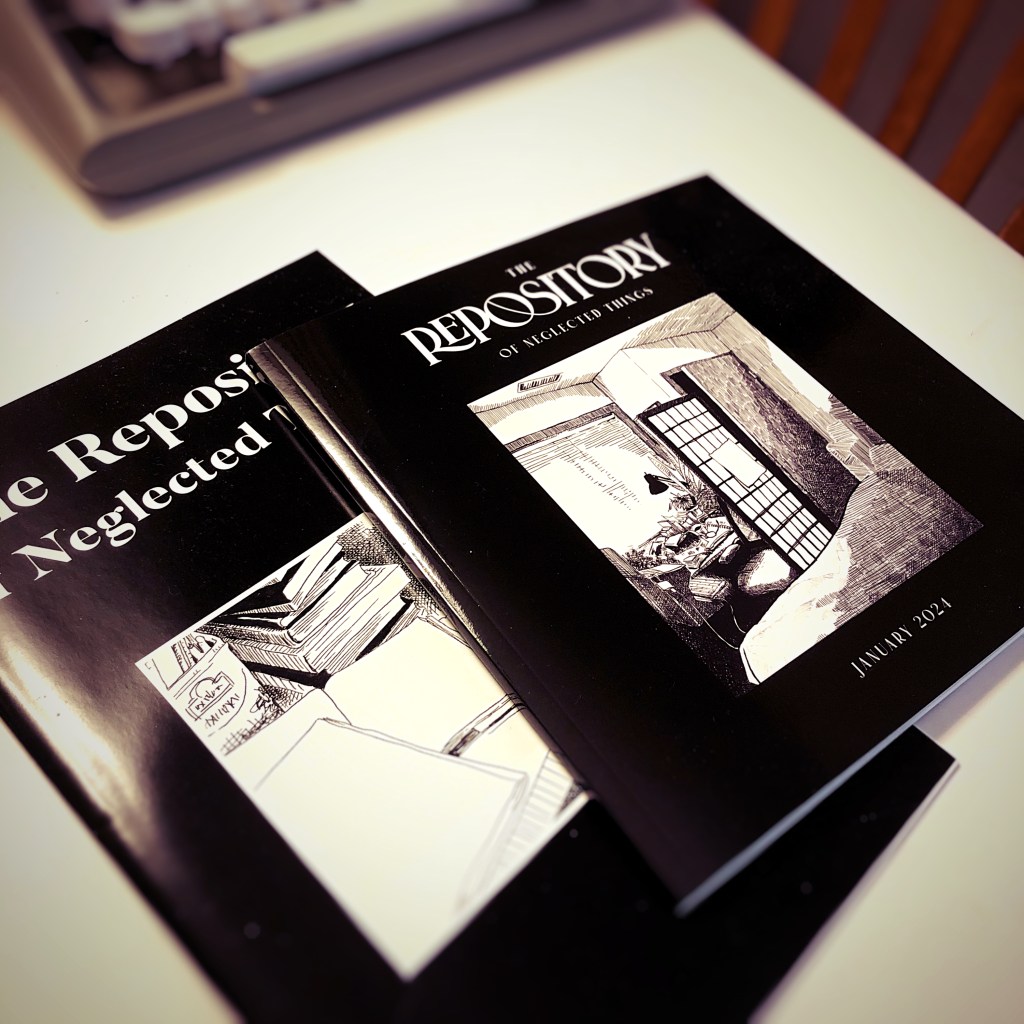
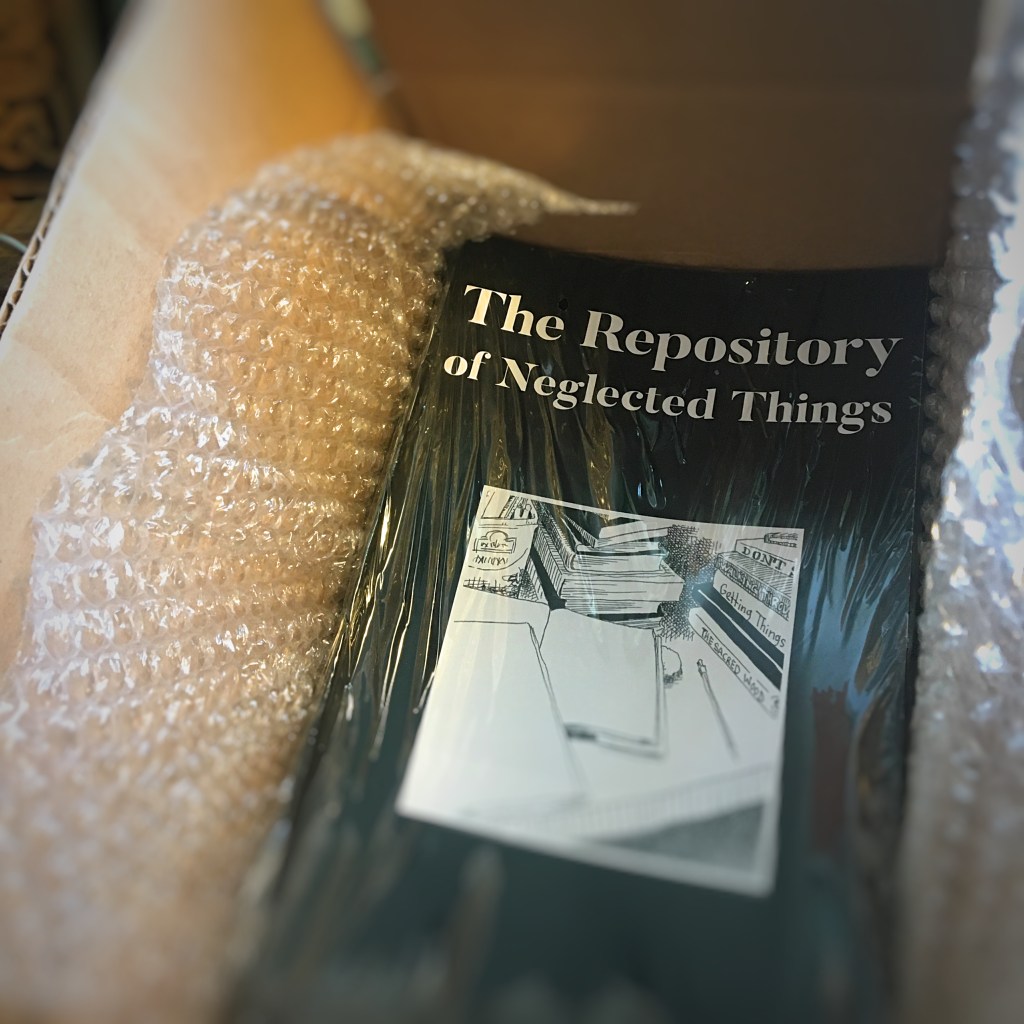
A couple of the drawings and illustrations featured on this web site during the last month or two appear in The Repository of Neglected Things. This private project originally started as way to collect unpublished drawings, illustrations, and stories into a physical package for friends and family. An anthology, if you will. Or maybe a portfolio. Plans are in process for a third and fourth volume. It has a limited print run. And distributed privately by invitation only.
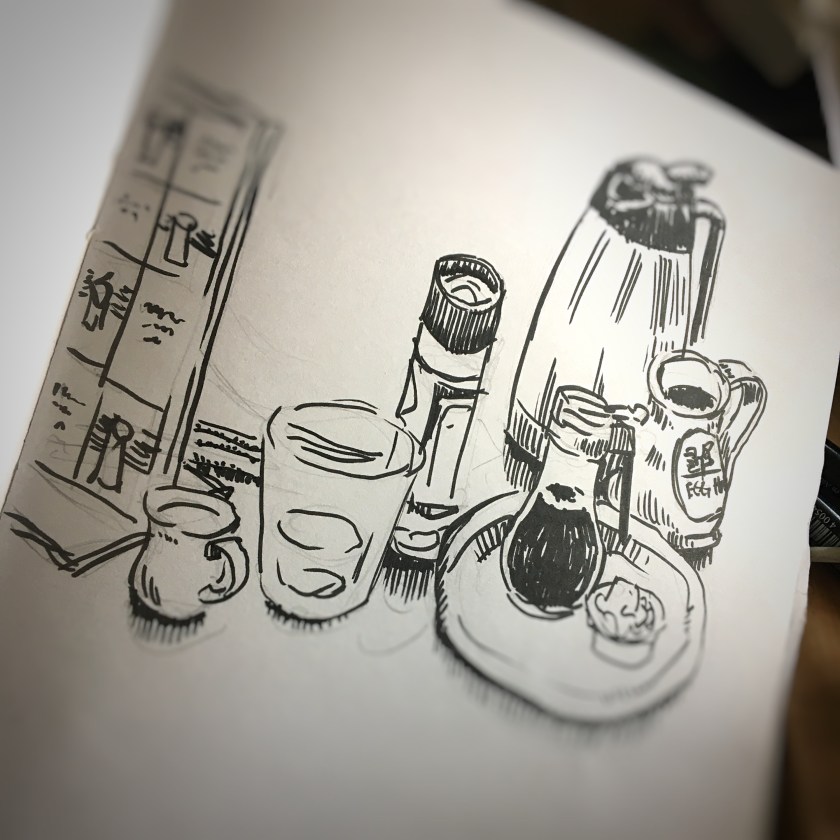
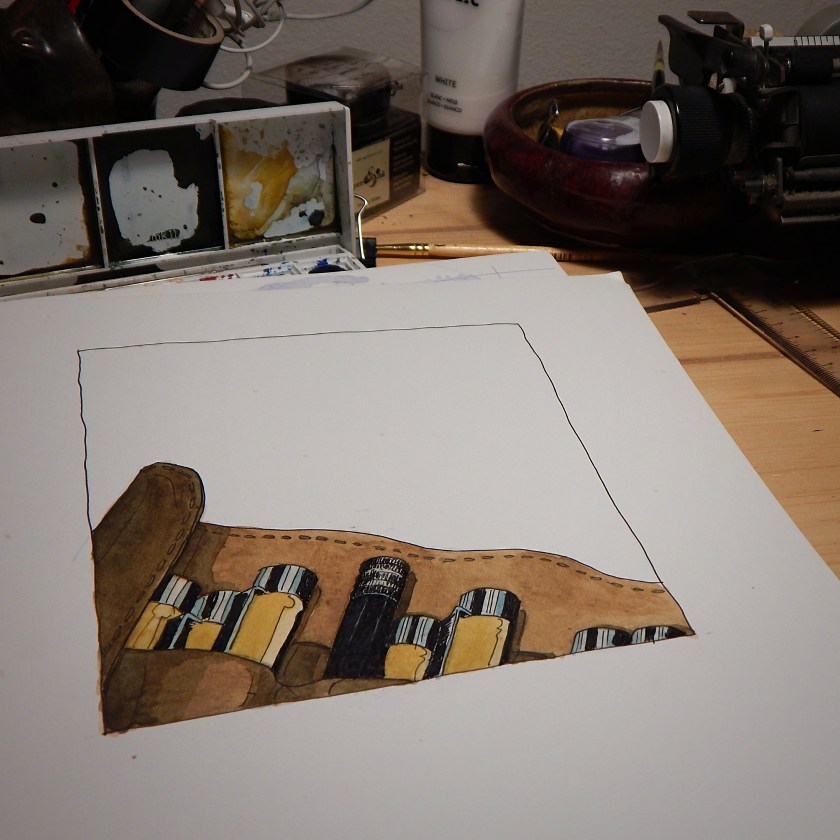
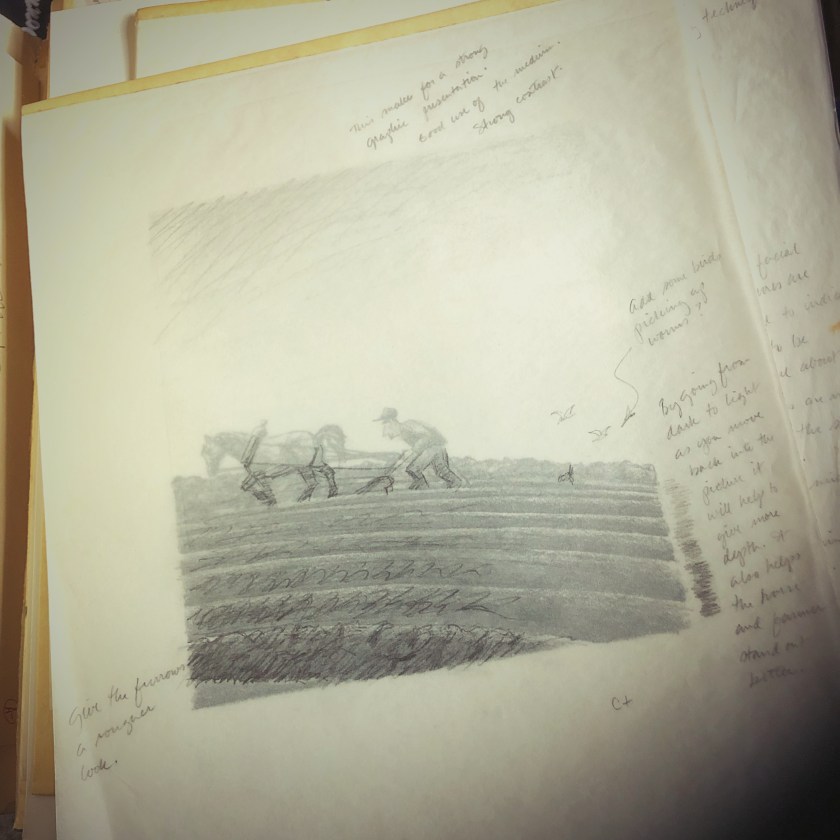
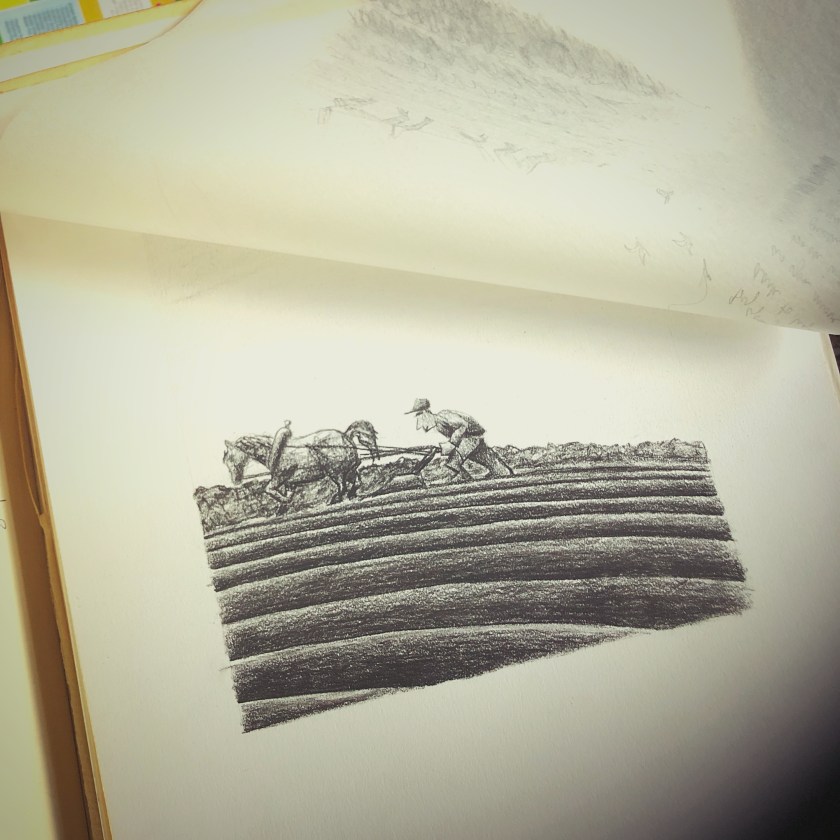
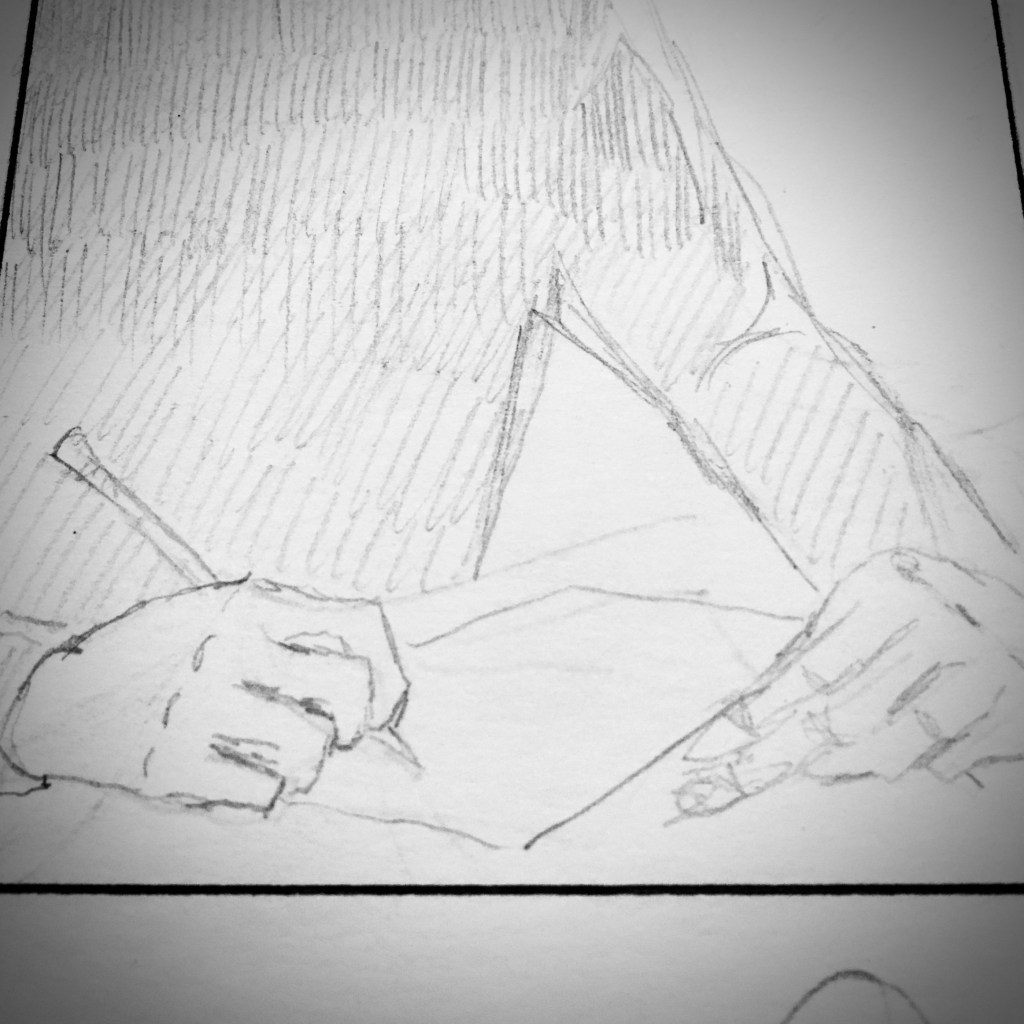
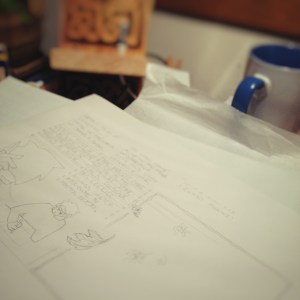
Photo of an illustration in progress taken five years ago.
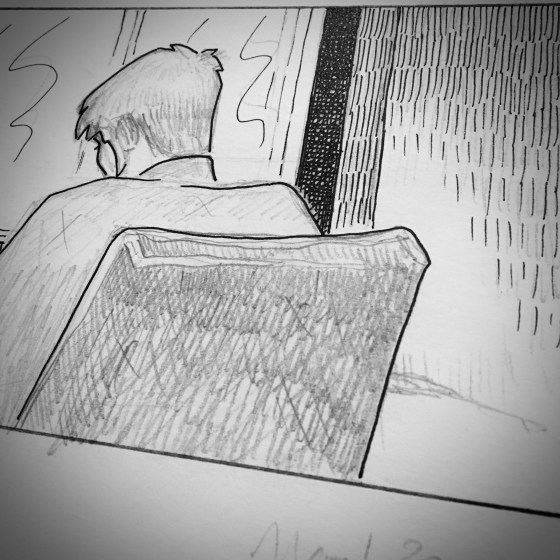
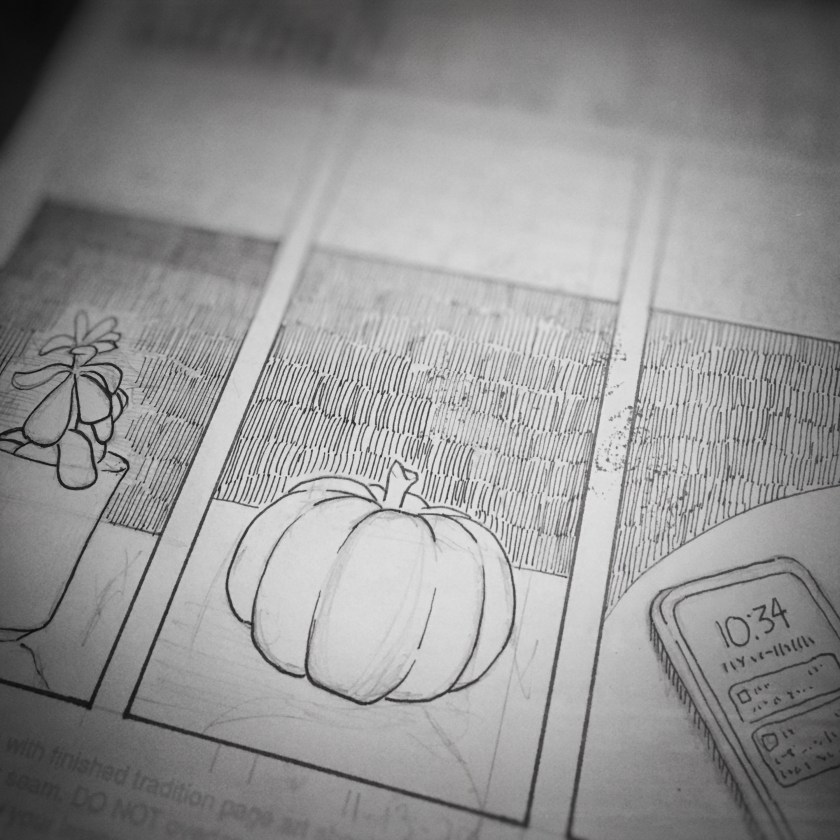
Most nights I look at this series of drawings and try to remember where I left off. Do I have time to finish a one-page drawing? Or one part of a drawing on a page?
The project began years ago. The script is incomplete. The character model sheet shifted. A fellow graphic designer called the original drawings “cartoony”. So, I shifted the drawings to something more realistic and representational. But the grammar of it seems confusing.
He sketches. He draws.
He sketches a page a night. He draws cartoony pictures.
Intransitive verbs. Transitive verbs. Is there such thing as transitive art? Intransitive art? Does the artwork transfer action to someone of something? Does artwork use a direct object? Is the artwork a direct object and the action the artist?
He drew. Last night, he drew.
Last night, he drew a cartoon picture. Last night, he drew a cartoon picture for a story he wrote, but did not finish.
This is confusing. English grammar. Transitive verbs. Intransitive verbs.
Tonight, he changed.
Tonight, he changed creative direction. Tonight, he drew a representational picture for a story he wrote .
What is grammar? Grammar is the skill of expanding core principles of any topic. Grammar provides the base for dialectic. Dialectic furnishes the foundation for rhetoric.
Pen transfers ink to paper. Ink forms points and lines. Points and lines for compositions…
As a drawing exercise, I reclaim old illustration paper that has been damaged in some form or fashion. Maybe it was ink or paint that bleed from a top page to the paper underneath. Maybe it is page that I erased pencil lines so many times the paper fibers feather the ink when it is applied. Whatever the case, a couple drawings and the use of my Sakura Pigma Micron pens provide an art exercise.
The challenge of creating analog art in a digital world is the only people to see and experience it are those who receive it–who physically hold the Bristol paper with ink illustrations in their hands. It is a great temptation to showcase the art on social media for the ephemeral likes of affirmation and validation. But the experience of sharing art in-person is intimate and memorable.
Is this sentimental? Or wistful desire toward a time and place where people were present and engaged? The value of creating something tangible and shared among family and friends avoids parasocial relationships. The glare of digital praise is alluring, but lonely.
Why was The Repository of Neglected Things written, illustrated and published?
The idea of this published project began grudgingly.
First, some background. Old sketchbooks, from decades ago, resurfaced when I cleaned the garage a year or so ago.
“What am I going to do with these?” I asked my wife.
“Save them,” she answered.
The cleaning plan was to throw away or sell garage items. Throwing away these large sketchbooks was not an option. And neither was selling them. The black cloth cover hardback sketchbooks varied in sizes. Most of them were nine inches wide by 12 inches high with 96 to 110 pages. Some were smaller. The smallest was four inches wide by six inches high. The largest was 11 inches wide by 14 inches high.
A navy blue cloth cover hardback sketchbook made its way from the garage to my desk. It measured six inches wide by nine inches high. The little blue book was half full of sketches. Or half empty. As many as 40 blank pages. My wife encouraged me to fill the blue cloth sketchbook with drawings. My children asked me to make more drawings. One of the children requested I storyboard a comic book. Or picture book. Reluctant, I began a few pencil drawings. My wife bought me some brush markers. I added more sketches. Once the blue sketchbook was filled with drawings, I reviewed it. Should I return it to the garage with the other black sketchbooks?
Summer faded to Autumn. A plan formed around the recently filled blue sketchbook. A mission to show my children that they can write and illustrate their own stories, their own books. The goal. Showcase their work in a print publication. A comic book. With creativity and energy they pulled their stories together. They learned about the process of creating a story, illustrating, organizing pages and layout, and basic pre-press tasks. The stories from the children featured one about cats baking muffins and another of a mouse warrior. My contribution to the anthology was selected drawings from the blue sketchbook. The art inside spanned twenty years. A single narrative titled “The Little Blue Sketchbook” tied the drawings together.
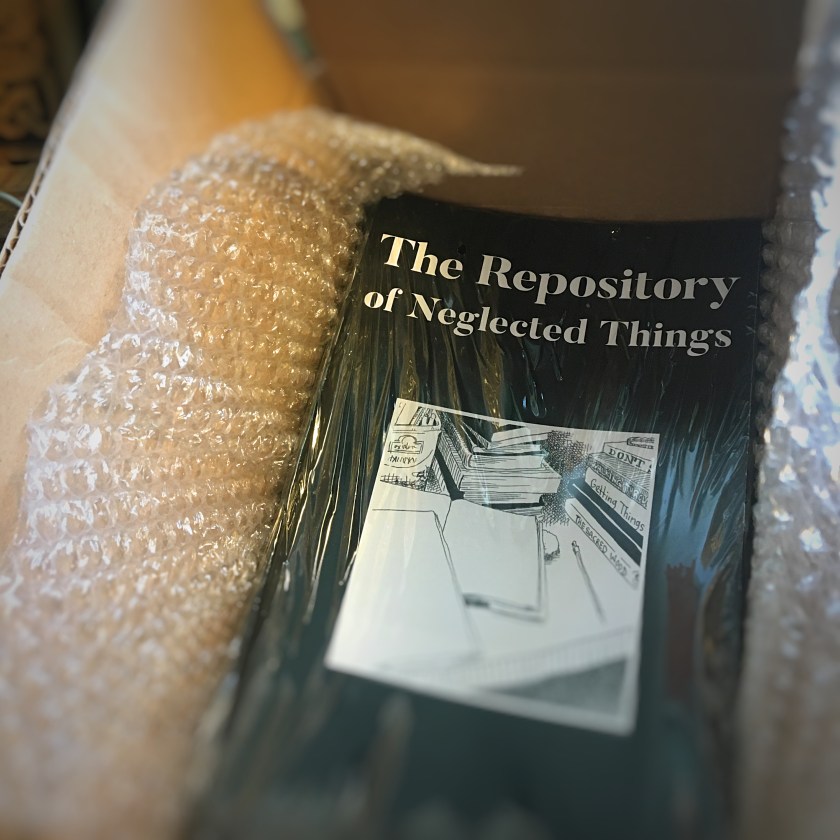
Finally, the publication The Repository of Neglected Things arrived. The children celebrated by flipping through the pages. They paused to examine their contributions. They read selections to each other. And then collected copies to send to friends and family. One child asked, “So, when do we publish the next edition?”
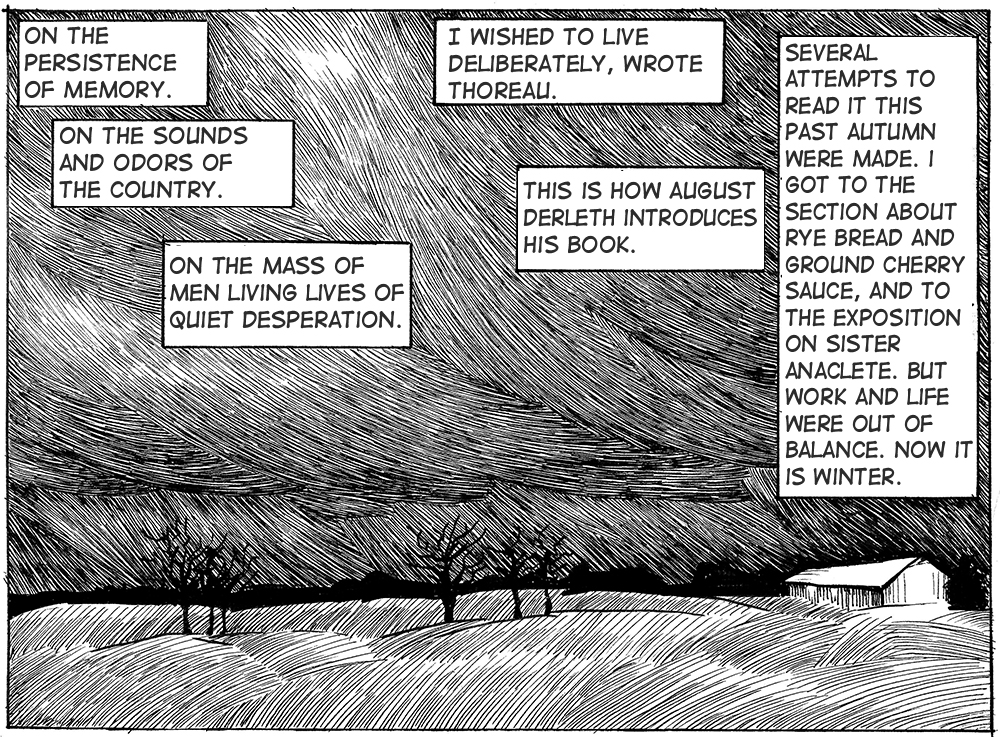
“The first awareness of night was a world of darkness bounded by a streetlight’s glow, the barking of a distant dog, the stars, trees, dim houses. The sense of being enclosed by the night, of being protected, as it were, by the darkness, is ancient.”
–August Derleth
January. The sun set half past four o’clock. Air temperature registered fifteen degrees Fahrenheit. As wind gusts rocked the automobile from side to side, the windchill felt more like five below zero. Pools of parking lot lights blurred from time to time with blowing snow.
I waited outside the grocery store for the oldest child’s shift to end. In better weather, the child walked to the grocery store. Or rode a scooter. But the long expected Wisconsin winter arrived with a fury. And walking, or riding, to work presented challenges.
The old auto’s engine idled as the heater worked to warm the vehicle’s interior. In spite of the effort, my feet were cold after twenty minutes of waiting in the south part of the parking lot. I wore insulated gloves as I read a library book from the glow of the parking lot lights.
As the heater fan moaned and engine grumbled, I thought of night and darkness and protection. From one of the books in the Sac Prairie Saga, these ideas rose before me like my breath in the winter air. The long nights of winter. The home brightened by Christmas tree lights. The contrast of the light and darkness. Protection and vulnerability. Is it vulnerability? Or destruction? Does not Epiphany land during the longest nights of the astronomical year?
A truck parked in front of my automobile. Head lamps blinded me. I looked away to the store exit until the driver turned off the headlamps and shuffled into the grocery store entrance. My eyes returned to the book and reread the passage. And the a half dozen more pages before a familiar stride passed below the parking lot light nearest me. I welcomed the child into the warm protection of the vehicle and drove home.
The young moon, a waxing crescent, appeared in the southwest like a cold smile. Jupiter, above the right tip of the crescent, glared down upon the frozen fields and village. I recalled not what we talked about on the way home, but the idea of shelter and safety persisted in my thoughts.
Later that night. After supper. After even prayers. I wrestled with an illustration. Measured, composed, and sketched. A world of darkness “bounded” by street lamps? The image of darkness leaping or jumping over glowing spheres of street lamps captivate my thoughts as I inked over the pencil marks on the illustration paper. Pen stroke after pen stroke filled the page until my eyes grew weary. And I surrendered to that ancient enclosure of night.
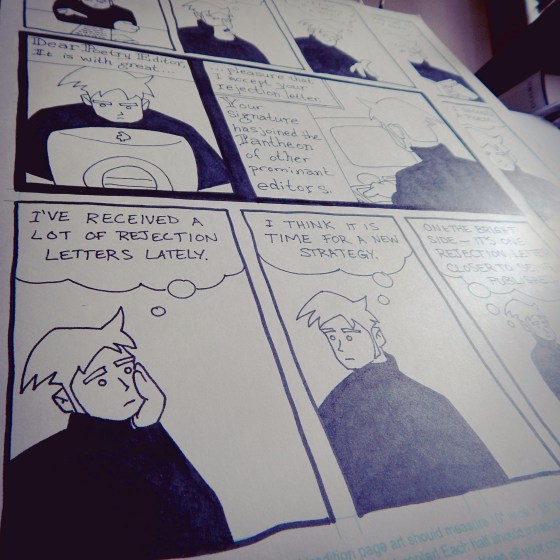
From the archives. This goes back quite a few years. Before social media. And iPhones. How did I manage to create a regular comic strip with a full-time day job?
In truth it took a few years. Little by little. The style developed from pen and brush inking techniques — more realistic illustrations — to Sharpie® marker and Sakura Micron pen illustrations — more graphic and cartoonish. The intent was to streamline the process and art style in order to work quicker. However, the reality is that the graphic, cartoonish style takes just as much time as pen and brush. Just in different applications.
The character remains unnamed — loosely referred to as a young artist. Dressed with black turtleneck and unkept hair. The comic strip ran for maybe a year before the newspaper ended publication. A lot of newspapers and magazines shuddered that year.
I return to the “young artist.” To practice art work. A creative workout. Similar to physical fitness routines. An effort to keep the motor skills of drawing and illustration in shape.
Recent practice comic strips created remain unpublished. Private exercises. Not published in an independent newspaper. Not for public show on Instagram. Or Facebook. I do not have accounts on those social media platforms.
I may share them here. This has become a digital repository of material I find in old art portfolios and sketch books.
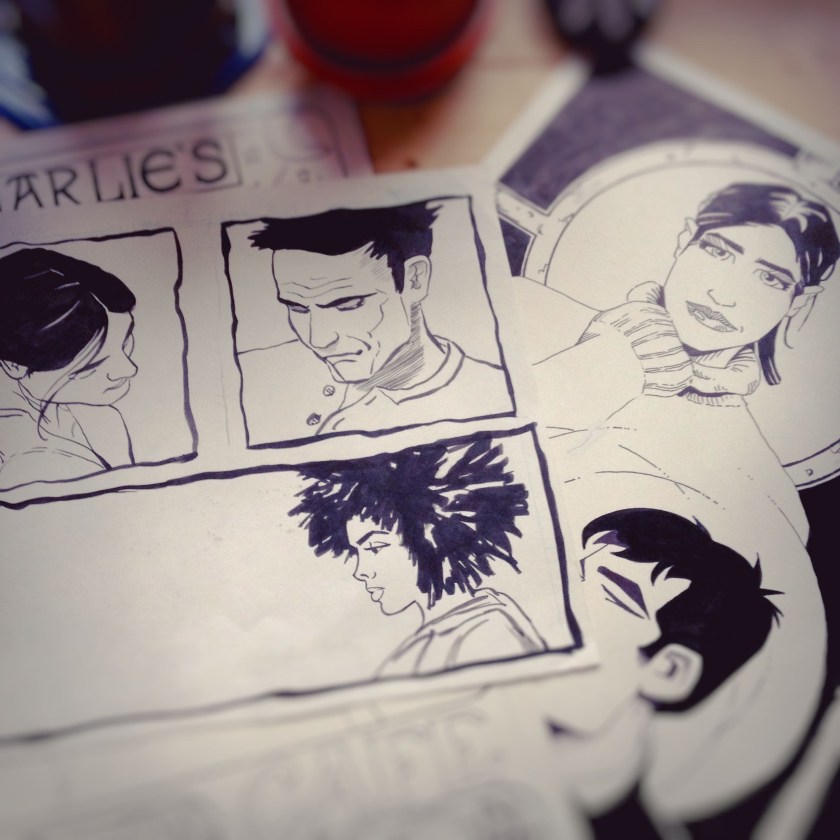
Three years ago I rediscovered these 11 inch by 17 inch pages. Illustrated comic book pages hidden in a storage container. A gray Rubbermaid® Roughneck® storage tote of the 18 gallon variety. I stored art supplies, books, family keepsakes, manuscripts, and tools in dozens of similar totes. Living in a humid subtropic climate at the time, I did this to avoid water damage and mold ruining art and other supplies. Additionally, heavy duty polypropylene bags also prevent mold and water damage. To offer an added level of protection I used the technique of poly bagging art pages and then placing them within totes. When I moved across the country this also acted as a good way to pack.
However, that was not the case with these pages of art I discovered three years ago. Like an archeologist, I excavated those pages from a gray Rubbermaid® tote. They were loose in the tote. Not poly bagged. Print samples of graphic design projects filled the tote as well. And also old newspapers and magazines. Either these publications featured something I wrote or something I designed.
In an effort to preserve the illustrated comic book pages, I found an old presentation book used for interviews. The Itoya Original Art Portfolio presentation books work the best. Good for professional presentation and storage.
During the holiday season I found one of the portfolio books with those illustrated comic book pages. Examined them again. This time one of the kidlingers was spying over my shoulder.
“These are really good,” the kidlinger said. “Better than I can draw.”
“These are practice pages.” I said. Paused to let the kidlinger read the panels on the page. For a brief moment a wave of vulnerability washed over me. A child-like anxiety of examinations. The kind of fear I had when a school teacher reviewed my arithmetic work during class. Found an error and announced it so that all the class might hear. Why had I felt that way about my child reading this page? There were no objectionable elements to the story. Nor art. Nothing inappropriate for the kidlinger’s age. The moment passed.
“What language is this?” Kidlinger pointed at one of the panels on the page.
“German.” I answered. “Deutsche.”
The kidlinger hesitated. I considered translating the passage: Im Schatten sah ich. . .
“Lines from a German poem,” I said. “I added it to the story to help me remember the poem.”
Or to add texture to the short slice-of-life comic book story I composed. Sequential art as some have called it. A clever way of renaming comic book art.
I did not purchase my own comic book until I was in high school. An art teacher suggested that it may be a good way to study human anatomy. And it was. Exaggerated, dynamic anatomy. Superhero comic books were the only type sold at the local gas station on the way to school. The public library carried collections of Peanuts. But nothing like Superman or Batman. They did, however, carry the Classics Illustrated book series. Excalibur was the name of the comic book I bought at the gas station.
Though superhero comic books introduced me to sequential art, it was the slice-of-life stories that intrigued me. At the time, I had not heard of nor read American Splendor, Berlin, Cerebus, or Strangers in Paradise. But that was the direction I was headedcreatively.
I probably added lines of German poetry to seem more sophisticated. To elevate comic book pages to sequential art.
“You wrote each of these stories, too?”
“Yes,” I answered the kidlinger. “Every one.”
I started to say something. To explain that these were practice stories and drawings. I wrote the script and illustrated the pages a decade ago. No. Maybe two. Each page, each panel pencilled and inked with crow quill and brush. It was practice for greater things.
My goal in those days was to publish a comic book or a childrens book. I did not know how. But the owner of a comic book store suggested I visit some comic book conventions. I did. And even booked a table on artists alley for a couple comic cons.
Artists alleys are a feature in nearly every comic con. The alleys feature artists and writers showing their work in hopes of securing a job with a major publisher. Or any publisher for that matter. Or trying to sell their own artwork. I met several artist and writers at these comic cons. And learned how hard I needed to work. Over time, I connected with writers and got a few independent projects. Some of them published. Most remained unpublished.
The kidlinger flipped through the entire portfolio. Read through several 2-page and 5-page stories.
“Nice,” said the kidlinger. An expression newly formed in the teenager’s mind to mean awesome or fantastic or good.
“What do you think?” I asked.
“I don’t know,” said the kidlinger and ambled out of the room.
I thought about that for awhile. What had the kidlinger found in looking through these pages? These artifacts? In a way, this portfolio is a childrens book for at least one child — my child — mein Kind. But these pages remain unpublished. Hidden in a black portfolio book. Even a fragment of a German poem remained hidden: Im Schatten sah ich/Ein Blümchen stehn. . .
I stumble through a translation:
In shadow I saw
a flower stand. . .
Or maybe:
In shade I saw
a flower grow. . .
What is that? Goethe? Was I reading Goethe back then?
I will not deny the desire that someday I would like these early drawings and writings published. But why? Maybe my desire is misplaced. Maybe these pages should remain in the shadow. In the shade. They are practice pages after all.
And then I have discovered something else. I was reading Goethe when I illustrated those pages. A fragment from Goethe’s poem “Gefunden.” Or, in English, “Found.”
It was cold. A political rally mangled traffic downtown. Everything seemed off schedule. I missed the street car to the train station by minutes and had to walk. The winter weather depleted the battery of my smartphone. Commuters waited at the Intermodal. The last train of the night was late.
There was a special one-hour podcast on obscure tunes from the Real Book loaded on my smartphone. I wanted to listen to jazz music. But I didn’t want to run out of battery. In case the train was delayed. And I had to call my wife to pick me up.
The previous weekend I checked out a book of poetry from the public library. A collection of poems, translated into English, of Li Po. Before I knew it I had found a friend. The translator made it inviting to enter the world and work of Li Po.
Soon the train arrived and I boarded. Found a seat. Plugged my phone into the outlet. Opened the book and continued reading. The train passed over the river and had nearly cleared the Third Ward when I caught a glimpsed of the moon over Lake Michigan.
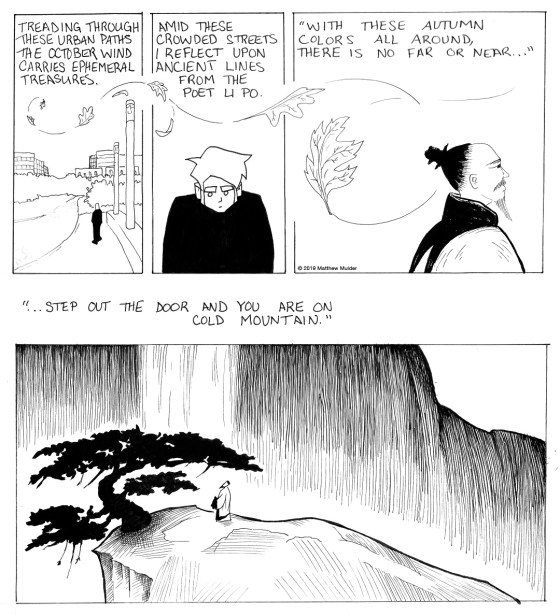
“I raise my cup to invite the bright moon, . . .” wrote Li Po.
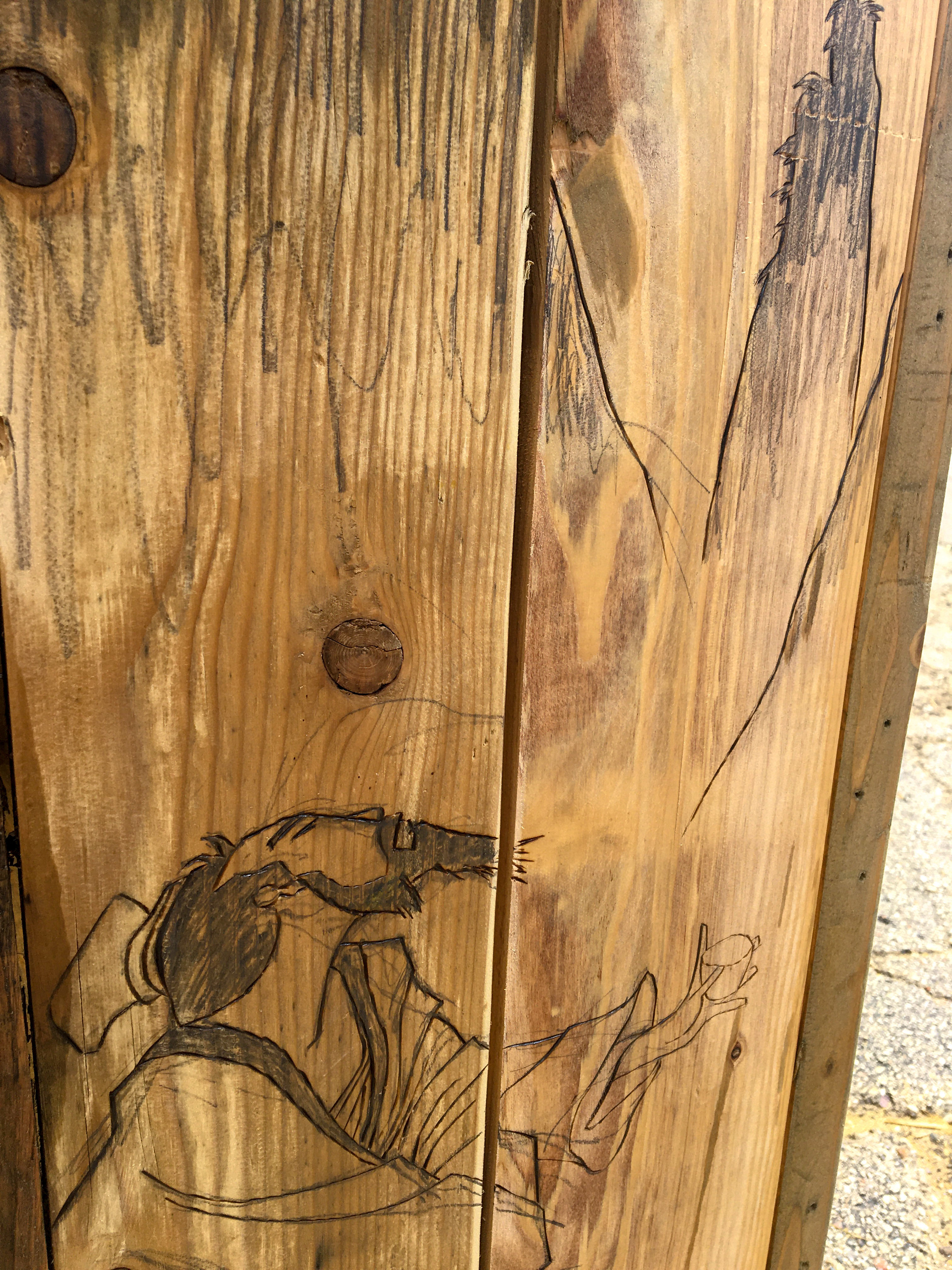
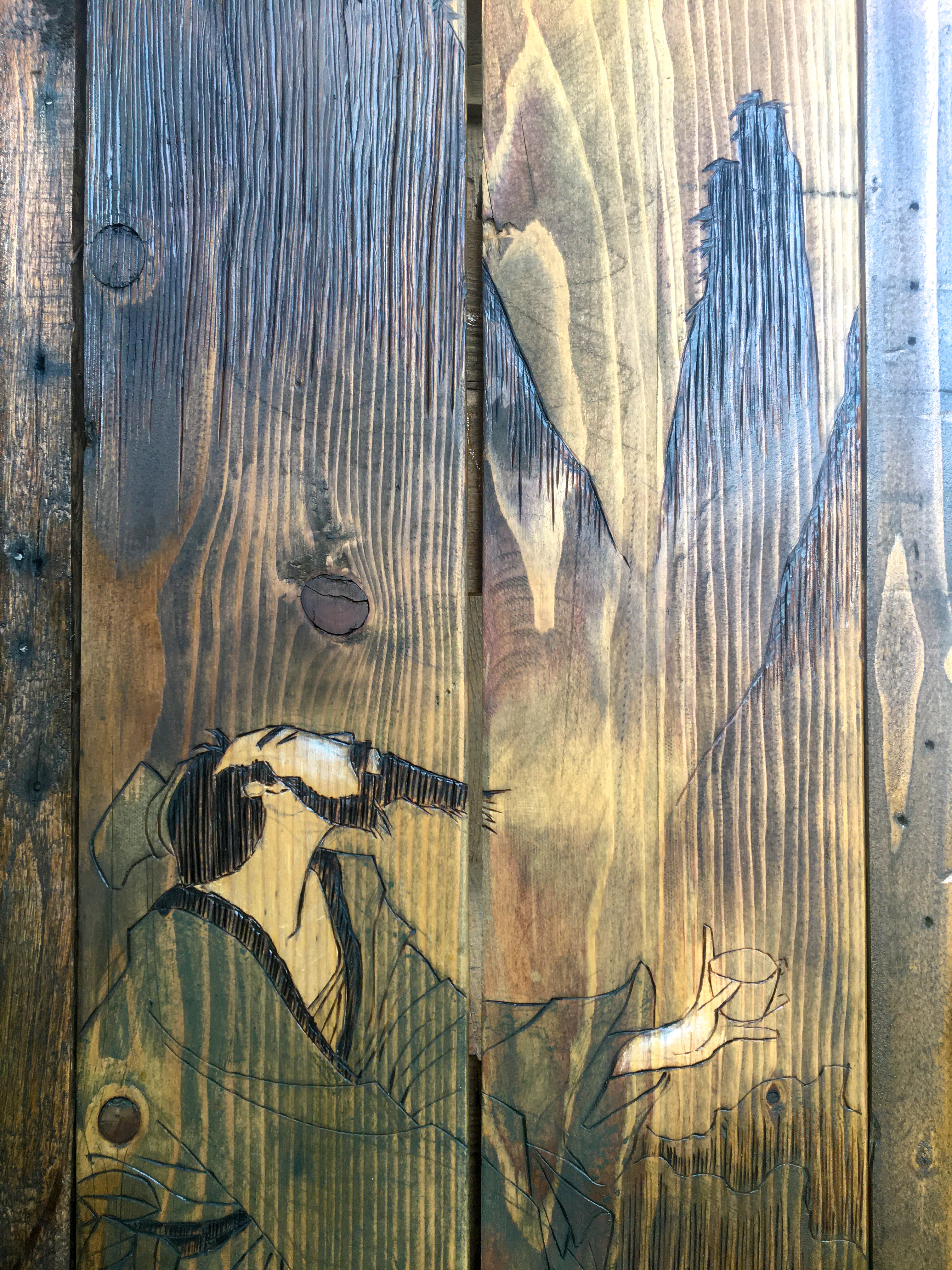
Maybe that endured me to Li Po. Or at least inspired me to feature an illustration of Li Po on a bookshelf I built this summer.
There are a couple Li Po illustrations I made during the last year or so. But the one for the new bookshelf is the most ambitious and detailed. Maybe I will share some posts about the bookshelf project with you later. I had considered writing a series of short posts about how it all came together. Sort of a how-to, or how it was done, type of posts. But the story about why I chose to decorate the sides of the bookshelf seems to interest people more than how I built it.
As the nights grow longer and colder, the illustrated bookshelf is now installed in the living room.
One of the challenges of an artist and designer is the amount of unfinished sketches or mock-ups (a working sample of an illustration or design) that collect over the years.
Found a unfinished illustration from over five years ago. Decided to finish the ink drawing. Added watercolor as a painting exercise.
Never too late to complete an unfinished illustration.
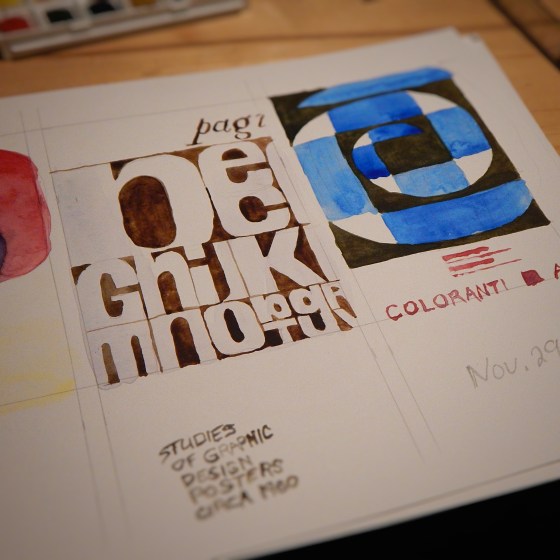
Tested a couple old brushes using a dozen watercolor half pans on illustration paper. Purchased the art supplies for a book cover illustration project a few years ago. Have not had the occasion to use them since then. Apart from recreational sketches and practice.
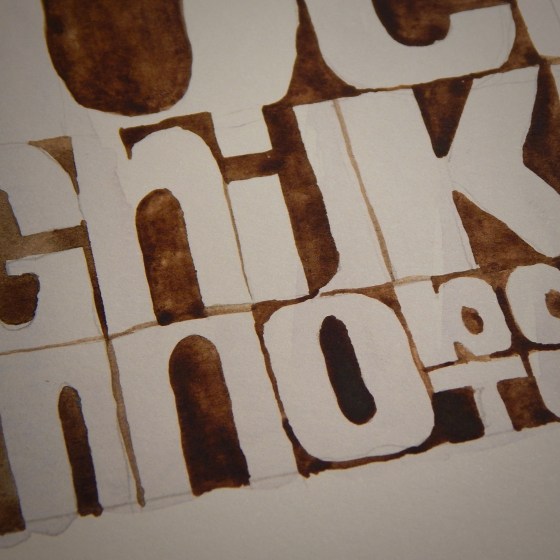
Painted some studies of graphic design advertisement posters from the 1960s. Muscle memory atrophied more than expected. How does the aphorism go? Either control the watercolors or they will control the painting. Some clumsy mistakes. A good test of skills. Not ready to paint a book cover illustration. But the exercise warmed up the muscles and mind to consider more opportunities.
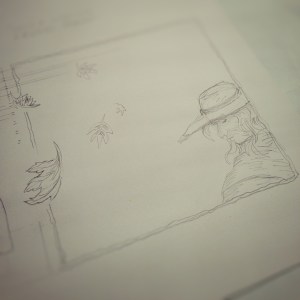
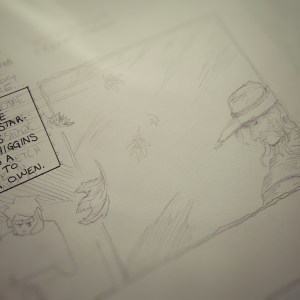
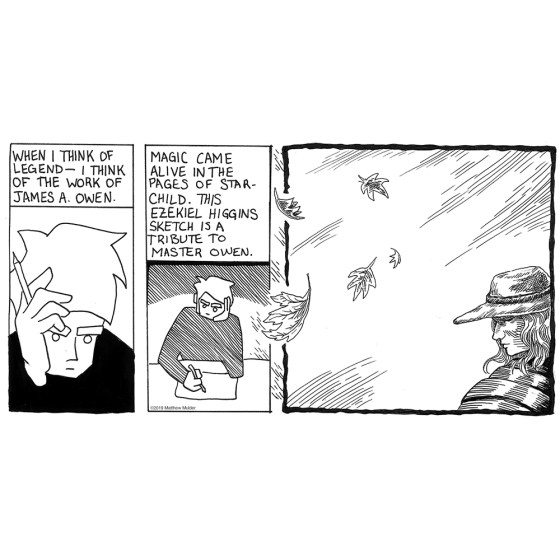
Inktober’s rules are simple: draw something in ink each day for the month of October, post it online, hashtag it, and repeat. So, if I draw three panels in a single day, does that make up for two missed days?
Ever watch those drawing challenges? Do a drawing or illustration in 10 minutes, 1 minute, and 10 seconds. My self-imposed challenge for day 15 was two hours.
The prompt that day was “legend.” The inspiration: two-fold. One, I revived a cartoon character I created long, long ago. Two, an homage to Starchild, created by James A. Owen.
The big challenge for me is that a two-hour block of time is a lavish luxury for me. It means I can not begin until the work day is done, household chores completed, and kidlingers in bed. Mostly.
Before I finished the inking process, one of the kidlingers reminded me that within the two-hour window I stopped twice. Once to spend 15 minutes brewing a pot of tea for the night owls of the household. And once to re-tuck a younger kidlinger into bed.
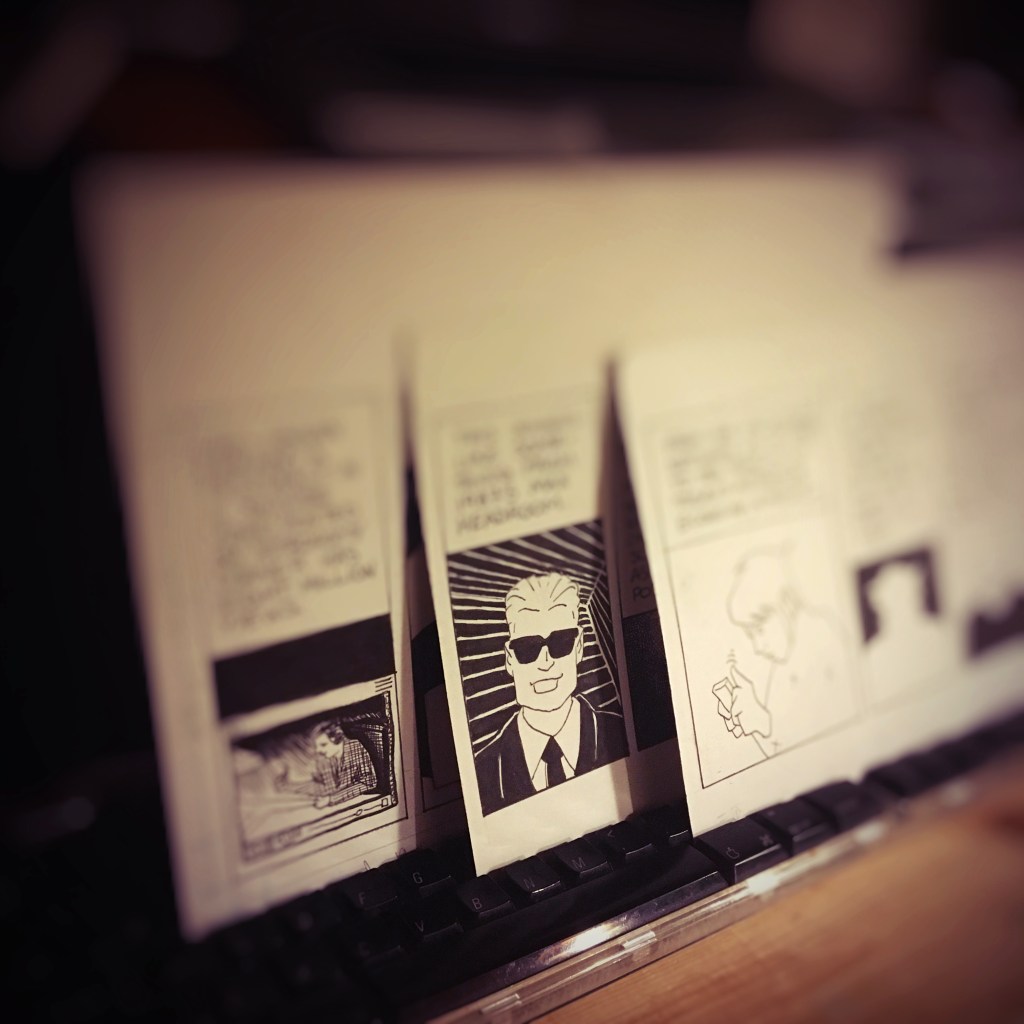
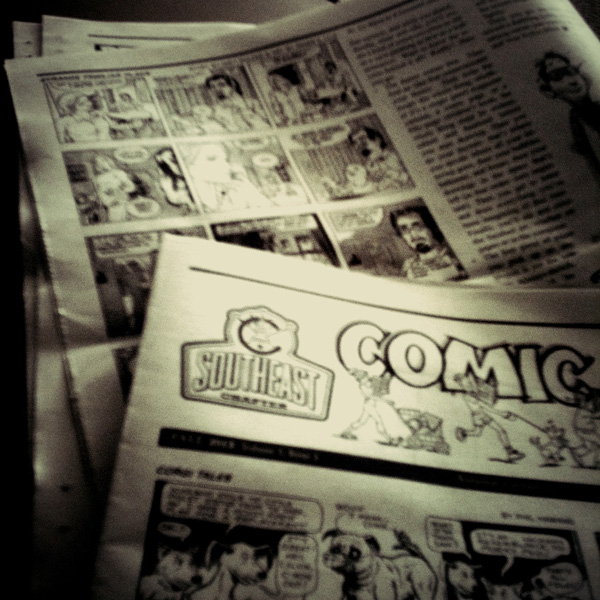
After nearly a six-year hiatus, I was excited to see a project that began with notes and sketches transform into a published comic strip. Even if it was a one-off. Even if I had to hand the responsibility of drawing each panel to someone else. It was done.
I had imagined that the creative non-fiction comic story I crafted would earn some interest. Maybe it would open a few doors to an audience. And allow me to write and illustrate. Even earn some money. Maybe I would quit my day job and provide for my household by doing something I loved. Telling stories. And drawing pictures.
That was five years ago.
A few weeks ago I found a box in the garage. It had several copies of a publication that printed my comic strip. I glanced over the pages and then placed them back into the box. I also found several books. Opened one book I remembered enjoying.
“What’s that?” asked one of the children.
“It’s a collection of comic strips.”
“Oh.”
I pulled a copy from the box and gave it to the child.
“There’s a story in there I wrote.” I said. “See if you can find it.”
The child took the copy of Comic Stroll and headed off to the couch in the living room.
I flipped through the pages of the book I had found. Read a few highlights.
Yeah, I resemble that, I thought to myself after reading a few lines at the end of the book. The author referenced a friend of his who gave up an art gig for a corporate job in order to provide for his family.
Yeah. I know what that is like.
How many comic pages might I have written and illustrated if I had. . . Well, what-ifs and might-have-beens are dangerous paths to pursue. What you did, great or small, is what matters.
Watching my progeny spend an afternoon reading comic strips I had a hand in creating was a pleasure.




 Coffeehouse Junkie