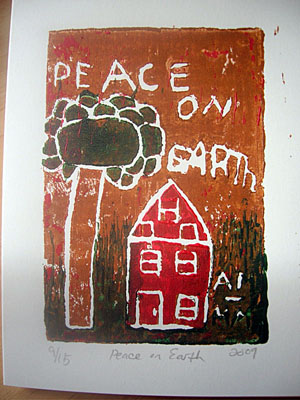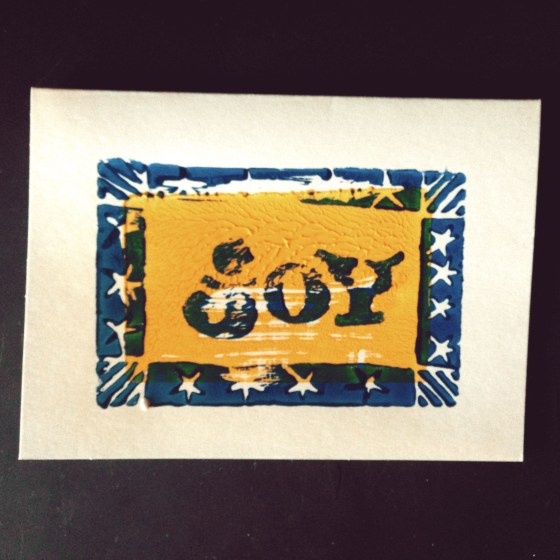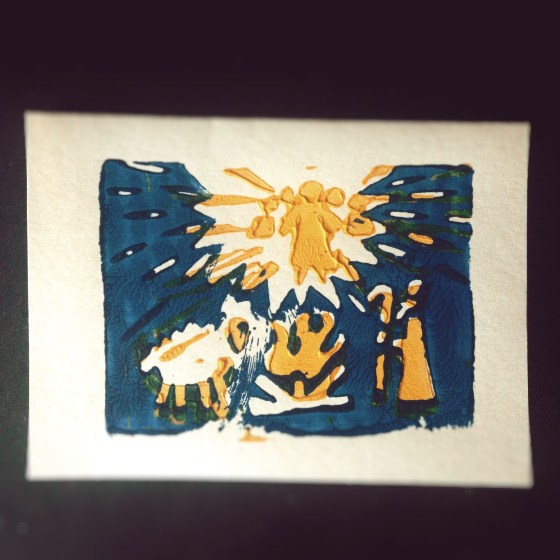
A poem for the first Sunday of Advent

This Advent Moon

by Christina Rossetti

This Advent moon shines cold and clear,
These Advent nights are long;
Our lamps have burned year after year,
And still their flame is strong.
“Watchman, what of the night?” we cry,
Heart-sick with hope deferred:
“No speaking signs are in the sky,”
Is still the watchman’s word.

The Porter watches at the gate,
The servants watch within;
The watch is long betimes and late,
The prize is slow to win.
“Watchman, what of the night?” but still
His answer sounds the same:
“No daybreak tops the utmost hill,
Nor pale our lamps of flame.”

One to another hear them speak,
The patient virgins wise:
“Surely He is not far to seek,”–
“All night we watch and rise.”
“The days are evil looking back,
The coming days are dim;
Yet count we not His promise slack,
But watch and wait for Him.”

One with another, soul with soul,
They kindle fire from fire:
“Friends watch us who have touched the goal.”
“They urge us, come up higher.”
“With them shall rest our waysore feet,
With them is built our home,
With Christ.” “They sweet, but He most sweet,
Sweeter than honeycomb.”

There no more parting, no more pain,
The distant ones brought near,
The lost so long are found again,
Long lost but longer dear:
Eye hath not seen, ear hath not heard,
Nor heart conceived that rest,
With them our good things long deferred,
With Jesus Christ our Best.

We weep because the night is long,
We laugh, for day shall rise,
We sing a slow contented song
And knock at Paradise.
Weeping we hold Him fast Who wept
For us,–we hold Him fast;
And will not let Him go except
He bless us first or last.

Weeping we hold Him fast to-night;
We will not let Him go
Till daybreak smite our wearied sight,
And summer smite the snow:
Then figs shall bud, and dove with dove
Shall coo the livelong day;
Then He shall say, “Arise, My love,
My fair one, come away.”

Source: Christina Rossetti, The Complete Poems, ed. R. W. Crump (New York: Penguin Books, 2001), pp. 62-64.
https://www.hymnsandcarolsofchristmas.com/Poetry/this_advent_moon_shines_cold_and.htm

Saturday morning jazz

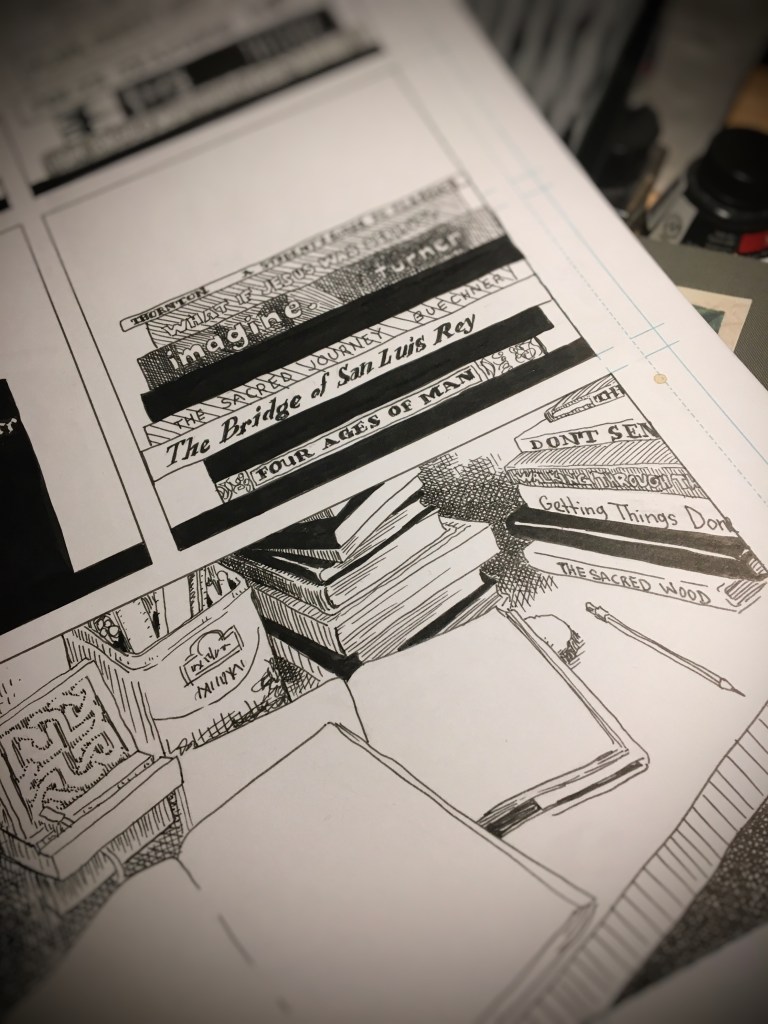
No-plan, salvaged-wood bookshelf finally installed

Saturday mornings. The work week is done. Sunrise is an hour or more away. The windows open. And have been all week. Unusual for this time of year and this part of the country. Birds create a pre-dawn cacophony in the evergreens outside the windows to the east.

The oldest kidlinger is up early doing laundry. Needs clean clothes for work later today. We move about the apartment quietly.

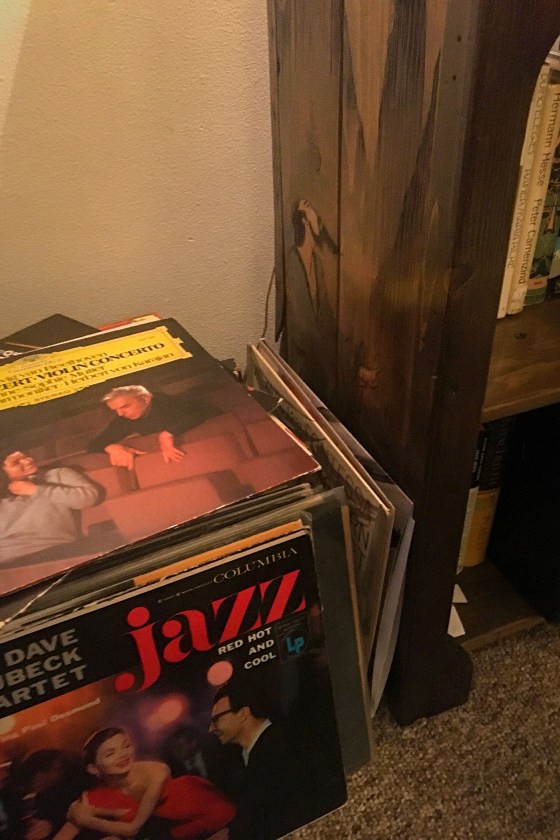
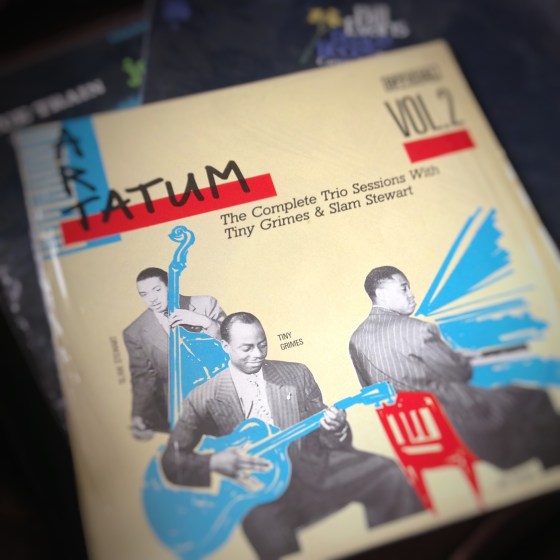
Saturday mornings are time for jazz. Brubeck. Coltrane. Evans. Tatum. But it is too early for Saturday morning jazz. It is time for stillness. A time to plan, think, and meditate. 

* * *

Conversations from the week come to mind. What makes a good book?

There are good books. Or at least, interesting books. There are poorly written books. And bad books. Meaning stylistically bad (as in the content is unsuccessfully researched, appallingly argued, or intentionally misleading). There are well-written books with poorly argued thesis statements. There are dull books with good data. And there is a bookshelf that holds them together. 

The no-plan, salvaged-wood bookshelf collects a portion of my library. The space between the work-from-home station and the vintage stereo is the new home of the bookshelf. The summer therapy project was completed so late that the intended use for the bookshelf for school materials was no longer relevant. 

The relevance is now my education. My continuing education in art, science and religion. Essentially, philosophy. What is truth? And, how do I know it? Variations on a theme. A book about technology. Another about project and time management. The top shelf nearly all books of poetry and essays. Some memoirs and novels. Several books on theology and spirituality. Books by American writers. British writers. And German writers.

The second shelf. A mix of poetry, fiction, essays, art and design. The third shelf. Memoirs, classical education, technology, theology, and philosophy. 

Reading an abundance of books does not make an individual well-read. Reading great books does not make one well-read. Understanding the great conversation makes a reader well-read. 

* * *

“I don’t read books,” he said. I did not know what to say. “I read the newspaper. Mainly the sports page. But that’s it.” 

I recalled the conversation from a few years ago. At lunch. On the patio of the Knickerbocker Hotel. The thought appalled me. Not the person. He’s a good guy. But no book reading? How is that possible?

And I know how this happens. Happened. Long days of work. Long commute. Family responsibilities. Community engagement. And other demands. Priorities need to be made in order to set and accomplish goals. 

* * *

Found myself in the recliner. Everyone asleep. It was late. The lamp near the recliner was on. All other lights were off. The apartment was dark. A copy of the New Yorker on my chest. The record player was on. Three records on the platter. Waiting to be reloaded on the center spindle.

I had fallen asleep. Midway through the tables for two section of the magazine. Could not even keep my eyes open. Did I eat supper? Or dream of eating it? Or dream of reading that I ate it?  

Who has time to read legacy publications? Will try again on the weekend.

I folded the magazine cover to the back so that the page I had read was open. And placed it on the top of the bookshelf to read later. Then turned off the lamp. 

* * *

How did it get to be noon? How did it get to be Saturday?

The sun is bright. Warm November breeze rattles the remaining brown leaves on the tree outside. Art Tatum plays from the record player.

I return a small book to the bookshelf. I place it open on the top shelf of the no-plan, salvaged-wood bookshelf I built this summer. The shelves are deep. At least a foot deep. Could hold two rows of standard-sized paperback books.

I place the book open on the top shelf. A reminder for me to return to the passage that captured my attention. Imagination. A bread crumb trail back to an idea.

The next vinyl record drops down the spindle. Bill Evens. Peace Piece. It is Saturday morning jazz slouching toward afternoon.


One night at a kava bar

One night at a kava bar I read a poem about. . . well, . . . that was many years ago. As National Poetry month concludes I hope you enjoy this recording. I do not believe I have read that poem in public since that night. Much gratitude to Caleb Beissert for recording and sharing the video.

Collision of jazz and Chinese poetry

The train was late. Or rather, I was late for the train. Work ran later than expected. Missed the 5:45. The street car was running. No mechanical problems like Monday. But a few minutes behind schedule due to a presidential rally.

I decided to skip the street car and walk to the station in order to catch the last train home. There is almost two hours between one train and the other. Walking gave me a chance to find a coffee shop and some time to catch up on reading. The Public Market was on the way, but it tends be loud. And crowded.

Stone Creek Coffee is nice and near the train station. And open until 7 p.m. It displays a nice interior design. But sometimes the atmosphere feels a bit too mod. The baristas are often impertinent. And I feel inelegant when I visit. Maybe I am getting too old to haunt swanky coffee shops. Stone Creek coffee is luxurious. In spite of pretentious barista I bought a cup and then walked to the train station to wait and read a book. It is an autobiography of the Chinese poet Tu Fu. The fact that a book published in the 1930s is still in circulation at a public library is impressive. Also interesting are the translator notes. A few weeks ago I finished reading a recent translation of Li Po poetry. The translator, Seaton, made observations similar to those made nearly 100 years ago by Ayscough and Lowell.

I struggled with one passage in the book as the train station grew loud with passengers arriving from one train and departing on a Greyhound bus. Pulling a mobile device out of my pocket I placed in ear buds and cued up episode 88 of the Discovering Jazz podcast. As I listened I read that one Chinese ideogram may require more than one word to transliterate. Sometimes an entire phrase is used to convey the idea of a single Chinese character. The last train arrived. I boarded. Found a seat. Continued reading. And listening.

The jazz podcast explored absolute pitch. The show host mentioned that Asian languages are tonal. Pronouncing a vowel with one pitch may mean one thing while pronouncing the same vowel with a different pitch provides a different meaning. I experienced that when I visited Japan. But I did not have the knowledge to appreciate it then as I do now.

Reading a dozen pages was all I managed to accomplish before the train stopped at the home station. Thankful to be homeward. Grateful for the travel disruption that mingled American jazz and Chinese poetry into one commute.

Patience to reconnect broken hyperlinks

Ever come across an article or blog post where the hyperlink leads to a deceased web page? That is what I discovered when scanning through old web log posts.

Exhibit 1

How to keep your job in journalism

POSTED ON MARCH 8, 2008
  1. Create killer content
  2. Pimp your work
  3. Brand yourself

This from Jason Sandford, founder of Ashvegas and veteran reporter. I shared my summary [1] and linked to his blog post. However, the hyperlink at the end of the post leads to a web page that reads: “Sorry. The Squarespace account ashvegas is not available.”

After a bit of research, it appears that Mr. Sandford migrated the blog content from Squarespace to an impressive hyperlocal news web page.[2] After scrolling for a decade, I found the original post [3] and reconnected the broken link. Problem solved.

Reading his original post, I learned that he quoted from a Robert Niles article [4] published two days before he shared excerpts with his readers.

Exhibit 2

The Knife Metaphor

POSTED ON JUNE 13, 2008

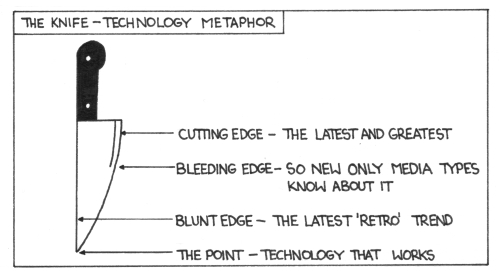
I do not know who created the image,[5] but I did provide a couple source links.

The hyperlink to The Flowfield Unity reads: “Nothing Found. Sorry, but we can’t seem to find what you’re looking for.” Follow Aja’s link I read a similar note: “Well this is somewhat embarrassing, isn’t it? It seems we can’t find what you’re looking for.”

I used to follow Aja on Tumblr. That is, before I quit Tumblr. The proliferation of adult content by users and providers prompted me to delete my account.

Sometimes I re-posted an image with source attribution. Link love was the proto-social media expression and polite thing to do.

Exhibit 3

A 90-second GTD primer

POSTED ON AUGUST 25, 2008

Surprisingly, the 43 Folders hyperlink from my blog post [6] is still active. Merlin Mann shared this — abridged here — jewel during Google’s infamous [7] August 11, 2008 outage:

  • Project. Any desirable outcome that requires more than one physical action in order to be considered complete.
  • Next Action. The next physical activity I could perform that moves a Project nearer to the outcome I want.
  • Context. Any limitation, opportunity, tool, or resource that lets me do one of the physical actions in my Project.
  • The Four Criteria Model. The notion that Priority is only one of four criteria in deciding what to do at a given moment.

The full, original post is worth reading. Especially for young readers who may find it interesting that even Google has service outages.

Exhibit 4

Poetry, the highest form of art

POSTED ON OCTOBER 8, 2008

Posted this Guardian lead paragraph [8] on my blog.[9]

“Imagine living in a society where poetry was considered to be the most important art form. Where a poet could easily fill a football stadium. Where a poet’s death was the top news story for days.”

Not surprisingly, the hyperlink is still active. Even if the article is more than a decade old.

Closing thoughts

I expected to find a lot more dead web pages and broken hyperlinks than I did. The sampling from 2008 of blog posts offers insight into journalism and social media.

Social media is reactionary. At its best, social media sneezes an ideavirus [10] that is contagious. At its worst, social media spreads toxic influenc-za.

Journalism reports news and events. To provide a permanent record for this age and the generations to follow. Journalism informs and educates readers. When done well, journalism inspires.

It is an easy tirade to attack social media as harmful rather than helpful. Equally, it is simple to launch a screed against poor quality journalism. Especially when broadcast news makes it effortless. (Side note: I do make a distinction between broadcast news and print/legacy news. But that is a topic for a different day.) It is fair to say that both journalism and social media may effectively be broken. Like an old, broken hyperlink they need time and patience to reconnect to a valid source.

NOTES:


[1] How to keep your job in journalism, accessed January 4, 2020.
https://coffeehousejunkie.net/2008/03/08/how-to-keep-your-job-in-journalism/


[2] Ashvegas.com.
https://ashvegas.com/


[3] “How to keep your job in journalism,” by Jason Sandford. First published March 8, 2008, accessed January 4, 2020.
https://coffeehousejunkie.net/2008/06/13/aja-the-flowfield-unity/


[4] “Keeping your job in journalism,” by Robert Niles. First published March 6, 2008, accessed January 4, 2020.
http://www.ojr.org/080305niles/

[5] Accessed January 4, 2020.
https://coffeehousejunkie.net/2008/06/13/aja-the-flowfield-unity/


[6] A 90-second GTD primer, accessed January 4, 2020.
https://coffeehousejunkie.net/2008/08/25/a-90-second-gtd-primer/


[7] “We feel your pain, and we’re sorry,” by Todd Jackson. August 11, 2008, accessed January 4, 2020.
https://gmail.googleblog.com/2008/08/we-feel-your-pain-and-were-sorry.html

[8] “Importing a passion for poetry,” by Sarah Maguire. First published October 6, 2008, accessed January 4, 2020.
https://www.theguardian.com/books/booksblog/2008/oct/06/poetry.in.translation


[9] Poetry, the highest form of art, accessed January 4, 2020.
https://coffeehousejunkie.net/2008/10/08/poetry-the-highest-form-of-art-2/


[10] Unleashing the Ideavirus, by Seth Godin, accessed January 4, 2020.
https://www.hachettebooks.com/titles/seth-godin/unleashing-the-ideavirus/9780786887170/

Reflections on a decade of sharing Advent poetry and art


A 183-word blog post published a few years ago became the most visited blog post I have written. How did this all begin? Part of the story started with a family tradition of creating handmade greeting cards. Part of the story involved a search for good seasonal, Christmas poems. Part of the story was how a father learned about Advent.

Last year I had the ambition to share a poem a day throughout the season of Advent. Newly discovered poems by Czeslaw Milosz, Christian Wiman, Edmund Spenser, and others. Unfortunately, work life became unmanageable due to circumstances beyond my control. Only six poems shared during last year’s 2018 Advent season.

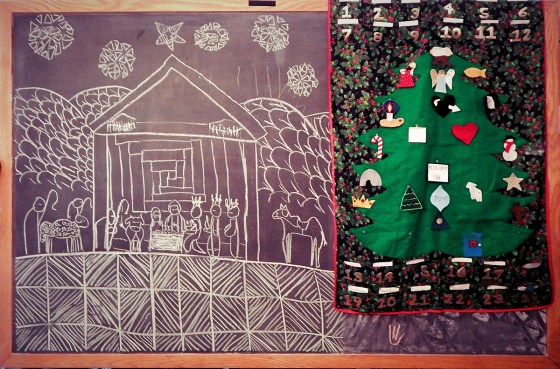
This year the plan was to share twelve poems during the Advent season. But again, work life demands became excessively burdensome. The poems were not released. They remain in the draft category of the content management system. In spite of the hurly-burly of this December, one of the children drew a very nice drawing on the chalkboard. It accompanies the Advent calendar that our family has used each year for more than a decade.

Finally, I wrote a long-ish essay to mark the decade. A story about the handmade greeting cards, the search for good Christmas poems, and how a father learned about Advent. But I decided not to publish it. I doubt anyone is interested in the story. In lieu of that, here are blog links that highlight the last ten years of Advent art, audio recordings, blog posts, and poems.

2018

Let Evening Come, Jane Kenyon
A Scandal in the Suburbs, X.J. Kennedy
Hill Christmas, R. S. Thomas
Remembering that it happened once, Wendell Berry
Advent, Mary Jo Salter
Advent, Patrick Kavanagh

2017

Exploring 12 Days of Advent poetry

2016

A holiday podcast for Christmas Day

2015

It’s that time of year
First Sunday of Advent — Poems
Second Sunday of Advent — Poems
Third Sunday of Advent — Poems
Fourth Sunday of Advent — Poems

2012

Advent Poems (or 12 days of poetry)

2011

Mighty Mercy, John Piper
Advent Calendar, Rowan Williams
Annunciation, Denise Levertov
The God We Hardly Knew, Óscar Romero
Mosaic of the Nativity (Serbia, Winter 1993), Jane Kenyon
Advent, Donald Hall
For Christmas Day, Charles Wesley

2010

Into The Darkest Hour, Madeleine L’Engle
The Winter Is Cold, Is Cold, Madeleine L’Engle

2009

Woodblock printing on a budget
Diy woodblock prints/greeting cards
“Christmas night,” a limited edition woodblock print
Woodblock prints/greeting cards
“Peace on earth,” a limited edition woodblock print

Gathering flowers, my mountain flowers


What are the names of the flowers and blossoms that edge the late August roadsides of rural Wisconsin? Cornflower? Goldenrod? Queen Anne’s lace? Or wild carrot? Maybe this is botanical contrafact.[1] Same road progression along corn and soybean fields, but new melodies and arrangements of purple, white and yellow. Weeds and wild flowers remixed along country roads.

The expression “gathering the flowers” originated from a Latin phrase, florilegium.[2] The idea and practice of gathering flowers was to record quotations, excerpts and selections of literature, sketches and observations. Often religious and/or philosophical. These thoughts and ideas collected in a common place[3] provided a field of potential cross pollination. Hence the term commonplace books from the Latin “loci communes.”[4]

But tonight the poetry of Li Po, commonplace books and conversation at the dinner table collided. It is a practice in my home to share dinner together with the entire family. Good food and lively conversation abound. Tonight the topics included rhetoric definitions, friendship, loyalty, virtue, astronomy, Taoism, Christianity, providence of God, Li Po, coffee, heavy metal music, hairless rabbits and so on. Weeds and wild flowers distinguished throughout the animated discussion.

After the conversation subsided, the table cleared and dished washed, I reflected on a poem by Li Po. In the poem he referred to himself and a hermit friend as “mountain flowers.” Remixing gathering flowers and mountain flowers intrigued me. One of the children placed John Coltrane, Bill Evans and Art Tatum records on the stereo.

John Coltrane’s “26 2.” Charlie Parker’s chord progression from “Confirmation” reimagined with Coltrane’s melody and arrangement. Later, I borrowed Li Po’s four-line structure and motif and added my own melody, images and theme. Gathering flowers and blossoms. Poetic contrafact.

NOTES:
[1] Discovering Jazz, Episode 46, Stolen Chord Sequences (Jazz Contrafacts), accessed September 7, 2019. https://player.fm/series/discovering-jazz-2150622/archives-episode-46-stolen-chord-sequences-jazz-contrafacts
[2] “Florilegium – gathering literary flowers,” August 27, 2019. https://coffeehousejunkie.net/2019/08/27/florilegium-gathering-literary-flowers/
[3] Loci communes: Not an easy Google search, but an example of its usage is here: https://www.britannica.com/topic/Loci-communes-rerum-theologicarum. Additionally, here are some Latin root words that make up Loci communes.


[4] Commonplace books is a subject explored here. “Best reads of 2014 (or what I found in my notebook),” December 31, 2014. https://coffeehousejunkie.net/2014/12/31/best-reads-of-2014-or-what-i-found-in-my-notebook/

National Poetry Month, weekend edition, five reflections on poems

Poems well composed haunt readers. Like the ache of an old injury during inclement weather. Good poems never quite disappear. They remain. Like a stubborn clump of April snow and ice on the corner of the street that refuses to melt. Here are five reflections on poems that continue to sparkle and shine throughout the year. At least in my mind.

1.

The May 2011 edition of Poetry magazine featured a Dana Gioia poem with a haunting opening line:

“So this is where the children come to die, . . .”

How can you not keep reading this poem? It is so good. So rich. Later in the poem the speaker says, “but there are poems we do not choose to write.” From the first line of the poem to the last line, “Special Treatments Ward” is an exceptional work.

2.

Poetry continues the Great Conversation. What is truth? How do we know it? Who are we and how should we live? Often reserved for philosophers, these questions are the result of friction from winds of poetry. What came first? Philosophy? Or Poetry? Since Theogony pre-dates many philosophical writings, I submit that poetry came first. Poetry is the wind that troubles the water.

3.

On a gray, stormy afternoon, I retreated to the public library in Racine. A book of translations of Han Shan needed to be renewed for the fourth or fifth time. And the children needed to get out of the apartment. Besides, the more you check out books of poetry the more funding the library gets based on your activity and/or interest in certain subjects. Or so I am led to believe by local librarians.

I was introduced to the Cold Mountain poems during one of the library’s writers groups. Since then I have read and studied several books of translations from Wang Wei, Ryokan, Basho and others.

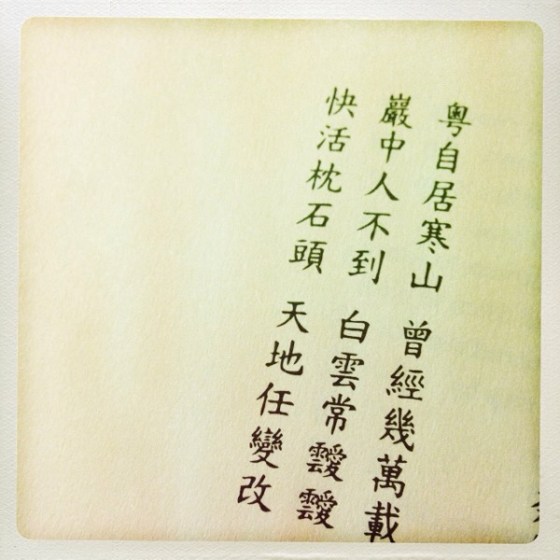
During the last few years, I find my writings turning toward dialogues with these poets. Here is a poem from Han Shan, a Taoist/Buddhist hermit, as translated by Red Pine:

Since I came to Cold Mountain
how many thousand years have passed
accepting my fate I fled to the woods
to dwell and gaze in freedom
no one visits the cliffs
forever hidden by clouds
soft grass serves as a mattress
my quilt is the dark blue sky
a boulder makes a fine pillow
Heaven and Earth can crumble and change

A quick read reveals a surface feast of images and imagination — the woods, the cliffs, soft grass and Heaven and Earth. After reading and thinking about this poem for several months there are questions that come to mind. Is the An Lu-shan Rebellion referred to in the third line? Is there a reference to the bodhisattva Avalokiteshvara? Heaven means the emperor. Earth means the empire. Is the last line political? Or philosophical? What do I say to Han Shan? Why did you flee? What and/or who did you leave behind?

Elsewhere in the world, at that same time Han Shan wrote this poem, Beowulf was composed. Charles Martel expanded the Frankish Empire. Three hundred years later The Song of Roland would commemorate one of the battles.

On a stormy afternoon, twelve- to eighteen-foot waves batter the rocky Lake Michigan shoreline. The world through literature expands and contracts with each line of poetry read.

4.

I like how Dick Allen stated this suggestion:

“Think of books of poetry the way you think of music CDs. A CD may have 12–15 songs on it. A small book of poetry may have 30–50 poems in it. Just as good songs will be played over, so good poems will be read over and over.”

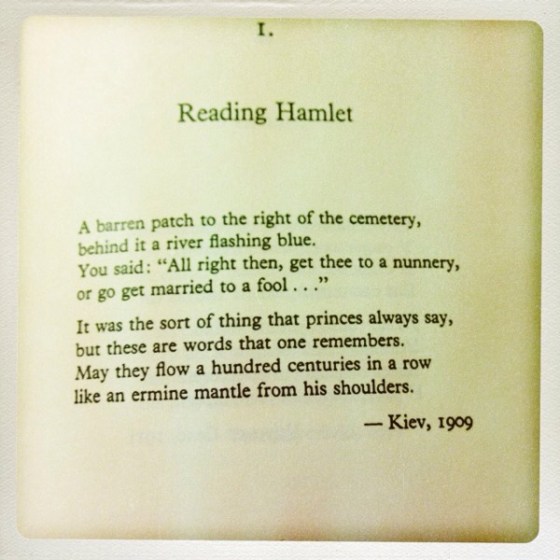
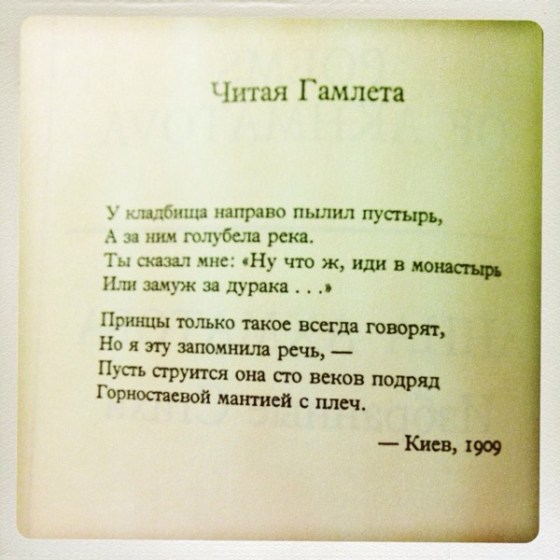
Like a single track on an album, I return to a poem by Anna Akhmatova. A Russian poem about an English play — Hamlet. The line that gets me every time I read it is:

“It was the sort of thing that princes always say.”

To me it is a catchy phrase that I want to play over and over again on the stereo. At full volume. Until it drives the neighbors in the apartment across the hall crazy.

5.

In Sam Hamill’s notes regarding his translation of a Tu Fu poem he wrote about the mingled joy and deep resignation expressed in the work.

“What is implied in the original, . . . is the notion that somehow, . . . he will not waste away sitting before the wine jug. . . . [Tu Fu] asks the question every poet asks under such circumstances: Why do we do it?”

Indeed. Why do we do it? Why read poems? In an old literary journal? Why read a poem more than 1000 years old? Or older? Why write poetry? Some may desire to write poetry in order to express themselves. I thought that was me. But not so much anymore. I write poetry in response to Wang Wei. Or Anna Akhmatova. Or Ghalib. Or Dana Gioia. My modern-day peasant efforts are to continue the Great Conversation. One line at a time.

NOTES:
Edited, condensed and updated from three previous blog posts: National Poetry Month, weekend edition, part one, National Poetry Month, weekend edition, part two, National Poetry Month, weekend edition, part three

Patience – your writing finds the right audience

Have you ever written something that developed a life — even an audience — unexpected? The final chapter of a literary biography I read recently featured an introductory note that caught my attention. The author stated that of all the essays he had written during his long career the final essay of the book received the most attention. And the most requests for permission to reprint it in various publications.
Those were different days, I reflected. A time when permission was requested to reprint material an effort to share thoughtful writings. Rather than copy, paste, click and post.

In a very small way, a similar observance was made regarding a piece I wrote more than a decade ago.

This was back in the days before iPhones, Facebook, or Twitter. A time when SMS messaging — later texting — was a novelty that would be the most used mobile data service. But that was a couple years away.

A reader of my blog requested a review of a poem. I was suspicious of the request. Thought it might be a college student seeking someone to write his or her literature paper. I accepted the challenge.

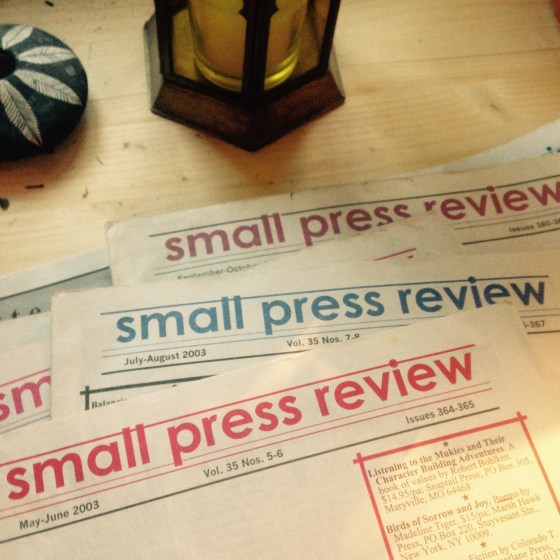
At the time, I was writing book reviews, essays, interviews and such. Mostly for local publications. But a few journals and magazines on the West Coast published some of my work. I reached out to Len Fulton of Small Press Review and asked if I could submit the poem review. He graciously agreed.

I wrote a review of Charles Simic’s poem “Old Soldier” in an esoteric manner that could not easily be passed off as a high school literature paper. I sent off the review for publication. And waited. Months went by. Issue after issue of Small Press Review arrived in the mail box. Impatient, I posted an abridged, clumsy version of the review on my blog. A month later I submitted it to editor, publisher, and friend Pasckie Pascua who published it in the September 2005 edition of The Indie. When the November-December 2005 issue of Small Press Review arrived I was surprised to see my review had — in fact — been published.

The review of Simic’s poem “Old Soldier” remains one of the most read posts on this blog. It is embarrassing to me for a couple reasons. One, the lack of virtue in my life. The selfish rush to be published. Patience is a virtue I am still learning to practice. Another reason for the embarrassment is that the online, perennial version of the review is a shadow of the original. The writing that appeared in the Small Press Review has never been released online. And maybe that is best for now.

The review of the poem is the final chapter of a book manuscript I finished. As of this writing it remains unpublished. But maybe one day it will greet an audience of its own. And maybe wander online as well.

Language is communal

If “language is communal” with the primary obligation of telling the truth, than poetry — the highest form of literature — is essential for addressing the fragmentation of communities and people.
Thirteen years ago, my wife and I hosted friends at our cottage on the outskirts of Asheville. A simple meal of salad, chicken and pasta, and red wine provided the vehicle for conversation and stories.

The husband told a story about being pulled over by local police near Old Fort. The officer asked for the husband’s driver’s license and registration. The requested items were provided through a narrow slit of a rolled down window.

“I still have to roll the window down,” he smiled. This attested to his mountain frugality and blue collar virtue.

The officer returned the license and registration and asked if he knew why he had been pulled over and if he had firearms.

“No. And yes,” he replied. The officer asked where the firearms were located. He told the officer that the guns and ammo were stored separately in the trunk. He was then asked to get out of the vehicle and show the officer the guns. Which he did.

The trunk was opened to reveal a chainsaw, climbing equipment, tools and containers for guns and ammo. The officer admired the make and model of one pistol. Asked what he did for a living. And requested to handle the pistol. The husband complied. The officer inspected the pistol. To the husband’s surprise, the officer commented that he would tell his wife about this. She might buy it for him as a birthday gift.

“Well,” said the officer. “Have a safe drive home. And repair that busted tail light within the month.”

I admired the husband’s story. His stories were like climbing a mountain road that rose and fell and wove between cove and valley and eventually arrived were it intended.

That night, as the dishes were cleared from the dining table and a second glass of wine poured, his wife shared that she and her mother planned to attend my reading at Malaprop’s Bookstore and Café on Thursday night. She confessed that she was looking forward to the scheduled night of poetry and music. But she wanted to know why I chose to read and write poetry.

“Why not stories?” she asked.

That question haunted me.

Poetry’s form and function is different from prose. It is more ancient. Where a novel’s exposition provides a landscape of hundreds of pages to expand the narrative plot of character, conflict, and theme, a poem compresses an idea, thought or theme into a few lyrical lines. This is an overly reductive and non-academic comparison of the two forms. But consider the etymology of the word “poetry.”

The English word for poetry comes from an ancient Greek word meaning “to make” or “to craft.” The German word for poetry comes from a Latin word meaning “to dictate.” The Romans often borrowed Greek ideas and themes and aped or improved them. Between the two etymologies I gather the impression that poets are conduits for The Muses — the source of inspiration and creativity. Poets dictate the message of The Muses. Poets craft the message of truth. The ancient Greeks invoked The Muses at the beginning of poems, hymns and epics.

At the time of the diner with friends, I held a casual understanding that poetry in the German language encompasses a compression or density of thought and theme. And that poetry in English embraces beauty and harmony–or graceful elegance. Then, as much as I could afford, I studied Persian, Chinese, Japanese and Korean poetry. And I learned there is much I did not know about continent of poetry.

“Why not stories?” she asked. Stories are important. Poetry is essential. Community is vital. Words must nurture a fractured community in order to bring it together and make it stronger. That August Asheville evening, more than a decade ago, was one of the last nights our two families enjoyed supper and stories together.

People leave. Find a better job. A greener pasture. Or at least a different job with a different view. Change is the only constant. The transience of American culture enables people to move every few years. Words, idioms and phrases fall in and out of fashion. How then are we to nurture a strong community? Maybe it requires each of us to dwell deeply and stand by language. Stand by words.

Typewriter poetry and blogging — updated

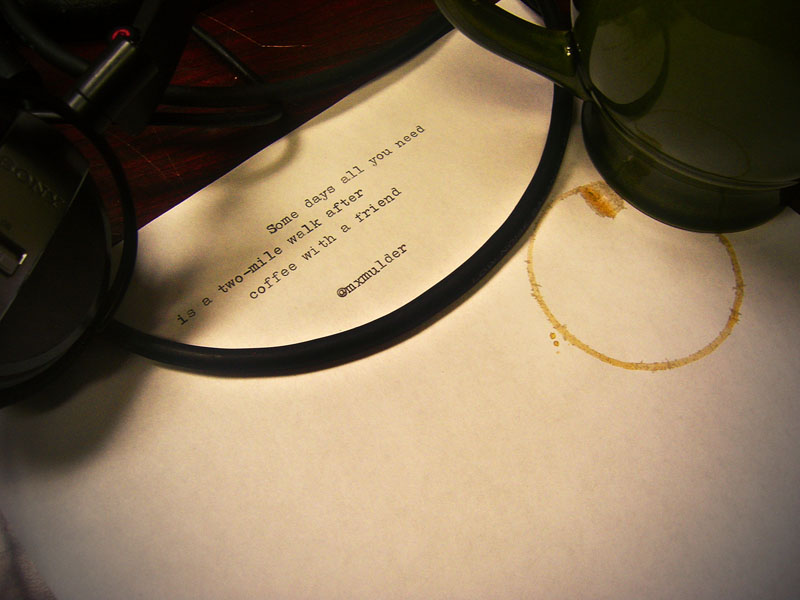
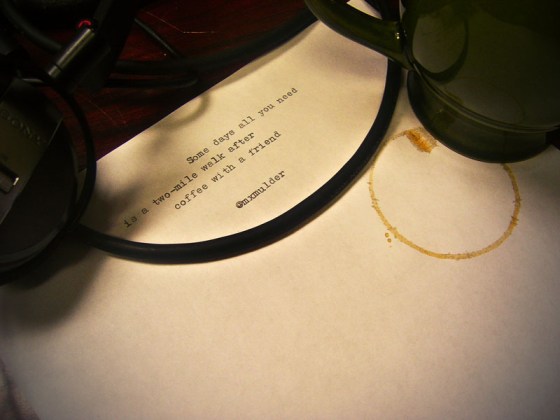
Some days all you need
A poem for a friend composed on a manual typewriter

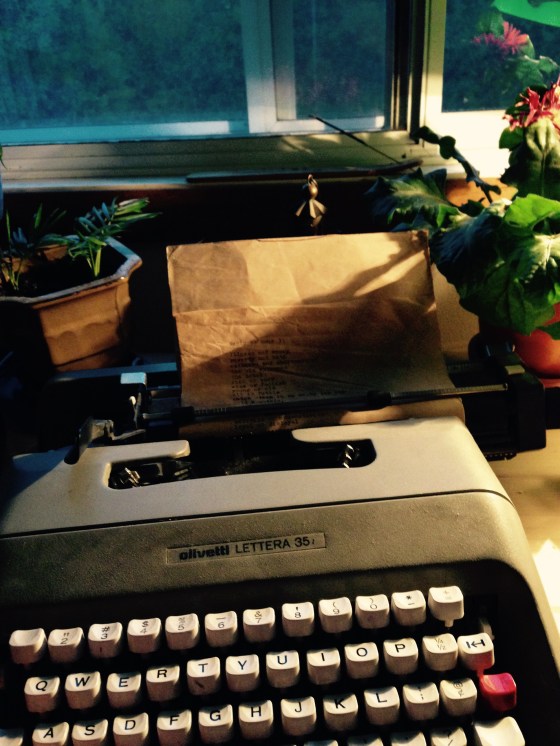
At least eight years ago, an old beat up manual typewriter provided a platform to compose poetry and other writings.1 It was an effort to return to an intentional practice of crafting poetry and prose without distraction of disruptive media.

For years and years, a notebook, journal or sketchbook was never far from reach. But one night after a long night of poetry and music at Beanstreets followed by an even longer time of coffee and conversation at Old Europe, a friend convinced me to try blogging.

Photo courtesy of @mxmulder
Sample journal page of poetry

The immediate response to blogging was infections.2 Connecting with people all over the country, sharing writing samples or books read and being part of an active digital community was exciting. And the feedback on written work was quick — sometimes within a couple days or hours. The practice of writing allowed me to hone the craft of creative writing and exposed me to other writers across the country. One of those bloggers actually showed up at a poetry gig I did. She was on a cross-country trip to visit friends and wanted to visit in real life.

Over time, I noticed that my practice of writing notes, daily sketches and other activities had all but disappeared. Relying on keyboards, display screens, hard drives and servers presented became a crutch. My writing drafts and sketches appeared deceptively crisp and final in neatly formatted text documents and web blog interface windows.

So, I pulled the plug. Returned to handwriting and typing as practice.3 Some friends and fellow poets saw a few samples of typewritten work and suggested I post it on my blog. It was a novelty. A curiosity. So, I did.

One of the first photographs of a poem I composed on a typewriter was written for a friend. It was posted about this time of year — in 2011.4 A few days later I followed up with another poem5 that was later read at poetry event where I and other poets were dubbed “the next generation” of Asheville poets.6

I do not claim to be the first person to post an image of a poem typed on a manual typewriter. But I noticed a trend in that direction about a year after posting those images of typed poem sketches.7 Not sure exactly if I started the trend. Probably not. Maybe other like-minded individuals who sought to return an organic practice of handwriting and typing as a mode of composing their visions and ideas.

After relocating to the southern boarder of the Great White North,8 I continued using the manual typewriter as a mode of composing new work — both poetry and prose. Some of this was due to the original intent of the practice — crafting content without distraction of disruptive media. Some of the use of the manual typewriter was due to a period of time that I was without a functional laptop and no internet access. A local writers group saw a lot of typed first drafts from that manual typewriter. One of those typed drafts was later published as a short story.9

Most recent first drafts have all been handwritten if not typed on one — of now two — of the manual typewriters. Blogging. Well, that has atrophied. Maybe I’ll post some photos of typewritten drafts this year as a way to keep the blog active. But, to celebrate an eight year anniversary of analog writing — I’ll keep most of it offline and on paper.10

Keep your stick on the ice and remember to use the lowercase L key when typing the numeral one.

NOTES:
[1] In truth, I composed poems on an electric typewriter prior to that. Did it for decades. Did not own a personal computer until… well, that is another story.
[2] That was when there were a mere couple million web blogs in the world. Now, there are some platforms, like Tumblr, boasting 100 million blogs. The blogosphere has become quite congested.
[3] Examples of some the 30 poems in 30 days journal posts with photos: here, here and here.
[4] April 1, 2011, blog post.
[5] Poem: “Never Look A Doughnut Dealer in the Eyes”
[6] “Rhyme and reason” by Alli Marshall, Mountain Xpress, April 6, 2011. Accessed April 2, 2018. “https://mountainx.com/arts/art-news/040611rhyme-and-reason/”
[7] Examples include Typewriter Poetry (though it seems the web site has not been active since March 19, 2015), Remington Typewriter Poetry (this site too has become inactive with the last entry posted June 2016), and the most popular is Tyler Knott (though his web page has an archive going back to 2003 (which is odd because he uses Tumblr as a platform and Tumblr was launched in early 2007… maybe he migrated his content from some other source to Tumblr… but I digress) the posted images do not begin until 2012 (unless I am mistaken).
[8] A reference to Bob and Doug McKenzie, fictional brothers who hosted the show Great White North (a reference to Canada, aye). For sample episode view Youtube video: https://www.youtube.com/watch?v=0pPRaD6TKLc
[9] Left of the Lake published “Mortal Coil” in 2015. https://coffeehousejunkie.net/2015/08/31/publication-of-mortal-coil/
[10] Original post published on April 21, 2015 https://coffeehousejunkie.net/2015/04/21/typewriter-poetry-and-blogging/

National Poetry Month, weekend edition, part three

National Poetry Month is nearly at an end. One poet, Ann E. Michael, mentioned that she participated in this year’s National Poetry Month “by reading more than by writing.”[1] I agree with that sentiment.

One book I have been reading is a bilingual collection of poems by Anna Akhmatova. The modernist approach Akhmatova displayed in a Russian poem about an English play — Hamlet — amuses me. The line that gets me every time I read it is: “It was the sort of thing that princes always say.”

For people who do not know that they may actually like poetry, I like how Dick Allen put it in this blog post:
“Think of books of poetry the way you think of music CDs. A CD may have 12-15 songs on it. A small book of poetry may have 30-50 poems in it. Just as good songs will be played over, so good poems will be read over and over.”[2]

Following the thread of these two poets, I have read and reread some poetry books. A few favorite poems are on my repeat playlist. This poem by Akhmatova. Another poem by Han Shan. A couple poems by Li-young Lee from his book The City in Which I love You. A poem by Tu Fu.

In Sam Hamill’s notes regarding his translation of a Tu Fu poem he wrote about the mingled joy and deep resignation expressed in the work. “What is implied in the original, . . . is the notion that somehow, . . . he will not waste away sitting before the wine jug. . . . [Tu Fu] asks the question every poet asks under such circumstances: Why do we do it?”

Indeed. Why do we do it? My reply is to continue the Great Conversation.

NOTES:


Poem Sixteen: Honey Bee

Poem: The honey bee

NOTE: Originally published April 19, 2011, https://coffeehousejunkie.net/2011/04/19/poem-the-honey-bee/

Poem Fifteen: Late Night Writing

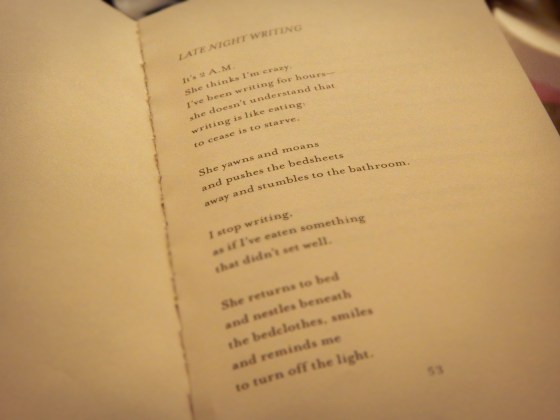
Title poem by Matthew Mulder from the book Late Night Writing.

Poem Fourteen: Sunrises I and III

DSCN5427[bsc-lomo-dusk]

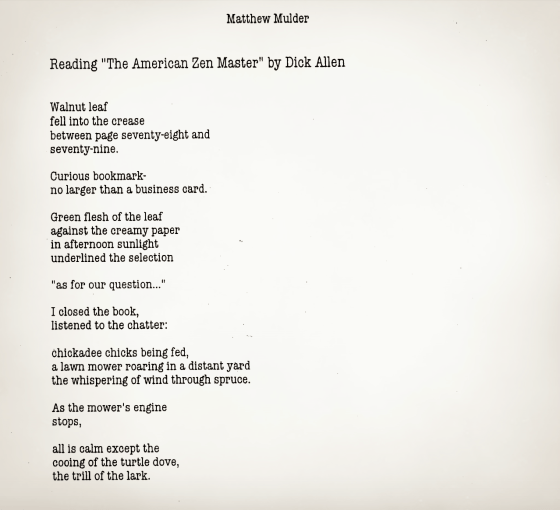
Poem Thirteen: Reading “The American Zen Master” by Dick Allen

Reading The American Zen Master

Poetry reading list for National Poetry Month, part four

Beanstreet coffeehouse, July 2005

Our paths first met at open mic night at Beanstreet café during a time of national crisis and local transition. The aftermath of 9/11 brought a lot of poets and singer songwriters to open mics for reasons of catharsis and later to protest.

But Barbie Angell[1] brought something different to the Beanstreet musicians and poets. Part Dorothy Parker, part Shel Silverstein, Barbie Angell became a regular favorite of scene and a poetic force.

We first met around the time my book Late Night Writing[2] was published. I was working hard on new material and trying it out on the open mic crowd. We exchanged a few conversations and notes at that time and then we lost track of each other for a couple years.

Beanstreet dramatically closed. The poetry scene was adrift for awhile. Eventually the Courtyard Gallery off Walnut Street filled the space. And that is where Barbie and I reconnected. From those late nights at the Courtyard Gallery open mics until my departure from Asheville, we spent a lot of time sharing poetry, discussing literary world domination, challenging and encouraging each other about all things regarding a poets life.

Roasting Questions,[3] her collection of poems and illustrations, was released a few years ago. We talked much about that publication and the supporting book tour.

Though our poetic styles were different we still sought to encourage one another toward success.

There was one night I remember in particular. Two different events were going on in Asheville and she was to read poetry at one while I read at another. She picked me up at my house, drove downtown, and after the separate events we met up at Sazerac for refreshments. We talked about the night’s events, avoided how jealous we were of the others’ success and then she drove me back home. That is what friends do.

That is a glimpse into the story behind this short poem. With friends like Barbie, you have the strength to walk further, to try harder, and to be better.[4]

NOTES:

[1Read all about Barbie Angell: http://www.barbieangell.com/about-barbie-angell/
[2Late Night Writing is still available in print. Contact me for details. Or you can purchase an e-book version here: https://www.amazon.com/Late-Night-Writing-Matthew-Mulder/dp/1932852204
[3Find out more about Barbie’s book, Roasting Questions: http://www.barbieangell.com/roasting-questions/
[4Originally published May 4, 2017 https://coffeehousejunkie.net/2017/05/04/poetry-reading-list-for-national-poetry-month-part-three/

Poem Twelve: Foggy Sunday morning

Poem: Foggy Sunday Morning

NOTE: Originally published April 11, 2011, https://coffeehousejunkie.net/2011/04/11/poem-foggy-sunday-morning/

Poem Eleven: Narrative kernel

DSCN5426[sqr-bsc-lomo-dusk]

Poem Ten: Values

DSCN5431[sqr-bsc-lomo-dusk]

Poem Nine: Always Departing

An excerpt of
An excerpt of “Always Departing” by Matthew Mulder from the anthology Rooftop Poets.

Poetry reading list for National Poetry Month, part three

Historic Battery Park Apartments, Asheville, North Carolina

Some of you know this, others may not, but there is a lot of labor involved if you put your hand to the practice and turn of poetry. There was a lot of hard work and late nights at cafés, open mics and taverns and copious amounts of coffee and hours of mic time that provided me the opportunity to read poems at an art gallery — the Flood Gallery Fine Art Center.

Flood Gallery Fine Art Center, February 2007

The Flood Gallery Fine Art Center[1] organized a poetry reading series that featured local poets. That evening marked a milestone — in my mind. Before that night at the Flood Gallery, the poets — Britt Kaufmann, Brian Sneeden, Barbara Gravelle and myself — were barely familiar with each other. But something alchemical happened during the reading.

Britt Kaufmann’s Belonging was published sometime after that reading.[2] I remember Britt emailing me drafts of the poems prior to publication as well as discussing the nuances of navigating publishing challenges. Barbara Gravelle has published several books of poetry.[3] Her collection of Greek island poems came together before my eyes. One afternoon we looked at illustrations and poems side by side to consider the flow of art and poetry. Brian Sneeden has several forthcoming books of translations and poetry.[4] The first time I heard him read his work was at Malaprop’s Bookstore/Cafe for a Traveling Bonfires event.

Barbara, Brian and myself went on to form a poetic collective called the Rooftop Poets. We collaborated on an invitation-only event of music and poetry at the private ballroom of the Historic Battery Park Apartments. Attendees were given a commemorative, limited edition anthology of our poems. There were a few more public gatherings of the Rooftop Poets, but for me the treasure was sharing our compositions privately. Discussing everything from modern Greek poetry to religion to archeology to feminism to poetry to local gossip as well other aspects of life. I greatly miss that face-to-face time with these friends.

Shortly before my departure from Asheville,[5] I sat in a side room of a wine bar on a Sunday afternoon. The room was filled with aspiring and novice poets. We went around the room reading poems. At the conclusion of the readings I overheard a few people commenting about the Rooftop Poets. They discussed — even mythologized — who the Rooftop Poets were, what they did, how many people attended a private reading, what happened at that reading and so on and so forth. The eavesdropping made me smiled. I did not correct factual errors. I walked to the main bar. Someone bought me a beer. We talked about employment and jazz and all things Asheville. And I left.

These poets and friends made in impact in my life — as well as the local and regional community.[6]

NOTES:

[1Flood Gallery Fine Art Center poetry reading. http://www.floodgallery.org/poetryinthepresence.html
[2Read more about Britt Kaufmann and her work as a poet and playwright. http://www.brittkaufmann.com/poetry
[3Some of Barbara’s books are out of print, but worth the read if you can find them. Here’s a link to one of her published poems: http://www.salomemagazine.com/search.php?search=1
[5The reason for leaving my adopted hometown of Asheville, North Carolina is captured in this article, “Why I Left Asheville,” published in The Asheville Blade: http://ashevilleblade.com/?p=306
[6Originally published May 1, 2017 https://coffeehousejunkie.net/2017/05/01/poetry-reading-list-for-national-poetry-month-part-two/


National Poetry Month, weekend edition, part two

Poetry continues the Great Conversation. What is truth? How do we know it? Who are we and how should we live? Often reserved for philosophers, these surface questions are the result of the friction from winds of poetry.

What came first? Philosophy? Or Poetry? Since Theogony pre-dates many philosophical writings, I submit that poetry came first. Poetry is the wind that troubles the water.

But I am no scholar. Only a modern-day peasant who watched as twelve- to eighteen-foot waves battered the rocky Lake Michigan shoreline this weekend.

On a gray, stormy afternoon, I retreated to the public library in Racine. A book of translations of Han Shan needed to be renewed for the fourth or fifth time. And the children needed to get out of the apartment. Besides, the more you check out books of poetry the more funding the library gets based on your activity and/or interest in certain subjects. Or so I am led to believe by local librarians.

I was introduced to the Cold Mountain poems during one of the library’s writers groups. Since then I have read and studied several books of translations from Wang Wei, Ryokan, Han Shan, Basho and others.

During the last few years, I find my writings turning toward dialogues with these poets. Here is a sample Cold Mountain poem from Han Shan, a Taoist/Buddhist hermit, as translated by Red Pine:

Since I came to Cold Mountain
how many thousand years have passed
accepting my fate I fled to the woods
to dwell and gaze in freedom
no one visits the cliffs
forever hidden by clouds
soft grass serves as a mattress
my quilt is the dark blue sky
a boulder makes a fine pillow
Heaven and Earth can crumble and change

A quick read reveals a surface feast of images and imagination. After reading and thinking about this poem for a few months there are things inferred and/or referenced. Is the An Lu-shan Rebellion referred to in the third line? Is there a reference to the bodhisattva Avalokiteshvara? Heaven means the emperor. Earth means the empire. Is the last line political? Or philosophical?

While Han Shan wrote this poem on rocks or trees, elsewhere in the world Beowulf was composed. Charles Martel expanded the Frankish Empire. What do I say to Han Shan? Why did you flee? What and/or who did you leave behind?

Earlier this year I shared poems with a high school group on invitation of the tutor. Han Shan was one of the poets I recited (among other poets like Ghalib and Akhmatova). After the class, one of the tutors thanked me for visiting the class. She was grateful that the young men in the class saw a man engaged and enthusiastic about poetry and literature. The tutor asked how I became interested in poetry. My answer was that poetry is part of the Great Conversation.

Poem Eight: There’s a place

Poem: Theres A Place

NOTE: Originally published April 12, 2011, https://coffeehousejunkie.net/2011/04/12/poem-theres-a-place/