What will graphic design look like in twenty years?

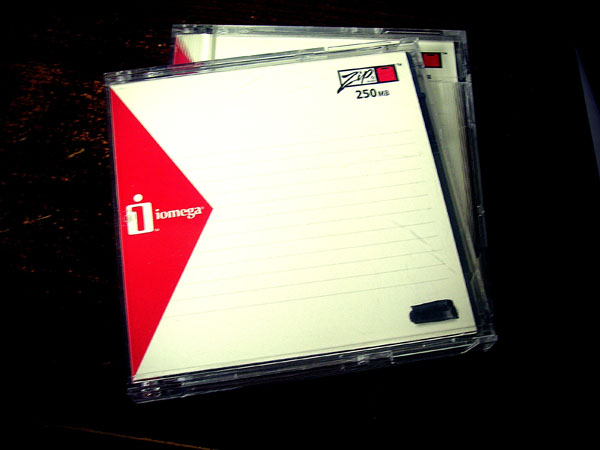
Ah, ye ole Zip disk[1][2] circa 1990s. Once the preferred removable storage device for young graphic designers — now, well, . . . these days you will have to scavenge Amazon[3] or eBay to locate a Zip disk. Then you will need to find a Zip drive that will connect with a USB port in order to salvage any data.

Somewhere between the days of floppy disks, magnetic tape and CD storage,[4] the Zip disk was a practical way to transfer files from art department to pre-press department.

There were deadline nights in the art department — back when Friends and Party of Five were on network television. I would scramble with the rest of the design team to print out press proofs for a project. Then we folded all the proofs and color separations into a FedEx Envelope or Box. Next was to save all related files onto a Zip disk —the QuarkXpress document file, native Illustrator and Photoshop files, and fonts — and pack that into the FedEx package. One of the design team was tasked with driving the package to the FedEx dropbox by 7 p.m. pick up.

When I shared this story with an intern several months ago she displayed a perplexed facial expression. I took for granted the evolution of systems and technology experienced during my career in graphic design. It is something she may never fully appreciate. She will experience an entirely different progress of technological applications as she begins her career in advertising and marketing.

I told her that on those press nights a few of us at the office would use it as an opportunity to grab supper together at a favorite Mexican restaurant. Or maybe catch a movie. Some nights we would go play bowling as a team or hang out at the Village Cafe downtown. We were a twenty-something tribe of professionals working in an industry that was rapidly changing.

Kind of a reward for putting in long hours, she commented.

Yeah, I replied.

I wanted to continue sharing details of those days during the digital revolution in design, but stopped. She will have her own stories to share about those days when everyone used flash drives to transfer data. And how easier it was to upload PDF files from a laptop or mobile device to the cloud.

I cannot help but wonder what will graphic design look like in twenty years?


NOTES:


[1]Image originally posted: May 18, 2011. https://coffeehousejunkie.net/2011/05/18/anyone-remember-using-these-old-zip-disks-better/
[2]Christopher Phin, Think Retro: Who else kinda misses their Zip disks?, Macworld, January 27, 2015, accessed April 11, 2017 http://www.macworld.com/article/2875893/think-retro-who-else-kinda-misses-zip-disks.html.

[3]Amazon sells discontinued Iomega Zip disks (accessed April 11, 2017): https://www.amazon.com/Iomega-Formatted-reformattable-Discontinued-Manufacturer/dp/B00004Z83E

[4]History of Data Storage Technology, Macworld, May 5, 2016, accessed April 11, 2017 http://www.zetta.net/about/blog/history-data-storage-technology

A sneak peek at the office

DSCN3405[...]

The challenge with working outdoors is no internet connectivity and barely a mobile device signal. It makes checking emails and updating social media status and blog posts nearly impossible. But, really, the technological detox is quite rewarding.

The contract job orders are nearly complete. Word of mouth has lined up another job in the… well… I cannot really disclose the location at this point. But I will say that the red and white oak trees provide wonderful shade and an orchestra of bird song. Or is a symphony of bird song?

Is free is expensive & how much would you pay for a good story?

Ever feel like you are asked to do the work of three people? Ever feel that most of your day is spent reading emails and sitting in meaningless meetings?

I am not sure I have answers for these questions, but it got me thinking about a couple articles I have read. One explores the shrinking size of the original content creators — i.e. newsrooms. The other touches on the devaluation of work hours.

  1. How Technology Can Help Work/Life Balance: http://online.wsj.com/articles/how-technology-can-help-work-life-balance-1414382688
  2. Why Free is Very Expensive: http://www.forbes.com/2011/06/10/forbes-india-why-free-is-very-expensive.html

Years ago, I worked for a news organization. After a meeting, the publisher told me that opinions are cheap to publish because it does not require the writer to do anything but write. But a good story is hard work and costs the company a lot of money to put boots on the ground, staff to interview and research a subject, photograph and edit lead stories. The quality of the content that goes into a lead story suffers when an organization is understaffed. Further, the consumers of the content receive sub-quality work. Is the fault with the consumer that wants free online content? Or the content creator that is unable to provide high-quality work on a limited budget that consumers will actually purchase?

How much would you pay for a good story?

Quote: Most people believe that technology is a staunch friend

“. . . most people believe that technology is a staunch friend. There are two reasons for this. First, technology is a friend. It makes life easier, cleaner, and longer. Can anyone ask more of a friend? Second, because of its lengthy, intimate, and inevitable relationship with culture, technology does not invite a close examination of its own consequences. It is the kind of friend that asks for trust and obedience, which most people are inclined to give because its gifts are truly bountiful. But, of course, there is a dark side to this friend. Its gifts are not without a heavy cost.”

–Neil Postman

Quote: “Technology is…”

“Whether or not it draws on new scientific research, technology is a branch of moral philosophy, not of science.”

–Paul Goodman, “Can Technology Be Humane?” The New York Review of Books, November 20, 1969

Quote: “The air itself is one vast library…”

What a strange chaos is this wide atmosphere we breathe! … The air itself is one vast library, on whose pages are for ever written all that man has ever said or woman whispered. There, in their mutable but unerring characters, mixed with the earliest, as well as the latest sighs of mortality, stand for ever recorded, vows unredeemed, promises unfulfilled, perpetuating in the united movements of each particle, the testimony of man’s changeful will.

—Charles Babbage

A library of Babel concealed in the very air we breathe. (via alphacaeli)

[Podcast] When the lights go out

06 June 2014 Podcast Cover

Listen now:


A light breeze from the south carries echoes of a recent place in memory. In this episode, stories about creative space, laptop versus hand-writing and more.

It is warm enough to finally open the windows and let the Spring air fill the house. The first segment touches on that in a story titled “Creative Space.” Recently, the village where I currently live experienced the first tornado of the year. Everyone is fine. Thankfully, the only dangerous weather was thunder, hail, and rain. But it got me thinking of our culture’s dependency on electricity and technology. “When the lights go out” is the second segment. The third segment answers listeners’s question in “An audience of one.” The final segment for this episode is titled “Life is lived as a messy first draft.”

This episode’s unofficial sponsor is The Steaming Cup located in the beautiful downtown area of Waukesha, Wisconsin. For more details, visit TheSteamingCup.com.

Very special thanks to Lee Tyler Post for permission to use his song “Life Without Fences” in between segments. I first heard his music on The Great America Music Hour hosted by Jerry Jodice. Learn how to get any or all of Lee Tyler’s six studio albums on his website LeeTylerPost.com.

Listen on:
PodOmatic: coffeehousejunkie.podomatic.com
SoundCloud: soundcloud.com/coffeehousejunkie

Or subscribe on:
RSS Feed: RSS Feed
iTunes: iTunes


Plan on- and offline activities

DSCN1707tiltshiftTheArtistLomoHow do you manage your online and offline activities? Okay, I am assuming you do manage your online and offline activities. For many people, time management is something that is not practiced–especially as it relates to blogging and social media. If you have an idea or thought, you post it on Twitter, Tumblr, Facebook or blog it.

True confession: I was one of those who did not manage online and offline activities. When I finally purchased a smartphone, I immediately downloaded all the latest and greatest social media mobile apps to stay connected. Or, at least, that was the reasoning. It was difficult for me to understand why some of my friends (online and in-real-life) were not more engaged in social media. For the most part, I disregarded them off as neo-luddites. Yes, I was a social media snob.

That all changed when I joined the ranks of the mega-commuters.[1] With long commutes to the office, there is limited time to engage in blogging and social media with out planning. Or at least, not a safe way to do it while driving through city traffic and mountains roads. Additionally, with the weight of leadership decisions and somewhere between 50 to 75 tasks per week, I rarely check my personal email or check social networks until the weekend.

So, for the last year or so my blogging and social media posts and updates have been automated. More accurately, most blog posts are scheduled using a WordPress feature and social media posts and updates scheduled using Hootsuite.

Saturday mornings or Sunday nights tend to be the time when I write online posts/updates. However, that doesn’t seem the best time to engage people. A couple articles I read [2] [3] suggest when the best time to post content on blogs and social media. So, I preschedule the posts, tweets, and other social media updates on the weekend. Sometimes I preschedule posts and updates as much as 14 days to a month in advance.

The downside of automating posts and updates as the lack of engagement. Sure, the content gets out there on a regular basis, but there’s little or no conversation taking place. This also means I miss a lot of the activity and conversation that is taking place on blogs and social networks. Some Saturday mornings I will spend a whole hour replying to comments on social media sites from the previous week. The point of social media is sharing and interaction.

In a manner of speaking and due to my present circumstances, I’ve sort of become one of those neo-luddites I used to snarkily snicker at. It’s humbling to realize how much of an idiot I had been regarding social media snobbery. Not everyone has the luxury of being accessible to social media. And, quite honestly, terra will continue her daily rotation speed of 1070 miles per hour regardless of my social media activity (or lack thereof).

NOTES:
[1] Matt Stiles, “Interactive: Compare Your Commute To The Nation’s Longest,” NPR’s The Two-Way, March 5, 2013 accessed April 23, 2013 http://www.npr.org/blogs/thetwo-way/2013/03/05/173515882/interactive-compare-your-commute-to-nations-longest
[2] Daniel Zeevi, “STUDY: When is the Best Time to Publish a Blog Post?,” Dashburst.com, February 4, 2013 accessed April 23, 2013 http://dashburst.com/report/best-time-to-blog/
[3] Samantha Murphy, “The Best and Worst Times to Share on Facebook, Twitter,” Mashable.com, May 9, 2012 accessed April 23, 2013 http://mashable.com/2012/05/09/best-time-to-post-on-facebook/

Where did April go?

April - It's been a blue

Where did April go? It’s a blur to me. In truth, most of this year has been a blur. If you journal or keep a diary, you understand the benefit of review. If you blog you know that you should be able to write a blog post in 70 minutes or less[1] and should have five main components including:

  • Lead Paragraph.
  • Relevant Image.
  • Personal Experience.
  • Main Body.
  • Discussion Question.[2]

Make sure you publish your post between 8 AM and 11 AM on a Monday morning[3] and include bullet points. A blog post without images and bullet points is highly ineffective. Yes, I’m a bit sarcastic. But don’t you feel that blog posts seem dehumanized by formulas for effectiveness and templates for success?

I look at my journal pages and see business cards and receipts stuffed between pages. On one page there’s a list of numbers (after deciphering them, I realized they are the CMYK break down of a turquoise color for a book project). Another page has an appointment date and time crossed out. My favorite is an unfinished note at the bottom of one page that simply ends mid-sentence. No conclusion. Random, incomplete entry. Even productivity guru and author of Getting Things Done David Allen tweeted a few months ago:

“Life is messy; that’s why it’s so dynamic.”[4]

May is almost here. Glancing in the rearview mirror of analog and digital review helps me set goals for the horizon seen through the windshield. If this were a highly effective blog post, I would include a discussion question like: “How does journaling help you create dynamic goals for the next 30 to 90 days?” But this is not a successful blog post even though it has bullet points and an image.

NOTES:
[1] Michael Hyatt, “How to Write a Blog Post in 70 Minutes or Less,” michaelhyatt.com, September 15, 2011 accessed April 29, 2013 http://michaelhyatt.com/how-to-write-a-blog-post-in-70-minutes-or-less.html
[2] Michael Hyatt, “Anatomy of an Effective Blog Post,” michaelhyatt.com, January 31, 2011 accessed April 29, 2013 http://michaelhyatt.com/anatomy-of-an-effective-blog-post.html
[3] Daniel Zeevi, “STUDY: When is the Best Time to Publish a Blog Post?,” Dashburst.com, February 4, 2013 accessed April 23, 2013 http://dashburst.com/report/best-time-to-blog/
[4] David Allen, Twitter post, September 27, 2012, 3:11 AM accessed April 29, 2013 https://twitter.com/gtdguy/status/251111806951649280

Why share your work in social networks?

One of the book cover designs I promote on the social network Behance.

“Why share our work in social networks?” was a question recently asked on a professional forum. My reply: two reasons: 1) promotion and 2) personal brand. It was a Malcolm-Gladwell-Blink response and I clicked the “add comment” button without much thought (which is not my usual practice). My thoughts still linger on that question, “Why…?”

A few months ago I came across a few articles asking the question “Does social media promote or enable narcissism?” [1] [2] The article that impacted me most was from a source I never read. In the post, the author, Dodai Stewart, reflects on piece in The New Yorker and her comments are stinging and self-revelatory.

Just look around: Between Twitter, Facebook, Tumblr, Instagram and Pinterest, the whole ME ME ME thing has swept the nation. Here are MY thoughts, MY pictures, MY shopping wish lists! We call it sharing, but it’s just egoistic self-indulgence, usually. LET ME TELL YOU WHAT I WANT. But wait: Enough about me… what do you think about me? [3]

Hm, narcissism and self-absorption. Herein rests the lingering thoughts of a week or so ago.

As a professional, promoting my goods, services and whatnot help to grease the gears of capitalism, right? Conventional wisdom (or at least American business wisdom), purports that if consumers are not aware of your product/service, customers will not purchase from ME. So, I am advised by business owners and other professionals to promote MY skills, services, products, etc. And not only that, I need to establish MY personal brand (so that consumers can be more emotionally and psychologically invested in the products/services I provide).

Maybe social networks are not promoting narcissism and self-absorption as much as one might think. There may be a greater systemic issue that only social networks magnify.

NOTE: [1] Tara Parker-Pope, “Does Facebook Turn People Into Narcissists?,” New York Times, May 17, 2012 accessed January 2, 2013 http://well.blogs.nytimes.com/2012/05/17/does-facebook-turn-people-into-narcissists/ [2] Steve Tobak, “Social networks and the narcissism epidemic,” CBSNEWS Money Watch, August 29, 2012, accessed January 2, 2013 http://www.cbsnews.com/8301-505125_162-57502035/social-networks-and-the-narcissism-epidemic/ [3] Dodai Stewart, “Self-Absorbed Is the New Normal,” Jezebel, June 26, 2012, accessed January 2, 2013 http://jezebel.com/5921468/self+absorbed-is-the-new-normal.

Letter writing, a vanishing art

A book is more than a collection of letters and pages.

The week before Fathers Day I completed a book design project that is a “legacy of letters from a decorated World War II hero…” Or so the back copy states.

Reading a manuscript like that, at times, seems voyeuristic. The compelling part of the book is the context of knowing that the author was three when his father passed away suddenly. He grew up hearing friends and family tell him “You sure look like your Daddy” or “I knew your Dad, he was one of the best.” The letters that the author collected for the book shares who is father was and what kind of man he was. But most importantly, for the author, it was the only way to hear the voice of a father he never knew.

At times, during the process of designing the cover and page layout, I glimpsed that boyish tenderness of the author (now in his sixties) as he ached for the presence his father. I cherished Fathers Day all the more as I thought of the author.

A couple of things come to mind as I wrap up this project and send it to press. First, the art of letter writing seems non-existent. The last letter I received was from my oldest child who placed it in my boot for me to find one morning. It was a simple note written in colored pencil. It is placed in my journal. I glance at it periodically.

Last time I received a hand-written letter was years ago. There are the seasonal holiday letters that begin filling my mail box every year between Thanksgiving and New Year’s Day. They usually arrive as letters printed out on decorative stationary purchased at Kinkos or Office Depot. But hand-written letters? Do people still do that in our culture?

Secondly, the legacy left behind of those letters written prior to, during and after a major historical event impresses me. What kind of legacy might we leave our children and grandchildren with a mountain of un-memorable text messages. What will our tweets and status updates mean a half century from now? Will Twitter be obsolete by then? Or Facebook? Can you imagine your grandchildren asking you, “What’s Twitter?” After you explain the whole social media birth of micro blogging they giggle and say, “Twitter is so 2012. I can’t believe how primitive that seems.”

Emails may convey some of the gravitas as a written (or typed) letter. However, as Luddite as this sounds, I still have hand-written letters from family and friends placed in an old shoe box. Letters and notes from a woman who became my wife are stored in a similar fashion. A typed note from my grandfather, when age had crippled his hand-writing, is placed in a book of his poems as a reminder and memento. As a child, my grandmother wrote a brief letter to me each birthday and placed a stick of gum in between the folds. I looked forward to that letter each year. You can’t attach a stick of gum to an email.

Besides, I doubt anyone in our culture would wait, anticipate and enjoy a letter that arrives annually. Everything is so urgent… almost panicked. Why isn’t someone responding to my emails, texts, tweets? It’s been 30 seconds! (Place emoticons here.) In my own life, I notice how differently I process social media and online content. There lacks a linear stretch of the intellect when processing clusters of data points from Twitter, Facebook, HuffPo, etc. My attention span fatigues when I have to wade through a barrage of emails, updates and tweets.

Yet I enjoy the long articles in the Atlantic Monthly, London Review of Books, The New York Review of Books or the like. It stimulates my mind. 700-word news articles for the most part bore me. There’s nothing there but a nut graph. No context. No history. No personality or narrative trajectory. Just a Google-like, or Wikipedia-like, democratized collection of information. There’s nothing there to engage my mind. Nothing that challenges my mind, beliefs or values. A book on the Battle of Agincourt offers nuances that blog posts, tweets and texts don’t offer.

Reading through a legacy of letters, like the book I am ready to send to press, captures the exchange of ideas in a sustained, generational conversation between a father and a son. The more our culture engages in the scatterbrained conflagration of data items, I suspect civil, engaging conversation (like letter writing) may become obsolete.
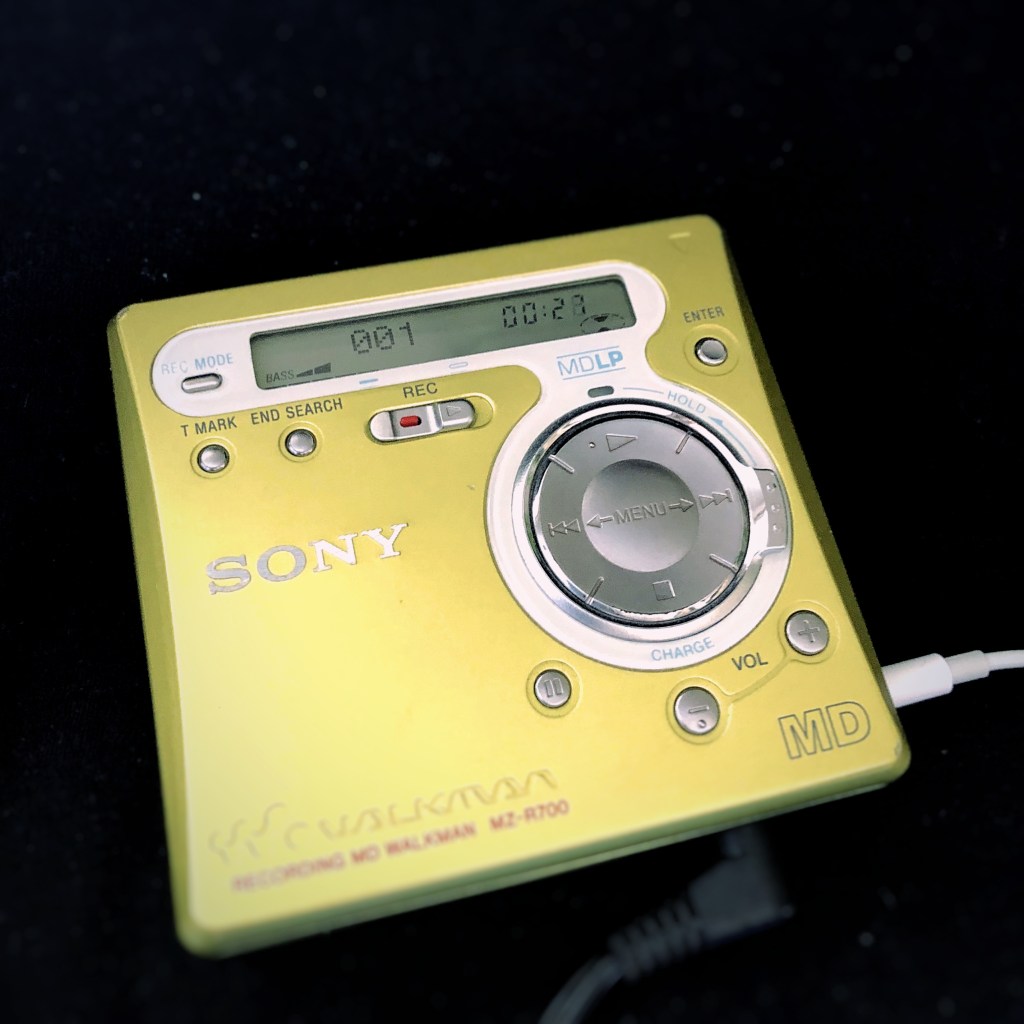
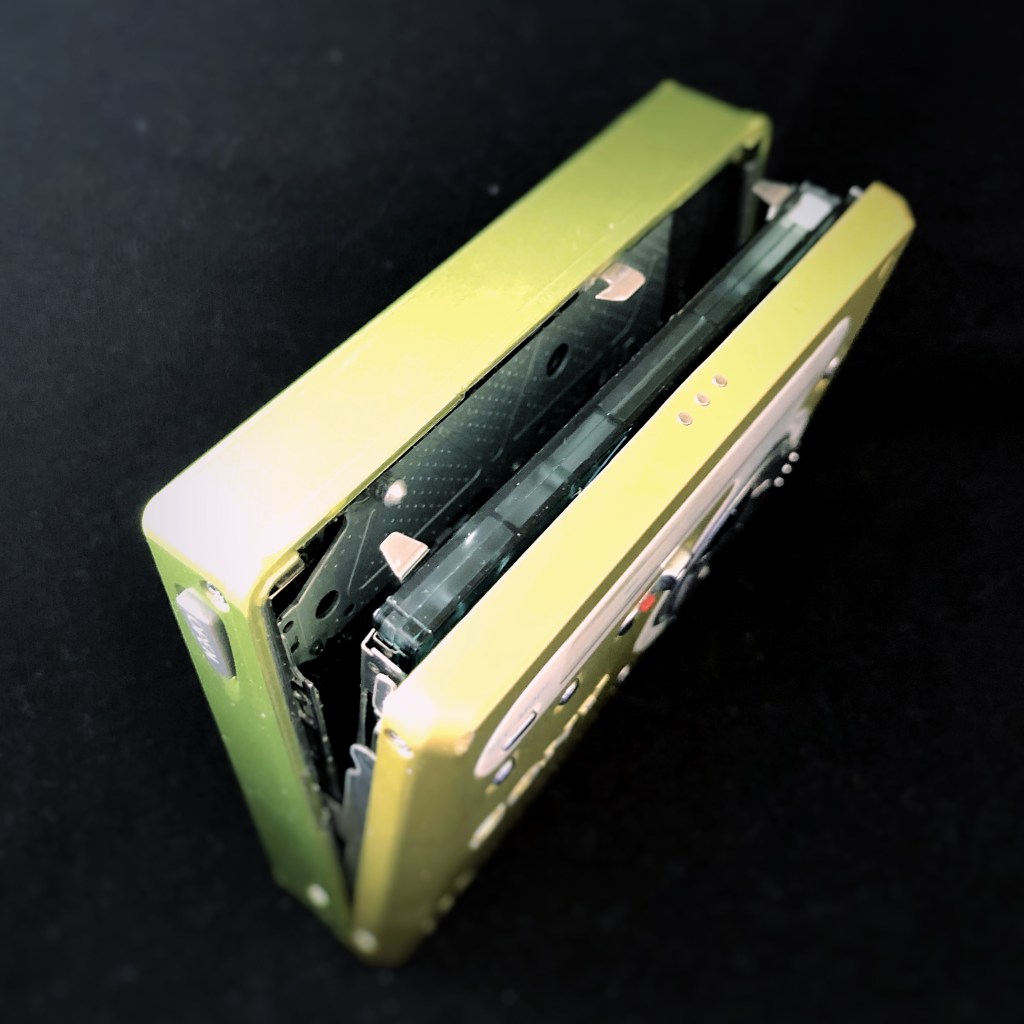
Technology cleanse means you unplug…

…for a short time with longer-term benefits for your relationships…

Interested in a tech cleanse?

Two reasons why I quit Tumblr

What is Tumblr? Besides being a highly addictive micro-blogging platform, [1] it was the place I did most of my blogging during the last few years. That is, until a few weeks ago. Two primary reasons why I deep-sixed my Tumblr accounts: simplistic functionality and superficiality.

Those familiar with Tumblr know the distraction of the endless expanse of images that populate the majority of these micro-blogs. Tumblr subscribes to the lowest common denominator of web log functionality to allow for users to post photos, videos, audio & text. The Tumblr interface allows users with absolutely no HTML experience and no blogging experience to post a menagerie of online content without having to really think about it. Add to the mindless uploading or reblogging of content is the liking system. If you “like” a blog post viewed somewhere in the Tumblr stream of people you are following, then you click the heart icon. The system is reciprocated by other users in a virtual validation and comparison of or by other Tumblr users. What makes this system clumsy and superficial is that there is no real communication between users. In a way, it’s like an individual person in a large airport terminal with all the televisions droning on and on. It’s an extremely lonely experience.

The “follow” feature, like Twitter, allows users to track your posts — and you may follow in return. Curious as I am, I often clicked on Tumblr profiles to find out who is following my Tumblr account. Like Twitter, a lot of my account’s followers were users seeking to promote something or looking for personal validation and/or competition by earning return follows (it is a common practice on Twitter to earn more followers in order to expand audience reach or to just boasting rights to having thousands of tweeple following your tweets). Some people prefer Tumblr because it easily integrates with social media sites [2] making it more of a network tool than a blogging platform. When Tumblr was first launched it was very simple to aggregate your Tumblr content to Facebook, Twitter, and other social media outlets. But now most blogging platforms allow that too. Most of the followers to my Tumblr account didn’t connect or even communicate with me. They just “like” something I post and then “follow” my Tumblr account. It’s an empty, hollow interaction if not essentially dehumanizing.

Another issue I had with Tumblr is that the platform really doesn’t work well for long-form blog entries. There are exceptions, [3] but on the whole, most Tumblr users are there for photos or videos or reblogging someone’s photos and videos. As someone who enjoys reading and stimulating conversation, I became very aware of how my thinking was changing as I consumed the endless Tumblr stream of images. One night I speculated that some users must spend all day on Tumblr. There is a schedule feature on Tumblr that allows users to place posts in a queue to be published later, but the time investment to post photos seems vapid. Occasionally, I’d come across an intelligent quote or text-post and “like” it or even “reblog” it. I discovered, to my embarrassment, that not all quotes I reblogged or liked were accurate and stopped the practice.

Increasingly, I was disturbed that the lack of exchange of ideas was altering the way I think as I succumbed to an avalanche of images falling from the blue Tumblr interface screen. One blogger noted that someone said Tumblr is an intellectual version of Twitter, [4] and further noted correctly that most Tumblr users post photos. How is that intellectual? I must confess, when I began to use Tumblr as a blogging platform I posted a lot of text pieces. It was an easy platform to post my writings, art work and photography. I liked the ease that it offered. But I got caught in the cycle of seeking validation of posting content simply to earn “likes” from “followers.” So, like an addict, I’d post more content — images that I didn’t create, but I liked (and sometimes “liked”) or inspired or informed me. But there was little if any engagement with other Tumblr users. Facebook and Twitter offered more discussion and conversation than Tumblr. It felt like a completely self-centered arena that offered nothing but consumption of content with no way to seek the best in others. I was not growing or learning from my Tumblr experience. I wasn’t meeting new people and exchanging ideas.

For me, quitting Tumblr comes down to this. An online community cannot grow and flourish if the lowest common denominator is a micro-blogging platform for web-illiterate users who reblog each others photos with silent alacrity.

NOTES: [1] Not that you need to be introduced to the crack cocaine of blogging — Smashing Magazine provides A Complete Guide To Tumblr [2] Read Compete’s report “Tumblr vs. WordPress vs. Blogger: Fight!” where it states that Tumblr functions more like a social network. . .” and “reduces barriers to publishing content .” [3] Longreads collects long-form online content from various publications [4] Olsen Jay Nelson

Quote: Patti Smith

Please, no matter how we advance technologically, please don’t abandon the book. There is nothing in our material world more beautiful than the book.

Patti Smith (via libraryland)

Mobile By The Numbers [INFOGRAPHIC]

Remember when you didn’t use your real name on the Internet?

Facebook is ubiquitous. In many ways it has replaced blogging. As an individual who has been blogging, well, since before the advent of Facebook, there were certain silent codes to blogging. Local bloggers like Edgy Mama, Ashvegas and Modern Peasant (who I recall may have been blogging before the advent of the internet), maintained a thirdtier level of intimacy with blog readers. In other words, there were third-tier personal details that were disclosed on blogs, but other more intimate personal details that may or may not be disclosed in real life at local blogger meet ups. It appears that Facebook disregards a third-tier relationship between content provider and content consumer. Here’s a couple of articles I’ve read recently about Facebook.

Some excerpts from Gizmodo: Top Ten Reasons You Should Quit Facebook

10. Facebook’s Terms Of Service are completely one-sided: Facebook’s Terms Of Service state that not only do they own your data (section 2.1), but if you don’t keep it up to date and accurate (section 4.6), they can terminate your account (section 14)….

9. Facebook’s CEO has a documented history of unethical behavior: According to BusinessInsider.com, [Zuckerberg] used Facebook user data to guess email passwords and read personal email in order to discredit his rivals. These allegations, albeit unproven and somewhat dated, nonetheless raise troubling questions about the ethics of the CEO of the world’s largest social network…

8. Facebook has flat out declared war on privacy: Founder and CEO of Facebook, in defense of Facebook’s privacy changes last January: “People have really gotten comfortable not only sharing more information and different kinds, but more openly and with more people. That social norm is just something that has evolved over time.” … Essentially, this means Facebook not only wants to know everything about you, and own that data, but to make it available to everybody.

3. Facebook makes it incredibly difficult to truly delete your account

And here’s an excerpt from Wired: Facebook’s Gone Rogue; It’s Time for an Open Alternative

So in December, with the help of newly hired Beltway privacy experts, it reneged on its privacy promises and made much of your profile information public by default. That includes the city that you live in, your name, your photo, the names of your friends and the causes you’ve signed onto.

This spring Facebook took that even further. All the items you list as things you like must become public and linked to public profile pages. If you don’t want them linked and made public, then you don’t get them — though Facebook nicely hangs onto them in its database in order to let advertisers target you.

This includes your music preferences, employment information, reading preferences, schools, etc. All the things that make up your profile. They all must be public — and linked to public pages for each of those bits of info — or you don’t get them at all.

[Read More: http://www.wired.com/epicenter/2010/05/facebook-rogue/#ixzz0nY6uIYRD]

  • How will you remember anybody’s birthday?
  • How will you hear about parties?
  • You don’t care about privacy anymore. Remember when you wouldn’t use your real name on the Internet?
  • 80 million of you are addicted to Zygna’s Facebook game, FarmVille.

The Internet has allowed access to volumes of data. Yet, some personal details should be maintained behind firewalls or offline. I’m not sure if it’s entirely Facebook’s fault. Facebook users willingly surrender intimate details to the Internet gods. A good, old school blogger rule is this: the Internet is immediate and permanent; only post stuff you want to remain permanent and searchable.

yes, a bag of skittles melted on my keyboard…