When it comes to promoting my own work, I am extremely self-consciousness. However, here are three announcements that may interest you.
Tag: writing
Published story. Read all about it.
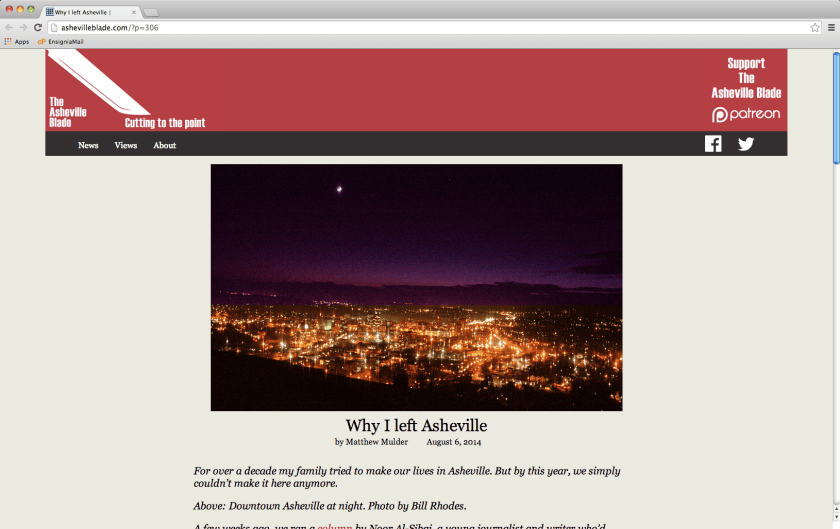
Last week The Asheville Blade published a story I wrote — Why I Left Asheville.
The response to that story has been overwhelming. If you have not read the story yet, please give it a read and share your thoughts in the comment section. Thanks for your support!
Wordshop
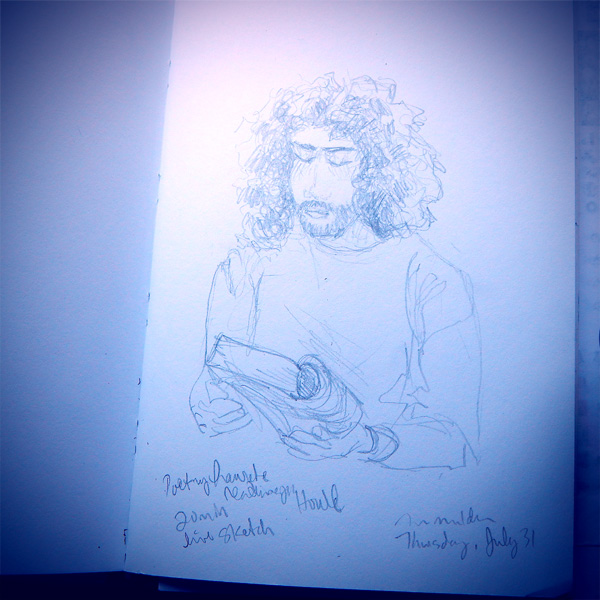
The weekly Racine Public Library Wordshop gathering of poets and writers is always lively and engaging. Last week there was a special presentation of Beat literature.
From the editor
Received this note from the editor of a forthcoming article to be published:
“…it’s excellent, timely, very motivating and inspirational.”
Quote: “The art of writing is…”
“The art of writing is the art of discovering what you believe.”
Gustave Flaubert (via absynthe-words)
[Podcast] When the lights go out
Listen now:
A light breeze from the south carries echoes of a recent place in memory. In this episode, stories about creative space, laptop versus hand-writing and more.
It is warm enough to finally open the windows and let the Spring air fill the house. The first segment touches on that in a story titled “Creative Space.” Recently, the village where I currently live experienced the first tornado of the year. Everyone is fine. Thankfully, the only dangerous weather was thunder, hail, and rain. But it got me thinking of our culture’s dependency on electricity and technology. “When the lights go out” is the second segment. The third segment answers listeners’s question in “An audience of one.” The final segment for this episode is titled “Life is lived as a messy first draft.”

This episode’s unofficial sponsor is The Steaming Cup located in the beautiful downtown area of Waukesha, Wisconsin. For more details, visit TheSteamingCup.com.
Very special thanks to Lee Tyler Post for permission to use his song “Life Without Fences” in between segments. I first heard his music on The Great America Music Hour hosted by Jerry Jodice. Learn how to get any or all of Lee Tyler’s six studio albums on his website LeeTylerPost.com.
Listen on:
PodOmatic: coffeehousejunkie.podomatic.com
SoundCloud: soundcloud.com/coffeehousejunkie
Or subscribe on:
RSS Feed: RSS Feed
iTunes: iTunes
[Podcast] How long it takes to write a haiku?
Welcome to the relaunch of the Coffeehouse Junkie audio podcast. A lot of things have happened during that time and there is much I plan to share with you, just not in this episode.
Yes, it is true. The last two years or so I have fasted from coffee. I almost had to rename this blog and audio podcast because of it. Thankfully, my sister introduced me to Maniac Coffee Roasting in Bellingham, Washington. Specifically, the Decaf Espresso Royale blend. Check them out at ManiacCoffeeRoasting.com. They are the unofficial sponsor of this episode. If you would like to officially sponsor an episode, email me at coffeehousejunkie [at] gmail [dot] com for details. Please include “podcast” in the subject line so that your email doesn’t end up in the spam folder.
Very special thanks to Amy Annelle for granting permission to use her song “Will Try” between the segments. Years ago, the album A School of Secret Dangers introduced me to her work. If you like her song, check out Amy Annelle’s latest album The Cimarron Banks. Visit the website HighPlainsSigh.com for more info about her music or find her music on Apple iTunes.
Here’s what’s coming up in this episode:
- How long does it take to write a haiku?
- So many books, so little time
- Keep Calm and Write Something
- Last night, I fell asleep writing a poem
Listen here:
Or listen on:
PodOmatic: coffeehousejunkie.podomatic.com
SoundCloud: soundcloud.com/coffeehousejunkie
Quote: “The short story is the art form…”
“The short story is the art form that deals with the individual when there is no longer a society to absorb him, and when he is compelled to exist, as it were, by his own inner light.”
Frank O’Connor (via libraryland)
Quote: “Turn the unspeakable into words”
“The writer’s job is to turn the unspeakable into words – not just any words, but, if you can, into rhythm and blues.”
Anne Lamott (via teachingliteracy)
The return of the Coffeehouse Junkie audio podcast is coming soon
Many, many moons ago in a far distant place there used to be a Coffeehouse Junkie audio podcast. For professional reasons I had to place it on hiatus for an indefinite period of time. In, short, I launched and produced nearly 500 audio podcasts for a national news group earning nearly 800,000 downloads in a little more than two years. Since those professional obligations no longer exist, it is time to resume some Coffeehouse Junkie audio podcasting.
There will be some new features to the audio podcast.
- A few topics that seem to be popular on this blog include writing, poetry and publishing. Since I have years of experience in the publishing industry, I will feature some episodes on a behind-the-scenes look at publishing.
- Additionally, I plan to open up the request lines (to use an antiquated terrestrial radio expression) . If you have read something on this blog that you would like me to address, I will plan an episode around that topic. Please include your name, Twitter handle and request in the comment section of this blog post.
I will re-release the last three episodes of the Coffeehouse Junkie audio podcast in the next week or so to prime the pump for the relaunch. The last episodes released featured essays and poems that were presented and discussed in a poetry writing workshop I taught at the Flood Fine Arts Center in Asheville, North Carolina. Episode 12 will be re-released later this week, episode 13 early next week and episode 14 the end of next week.
Day 8 of the November PAD Challenge

The Biltmore Coffee Traders new addition is now open for customers. Willie Nelson singing from the house sound system. Earlier, Van Morrison and Dave Matthews warmed up a chilly, windy but sunny sort of November day as patrons enjoyed gluten-free breakfast cookies and granola bars.
It is day eight of the November PAD (Poem-A-Day) Chapbook Challenge (Details are available on Writer’s Digest website.). Senior Content Editor of the Writer’s Digest Writing Community offers this writing prompt for today: “inanimate object poem.” I have not used the prompts for this challenge. Though I am keeping track of the prompts for later use.
For a gift, I received a limited printing of book on Korean poetry forms. So, the poems composed so far for this challenge have run in a vein of Japanese and Korean inspired forms. Though, to be fair, most of the compositions are corruptions of the poetry forms.
How about you? How has your November PAD Challenge gone so far?
As a bonus, if you want to play along, fill in the blanks with a poem to accompany the images posted above. Next week, I’ll post what I placed in the blanks.
The November PAD challenge begins

It is the first of November, often celebrated as All Saints’ Day. For me, the day started out with cloudy skies and a light drizzle as I walked to Biltmore Coffee Traders.
It is also the first day of the November PAD (Poem-A-Day) Chapbook Challenge (Details are available on Writer’s Digest website.). Senior Content Editor of the Writer’s Digest Writing Community, Robert Lee Brewer, offers this writing prompt: “write an appearing poem.”
It is not necessary to use a writing prompt for the challenge, but it is a helpful tool. How about you? Have you started composing your first poem for the challenge?
November PAD is almost here

Anyone interested in the November PAD (Poem-A-Day) Chapbook Challenge? Details are available on Writer’s Digest website.
It has been awhile since I mentioned the writing exercise I often practice of writing 30 poems in 30 days. A couple of years ago I stopped posting poems on this blog under the advice of a published poet. Poems posted on blogs qualify as “published” and therefore are ineligible to be published in a literary journal or magazine.
So, I started writing poems for friends and others on a manual typewriter and posting the photos—like this short poem for a fellow poet, writer and friend: “Some days all you need.” Or this poem written for the wonderful staff at Dunkin Donuts who always know my order and have it ready for me before I get to the counter: “Never look a doughnut dealer in the eyes.” It is not that I wouldn’t like to get published in a literary journal or magazine, but I really enjoy the process of writing to a specific person or persons.
Due to unemployment followed by new employment challenges, the practice of using the manual typewriter to compose poems ceased due to circumstances I can not share at this point. But I kept composing and writing offline—analog, if you will. In lieu of a manual typewriter, I discovered an app awhile ago. There’s always an app for something, right? During the last month or so, I composed several poem sketches. In the next weeks, I shall share some of these visual poems. Tomorrow, the first one will be posted.
For the month of November I plan to compose a poem a day. Who is with me?
Is poetry dead? or can poetry matter?
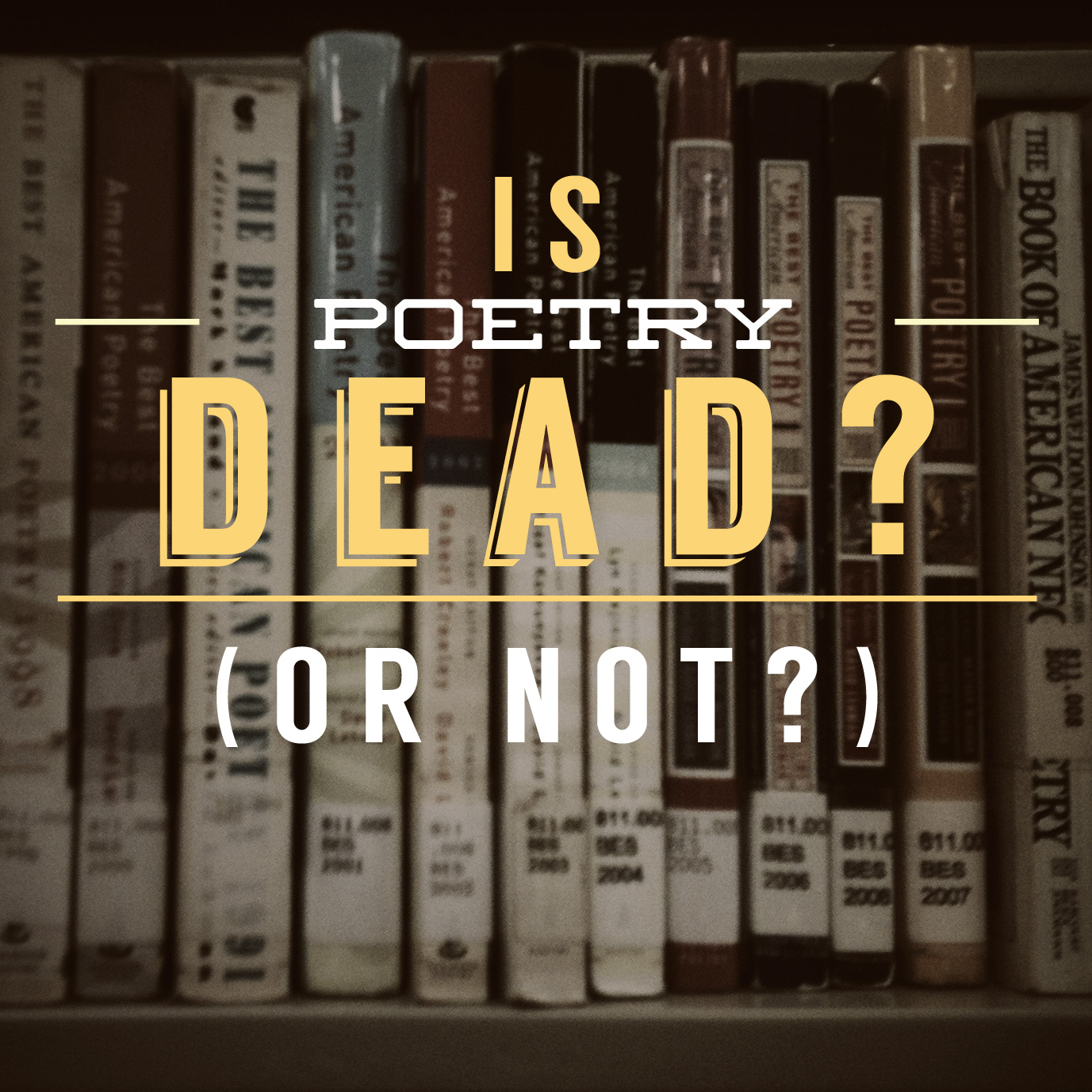
Earlier this year a quiet and quite active discussion took place in a small corner of the public square. It began with Alexandra Petri’s article “Is Poetry Dead?” [1] John Deming immediately responded with an “Open Letter to Alexandra Petri.” [2] A Few days later, Richard Higgs tossed the question to a group of poets and writers. [3] The topic was actively discussed for months.
Alexandra Petri asked “Is poetry dead?” Referencing Richard Blanco, she writes, “. . . poetry, a field that may very well be obsolete.” She continues:
I say this lovingly as a member of the print media. If poetry is dead, we are in the next ward over, wheezing noisily, with our family gathered around looking concerned and asking about our stereos.
In her article she offers some harsh yet reasonable analysis: “These days, poetry is institutionalized. Everyone can write it. But if you want a lot of people to read it . . . there are a few choked channels of Reputable Publications.”
John Deming immediately replies to this “attack on American poetry” by stating that there are more than “2,000 books of poetry are published each year in the U.S.” He did not reveal where he got that number, but I suspect much of those poetry books are independent or small press publications. Further, knowing intimately how the publishing business works, I suspect that the majority of those poetry books published do not exceed press runs of more than 500 copies. With all due respect to Mr. Deming, his open letter is more a reaction to Ms. Petri’s article and less a defense of American poetry’s life (or death). He does offer a pointed question for both Ms. Petri and for poets: “. . . what kind of ‘change’ [do] you mean. Literal political change?”
Can poetry effect change?
Years ago Dana Gioia asked “Can Poetry Matter?” in his essay published in The Atlantic Monthly [4] [5] I will not go into a lot of detail about his essay because I do not want to spoil his conclusion, but I do encourage you to read it. Mr. Gioia’s question is a better question than Ms. Petri’s. Introducing great poetry in school is part of the equation as well as encouraging the love of reading books to children. Mr. Gioia offers other ways to promote the reading of and love of poetry. The Academy of American Poets published a report years ago that stated that adults who purchase and read poetry books were introduced to poetry at an early age.
Alexandra Petri does present some valid concerns. Like Ms. Petri, I have attended poetry readings where “the attendees were almost without exception students of the poet who were there in the hopes of extra credit.” For that matter, I’ve been that poet (like Charles Bukowski) [6] reading to an audience of “. . . friends, . . . other poets / and the handful of idiots who have wandered / in / from nowhere.” Mr. Deming makes some equally valid points that poetry is “far from obsolete . . .” As someone in the publishing industry I know that poetry books do sell, but not as well as fiction or non-fiction. But lack of book sales revenue does not mean that poetry books are not effective or revolutionary. How many memoirs or novels have you read that feature a few lines of poetry as an epigraph printed at the beginning of the work?
I am convinced that there is a large audience of people that do not know that they enjoy poetry. They have to be introduced to great poetry. The fact that the August 31, 2013 issue of the New York Times featured a large front page photo of the poet Seamus Heaney (printed above the fold in contrast to a small photo of the President of the United States below the fold) testifies to the relevance of poetry in America. [7] Can poetry effect change? The poem “The Names” by Billy Collins was read before a special joint session of Congress in 2002 commemorating the victims of 9/11. [8] Can poetry matter? These are just two examples that attest to it’s impact (if ever so little) in our culture.
NOTES: [1] Alexandra Petri, “Is poetry dead?,” The Washington Post ComPost, January 22, 2013, accessed January 29, 2013 http://www.washingtonpost.com/blogs/compost/wp/2013/01/22/is-poetry-dead/
[2] John Deming, “Open Letter to Alexandra Petri,” Coldfront Magazine , January 22, 2013 accessed January 29, 2013 http://coldfrontmag.com/news/open-letter-to-alexandra-petri?goback=%2Egde_1651527_member_208175181
[3] Richard Higgs, “Is poetry dead? Washington Post blog article, and a brilliant response,” LinkedIn Poetry Editors & Poets Group, January 25, 2013, accessed January 29, 2013 http://www.linkedin.com/groups/Is-poetry-dead-Washington-Post-1651527.S.208175181?qid=64a426de-d879-42c3-b90d-5c25b99fe691&trk=group_most_popular-0-b-ttl&goback=%2Egde_1651527_member_208175181%2Egmp_1651527
[4] The Atlantic Monthly; May, 1991; “Can Poetry Matter?”; Volume 267, No. 5; pages 94-106.
[5] Dana Gioia, “Can Poetry Matter?,” The Atlantic Monthly, May, 1991, accessed January 29, 2013 http://www.theatlantic.com/past/docs/unbound/poetry/gioia/gioia.htm
[6] Charles Bukowski, “poetry readings,” The Writer’s Almanac, September 11, 2008, accessed January 29, 2013 http://writersalmanac.publicradio.org/index.php?date=2008/09/11.
[7] “The New York Times pays tribute to Seamus Heaney,” TheJournal.ie , August 31, 2013, accessed September 25, 2013 http://www.thejournal.ie/new-york-times-seamus-heaney-1063056-Aug2013/
[8] “Poet Billy Collins Reflects on 9/11,” PBSNewsHour, accessed September 25, 2013 http://www.poetryfoundation.org/features/video/301
Strange Familiar Place returns
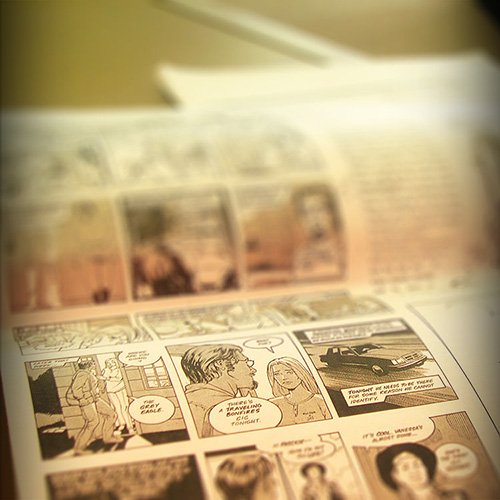
After a very long hiatus, “Strange Familiar Place” will be back in print. Or at least it will be in a very limited capacity. More details on that later.
The creative non-fiction comic “Strange Familiar Place” first appeared in The Indie. Inspired by the works of Harvey Pekar, Jessica Abel, and Eddie Campbell, I wrote and illustrated “Strange Familiar Place.” Eventually I collaborated with illustrator and comic book artist James E. Lyle on six comic strips.
Comic Stroll, a publication of the local chapter of the National Cartoonist Society, will feature that collection of previously unpublished comic strips. Read the evolution of what started as a couple drawings and became a creative non-fiction comic:
- Comics and Narrative Non-Fiction
- Comics and Narrative Non-Fiction Continued
- Narrative Non-Fiction Comics: part 3
- Narrative Non-Fiction Comics: part 4
- Narrative Non-Fiction Comics: part 5
- Narrative Non-Fiction Comics: UPDATE
- Narrative Non-Fiction Comics: UPDATE
- Strange Familiar Place comic series
More details about Comic Stroll distribution will be made available later.
An audience of one
 What do you mean by audience of one? one reader replied to “Keep calm and write something.” He is referring to how I concluded a blog post: “If I have an audience of only one, that is sufficient.” So, what does that mean, an audience of one? …
[read more]
UPDATE: This blog post is available as part of an audio podcast.
Listen now:
Or listen on:
PodOmatic: coffeehousejunkie.podomatic.com
SoundCloud: soundcloud.com/coffeehousejunkie
E-book: This blog post will be featured in a forthcoming e-book. More details coming soon.
Keep calm and write something
Back in January I submitted more than 50 poems to various publishers. So, how many poems have been accepted? or rejected? More on that later….
[read more]
UPDATE: This blog post is available as part of an audio podcast.
Listen here:
Or listen on:
PodOmatic: coffeehousejunkie.podomatic.com
SoundCloud: soundcloud.com/coffeehousejunkie
 E-book: How long does it take to write a haiku?: and other stories
Purchase the e-book Kindle Edition for $0.99!
What do you think about when you see a stack of books? In this short collection of stories you will also learn what a creative director thinks of when he sees a stack of books. Who is the audience for your poems? Is possible to write in your sleep, or not?
How did you come to poetry?
Over the weekend, an editor made a comment on Facebook that got me thinking about the question, how did you come to poetry?
My response is not an academic reply. The mechanics of poetry make the art good and great. But the best way to ruin poetry for young minds or new readers, is to have people study the architecture of a poem–its meter, rhyme, enjambment, stanzas, etc. Is this the way you learn about a new home? When you enter a friend’s home for the first time, do you inquire as to house’s foundation (is it a slab foundation?), framing (stick frame or post and beam?) or roof (you get the point)? So why do educators insist on destroying poetry for young readers? Make the home inviting. Make poetry inviting.
As a poetry reader, I approach a poem (or body of poems) as I would a new home of a friend I just met. I enter the door, look at the paintings on the wall, run my fingers along the spines of the books on the shelf, scan over the vinyl collection beside the stereo and sit on the futon near the front window. This is how to see what the poet sees through the window of the poem. This is when I see what the poet says about love, injustice or various other subjects and topics.
Not all poems are created equal. Sometimes I get the impression that someone or something is shouting at me from an open door. I tend to quicken my steps along the street and find a more inviting home–a more inviting poem.
Poetry is not something I studied in school. There were, of course, the required literature classes, and some teachers that opened the landscape of great poetry and prose. But for me, someone left the back door to the house of poetry open and I slipped in to explore. A house doesn’t seem so intimidating or formal when you enter, casually, from the backdoor.
Which came first philosophy or poetry?
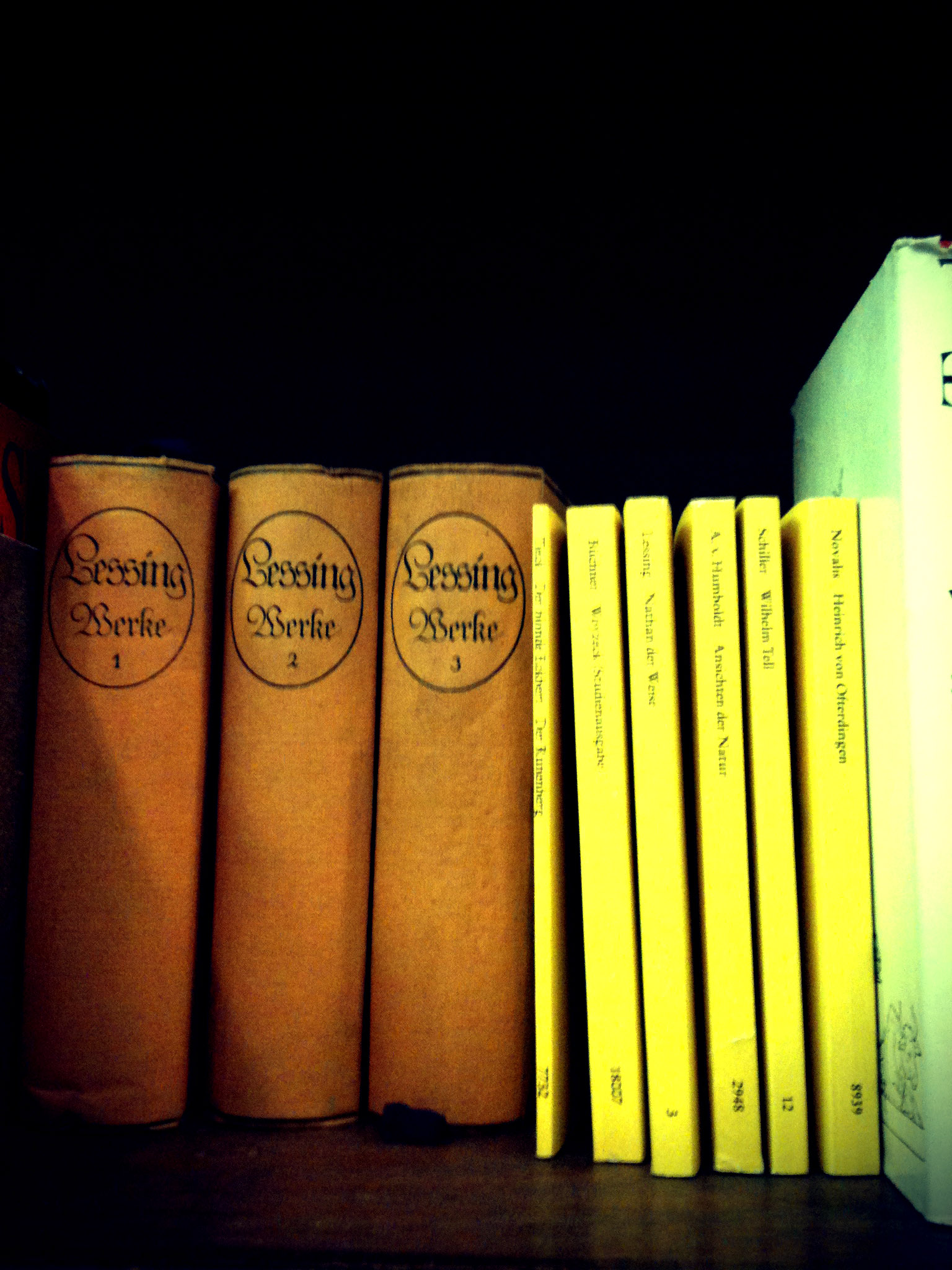
Someone asked how many of today’s poets are also philosophers?[1] The question presents some assumptions. One assumption is that poets merely express themselves in literary work through distinctive style and rhythmic fashion. This notion tends to present the emotional aspect of poetry, but ignores the intellect of poetry. There is a dichotomy to poetry that mingles and merges into philosophy. The study of knowledge, reality and existence is at the core of philosophy, and the expression of these ideas is at the center of poetry.
Readers of poetry know that the subject matter of most serious literary poetry is an investigation of knowledge, reality and existence. One might argue, that light verse also presents a philosophical truss and girder to the support of the work. Truly, poetry puts a face on ideas, clothes abstractions in tangible, beautiful garments and builds images from the exploration of the meaning of life.[2]
Western philosophy began in 6th century BCE. It interesting to me that before philosophy there was poetry. Hesiod composed Theogony more than 100 years before Thales of Miletus and the Pre-Socratics. About that time period Homer released the Iliad. It is not by accident that poetry informs philosophy nor that poets birth philosophical conversations.
To address the question that sparked this post, I’m still considering the question of who I might regard as a great modern poet philosopher. My mind runs in two veins: one is the craft of the poet (i.e. the strength of the literary work) and two is the ideas of the poet (i.e. the strength of the logic and rhetoric of the argument). A couple of modern poets come to mind, but they have long since passed from this world. Two names of living poets simmer in the back of my mind. What do you think? How many of today’s poets are also philosophers? Are you a poet? Do you consider yourself a philosopher? What examples of philosophy do you find in poetry?
NOTES: [1] Gael, “Wondering how many poets are also philosophers and intuitives as well as creative.?” LinkedIn, April 21, 2013 accessed May 6, 2013 http://www.linkedin.com/group.
[2] There is a whole discussion that could be had regarding avant-garde poetry and the challenges with poetic forms that are not accessible to the average reader, but this post deals only with the question of philosophy as it relates to poetry.
Scrambled eggs and poets
Have you ever typed a message into your smartphone and the autocorrect delivers an amusing sometimes intriguing option? That’s were the title of this post comes from. I was trying to text: scrambled eggs and toast please. Don’t ask. It’s been a long weekend, but I wanted to provide an update to a February post [1] where I detailed the number of poems submitted to publication and how many have been accepted. And the grand total is: none. I haven’t heard from all the publishers yet, but so far it has been rejection letters and emails. [2]
And now, scrambled eggs and poets.
It is a rare evening these days when I am able to attend a literary reading in my adopted hometown. The Juniper Bends Reading Series for May [3] featured Mandy Gardner, Collin Garrity, Rose McLarney and Jerry Stubblefield. I arrived late, but enjoyed a truly amazing reading. The highlight, for me, was Rose McLarney’s reading. It had been almost seven years since I first heard Rose McLarney read her poems at the Black Mountain College Museum + Arts Center. And since then, her acclaimed collection of poems was published by Four Way Books. [4]
After the reading concluded, and this is where things get a bit scrambled, I waited with others to chat with the poets and writers. The longer I waited the more I wanted to ask her about the publishing process. How did she manage to get her collection published? What tips would she recommend? You know, all those predictable, pithy questions unpublished poets ask published poets.
And then, like Billy Pilgrim, [5] I sort of time travelled. No longer standing inside the crowded Downtown Books & News, [6] it was night and I was walking up Eagle Street toward Pack Square Park with a poet how was asking me, “How do I get my poems published? What tips do recommend?” With my experience in publishing, I began telling her any information that I thought might help. And then, as we were parting ways, I was telling her not to sweat it, “When the poems are ready, the audience will be there.”
And then, I time traveled back to May 2013, it was night again. I walked to my auto as a SUV full of kids drove by with the windows down. Their ruckus noise spilt onto the street. They slowed and someone threw hot pennies at me. They sped away. Why do kids heat pennies with cigarette lighters and throw them at complete strangers? I entered my car and drove home saying, “When the poems are ready, the audience will be there.”
More scrambled eggs and poets.
Scrambled yet? Don’t worry. It’s Monday. You have the whole week ahead of you.
Let’s do some more time traveling. Last year, I provided some teasers for an upcoming book. [7] The manuscript is nearly novel length and I’ve sought out a couple editors to assist me. Truly, this is not a story I wanted to write, but it has found me and apparently an audience.
NOTES:
[1] So far, I’ve submitted almost 70 poems for publication. You can read the details in the post: 50 poems in 30 days
[2] Why do poets write, if not to be published? These thought have occupied my thoughts since last week’s post.
[3] Juniper Bends Reading Series
[4] Four Way Books
[5] Everyone knows who who that is, right? And if you have to google it, just know that it is not the American folk musicians from Atlanta.
[6] Downtown Books and News
[7] You may read the teasers here
Write now, set writing goals
![...any road wil get you there.[1]](https://coffeehousejunkie.net/wp-content/uploads/2013/05/tumblr_mlgvegmtir1qz6f9yo1_500.png)
A few years ago I sat in a writing workshop and noticed that I was the only member of the group under the age of 50 years old. Further, most of the students at the workshop had been working on a memoir or a novel or something that began at a university. Now enjoying their retirement, the nostalgic desire to complete these literary works grip those writers who had been dribbling out small passages of poetry and prose for what seems to be my lifetime.
I determined at that time to set writing goals and not let time slowly bleed me of creative efforts. So, I adapted some of the productivity and time management skills I use at work to my writing life. Here’s some productivity, or time management, habits I practice at the office.
1. Don’t check email first thing in the morning.
At the office, I schedule two times a day were I read and reply to emails: once in the morning and then again in the afternoon. If I reply to every email that lands in my inbox at the moment it arrives, I would spend more than half the work day reading and replying to emails. I found that if I batch tasks, like emailing, I can maintain focus on accomplishing those tasks more efficiently.
2. Make a list.
First thing I do when I get to the office is make a list. This is a combination of project management and mind-sweeping. This activity allows me to organize and prioritize large and small tasks for the day and week.
3. Declutter the desktop.
This is something that is both on- and offline. And by “declutter” I don’t mean empty your desktop of everything. Declutter has to do with a collection system. How do you collect the papers or files? Years ago I began the practice of collecting items in folders based on the 43 folders system. Here’s how it is presented by Merlin Mann:
- identify all the stuff in your life that isn’t in the right place (close all open loops)
- get rid of the stuff that isn’t yours or you don’t need right now
- create a right place that you trust and that supports your working style and values
- put your stuff in the right place, consistently
- do your stuff in a way that honors your time, your energy, and the context of any given moment
- iterate and refactor mercilessly[2]
Again, the goal of this practice is not to have a clean, empty desktop, but a productivity system in place to help get things done.
4. Plan. Revisit the plan. Stay on task.
Your co-workers and supervisors think every task is an emergency and everything is a priority. Planning and staying on task is one of the most annoying practices my co-workers and supervisors must endure. Yet, unless I identify the goals and chart a trajectory to hit those goals, I’ll never me able to meet deadlines on time or successfully accomplish projects. How does the old adage go? If you don’t know where you’re going, any road will get you there.
Let’s do this!
Avoid waiting until you retire to complete that novel you’ve been working on, or that collection of poems you’ve been tinkering with for years. Find a writers group that can help you with accountability and encouragement. It is written that no one knows the number of his or her days. Our life is a shadow.[3] Whether it is writer’s block, procrastination, internal or external distraction, find that writing project you’ve been working on and commit to finishing it.
NOTES:
[1] Source: This Isn’t Happiness, accessed May 8, 2013 http://thisisnthappiness.com/post/48296644589/any-road
[2] Merlin Mann, “Getting started with ‘Getting Things Done’,” September 8, 2004 accessed May 4, 2013 http://www.43folders.com/2004/09/08/getting-started-with-getting-things-done
[3] Shane Claiborne, Jonathan Wilson-Hartgrove and Enuma Okoro, Common Prayer: A Liturgy for Ordinary Radicals (Zondervan, 2010), 271.
Why do poets and writers write?
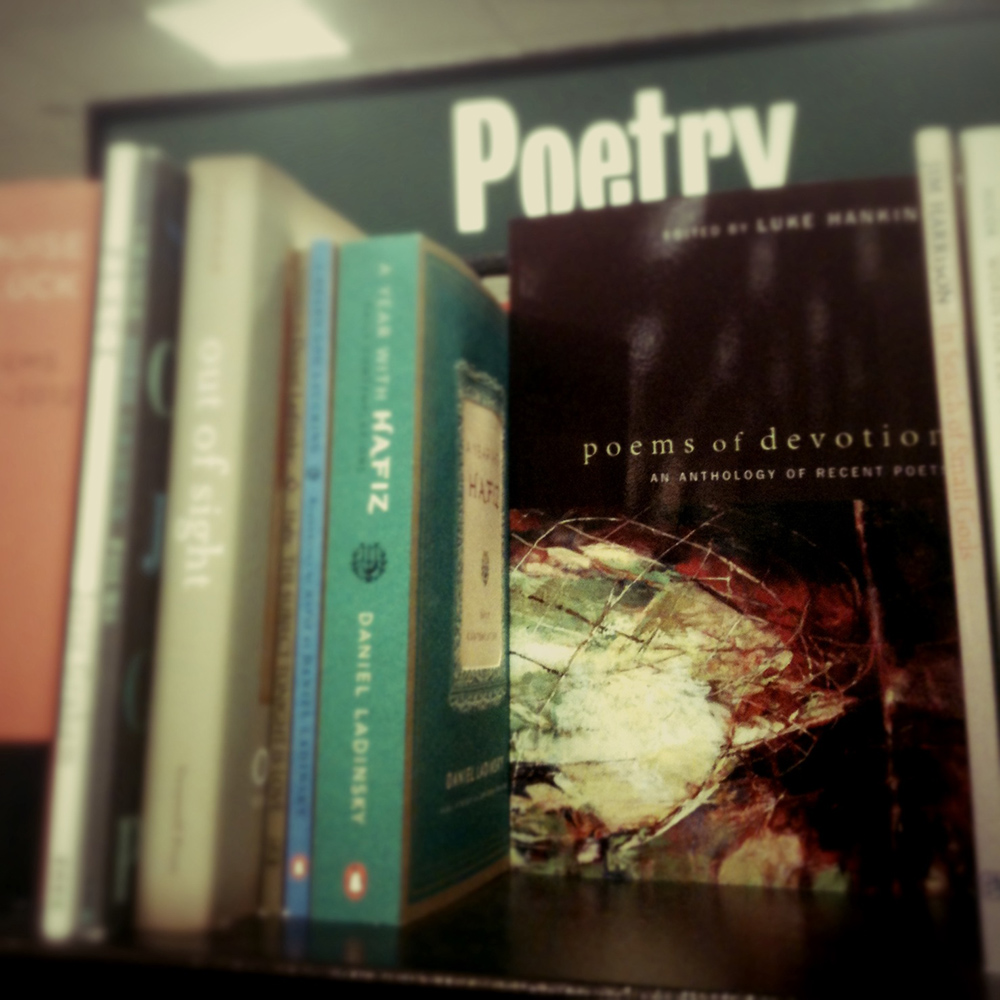
This is a question like a sliver that gets under your skin. It is like that wood splinter you received from running your hand along a wooden fence and the painful acceptance of it to the soft spot below your thumb sends you to the medicine cabinet where you try to remove it with tweezers. But it’s too deep and requires a poultice to draw the splinter to the surface for removal. It is that way with answering the question, why do poets and writers write?
In an online discussion[1] of poets and writers and arm-chair philosophers, I offered this to the ongoing conversation: Emerson wrote that “The poet is the sayer, the namer, and represents beauty.”[2][3] This rings true as to why writers write. Years ago I heard someone say, “We are God’s poème.”[4] (Poème derives from the Latin word poema meaning poem.) I have often pondered that as an answer for why writers write and wonder if that is what Emerson had in mind when he wrote those lines. We are God’s poem, that is why we say, name, and represent beauty.
What are your thoughts on the matter? What motivates you to write? and why?
NOTE: [1] Renée, “Why write?,” LinkedIn, April 25, 2013 accessed May 6, 2013 http://www.linkedin.com/group.
[2] The quote is from Ralph Waldo Emerson’s book Essays, Second Series from the essay “The Poets.” Here’s a link to an excerpt: http://www.goodreads.com/quotes/495734-the-poet-is-the-sayer-the-namer-and-represents-beauty?.
[3] Or you can read the entire essay in this handsome collection: Emerson: Essays and Lectures: Nature: Addresses and Lectures / Essays: First and Second Series / Representative Men / English Traits / The Conduct of Life (Library of America) [Hardcover].
[4] This is a reference to a passage in chapter two of The Epistle of St. Paul to the Ephesians. William D. Mounce writes on the matter of the original Greek text in this article, Are We God’s Poem?.
Do you submit poetry for publication?
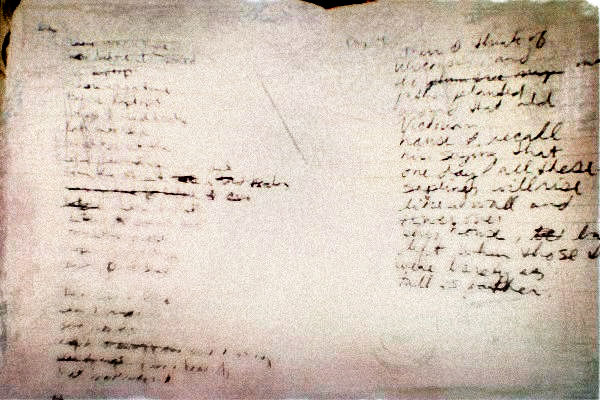
So, you write poems. Maybe you read your poems at a local bookstore, music venue or coffeeshop at a monthly or weekly open mic. And maybe you even sign up for a writing workshop and the teacher hosts a public reading at a fine art center or library at the conclusion of the course. But do you submit your poetry for publication?
Last month I submitted over 50 poems for publication. So far I’ve receive quite a few reject letters. Some replies were so quick I wonder if the editor read the submission. A week after I submitted poems to one editor I received this:
“I enjoyed reading your poems but I’m unable to use them…”
A day later I received this from a different editor:
“Thank you for your recent submission…. This group of poems wasn’t right for us, but we’re grateful for the opportunity to consider your work…”
These replies are courteous, non-confrontational and sterile. Last weekend I received my favorite rejection letter so far. It reads,
“We sincerely appreciate your interest … and are very glad you are getting your pieces published…. we wish you the best of luck in your continued writing. Never give up on what your high school literature teacher told you!”
Why do I like that rejection letter? Here’s three reasons:
- The editor actually read the cover letter. Not just the first few lines of the cover letter, but all the way to the third paragraph. You see, buried in the third paragraph of my cover letter is an homage to an inspirational high school literature teacher.
- Clearly it is not an automated reply to a submission for publication.
- The way the letter is crafted is a sandwich. By that I mean, the letter opens positively, nicely rejects the submission with two reasons and concludes with a personal and positive note.
Literary journal editors should take note of this rejection letter. It is a good model to follow.
If you submit your poetry for publication, I am interested to learn how it is going for you. If you don’t submit your poems for publication, I’d like to know why.
How long does it take to write a haiku?
 It is twilight. A meager meal of potatoes and cheese provides a father and his children sustenance. As they eat he tells them about a son who lived a long time ago in a far, distant land. He was the son of a samurai and is famously know for his poetry…. [read more]
UPDATE: This blog post is available as part of an audio podcast.
Listen here:
Or listen on:
PodOmatic: coffeehousejunkie.podomatic.com
SoundCloud: soundcloud.com/coffeehousejunkie
 E-book: How long does it take to write a haiku?: and other stories
Purchase the e-book Kindle Edition for $0.99!
What do you think about when you see a stack of books? In this short collection of stories you will also learn what a creative director thinks of when he sees a stack of books. Who is the audience for your poems? Is possible to write in your sleep, or not?
 Coffeehouse Junkie