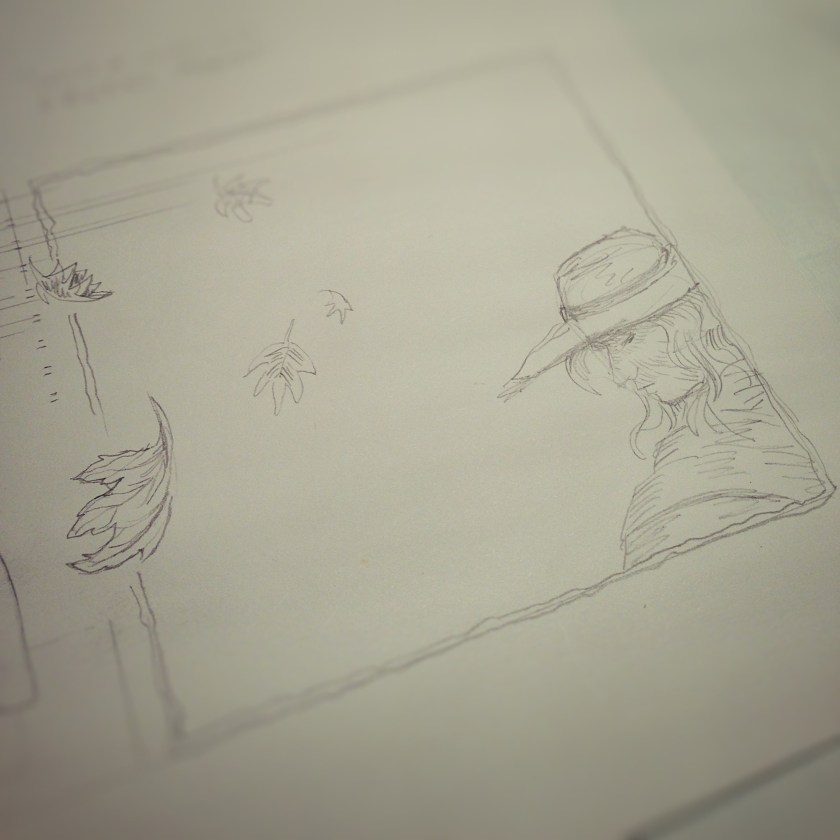
Tag: art
Vision in motion, an exercise
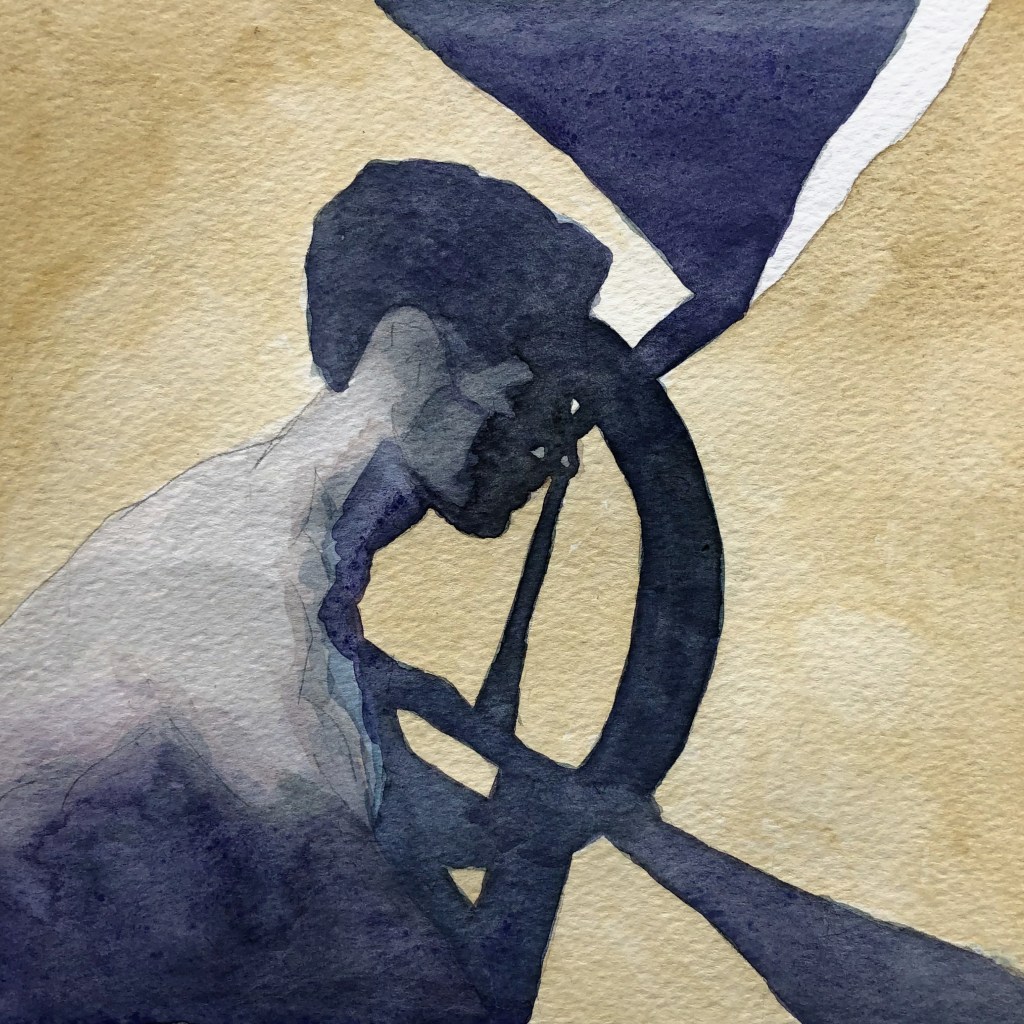
Never waste money on purchasing a tube of black paint, I was told.
With three or four colors you can mix a pigment as dark as black. And a richer shade of pigment. Is black even a color?
These thoughts remind me of color theory and composition class at the university. My professor was a student of Josef Albers. At the time, that fact did not have a great impression on me. But I wonder about the lessons he must have learned. Not so much the academic rigor of craftsmanship and applied fine arts. That is important. But lessons of integrity and legacy. Was it Albers who taught him that quip about black paint? Or did that come from Willem de Kooning?
A couple days later, the middle child looks at this project. “What’s this about?”
I do not answer. It is an exercise. It is practice.
Vision in motion, paint big
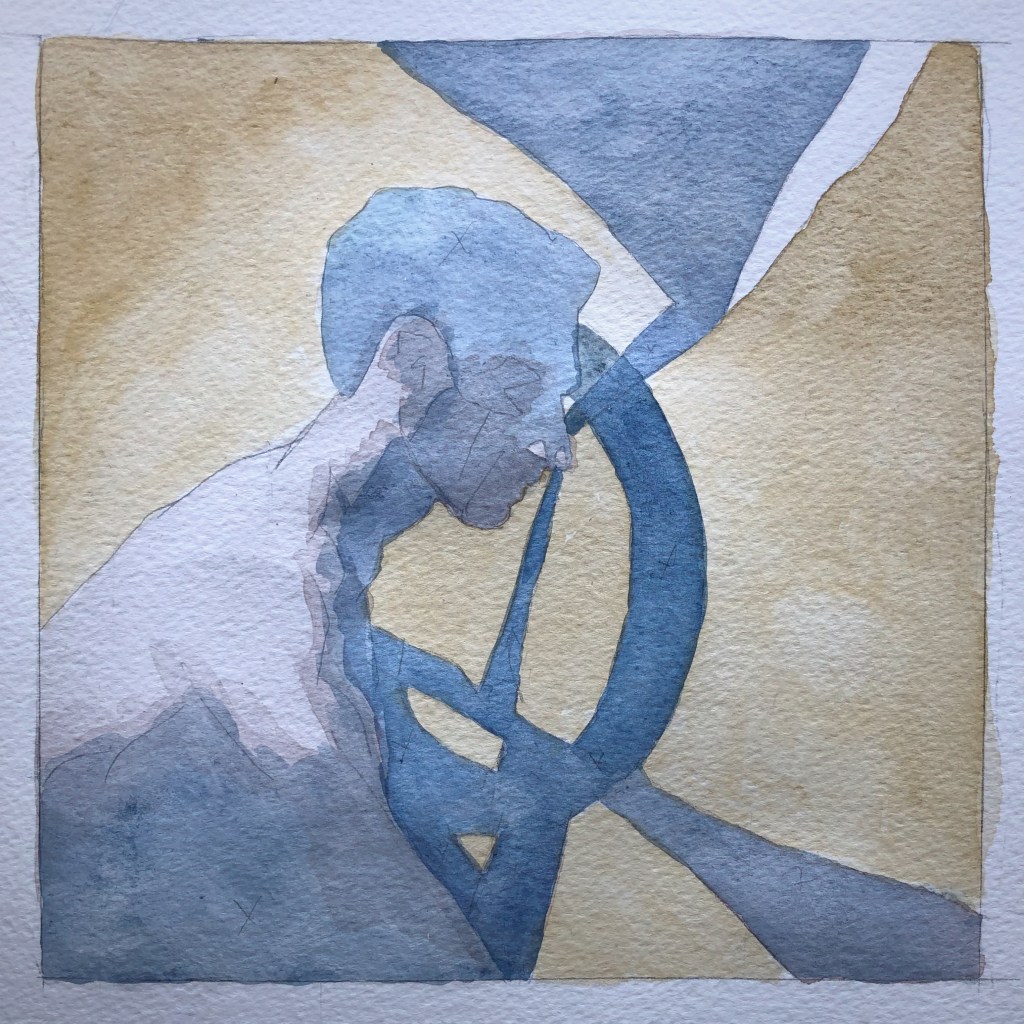
This is practice. An exercise. Form and color.
Do you see a character? As in, a letter of the alphabet.
Or do you see a character in human form?
The daylight quickly fades for this January afternoon. I chose a larger brush to apply pigment. At the university, the art professor instructed, “If you can’t paint well, paint big.”
It was not criticism, but rather a modernist declaration. He provided an atmosphere that allowed guidance rather than dogma.
I load the larger brush with the muddy water from the tray and a touch of pigment found between two watercolor cakes. The transparent layer is applied to the dry paint. A technique called glazing.
This is not an art lesson. It is a conjuring up of an image.
Vision in motion, layer upon layer
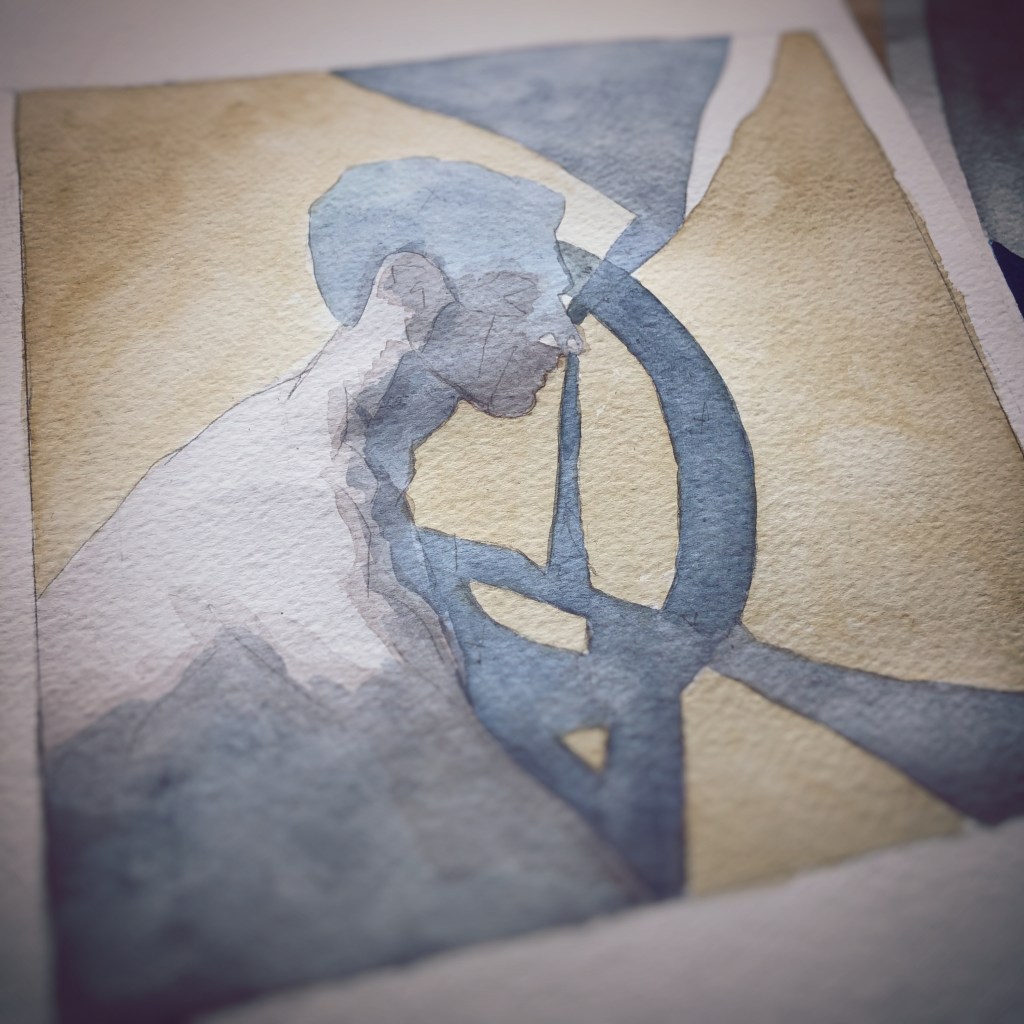
This is an exercise. Form and color. Loading the brush with pigment and applying it to the paper. Quick strokes. Vision in motion.
Painting by the light of the apartment’s living room window. The sun light is best in the morning. But I have continued this project well past the noon hour.
“Why do you keep painting,” asks my child.
“It’s underpainting,” I say as I clean the brushes and prepare for an afternoon walk. “The lighter tones provide the base. When the paint dries I add more color layers.”
It is January. It is Winter. The outdoor temperature is above the freezing point. We walk to the library and return books. We continue to talk.
Vision in motion
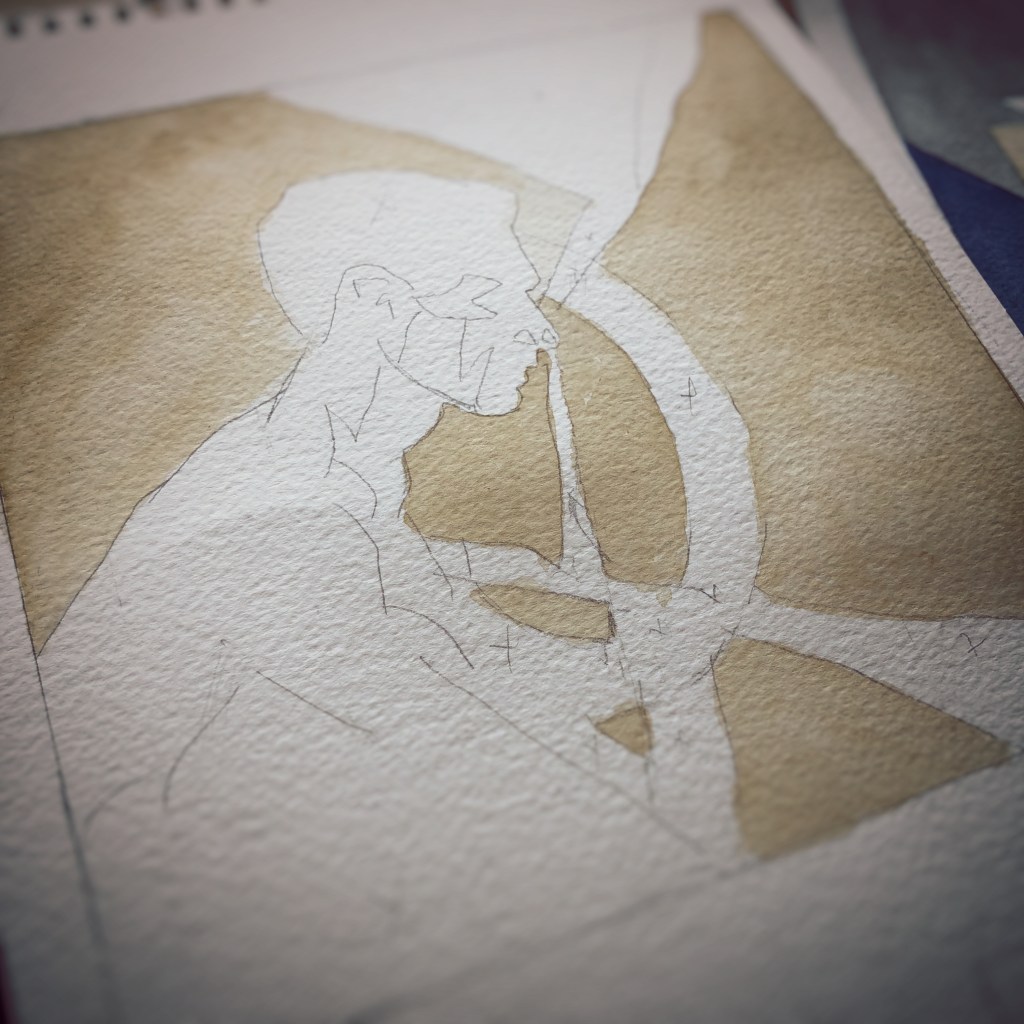
Trying something new. Or, rather, returning to something old.
Here is a first draft for consideration.
Will provide details as updates are available. Let’s see how this turns out.
Weekend sketch – Sarah and the king of the goblins

Another sketch from the weekend. Inspired by the film Labyrinth, I reimagined Jareth, the king of the goblins, and Sarah. The first time I saw the film was in art class. The high school art teacher thought it would be inspiring. It has captivated my imagination ever since.
Weekend sketch – Jareth, the Goblin King
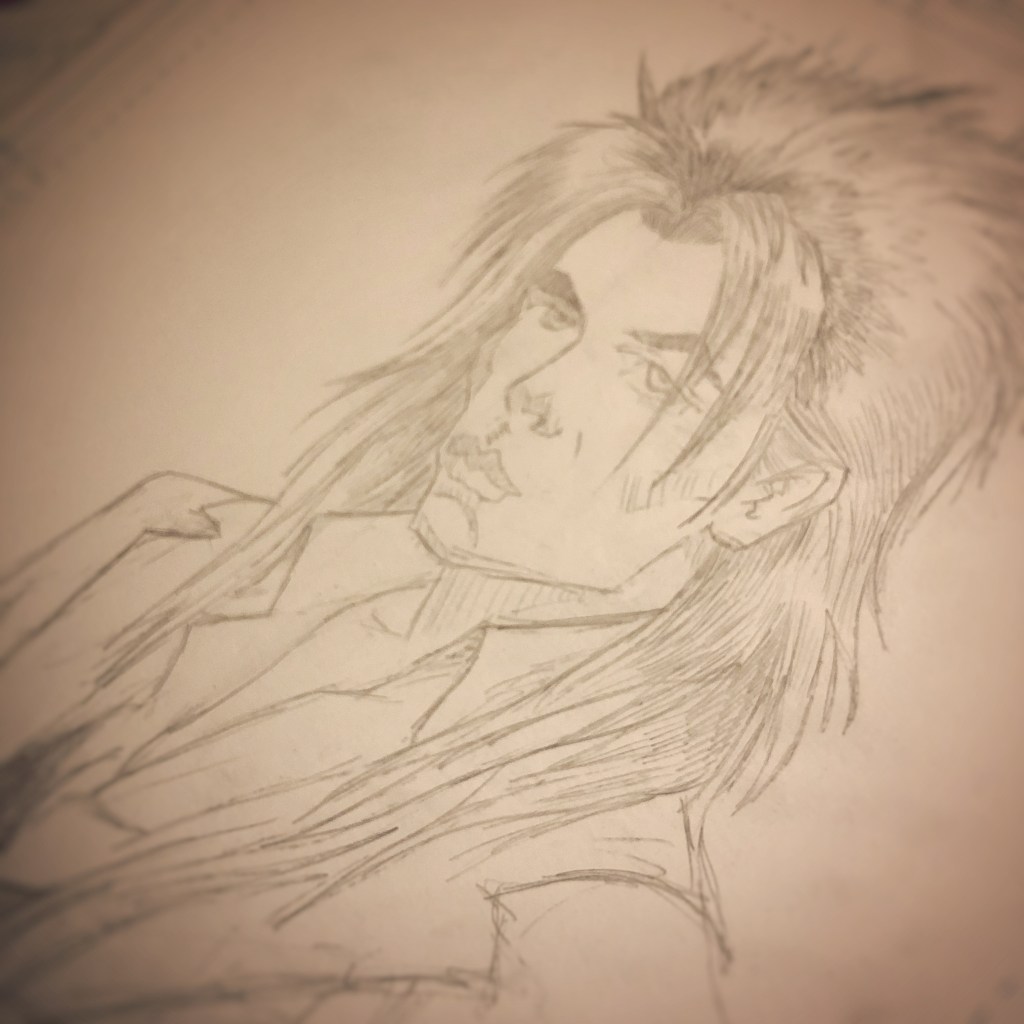
Inspired by the 1986 film Labyrinth, I sketched a portrait of Jareth the Goblin King.
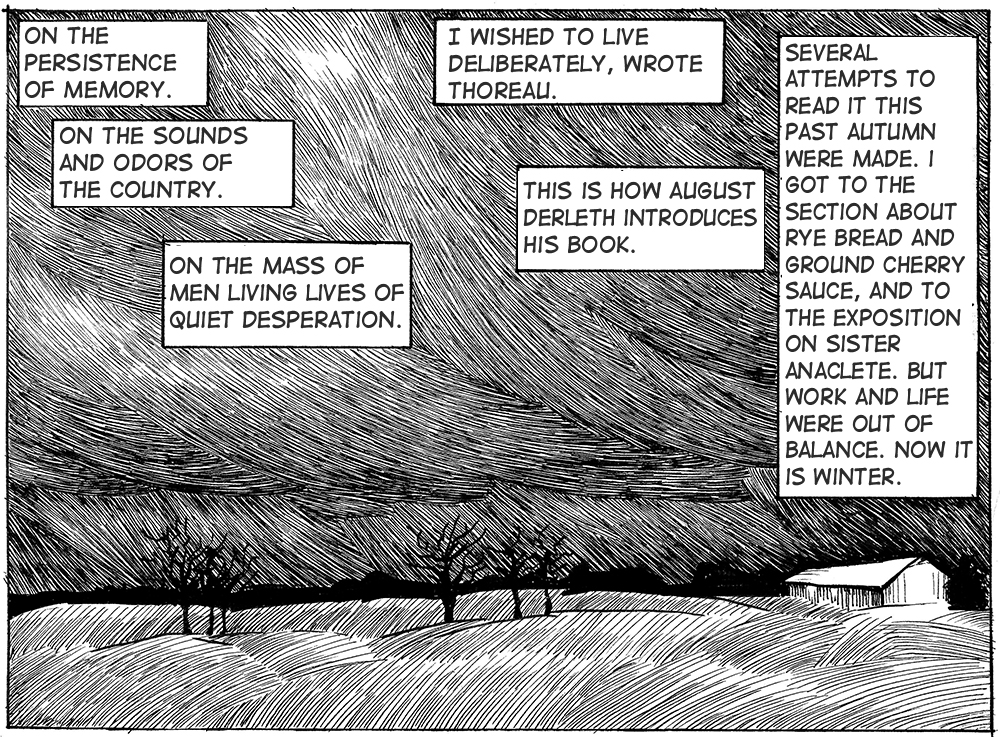
Now it is winter
The Repository of Neglected Things, published
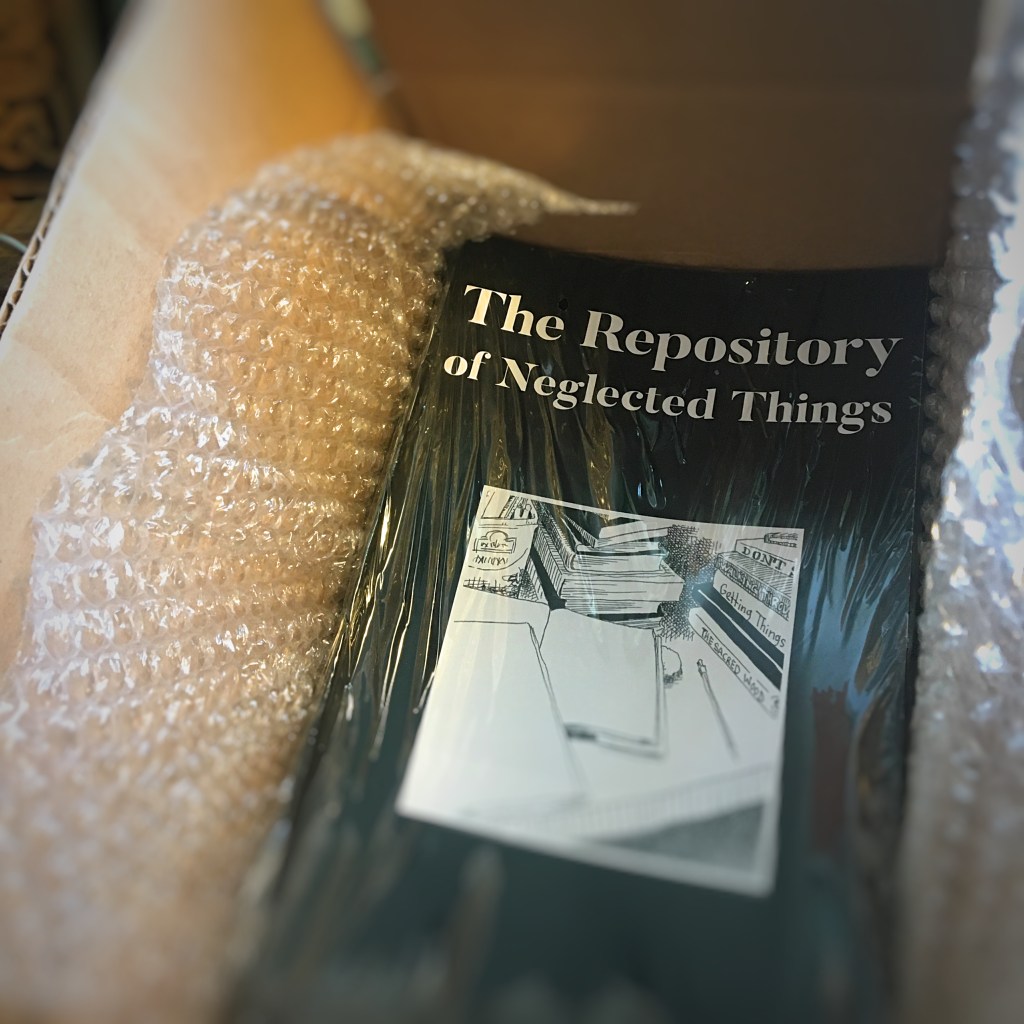
Why was The Repository of Neglected Things written, illustrated and published?
The idea of this published project began grudgingly.
First, some background. Old sketchbooks, from decades ago, resurfaced when I cleaned the garage a year or so ago.
“What am I going to do with these?” I asked my wife.
“Save them,” she answered.
The cleaning plan was to throw away or sell garage items. Throwing away these large sketchbooks was not an option. And neither was selling them. The black cloth cover hardback sketchbooks varied in sizes. Most of them were nine inches wide by 12 inches high with 96 to 110 pages. Some were smaller. The smallest was four inches wide by six inches high. The largest was 11 inches wide by 14 inches high.
A navy blue cloth cover hardback sketchbook made its way from the garage to my desk. It measured six inches wide by nine inches high. The little blue book was half full of sketches. Or half empty. As many as 40 blank pages. My wife encouraged me to fill the blue cloth sketchbook with drawings. My children asked me to make more drawings. One of the children requested I storyboard a comic book. Or picture book. Reluctant, I began a few pencil drawings. My wife bought me some brush markers. I added more sketches. Once the blue sketchbook was filled with drawings, I reviewed it. Should I return it to the garage with the other black sketchbooks?
Summer faded to Autumn. A plan formed around the recently filled blue sketchbook. A mission to show my children that they can write and illustrate their own stories, their own books. The goal. Showcase their work in a print publication. A comic book. With creativity and energy they pulled their stories together. They learned about the process of creating a story, illustrating, organizing pages and layout, and basic pre-press tasks. The stories from the children featured one about cats baking muffins and another of a mouse warrior. My contribution to the anthology was selected drawings from the blue sketchbook. The art inside spanned twenty years. A single narrative titled “The Little Blue Sketchbook” tied the drawings together.
Finally, the publication The Repository of Neglected Things arrived. The children celebrated by flipping through the pages. They paused to examine their contributions. They read selections to each other. And then collected copies to send to friends and family. One child asked, “So, when do we publish the next edition?”
Researching an allegory

Previously mentioned, the above image is an old sketch of the Luther Terry painting.
On weekends, I visited an art museum when I was younger. With pen and black cloth sketchbook, I recorded the painting in to my sketchbook. Practiced drawing. Researched an allegory.
But capitalism is a poor cultivator of the arts. For the price of an item of beauty and value, some would pay the same price for a 728 pixel wide by 60 pixel high web banner. A digital item that pastes at the top of a web page or email for a week or two and then disappears.
The lesson I quickly learned is that beauty is not useful. Art and design that is practical and commercial are valued in America. Sacrifice the permanent on the alter of immediate. This utilitarian principle fuels professional success. Or at least provides employment.
This drawing in my sketchbook reminds me that I once believed that beauty is lasting. And, I still do.
The conversation went something like this. . .
“Are you thinking about painting again?”
“Thinking.”
“I see the easel is up.”
“Yeah. I was cleaning up some stuff in the garage and wanted to see of the easel was in working order.”
“Is it?”
“Sort of. . . the base wobbles. . . but that can be repaired with a wooden shim.”
“And you have a canvas on the easel.”
“Yes. . . well. . . wanted so see if the canvas was secure on the front lower horizontal bar. The top bar works. But I may need to replace the wing nut on the lower bar.
“Looks like you started painting.”
“No. Not really. Gessoed over an old painting. . . Several years ago.”
“What was wrong with the old painting?”
“It was a sketch. . .”
“Well, looks like supper is almost ready.”
“Yeah. . . you hungry?”
Later. After supper.
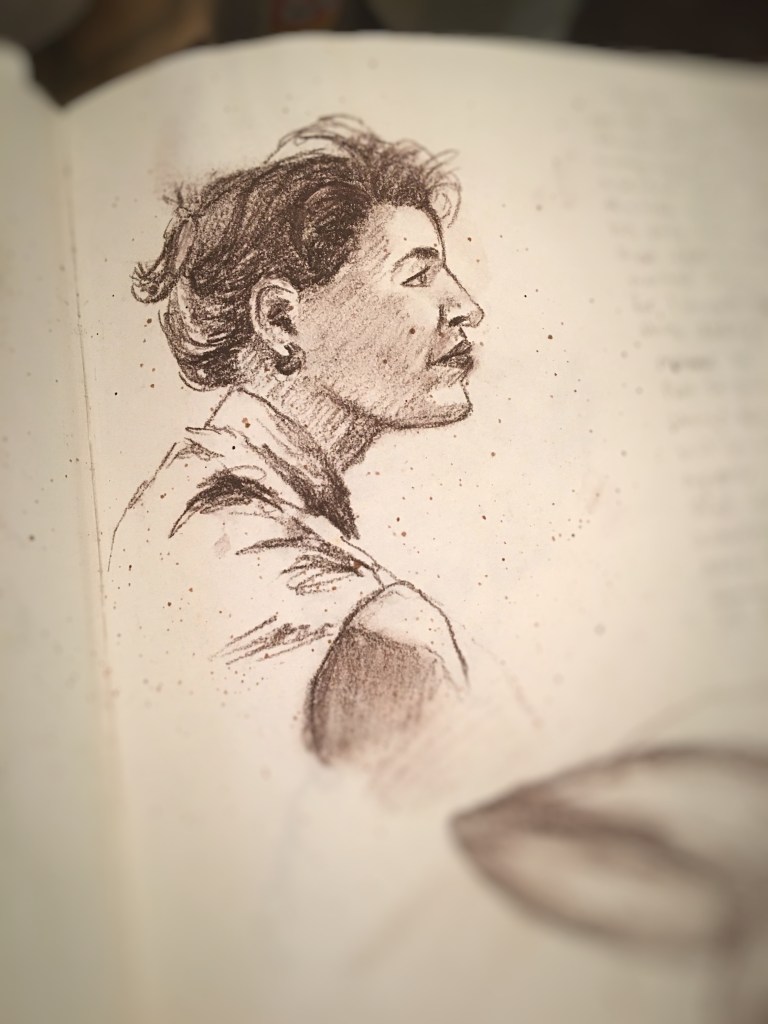
In the garage, old sketch books revealed ideas for paintings. Sharpie marker drawings. Charcoal sketches. Conte crayon drawings. Graphite sketches.
The sketch of a female profile. To be used in a composition inspired by a Luther Terry painting. An allegory. But who should model for the composition’s three figures? Many sketches. Poses. Lighting. All collected in thick hardcover black sketch books. One sketch earns a few minutes of consideration. Maybe. . .
A sigh. A glance outside the garage. Shadows lengthened to darkness. Sun has set.
Practice art work
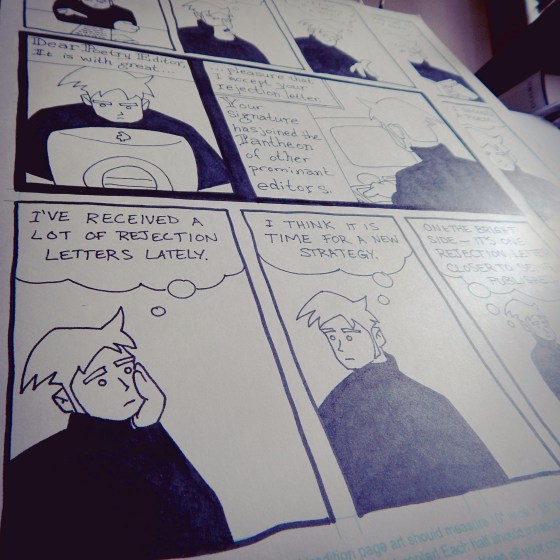
From the archives. This goes back quite a few years. Before social media. And iPhones. How did I manage to create a regular comic strip with a full-time day job?
In truth it took a few years. Little by little. The style developed from pen and brush inking techniques — more realistic illustrations — to Sharpie® marker and Sakura Micron pen illustrations — more graphic and cartoonish. The intent was to streamline the process and art style in order to work quicker. However, the reality is that the graphic, cartoonish style takes just as much time as pen and brush. Just in different applications.
The character remains unnamed — loosely referred to as a young artist. Dressed with black turtleneck and unkept hair. The comic strip ran for maybe a year before the newspaper ended publication. A lot of newspapers and magazines shuddered that year.
I return to the “young artist.” To practice art work. A creative workout. Similar to physical fitness routines. An effort to keep the motor skills of drawing and illustration in shape.
Recent practice comic strips created remain unpublished. Private exercises. Not published in an independent newspaper. Not for public show on Instagram. Or Facebook. I do not have accounts on those social media platforms.
I may share them here. This has become a digital repository of material I find in old art portfolios and sketch books.
Comic book pages found

“What’s that?”
I turned to give the kidlinger a better view.
“Did you draw all that?”
I nodded.
Three years ago I rediscovered these 11 inch by 17 inch pages. Illustrated comic book pages hidden in a storage container. A gray Rubbermaid® Roughneck® storage tote of the 18 gallon variety. I stored art supplies, books, family keepsakes, manuscripts, and tools in dozens of similar totes. Living in a humid subtropic climate at the time, I did this to avoid water damage and mold ruining art and other supplies. Additionally, heavy duty polypropylene bags also prevent mold and water damage. To offer an added level of protection I used the technique of poly bagging art pages and then placing them within totes. When I moved across the country this also acted as a good way to pack.
However, that was not the case with these pages of art I discovered three years ago. Like an archeologist, I excavated those pages from a gray Rubbermaid® tote. They were loose in the tote. Not poly bagged. Print samples of graphic design projects filled the tote as well. And also old newspapers and magazines. Either these publications featured something I wrote or something I designed.
In an effort to preserve the illustrated comic book pages, I found an old presentation book used for interviews. The Itoya Original Art Portfolio presentation books work the best. Good for professional presentation and storage.
During the holiday season I found one of the portfolio books with those illustrated comic book pages. Examined them again. This time one of the kidlingers was spying over my shoulder.
“These are really good,” the kidlinger said. “Better than I can draw.”
“These are practice pages.” I said. Paused to let the kidlinger read the panels on the page. For a brief moment a wave of vulnerability washed over me. A child-like anxiety of examinations. The kind of fear I had when a school teacher reviewed my arithmetic work during class. Found an error and announced it so that all the class might hear. Why had I felt that way about my child reading this page? There were no objectionable elements to the story. Nor art. Nothing inappropriate for the kidlinger’s age. The moment passed.
“What language is this?” Kidlinger pointed at one of the panels on the page.
“German.” I answered. “Deutsche.”
The kidlinger hesitated. I considered translating the passage: Im Schatten sah ich. . .
“Lines from a German poem,” I said. “I added it to the story to help me remember the poem.”
Or to add texture to the short slice-of-life comic book story I composed. Sequential art as some have called it. A clever way of renaming comic book art.
I did not purchase my own comic book until I was in high school. An art teacher suggested that it may be a good way to study human anatomy. And it was. Exaggerated, dynamic anatomy. Superhero comic books were the only type sold at the local gas station on the way to school. The public library carried collections of Peanuts. But nothing like Superman or Batman. They did, however, carry the Classics Illustrated book series. Excalibur was the name of the comic book I bought at the gas station.
Though superhero comic books introduced me to sequential art, it was the slice-of-life stories that intrigued me. At the time, I had not heard of nor read American Splendor, Berlin, Cerebus, or Strangers in Paradise. But that was the direction I was headed creatively.
I probably added lines of German poetry to seem more sophisticated. To elevate comic book pages to sequential art.
“You wrote each of these stories, too?”
“Yes,” I answered the kidlinger. “Every one.”
I started to say something. To explain that these were practice stories and drawings. I wrote the script and illustrated the pages a decade ago. No. Maybe two. Each page, each panel pencilled and inked with crow quill and brush. It was practice for greater things.
My goal in those days was to publish a comic book or a childrens book. I did not know how. But the owner of a comic book store suggested I visit some comic book conventions. I did. And even booked a table on artists alley for a couple comic cons.
Artists alleys are a feature in nearly every comic con. The alleys feature artists and writers showing their work in hopes of securing a job with a major publisher. Or any publisher for that matter. Or trying to sell their own artwork. I met several artist and writers at these comic cons. And learned how hard I needed to work. Over time, I connected with writers and got a few independent projects. Some of them published. Most remained unpublished.
The kidlinger flipped through the entire portfolio. Read through several 2-page and 5-page stories.
“Nice,” said the kidlinger. An expression newly formed in the teenager’s mind to mean awesome or fantastic or good.
“What do you think?” I asked.
“I don’t know,” said the kidlinger and ambled out of the room.
I thought about that for awhile. What had the kidlinger found in looking through these pages? These artifacts? In a way, this portfolio is a childrens book for at least one child — my child — mein Kind. But these pages remain unpublished. Hidden in a black portfolio book. Even a fragment of a German poem remained hidden: Im Schatten sah ich/Ein Blümchen stehn. . .
I stumble through a translation:
In shadow I sawa flower stand. . .
Or maybe:
In shade I sawa flower grow. . .
What is that? Goethe? Was I reading Goethe back then?
I will not deny the desire that someday I would like these early drawings and writings published. But why? Maybe my desire is misplaced. Maybe these pages should remain in the shadow. In the shade. They are practice pages after all.
And then I have discovered something else. I was reading Goethe when I illustrated those pages. A fragment from Goethe’s poem “Gefunden.” Or, in English, “Found.”
Saturday morning jazz
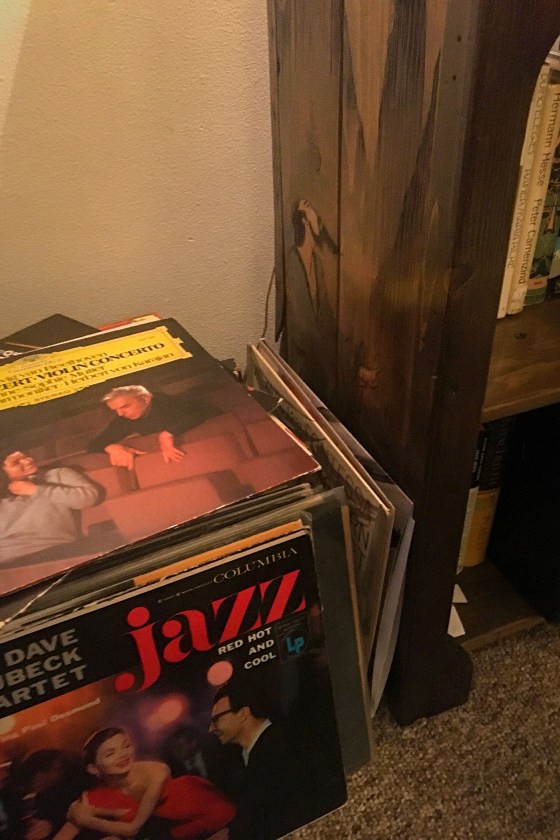
Saturday mornings. The work week is done. Sunrise is an hour or more away. The windows open. And have been all week. Unusual for this time of year and this part of the country. Birds create a pre-dawn cacophony in the evergreens outside the windows to the east.
The oldest kidlinger is up early doing laundry. Needs clean clothes for work later today. We move about the apartment quietly.
Saturday mornings are time for jazz. Brubeck. Coltrane. Evans. Tatum. But it is too early for Saturday morning jazz. It is time for stillness. A time to plan, think, and meditate.
* * *
Conversations from the week come to mind. What makes a good book?
There are good books. Or at least, interesting books. There are poorly written books. And bad books. Meaning stylistically bad (as in the content is unsuccessfully researched, appallingly argued, or intentionally misleading). There are well-written books with poorly argued thesis statements. There are dull books with good data. And there is a bookshelf that holds them together.
The no-plan, salvaged-wood bookshelf collects a portion of my library. The space between the work-from-home station and the vintage stereo is the new home of the bookshelf. The summer therapy project was completed so late that the intended use for the bookshelf for school materials was no longer relevant.
The relevance is now my education. My continuing education in art, science and religion. Essentially, philosophy. What is truth? And, how do I know it? Variations on a theme. A book about technology. Another about project and time management. The top shelf nearly all books of poetry and essays. Some memoirs and novels. Several books on theology and spirituality. Books by American writers. British writers. And German writers.
The second shelf. A mix of poetry, fiction, essays, art and design. The third shelf. Memoirs, classical education, technology, theology, and philosophy.
Reading an abundance of books does not make an individual well-read. Reading great books does not make one well-read. Understanding the great conversation makes a reader well-read.
* * *
“I don’t read books,” he said. I did not know what to say. “I read the newspaper. Mainly the sports page. But that’s it.”
I recalled the conversation from a few years ago. At lunch. On the patio of the Knickerbocker Hotel. The thought appalled me. Not the person. He’s a good guy. But no book reading? How is that possible?
And I know how this happens. Happened. Long days of work. Long commute. Family responsibilities. Community engagement. And other demands. Priorities need to be made in order to set and accomplish goals.
* * *
Found myself in the recliner. Everyone asleep. It was late. The lamp near the recliner was on. All other lights were off. The apartment was dark. A copy of the New Yorker on my chest. The record player was on. Three records on the platter. Waiting to be reloaded on the center spindle.
I had fallen asleep. Midway through the tables for two section of the magazine. Could not even keep my eyes open. Did I eat supper? Or dream of eating it? Or dream of reading that I ate it?
Who has time to read legacy publications? Will try again on the weekend.
I folded the magazine cover to the back so that the page I had read was open. And placed it on the top of the bookshelf to read later. Then turned off the lamp.
* * *
How did it get to be noon? How did it get to be Saturday?
The sun is bright. Warm November breeze rattles the remaining brown leaves on the tree outside. Art Tatum plays from the record player.
I return a small book to the bookshelf. I place it open on the top shelf of the no-plan, salvaged-wood bookshelf I built this summer. The shelves are deep. At least a foot deep. Could hold two rows of standard-sized paperback books.
I place the book open on the top shelf. A reminder for me to return to the passage that captured my attention. Imagination. A bread crumb trail back to an idea.
The next vinyl record drops down the spindle. Bill Evens. Peace Piece. It is Saturday morning jazz slouching toward afternoon.
Serious things

“What did you do last night?” she asked as we walked through the neighborhood in the pre-dawn moments of the day.
“I worked ’til six. Clocked out. Made supper. And spent a couple hours drawing.”
She did not say anything for a few dozen steps. She took the kidlingers on an adventure the night before. And she was tired.
I continued. “The challenge is that it takes me nearly an hour to set up. Not just gathering tools like pencil, ink, brush, illustration board, and setting up a space to work. But planning. Composing a page. Thumbnail sketches. Reference materials and such.”
She listened. We walked further. In the hour before sunrise, I looked East. I saw Venus. Or maybe Regulus. Possibly both.
“By the time everyone got home,” I said. “I had finished marking out a page and composing three panels.”
She told me about a conversation with the one of the kidlingers as we walked. We exchanged comments about plans for the day. We continued for a quarter mile or so before returning home.
Thoughts of last night’s drawings were pushed into the shadows of a day filled with choses sérieuses.
Try again another night
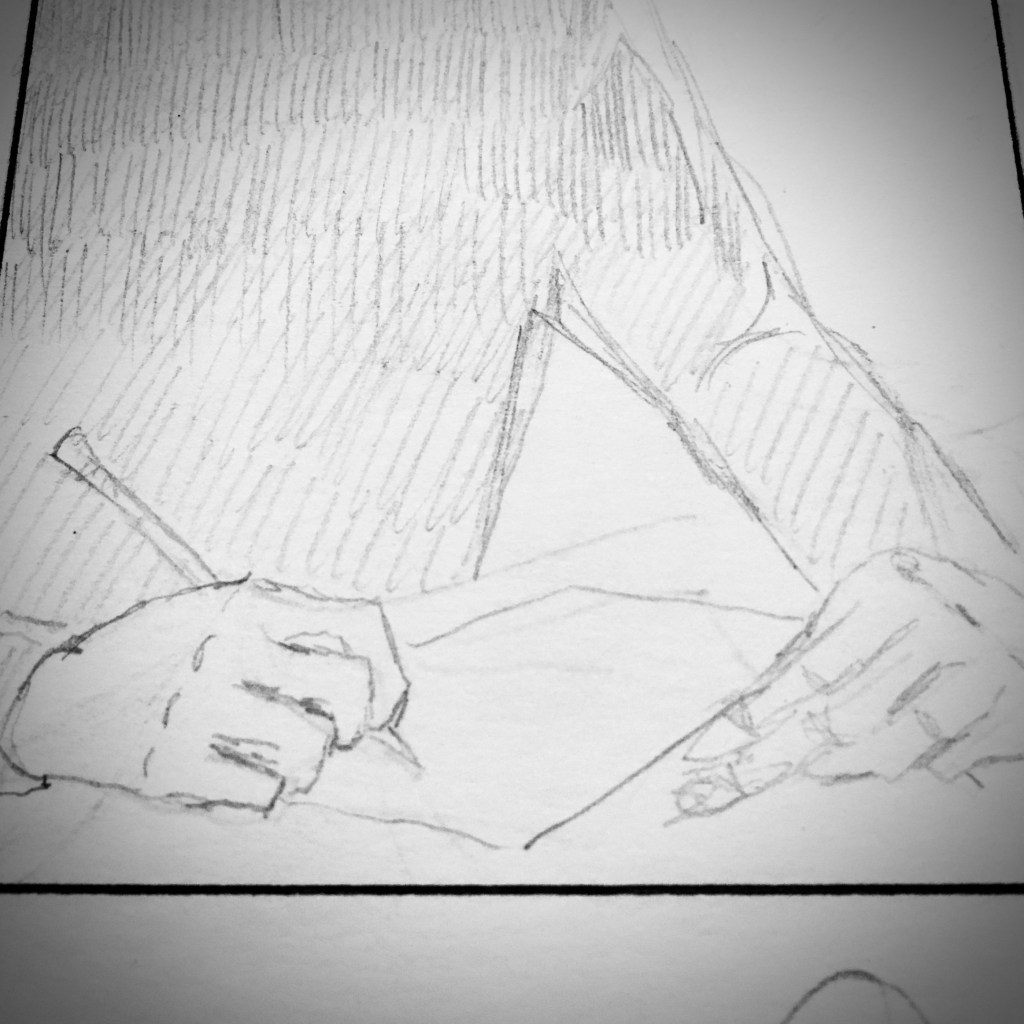
How long did I look at this drawing the other night? 15 minutes? 30 minutes?
Calculated the time it would take to complete the drawing. Did I have the time?
Considered if the time spent on this illustration was valuable.
Too late. A kidlinger requested help. Followed by a short list of other household chores.
The illustration was placed back in the portfolio with 60 other drawings in various stages of completion.
Try it again another night.
Art making in quarantine
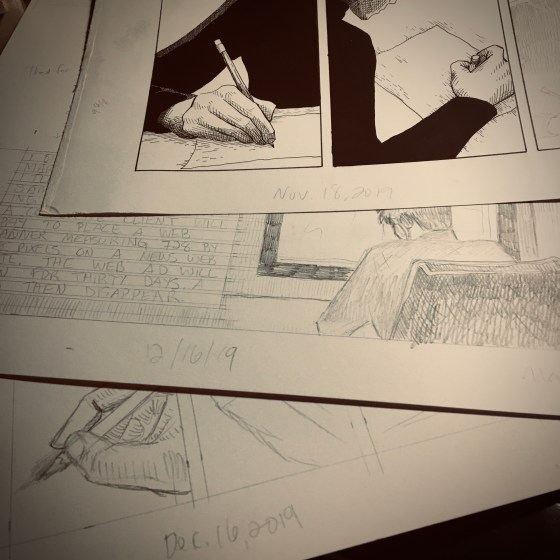
Inspired by Inktober 2019, I kept working on illustrations throughout November and December. For me, this was intentional art exercise. Keeping up the practice of crafting pencil compositions on illustration board. It was a private affair. No commercial application. Just me, a pencil, and board. But I hit a dry spell entering the new year. Actually, it was not a dry spell, but rather a lack of designated time to practice.
Commuting for two hours a day was part of the daily routine. By train and by street car. Or by automobile. Traveling sapped my energy. But now with state and government safe at home orders, I tried to ease back into evening illustration exercise.
Working from home had its own set of demands. Working from home with a family in an area of less than 1000 square feet presented additional challenges. But these are first world problems.
The first week was difficult. Routines and life patterns merged. A lot of discovery. Kidlingers and spouse realized what I did for work all day. Or at least attempted to do in spite of technological challenges with internet speed and video conferencing.
All evening activities outside the home had been cancelled until further notice. I had more time to catch up on reading and art projects. But resuming the exercise of illustration was difficult.
The first evening all I did was organize and clean the art tools and space. The next night all I did was ink one of the drawings. The plan for the illustrations were simple, clean drawings in the fashion of cartoons and comic books. Another night all I did was tone an illustration with shading and hatching. The direction shifted to a stylized portrait. The results surprised and pleased me.
This encouraged me to continue the practice. And it also encouraged the kidlingers to make art as well.
The practice of sketching, or a meditation on loss and gratitude
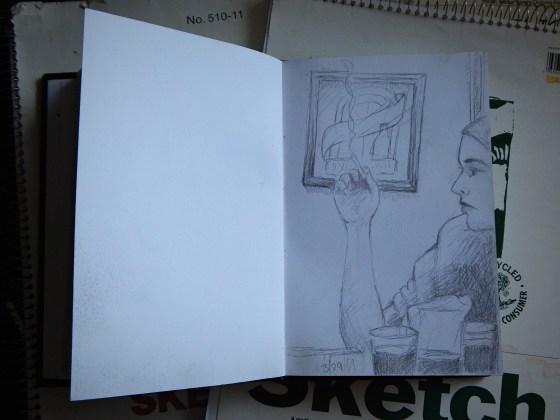
Relocating to Wisconsin was done with such haste that I am still discovering unopened boxes of items. Some items I have not seen in years. One such discovery was a series of old sketchbooks.
A five-minute sketch of a landscape painting on display at an art museum. The composition captured, but not the details.
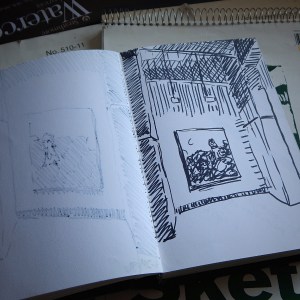
A loose sketch of a production of Shakespeare in the Park.
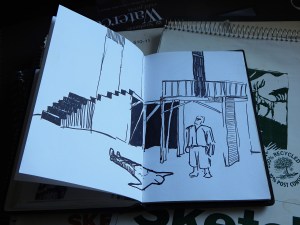
A 30-minute sketch of a roommate reading a magazine. That was back in the days before mobile phones, tablets and laptop computers.
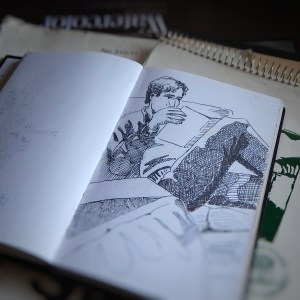
When I flipped through the pages of these sketchbooks there was a mixture of despair and some other unnamed emotion. Is it possible to name every emotion? Is it necessary to catalog everything in the cosmos in hopes of gaining understanding? Or knowledge? Or wisdom? But I digress.
Each sketch had a story. The night at a downtown pub when I learned I was no good at billiards. After the first game, I enjoyed the rest of the evening by doing sketches. I remember the show at the art museum and the artist represented. The friends who invited me to see Shakespeare in the Park. And the rare moment a very charismatic roommate sat on the couch before jetting off to a concert or movie or date or some other activity.
A sketch is an exercise that precedes a painting. But these sketches never received the intended painting. Reportedly, Thomas More’s poems for Epigrammata began as a Latin translation exercise. If I view these sketches as lost paintings, I despair. But if I view these sketches as exercises, I am gratified.
The practice of sketching is an exercise and preliminary draft of an art object. Even today, I still sketch ideas and images. For example, I was asked to create a logo design for a business event.
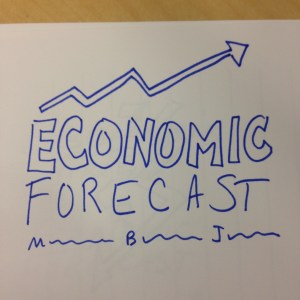
After some discussion the request included the city skyline of Milwaukee.
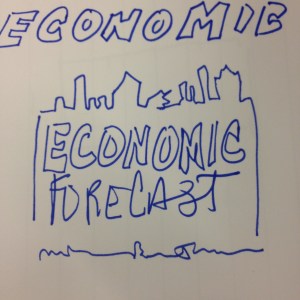
Once a plan was in place, I quickly moved to a digital rendering of the logo design and colors. Securing a piece of stock illustration, I customized the vector image and crafted a logotype used to promote and represent the business event.
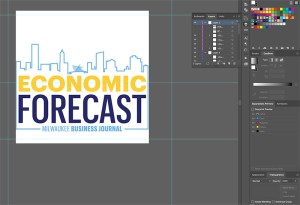
The pace of work is so fast, months go by without me realizing the value of the brand created. What took hours over the span of a few days, was on display on the front page of the newspaper and behind a representative from the Federal Reserve Bank in Chicago.

A few small three-inch square pen sketches became a huge display banner at a business event in Milwaukee. The practice of sketching is twofold: exercise and exhibit. The path to the 2019 Economic Forecast event logo and banner was a thousand unseen sketches. Page after page. Year after year. A lot of practice pieces that remain lost from view. But without them the objects that are visible would not have been created.
Strange Throwback Thursday
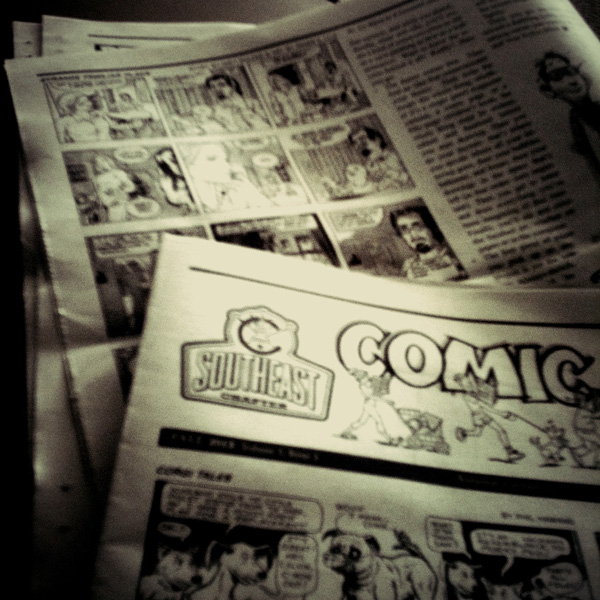
After nearly a six-year hiatus, I was excited to see a project that began with notes and sketches transform into a published comic strip. Even if it was a one-off. Even if I had to hand the responsibility of drawing each panel to someone else. It was done.
I had imagined that the creative non-fiction comic story I crafted would earn some interest. Maybe it would open a few doors to an audience. And allow me to write and illustrate. Even earn some money. Maybe I would quit my day job and provide for my household by doing something I loved. Telling stories. And drawing pictures.
That was five years ago.
A few weeks ago I found a box in the garage. It had several copies of a publication that printed my comic strip. I glanced over the pages and then placed them back into the box. I also found several books. Opened one book I remembered enjoying.
“What’s that?” asked one of the children.
“It’s a collection of comic strips.”
“Oh.”
I pulled a copy from the box and gave it to the child.
“There’s a story in there I wrote.” I said. “See if you can find it.”
The child took the copy of Comic Stroll and headed off to the couch in the living room.
I flipped through the pages of the book I had found. Read a few highlights.
Yeah, I resemble that, I thought to myself after reading a few lines at the end of the book. The author referenced a friend of his who gave up an art gig for a corporate job in order to provide for his family.
Yeah. I know what that is like.
How many comic pages might I have written and illustrated if I had. . . Well, what-ifs and might-have-beens are dangerous paths to pursue. What you did, great or small, is what matters.
Watching my progeny spend an afternoon reading comic strips I had a hand in creating was a pleasure.
NOTES:
Comic Stroll, a publication of the Southeast chapter of the National Cartoonist Society, featured a collection of previously unpublished comic strips. You can read the whole journey of what started in November 2005 as a couple drawings and became a creative non-fiction comic strip:
[1] Comics and Narrative Non-Fiction
[2] Comics and Narrative Non-Fiction Continued
[3] Narrative Non-Fiction Comics: part 3
[4] Narrative Non-Fiction Comics: part 4
[5] Narrative Non-Fiction Comics: part 5
[6] Narrative Non-Fiction Comics: UPDATE
[7] Narrative Non-Fiction Comics: UPDATE
[8] Strange Familiar Place comic series
[9] Strange Familiar Place returns
[10] The return of Strange Familiar Place to print
Thursday Great Lakes blues
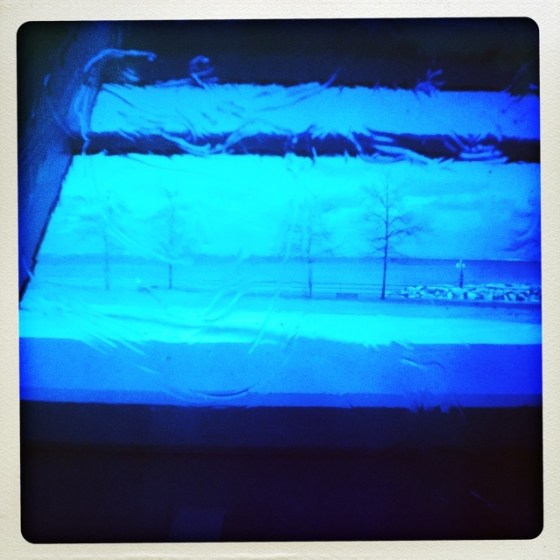
Lake Michigan. Last week. As viewed from the the Milwaukee Art Museum’s Baumgartner Galleria. Glass sculpture.
Find four more hours in a day
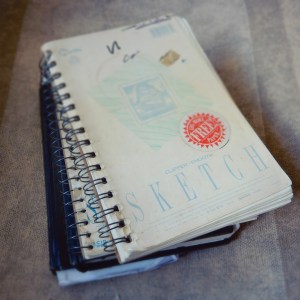
Personal archeology.
Discovered these old sketch books in September. Looked at them. Placed them on a shelf. Lost them again.
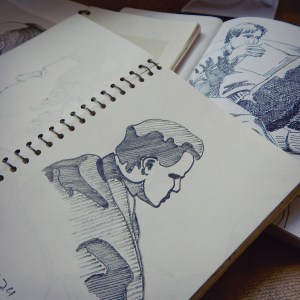
Rediscovered the sketch books again this weekend. Marveled at how much time was invested. Considered how these books were populated with sketches of classmates, drawings of roommates and other ephemera in a place and time were smart phones, tablets and laptops were not ubiquitous.
Question:
What would you be able to create if you were not glued to your smart phone for more than four hours[1] a day?
NOTES:
[1] How Much Time Do People Spend on Their Mobile Phones in 2017?, Hacker Noon, May 9, 2017, accessed December 11, 2017 https://hackernoon.com/how-much-time-do-people-spend-on-their-mobile-phones-in-2017-e5f90a0b10a6
The final page

The final page of a sketchbook is a peculiar geography. . . read more ->
Leaving the oak grove office
![DSCN3911[sqr-tilt-dallas]](https://coffeehousejunkie.net/wp-content/uploads/2015/08/dscn3911sqr-tilt-dallas.jpg?w=560)
The summer is at an end. Or at least the American tradition of the start of school and Labor Day signify the end of summer. And so, my work at the oak grove office has also concluded.
From the shade of oak trees, I hand-lettered and hand-painted signs for a Renaissance Faire. An anachronistic skill for these highly digital, automated modern times.
“Sure,” he said, the mastermind and owner of the School of Combat. “I can get these signs printed somewhere. But this isn’t a… video game… This is real combat. Real armor. With real swords. The signs need to be real. Anything fake… and the magic is gone.”
![DSCN3912[sqr-tilt-dallas]](https://coffeehousejunkie.net/wp-content/uploads/2015/08/dscn3912sqr-tilt-dallas.jpg?w=300) When tasks around the grounds did not occupy his attention, he would take a pencil and sketch out a drawing of a crane or boar on a wooden shield. All the drawings were based on authentic heraldry. My job was to accurately paint the shields.
When tasks around the grounds did not occupy his attention, he would take a pencil and sketch out a drawing of a crane or boar on a wooden shield. All the drawings were based on authentic heraldry. My job was to accurately paint the shields.
“Should only take a few hours,” he said after he assigned projects. “Depending on the details.”
All the shields were painted with a combination of six colors. Attention to detail and quickness of brush were essential to the painting of the shields and signs. Some mornings I would draw a double-headed rooster, unicorn or swan. Before noon, paint filled in the background. Red for the swan and unicorn. White for the double-headed rooster and the crow. Water was used to thin the acrylic paint for some techniques like shadows and highlights.
“I like it,” he said after he inspected my work on the wild boar shield. “You should see kids when they enter the ring. They’ll claim one of these shields… They’ll point at it or whack it with their foil. The painted animal or bestiary becomes their totem.”
![DSCN3903[sqr-dallas]](https://coffeehousejunkie.net/wp-content/uploads/2015/08/dscn3903sqr-dallas.jpg?w=300) He asked for my brush. Loaded it with some black. Mixed in some white. A little blue. Touched up a few details on the belly of the boar. I did not mind. Always yield to the master. Some of his crew have told me that other artists did not last past a day with him. Maybe they were untrainable.
He asked for my brush. Loaded it with some black. Mixed in some white. A little blue. Touched up a few details on the belly of the boar. I did not mind. Always yield to the master. Some of his crew have told me that other artists did not last past a day with him. Maybe they were untrainable.
“Yeah, this is great,” he said and handed me back the brush. “You don’t know how happy this makes me.”
He took a seat, smiled, slowly ran is hand over his nearly shaved head. I explained a couple details about the boar and the other shields I had worked on that day.
“You know,” he started. “This is spiritual… very spiritual…”
![DSCN3904[sqr-tilt-dallas]](https://coffeehousejunkie.net/wp-content/uploads/2015/08/dscn3904sqr-tilt-dallas.jpg?w=300) The fencing ring is violent, he conceded. But it is necessary, he added. America does not have a rite of passage for boys becoming men or girls becoming women. The ring provides a balance to the scales in some manner. Brothers settle festering scores with each other. Young men humiliated for their arrogance. Families learn about justice when they enter the ring of combat. Daughters win matches and glow with achievement. He told me all manner of stories about the ring.
The fencing ring is violent, he conceded. But it is necessary, he added. America does not have a rite of passage for boys becoming men or girls becoming women. The ring provides a balance to the scales in some manner. Brothers settle festering scores with each other. Young men humiliated for their arrogance. Families learn about justice when they enter the ring of combat. Daughters win matches and glow with achievement. He told me all manner of stories about the ring.
Then he stood up, “No one has ever been injured in the ring. The armor prevents that. Well, maybe injury to their pride. The armor allows for that.”
He smiled his hallmark smile.
After I returned to the task of painting shields, meditation on his words continued. In that oak grove, there was no artificial broadcast of mechanically distributed musical entertainment. The rhythm of framers hammering out their progress on a building competed with bird song. Every so often a circular saw cuts through the hot summer afternoon.
![DSCN3421[...]](https://coffeehousejunkie.net/wp-content/uploads/2015/06/dscn3421.jpg?w=300) Boys tend to gauge range first before striking, he told me earlier in the summer. Girls go straight for the prize. If you want to win, he told me. Strike first and fast. And don’t stop until someone pulls you off the target.
Boys tend to gauge range first before striking, he told me earlier in the summer. Girls go straight for the prize. If you want to win, he told me. Strike first and fast. And don’t stop until someone pulls you off the target.
My brush paused at that thought. I gauged the next brush stroke. Cursed myself for lack of discipline, and applied the next stroke. And the one after that. On target and fast.
Do not stop until someone pulls you away. Until summer fades to autumn. Until the shields and signs are placed.
Book cover illustration – update
Fear motivates. The paralyzing fear that if I mess up the coloring of this book cover art, I will have to start the whole process over again. And the completion date is fast approaching. But the task needs to be done. So, onward.
![DSCN3428[sqr-tilt-dallas]](https://coffeehousejunkie.net/wp-content/uploads/2015/06/dscn3428sqr-tilt-dallas.jpg?w=560)
Watercolor washes begin the color process for the book cover illustration.
![DSCN3427[sqr-tilt-dallas]](https://coffeehousejunkie.net/wp-content/uploads/2015/06/dscn3427sqr-tilt-dallas.jpg?w=560)
Paint to the edges and then let the colors bleed. The basic color palette had already been determined weeks prior to the final execution of the cover art. But once the water and pigment are activated on the surface of the paper, the color palette organically builds to its own organized spontaneity.
![DSCN3434[sqr-tilt-dallas]](https://coffeehousejunkie.net/wp-content/uploads/2015/06/dscn3434sqr-tilt-dallas.jpg?w=560)
Details. There are always small details that many casual observers may not detect at first glance. For example, the color for the shotgun shell includes multiple wash layers of different pigments — each layer pulling or pushing color from previous layer.
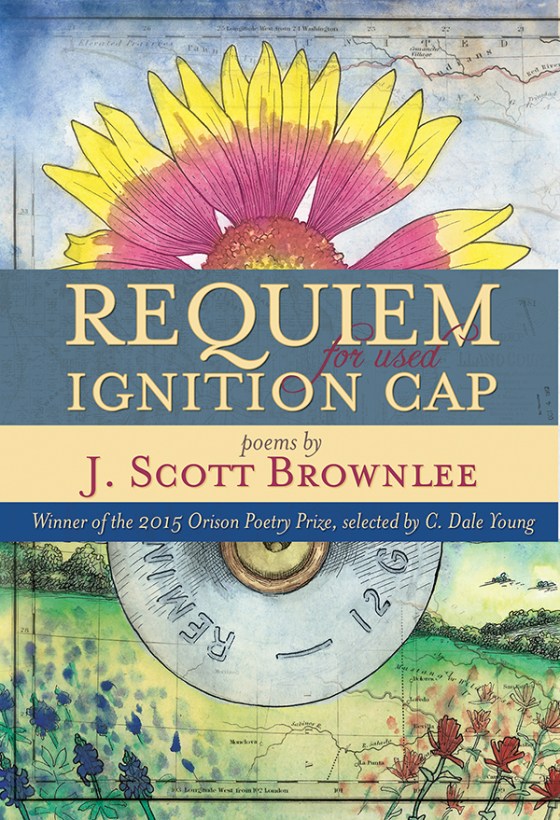
Once the final art is approved, I finished the design with title bar and a map overlay to texture the collage art.
 Coffeehouse Junkie