“It’s a good time to come together at the table of poetry,” says Laura Hope-Gill, the director of Asheville Wordfest, in a recent article in the Asheville Citizen-Times.[1] I’m very excited to be part of the local Asheville poets who will be reading during the festival. I’m also excited to listen to the guest poets attending this year’s poetry festival. Some of the guests include Arthur Sze [2] (author of The Ginkgo Light, Archipelago and other books) and Matthew Shenoda (author of Somewhere Else and Seasons of Lotus, Seasons of Bone of which A. Van Jordan writes, the poet “uses a quiet language to bring some of the most striking lyrical intensity.”).[3]
This year’s Wordfest includes a memorial reading for poet Carol Novack. On a rainy evening last summer at the Battery Park Book Exchange and Champagne Bar was the last time I saw her. She was with friends and admirers reading selections from Giraffes in Hiding.
This morning I received an email from the director of Asheville Wordfest with the official schedule for the Asheville Wordfest 2012. It is listed below for those who have not received the schedule:
Wednesday
• 9-11 p.m.
Open mic hosted by Caleb Beissert. Vanuatu Kava Bar, 15 Eagle St.
Thursday
• 7 p.m. “Poem-ing the 28801,”
with Barbie Angell, Ten Cent Poetry, Jonathan Santos and Jadwiga McKay at Vanuatu Kava Bar.
Friday
• Noon, informational luncheon with Lenoir Rhyne University graduate studies program director Paul Knott, who will talk about the Masters in Writing program. Chamber of Commerce building, 2nd floor, 36 Montford Ave. RSVP required to Sara Landry at 258-6136 or Sara.Landry@lr.edu.
• 5-7 p.m., MadHat Reception honoring Carol Novack. Refreshments.
• 7 p.m. “Voices of the City,”
Katherine Soniat, DeWayne Barton, Ronald Reginald King, Matt Mulder, Ekua Adisa and Roberto Hess.
• 9 p.m. “An Evening of Translation,”
with Erik Bendix, Caleb Beissert, Thomas Rain Crowe, Nan Watkins and Luke Hankins.
Saturday
• 11 a.m.-12:30 p.m., “The Poets of Press 53,”
with Terri Kirby Erickson, Joseph Mills and Kathryn Kirkpatrick.
• 1-2 p.m. The Carol Novack Memorial Reading,
with Terese Svoboda, Marc Vincenz and Jeff Davis, Asheville Wordfest co-founder and host of Wordplay.
• 3 p.m. “Fixing to Tell About Jack,”
a celebration and benefit for Ray and Rosa Hicks Fund, featuring storytellers Sheila Kay Adams, Gwenda Ledbetter, Vixi Jil Glen, David Novak, Connie Regan-Blake and Ted Hicks. $12; additional donations welcomed.
• 5:30-6:30 p.m.The Poets of the Asheville-Buncombe County Schools Poetry Slam.
• 7-9 p.m. “Our Honored Guests,”
with Sara Day Evans, LeAnne Howe, Allison Adelle Hedge Coke, Arthur Sze and Matthew Shenoda
• 10 p.m. until late. “Late Night Open Mic.”
Sunday
• 10:30-11:30 p.m. “Children’s Poetry and Children’s Poems,” hosted by Barbie Angell..
• Noon-1 p.m. “Morning of Spirit,” with Tracey Schmidt and James Davis of Logosophia Books, Michael Ivey on guitar and Matthew Cox from Shantavaani on tablas and hand drums. An open mic will invite people to share their own spiritual poems.
• 1:30-2:30 p.m. “Voices of the City,” with April Fox, Eric Steineger, Lisa Sarasohn and Meta Commerce.
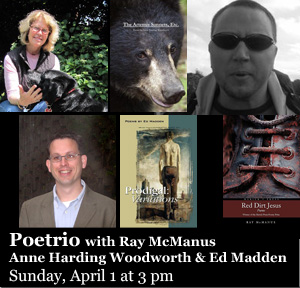
• 3 p.m., “Poetrio,” with Maureen Sherbody, Mark DeFoe and Jessie Carty. Malaprops Bookstore/Café, 55 Haywood St.
• 5 p.m. until whenever, “Poetic Wine-Down,” Battery Park Book Exchange and Champagne Bar, Grove Arcade.[4]
NOTES: [1] “Asheville Wordfest celebrates poetry of all stripes, May 2-6” [2] The Poetry Foundations bio of Arthur Sze [3] Matthew Shenoda’s web site [4] Asheville Wordfest 2012
 The afterglow of Asheville Wordfest 2012 has barely faded. In truth, I’m still recovering from the rich, full weekend, but excited to announce tomorrow night’s literary reading.
 It’s true. There is only one article I read from the pages of O: The Oprah Magazine. It is the interview between Maria Shriver and the poet Mary Oliver.

 How do you capture an abstract thought for a book cover design? That’s the question one person left in the comments section to
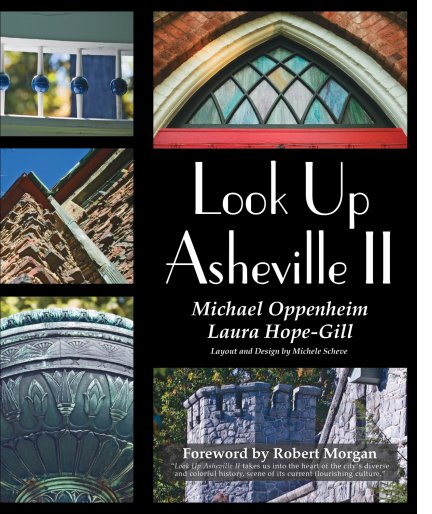


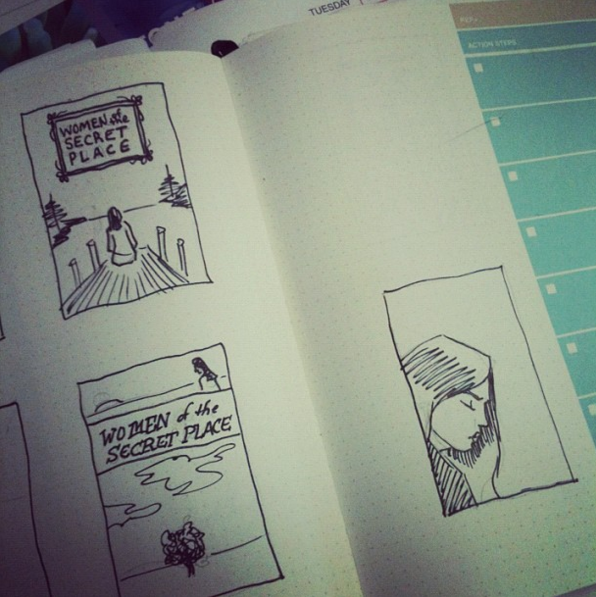 For me, every book cover I design begins with pencil sketches that eventually lead to ink drawings. Actually, I suppose it begins prior to that. The author receives a pre-publication questionnaire from me prior to the design process. The questionnaire asks the author what is his/her elevator pitch, what are the pillars of the book (i.e. what are three main concepts/ideas in the book?), and what is the book’s key audience? There are more questions that help me prepare for the design process, but reading through that document helps me form an idea of who the author is, what the book is about and how best to represent the book’s content with an attractive cover.
 Coffeehouse Junkie