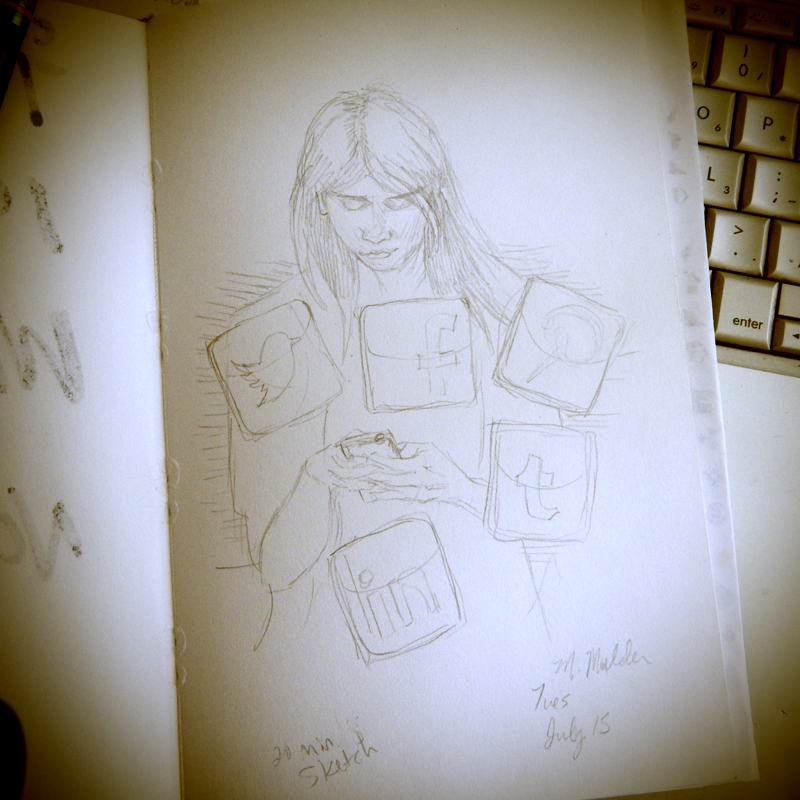
A picture is worth a thousand words. A common expression. Or common illusion. The story behind the image used in a post, “Meformer” (vs “informer”), does not tell the whole story. Not even part of the story. The post deflects the writer’s fears and anxiety. What do you see in the twenty minute sketch captured by an outdated iPhone photo?
Another images portrays an artist’s workspace. An unfinished ink and watercolor painting. The related post reveals part of the story. Fear motivates. But there is a whole story arch of dreams and desires. Hopes and aspirations. And failure. If you were to write a thousand words about this photo, what story would you tell?
Notepads capture interesting details. To do lists. Contact information. Grocery lists. Project tasks. Appointments. Or this photo of an anatomy of print advertising. Why this list? What story does this relate?
The illusion of these photos is the framing. The information that is cropped out of the image is equally as important as what is framed within it.
It rained all day. A perfect day for reading books and drinking tea. By the opened window I listened to the rain and struggled with a dozen pages of one of Thomas Carlyle’s lectures. That afternoon I turned to Epstein for consolation. If he found it difficult to read Carlyle’s prose about the French Revolution, I may be in good company. Not that I should be compared to such a man of letters.
Many years ago I aspired to a career in letters. A local independent newspaper published my work. Then a few national and international literary journals picked up my work. Surrounded by writers who supported me and encouraged me to continue along that path, I composed a series of narrative non-fiction pieces. Sketches for a full-length book. Searching through this site’s archives, ten years ago (almost to the date), I teased these efforts. Writers had reviewed the three or four of the chapter sketches. An editor was sought to help finish the process. And publications were selected for submission to publication. And then. . .
These stories remain unpublished to date.
NOTES: *The title of the post is a line from “In Rainy September” by Robert Bly.
Apparently I was so tired that I forgot to click the button marked “publish” on Sunday, September 11, 2022 at 9:48PM.
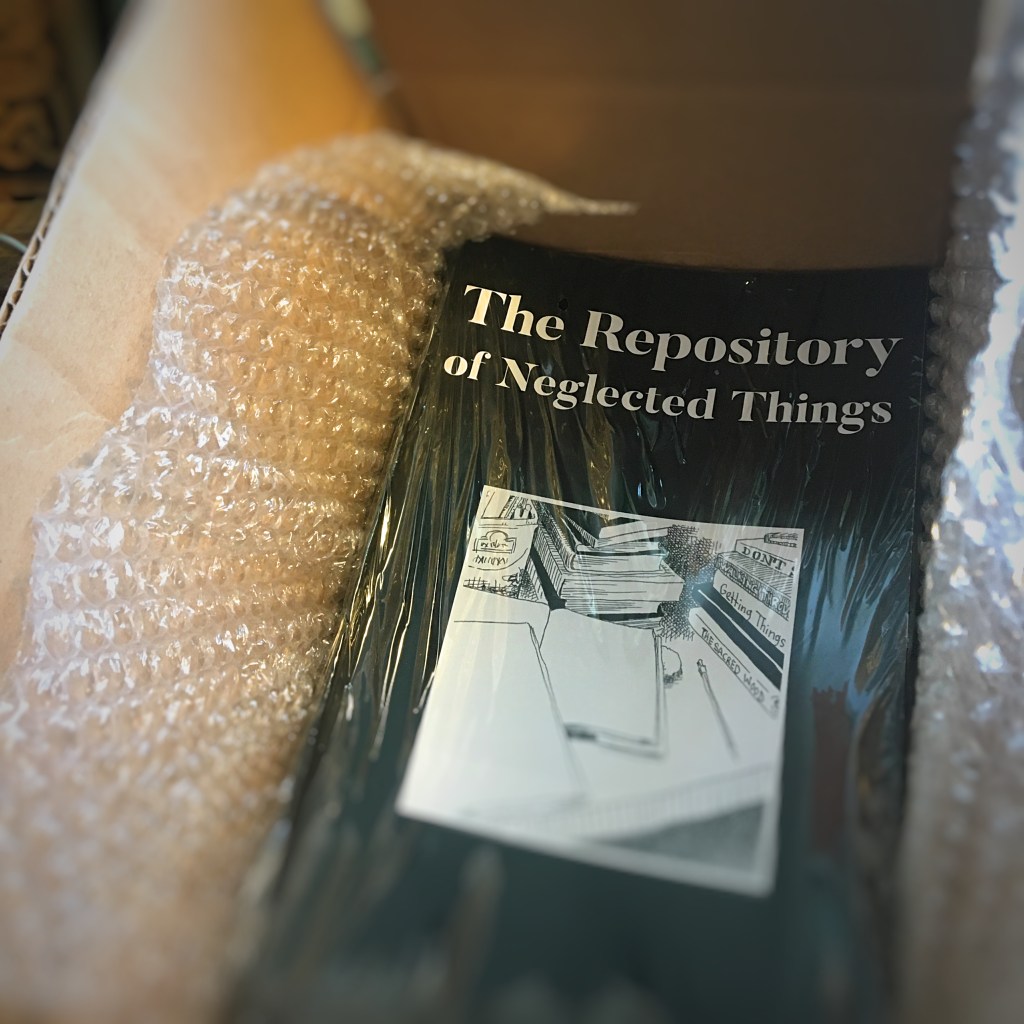
Why was The Repository of Neglected Things written, illustrated and published?
The idea of this published project began grudgingly.
First, some background. Old sketchbooks, from decades ago, resurfaced when I cleaned the garage a year or so ago.
“What am I going to do with these?” I asked my wife.
“Save them,” she answered.
The cleaning plan was to throw away or sell garage items. Throwing away these large sketchbooks was not an option. And neither was selling them. The black cloth cover hardback sketchbooks varied in sizes. Most of them were nine inches wide by 12 inches high with 96 to 110 pages. Some were smaller. The smallest was four inches wide by six inches high. The largest was 11 inches wide by 14 inches high.
A navy blue cloth cover hardback sketchbook made its way from the garage to my desk. It measured six inches wide by nine inches high. The little blue book was half full of sketches. Or half empty. As many as 40 blank pages. My wife encouraged me to fill the blue cloth sketchbook with drawings. My children asked me to make more drawings. One of the children requested I storyboard a comic book. Or picture book. Reluctant, I began a few pencil drawings. My wife bought me some brush markers. I added more sketches. Once the blue sketchbook was filled with drawings, I reviewed it. Should I return it to the garage with the other black sketchbooks?
Summer faded to Autumn. A plan formed around the recently filled blue sketchbook. A mission to show my children that they can write and illustrate their own stories, their own books. The goal. Showcase their work in a print publication. A comic book. With creativity and energy they pulled their stories together. They learned about the process of creating a story, illustrating, organizing pages and layout, and basic pre-press tasks. The stories from the children featured one about cats baking muffins and another of a mouse warrior. My contribution to the anthology was selected drawings from the blue sketchbook. The art inside spanned twenty years. A single narrative titled “The Little Blue Sketchbook” tied the drawings together.
Finally, the publication The Repository of Neglected Things arrived. The children celebrated by flipping through the pages. They paused to examine their contributions. They read selections to each other. And then collected copies to send to friends and family. One child asked, “So, when do we publish the next edition?”
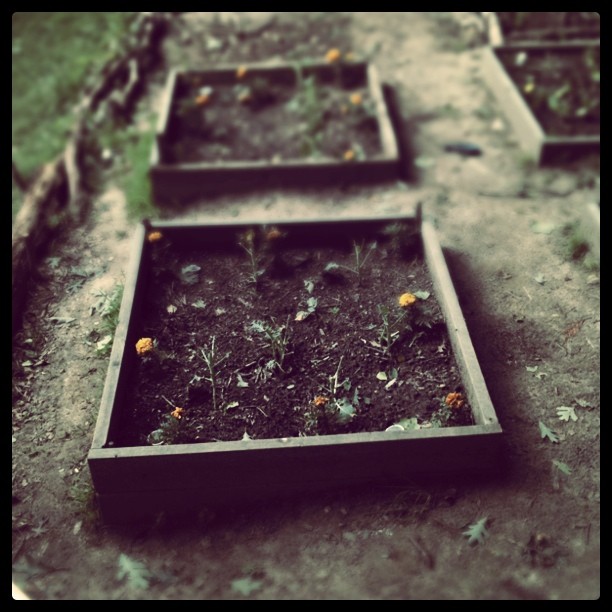
The damage one groundhog did to a garden in a single morning.
I searched through the archives this morning as I waited for the work laptop to install software updates.
Five years ago this month I posted two blogposts. The entire month. Looking back, that may be an average. June is a light month for postings when compared year over year. Except in 2011 — that month 79 blog posts were offered.
Ten years ago to the date I posted the above photo in this blog post. Not mentioned at the time was that a female groundhog had eaten all the young broccoli and greens that had been planted earlier that spring. An expert was called in and he humanely captured the mother and her two pups. He informed me that groundhogs mate in early spring. Female groundhogs have really short pregnancies. So, by June the groundhog in our area was a very busy mother. It was difficult to get angry at the groundhog for eating most of my spring plantings. She was just doing what groundhogs do. Mother and pups were safely relocated to one of the nearest state parks.
Fifteen years ago this month I published a weekly column. I had been invited to contribute a weekly column by another writer. At some point I considered collecting those columns in to a book. But that manuscript, or manuscripts, is probably buried in a junk drawer somewhere in the garage.
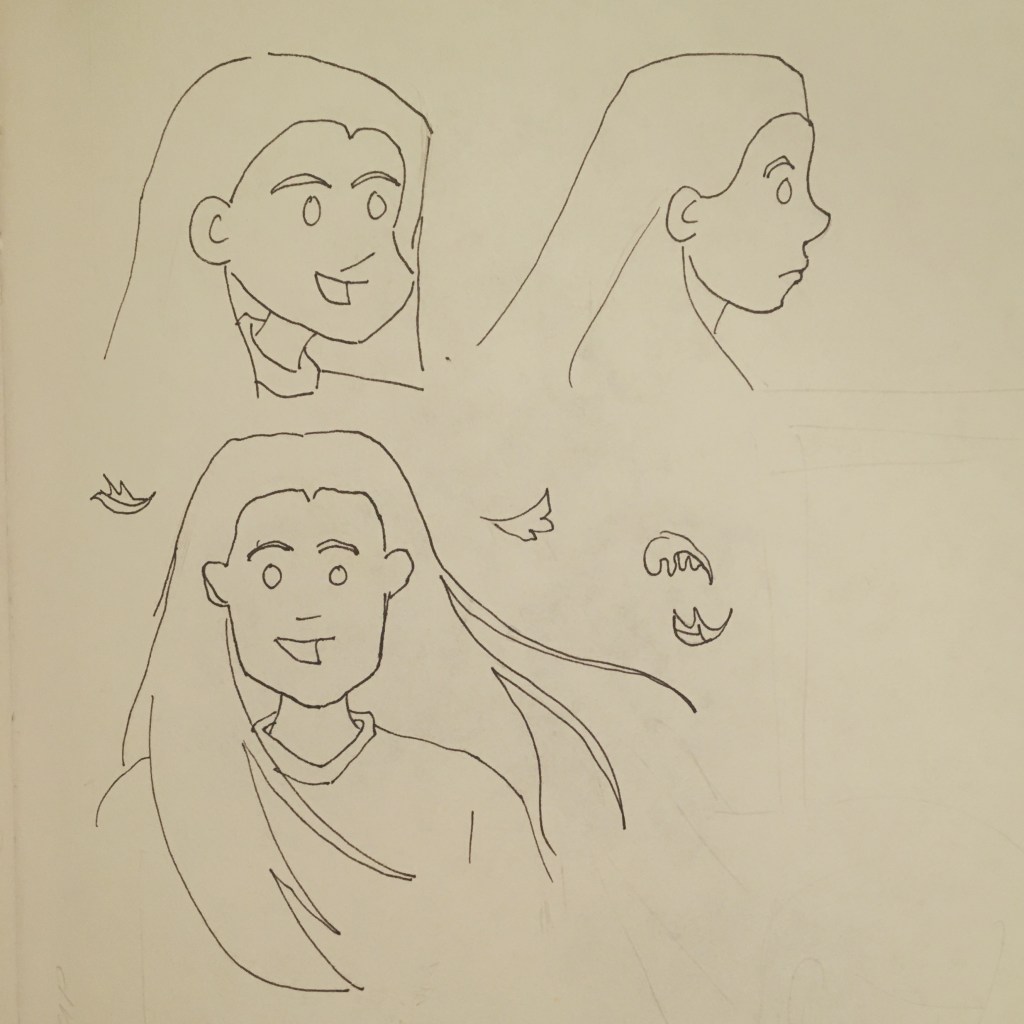
Twenty years ago. No blog. No laptop. Just a black cloth hardback sketchbook. I sketched a model sheet for a comic book proposal.
The genre of blog writing is nearly obsolete. As far as I can tell. This is based on a conversation I had a couple months ago.
“You’re son told me you have a blog,” she said.
“Huh?” I replied.
My family was invited to a small, casual dinner party.
“Yeah, he also said you’re an artist and poet,” she said. “I used to have a blog. I mean. That was years ago. I’m not really a writer, but I blogged.”
She continued to tell me what she blogged about and where. We were both active around the same time period (by active I mean posting writings nearly daily). That was before the rise of the major social media platforms. I shared that part of what I enjoyed about the genre was the interaction with people. The exchange of ideas. The sense of being part of a greater community.
“I mostly just write on Facebook now,” she confessed. “Remember, back when, you could only leave a comment on a blog post?”
“That’s right,” I recalled out loud. “There were no like buttons or social media share icons.”
After that dinner party, I updated the art page of my blog. And planned to contribute more time and resources to blogging again.
2.
I composed a post about the value of journaling with plan to publish it the first week of March. But it ended up in the draft folder.
Mid-March I wrote another post. This one was about discovering a collection of my old art work. But it too is in the draft folder. Well. Actually. I eventually posted it near the end of April.
But the genre of blog writing is passé. Outdated. Why do I still do this?
Then I remembered rule number eight: “Every word on your blog is a word not in your book.”
3.
Shifting focus, I started work on a book. Or rather a series of books. Inspired by August Derleth’s Sac Prairie books, like Walden West and Countryman’s Journey. I set to work on the first manuscript.
Derleth presented a non-linear collection vignettes and entries about his home town. I moved in the direction of a daybook, or journal. Instead of spending a year at Walden Pond, or Sac Prairie, I collected entries and stories of a year in the life of a cultural creative edging toward a digital nomad.
Thoreau and Derleth drew from nature, whether from a pond or prairie. I discovered the ubiquitous screen became the prominent pool of inspiration for the first manuscript. One book manuscript became two and three. The metaphor of the glowing computer laptop screen began to crack and shatter by the fourth book manuscript.
The book series is part confession and part cautionary tale.
4.
I deleted the blog. The only thing that remains of that original blog is the screen shot featured in this post.
In truth, I deleted all blogs I maintained. Except this one.
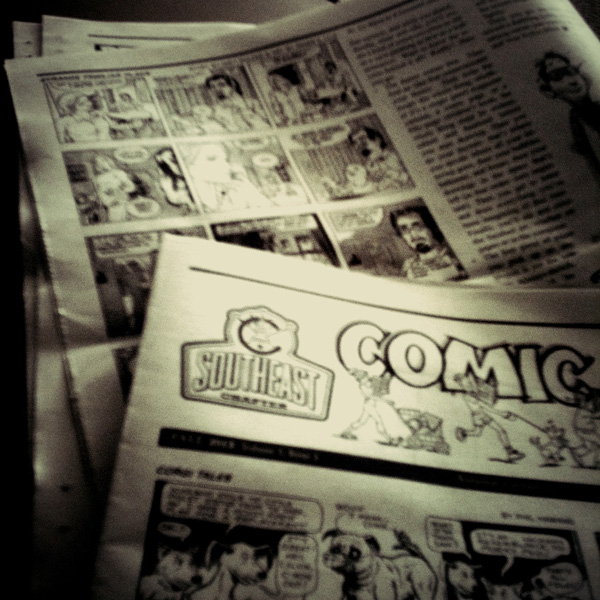
After nearly a six-year hiatus, I was excited to see a project that began with notes and sketches transform into a published comic strip. Even if it was a one-off. Even if I had to hand the responsibility of drawing each panel to someone else. It was done.
I had imagined that the creative non-fiction comic story I crafted would earn some interest. Maybe it would open a few doors to an audience. And allow me to write and illustrate. Even earn some money. Maybe I would quit my day job and provide for my household by doing something I loved. Telling stories. And drawing pictures.
That was five years ago.
A few weeks ago I found a box in the garage. It had several copies of a publication that printed my comic strip. I glanced over the pages and then placed them back into the box. I also found several books. Opened one book I remembered enjoying.
“What’s that?” asked one of the children.
“It’s a collection of comic strips.”
“Oh.”
I pulled a copy from the box and gave it to the child.
“There’s a story in there I wrote.” I said. “See if you can find it.”
The child took the copy of Comic Stroll and headed off to the couch in the living room.
I flipped through the pages of the book I had found. Read a few highlights.
Yeah, I resemble that, I thought to myself after reading a few lines at the end of the book. The author referenced a friend of his who gave up an art gig for a corporate job in order to provide for his family.
Yeah. I know what that is like.
How many comic pages might I have written and illustrated if I had. . . Well, what-ifs and might-have-beens are dangerous paths to pursue. What you did, great or small, is what matters.
Watching my progeny spend an afternoon reading comic strips I had a hand in creating was a pleasure.
During the last month I reflected on things I wrote a decade ago. The original idea I had was to simply repost material as a Throwback Thursday blog post. But when I reviewed the writings from those halcyon days before the disruption of iPhones, social media, tweets and posts — I noticed something. The meaning was illusive. I am still pondering it.
The first blog post was about photography. The second was about a poetry reading. The third was about a published essay. The fourth blog post was to be about confessions. Each week I wanted to add nuance and/or context to the original piece. Or at least a different facet of the original. To see it from a different angle. But that week I wrote four different takes on a post time stamped August 23, 2007.
One draft continued after the manner of the previous confessions series. The second draft crafted a meditation on the form and function of the confessions. Another explored the definition. What does the word “confession” mean? And finally, there was a brief homage to the blogger who inspired the confessional series. Ten years ago, there were at least a dozen bloggers (writers, thinkers and artists) I read daily.
To write and post one (but not all) of these different perspectives seemed to me limited in scope and context. To post all seemed unfair to the reader — not to mention indulgent and esoteric. And so, I scrapped the plan. Missed the Thursday deadline. And reflected on a path forward.
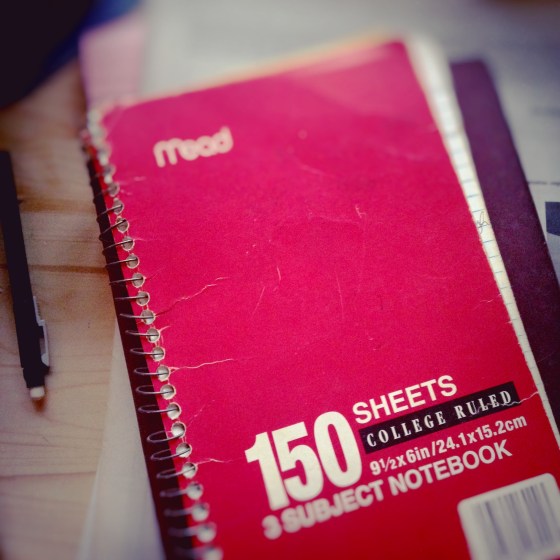
And then, during that weekend, I discovered an old spiral notebook from. . . well. . . a long time ago. In those days, my small Southern rental house had no internet, television or air conditioning. The only computer technology I owned at the time was a Brother electric typewriter. The notebook exposed a habit, a pattern, of mine that I have not altered from in years.
The red spiral notebook contained three drafts of a letter to a family member. Each draft was a variance of the previous letter. Each draft removed or altered items regarding hopes, fears and dreams. And the final draft was never mailed. More than one writing teacher and mentor told me that I tend to censor my writing. To hide details. Hide intimacy. This may be the nature of men. It may be my upbringing in a religious household. A home that taught everyone will be accountable to God for every word spoken and written. But failed to offer that if God is sovereign, then he already knows every word and deed I will ever do in my life. And he chose to love me anyway. But I digress.
To post or not to post. To repeat old habits, or to start new ones.
A poem for a friend composed on a manual typewriter
At least eight years ago, an old beat up manual typewriter provided a platform to compose poetry and other writings.1 It was an effort to return to an intentional practice of crafting poetry and prose without distraction of disruptive media.
For years and years, a notebook, journal or sketchbook was never far from reach. But one night after a long night of poetry and music at Beanstreets followed by an even longer time of coffee and conversation at Old Europe, a friend convinced me to try blogging.
Sample journal page of poetry
The immediate response to blogging was infections.2 Connecting with people all over the country, sharing writing samples or books read and being part of an active digital community was exciting. And the feedback on written work was quick — sometimes within a couple days or hours. The practice of writing allowed me to hone the craft of creative writing and exposed me to other writers across the country. One of those bloggers actually showed up at a poetry gig I did. She was on a cross-country trip to visit friends and wanted to visit in real life.
Over time, I noticed that my practice of writing notes, daily sketches and other activities had all but disappeared. Relying on keyboards, display screens, hard drives and servers presented became a crutch. My writing drafts and sketches appeared deceptively crisp and final in neatly formatted text documents and web blog interface windows.
So, I pulled the plug. Returned to handwriting and typing as practice.3 Some friends and fellow poets saw a few samples of typewritten work and suggested I post it on my blog. It was a novelty. A curiosity. So, I did.
One of the first photographs of a poem I composed on a typewriter was written for a friend. It was posted about this time of year — in 2011.4 A few days later I followed up with another poem5 that was later read at poetry event where I and other poets were dubbed “the next generation” of Asheville poets.6
I do not claim to be the first person to post an image of a poem typed on a manual typewriter. But I noticed a trend in that direction about a year after posting those images of typed poem sketches.7 Not sure exactly if I started the trend. Probably not. Maybe other like-minded individuals who sought to return an organic practice of handwriting and typing as a mode of composing their visions and ideas.
After relocating to the southern boarder of the Great White North,8 I continued using the manual typewriter as a mode of composing new work — both poetry and prose. Some of this was due to the original intent of the practice — crafting content without distraction of disruptive media. Some of the use of the manual typewriter was due to a period of time that I was without a functional laptop and no internet access. A local writers group saw a lot of typed first drafts from that manual typewriter. One of those typed drafts was later published as a short story.9
Most recent first drafts have all been handwritten if not typed on one — of now two — of the manual typewriters. Blogging. Well, that has atrophied. Maybe I’ll post some photos of typewritten drafts this year as a way to keep the blog active. But, to celebrate an eight year anniversary of analog writing — I’ll keep most of it offline and on paper.10
Keep your stick on the ice and remember to use the lowercase L key when typing the numeral one.
NOTES:
[1] In truth, I composed poems on an electric typewriter prior to that. Did it for decades. Did not own a personal computer until… well, that is another story.
[2] That was when there were a mere couple million web blogs in the world. Now, there are some platforms, like Tumblr, boasting 100 million blogs. The blogosphere has become quite congested.
[3] Examples of some the 30 poems in 30 days journal posts with photos: here, here and here.
[4] April 1, 2011, blog post.
[5] Poem: “Never Look A Doughnut Dealer in the Eyes”
[6] “Rhyme and reason” by Alli Marshall, Mountain Xpress, April 6, 2011. Accessed April 2, 2018. “https://mountainx.com/arts/art-news/040611rhyme-and-reason/”
[7] Examples include Typewriter Poetry (though it seems the web site has not been active since March 19, 2015), Remington Typewriter Poetry (this site too has become inactive with the last entry posted June 2016), and the most popular is Tyler Knott (though his web page has an archive going back to 2003 (which is odd because he uses Tumblr as a platform and Tumblr was launched in early 2007… maybe he migrated his content from some other source to Tumblr… but I digress) the posted images do not begin until 2012 (unless I am mistaken).
[8] A reference to Bob and Doug McKenzie, fictional brothers who hosted the show Great White North (a reference to Canada, aye). For sample episode view Youtube video: https://www.youtube.com/watch?v=0pPRaD6TKLc
[9] Left of the Lake published “Mortal Coil” in 2015. https://coffeehousejunkie.net/2015/08/31/publication-of-mortal-coil/
[10] Original post published on April 21, 2015 https://coffeehousejunkie.net/2015/04/21/typewriter-poetry-and-blogging/
It is April 15th. If you are participating in the 30 poems in 30 days challenge, than you are half way there!
Some of the results of the daily discipline of writing looks more like sketches rather than fully composed poems. Nothing yet looks like a Coleridge “Kubla Khan” or a Ginsberg “Howl” or even a Bashō haiku. A few sparkling lines, but a lot of raw material.
It is no joke. It is April. And it is the beginning of National Poetry Month.
For poets and poetry fans, April is a special month-long celebration of poems and poets. For most of America, it is the beginning of baseball season.
One question that is asked of me when an individual learns that I compose lines poetry is this: “Are you published?”
The answer is yes.
Throughout the month of April I will post selections of my published work for your reading pleasure.
April is a good month to test your poetry writing skills. A few years ago I took up the challenge[1] to write 30 poems in 30 days.[2] You are invited to the challenge as well.
Caleb Beissert is a poet, translator and musician. His published work appears in International Poetry Review, Tar River Poetry, Asheville Poetry Review and Beatitude: Golden Anniversary, 1959-2009.
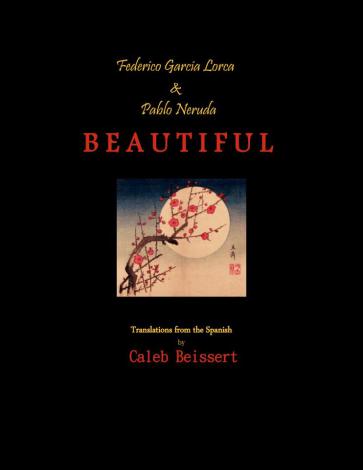
This week, Poetry at the Altamont celebrates the release of Caleb Beissert’s first book, Beautiful, a selection of poems by Pablo Neruda and Federico García Lorca translated into English. During the last few weeks, Beautiful was well received by enthusiastic audiences at Montford Books & More and Malaprop’s Books & Cafe and is a Small Press Distribution best-seller.
The Altamont theater doors open at 7:00 P.M. for Poetry at the Altamont. Admission is $5 at the door. Beer and wine sold at the bar and lounge will remain open for drinks after the reading. Event link.
UPDATE: Caleb Beissert is the featured guest of the Coffee with the Poet Series, Thursday, February 21st at 10:30 a.m. at City Lights Bookstore. Event…
Received notification earlier this month that a piece I wrote earned second place in a writing contest. It will be published in the August 2015 issue.
The contest judge is a faculty member at Columbia College Chicago. So, the acceptance of the prose piece submitted seems to have some merit. Or at least that is what I try to convince myself, because all month I have received notification of other submissions that have all been rejected.
Much gratitude goes to the members of the writers group that meets at the Graham Public Library who saw the first handwritten draft of the story. Their support has been amazing. And special thanks to novelist Justin Grimbol, for encouraging me in the craft of fiction.
“Give me I subject to write about,” I challenged the oldest kindlinger. It was lunch break and I was home for tea and toast.
After a few moments, the kidlinger offered a subject — a writing prompt, if you will.
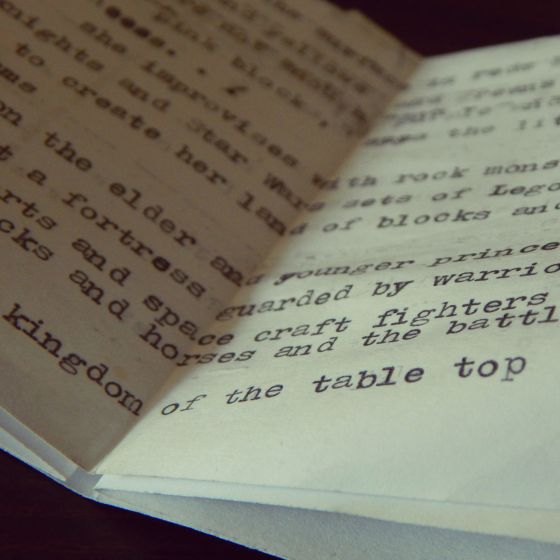
Grabbing a sheet of paper from the recycled bin, I feed the sheet into an old manual typewriter and began composing a manuscript on the spot. The kidlingers watched at a distance and then approached to watch the keys striking the paper. Their amusement fueled the writing and from time to time I would ask them for a color or word choice.
Within fifteen minutes I had composed a draft of a book custom tailored to the chosen subject. There is no trick here. No spell check. No slight of hand. No editing. And no kidding. Handmade mini-books are very easy to manufacture [see my post on the topic here]. Writing a handmade mini book may be more of a challenge. But for writers and parents, it is a lovely experience.
The oldest kidlinger was dubious of the handmade mini-book. The younger kidlinger was all smiles. Their mother read it aloud. The request to sign and date it was meet and the book was carefully examined by the kidlingers as I returned to the afternoon’s labors.
Who doesn’t like a deal? This weekend only at the Racine & Kenosha Authors Book Fair (Saturday, May 23, 2015, 2-5 p.m., Rhode Center for The Arts), you can purchase copies of my books for special book fair price: four books for $16. Limited quantities are available. So come early. See you there.
A poem for a friend composed on a manual typewriter
At least five years ago, an old beat up manual typewriter provided a platform to compose poetry and other writings.1 It was an effort to return to an intentional practice of crafting poetry and prose without distraction of disruptive media.
For years and years, a notebook, journal or sketchbook was never far from reach. But one night after a long night of poetry and music at Beanstreets followed by an even longer time of coffee and conversation at Old Europe, a friend convinced me to try blogging.
Sample journal page of poetry
The immediate response to blogging was infections.2 Connecting with people all over the country, networking, sharing and being part of an active digital community was exciting. The practice of writing allowed me to hone the craft of creative writing and exposed me to other writers across the country. One of those bloggers actually showed up at a poetry gig I did. She was on a cross-country trip to visit friends and wanted to visit in real life.
Over time, I noticed that my practice of writing notes, daily sketches and other activities had all but disappeared. Relying on keyboards, display screens, hard drives and servers presented became a crutch. My writing drafts and sketches appeared deceptively crisp and final in neatly formatted text documents and web blog interface windows.
So, I pulled the plug. Returned to handwriting and typing as practice.3 Some friends and fellow poets saw a few samples of typewritten work and suggested I post it on my blog. It was a novelty. A curiosity. So, I did.
One of the first photographs of a poem I composed on a typewriter was written for a friend. It was posted about this time of year — in 2011.4 A few days later I followed up with another poem5 that was later read at poetry event.
I do not claim to be the first person to post an image of a poem typed on a manual typewriter. But I noticed a trend in that direction about a year after posting those images of poem sketches.6 Not sure exactly if I started the trend. Probably did not. Maybe other like-minded individuals who sought to return an organic practice of handwriting and typing as a mode of composing their visions and ideas.
Here is to a five year anniversary of analog writing.
NOTES:
[1] In truth, I composed poems on an electric typewriter prior to that. Did it for decades. Did not own a personal computer until… well, that is another story.
[2] That was when there were a mere couple million web blogs in the world. Now, there are some platforms, like Tumblr, boasting 100 million blogs. The blogosphere has become quite congested.
[3] Examples of some the 30 poems in 30 days journal posts with photos: here, here and here.
[4] April 1, 2011, blog post.
[5] Poem: “Never Look A Doughnut Dealer in the Eyes”
[6] Examples include Typewriter Poetry,Remington Typewriter Poetry, and the most popular is Tyler Knott (though his web page has an archive going back to 2003 (which is odd because he uses Tumblr as a platform and Tumblr was launched in early 2007… maybe he migrated his content from some other source to Tumblr… but I digress) the posted images do not begin until 2012 (unless I am mistaken).
Earlier this week, someone in a writers group I attend asked me where do I get the ideas I write about. My answer was a paraphrase of something Hemingway wrote to Fitzgerald. Here’s the exact quote from his letter in 1929:
“The good parts of a book may be only something a writer is lucky enough to overhear or it may be the wreck of his whole damn life–and one is as good as the other.”
–Ernest Hemingway
He also wrote something to the idea that he learned to write by examining the simplest of things.
“The process of writing . . . is . . . a journey by boat. . . . If you get distracted or allow yourself to drift, you will never make it to the destination. . . . The journey is your narrative.”
![DSCN3428[sqr-tilt-dallas]](https://coffeehousejunkie.net/wp-content/uploads/2015/06/dscn3428sqr-tilt-dallas.jpg?w=560)
![DSCN6003[DSCN6002[sqr-basic-lomo-dusk-tilt]]](https://coffeehousejunkie.net/wp-content/uploads/2016/07/dscn6003dscn6002sqr-basic-lomo-dusk-tilt.jpg?w=560)


 During the last month I reflected on things I wrote a decade ago. The original idea I had was to simply repost material as a Throwback Thursday blog post. But when I reviewed the writings from those halcyon days before the disruption of iPhones, social media, tweets and posts — I noticed something. The meaning was illusive. I am still pondering it.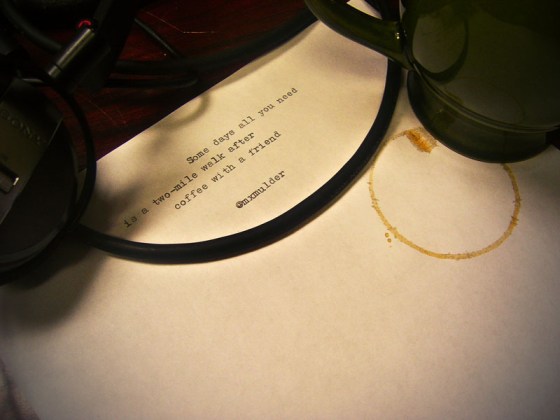

![DSCN5411[sqr-basic-lomo-lofi]](https://coffeehousejunkie.net/wp-content/uploads/2016/04/dscn5411sqr-basic-lomo-lofi.jpg?w=560)
![DSCN5313[sqr-basic-lofi]](https://coffeehousejunkie.net/wp-content/uploads/2016/07/dscn5313sqr-basic-lofi.jpg?w=560)
![DSCN5414[sqr-basic-lomo-lofi]](https://coffeehousejunkie.net/wp-content/uploads/2016/04/dscn5414sqr-basic-lomo-lofi.jpg?w=560)

![DSCN3549[sqr-tilt-dallas]](https://coffeehousejunkie.net/wp-content/uploads/2015/07/dscn3549sqr-tilt-dallas.jpg?w=560)
 Grabbing a sheet of paper from the recycled bin, I feed the sheet into an old manual typewriter and began composing a manuscript on the spot. The kidlingers watched at a distance and then approached to watch the keys striking the paper. Their amusement fueled the writing and from time to time I would ask them for a color or word choice.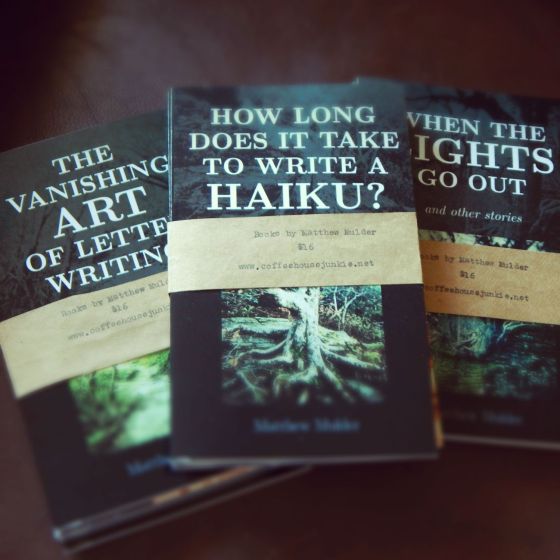
 Coffeehouse Junkie